
When My Own Neck Was on the Line

Standard

On December 4, 2024, a shadowy figure, in a dark hoodie, waited for his opportunity, ran across the street, and then fired three shots.  A married father of two stumbled to the ground as his killer fled the scene.  Brian Thompson, the CEO of UnitedHealthcare was murdered and his killer allegedly a 26-year-old, disgruntled by botched a neck surgery that had left him in pain and disabled.

As father of two, husband of one, who had severe neck issues, and surgery, I had a lot of empathy for both men.  Very clearly this was an act of misdirected rage.  The killer, like most of us, wanted someone to blame for their life falling apart and a very wealthy insurance company chief executive made a convenient target, made a scapegoat, for a system that is broken at multiple levels.

When I was initially injured, in my twenties, I went to Dr. Rajjoub, he was known as one of the leading neurosurgeons in the area from what my mom found and we sat waiting in his office for a long time.  When we finally got to the exam room, the doctor was very brisk, “physical therapy.” 

My parents and I sat with our jaws open.  And my mom, a bit faster on her feet, stammered a protest.

Rajjoub broke his stride.  And he explained, very briefly, that better surgery options, like disk replacements, were on their way and I should wait.  And amazingly enough, a little physical therapy would get me back on my feet again.  He was right.

Fast-forward to a couple of years ago and a decade or so after this conversation and my neck pain was back with a vengeance.  And this time physical therapy, after an ill-advised trip to a chiropractor, would not produce sufficient results.  I knew with the numbness and loss of strength, the window of opportunity was beginning to close, there would need to be surgery soon or I may never be restored to full use of my right arm.

So I got an appointment with a specialist, at our local hospital, explained the history and my current symptoms.  This neurosurgeon agreed that it was time to go under the knife and we began to discuss the particulars of the procedure he would do.  What he would describe is a neck fusion.  They bond a few vertebrae together, around the injury area, to bring some stability and restore the gap for the pinched nerve to travel through.

I was underwhelmed.  I didn’t wait this long to get an inferior surgery.  So, once again, I enlisted the help of my mom.  And the goal was to find an alternative option who would do a replacement rather than a fusion.  We ended up contacting Virginia Spine Institute and I was soon talking to a young energetic Bucknell graduate.  We exchanged stories about my home town, and common experience at the local watering hole, before we got down to the business at hand.

One of the items to consider, going in, was that this medical group was out-of-network, my insurance would likely reimburse for a little and yet not nearly the whole cost.  But, given I only have one neck to spare, and that VSI seemed state of the art—I went with my gut and bit the bullet.

The results were phenomenal.

My veteran physical therapist was totally amazed at the speed of my progress.

As if to confirm my decision, already on my way back to work, I went through the drive thru at Dunkin a few days after the surgery, still wearing the neck collar as precaution, and had a brief exchange with the cashier who gave an account of her own experience with neck surgery.  She had the fusion, was still dealing with chronic pain, and validated every concern that I had with the outdated practice.

An activity not doctor recommended.

So why did she, and the killer of Thompson, have a surgery that should be discarded to the annals of medical history?

There are multiple contributing factors, as always, insurance companies slow in their acceptance of change, surgeons who don’t want to get trained in a whole different way of doing things when they have mortgage to pay plenty of work, but truly at the heart of it all is the FDA moving at a turtle’s pace.  The agency has lagged well behind counterparts in Europe and who knows why.  There is no Big Fusion industry lobby to blame as far as I can tell.  So what’s the hold up?

This approval process really underlines the misplaced faith many have in government agencies.  While Europeans were getting a far better option, literally for decades, those of us under the protective care of a Federal regulatory bureau, suffered the ‘cure’ barely an improvement on the disease.  And really need to ask the question why.  Why can the FDA work fast to approve a pharmaceutical and yet not to ban dangerous red dyes?

The answer is likely a combination of lack of political will and bureaucracy.  The real problem is this notion these institutions are all science and not political or biased.  

It is tempting to just call it incompetence (or cook up some cockamamie theory) but it is more than that.  We do fusion surgery rather than risk replacements and that is because what is established seems less risky than a newer procedure.  There is probably a big assumption that because an opinion exists there is no need to move quickly.  And then an agency is made of people.  It is not some monolith constructed of pure unadulterated science.  No, it is rather like where you work, an institution that is really only ever as good as the management.

Many smart people work at the FDA.  But it is not their job to make sure that the latest technology gets to the consumer.  They do their assigned tasks.  And thus some items may fall through the cracks.

The most tragic part of Thompson’s murder is that it targeted someone who was doing their job and working within conditions set by the industry and the government.  This idea that removing a profit motive will just magically fix everything is wrong.  What is truly needed is a major disruption of status quo for regulatory agencies.  There is really nothing sacrosanct or unquestionable that the FDA does.  Science needs scrutinized, the experts miss things and have their own private motives.

Furthermore, the rising cost of healthcare doesn’t have one singular cause.  The left wants to explain everything bad as being a result of evil capitalism, whereas the right always wants a secret plot to destroy the health of America, but the reality is much more complex and not nearly as exciting as these two ideologically driven fantasies.  It is simply the limits of system and cost of the technology in many cases, coupled with a crippling burden of compliance.

There is a big reason why the small medical practices are disappearing, swallowed up by giant politically connected and bureaucratic nightmares.  There is also a reason why, in the age of the ACA requirements, insurance companies must push back against waste of invested resources.  We’re all caught in a tangled ball of competing interests and may need our Alexander to take a sword to this gigantic seemingly unsolvable knot.  
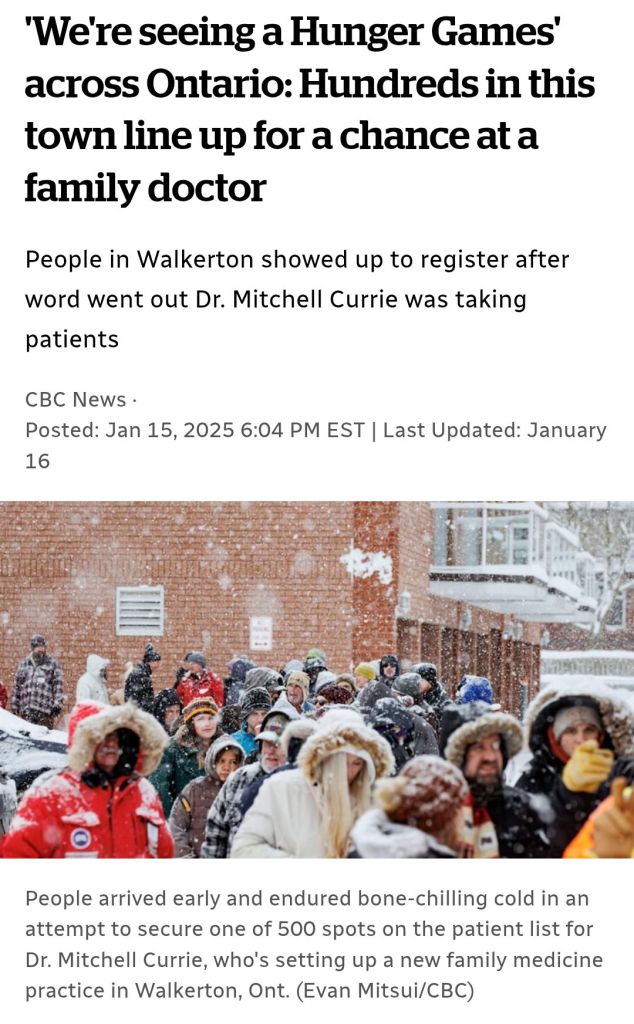
Isn’t Socialism wonderful?

This is why I’m willing to give new Health Secretary Robert Kennedy Jr. a chance.  We need reform and we needed it yesterday, it is decades overdue like the eventual approval of the disk replacement surgery that has allowed my return to an active and fulfilled life.  And, if you don’t like it, then maybe you should try Canada where healthcare is free, if you can get through the line.  Amazing how nobody blames public health officials—until you get one who goes against the status quo they claim to hate.

Confessions of the Prodigal’s Older Brother—the Rough Road To Be Free Of Resentment

Standard

I do not call for the judgment of anyone, but it seems only right that good behavior is rewarded. And yet it is often unruly people who get the loving attention when they do bad and then the accolades when they begin to do what the well-behaved have been doing quietly for years.

The conscientious person feels bound to their duty to righteousness. They are driven by loyalties to people, motivated by moral obligation and take responsibility for the welfare of others. It was not out of a desire to be recognized, it is a burden they’ve been carrying since birth, it is never a choice for them, but rather is something inescapable, a prison and hell.

I’ve been that tortured soul. I’ve always wanted to do everything right and for the right reasons. While definitely wanting to be my own person and entitled to my own thoughts, I had no desire to be a troublemaker or disruption. I tried to be cooperative and compliant, to make the lives of my teachers and authorities easier, because I knew the greater social good was dependent upon this and would not be served by my selfish outbursts.

I could never live this ideal out perfectly. I had a standard for myself, a part of the religious inheritance I received as a Mennonite, that was impossible to live out. My frustration with this reality of my own failure would sometimes come bubbling up. Something would set me off and, in the privacy of my parent’s home, I would rage against this awful predicament and the unfairness of it all.

The carefree (and careless) younger brother…

A week or two ago some resentment returned. This change in mood was likely triggered by two things (or rather two conversations) and one of them being an encounter with David Bercot on the topic of divorce and remarriage. The other thing? I had a run-in with my own Prodigal side.

We claim there are consequences for sin. This is how we convince ourselves that our righteous inclinations are correct and there is really no other way to justify depriving oneself of hedonistic pleasure. If it doesn’t matter what we do, no real score kept for right or wrong in the end, then we might as well just have some fun, right?

I’m friends with one of those “bad boys” who (despite his heart of gold) doesn’t care what other people think and has done things at his age that were unimaginable for me. He is a ladies’ man, he’s that guy the young women (yes, even the ‘good’ ones) feel comfortable playing around with, and is basically my antithesis.

I can’t help but love him. He was my true friend a few years ago, heard me spout venom at those who had hurt me with their self-righteous indifference, and never said a word of condemnation. That said, his recklessness and lack of my seriousness, while I was fighting for all I was worth to stay glued together after a devastating announcement, had also sparked my most violent and evil imaginations.

I can’t hold him accountable, though. I look at his freedom with a bit of envy in that at any moment he could decide to settle down, marry the perfect girl (drawn by his charm) and carry no stigma. Me, however, I was always outside looking in, I wasn’t allowed (by character or circumstance) to partake of that “wild” youth nor given the legitimacy that is his for the taking once he decides to settle down.

I’m not jealous of or bitter toward him. Why should I be? But what I do struggle with is anger towards the religious culture that made me, that fed me a steady stream of false promises and left me feeling completely betrayed in the end. Specifically, I’m still upset with the fathers who dismissed me with their cynical calculations and their daughters who continually rejected my sincerest efforts—while meanwhile crawling all over the reckless and indifferent guys.

It is bad enough to go unrecognized. But we seem to live in a world where no good deed goes unpunished, where caring (when others do not) is mischaracterized as creepiness and doing right for the right reasons is often stigmatized. It seems my obeying conscience doesn’t allow me the freedom of rebellion nor does it gain me the approval of those who told me that my conscientious is a good thing when I do what is right in spite of their opinions.

The daddy issues of the Prodigal’s older brother…

The problem with the older brother, in the parable Jesus told about the Prodigal son who returns home, was deeper than his resentment over the celebration for his wayward brother. His indignation was towards his father:

“The older brother became angry and refused to go in. So his father went out and pleaded with him. But he answered his father, ‘Look! All these years I’ve been slaving for you and never disobeyed your orders. Yet you never gave me even a young goat so I could celebrate with my friends. But when this son of yours who has squandered your property with prostitutes comes home, you kill the fattened calf for him!’ (Luke 15:28‭-‬30 NIV)

This anger is likely due to a misconception the older brother had about his father. He obeyed. However, he obeyed for fear of consequences rather than purely as a matter of conscience. His motivation, while in some respects a devotion to his father, was also a desperate effort to secure his place in the family and a mistrust of father’s love. He, like the servant who buried his talent for fear of punishment, couldn’t comprehend being loved for anything other than his performance and had lived in fear rather than faith.

Can you imagine having spent years trying to hold up your own end of the bargain, working hard to produce because that’s how your father’s love is earned, only to have the bubble burst?

In my own case, it was not entirely my own fault that I saw God, my heavenly Father, as this sort of vengeful tyrant. As one raised in a fundamentalist setting there is plenty of reason why I would assume that God’s love is based on my own performance rather than something freely shared to all who accept it and that’s because my earthly fathers often did keep me in limbo. Revivalistic preaching undermined any assurance of salvation, my life could never measure up to their purity standards, and their love for me was limited by what I was able to provide for them.

For years my hopes for love outpaced my resentments. I would tell myself that next time will be different, that my fears of always being on the margins of their paradise were unfounded, and eventually Christian love would triumph over my inadequacies. However that paradigm came crashing down in spectacular fashion when a young woman, someone to whom my hope against hopes (in respect for her professed devotion) were fully invested, said “I can’t love you like that,” which was to say that she really could not love me at all, and destroyed that last hope of a way to her or rather her father’s world.

Trying to please the lawyer’s God…

Over the past weeks, I’ve felt whipsawed. That is to say, I’ve felt pulled between two seemingly opposed views that together undermine my peace with God and the ability to live a victorious life. The first being how the Prodigal gets the embrace while I’ve often been ignored or, worse, had those whose love I had desired recoil as if I was some sort of monster. The second being the inescapable legalistic mindset that is at complete odds with true Christian love.

I have nothing against men like David Bercot personally. In fact, I see them as men very much like myself a few years ago, they diligently search Scripture trying to find their salvation, and yet they are far more capable than I’ll ever be. Their dedication and discipline would seem to be commendable and even something enviable. However, their standard is something I’ve found to be out of my own reach and their religious prescriptions often come at the expense of love.

Bercot, like so many others including myself, is law rather than love oriented. By this I mean we prioritize precise legal interpretation and application of law above the loving purpose behind it. In other words, we are like those religious experts Jesus encountered, who do things like tithe spices, are more concerned with the day someone is healed than the fact that they have been healed, remained as dogmatic even when entering the church and had to be put in their place:

It is for freedom that Christ has set us free. Stand firm, then, and do not let yourselves be burdened again by a yoke of slavery. Mark my words! I, Paul, tell you that if you let yourselves be circumcised, Christ will be of no value to you at all. Again I declare to every man who lets himself be circumcised that he is obligated to obey the whole law. You who are trying to be justified by the law have been alienated from Christ; you have fallen away from grace. For through the Spirit we eagerly await by faith the righteousness for which we hope. For in Christ Jesus neither circumcision nor uncircumcision has any value. The only thing that counts is faith expressing itself through love. You were running a good race. Who cut in on you to keep you from obeying the truth? That kind of persuasion does not come from the one who calls you. “A little yeast works through the whole batch of dough.” I am confident in the Lord that you will take no other view. The one who is throwing you into confusion, whoever that may be, will have to pay the penalty. Brothers and sisters, if I am still preaching circumcision, why am I still being persecuted? In that case the offense of the cross has been abolished. As for those agitators, I wish they would go the whole way and emasculate themselves! (Galatians 5:1‭-‬12 NIV)

Paul’s pun at the end does not take away from the serious warning in his words. Those trying to please God through their careful obedience to the law “have fallen away from grace” and are thus obligating themselves to an impossible standard. They will either end up deluded (like the Pharisee praying loudly about his own superiority to others) or desperately trying to cross all the T’s and dot all of the I’s and ending up in despair when his/her effort falls woefully short of God’s perfection.

Where I’ve found God’s love…

My goal is not to be the rebellious Prodigal son or the one whose careful dedication ended in bitter disappointment. Both of them have fallen short in love for their father or in understanding their father’s love for them and have suffered consequences as a result. The story isn’t intended so that we go out to sow our wild oats, enjoying the pleasures we are afforded us as a result of our inheritance, and then come back to our father’s house again. It isn’t just a warning against a superficial closeness either.

The true meaning of the story is for us to be more like our heavenly Father, who is perfect in mercy and loves even when His love is not reciprocated. Yes, there is a law, not the kind of law that pleases a sanctimonious religious lawyer, but a law summed up by Jesus:

“‘Love the Lord your God with all your heart and with all your soul and with all your mind.’ This is the first and greatest commandment. And the second is like it: ‘Love your neighbor as yourself.’ All the Law and the Prophets hang on these two commandments.” (Matthew 22:37‭-‬40 NIV)

When we love God we do not worry about being stigmatized like Jesus and his disciples were for breaking with the harsh and unloving application of the law. We stop trying to please those impossible to please, stop believing God is some tyrant finger over the “smite” key waiting for us to slip up, and start doing what is possible to do out of love for our neighbors. It is in remembering that Jesus came to save and not to condemn the world—that through his love even the vilest of sinners can find eternal life.

I still struggle with my hurts despite God’s grace towards me. I still find myself trying to please people who have made pretty much zero real investment in my well-being spiritual or otherwise—who absolutely refused to reciprocate my love for them. I could easily become unsettled again, reject the greater blessing I’ve received by pursuing the promises of those who attempt to live by a standard impossible to please.

But I choose to love those whom God has entrusted to me instead and even if it costs me what little remains of my Mennonite reputation. I would rather lose it all for sake of the kingdom than to return to the bondage of fundamentalist expectations. Jesus loved despite the disapproval of his religious peers and that’s the love that will overcome my feelings of resentment as one who followed the rules and got burnt. It is a rough road some days, but we are called to suffer rejection and carry our cross.