Language isn’t reality. Morality likewise is an overlay. Even rationality itself does not arise from the substrate. Mathematics is probably our best 1:1 analog to something objectively real, and even that breaks down at the edges of reality. It is important we work through until we find the substance of what matters.
We all have our reasons for what we do. It is often good from our perspective. But we have a perspective limited by our ability to accurately model the world based on what we know and extrapolate from that. Faulty information and assumptions will lead to bad reasoning and the suboptimal outcomes we wish to avoid. That’s what this essay is about—explanation of what is truly moral and sustainable.
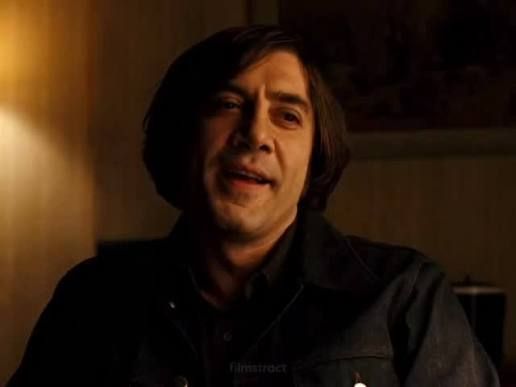
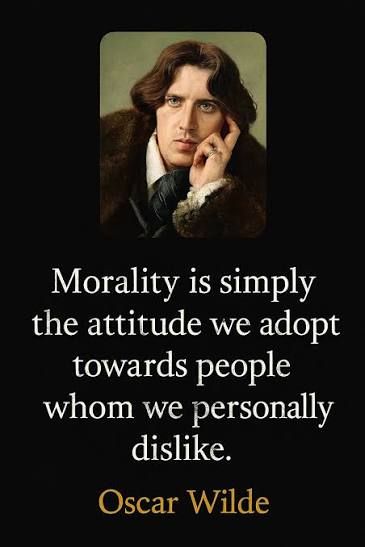
Moral reasoning is about human desire. It is an extension of our biology and part of an effort to survive—even thrive—in the environment we’re in. Morality is about a set of rules, and a good rule is one that produces optimal results. In the words of Anton Chigurh—a sort of force of nature and psychopathic antagonist featured in No Country for Old Men—mocking Carson Wells: “If the rule you followed brought you to this, of what use was the rule?”
Morality doesn’t exist “out there” separated from human need. It is negotiated between us, like language, where we all have a say (to a point), along with culture and tradition (essentially our moral programming), in setting the standard. The “Golden Rule” works as a code because most people have the same natural aims that we do. Morality is about mutual benefit or the win-win situation. And this can break down at the edges, in zero-sum games or times when one believes they can get away with harming another and lacks a true conscience to stop them.
Disproportionate power and differences of language are fracture zones. Reciprocity, as a rule, generally only works with those who are at the same economic level or have a voice. The reason we don’t care about the Armenian genocide of 1915 to 1923 is that we were never told to care. Our morality only applies when we can identify with the other person and see them as an equal. Conflicts arise when we don’t consider what is good from the perspective of another person and they lack the means to stop us.
What is the reason for morality?
To protect ourselves by respecting the right of others to exist as we want to exist.
What causes violence?
Low intelligence: If you don’t understand cause and effect or how what goes around comes around, then you’re more likely to do ‘bad’ things without ever fully considering the consequences. You want X, he stands in the way, so you murder him because you are strong enough to do it. This is the law of the jungle.
Low exposure: It’s hard to fool me into thinking that other races are subhuman. I have met them in real life. People living around the world may see the U.S. as a nation of school shooters and OnlyFans girls based on what they know of us. But the reality is we’re just a nation obsessed with violence and immoral sexuality. And yet, seriously, ignorance isn’t bliss—it is a propagandist’s haven and what allows them to convince otherwise good people to kill people who don’t look exactly like them or speak their language.
Low empathy: Some intelligent people are just psychopaths. They are part of the social contract (although they will pretend to be) and see their own needs as the only ones that are important. They can’t “walk a mile in another man’s shoes” without some innate ability to feel what other people feel and imagine their pain. Empathy is natural and also taught. Yet not all have the same capacity to show empathy or care. If you see other people the same as you do a fly, you won’t hesitate to exploit or kill them if there’s a low risk of consequences.
Low trust: We can recognize that others are human, no different from us, and yet still choose to kill them. Why? Well, if there is a fear that others will do violence to us, there’s an option of preemption. It’s also why men kill the guy in the opposite trench in a war—it is me or him. If we see another person as a potential threat, there’s a primitive impulse to eliminate the other before they act. This is how war is sold to the masses: violence as an answer for uncertainty and anxiety over not knowing what they may do.
The problem with violence is that it creates a cycle of violence. And if it doesn’t do that, it still comes at a cost. To prevent this, we must get ahead of the causes. Education, diplomacy, and building relationships are an ounce of prevention worth a pound of cure. Sure, violence can be a winning strategy in the game. However, violence turns what is possibly a win-win scenario into a zero-sum game with unpredictable outcomes. It may be possible to exploit trust and murder your way to the top, yet eventually it catches up to you—eventually someone bigger, smarter, and nastier comes along.
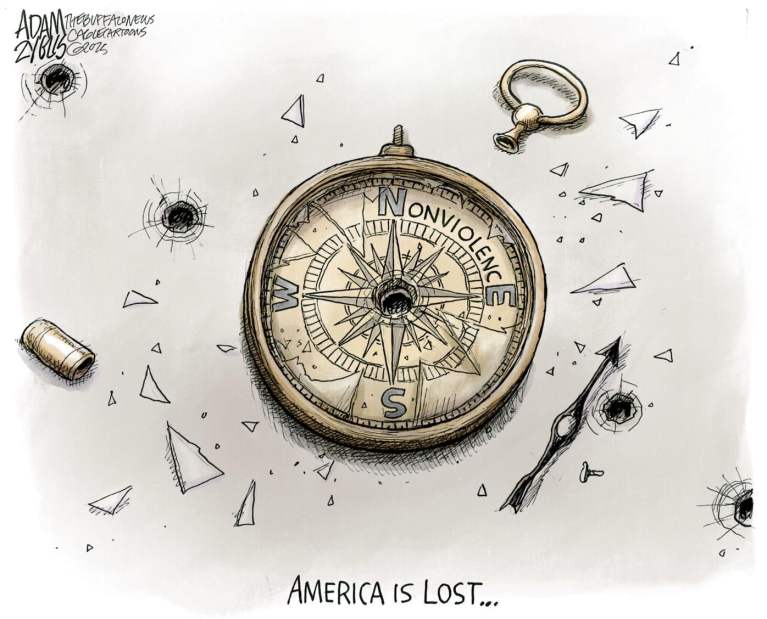
The highest form of morality must therefore serve the ultimate good. A tribal morality, or one where only people like you gain, is risky. It means chaos and conflict. Whereas with a universal morality that serves all, there is a possibility of peace, harmony, or stability. This is why consistent non-violence is the intelligent option. Innocent people are hurt in war. Violence begets violence. So if we want to maximize our own chances or those of our loved ones, then we must respect the rights of all others. Apathy and indifference are not a choice either—we must be united in opposition to violence and abuse of others if we want others to care when it is our turn to face down true evil.
Only in the most extreme circumstances is it moral to use force. Self-defense, or one of the very narrow circumstances where there is no other reasonable option, is a possibly justified exception. Of course, not a “right to defend” that tramples the rights of other people. Unfortunately, we live in a world of propaganda where the most aggressive and disproportionate acts of revenge can be construed as defense—where unwanted words can be called violence. A clear standard can very soon be rationalized away to the point where defenders are made the aggressors while actually being the victims who are attacked.
This is the problem with any moral system we create. The overlay can be shifted, the language manipulated, and soon we end up back at square one fighting tribal wars over irrational fear of the other. This is why we cannot ever assume that our ideal is being transmitted perfectly in words. This is also the risk of making any exceptions.
Moral conscience must be built and passed on. We need to address the ignorance and show people how history is full of examples of unintended consequences. A war rarely goes as planned. We need to minimize the fear of the ‘other’ by encouraging positive interactions. Humanization is a natural byproduct of good relationships. It is past time to stop putting psychopaths in positions of power. We must resist those who manipulate us to fight wars for their financial or political gain.
We also need to equalize power so that all are represented and all are accountable. If we make some kings and others pawns—some “more equal” like the pigs in Animal Farm—it leads to endless conflict. Wealth inequality is a problem when it means that a few can buy their way out of morality. The Epstein-class—those who believe the law doesn’t apply to them as special people—will come to us in many forms when we let financial or political power concentrate into fewer hands. Morality is all about identifying with the other, and it is only possible when we are all at a similar level of status.
This is a Christian moral teaching:
Our desire is not that others might be relieved while you are hard pressed, but that there might be equality. At the present time your plenty will supply what they need, so that in turn their plenty will supply what you need. The goal is equality, as it is written: ‘The one who gathered much did not have too much, and the one who gathered little did not have too little.’
(2 Corinthians 8:13-15 NIV)
Morality is about considering others to be equal in value to ourselves. And that is easier when they basically are equal in terms of their social status and power. This is why the writers of the New Testament put so much emphasis on the elimination of special social status or favoritism. We are supposed to “submit to one another” rather than enforce our own advantage. We’re told God is impartial. We are told the greater should serve the lesser, to share “all in common” so none are ever in need. The Great Leveler (Galatians 3:28) is a confrontation of identity politics and only fighting for those like us.
It’s interesting how many people want the U.S. to be a Christian nation when it comes to their own sexual mores or religious customs, and yet don’t want to treat the foreigner as the native born (Leviticus 19:33-34) or love their ‘neighbor’ as Christ defined the term. They seek to accumulate power for themselves and impose rather than serve. This is false morality; it is just legalism and hypocrisy—forcing others to apply a morality we do not fully live out ourselves. Being truly moral is about what we consistently live, not merely what we claim about ourselves.
Which brings us to the final point. Morality needs to be consistent in logic and application. We can’t carve out exemptions or have double standards because it destabilizes the entire structure we’re standing on. Moral integrity is about rooting out our contradictions and being the same person in all circumstances. If you lie in one context, for example, eventually this habit is bound to bleed over into another. And if we enable our leaders to violate others, who (or what) will stop them from violating us? This is why we must battle against expediency math that violates consistent application of a moral rule. It is better to take the cost of maintaining these critical principles upon ourselves than risk their end.

Morality is an abstraction. A construct. But it is a very important one to get right. Good morality is about aim more than it is about perfection. And like driving when you look where you wish to go rather than at the edges.
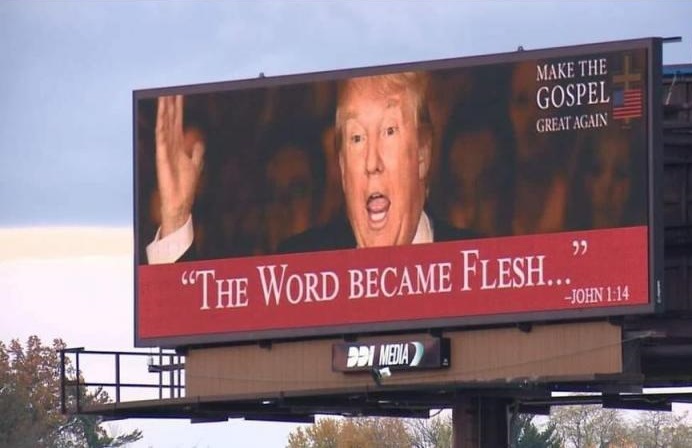
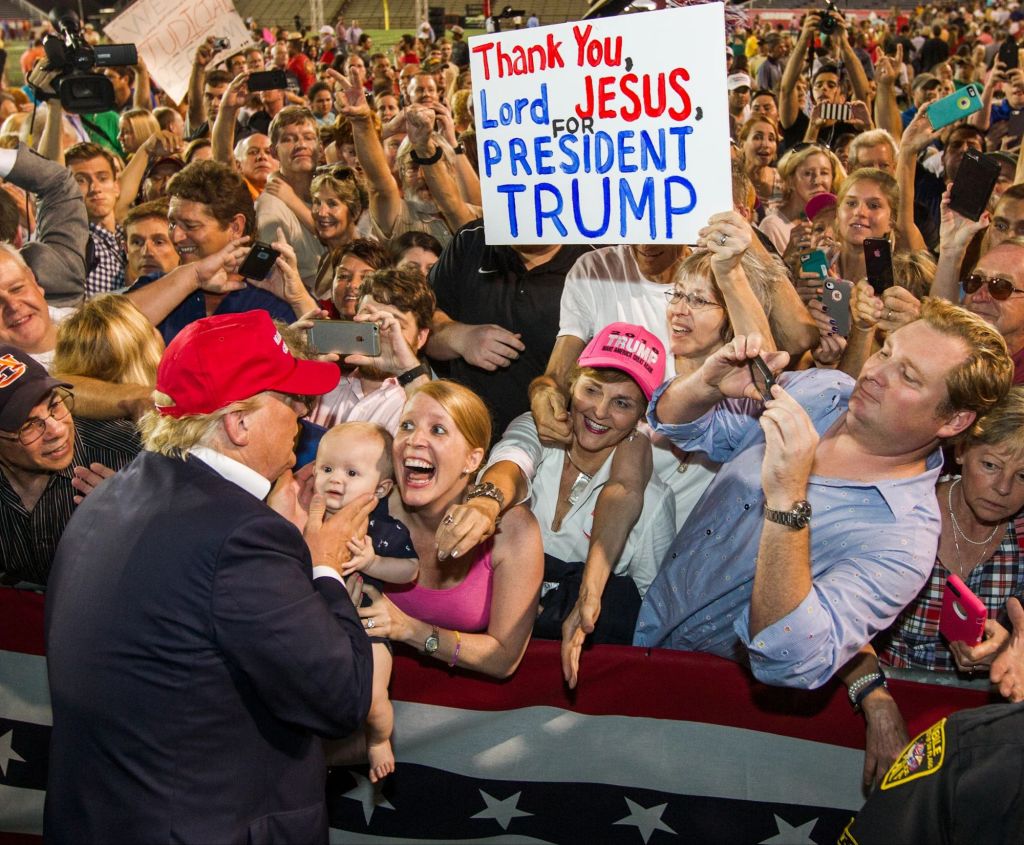
I’ll make a confession. Before Paula White-Cain ever said it, I described Donald Trump as a type of Christ. I believed the judgments against him were largely vindictive and politically motivated rather than a genuine pursuit of truth and justice.
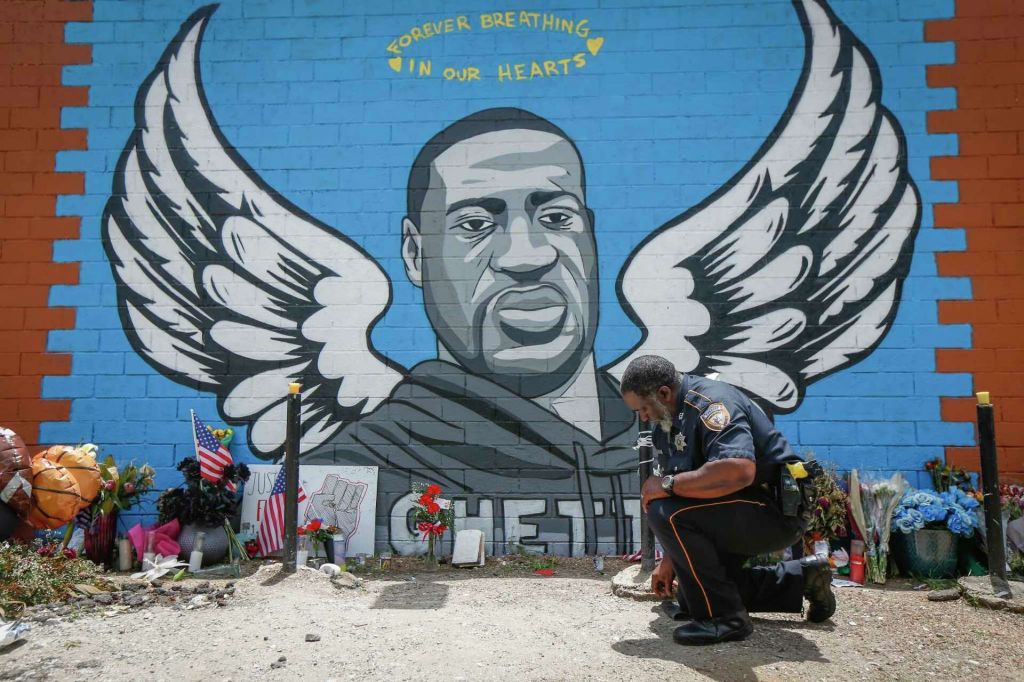
In my defense, I didn’t mean it the same way Paula White does. George Floyd can also be seen as a type of Christ—a man who died under tragic circumstances and became a powerful symbol of what many perceive as lingering racial injustice. Samson in the Old Testament was another flawed type of Christ: a strong but deeply imperfect man who ultimately brought the house down on his people’s enemies. The religious leaders of his day even declared it better that one man should die than the whole nation perish—the exact same justification used against Jesus.
Then there’s Jesus Barabbas, a man whose name literally means “son of the father.” The frenzied mob chose to free a violent revolutionary instead of Jesus of Nazareth. He serves as a dark type: a chaotic figure the crowd preferred over the true son of God and Prince of Peace.
When I first called Trump a type of Christ, it was out of sympathy and frustration with lawfare. I opposed the clear double standards—Joe Biden openly bragging about his quid pro quo, James Comey giving Hillary Clinton a free pass, while Trump faced relentless legal pursuit. My support was rooted in a belief in equal justice under the law, not personal adoration. I never saw him as a good man, let alone an example to follow. I had accepted him as a necessary monster to fight other monsters.
But I’m now regretting even that loose analogy. Trump’s character has troubled me from the beginning. His style of politics often mirrored the very things I criticized on the left. The “we’re electing a commander-in-chief, not a pastor” argument never fully sat right with me. (More so now that Jerry Falwell Jr., the Evangeli-con leader who had coined this way to rationalize around Trump’s shortcomings, has since been disgraced in a lurid sexual scandal). Being burned by a man I quietly endorsed has forced me to reevaluate my own judgment.
Character is not just one factor among many—character is everything. The danger of electing a monster to fight other monsters is that the beast will eventually turn on you. Perhaps it’s better to “waste” a vote on someone of stronger character than on a “lesser evil” who may overachieve?
Trump won his reelection largely because his opponents cried wolf too many times. Decades of calling anyone to the right of Mao a “fascist,” coupled with the very weak evidence for Russian collusion compared to credible questions about Biden family corruption, made it easy for many to dismiss all criticism of Trump as just another partisan witch hunt. The perception of unfair treatment caused many people to rally around him, ignoring his serious character flaws.
I call it the “George Floyd effect,” where symbolic value of an individual and grievances shared by a demographic group cause people in that group to overlook glaring character issues. Trump also cleverly positioned himself this way with the line, “They’re not coming after me. They’re coming after you—and I’m just standing in their way.”
Yet Trump has increasingly imagined himself as a Jesus-like figure. He once questioned why he would need to ask for forgiveness if he doesn’t make mistakes—which is a stark departure from Christian teaching that all continually fall short of God’s glory. And the recent meme he posted of himself with healing hands, dressed in robes as a Christ-like figure (which he since has insisted was meant to show him as a doctor), crosses into very dangerous territory. It’s blasphemous.
Anyhow, I’m old enough to remember Barack Obama being called the Antichrist or accused of thinking he was a god for far less. (See: pillars at DNC) The same voices who condemned Obama’s allegedly messianic imagery are now defending or downplaying Trump’s behavior.
I didn’t leave the MAGA coalition.
It left me.
To balance the record: Trump can also be seen as a type of Hitler in troubling ways. He is a populist with grandiose tendencies, quick to attack others while being extremely thin-skinned. He blames foreigners for America’s problems and has also sparred publicly with the Pope—much like Hitler clashed with the Vatican. Both men also survived assassination attempts in ways some called lucky or God’s hand of protection.
In the end, I regret using Christ-like language for any politician. The temptation to turn our flawed political leaders into sacred symbols—whether as redeemers or villains—ultimately does us more harm than good. Politics already pulls us toward idolatry. We should resist it by judging leaders on character first, not on how well they embody our grievances.

Why do we put fabric all over our bodies—why not be naked?
For protection.
We wear clothes for a layer of protection against the elements.
Clothing helps us keep our body heat in the cold air. It is a barrier against harmful solar radiation. This invention allows us fragile creatures to navigate harsh environments that would kill us otherwise.
We also wear clothes as a matter of public health. This covering is beneficial from a sanitation perspective and for keeping all of our disease spreading bodily fluids off of shared surfaces.

There is a significant social component or function as well. Having the ‘right’ clothes matters if you want to fit in. It could be a religious group you wish to belong to or just the popular kids at school—but you will be judged by the outfits you wear.
My son, for example, found out the pair of sneakers (bought with his money) weren’t cool because they weren’t some recognized name brand. Agree or not, I know there’s no point in fighting this pressure to conform. If a kid does not want to be ridiculed they will wear the currently acceptable style.
Even those counter-cultural types are just responding to this pressure by going in an opposite—yet as completely predictable—direction. From Hipsters who all looked the same trying to be different to the Goth kids with their own uniform that is stricter than the typical and mainline dress regime—all are obeying a rule.
Even in trying to look different we end up looking the same.
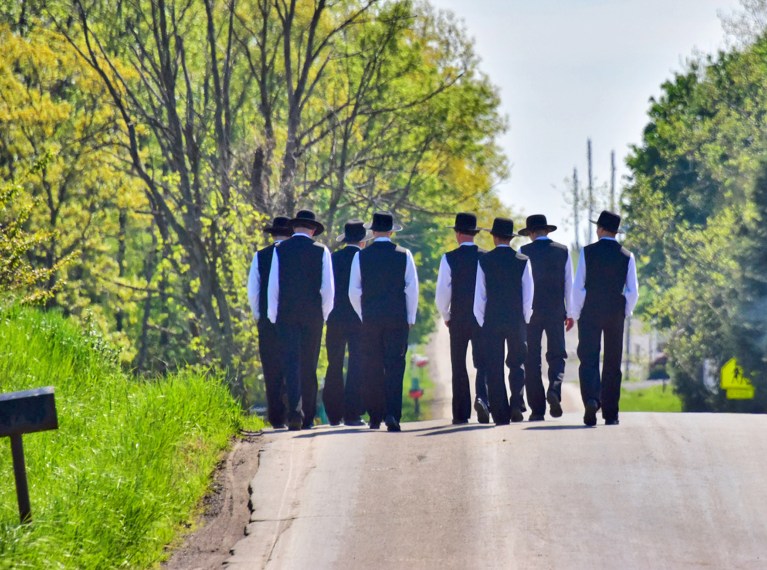
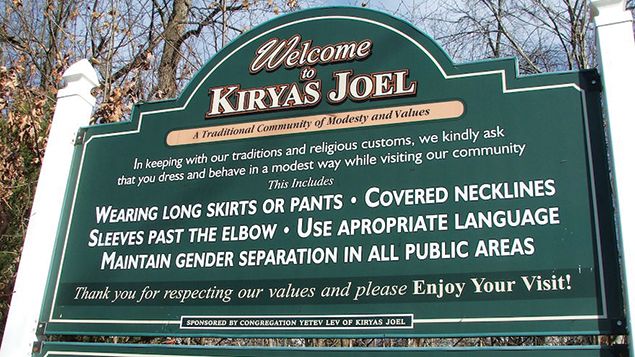
Dress is a part of group identity—a way to belong to a group. Amish will know other Amish in the same way gang members or police officers recognize each other. It is by wearing the correct colors, or following the correct patterns, that an individual gains the necessary recognition to gain the benefit and protection of a community. Sure, we may not always like it, we might see this as being superficial, but clothing sends signals that can either make us more vulnerable or more safe.
Conservatives have long valued modesty over inviting attention. This is something developed from tradition. But not tradition without any practical purpose or merit. My wife, from a place where the government is a bit weaker, told me never to display any signs of wealth as this would make me into a target. And I could certainly protest the recommendation as an infringement on my freedom—that I am American, with rights, and can therefore will do whatever I please! However, that belief won’t save me from a mugger in a back alley, will it?
Modesty is about protection. It is about keeping hungry eyes off of those assets we don’t plan on giving away. No, that does not mean our immodesty justifies assault, theft or rape. It also does not mean our modesty is a foolproof protection. Rather, it is sort of like N95 masks and Covid, this is only one part of a larger strategy that is designed to minimize a particular risk rather than fully eliminate it.
It is sometimes a matter of public decency and respect for others. If there’s a sign on the door of a business: “no shirt, no shoes, no service” Why make a scene?
We should understand—as conservative people—that this public space comes with a set of public expectations and should probably comply without causing drama.
There was a time—and not very long ago—for the reasons outlined above, a woman wouldn’t leave the house without a proper dress, blouse and bonnet. Both men and women covered up, to be prepared for an environment that was harsh and only the insane did otherwise. Clothing was part of being civilized and a value of modesty tied very intimately to Christian religion and the Biblical standard.
Wolves in Sheep’s Skin
Some clothing is dishonest.
A disguise.
In order to gain acceptance and trust (going back to group identity and belonging) some will wear a costume of something they do not represent to gain trust And the “wolves in sheep’s skin” have infiltrated every conservative institution in this nation and turned them into a propaganda tool of godless empire.
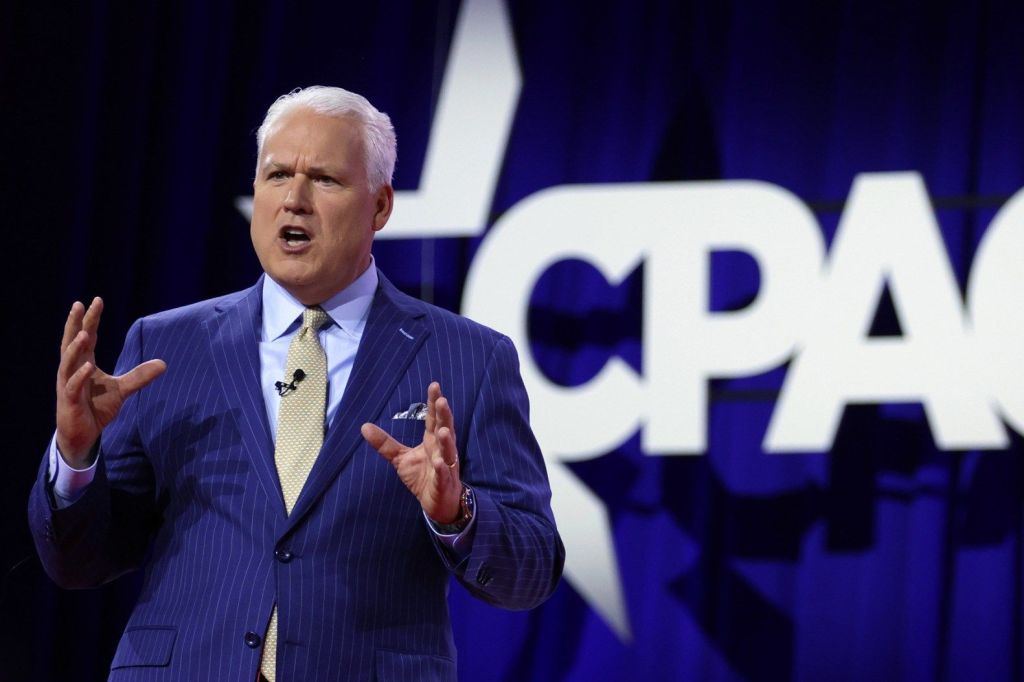
Take Matt Schlapp, for example, the present chairman of American Conservative Union—also the first ever paid chair of Conservative Political Action Committee (CPAC) where he received a modest $600,000 in annual compensation—and an additional $175,000 for his wife on top of that. All while he has faced multiple allegations of groping men when he’s out drinking. One of the accusers—who had publicly apologized for the “misunderstanding”—was also quietly paid off (by a insurance company that represents ACU) to the tune of $480,000! More recently he got a little too touchy-feely with men at a Virginia bar. This is your conservative leadership.
Beinart: “We know that if the U.S. and Israel had not attacked a country that poses no serious threat to them—Israel has hundreds of nuclear weapons, America has thousands—that those girls would be alive…”
Schlapp: “They’d be alive in a burqa … this is … a barbaric society…”
Morgan: “hang on.”
[The conversation continues…]
Schlapp: “It’s hypocritical to say that these attacks harmed women and children when those women and children, the young girls that you reference, would be … live a life in a barbaric, unequal society behind a burqa, with no ability to make career choices…”
Uygur: “So just kill them?”
Schlapp: “No, that’s not what I’m saying either…”
Uygur: “That is what you said…”
While Schlapp apologists will claim that their accused man-groping ‘conservative’ was not actually saying what he seemed to be saying—it is abundantly clear that this was trying very hard to minimize a horrific slaughter.
Where do you even start?
Schlapp is directing his appeal to people who hate feminism and yet desperately want to get one over on their evil ‘liberal’ women by their disingenuously siding against ‘the patriarchy’ to justify murder? Either that or he’s a closeted leftist who hates women and religion so much that ridding the world of a school full of youngsters indoctrinated to believe that his unconsenting grabs of male parts is a sin feels right to him?
I won’t pretend to know what goes on in the twisted moral rot of this man’s mind, but as one who is friends with traditional women (Christian and Muslims) who do wear a veil his take is appalling. It would be equivalent to a feminist saying—“Well, at least those Amish girls killed at Nickel Mines will be spared a life of oppression speaking PA Dutch, getting married and working around the house!” What total horse shit. Women are as happy in traditional cultures are they are in any other—maybe even happier—the “happiness paradox” refers to the increase in female financial independence which has corresponded directly with decrease in happiness.
Sure, Schlapp does not come right out and say they’re better off dead. But what is he saying? What is he implying?
There this insane level of arrogance, which is reflected in Schlapp’s statement, of these people just assume that people who do not look exactly like them—share their cultural values, religious traditions or political perspectives—are better off dead. It is just plain bigoted nonsense.
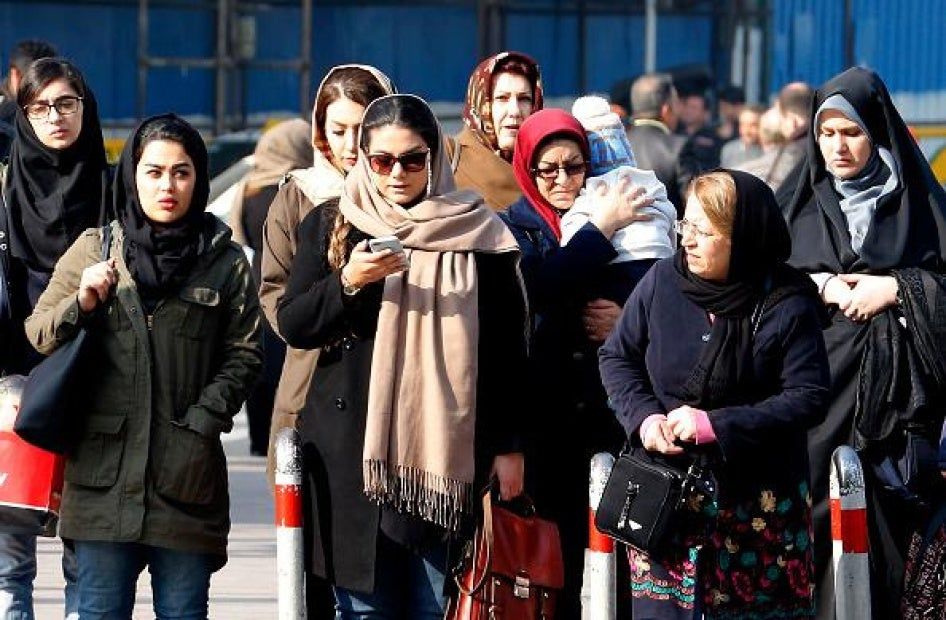
The top picture is of Iranian women in a hijab. The bottom is Afghan women in burkas.
Furthermore, showing his ignorance, Iranian women don’t wear the burqa. They wear a hijab. It’s a detail that likely doesn’t matter to his MAGA target audience. And yet this is a huge difference. The burqa covers an entire face, it is more common with Sunnis (Saudi Arabia), and not required by Iranian law. The hijab, by contrast, doesn’t cover a face, it is a hair covering that is very similar to what Christian women wore for centuries before the society liberalized. Sure, maybe it shouldn’t be mandated, but it’s as Biblical as the Ten Commandments:
Every man who prays or prophesies with his head covered dishonors his head. But every woman who prays or prophesies with her head uncovered dishonors her head—it is the same as having her head shaved. For if a woman does not cover her head, she might as well have her hair cut off; but if it is a disgrace for a woman to have her hair cut off or her head shaved, then she should cover her head.
(1 Corinthians 11:4-6 NIV)
Incidentally, it is this passage above which makes it so strange that so many ‘Christian’ (Zionist) Presidents and public officials will wear a hat while praying and kissing a wall—deliberately dishonoring Christ. But more to the point, is this a “barbaric” practice? Is religious headgear, a Nun’s habit, some kind of terrible evil which totally excuses blowing up an elementary school?
Or is there something else going on here?
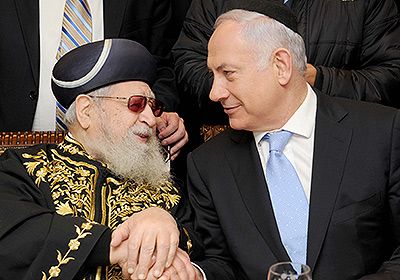
One of these is an Orthodox Christian the other is Mike Huckabee.
This is as much moral inversion as anything from the ‘woke’ left. We kill to save?
Furthermore, for all this talk about career choice, Iran graduates a significantly higher percentage of females in STEM fields than Israel or the US. So, in response to that part of Schlapp’s absurd statement: What are the career choices Iranian women are currently unable to make? Is he talking about OnlyFans?
Which woman is liberated? The one using her brains or the one displaying her body?
If we’re such great defenders of feminity, so much so that we can dictate to sovereign states what standards of decency they can or cannot have, why haven’t there been any Epstein client arrests?
Phony Fat Cracker Barrel Conservatives
The Schlapp types, neo-con Zionists, aren’t conservative at all. Sure, they always wrap themselves in Christian identity, but they’re not peacemakers, they feed prejudices and promote endless war that has cost trillions of dollars as well as millions of lives around the world. They will fein concern for Iranian rights in one breath then promote bombing the country into oblivion in the next.
They exploit jingoistic sentiment in the beer gut football crowd who (in their lack of Christian character) confuse toughness and masculinity with excessive violence. Every problem is solved with a gun or a bomb for them. This phony ‘conservativism’ of these war-mongering empire building neo-cons is antithetical to Christianity—it is anti-Christ and one part of their Epstein-class campaign to dismantle American values.

The Republican elites are as totally opposed to traditional American values as the Democrats—they just need our conservative votes.

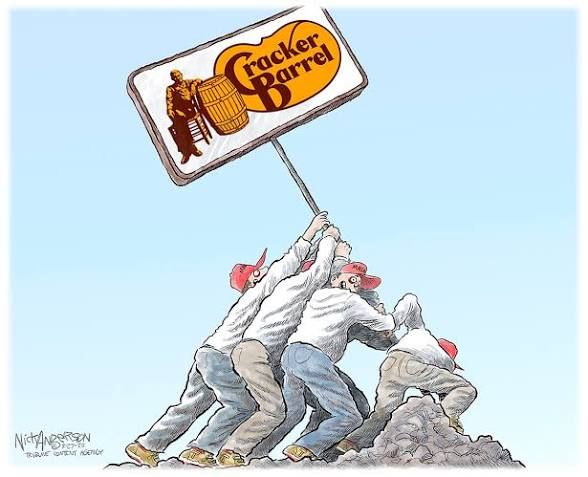
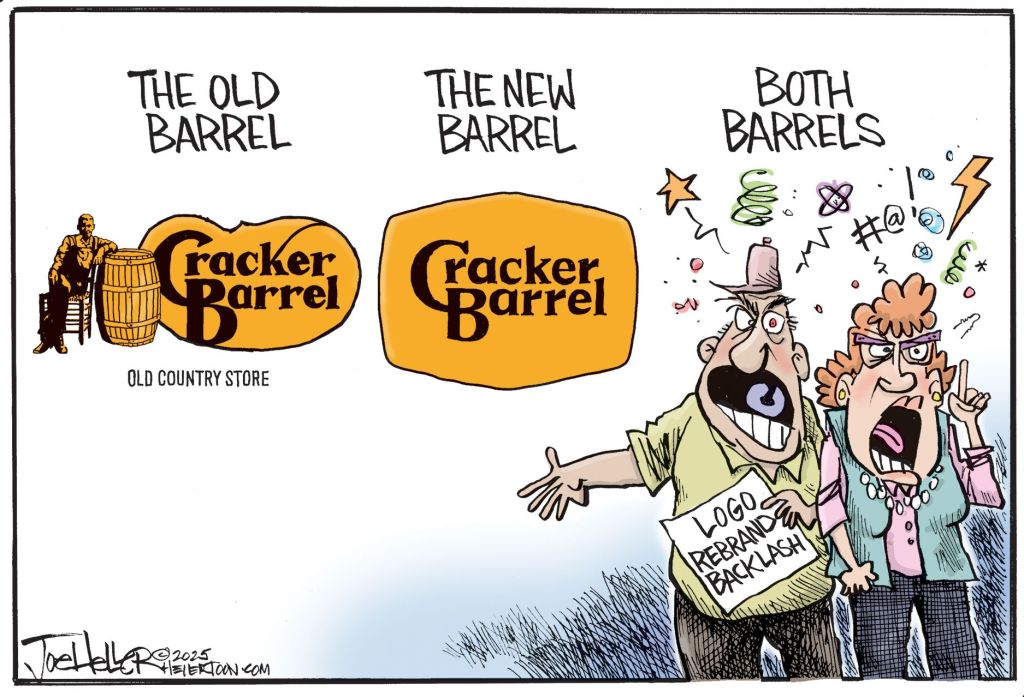
The Cracker Barrel conservatives—people who get riled up over a change in corporate kitsch—enable these cultural vandals. The religious right talks incessantly about every tempest in a teapot controversy and then go mute when the Trump administration has worked overtime to protect billionaire pedophiles. These are the type that Jesus had called out for their straining on gnats and swallowing camels. They have no principles other than vote for the ‘red’ team on election day because we can’t let ‘blue’ team ‘liberals’ win—they imagine themselves as defenders of Western civilization yet will put their weight behind an oppressive regime if it is dressed right according to their own partisan fashion.

What’s important? The 4th and 5th Amendments or saving old-timey corporate kitsch?
They side against our own dissidents, make fun of Renee Good who was killed by ICE agents shouting conflicting orders, say Alex Pretti deserved getting shot in the back for being a guy who intervened when a woman was being assaulted, and then suddenly do a complete reversal to express moral outrage when Saleh Mohammadi, 19, was executed after a trial for murder of two police officers. The same people who can justify the deaths of 175 innocent children as “part of war,” are siding with an accused and convicted cop killer? What a mindless propaganda-blinded and flip-flopping lot—we’re living in a scene from 1984.
The same people who justify the killing of Good and Pretti defend an Iranian wrestler convicted of the murder of two police officers.
Trump wrapping himself in a flag (literally) is all it took. All he needs to do is hold up a Bible, hand out a few signed copies of the Bible for the MAGA faithful, and suddenly he’s the next thing to Jesus in the Evangeli-con pantheon. His aggression becomes integrity, his lewdness honesty, and arrogance a virtue. And he is aware, see how Trump described the cult’s devotion during the run up to his first term: “I could stand in the middle of Fifth Avenue and shoot somebody, and I wouldn’t lose any voters, OK?”
Trump is a manifestation of cultural rot, we celebrate immodesty and excess. The book of Philippians describes some who profess faith as the “enemies of the cross of Christ” (3:18) and proceeds to warn, “Their destiny is destruction, their god is their stomach, and their glory is in their shame” and “their mind is set on earthly things.” And this is our American consumerism. We see ourselves as the heroes, as representing freedom and democracy, when we’re really Egypt and Sodom (oppressor and corruption) cloaked in a pretense of righteousness.
We could use a bit of modesty. A moment of introspection and self-awareness.
Reclaiming American Christian Values
The U.S. has never been the “shining city on the hill” envisioned in John Winthrop’s 1630 sermon and highlighted by Ronald Reagan.
The aspiration.
Moral excellence is certainly a great goal even if we fall short. However, it is an aim which requires repentance. There are many things for this American nation should want to turn from. The ethnic cleansing of native populations, the institution of slavery, many wars of aggression and expansion—there is no purity here.
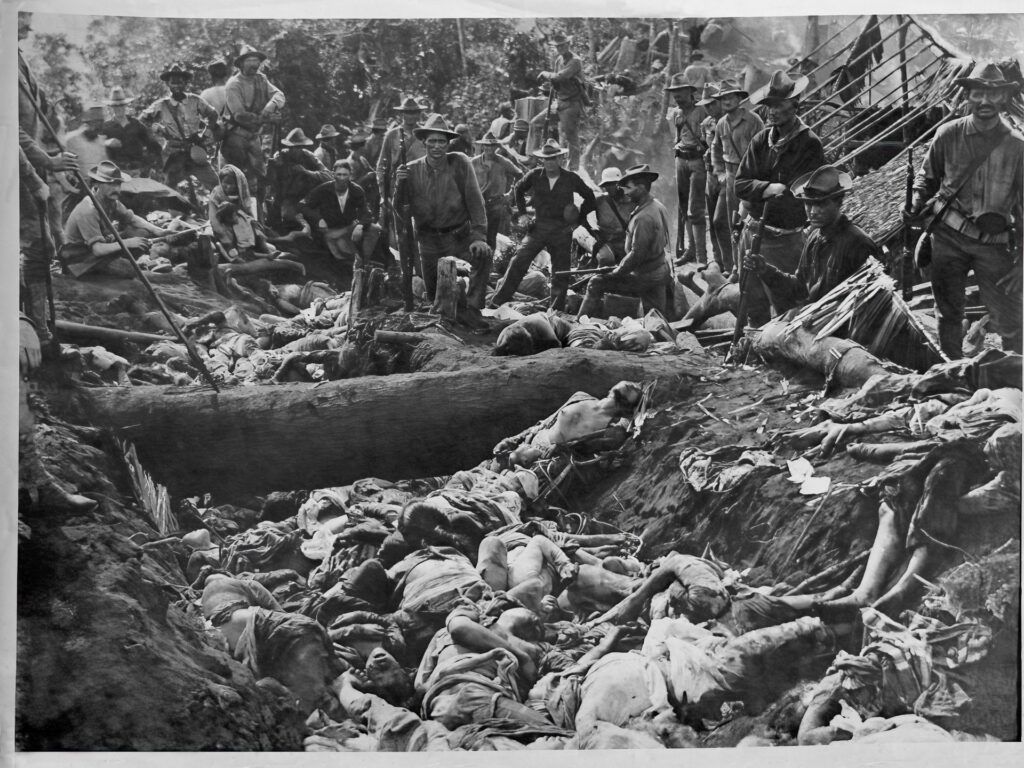
The U.S. has, if anything been exceptionally violent—from massacres in North America to the brutal occupation of the Philippines to the millions killed across the world as a result of aggressive policies—this country has never ceased in wars for control over resources. This conquest, sold to the public as some kind of moral mission or “Manifest Destiny,” was to conceal greed and a desire for things not ours to have.
There is no special American exception to the Christian requirement that all repent of their sins. That’s a starting point to the U.S. being great. To be truly great the goal is not to turn back the past mistakes, but turning away from them.
We should consider both bad and good examples from the past as a basis for improvement in the present.
This takes humility, not hubris.
The sin at the root of all moral pretense and posturing is pride—the very first sin, the one that changed Lucifer from God’s second in command into the father of lies. Pride tells us our culture, our politics, and our ways are just superior. Pride is what lets us dress up in sheep’s clothing of “conservative values” while living like wolves. Pride is what lets Matt Schlapp (or any of the other neo-con grifters) lecture on liberation while his own hands grope men in the dark and his mouth justifies the slaughter of schoolgirls. Pride is what lets the Cracker Barrel crowd wave a Bible one minute—rant against abortion, feminism, wokeism—only to cheer endless war and merciless bombings in the next, ignoring the plank in their own eye.
Christian conservatism worthy of the name begins with the opposite of pride: humility. It begins with the recognition that we are not owed respect—we must show it first. Just as modesty in clothing is not about shame but about protecting what is sacred, a respect of what is God’s, so too is respect in every other sphere. You do not demand entrance to another man’s house, another nation’s culture, or another woman’s dignity by force. Traditional modest dress of the past was never “oppression.” It was armor. It was just a public declaration: “I belong to something higher than my appetites. I will respect and you will respect me.”
The same principle applies to foreign policy, to political leadership, to every claim of “American exceptionalism.” An authentic conservatism does not bomb a school to “free” the girls inside it. It does not wrap imperial greed in the language of feminism or democracy. It does not make demands with threats of violence. Rather it says, with the Apostle Paul, “Let your gentleness be evident to all” (Phil 4:5) and “If it is possible, as far as it depends on you, live at peace with everyone” (Rom 12:18).
Principled Christian conservatism is not a costume. It is not red hats, Cracker Barrel nostalgia, or trillion-dollar defense contracts dressed up as patriotism. It is living a life of repentance. It is about mutual respect. It is the refusal to celebrate pride in any form—whether of immodesty, the aggressive “grab ’em by the pussy” arrogance of entitled men or just indifference about how our actions impact others. It is discipline of protecting what should be protected and also refusing to sacrifice our values for expediency.
If we want to belong to the Body of Christ then we must wear the right uniform code: humility, not hubris; respect, not ridicule; modesty, not exceptionalism. We must stop pretending America is already righteous or beyond reproach and start acting humbly like the sinners we are. Only then will we ever regain the respect we have lost. Only then will our clothing—literal and spiritual—actually protect instead of provoke.
More imperial “forever war” for the benefit of the Epstein-class.
Let the attire of our attitude preach truth: we are fragile, we are fallen, and the only safety worth having comes from walking in fear of the Lord, not by military might. That is the conservatism worth conserving—the repentance that can make us an example in the world and is the actual foundational basis of Christian civilization.
Schlapp says that Iran is a “barbaric culture” for dress standards different from our own and that bombing them is about defense of civilization. But a principled conservative is about consistent rules, true impartiality and no favoritism. It doesn’t decide if cop killers (or killer cops) are heroes or an attack on us all according to political needs. A civilized person seeks coherence and harmony, not unpredictability, brutality and dominance. It prefers local control and respects sovereign space of others. It gains a position through competency, not by trickery and deception, nor by threats and coercion.
Christian civilization rejects use of violence and notions of blood guilt. All must clothe themselves in the righteousness of Jesus—a clothing that we put on through Baptism, not our birth or bloodline:
For ye are all the children of God by faith in Christ Jesus. For as many of you as have been baptized into Christ have put on Christ. There is neither Jew nor Greek, there is neither bond nor free, there is neither male nor female: for ye are all one in Christ Jesus. And if ye be Christ’s, then are ye Abraham’s seed, and heirs according to the promise.
(Galatians 3:26-29 KJV)
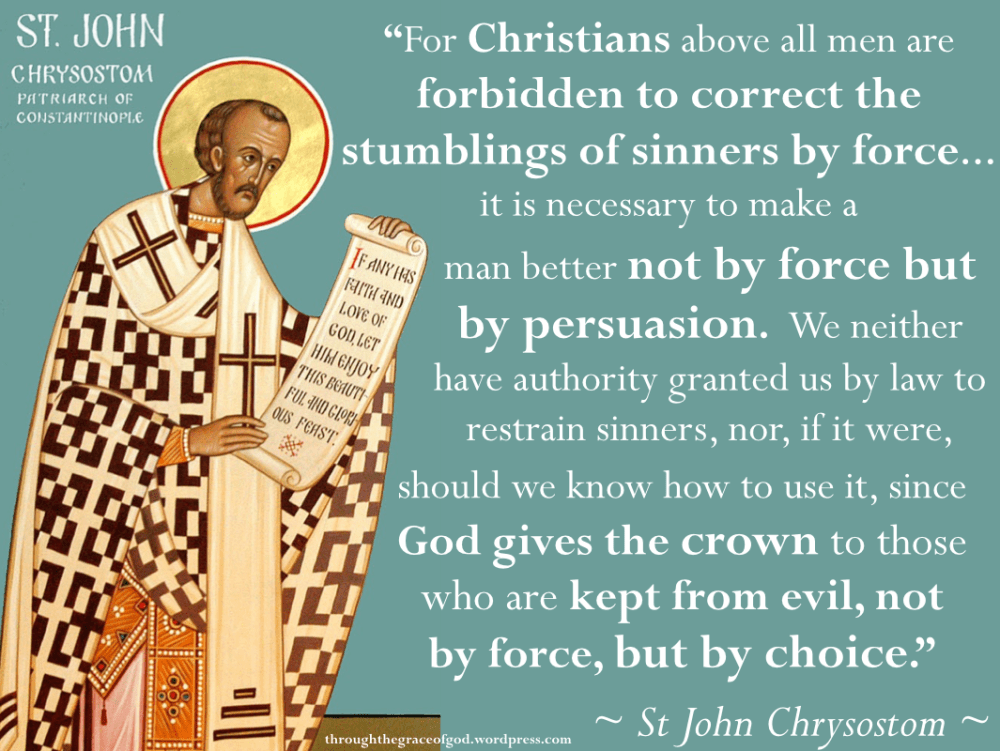
We replace lying with truth, maliciousness with kindness, fury with forgiveness, theft with generosity and are told “to put on the new self” and with this to be “created to be like God in true righteousness and holiness” (Eph 4:22–32, Col 3:5–14) John Chrysostom (c. AD 347—407) described this putting on of Christ as “never to be forsaken of Him, and His always being seen in us through our holiness, through our gentleness”
Civilization may need to be qualified. We want Christian civilization, not an Old Testament violence reenactment.
We must reject the perversion of those who promote moral inversion where killing is an act of liberation and a society where more women graduate with STEM degrees called “barbaric” by the Epstein-class.
Schlapp’s depraved reasoning is a symptom of arrogance, not righteousness. If Jesus is our Lord, then we should be clothed in humility and a gentle example rather than a force of fury or violence.
The militarism of neo-cons is not the armor of God—it is a false protection—we need the attitude of repentance.
************************
Postscript: The point of this essay isn’t to defend the Islamic Republic of Iran. I have no doubts about it being a very brutal and intolerant regime. I also don’t write this as a strong advocate of modesty standards. But only to promote introspection about what we excuse and condemn. In one breath we are outraged by an execution in Iran, in the next we ignore the bombing of children in Gaza, Lebanon, and Iran. The same people who decry liberalism in the West celebrate the leftists in the East. This isn’t only about other people. This is also about me. After warning about Trump in 2014, I voted for the narcissist three times. He promised he would drain the swamp, to end the forever wars, and release the Epstein files. It was when he tried to gaslight about continued interest in Epstein that I realized I had been had. What I will say in my defense is that it wouldn’t be much improvement to vote for team blue. Kamala Harris couldn’t think of anything she would have done differently than Joe Biden. She shushed those trying to bring attention to the Gaza genocide and the Democrat party establishment has been as warlike as the Republicans despite their constituents. I must concede that we will not vote ourselves out of this. Society must change. True devotion to the base Christian principles—where Jesus is way more than a bobblehead on the dashboard of empire. If we want to change the world we need to lead by example rather than by force. The people of the world easily see through our facade, our oblivious talk of freedom and democracy, they see Egypt and Sodom.
Recently, in remarks defending his aggression, Israeli Prime Minister Benjamin Netanyahu—quoted historian Will Durant to declare “history proves that, unfortunately and unhappily, Jesus Christ has no advantage over Genghis Khan” because if you are strong enough, ruthless enough, powerful enough, evil will overcome good and aggression will overcome moderation—laid bare a stark moral inversion.
In this view, the teachings of Jesus represent a path of weakness, losing, while the conqueror’s ruthlessness ensures survival. The modern state of Israel, in its actions and rhetoric, often seems to embody this reversal of means: where the New Testament calls for love, the response is enmity; where it urges mercy, the strategy is application of overwhelming force; where Jesus promises a blessing to the meek, Israeli’s power is pursued through dominance.
If the Gospel says to love your neighbor, policies build barriers and displace. If Jesus commands turning the other cheek, retaliation escalates. If it blesses peacemakers, the calculus becomes one of preemptive attacks over moderation. And the Sermon on the Mount teaching and example of Jesus is treated not as a blueprint for life but as a cautionary tale for losers—nice ideals unfit for a world where barbarians crash the gates unless you become the stronger barbarian first.
Many professing Christians appear to accept this pragmatic dismissal of their Lord’s teachings in the “real world,” but I believe those teachings—if sincerely and universally applied by the faithful—would bring profound benefit even to ordinary people caught in wars, the soldiers and civilians alike.
But how would this look in practice?
I decided to arrange the teaching of the Gospel into a series of logical gates on a pathway of escalation-reversal which will lead to a new systemic reality:
A. Repentance: The Changing of Our Own Individual Perspective
1) The Golden Rule (Empathy): We must see things from our ‘enemies’ perspective. Why are they actually doing what they’re doing? This is a step that requires looking past propaganda and prejudice to find the grievance, then stop to think how we would respond if we were facing similar circumstances and then adjust accordingly. If we don’t want our own city bombed—then the logic of bombing theirs will immediately collapse.
2) Loving Your Enemies (Humanization): If we start to see a neighbor in our opponent rather than some negative label (terrorist, liberal, rats, etc) we’ll be less inclined to be in favor of just incinerating them and their families. This makes us more immune to the wartime propaganda that caricatures and demonizes opponents as being something less than us. Love is to see them as being human rather than aliens. The ‘enemy’ is someone’s brother, uncle, husband, father or friend—can you at least love those harmed by violence against them?
B. Restraint: Being Deliberate Rather Than Reactionary
3) Turn the Other Cheek (Non-retaliation): This is the one that goes most against us and probably where I would get the most resistance from Evangeli-cons. At the very least it is prudent to count the cost of the response in kind (Luke 14:28-33) and ask if we can afford to go down the path of tit-for-tat violence. A tactical pause can be beneficial if only to avoid a trap. Many believe that the path to dominance is by meeting every provocation with an aggressive response. But this may be exactly what the other side anticipated; they expect you to flail wildly, overextend, and give them the opportunity to expose your true character to others. There is special power in non-response—employment of a Machiavellian strategy of not letting others set your tempo—to stay in control and dominate on another level.
4) Putting Away the Sword (Disarmament): Saber-rattling is a go-to intimidation tactic, the idea of putting on displays of military prowess to deter an opponent. However it does not usually work as a long-term plan. If you wave a gun in someone’s face you’ll be more likely to start an arms race. People don’t like to be humiliated. Drawing a weapon will create a feedback loop that may truly only increase the threat. The U.S. war machine dropped nukes on Hiroshima and Nagasaki in the thinking this would back down the Soviets—it only led Stalin to prioritize the building of their own nuclear deterrence.
C. Try a Little Diplomatic Engagement
5. Overcome Evil with Good (Reframe the Conversation): Dropping bombs is fun. It can be very satisfying to see those who we have been led to believe’deserve it’ squirm under pressure. But this is a path of mutual destruction. It makes a whole lot more sense to turn the competitor into a partner with a peace offering: “Hey, so we are sorry we overthrew your democratic government to help BP steal your oil—here is the money we owed you from that defense contract which fell through!” It is difficult to harbor ill will towards someone who is actively doing nice things for you. War is expensive.
6. The Peacemaker (Mediator): It is much easier to stay on the sidelines or to take a side. Everyone says they want peace, to avoid wars, and yet few are willing to build the bridge. As the saying goes “if there’s a will there’s a way” and making peace is a matter of will. It may take a little extra effort and risk, yet peace pays dividends. War is a very costly affair both in terms of men and material—finding a way to unravel a conflict before it blows up is a win-win for all but those war profiteers
D. Mission Accomplished: Building a New Reality
7. Ministry of Reconciliation (Restoration): The ultimate goal of all the above is not only to get to a “ceasefire” or ending of the current war, but to a “Shalom” which is to say a bonding into a whole of the various factions. We want to end all war by marrying the two-halves of the conflict to make something better. The Japanese and Americans are far better off exchanging money for minivans than trading munitions. So maybe if we spent as much money pursuing these favorable outcomes, as we did to support the bloated Department of War (or Defense) we would finally reach those better ends we claim to seek despite our never fully investing?
The Tremendous Benefit of Learning From Past Mistakes.
When I was younger and dumber I believed a lot of the propaganda put in front of me. Iraq was a threat. Despite having nothing to do with 9/11—an attack by citizens of our own allies—Saddam Hussain was spun into the real threat. Despite a promise back then of “tremendous benefits” from the same man mocking Jesus today—the results were 4,492 U.S. military deaths, with over 32,000 wounded, and an overall cost of approximately three trillion dollars.
For sake of reference, gas in 2002 cost $1.36 per gallon—we now pay $3.91 and will only see that continue to rise as the onslaught continues. Is this truly the “winning, winning, winning” that we’ve heard Netanyahu advertise?
If we had taken out the path of endless war back then, I guarantee you that it would have had enormous positive reverberations in the region… but instead we did the opposite, and look what happened.
We believed removing Saddam would topple tyrants and spark democracy like dominoes—yet it unleashed chaos, empowered Iran, birthed ISIS, cost trillions, and left generations scarred. I’ve seen the soldiers who returned maimed. The ‘positive reverberations’ turned into shockwaves of suffering that echoed for decades.
So today, let’s finally learn the lesson from our history: aggression doesn’t guarantee victory; it often only guarantees the next war. The real tremendous benefit comes not from more bombs and regime changes, but from our repentance, restraint, and reconciliation—from applying the very teachings we too often set aside.
If we invert the escalation instead of the Gospel, perhaps the region—and the world—will finally see some true positive reverberations: peace that lasts, neighbors who humanize each other, and a Shalom worth guaranteeing.
The costs of war are enormous. There are no winners in war. Even if your side comes out ‘victorious’ it is a drain of a nation’s blood and treasure. That’s the real picture, the real result, and we will be the ones bearing the increased burden. The U.S. debt has gone from being 3.55 trillion dollars in 2002 to $39.05 trillion and not slowing down. A big chunk of that is the bill for endless war. So maybe for Netanyahu there’s “enormous positive reverberations” because it didn’t cost him a dime, but the reality is that we have lost reputation—the little that remains of Christian witness and confidence that we once had to manage world affairs. The Petrodollar and, with it, exorbitant privilege—which gave us the economic advantages that made us a global superpower. And maybe this loss of prestige is by design? Israel has benefitted at our great expense.
Many Americans want death to Iranian people. The phrase used by protestors of US imperialism was specifically aimed at the regime that endlessly harassed their people, at policies and not people. They blamed the regime of billionaires and politicians who rule over us.
The biggest lie of this century is that abandoning the way of Jesus is our most realistic option. The truth is that we’re sacrificing our future with the false idea that our security depends on us killing all who oppose the same tyranny we experience every taxseason when we pay for all the bombs that rain on Gaza. Our actions are going to have immeasurable consequences.
Dismiss this if you like. Side with the antithesis of Christ and say that it is totally unrealistic. But why pray, hypocritically, “Thy will on Earth as it is in heaven” while then simultaneously plotting to wipe out those we’re expressly told to love? I’m not saying this is easy, and yet this is simply part and parcel of a religion that teaches you will be forgiven as you forgive and judged as you judge. I’m convinced if we work our way down this list—taking care of first things first—we could have what seems impossible.
No man can serve two masters: for either he will hate the one, and love the other; or else he will hold to the one, and despise the other. Ye cannot serve God and mammon.
(Matthew 6:24 KJV)
This teaching popped into my mind a few weeks ago and while reflecting on where our morality has broken down in the United States. Mammon is an interesting Biblical word and refers to more than just money as currency. Jesus is not talking about having material wealth here, rather he’s addressing about misplaced trust and devotion put in it. And “serve” seems like a key operational word here. In Greek it is “douleuó” (δουλεύω) and the term refers to slavery or bondage.
Jesus was confronted on this teaching by the Pharisees—who we’re told sneered at him. But we are also told they were the same people who would shortchange their own parents by abusing the practice of ‘Corban’—by claiming money was set aside for God (Matt. 15:1-9, Mark 7:1-13)—when it was all about their own gain. When you’re addicted to material gain, you’d likely sell off your own mother for another hit of the money drug and can’t be a good person. A slave to the ‘almighty dollar’ will basically do any evil to obtain more of it.
For we brought nothing into the world, and we can take nothing out of it. But if we have food and clothing, we will be content with that. Those who want to get rich fall into temptation and a trap and into many foolish and harmful desires that plunge people into ruin and destruction. For the love of money is a root of all kinds of evil. Some people, eager for money, have wandered from the faith and pierced themselves with many griefs.
(1 Timothy 6:7-10 NIV)
Pray for contentment, not cash. You can have enough to eat and live without a big bank account. We may enjoy—or imagine—a feeling of security from having more, but it is false security and pursuit of it leads to moral compromise. As Mark 8:36 asks: “What good is it for someone to gain the whole world, yet forfeit their soul?”
The American Evangelical landscape does not handle this very well. The ‘health and wealth” or prosperity gospel might not be openly preached in every church, but there’s often the underlying assumption that those who have money are blessed. I mean, you don’t want to ever offend those who fill the offering plate, do you?
This errant belief that material success equates to divine favor has seeped deeply into political alliances, particularly among Evangelicals who have thrown their support behind leaders promising them economic prosperity above all else. Donald Trump, with his gilded persona and “art of the deal” ethos, became a symbol of this worldview—tremendously blessed by wealth, endorsed by faith leaders, and appearing to be toualluntouchable.
Two of a kind…
Yet, as his second term unfolds, we’re now seeing how devotion to money over all else manifests in government—prioritizing billionaire gains over accountability and human suffering. It isn’t the paradise promised.
Life Under Bondi-age
One of the big reasons Trump had seemed like a better choice than a continuation of a Biden administration, under Harris, was his ‘green’ policies. He appeared to be a “make money, not war” candidate, given his history of draft dodging and no new war first term. Maybe it was just weariness of the conflicts in Gaza and Ukraine that made him a hope to the “it’s the economy, stupid” crowd. He also promised to release the Epstein files—which would mean some justice, right?
Attorney General Pam Bondi’s testimony to Congress is a revelation of a mentality that is completely detached. Who knows who coached her—or maybe it was completely her own idea? But the answers she gave only raised more eyebrows.
For example, when asked:
How many of Epstein’s co-conspirators have you indicted? How many perpetrators are you even investigating?
She replied:
Because Donald Trump, the Dow, the Dow right now is over — the Dow is over $50,000. I don’t know why you’re laughing. You’re a great stock trader, as I hear, Raskin. The Dow is over 50000 right now, the S&P at almost 7,000, and the Nasdaq smashing records. Americans’ 401(k)s and retirement savings are booming. That’s what we should be talking about. We should be talking about making Americans safe. We should be talking about — what does the Dow have to do with anything? That’s what they just asked. Are you kidding?
Is she kidding?
That’s astonishingly callous.
With victims in the crowd, she really thought it would play well to deflect with a pivot to a stock market highs?
Now, sure, this sort of hearing is a very partisan and high-pressure event. And a great many of those lawmakers are guilty of a cover-up as the Trump administration. Lest we forget it, around 80% to 90% of Epstein’s political donations went to Democrats. But now responsibility for the continued lack of transparency about this lies squarely on the Trump administration.
Bondi’s Justice Department has violated the law, The Epstein Files Transparency Act—a bill demanding the unredacted release of the files pushed through by representatives Thomas Massie (R) and Ro Khanna (D), by continued use of redactions that extends a cover-up that has gone on for decades. And both parties are neck-deep in this scandal, which is why nothing was done about it last administration despite Trump’s name being in the files tens of thousands of times—and probably many more mentions still hidden under all those black lines.
Remember when JD Vance sounded like Thomas Massie?
The administration that ran on a promise to tell the truth about Epstein has become one where Trump gaslights:
Are you still talking about Jeffrey Epstein? This guy’s been talked about for years, are people still talking about this guy? This creep? That is unbelievable. I can’t believe you’re asking a question on Epstein at a time like this, when we’re having some of the greatest success, and also tragedy with what happened in Texas. It just seems like a desecration.
I mean, why would we still be talking about a guy who was apparently sex trafficking a bunch of underage girls to a very long list of elites who have yet to be prosecuted, right?
The truth is a ‘desecration’ of Texas flooding response somehow?
Wherever the case, Bondi isn’t a fraction as skilled as her boss at this game. If you are going to pivot off a question about horrible sexual crimes and ritual abuse not leading to dozens of arrests, then at least deflect away to matters of an equal moral weight. As in this “We have arrested X amount of pedophiles, more than any administration since Genghis Khan—we’re making America safe again!” That would sound much less tone deaf than turning to the economy as if this nullifies questions about Epstein.
What does Bondi’s pivot scream?
It shouts that money can take her attention off of crime—that she can be bribed. More importantly, it suggests she thinks we will be distracted by money and forget about a total lack of prosecutions.
In the end, Bondi’s deflection and the Trump administration’s broader pattern reveals the stark truth: when mammon reigns supreme, justice for the vulnerable becomes optional, and the soul of a nation is quietly sold off in exchange for an economy that mostly benefits billionaires. True contentment—and true greatness or lasting gain—will never come from chasing a dollar or at expense of seeking justice for all people.
The crazy part is that most who voted for Trump thinking it would help their portfolio and would keep us out of war—will find out that those who bought him have no problem with sending your sons to die in Iran.
Everything we hear is an opinion, not a fact. Everything we see is a perspective, not the truth.
Marcus Aurelius
I will attempt to bring multiple threads together in this blog and the quote above is a good starting point. If there is objective reality it’s not going to be something possessed by one human. We do not know all circumstances nor can we vet and independently verify every fact we receive. Or at least not without becoming totally hamstrung by the details. We put our trust in parties, traditions, systems, credentials and the logic which makes sense to us.
The deeper we dive into our physical reality the murkier it all gets. The world ‘above’ that we encounter feels concrete. But there is not a whole lot of substance to be found as we get beneath the surface. The rules that we discovered—of time and space—end up dissolving into a sea of probabilities and paradoxes at a quantum level that we don’t have an answer to. And this is the ‘concrete’ observable reality. We all see our own unique perspective, a slice, and build our model of the world from it.
But it is even murkier when we get to topics of social science. Morality and ethics, built often from what we believe is fact or truth, is more simply opinion and perspective than it can be hammered out in words everyone is able to agree on. Even for those who are of the same foundational religious assumptions—despite even having the same source texts—do not agree on matters of interpretation or application. So who is right? And who is wrong? How do we decide?
1) Patrick: We Don’t Need God To Be Moral
My cousin, Patrick, a taller, better looking and more educated version of myself, an independent thinker, and has departed from his missionary upbringing—gives this great little presentation: “Where Do You Get Your Morality?“
His foundation for a moral value system is concepts of truth, freedom and love which he describes in the video. I find it to be compelling and compatible with my own basic views. Our cooperation is as natural as competition, it is what makes us human, and a conscience gives potential for better returns.
However, while I agree with his ideal, there is also reason why deception, tyranny and indifference are as common in the world—they are natural—and this is because it can give one person or tribe an advantage. Lies, scams, and political propaganda all exploit trust and can be a shortcut for gaining higher status or more access.
No, cheating doesn’t serve everyone. But the lion has no reason to regret taking down a slow gazelle. By removing the weak, sick, or injured, it inadvertently culls the less-fit genes from the herd, strengthening the prey population over time and even preventing overgrazing of the savannah. It’s just a raw service to ecosystem balance, much like a short seller who exposes those overvalued stocks, forcing the market corrections and greater efficiency—acts of pure self-interest yielding a broader good.
Not a friendly neighbor.
Herd cooperation or predator opportunism are different strategies, both 100% natural and amoral in their own context. I’m neither psychopath nor a cannibal, but I do suspect those who are those things would as readily rationalize their own drives and proclivities. Nature doesn’t come with a rulebook—only consequences.
I’m certainly not a fan of the “might makes right” way of thinking and that is because my morality and ethics originate from the perspective being disadvantaged. But I also understand why those who never struggled and who have the power to impose their own will without fear of facing any consequences often develop a different moral framework.
We need to be invested in the same moral and civilizational project. Or else logic, that works for only some who have the strength or propaganda tools, will rule by default. I don’t disagree with Patrick, but his core message caters to a high IQ and high empathy crowd—which does leave me wondering how we can bring everyone else on board?
2) Kirk: A Way To Focus Our Moral Efforts
Charlie Kirk wasn’t a significant figure to me before his death. It may be a generational thing or just a general lack of interest in the whole conservative influencer crowd. I feel dumber any time I listen to Steven Crowder and assumed Kirk was just another one of the partisan bomb throwers. But, from my exposure to his content since, I have gained some appreciation.
Bring back the Ten Commandments, because it worked so well the first time?
Arguing for the Ten Commandments has never been a priority for me. It’s a list with a context and not standalone. Nevertheless it is a starting point for a moral discussion and also one that it seems Charlie Kirk would go to frequently in his campus debates. The two most difficult of these laws to explain to a religious skeptic are certainly the first two: “I am the Lord your God; Have no other gods before me and do not make idols.”
We generally agree on prohibition of murder and theft, or even adultery, but will disagree on one lawgiver and judge.
Why?
Well, it is simply because divine entity is abstract compared to things we have experienced—like the murder of a loved one or something being stolen from us. You just know this is wrong based on how it makes you feel. The belief in celestial being beyond human sight or comprehension just does not hit the same way as events we have observed. And it’s also the baggage the concept of a God carries in the current age. I mean, whose God?
It seems to be much easier just to agree the lowest common denominator: Don’t do bad things to other people.
But then we don’t. We justify killing others if it suits our political agenda, labeling people as bad for doing what we would do if facing a similar threat to our rights. If I’ve learned one thing it is that people always find creative ways to justify themselves while condemning the other side for even fighting back against an act of aggression.
Self-proclaimed good people do very bad things to good people. Like most people see themselves as above average drivers (not mathematically possible), we tend to distort things in favor of ourselves. Fundamental attribution error means we excuse our own compromises as a result of circumstances while we assume an immutable character flaw when others violate us. We might be half decent at applying morality to others—but exempt ourselves and our own.
So morality needs a focal point beyond us as individuals. There must be a universal or common good. Which might be the value of a theoretical ‘other’ who observes from a detached and perfectly unprejudiced point, the ideal judge. Not as a placeholder, but as the ultimate aim of humanity. One God. One truth. One justice. This as the answer to double standards, selective outrage and partisan bias. If we’re all seeking the same thing there is greater potential of harmony and social cohesion where all benefit.
At very least it would be good to promote an idea of an ultimate consequence giver that can’t be bought or bribed.
3) The Good, the Bad and the Aim for What Is Practically Impossible
The devil is always in the details. And the whole point of government is to mediate in this regard. Unfortunately, government, like all institutions, is merely a tool and tools are only as good as the hands that are making a use of them. A hammer is usually used to build things, but can also be used to bash in a skull. Likewise, we can come up with that moral system and yet even the best formed legal code or enforcement mechanism can be twisted—definitions beaten into what the current ruling regime needs.
The United States of America started with a declaration including the words “all men are created equal” and a Constitution with that starts: “We the people…” This is reflection of the Christian rejection of favoritism and St. Paul telling the faithful “there is no Jew or Greek” or erasing the supremacy claims of some. An elite declaring themselves to be exempted or specially chosen by God is not compatible with this vision. We never ask a chicken for consent what we take the eggs. We do not extend rights to those who we consider to be inferior to us or less than human. Human rights hinge on respect for the other that transcends politics.
That’s where the labels come in. If we call someone a Nazi, illegal, MAGAt, leftist or a Goyim we are saying that they are less than human and don’t deserve rights. This is the tribal and identity politics baseline. Those in the out-group are excluded for decency, their deaths celebrated as justice (even if there’s no due process) and we’ll excuse or privilege our own. All sides of the partisan divide do this—we create a reason to deny rights to others often using things like truth, freedom and love (Patrick’s foundation) as our justification: “Those terrorists hate our freedom and democracy, we must fight for those we love and our truth!”
Bringing this to a practical level: Looking at Minneapolis, the ICE and anti-ICE activities, we have competing moral narratives and a different vision for application of American values. On one side of the debate you have those who say that “one is one too many” if an illegal immigrant kills a US citizen—then suddenly do not care when Federal agents shoot a fellow American. The defiant “don’t tread on me” opposition to mandates and masks during Covid somehow shifting to “comply or die!” On the other side you have those outraged about Kyle Rittenhouse and who have been traditionally opposed to the 2nd Amendment defending Alex Pretti while the Trump administration condemns a man for carrying a permitted firearm.
Judgment is for the other, it seems, rights for those who look like us or agree. It’s this inconsistent eye, the call for understanding of our own and grace for ourselves with the harsh penalties applied to those within the forever shifting lines of our out-group, that shows how our political perspectives cloud our moral judgment. The ‘sin’ is not the act itself, but whether or not the violation suits our broader agenda. This is why ‘Christian’ fundamentalists, who will preach the love of Jesus on Sunday, can be totally indifferent to the suffering of children with darker skin tones—their God is about national schemes not a universal good or a commonly applied moral standard.
The aim needs to be justice that is blind to who and only considers what was done. If pedophilia is excused for powerful people who run our government and economy, then it should be for those at the bottom as well. If the misdemeanor of crossing an invisible line is bad, a justification for suspension of due process for all Americans, then why is it okay to violate the sovereignty of Venezuela or Iran over claims of human rights abuse?
The US fought a war of independence, took the country for the British and yet has been acting as a dictator, installing kings, when it suits our neo-colonial elites.
That’s immoral.
We’re all immoral.
The moral code of Patrick, Charlie or myself is incomplete—because every moral code is incomplete when filtered through human eyes. We start from our different premises: Patrick’s secular triad of truth, freedom, and love; Kirk’s religious appeal to the Ten Commandments and a divine lawgiver as the only reliable check on self-deception; my own reluctant recognition that empathy and cooperation are real, yet fragile, against the raw arithmetic of power and advantage. Yet all of our approaches circle the same problem: without some external, impartial standard that transcends our biases, tribes, and self-justifications, our morality devolves into competing opinions dressed as facts—exactly as Aurelius observed.
We cannot fully escape the murk. Objective reality, if it exists, slips through our fingers like quantum probabilities—and moral truth fractures along lines of culture, experience, and interest. Even when we agree on broad principles (don’t murder, don’t steal), the application often splinters: whose life counts as being worthy of protection? Whose borders, laws, or children deserve a defense? And whose “justice” is merely revenge in better lighting?The temptation is cynicism—just declare all values relative, retreat to my own personal pragmatism, and then let might (or votes, or algorithms) sort the rest. But that is a path leads to the very outcomes we decry—dehumanization, selective outrage, and the erosion of the entire civilizational project that allows agnostic high-empathy and high-IQ arguments like Patrick’s to even exist. Yes, nature may be amoral, but us humans build societies by pretending otherwise, by our aiming higher than baser ‘animal’ instincts—reaching for God.
So perhaps the most honest conclusion is not to claim possession of the full truth, but to commit to pursuing it together—knowing we’ll never quite arrive. We definitely need focal points that force some accountability beyond ourselves: whether that’s a concept of one ultimate observer who sees without favoritism, or by a shared commitment to universal human dignity rooted in principle beyond biology or tribe, or simply just the hard-won habit of applying the same rules to our side as to the other. Blind justice isn’t natural or self-evident—it’s cultivated. Morality is an aim which requires vigilance against our own double standards, humility before the limits of our perspective, and courage to defend principles we claim even when they inconvenience us.
In the end, we don’t need perfect agreement on the source of morality to agree that inconsistency in application is poisonous. What goes around will certainly come around and if we live by the sword we’ll die by it. If we can at least hold each other (and ourselves) to a standard higher than “what works for my group right now,” preserve the space for mutually beneficial cooperation over cruel predation—a shared conscience over mere convenience. Anything less, and the gazelle never outruns the lion for long—and neither does the society which forgets why it tried.
AI is an exciting new tool—kind of like Wikipedia was back in the day, something fun to turn to for those quick answers. But let’s be clear: AI is NOT a replacement for actual research. No, it isn’t an independent mind, and it’s certainly no impartial judge. All it really does is take the content that’s currently acceptable to its creators and then will synthesize it into responses. And it will lie to you outright, with zero conscience, because it has no conscience at all. It’s a sophisticated machine, a tool, nothing more or less, and it can absolutely be manipulated by the agendas of those behind the scenes who run it.
Like Wikipedia or so-called fact-checkers, at best, AI reflects the current bias or the established narrative. A perfect example of this is the lab leak theory for Covid-19’s origins. Back when some of us were talking about it, we were being “debunked” (some even banned), only for things to reverse later. As of early 2025, the CIA has assessed that a research lab origin is more likely than a natural one. So, to all the “sources please” crowd: beware. There’s no substitute for building your own knowledge base and using your own brain to evaluate things independently of official or established organizations.
AI is probably less reliable than your GPS. Sure, the tool works most of the time, but it’s no replacement for your own eyes or basic navigation skills. “Death by GPS” is a real category for a reason—if the machine were totally accurate, people wouldn’t drive off cliffs or into lakes after following bad directions. We need our own internal map, built on some established waypoints and a landmark or two, rather than just plugging in an address and blindly following the device into the abyss. Above all, we need a strong internal BS detector, we need it because the tool belongs to them—and it does what its creators need it to do. And telling you the unvarnished truth isn’t always the priority.
At its very best, AI will reflect the currently available information and most dominant narrative. Imagine, had the technology been available, asking it about the threat of Covid early on—it very likely would have dismissed outlier concerns as rumors, downplayed the disease in comparison to the seasonal flu, maybe even lectured about racism—while echoing the House Speaker Nancy Pelosi’s encouragement, February of 2020, to visit those crowded streets of San Francisco’s Chinatown in total defiance of emerging fears. (A family member ridiculed me for saying Covid would be a big deal at that time—dutifully citing mainstream media sources saying it was less worrisome than the seasonal flu.)
People have also very quickly forgotten how The Lancet published a deeply flawed study in the critical early weeks of the pandemic claiming hydroxychloroquine was extremely dangerous—only to quietly retract it later because the authors couldn’t verify the authenticity of the data. In short, the data was totally unreliable, and was a study based on falsehoods presented as science. If that was the “reliable” information being fed into an AI system back then, what would it have told you the scientific consensus was? It would have parroted the lie, and made it as unreliable as the retracted paper during the most urgent phase of the crisis. AI didn’t exist in its current form at the time, but its behavior would have mirrored exactly what I describe: reflecting the biased mainstream thought rather than truly act as a functioning as an independent thinker.
AI lags behind reality. A semi-independent mind—one relying on their personal intelligence and a grounded model of the world—can oftentimes do better. When I saw the early images coming out of Wuhan and listened to reports from doctors there (some of whom later died or disappeared), I knew this was not just the seasonal flu. It didn’t matter how many three-letter agencies were being quoted by corporate media; I could make my own judgment. I also quickly realized how terribly politicized even a pandemic can become. People didn’t pick sides based on the evidence—instead, they chased (or even invented) evidence to confirm their partisan narratives.
If AI had existed back then, it would have picked a side based on what its owners wanted. Covid is where I really honed my BS detector and learned that both sides lie—not that I was oblivious before, but seeing it play out in real time was very eye-opening. Partisans would flip positions the moment their preferred politicians did. Suddenly, independent voices raising alarms (with Trump leaning that way) became the target, then Democrats outflanked this with total hysteria after their months of denial when it actually mattered. We saw the same flip with Operation Warp Speed: with the left as vaccine skeptics while Trump promoted them, only for the Democrats pushing hard for mandates while Republicans opposed even masks.
How fast a symbol of oppression/security can become a symbol of oppression/security. Questions remain about effectiveness in either context.
Now, identity-obscuring masks are back in style as authoritarian right-wing fashion, as ICE agents terrorize, and insurrections are now cool again for Democrats who dislike immigration laws or the last election results. And AI won’t fix any of this partisanship—especially when people use it without understanding how it works or its severe limitations.
At best, AI is a good supplement or starting point for someone who already knows how to ask the right questions. At worst, it will lie and give you exactly what you want to hear. But one thing is certain: AI is NOT an objective truth-teller. Rely on your own reasoning, your own research, your own past experience, the reliable voices you have vetted on your own or your own BS detector first. The AI machine is no substitute. Yes, independent thinking is tough, in practice, and yet we must be smarter than the tool. Journalism, Wikipedia, or fact-checkers and GPS—all of these things are reliable… until they’re not.
The recent fatal shooting of Alex Jeffrey Pretti, a 37-year-old ICU nurse at the Minneapolis VA hospital, by U.S. Border Patrol agents has left many Americans—including many who identify as conservative—grappling with deep unease. On January 24, 2026, amid escalating protests against Federal immigration enforcement operations in Minneapolis, Pretti was executed while trying to protect a woman from Federal agents who had just knocked her down. Multiple eyewitness videos, verified by major outlets like The New York Times and NBC News, show Pretti holding a phone—not a gun—while attempting to assist a woman who had been shoved to the ground. Federal officials initially claimed self-defense, alleging he approached with a weapon, but sworn witness testimonies and footage contradict this, describing him as non-resistant and focused on helping others.
Pretti was a dedicated healthcare worker who cared for veterans, an avid outdoorsman, and a U.S. citizen with no criminal record beyond minor traffic issues. He had a valid firearms permit, was legally carrying at the time of the confrontation, but evidence indicates no firearm was brandished. His family has condemned the official narrative as “sickening lies,” and protests erupted almost immediately, with Minnesota officials like Gov. Tim Walz calling the incident “sickening” and demanding an end to what they describe as a federal “occupation.” It marks the second fatal shooting of a US citizen by Federal agents in Minneapolis this month, following Renee Good’s death on January 7.
What disturbs me most is the reaction from the MAGA right-wing. Pretti has been quickly labeled as a “Communist” or “domestic terrorist” online, often solely based on his presence at the protests against immigration raids or the unverified social media claims. Yet reliable reports portray him as apolitical in daily life—as kind, service-oriented, and uninterested in partisan drama. His friends and colleagues emphasize his true commitment to saving lives, not disrupting them. Celebrating or dismissing his death, dehumanizing him with labels, because he fits a convenient ideological enemy is profoundly wrong. Rights violations don’t depend on politics. No, due process and presumption of innocence apply to everyone, even (or especially) those we disagree with.
This selective outrage highlights a deeper issue not being addressed: this is political retribution disguised as enforcement. Minnesota has a very small illegal immigrant population compared to other states, around 95,000–130,000 (per recent Pew Research and state analyses), nothing like Texas (2.1 million) or Florida (1.6 million)—red states with far larger numbers. And yet Federal resources, including thousands of ICE, Border Patrol, and DHS agents deployed since late 2025, have disproportionately targeted blue Minnesota with sanctuary-like policies. Freezing billions in Federal funds to the state and overriding local law enforcement appears to be punitive, aimed at breaking political resistance rather than uniform honest immigration control.
This echoes historical patterns of a central power crushing regional autonomy, and most starkly in Joseph Stalin’s use of starvation against Ukraine during the Holodomor of 1932–1933. Stalin had deliberately engineered a man-made famine to suppress Ukrainian nationalism and resistance to Soviet collectivization, killing millions through grain seizures, border blockades, and denial of aid—this framed as necessary for national unity and ideological purity, but was clearly intended to crush a semi-autonomous region’s defiance. Here, the heavy-handed federal deployment in Minnesota—targeting a state resisting central directives—clearly mirrors that authoritarian tactic: punish non-compliance under the guise of security, erode local sovereignty, and break any “resistance” to the regime’s aims.
The US Constitution originally designed states as semi-sovereign entities—much like small nations —with the Federal government focused on their defense and on interstate affairs. Expansions of Federal authority—starting as an unfortunate byproduct of Lincoln’s Civil War centralization of power and those Reconstruction-era impositions, shifted the balance. Today’s actions—militarized deployments without state consent, the killings during protests, and limited (or non-existent) cooperation in investigations—violate the 10th Amendment’s spirit. A Federal judge has already issued a restraining order on DHS crowd-control tactics, and multiple states have since joined legal challenges calling them “militarized and illegal.”
George Orwell diagnosed this in 1984: regimes manufacture perpetual enemies to justify control—using propaganda to invert reality. Fear of “outsiders” or “internal threats” (protesters, or sanctuary cities) is stoked to excuse force, while media—dominated by a few billionaire-aligned outlets—amplifies narratives that dumb down discourse. Some cheer Federal agents after these killings, seeing them as heroes against an illegal “invasion,” yet ignore contradictions like inaction in red states with bigger populations. People who just a couple years ago decried Covid mandates and the slaying of Ashli Babbitt now seem to see FAFO as a moral argument. It’s always the same playbook: dehumanize, divide, and centralize the decision making power.
The above is brazen disinformation with an agency logo. They’re distorting and misleading people.
The right-wing is just as collectivist and dumb as those who they derided as being leftist, Socialist or Communist. They couldn’t articulate a logical consistent argument in defense of their irrational smorgasbord approach to ethics and morality, it is just whatever is expedient in the moment and on the whim of their Big Brother stand in (DJT) as the billionaires technocrats decide how they will manage us unruly human cattle.
Partisans keep flip flopping. The truly principled do not change and stand for “liberty and justice for all” as they pledged.
Orwell didn’t foresee AI and mass surveillance tools like Palantir, but the parallels are eerie. During COVID, many on the right had decried overreach in the name of liberty; now, similar authoritarian capabilities are embraced when aimed at perceived enemies. They fail to see the machine they’re building will also be turned on them. They reveal themselves as tools rather than moral thinkers. This hypocrisy reveals how various systems of control operate identically—whether they’re labeled Socialist, authoritarian, woke or otherwise—they erode rights selectively until they target anyone dissenting.
Pretti’s death isn’t about immigration politics alone; it’s about the erosion of constitutional norms, the weaponization of federal power against states, and the willingness to overlook violations when the victim is painted as “the other.” True conservatism should defend limited government, state sovereignty, and individual rights always—not cheer when Federal agents kill citizens in the street (then clap in celebration) over disputed enforcement actions. If we accept this for “Communists” today, tomorrow it could be anyone labeled an enemy. When a regime is given permission to abuse Nazis then everyone is a Nazi if they stand up to the regime. That’s how this works and smart people aren’t a party to it.
Yes, the agents clapped and said “boo hoo” learning of the ICU nurse’s death. Very similar to the attitude of Jonathan Ross who exclaimed “fucking bitch” after he shot a woman in the face.
We need accountability, especially at the top, in a time when our President’s wealth has doubled as he continues to protect pedophile predator elites, we need to ask why release of the Epstein files is being and unlawfully slow walked. We need to have independent investigations of these killings, transparency on bodycam footage, and an end to punitive Federal overreach. Lives like that of Alex Pretti’s—of ordinary Americans trying to help in chaotic moments imposed by officials who only double down rather than deescalate—deserve better than propaganda-fueled dismissal. We do not want to wait until two becomes two million—we either stand together now against a budding authoritarian regime or we fall separately.
In the annals of history, empires often have become cornered by their ambitions and are forced into desperate acts that hasten their downfall. Imperial Japan in the lead-up to World War II provides a stark example: backed into an economic stranglehold by US oil embargoes, it launched a very daring attack on Pearl Harbor in a bid for survival. And, today, the United States faces a eerily similar predicament—not as the embargoes’ enforcer, but as a nation grappling with big resource dependencies, massive mounting debts, and quickly eroding global influence. This parallel becomes extremely vivid when examining U.S. policies toward Venezuela—where the act of desperate aggression of Imperial Japan echos Trump’s bold moves on Greenland and the kidnapping of Nicolás Maduro. Drawing on historical precedents and the current events, we see superpower teetering on the edge—actions driven more by vulnerability than strength.
To fully understand this analogy, recall the circumstances that propelled Japan toward Pearl Harbor. In the 1930s and early 1940s, Japan’s imperial expansion in Asia relied heavily on imported oil, much of it from the United States. When President Franklin D. Roosevelt imposed an oil embargo in 1941—as a response to Japan’s actions in China and Indochina—this act was a declaration of an economic war. And it also set a countdown timer on Japan’s military machine. Without fuel, their economy and war efforts would grind to a halt and within months. Faced with this dire situation—down seven points with a minute left on the clock, as one might say—Japan opted for a Hail Mary: a surprise attack on the US Pacific Fleet at Pearl Harbor on December 7, 1941. The hope was to cripple U.S. naval power long enough to negotiate a favorable peace deal and secure resource access. Tactically brilliant, the audacious strike was an amazing success, devastated battleships and caused enormous damage. However, not wanting to risk detection, the Japanese decided against a third wave and left fuel depots and repair facilities ready to use. Crucially, the U.S. aircraft carriers, that would prove decisive in the coming battles, were absent from moorings.
Perfectly planned and executed.
The Japanese leaders underestimated America’s resolve and their unmatched industrial capacity—which soon out-produced and overwhelmed them. What began as a bid for survival ended in their total humiliating defeat.
Fast-forward to the present, and the United States occupies the opposite seat at the table—or rather, a mirrored one. Once the architect of oil embargoes, America now imports much of its oil, and has refineries optimized for heavy crude from sources like Saudi Arabia, Russia, and Venezuela. Our economy ticks like a time bomb, burdened by dependencies on foreign production (notably China for manufacturing) and a military that, while formidable, also shows cracks of vulnerability. Recent simulations highlight this: in combined naval exercises, a relatively cheap ($100 million) diesel air-independent propulsion (AIP) submarine has “sunk” a powerful $6 billion nuclear U.S. Navy aircraft carrier, underscoring how newly arrived asymmetric threats could shatter the illusion of invincibility. This mirrors Japan’s overconfidence in its naval prowess, only to face industrial and logistical realities.
Nowhere is this desperation more apparent than in the US . dealings with Venezuela, a nation long in the shadow of the American empire.
Nobody comes close to the US in military capabilities.
South America’s history is riddled with bullying US interventions prioritizing corporate interests over national sovereignty—from the violence of CIA-orchestrated coups to those direct military incursions—a history that has birthed the term “Banana Republic.” For over a century, as long as resources flowed northward, Washington turned a blind eye to the most brutal regimes and their human rights abuses. The US military has often served solely as an enforcement arm of a handful billionaire oligarchs, who in turn fund politicians in DC in a corrupt cycle of public risk for private gain masquerading as Capitalism.
U.S.-Backed Kidnappings, Assassinations and Coups in Latin America Since 1950
1954 — Guatemala — President Jacobo Árbenz — Overthrown in CIA Operation PBSUCCESS
1960s, 70s, 80s — Cuba — Prime Minister Fidel Castro — The US tried to assassinate him about 634 times and invaded the country during the Bay of Pigs
1961 — Dominican Republic — Rafael Trujillo — US-backed coup and assassination
1964 — Brazil — President João Goulart — US-supported coup
1965 — Dominican Republic — President Juan Bosch — US-supported coup
1970 — Chile — General René Schneider — US-supported kidnapping and assassination
1971 — Bolivia — President Juan José Torres — US-supported coup
1973 — Chile — President Salvador Allende — US-backed coup and “suicide” of Allende
1976 — Argentina — President Isabel Perón — US-backed coup
1976 — Bolivia (in exile in Argentina) — former President Juan José Torres — US-supported assassination
1981 — Panama — General Omar Torrijos — Death in suspicious plane crash with likely US support
1981 — Ecuador — President Jaime Roldós — Death in suspicious plane crash with likely US support
1983 — Grenada — Prime Minister Maurice Bishop — US invasion and removal of Bishop in Operation Urgent Fury
1980s — Nicaragua — Sandinista government — Sustained covert regime-change war
1989 — Panama — Gen. Manuel Noriega — Invasion, kidnapping and transfer to US custody in Operation Just Cause
2002 — Venezuela — President Hugo Chávez — Kidnapped by US-backed military forces for less than 48 hours before being restored to power
2004 — Haiti — President Jean-Bertrand Aristide — Kidnapped and flown to Africa on a US military plane
2009 — Honduras — President Manuel Zelaya — US-backed kidnapping and coup
Venezuela’s “crime” was simple: asserting control over its vast oil reserves. When the government nationalized assets for sake of their people, the U.S. corporations and their political allies responded with their crippling sanctions—akin to thugs blocking shoppers from a well-stocked store. These measures aren’t about justice; they’re punishment for defying the empire. Claims that Venezuela “stole” oil infrastructure built by U.S. firms ignore offers to compensate, which were rebuffed. Why accept a fair payment when gross exploitation of resources is far more profitable? Recent actions under President Trump, including the controversial removal of the Venezuelan leader Nicolás Maduro to face a US judge, smack of desperation: a bid to seize assets and bolster a faltering balance sheet. It’s framed as liberating a people from Socialism, but the real reason is resource control.
US propaganda blames Venezuelan suffering on internal policies—like universal healthcare—ignoring how our sanctions starve their economy. Socialism is not a problem in Israel—why only here?
Meanwhile, alternative oil sources like Saudi Arabia or Russia remain volatile and keeping access is an increasingly risky proposition.
And, while I firmly believe mutual respect could yield great prosperity for the US and Venezuela—would both allow the migrants fleeing poverty to stay home and secure stable energy for the US without war—that is a peaceful solution that is far less profitable for US-based oil billionaires. Maduro had also taken a strong stance against the killing in Gaza. The country of Venezuela—under Hugo Chávez—banned usery and enforced a regime of conservative morals (US pornography banned and on gay marriage) all of which defies US banking and business interests.
This imperial overreach extends to the broader economic woes in the US, painting a picture of a nation painting itself into a corner. The US national debt, which first hit $1 trillion in 1981, now ballooned to $38 trillion and now they add a nearly trillion dollars every other month in an unsustainable parabolic ascent. The US currency debasement, endless printing of money, punishes global holders, and is fueling the rise of BRICS as the safer alternative to the dollar’s long abused “exorbitant privilege.” Worse, all this government spending, regardless of the party, simply funnels wealth to oligarchs via their political connections—a trickle-down economics by another name. So called “tax cuts for the rich” are derided, and yet inflation achieves this exact same redistribution upward. The weaponization of the dollar, more importantly, erodes faith in its reserve currency status, undermining the very foundations of the post-World War II systems on which US strength rests—like Bretton Woods and the Petrodollar.
Compounding this loss of US reputation is a propaganda machine straight out of George Orwell’s 1984. No, show trials and kangaroo courts aren’t relics of Soviet excess; they’re very much alive in US actions against the figures like Maduro, tried in a rigged system far from impartiality. Maduro’s criticism of Gaza violence preceded his ouster, timed suspiciously after meetings between Trump and Israeli leaders. Media manipulates the narratives—vanishing massive supporting rallies or amplifying astroturf campaigns—much like the staged toppling of Saddam Hussein’s statue in Iraq, later regretted by participants who longed for pre-invasion stability. Skepticism abounds: those who saw through Russian collusion hoaxes or Trump’s prosecutions as lawfare suddenly swallow anti-Venezuela propaganda whole, revealing partisan blindness over principle. Lady Justice’s blindfold is absent at the top, swayed by partisan politics and payments. We endure psyops, cancel culture, thought policing, and memory holes, us screaming “2+2=5” at our cult leaders’ behest.
In historic parallel, the US supported Gaza genocide also evokes a direct comparison to Japan’s Nanjing Massacre, the unverified casualties now dwarfing historical horrors. America’s “Zionist” alignment only isolates us further on a world stage, very similar to Japan’s Axis ties. Trump’s tactical “success” in Venezuela may prove a strategic blunder, like Pearl Harbor: a short-term victory that awakens global resistance. And forcing the Danes to relinquish Greenland only drives a wedge deeper. Other nations witnessing another blatant disrespect of sovereignty—applying US laws extraterritorially, flouting the “rules based order” precedents—will only serve accelerate de-dollarization or even lead to alliances against us.
Stephen Miller: “only power and the willingness to use it matters.”
In conclusion, expansion oriented Zionist America, much like the Soviet Union of old, now perpetrates atrocities and abuses—from the bloodshed in Gaza to the brazen seizure of foreign leaders and threats—that erode our moral foundation and alienate the world. This path of treating partner nations like a pimp does a prostitute—the extracting resources through coercion and sanctions—is unsustainable. There are far better ways to achieve our goals beyond application of brute force—unlike the recent assertion by Zionist Trump adviser Stephen Miller saying “only power and the willingness to use it matters.” Embracing mutual respect, fair negotiations, and genuine diplomacy could foster true alliances, allowing us to secure resources without conflict, and also restore America’s standing. History warns that all empires built on military domination crumble; it’s time to choose a different course before our own Hail Mary seals our fate.
The Bondi beach shooting was terrible and most especially that an 11-year-old girl was among those killed. The images from this violent incident drew global condemnation with the victims being Jewish people who were celebrating Hanukkah. Immediately Zionist propagandists blamed the protests against genocide in Gaza and Muslims for this act of evil. This was the consequence of dissent against Israel, they claimed.
But many of us have been predicting terrorist attacks for months now and for a completely different reason. In August, in Sydney, there was a massive protest for the people being massacred in Gaza that had gained international attention. Then in September Australia officially recognized a State of Palestine. And that Israeli government representatives so quickly tried to link terrorism to these two peaceful acts (in opposition to their indiscriminate Gaza campaign) was very cynical and almost too opportunistic.
But the biggest tell was how Bibi Netanyahu lied straight into the camera about the hero who got shot twice as he risked everything to tackle the gunman. In Hebrew the Israeli said he saw “a video of a Jew who pounces on one of the murderers, takes his weapon, and saves who knows how many lives.” But it is very clear that Ahmed al Ahmed is not a Jew and is, in fact, a Syrian Muslim. So why would Netanyahu say this knowing full well that the identity of the hero was revealed?
The simple reason for this brazenness is he has done this many times before. You can present this kind of false counter narrative and get away with it in many cases. When something happens in Israel he can totally get away with it, or turn it into a he said she said, but in Bondi it was very clear that this guy named Ahmed was no Jew and actual video arrived of his heroism before any of the typical Zionist damage control could be done. It’s a window into what happens all of time after the IDF bombs are church or a hospital full of innocent people.
This scramble to distribute blame to parties completely uninvolved and claim the hero is just a sign of how dishonest Netanyahu will be to promote Zionist tropes.
But there’s something more sinister here we need to discuss and that’s a pattern that will quickly emerge for anyone who has studied the history of Zionism.
In Iraq, in a period between 1950-1951, the Arab Jewish population in the city of Baghdad came under attack. There was a series of bombings that killed or injured dozens and eventually led to some arrests. But it wasn’t Islamic extremists who were caught. No it was Mossad or Zionist agents. Why would they attack their own people? Well, the new Israeli state needed manpower and scaring Arab Jews out of their communities to the ‘safety’ of Israel solved this crisis.
In 1954, in Egypt, a terror plot was foiled. This false flag attempt, called the “Lavon affair,” was orchestrated by Egyptian Jews at the direction of Israeli intelligence and the targets were Egyptian, American and British civilian locations. And, apparently the Muslim brotherhood was going to be set up to take the blame.
June 8th, 1967, the brutal attack on the USS Liberty, an intelligence ship that was sailing in international waters, is another example. This was during the six-day war when the IDF launched a sustained and multi-wave assault on the lightly armed ship killing 34 Americans and injuring 171. The Israelis claim it was an accident. But this ship was clearly flying a US flag and easily identified as a US Navy vessel. And the only reason what had happened is because of a radio operator who broke through the Israeli jamming of their distress calls. A US carrier group was alerted and the Israelis forced to break off the treacherous act without ever finishing the job.
Can you imagine Iran or anyone else doing this without the American public screaming for retribution?
I’ve recently learned about the 1994 London Israeli embassy bombing where one device targeted the embassy and another service exploded outside a Jewish interest in the city. Two Palestinian engineers were found guilty However a former MI5 officer, Annie Machon, later claimed that an internal MI5 assessment saw the finger prints of Israeli intelligence in the bombings. The Israelis had been lobbying for the British to provide more intelligence information to Israel and this terror accomplished that objective. It killed two birds with one stone, in fact, the Palestinian solidarity movement was just starting to gain traction and was certainly dampened by this.
One of many pager attack victims.
But the most recent and obvious attempt at a false flag happened in Pakistan. In a covert operation during 2007–2008, Israeli Mossad agents impersonated CIA officers—using forged U.S. passports, American currency, and CIA credentials—attempted to recruit members of the Pakistan-based Sunni militant group Jundallah for attacks inside Iran, including bombings and assassinations targeting Iranian officials and civilians, as part of the broader effort by the Zionists to destabilize Tehran’s regime amid nuclear tensions. The deception, conducted openly in places like London, aimed to frame the United States as the sponsor of the terrorism, exploiting Jundallah’s sectarian separatist motives while also providing plausible deniability for Israel; U.S. officials uncovered the ruse through internal investigations debunking earlier media reports of CIA involvement, leading to outrage in the Bush White House (with US President Bush reportedly “going ballistic”), strained intelligence cooperation under Obama, and lef eventually to the U.S. terrorist designation of Jundallah in 2010—although no public repercussions were imposed on Israel.
This is ideological. An approach used over and over by those who laid the foundation of the modern Israeli state.
So there are multiple examples of Mossad planning attacks and setting up others as their fall guys. This could very well be the case with Tyler Robinson, who is currently charged in the assassination of Charlie Kirk where—like the London bombings—circumstantial case seems strong and does make me wonder where the young man stood on Israel’s genocide? Maybe he was too vocal with the wrong people online and became the perfect patsy? It’s really not all that difficult to plant evidence or get someone to a location. Perhaps Tyler dropped out of college because he thought he was working on a CIA operation?
It just so happens that Utah State University has a Center for Anticipatory Intelligence—a recruiting node for the CIA. So is it possible that Robinson was approached by someone who claimed to be working for the CIA and set him up to be the fall guy?
The question of who benefits must always be asked. I know we’re supposed to believe that Arabs and Palestinians are just dumb beasts who don’t understand how bad that their actions look. But, bigotry aside, there is very little reason why someone would kill people at Bondi beach in support of Gaza, it is even less likely that Palestinians in West Bank would want to burn down a Christmas tree when they understand the optics side of the information warfare.
It’s just strange that those who scream out a “Pallywood” slur every time a journalist lines up a bunch of hungry children for a shot cannot imagine a country with a huge budget and the world’s most sophisticated propaganda machine doing this.
Every week the Hasbura story changes. One week there’s no starvation. The next week there is starvation but it’s Hamas. And then the narrative shifts back to no famine again.
Netanyahu has sent hundreds of Israeli young people to die while his son lives in Florida. And expresses no sorrow as he slaughters Gaza’s children. Do you believe that this man has too much conscience to order a deadly false flag because some of his own Jewish people would be killed? It may be unimaginable to you, as someone with a Christian worldview, but there’s no similar respect for individuals with those of a fascist or tribal mindset. Netanyahu isn’t like you. He’s a psychopath. He justifies what he does as necessary to protect the whole of Israel—when it’s truly about him escaping justice for his corruption.
From pager bombs blowing up in homes and markets, to the bombings and assassinations that Israel was founded on, disguising themselves as Palestinians, to the recent unrest in Iran, there’s not one period of Zionist history where the secret plots ended. It is a pattern. Sure, the attacks have become much more sophisticated (practice makes perfect) and yet no more concern is shown for the innocent. It is up to us if we’ll let them continue to blackmail the world into compliance or not. But at the very least we must be aware of the deception.