
Character Over Symbolism — Rejecting Trump as a Political Messiah

Standard

I’ll make a confession. Before Paula White-Cain ever said it, I described Donald Trump as a type of Christ. I believed the judgments against him were largely vindictive and politically motivated rather than a genuine pursuit of truth and justice.

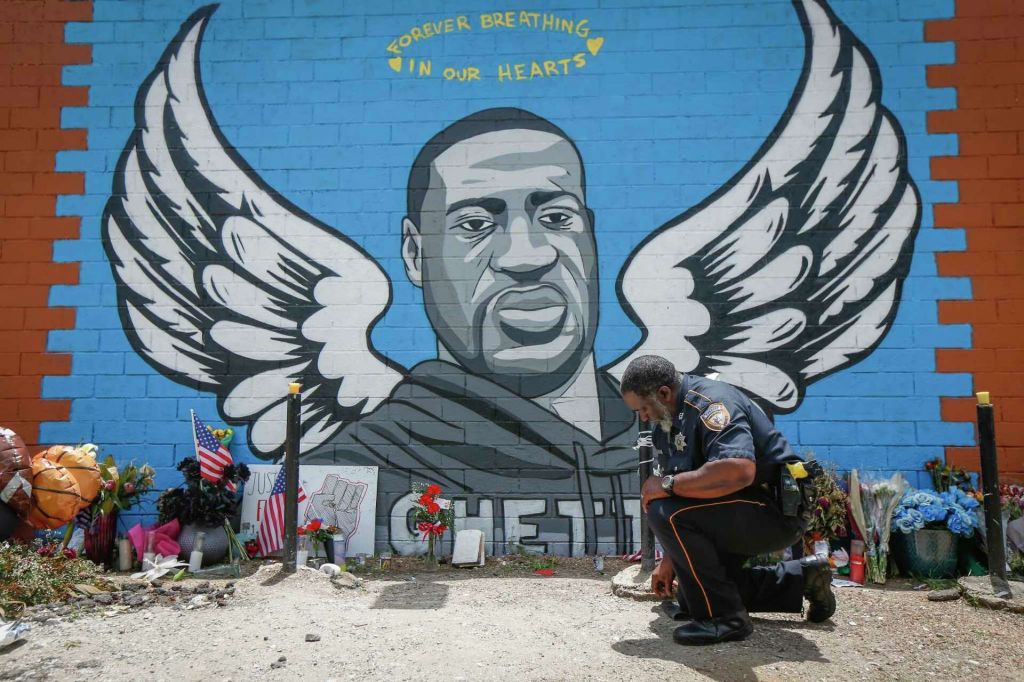
In my defense, I didn’t mean it the same way Paula White does. George Floyd can also be seen as a type of Christ—a man who died under tragic circumstances and became a powerful symbol of what many perceive as lingering racial injustice. Samson in the Old Testament was another flawed type of Christ: a strong but deeply imperfect man who ultimately brought the house down on his people’s enemies. The religious leaders of his day even declared it better that one man should die than the whole nation perish—the exact same justification used against Jesus.
Then there’s Jesus Barabbas, a man whose name literally means “son of the father.” The frenzied mob chose to free a violent revolutionary instead of Jesus of Nazareth.  He serves as a dark type: a chaotic figure the crowd preferred over the true son of God and Prince of Peace.

When I first called Trump a type of Christ, it was out of sympathy and frustration with lawfare. I opposed the clear double standards—Joe Biden openly bragging about his quid pro quo, James Comey giving Hillary Clinton a free pass, while Trump faced relentless legal pursuit. My support was rooted in a belief in equal justice under the law, not personal adoration. I never saw him as a good man, let alone an example to follow. I had accepted him as a necessary monster to fight other monsters.

But I’m now regretting even that loose analogy. Trump’s character has troubled me from the beginning. His style of politics often mirrored the very things I criticized on the left. The “we’re electing a commander-in-chief, not a pastor” argument never fully sat right with me. (More so now that Jerry Falwell Jr., the Evangeli-con leader who had coined this way to rationalize around Trump’s shortcomings, has since been disgraced in a lurid sexual scandal). Being burned by a man I quietly endorsed has forced me to reevaluate my own judgment.

Character is not just one factor among many—character is everything. The danger of electing a monster to fight other monsters is that the beast will eventually turn on you. Perhaps it’s better to “waste” a vote on someone of stronger character than on a “lesser evil” who may overachieve?

Trump won his reelection largely because his opponents cried wolf too many times. Decades of calling anyone to the right of Mao a “fascist,” coupled with the very weak evidence for Russian collusion compared to credible questions about Biden family corruption, made it easy for many to dismiss all criticism of Trump as just another partisan witch hunt. The perception of unfair treatment caused many people to rally around him, ignoring his serious character flaws.

I call it the “George Floyd effect,” where symbolic value of an individual and grievances shared by a demographic group cause people in that group to overlook glaring character issues. Trump also cleverly positioned himself this way with the line, “They’re not coming after me. They’re coming after you—and I’m just standing in their way.”

Yet Trump has increasingly imagined himself as a Jesus-like figure. He once questioned why he would need to ask for forgiveness if he doesn’t make mistakes—which is a stark departure from Christian teaching that all continually fall short of God’s glory. And the recent meme he posted of himself with healing hands, dressed in robes as a Christ-like figure (which he since has insisted was meant to show him as a doctor), crosses into very dangerous territory.  It’s blasphemous.

Only Trump could get away with saying he was portraying a doctor and that those who believe their eyes shouldn’t be trusted.

Anyhow, I’m old enough to remember Barack Obama being called the Antichrist or accused of thinking he was a god for far less. (See: pillars at DNC) The same voices who condemned Obama’s allegedly messianic imagery are now defending or downplaying Trump’s behavior.

I didn’t leave the MAGA coalition.

It left me.

To balance the record: Trump can also be seen as a type of Hitler in troubling ways. He is a populist with grandiose tendencies, quick to attack others while being extremely thin-skinned. He blames foreigners for America’s problems and has also sparred publicly with the Pope—much like Hitler clashed with the Vatican. Both men also survived assassination attempts in ways some called lucky or God’s hand of protection.

In the end, I regret using Christ-like language for any politician. The temptation to turn our flawed political leaders into sacred symbols—whether as redeemers or villains—ultimately does us more harm than good. Politics already pulls us toward idolatry. We should resist it by judging leaders on character first, not on how well they embody our grievances.

Too Cruel To Be Coincidence

Standard

There is this sort of silly thought I have had, which has some legs, about the true nature of the universe and how unlikely it seemed that our friend’s daughter would fall victim to the currents of the Susquehanna river.  I realize this is more just a hiccup of my own mind than an actual reality, but what are the chances?  What are the actual probabilities we would know another Filipino-American couple with so many similarities and has a tragedy like this happen?

I ran my hunch through Grok.  What are the chances that another couple, one of them a German-American with neck or back issues (like me) the other a recent immigrant from the Philippines who came with a child and has also (like my wife) recently given birth to a second child, losing their ten-year-old daughter in a drowning incident just a week prior to Mother’s Day?  And how likely is it that I would have experienced the loss of a close friend’s child twice?  The probabilities are so infinitesimal that the very existence of life is more likely than this:

The probabilities of the specific scenarios you described—knowing an ethnic German man in Pennsylvania with a Filipino wife and children matching your family’s profile (0.00462%), his 10-year-old daughter drowning in the Susquehanna River on a specific weekend (1 in 2.82 trillion), and being friends with two women who lost children tragically (0.566%)—are all significantly lower than the probability of life existing in the universe, which is nearly certain (1) due to the vast number of planets (10²²). Even in an extreme pessimistic scenario where life is exceedingly rare (0.36%), only the third scenario approaches or slightly exceeds it, while the others remain far less likely. The universe’s immense scale makes life’s existence highly probable, whereas the hyper-specific nature of your scenarios, especially the drowning event, drives their probabilities to near-zero.

All this is just an extended version of that age-old question: “Why me?”  

This weird feeling of this being a tragedy too perfectly scripted to be real is simply the hallucination of a mind searching for meaning where there is none.  

It is no different from when I—in delusion of religion and looking for answers—had assigned meaning to the ‘impossibility’ (a romantic interest) randomly picking up a paper, leftover from Sunday school class in the same location, and then reading from it “with God all things are possible” right as she walked past me—renewing my hope to continue my foolish pursuit of faith and love.  Belief in a divine plan only led to more disappointment.  It is what it is—as she told me as an answer.  A coincidence is no more meaningful than we have made it.  

apophenia

Truly, we could throw our lasso around any circumstance, any set of facts, and find it to be highly improbable.  But, after the fact, if it has happened, the probability is always 100%.  Basically everything is unlikely right before it has happened and this why those Lee Strobel type of apologetic ‘cases’ aren’t very compelling for a critical thinker.  They are too based on assumptions and deciding what matters based on our own window of understanding—never considering the other possibilities.  

It is actually very likely that I know another Filipino-American couple, involving a single mother and a lonely guy similar to me, given that we deliberately connected to the local Pinoy community for sake of my wife.  And it was our similarities that always gave us something to talk about.  He was employed in an engineering related field, same as me, and going through the visa process.  As far as the tragedy, around 4000 unintentionally drown in the US per year (900 children) and spring weather (near Mother’s Day) is just likely to bring people to the river.

My foreign-born friends, in retrospect, were more vulnerable.  Those who grew up in the Susquehanna valley have a bit more fear of the river.  The waters may appear to placid, but we also know about those floods which have ripped through communities and how it respects nobody.  You’ll try to pet a bison up until you see the first person gored.  We simply don’t know risk until we have seen it for ourselves.  But then I also know that the mother, in this case, was always extremely cautious and only looked away for seconds before hearing the commotion.

What is so hard to accept is that reality that this world is full of danger.  Both conspiracy theorists and left-wing control freaks refuse to deal straight up with a world where death can occur without some dark plot and that this won’t be solved with politics.  I’ve never been under that delusion.  However, I have had this good things happen to good people expectation going in to life.  My Pollyannish hopes have been rebuffed too harshly and consistently to continue holding to them.  In truth, the natural world does not care about your morality—if you follow all the rules or are evil incarnate—the universe is utterly indifferent.  It just is what it is.

There is no evidence of a grand design, as I had been indoctrinated to believe, and fully embraced—before falling flat.

It is pareidolia, a mirage or projection of our own desire to find explanation or reason for everything.  People want this singular thing to blame for all bad things and yet there is not in the case of this drowning.  The mom was not negligent, the water is neutral and neither good nor evil.  Trying to find design is only me choking on a reality we all should face: We all leave this world the same as we entered it—dust to dust.  Some depart on a different schedule than expected.  But many children have died before their parents and long before history recorded it.

To have no cosmic force orchestrating our suffering is a big comfort.  It eliminates the cognitive dissonance of the loving God that then subjects Creation to torment.  Pain is a survival mechanism.  It helps to correct our behavior and train us, but also misfires (ask those with chronic pain) and hurts us for no good reason.  There is no need for a perfect system, one where only those who deserve punishment are punished, merely one that functions well enough.  There is no intent to be cruel, no special message to glean from the loss of a precious daughter a weekend before Mother’s Day—she slipped on a rock and that’s all there is to it.

We desire a director behind all events good or bad to make it easier to understand.

If fantasy helps you cope with grief then by all means embrace it.  We could theorize it was part of a hidden divine plan to gain the salvation of her parents, a punishment for lack obedience to Allah, and that she is playing up in heaven with those millions of aborted fetuses Evangeli-cons care about (or the children of Gaza they don’t) and if the thought comforts then pull it up over your head like a warm blanket.  Nature can be cruel, cruel in a way that seems very much too improbable to be unplanned, but good people suffer just as the wicked do, and the universe offers no explanation or apology for it.

Are You Too Busy To Read This Blog?

Standard

I’ve been wanting to do a blog on Mary and Martha, but I’ve been…well…busy…

It seems appropriate, with the bustle of the holiday season soon to be upon us, to talk about distraction and keeping our focus on what actually matters.  There are two Biblical characters who are notable for being in the presence of Jesus and yet too caught up in the wrong way of thinking to care.

Jesus, in defense of impractical love, confronts Martha’s distraction and disillusionment of Judas.

There are several different Biblical accounts where we see a woman (not always identified as Mary) who pours out her adoration in a way that seems irresponsible.  She is rebuked by others for it, but defended by Jesus.

Here’s the first account:

“As Jesus and his disciples were on their way, he came to a village where a woman named Martha opened her home to him. She had a sister called Mary, who sat at the Lord’s feet listening to what he said. But Martha was distracted by all the preparations that had to be made. She came to him and asked, ‘Lord, don’t you care that my sister has left me to do the work by myself? Tell her to help me!’ ‘Martha, Martha,’ the Lord answered, ‘you are worried and upset about many things, but few things are needed—or indeed only one. Mary has chosen what is better, and it will not be taken away from her.'” (Luke 10:38-42)

Hosting a large group of people is not easy and it is completely understandable that Martha would be annoyed.  I can imagine her, hands on hips, showing her indignation and I can also see Jesus smile as he answers.  She was so wound tight that she was not enjoying life or appreciating the moment.  Martha was stumbling through her life blinded by distractions.  Jesus gently tries to redirect her attention from the multitude of tasks that cluttered her vision back to what was truly important.

Mary, in contrast to her sister Martha, was in the moment and focused on what mattered.  It is interesting that in another Gospel account Mary is also criticized by Judas Iscariot for her use of resources, he asks: “Why wasnʼt this perfume sold and the money given to the poor? It was worth a yearʼs wages.” (John 12:5)  And Jesus, seeming to prefer the impractical display of affection, rebukes Judas as he did Martha.  In both cases Jesus is endorsing the fanciful over what we would call good stewardship of time and resources.

The disillusionment of Judas leads to betrayal of Jesus.

The Gospel accounts captured a feeling of distain for this man, the writers making sure to inform us that Judas was a thief and stealing from the common purse he carried for the disciples.  He’s obviously a complex character, he was chosen as a disciple and evidently had some interest in what Jesus taught.

But we do know that Judas, whether a disenchanted social justice warrior unhappy with the lack of progress or plain greedy and in it for his own gain, was distracted by money.  He betrayed his relationships, he was stealing from his friends (hence thier distain) and ultimately died miserable, taking his own life, after betraying Jesus for a little silver.

Many men today are similarly distracted by money and betray family for business and trade true faith for some numbers in a bank account.

The judgment against men who make an idol of money or financial security at the expense of relationships will be severe.  They will lose the hearts of their children, love of their wife, and possibly forgo their only chance for salvation.

Martha was simply too busy to enjoy life and too distracted to fully appreciate Jesus.

Unlike Judas (who was serving himself despite his altruistic rationalizations) we see Martha was very busy serving others.  She seems to be an extremely duty bound person and was probably completely exhausted.  She takes out her frustration on those around her, including sister Martha and even Jesus.

We are not told how Martha responds to the correction offered by Jesus.  If she’s like some of the industrious Mennonite women I know she probably scoffed at the suggestion before scurrying away to do all those other things that couldn’t wait.  But I can also see her later contemplating what was said, learning to worry less and relax a little.

In Martha I see my own mother (sorry mom, yes I do appreciate all you do and I can’t wait for thanksgiving day) who tends to stress out about hosting people.  The house must be perfect.  She scrubs, scours, cleans, and frets, often to the perplexed amusement of other inhabitants of the household who don’t mind a little dirt so long as the food tastes good—and it always does.

In conclusion, be a Mary, do not be distracted by things that do not matter and focus on what does. 

We to live in a time packed full of activities and work more hours than generations before us so we can afford more stuff that doesn’t satisfy us in the end.  Those who aren’t successfully distracted in their business can become bitter when others seem oblivious to their own concerns.

Most of us have our heads spinning because of smart phones, work obligations and social commitments.  Even good things, things that are good in their proper place, can keep us preoccupied and spiritually disconnected.

Dutiful religious devotion, reading a few Bible verses or going Christmas carolling and volunteering at the local food bank, is not always connection with the giver of life.  To be in the presence of Jesus is to be rested fully in the Spirit of God.  It could mean quiet contemplation alone.  It could also mean putting aside that carefully arranged schedule and really listening to someone who needs a friend.

Our devotedness to God truly is not measured by the amount of tasks we complete ritualistically.  True devotion is to love as God loves—to love the sparrow that falls and love the poor child without a father even more.

The first Christmas started with an impromptu visit of a pregnant woman to a stable in Bethlehem and yet things seemed to turn out just fine.  Keep that in mind.

Show devotion by trusting God—trusting God both with the minutia of details that you can’t ever control and also with the ‘big’ things that we delude ourselves to believe are secure and really are not.  Science can’t even tell us what keeps the universe glued together, nobody is guaranteed tomorrow, so stop banking on your own abilities and…

“Humble yourselves, therefore, under Godʼs mighty hand, that he may lift you up in due time. Cast all your anxiety on him because he cares for you.” (1 Peter 5:6-7)

With the holiday season upon us, be sure to contemplate where real security is found, remember what is truly important to remember, and experience the real presence of Jesus!