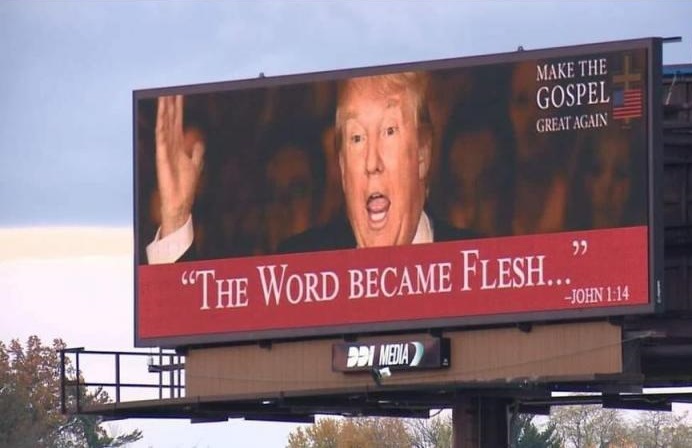
Character Over Symbolism — Rejecting Trump as a Political Messiah

Standard

I’ll make a confession. Before Paula White-Cain ever said it, I described Donald Trump as a type of Christ. I believed the judgments against him were largely vindictive and politically motivated rather than a genuine pursuit of truth and justice.

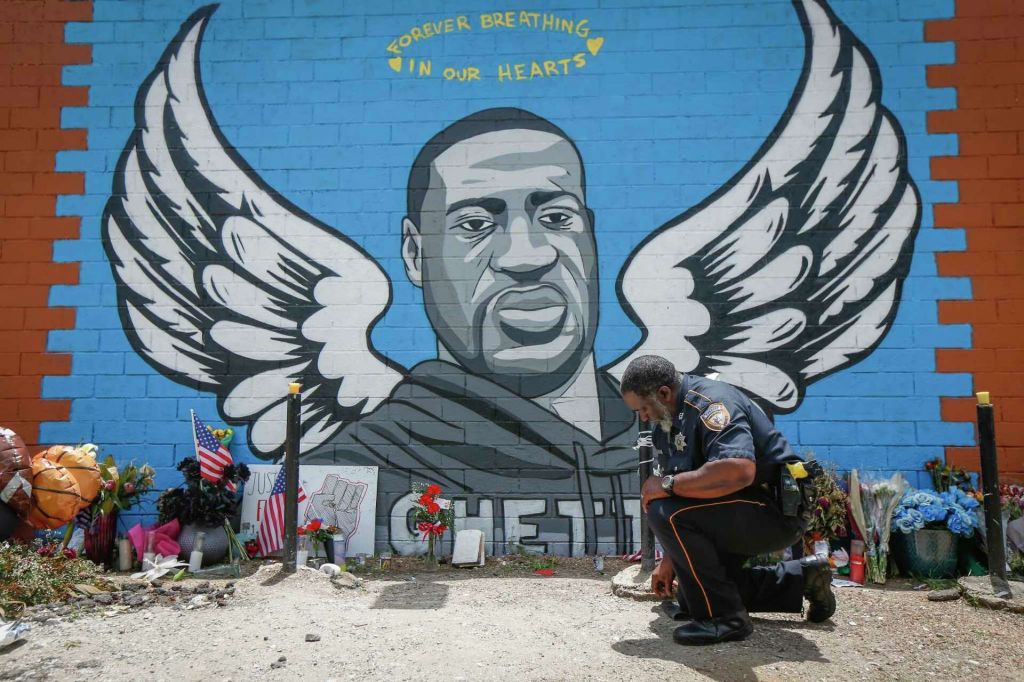
In my defense, I didn’t mean it the same way Paula White does. George Floyd can also be seen as a type of Christ—a man who died under tragic circumstances and became a powerful symbol of what many perceive as lingering racial injustice. Samson in the Old Testament was another flawed type of Christ: a strong but deeply imperfect man who ultimately brought the house down on his people’s enemies. The religious leaders of his day even declared it better that one man should die than the whole nation perish—the exact same justification used against Jesus.
Then there’s Jesus Barabbas, a man whose name literally means “son of the father.” The frenzied mob chose to free a violent revolutionary instead of Jesus of Nazareth.  He serves as a dark type: a chaotic figure the crowd preferred over the true son of God and Prince of Peace.

When I first called Trump a type of Christ, it was out of sympathy and frustration with lawfare. I opposed the clear double standards—Joe Biden openly bragging about his quid pro quo, James Comey giving Hillary Clinton a free pass, while Trump faced relentless legal pursuit. My support was rooted in a belief in equal justice under the law, not personal adoration. I never saw him as a good man, let alone an example to follow. I had accepted him as a necessary monster to fight other monsters.

But I’m now regretting even that loose analogy. Trump’s character has troubled me from the beginning. His style of politics often mirrored the very things I criticized on the left. The “we’re electing a commander-in-chief, not a pastor” argument never fully sat right with me. (More so now that Jerry Falwell Jr., the Evangeli-con leader who had coined this way to rationalize around Trump’s shortcomings, has since been disgraced in a lurid sexual scandal). Being burned by a man I quietly endorsed has forced me to reevaluate my own judgment.

Character is not just one factor among many—character is everything. The danger of electing a monster to fight other monsters is that the beast will eventually turn on you. Perhaps it’s better to “waste” a vote on someone of stronger character than on a “lesser evil” who may overachieve?

Trump won his reelection largely because his opponents cried wolf too many times. Decades of calling anyone to the right of Mao a “fascist,” coupled with the very weak evidence for Russian collusion compared to credible questions about Biden family corruption, made it easy for many to dismiss all criticism of Trump as just another partisan witch hunt. The perception of unfair treatment caused many people to rally around him, ignoring his serious character flaws.

I call it the “George Floyd effect,” where symbolic value of an individual and grievances shared by a demographic group cause people in that group to overlook glaring character issues. Trump also cleverly positioned himself this way with the line, “They’re not coming after me. They’re coming after you—and I’m just standing in their way.”

Yet Trump has increasingly imagined himself as a Jesus-like figure. He once questioned why he would need to ask for forgiveness if he doesn’t make mistakes—which is a stark departure from Christian teaching that all continually fall short of God’s glory. And the recent meme he posted of himself with healing hands, dressed in robes as a Christ-like figure (which he since has insisted was meant to show him as a doctor), crosses into very dangerous territory.  It’s blasphemous.

Only Trump could get away with saying he was portraying a doctor and that those who believe their eyes shouldn’t be trusted.

Anyhow, I’m old enough to remember Barack Obama being called the Antichrist or accused of thinking he was a god for far less. (See: pillars at DNC) The same voices who condemned Obama’s allegedly messianic imagery are now defending or downplaying Trump’s behavior.

I didn’t leave the MAGA coalition.

It left me.

To balance the record: Trump can also be seen as a type of Hitler in troubling ways. He is a populist with grandiose tendencies, quick to attack others while being extremely thin-skinned. He blames foreigners for America’s problems and has also sparred publicly with the Pope—much like Hitler clashed with the Vatican. Both men also survived assassination attempts in ways some called lucky or God’s hand of protection.

In the end, I regret using Christ-like language for any politician. The temptation to turn our flawed political leaders into sacred symbols—whether as redeemers or villains—ultimately does us more harm than good. Politics already pulls us toward idolatry. We should resist it by judging leaders on character first, not on how well they embody our grievances.
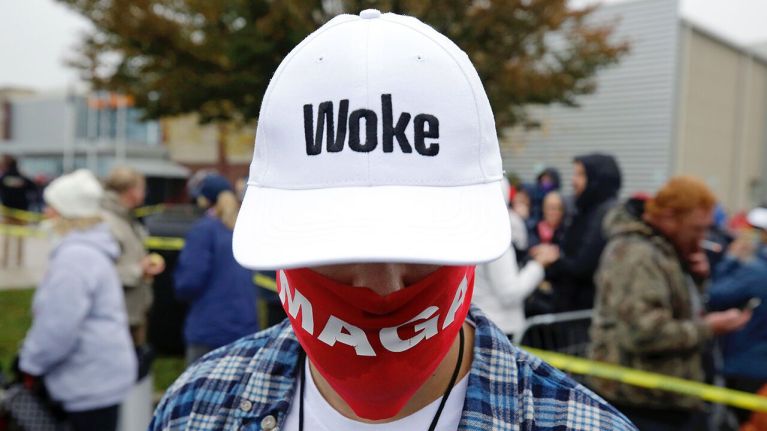
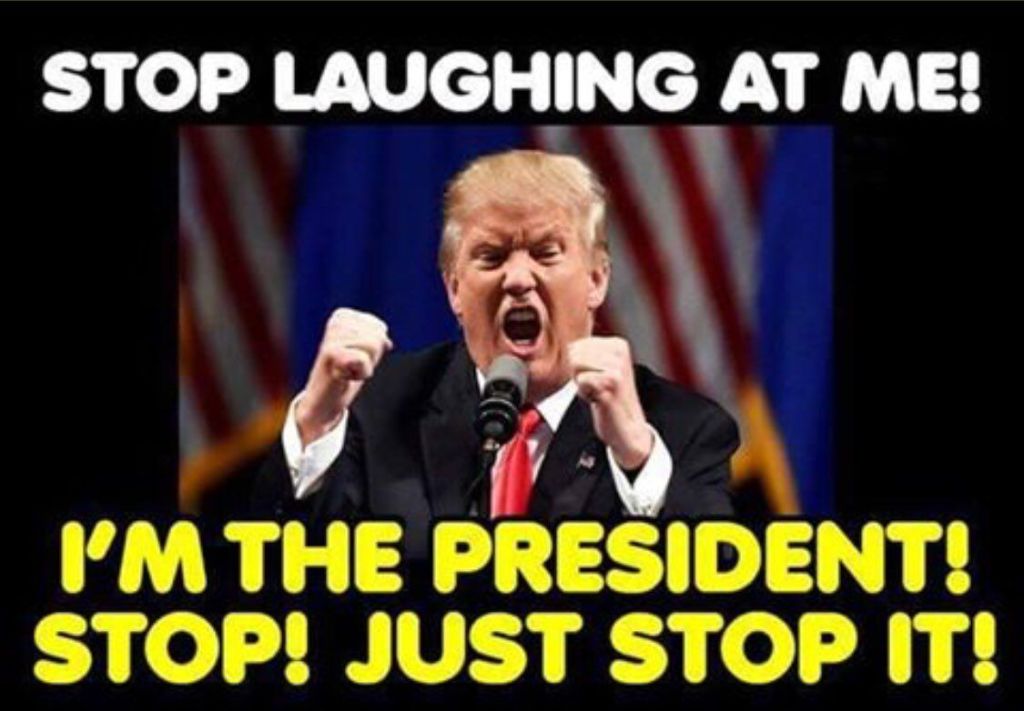
Why Woke Is Incompatible with Christianity (And Why MAGA Isn’t Much Different)

Standard

I never like it when I can’t explain something in simple terms.  But most important topics are not easily distilled.  I mean, a leftist may tell me they believe woke is compatible with Christianity.  And it (like MAGA) absolutely is not.  Sure, there’s a message of justice in the Gospels.  We learn how the first shall be last and the last shall be first.  Jesus broke down barriers of ethnicity and gender—took on the religious elites.  However, he taught a message of repentance rather than pride or demanding recognition.

1) Woke externalizes blame, Christianity takes responsibility: Jesus taught us to answer for our own sins—that God will judge those who mistreat us.  Basically Jesus turns fundamental attribution error inside out by asking us to completely own our own actions and then to be merciful to those who offend us.  This is not to say that we’re silent about injustice—we just remove the beam from our own eye first and never blame others for our own sins.

2) Woke replaces identity in Christ with group identity: Woke ideology organizes people into categories of oppressors and victims based on race, gender, or sexual orientation. The gospel teaches that primary identity is found in Christ (Galatians 3:28) and unites all people under one common banner of humanity rather than into competing factions arguing over who must serve who.  All should serve in the manner of Christ who died for the sake of his oppressor rather than fight and demand fair treatment.

3) Woke rejects absolute truth in favor of the subjective experience: Woke culture often promotes the idea that truth is relative and based on “lived experience” or their social construction, whereas Biblical Christianity is founded on the unchanging, objective truth of Jesus as being God’s Word.  The Gospels claim that Jesus was there from the beginning and that he is the one and only correct path to salvation: “I am the way, the truth, and the life.  No man comes to the Father but by me.” 

4) Woke promotes judgment, not forgiveness: Woke culture is “cancel culture,” which is very unforgiving and aims to ostracize those who deviate on even the slightest bit of the current dogma. Conversely, Jesus taught a path of mercy, forgiveness, grace, and redemption, offering hope and reconciliation for all, rather than a never-ending cycle of shaming others and condemnation.

5) Woke is a total inversion of the Christian standard: Woke ideology attempts to redefine traditional moral standards, and in particular with regard to sexual ethics, or marriage, and gender, which Jesus explicitly upheld.  Jesus confronted the Pharisees for their hypocrisy—not over disagreement with the law.  If the law does not matter there’s no hypocrisy.  However, Jesus did not say that there’s no set standard—only that the religious and political elites kept the letter of the law and neglected the spirit.

6) Woke focuses on political activism rather than spiritual renewal: Wokeism prioritizes changing societal structures and the power dynamics as the primary solution to human issues. In contrast the teachings of Jesus emphasize that the greatest problem is sin (our own first) and that all lasting change flows from spiritual transformation of us individually, not just structural reform.  Woke is about screaming into a bullhorn while the Gospel is focused on introspection and repentance.

7) Woke divides people by identity tribes and does not create unity: While Jesus calls for love and unity among believers, forgiveness of our enemies—woke political ideology creates more division, fuels conflict, resentment, and “hatred, contentions, [and] outbursts of wrath” (Galatians 5:19-21) by focusing on oppression narratives, or historical and group grievances.  There’s no love of offenders or forgiveness in woke—only role reversal and vengeance against the prescribed villains.

8) Woke assigns collective guilt rather than protecting individual rights: Woke ideology tends to attribute collective, inherited guilt to entire groups based on skin color or social status. The Gospel teaches that every individual is responsible for their own sin before God and is justified by their own faith. 

9) Woke focuses on vertical power struggles over reconciliation with God: Wokeism is concerned with the dismantling of traditional power structures, often adopting a Marxist-style analysis of human relationships. Biblical justice, on the other hand, is a hierarchy rooted in God’s perfect righteousness and focuses primarily on reconciling sinners to God, which then informs how they live with others. 

Both Woke and MAGA: Counterfeit Gospels of Grievance and Pride

Yes, there’s certainly some overlap between woke and the Gospel.   But one rejected the fight for control over worldly political power structures, the other simply attempts to flip the script on current rulers. 

One chants “down with the hierarchy” whereas the other restates hierarchy with a twist: Those at the top—rather than domineer—are supposed to serve those below them in an authority that their submission to God’s will gives them.

There’s never an inner change—they believe that their own bad behavior is a justified result of the external conditions.

Woke says you are fine the way you are, change is unnecessary for you—then it demands others change to accommodate you instead.  Yes, they claim to own love and kindness, but it is only in the same way Trump believes he should be awarded a Noble Peace Prize. 

Trump is basically woke right in that he uses the same power of identity and tribal grievance to advance his political agenda.  His calling out of “fake news” and inventing his own facts is more post-modern than it is conservative.  That’s why he has turned on those principled people of his coalition, like Thomas Massie, because his own ever-changing truth is all that matters. 

Woke—like MAGA—is unmoored from historical precedent, not capable of self-awareness and eats its own the moment they doubt the rage mob.

Furthermore, Trump and DEI wokeism believe that holding position and title or just identifying yourself as something is the same thing as being it.  Trump’s presidency is increasingly rejected by those who simply cannot respect his authority as a morally compromised man who constantly lies thinking we won’t notice.  The parallel is a man who believes we should call him “ma’am” simply because he is taking sex hormones and completes having his junk removed. 

As the Turkish proverb goes, “When a clown moves into a palace, he doesn’t become a king. The palace becomes a circus”.

Putting an unqualified person in a position only ever degrades the position.  Allowing transgender men to compete in women’s competition will not legitimize their transition.  If anything it serves to highlight the difference while dismissing the true uniqueness of the female gender.  Yes, Trump is legally the President, like I can legally become a woman, but the social contract has a vote as well and power abused to create an unreality tends to snap back like a rubber band pulled too far.

Trump and woke are just two grotesque forms of American exceptionalism.  Both are composed of people who feel entitled to special treatment and have no need to adjust themselves or their own attitudes—they believe wherever they stand is made sacred by their very presence.  It is exactly what Paula White-Cane (the ‘spiritual advisor’ of Trump) has said—anywhere she stands is “holy ground.”  That’s just narcissistic bull crap. 

White has also said, “Anyone who tells you to deny yourself is from Satan.”  Which is a direct contradiction with Jesus, in Matthew 16:24 (and Luke 9:23): “Whoever wants to be my disciple must deny themselves and take up their cross and follow me.” 

Must be her “Judeo-Christian values” that make her accuse Jesus of being from Satan?

Christianity is all about subduing the flesh and bringing our impulses under control—White, like woke, is about indulging herself and pride.  It’s no wonder there’s so much agreement between these Pulp Fiction Christians and a self-declared “chosen people” who never kept their own side of their Covenant.

MAGA uses Christian imagery, but always in this perverse manner that honors the Trump political brand and not Christ.  The shooting at the White House Correspondence dinner, for example, has already been described as God’s protective hand on Trump as if some guy in the lobby had even a remote chance of success.  Maybe we should just remember Jesus was killed and Hitler survived multiple attempts on his life?

In the end, both woke ideology and MAGA cult tribalism offer a counterfeit gospel: one of pride, grievance, and external blame rather than a life of repentance, taking personal responsibility, and genuine transformation through Christ.

Excuse Me, Miss…

Standard

My wife and I were taking advantage of the spring weather, out on a walk together, baby in stroller, when a voice from behind us interrupted our stride:

“Excuse me, miss, why do you walk with your hands behind your back?”

Apparently, according to this inquirer, my wife was walking with her hands clasped together behind her and it made him curious.  And, after he said it, I immediately knew what he meant, I had seen her do this before and now considered that it wasn’t a common thing for American women to do.  

My wife—other than to answer the man with his New Jersey accent that it is something common with older people from her place—had no good answer.

She told me later it was something she recalls her grandma doing and was not something she ever gave much conscious thought to until he stopped us.  It was just what felt natural or right to her—a mannerism that the Igorot women of certain age and good reputation simply did.

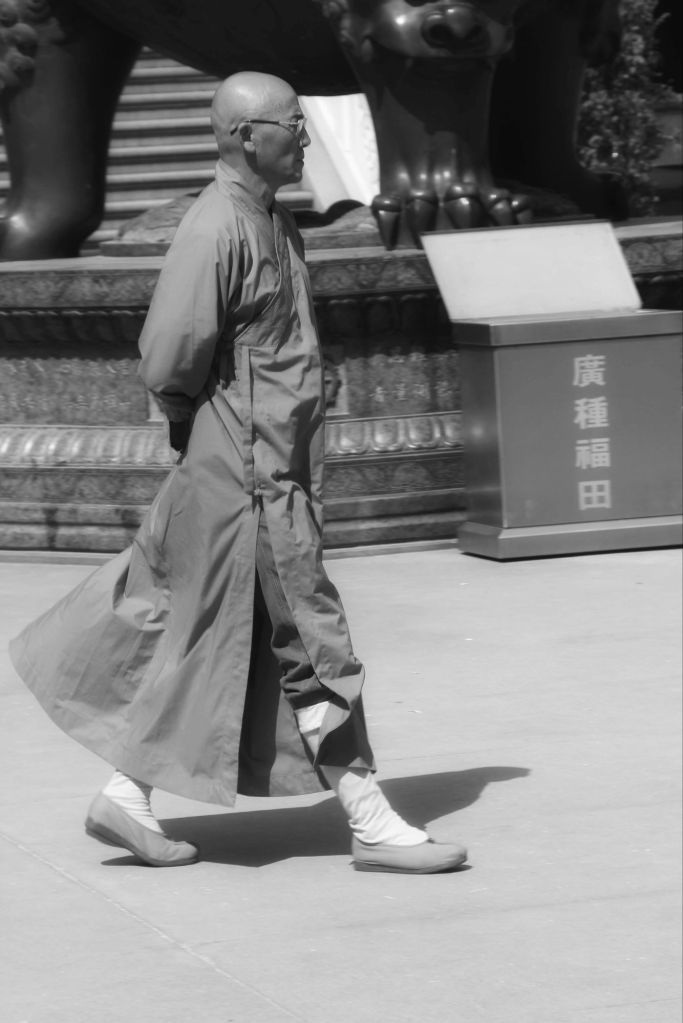
The best explanation I have found is that this is social signalling in Asian culture.  It is an image of authority and composure.  And it could mean my wife feels confident, does not need to be in a rush or has earned the right to be contemplative, non-defensive and like a respected elder in her native culture. 

Whatever it is, it isn’t deliberate or something she tried to do, it had just naturally came to her.

Mennonite Matriarchs and Mirroring Behaviors

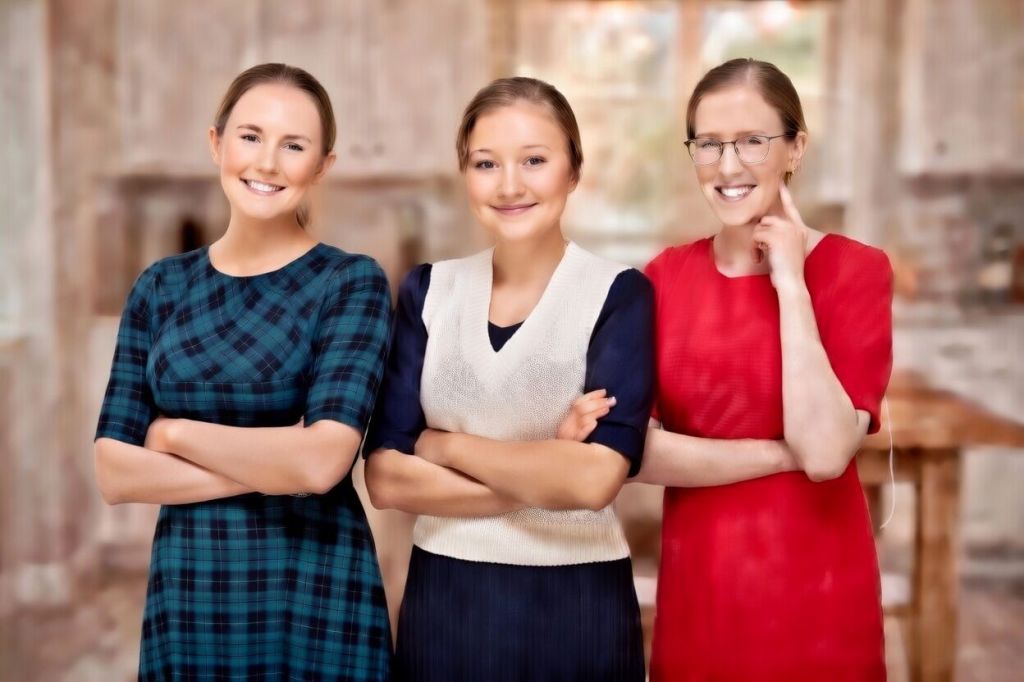
What piqued my further interest was a parallel conversation, led by Dorcas Smucker (a popular conservative Mennonite blogger), trying to figure out why her female religious peers cross their arms in front of them while standing.

The answers ranged from comfort to having no pockets in their traditional dress—or a resting position.  Others say it is a defensive posture or a symptom of women ashamed of their feminity or trying to hide themselves.   However, I have also noticed, in office meetings, my male coworkers—all of us from Amish or Mennonite background—sit around the table with their arms crossed.  The room is a bit cool.  Maybe that’s all it is?

I’m guessing this has very little to do with what is projected onto it by those who often seem to see the broader American culture as some kind of benchmark for normal. 

Yes, it is the case that those of us born into this religious subculture tend to be self-conscious about what we wear and appearance.  I knew I was odd, at a public school, wearing long pants during the heat of August, and had classmates who would remind me of my being Mennonite.  But is it the cause every mannerism?

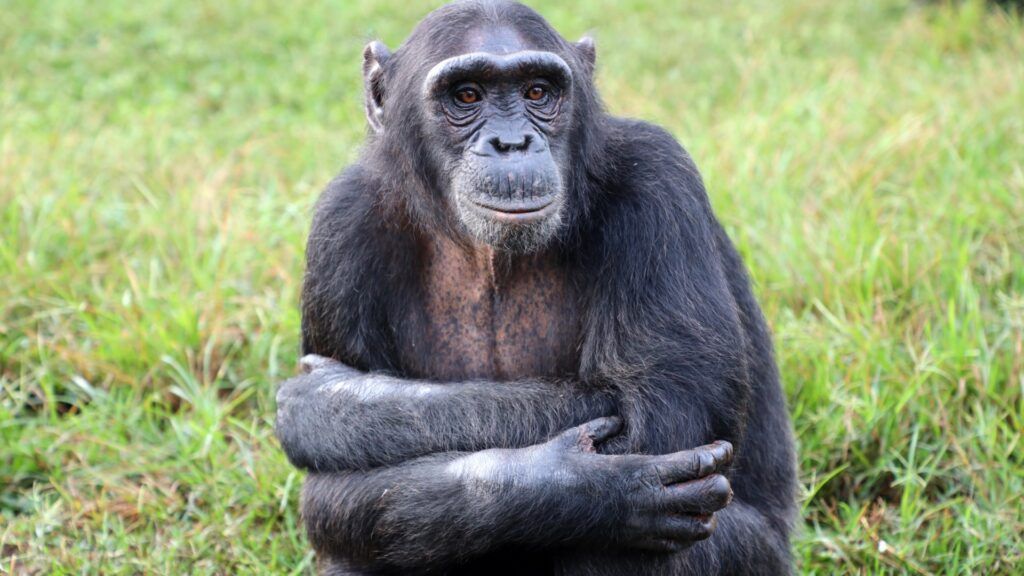
Chimpanzees also cross their arms.  But it is described as just being a neutral relaxed position or simply a way to rest and relieve muscle strain.  The crossed arms as being a defensive posture has fallen out of favor with experts.  Could there be some post hoc rationalizing in how we explain human body language? 

Mirroring behavior provides a more plausible explanation.  This is to say we will just imitate the postures or mannerisms of others in our group without a thought.  This is called “chameleon effect” and part of the way we build rapport or trust.  It is part of our sense of belonging within a community.  It’s wired in our brain—the “mirror neurons” which fire off both when we perform a particular action as well as when we see someone else doing the same thing.  Nobody has to tell us to do it.

This is deliberate.  Whereas mirroring is subconscious.
This hand gesture is very common all throughout the Philippines.  The “I’m good looking” pose.  Click here for more gestures.

So what is likely, whether those Mennonite arms crossed or Igorot elders walking with their hands clasped behind, is that these postures are about a cultural identity and unconscious process where we copy those whom we respect in the group or just what we have seen thus accept as normal.  It is social glue—in the same way my cousin picked up her Southern drawl after marrying a Virginia boy.  This is similar to how we yawn when other people do.  It’s just an instinct.

Social Glue in Religious Ritual Too

What’s interesting is that religions attempt to capitalize on this by forced mirroring that becomes unconscious.  The extended hand, the greeting a non-relative as “brother” and all ritual is about building an artificial bond that makes us feel like we belong.  It’s in the silly cliché phrases, they’re part of that “hedge of protection” around community identity, and just social connection that makes us feel comfortable.

Common in the East.
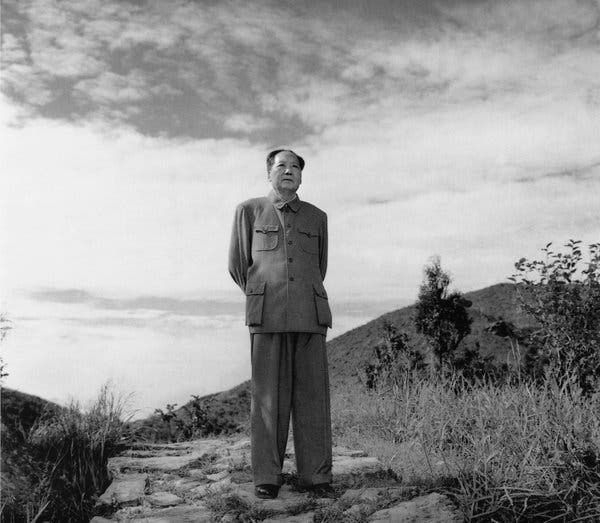
The “Four Olds” (old ideas, old culture, old customs, and old habits) of the Cultural Revolution didn’t reach Chairman Mao.  His hands are still in the traditional Asian authority position.

However, this can also make life very difficult for those outside coming in.  An outsider that tries to go through the same motions will very likely look forced—like a mask or performance rather than genuine.  This “false signal” could be taken as mockery and give off an uncanny valley feel that makes people suspicious or uncomfortable. Not to mention it is hard for the person trying to keep up the appearance as well.  Like the time when I awkwardly did a full prostration rather than the requested bow from the priest for that part of an Orthodox service.

And yet, off the insecurities most contemptible, it is this need to explain or apologize for what was programmed into us by our culture.  Hands in contemplative clasp behind our back while we walk or an assuring restful self-hug, we need not ever feel awkward about our mannerisms and physical pose simply because it is unique to our own subset of humankind.  It is an unfortunate side-effect of modern pluralism and exposure is we’re left second guessing our status rather than just being a part of the social fabric.

We don’t need to defend or pathologize this. 

At the same time, like physical posture, culture is built on religion and our moral assumptions are basically inherited.  So there is a place for careful deliberation and more intentionality in what we do.  And we do this by understanding how new generations absorb many practices through a process of socialization osmosis rather than only verbally through instruction.  If more is caught than taught; if many things are learned through unconscious mirroring—then we need to practice much more than we ever preach.