
Intelligence as a Shotgun: Brute Force, Curiosity, and the Distributed Nature of Problem-Solving

Standard

Nature is a problem solver.  The whole of which is intelligent.  

I have been turning over some thoughts on intelligence lately, and the more I reflect, the more I see intelligence not as elegant precision but as something that is much messier, more improvisational, and deeply pragmatic.  In this age of AI, there is reason to consider how our own problem solving ability works—to gain a better perspective on ourselves and our limitations.

Intelligence is natural and distributed to all creatures.  But it is often expressed through biology rather than brain power—in genetic variation allows at least a few survivors.  I mean, your own chances of yelling “bingo” go up with the amount of numbers read.  More shots gives a higher probability of success.  This is why a shotgun is preferable with a small or elusive target, it requires a far less precise aim to be the right firing solution.  And this crude analogy applies to all intelligence—we arrive at the correct answer mostly on the basis of having enough tries.
Indeed.

General intelligence—the kind that humans possess in greater measure than with other creatures—is fundamentally an adaptation to an unpredictable world. When the world environment can shift so dramatically and without warning, the special ability to solve a diverse set of problems (rather than just relying on slow change through the shotgun blast of genetic expression) is the ultimate survival trait.  Our curiosity and imagination aren’t luxuries; they’re our exploration tools. They let us scan the horizon of possibilities for potential threats or opportunities before we ever encounter them in reality.

Specialization, by contrast, is just ruthlessly efficient—up until it isn’t.  A creature that is finely tuned to a narrow niche will be able to thrive spectacularly in stable conditions.  It is adapted, not adaptable.  And introduce a radical environmental shift, and that perfect adaptation can become a death sentence. Evolution’s answer for most organisms isn’t individual brilliance but something broader and more distributed.  Other animals and living systems often solve the problems of sustaining life at the collective level.  Or, in other words, through a staggering genetic and behavioral diversity, populations throw countless variations at existence. This is a shotgun approach at problem solving: put enough lead downrange and something is bound to hit the target. One subset of the population will carry the traits that survive the next drought, predator, or disease. The intelligence of the species emerges from the swarm, not the single organism.

Human intelligence, for all its appearance of sophistication, works much the same way—albeit at the individual level. Our brains don’t usually arrive at perfect or precise solutions on the first try. No, instead, we will generate the possibilities, daydream many different scenarios, run mental simulations, and iterate. Think long or hard enough, explore enough angles, and your brain may eventually stumble onto the correct answer.  So, yes, it’s still brute force—a massive parallel search through the space of ideas—rather than crystalline precision.
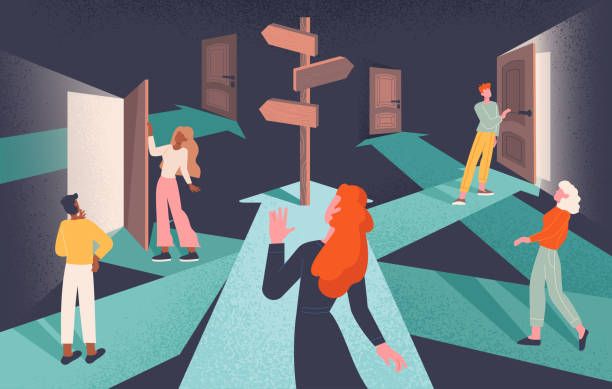
Intelligence is finding a solution.

What truly sets humans apart, as a species, is the software layer that’s built on top of the biological hardware: culture and language.  While animals transmit knowledge primarily through instincts encoded in genetics or their limited behavioral imitation, us humans have collective memory transmitted in our words. It is the development of language that allows us to pass many insights, discoveries, and lessons across many generations with fairly high fidelity. One person’s hard-won realization—therefore—can become everyone’s inherited advantage.  Writing, storytelling, teaching, and now digital networks have turned this into an exponential adaptation accelerator. Our “intelligence” isn’t just what’s inside any single skull—it’s the compounding archive of everything our species has learned.

This makes humans strangely adorable at the individual level. We’re very neotenous, playful, socially wired creatures who retain childlike curiosity and vulnerability well into adulthood. While a lone human is far from being a match for the strongest or fastest animal, individual charm and dependence on one another fuel the social bonds that make cultural transmission possible.

Thomas Edison didn’t invent the light bulb in the sense that he sat there in contemplation with absolute understanding of the science involved.  No, he was merely building off the multitude of discoveries accumulated over time—running thousands of experiments in order to find a better filament to make the application of a phenomenon more practical.  Many human advancements in technology have come by accident and not through a precise process or intentional pursuit.  Oftentimes we found a question we did not even know existed until we stumbled upon the answer.
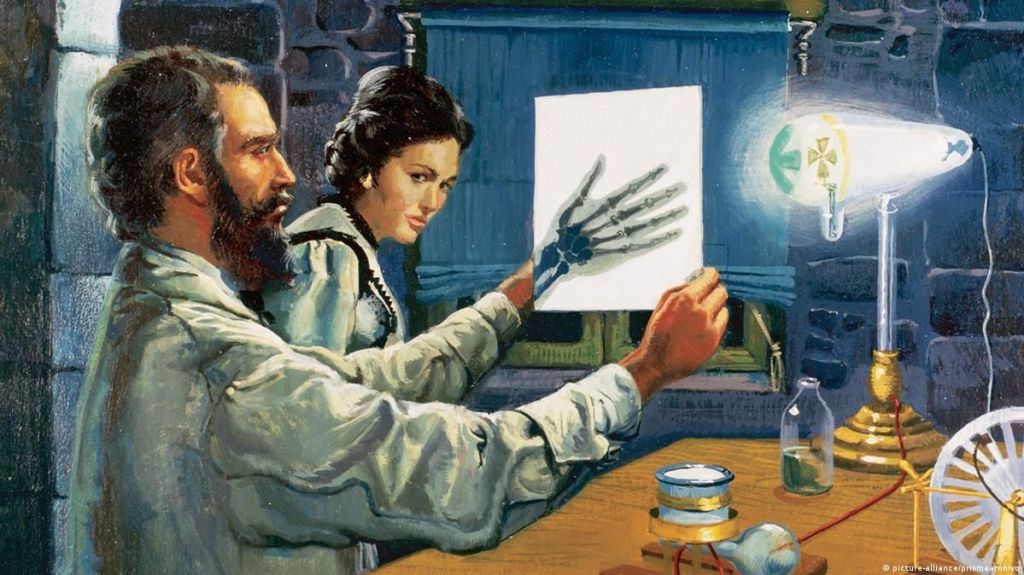
Huh?  We can do something with this!

I was not proficient at my own job of truss design at birth.  Instead, a natural curiosity and a little spatial reasoning aptitude, with my dad’s career in construction—as well as an affirming comment from him about my understanding the blueprints he brought—gave me courage to pursue engineering.  It got me the opportunity (by an acquaintance who recommended me) and even then my progress with the software was through a lot of training follow by trial and error.  My having the right solutions, quickly, comes down to memory and knowledge that has been accumulated over time.  Is my design intelligence more than just matching tools to problems until one works and keeping a memory of the success?

In the end, intelligence across the scales—genetic, neural, cultural—seems to rely on the same underlying strategy: by generating enough variation, exploring broadly enough, and letting selection (or our insight) find the winners. Evolution is intelligence that does it blindly across populations. Our brains do it consciously within a single lifetime. And human culture does it cumulatively across time.  Our intelligence is innate in the ability to map our world, aquire language, pattern recognition and memory to keep a catalog of proven solutions.

Limits of human cognition are greater than we often realize.  It’s a distorted picture, one that centers on an ego, fails in the direction of confirmation bias, takes a large amount of mental shortcuts (call them stereotypes and prejudice), which is not to mention delusion and hallucination.  All of this because there is only so much power that can be packed into our skull and we’re optimized for mere survival rather than creating a 1:1 model of reality.  So long as we are not running off of cliffs or eating the ‘wrong’ berries, living long enough to produce offspring, we achieved the purpose of our intelligence.

Our anxiety, our existential dread, are simply a byproduct of a brain geared to a survival mechanism that tries to interpret data, find patterns, create models, project and predict the future so we’re better prepared.  The world we inhabit remains wildly unpredictable.  Perhaps the real edge, then, belongs not to those who optimize perfectly for today, but to those who maintain their curiosity and flexibility to keep firing shots into the unknown tomorrow.  This is one place where diversity is our strength—or so long as we can appreciate those who have gotten past a bottleneck or choke point in our progress.

Wisdom comes with understanding that our intelligence is a crude instrument at best.  It helps us navigate and even temporarily help simplify a complex environment—up until it doesn’t.  The systems we built, the designs we have made to create ease—including creation of AI as a tool to help synthesize—all rest upon a foundation of assumptions.  Ours is a purpose built intelligence.  If the world we are in was to ever move too far from what familiar dilemmas our intelligence would become disoriented and lost.

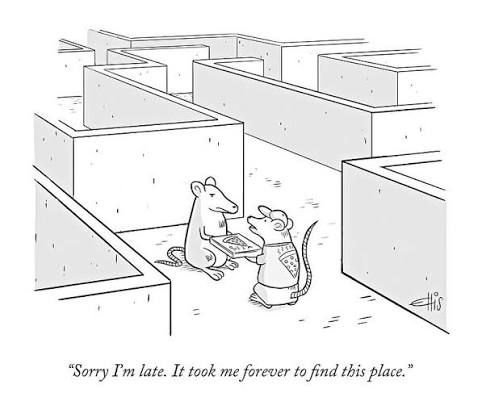
In the end us humans are a rudimentary data crunching pellet shot out in hopes of being the answer that carries on life.  We’re a focused part of the overall computational power of universe.  Clever for our environment and yet, if we fail, nature will simply load another shell and fire into the future.  Our intelligence is a blast in a direction of where the generically determined parameters, with momentum of generations, expect the viable path to be.  Our brains help us to fine tune survival, civilization our collective intelligence, while our more animalistic instincts drive us forward into the maze.
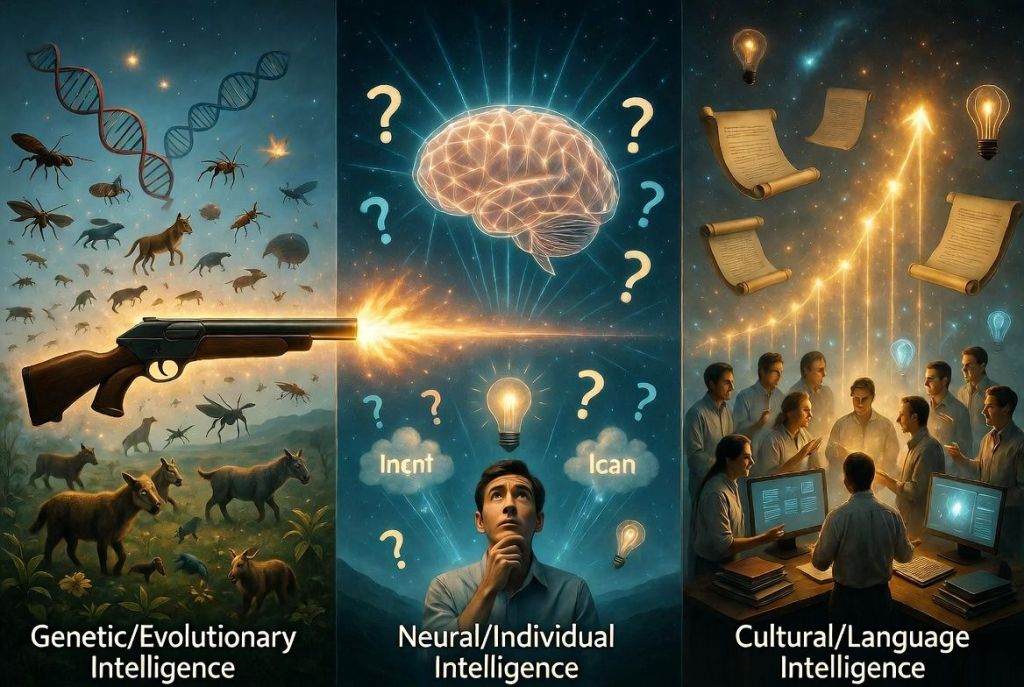
Three blasts into an unknown future.

What do you think?  Are humans truly a kind of general intelligence or simply a creature with quirks in our hardware and software? Is human intelligence truly distinct, or just biology’s most egotistical hack of shotgun method?  I’d love to hear where your randomly generated thoughts on this topic land. 
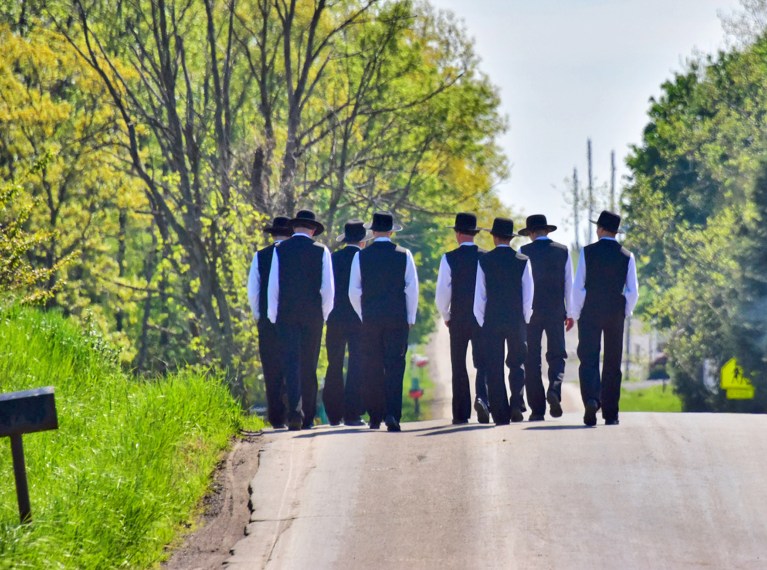
Scary Amish, Manufactured Sharia Panics, and Europe’s Demographic Reality

Standard

So, aren’t you afraid of the Amish moving in and imposing Ordnung law?

These peaceful-looking folks buy up large tracts of land, send their children to their own private schools, and even speak a strange tongue among themselves. It won’t be very long until they ban automobiles, require all women to wear bonnets, mandate beards for men, and pressure everyone to buy their discounted quilts. It’s clearly part of their long game.

If that mix of real Amish religious practice and wild extrapolation sounds completely ridiculous, good. That said, this is what propagandists do all of the time.

Anabaptist radicals—the forebearers of Amish—once aggressively seized control of the German city of Münster in 1534–1535. They established a violent theocracy, practiced polygamy, executed religious opponents, and even drove thousands of Lutherans and Catholics out into a freezing snowstorm. It is a historic episode that ended in horrific bloodshed. After defeat, the survivors gathered at the Bocholt Conference in 1536 and chose not a full rejection of violence, but only a tactical pause—force was futile “for the time being.”

Imagine someone using that bloody 16th-century event today to argue that modern Amish families, purchasing farmland in central Pennsylvania or across Ohio are secretly just biding their time, growing their numbers, and simply waiting for the perfect moment to strike and impose strict religious regulations. We’d call it fear-mongering and absurd—and rightly so.

None of us would seriously worry about Amish Ordnung (community rules) being imposed on ordinary Americans. There’s no will, capability, or realistic pathway to do so.

In the United States, religious communities have long maintained their own schools, arbitration systems, and customs. Orthodox Jewish Beth Din courts and various Christian panels are operated legally, protected by the First Amendment and always subordinate to national and state law. The Amish aren’t coming for your car or your clean shaven appearance.

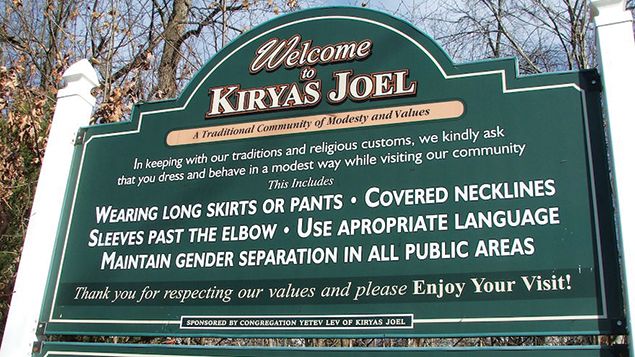
Kiryas Joel, an Orthodox Jewish settlement in upstate NY, has their own religious rules similar to Amish.
Orthodox Jews, in Brooklyn NY, have special patrols.

The Selective Sharia Panic

That brings us to Sharia.

For many, this is treated as a real and imminent threat—no-go zones, creeping theocracy, city blocks under Islamic law. The irony is thick. The loudest promoters of the “Sharia takeover” narrative often trace back to networks tied to pro-Israel advocacy, as well as major defense contractors (Boeing, Lockheed Martin, Raytheon, General Dynamics, Northrop Grumman). Figures and foundations pushing this perspective have functioned, in effect, as part of a sustained effort to maintain a boogeyman that justifies forever wars and interventionism.

David Yerushalmi—the anti-Muslim lawyer funded by pro-Zionist organizations.

Whether the fear is genuine or manufactured, the U.S. Constitution is more than sufficient to block any religious code from overriding secular law. I’m far more concerned about domestic elites—lobbyists, intelligence agencies, and the entrenched interests with real power to buy politicians and shape narratives—than about hypothetical theocracies in the American heartland. On Sharia itself, certain elements (such as the ban on usury) could even offer lessons for breaking cycles of debt slavery. At minimum, we should respect those who reject having our own exploitative financial and cultural systems imposed on them.

The Christian standard remains: treat others as you wish to be treated. Lead by the attractive power of example and love, not through bombs or domination.

There are two billion Muslims in the world, if a large percentage of them were actually out to get us we would not stop them.  But, like us, they’re all unique individuals and the extremists don’t represent them any more than the Salem Witch Trials do us.  The Islamic religion has a diversity of interpretations no different from Christianity and it seems most Muslims just want to live life like other people do.  The Sharia law panic on the right is no different from the left’s Handmaid’s Tale fantasy about Biblical fundamentalists.

Europe’s Demographic Reality

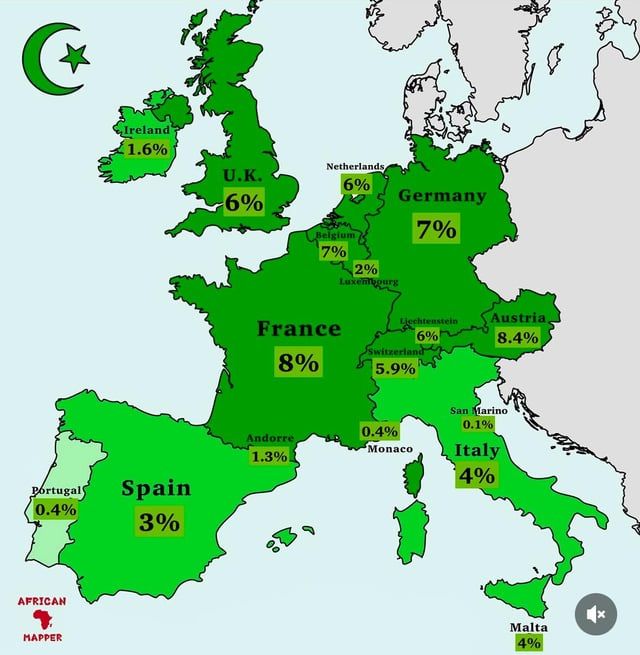
Europe faces a genuine transformation. Muslims currently make up roughly 7-8% of Europe’s population. However, while alarmist projections of a Muslim-majority continent in decades—all assume unchanging high fertility that the data contradicts. It is true Muslim immigrant fertility (around 2.6 children per woman) exceeds native rates (around 1.6), but this drops sharply by the second generation.  Assimilation?

In fact, the fastest voluntary fertility declines in modern recorded history have occurred in stable Muslim-majority countries: Iran, UAE, Tunisia, Oman, and Bangladesh.  Peace, female education, and general economic development lower birth rates across cultures—just as they do in the West.

Europe’s core problem is not invasion but its own fertility collapse well below replacement. Aging societies need workers to sustain economies and welfare systems.  Immigration is filling a vacuum created by native demographic decline.

NATO destroys Libya and this is the result.

What drives the migration waves?  Decades of destabilization—wars, regime changes, sanctions, and proxy conflicts in the Middle East and Africa. NATO’s intervention in Libya (Hillary Clinton’s “We came, we saw, he died” cackling) turned a viable country into a source of slave markets and refugees. The pattern is consistent: create chaos abroad, then face the human consequences at home. Neo-cons often cheer destruction overseas while panicking about the resulting flows.

Conflict and poverty keep fertility higher simply as a survival strategy.

Stability is the best contraceptive.

Ending endless interventions—the trillion-dollar wars, support for destabilization covert action, and regime-change cycles—would reduce the pressure to migrate. Sovereign nations should govern themselves. Saddam would’ve happily sold us oil. Iran’s original sin in Western eyes included rejecting a CIA-backed coup against its elected secular leader. Nations we’ve harmed have often shown more pragmatic forgiveness than expected when we finally stop killing their people and taking their resources.

If anyone had done to us what we did to Vietnam, world the ‘Christian’ U.S. ever forgive it?

This approach won’t magically reverse Europe’s native birth-rate collapse or cultural self-doubt, which predates recent immigration. But it would ease the crisis, allow more selective policies, and let more people thrive at home: Syrians in Syria, Palestinians to be free again on their ancestral land, and Europeans preserving their heritage without perpetual emergency.

Global diversity’s viability ultimately requires reciprocity—ending systems of domination and apartheid everywhere, allowing resource-rich countries to benefit their own populations, and fostering mutual respect over war propaganda. Second- and third-generation immigrants adopt the low-fertility patterns of developed societies. Prosperity and stability are self-correcting.

Fearing the Amish by dredging up Münster is absurd. Painting every Muslim as part of some monolithic conquest is equally so—and also is conveniently profitable for certain interests.

The real threats are internal cultural decay and the foreign policies that export chaos, and then import its victims. The saner path is to seek peace abroad and then spiritual renewal at home: lead by competence, example, and vitality of faith rather than fear and bombs.

Learning the Münster Lesson

Amish have learned, maybe through the error of their less peaceful Anabaptist forebearers, that it is better to farm than fight.  They have a greater strength than their numbers through rejection of violence than they do through arms.  We are not set free by our militarism or aggressive posture—we are bound to the military-industrial complex and state of propaganda.  A moment of real and true honest introspection may spare us a world of future pain.  Maybe we’re not those blameless heroes we imagine ourselves to be?

Spectacle.

Standard

The stage has been set for Trump’s fight on the White House lawn. The UFC octagon is set up and ready for the big June 14th event showcasing championship bouts between a series of professional athletes. A spectacle purported to celebrate the President’s 80th birthday and officially commemorating the nation’s 250th anniversary.

To many Democrats this is travesty of epic proportions. California Democrat Senator Adam Schiff suggested it is “out of touch” and others questioned the price tag to the American people (apparently the UFC CEO Dana White eats the entire cost), there was even a lawsuit filed to stop the event. But to the Trump faithful, and many in America, it’s the entertainment they love.

The UFC is wildly popular. No, probably not with cat lady’s (although I can’t be sure), but with just about everyone else. Millions will pay to watch UFC Freedom 250. This won’t offend anyone who matters so far as Trump is concerned and—if anything—this outrage of the Democrats only strengthens MAGA.

This country is full of those blue collar beer (not Bud Light) drinking types who—in act of rebellion against the decades of being lectured, shamed, and policed by coastal elites, corporate HR departments, and woke scolds—thrive on “liberal tears.” They more or less live for laughing at all those hand-wringing and pearl-clutching talking heads at CNN or MSNBC. They revel in being the hated ‘deplorables’ for not being politically correct according to the left.

And in the other corner? Those transgender and drag queen types who—for reasons not entirely clear to me—want to do a story hour for kids?

From the Biden administration going out of their way to fill positions with men wearing dresses to those attention-seeking displays at state houses. Republicans, for their part, play right into this, introducing bills and thus spark a backlash of “transphobia” accusations from the over-the-top sashaying activists. The great irony is that this mess of confused sexuality, gaudy woman-face flamboyance, originates in psychology that is similar to the MAGA hat wearer in NYC.

Trump loves spectacle. He loves being the center of attention, praised and celebrated—or even attacked—as long as he’s always the main event. The abnormal spray tan, the cartoonish signature hair, the provocations that dominate every news cycle: Yup, he is extraordinary and in nearly the same way as some drag queen diva. He tries to provoke a response. They call him thin-skinned, yet he thrives on the negative attention as much as the positive, so long as the whole planet is watching him own the room.

The biggest difference between Trump and the left’s woke spectacle is the audience he caters to. He wins the Boomers, those who think Lindsay Graham represents them over Thomas Massie, whereas LGBTQ+ presents as an exaggerated individualism and giving special exemptions to those who can claim the most intersectionality points. Both from an outsider looking in are just absurdities—people gaining aura by deliberately making a show of themselves.

Had Trump decided he would have had an easier road to the White House on the blue team the only thing different is he would be surrounded by a line of prancing men doing high kicks in long boots. That’s the irony of it all. If Trump were still a Democrat the left would see him as a crazy uncle, at worst, or a man breaking down conventions. Switch his UFC Freedom 250 with a drag show with a similar name, in this scenario, and Adam Schiff would certainly be calling it stunning and brave—a ‘historic’ moment!

The fall of Rome was a historic moment. So was the destruction of Jerusalem in 70 AD, where Josephus described rebels adopting women’s dress, perfumes, and effeminate mannerisms amid the moral collapse which had preceded the city’s ruin.  The bread and circus of Rome.  And what we’re witnessing today is not ultimately a matter of right versus left, but it is emblematic of a broad decline in American culture—a triumph of spectacle over substance.

Data Centers as Dual-Use Scaffolds

Standard

The book of Esther tells us the story about Haman—a man who was so obsessed with destroying a rival that it cost him his own life in the end.  It could be read as being a cautionary tale against ambition when it is at the cost of others.  The devices we build to solidify our own power might instead be our own undoing.  

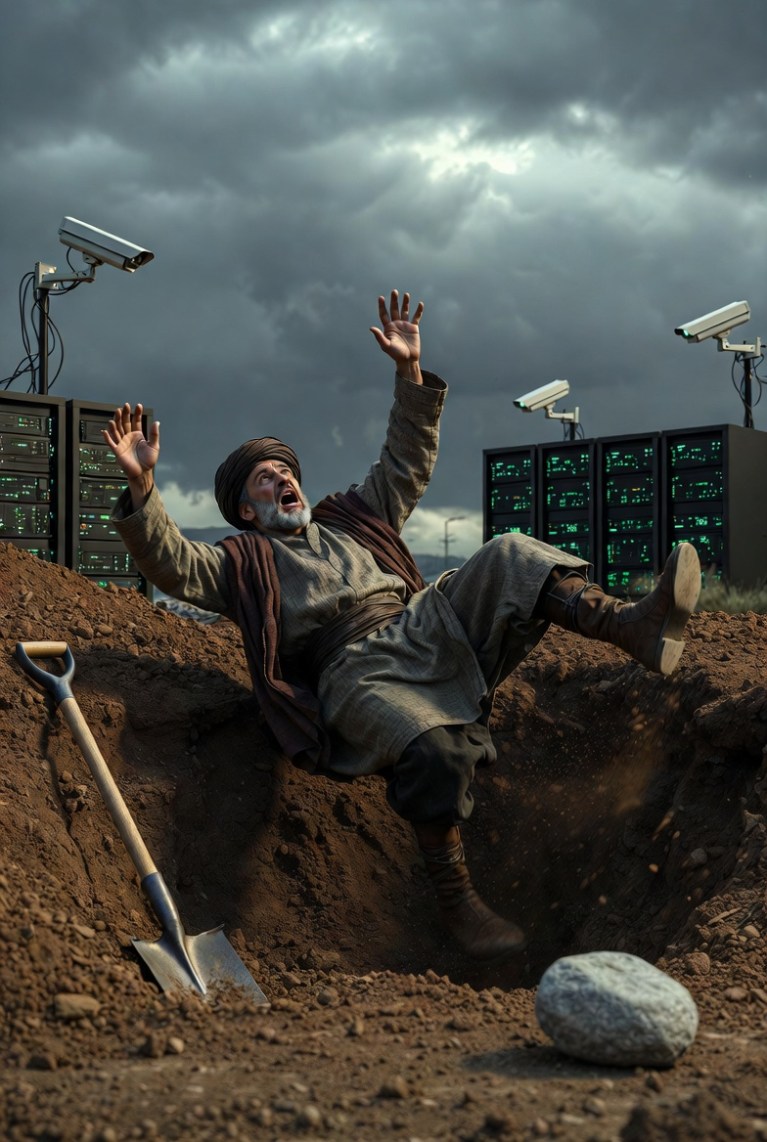
In the same way Haman didn’t anticipate Mordecai being related to queen Esther we can’t always imagine how our own plans will play out and never actually know how the scaffolds we build to deal with others will be used.  There’s a principle about such plots found in Proverbs 26:27, “Whoever digs a pit will fall into it; if someone rolls a stone, it will roll back on them.”  Jesus explained this concept of reciprocation and told Peter “those who live by the sword die by the sword.”  The things we bring into the world can easily come back on us.

We Must Beat China!

A few years ago, policies like confronting China and large-scale deportations of illegal immigrants seemed right to me. I saw them as necessary for national security and for preserving our country’s character. It was never about skin color or the language people spoke. For me, it came down to basic fairness—everyone playing by the same rules—along with the belief that China was acting as a bully in its region and that the U.S. should put the interests of its own people first. Back then, I still trusted that our institutions and the character of the American people, though imperfect, would generally do the right thing.

Fast-forward to today, and—for multiple reasons that go beyond the scope of this post—I no longer trust the government to reliably serve our best interests.

After I’ve watched multiple administrations say one thing while doing another, the actual needs of the American people clearly aren’t a priority in Washington DC or amongst our elites.

A race towards the abyss?

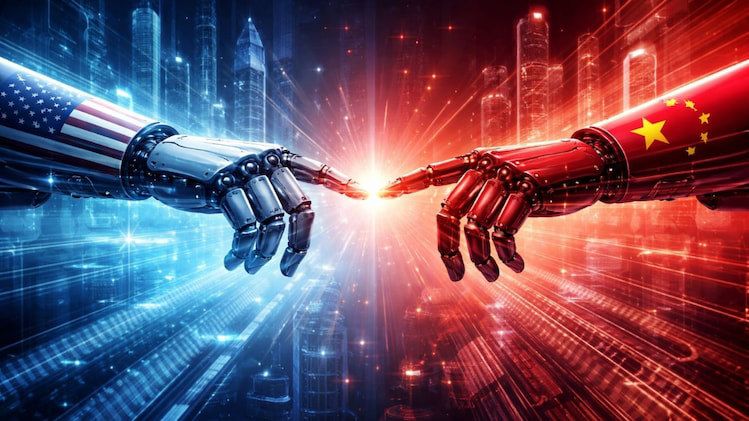
So, when Kevin O’Leary says we need more data centers to beat China, I’m skeptical.  Is all this massive AI infrastructure being built as a tool of protection from a foreign power or is it simply about control, in general, for a few elites?  There’s actually no way to know for certain how this plays out, but there’s no reason to believe that this tool of war and of mass surveillance won’t eventually be used on us.  China may be the excuse.  However, AI is the ultimate dual use technology and as easily domestically employed as it is against an alleged foreign threat.

What Is Actually Coming?

My initial response to data centers was a response to NIMBYism.  It was so ironic to see people, on social media, using ChatGPT to construct arguments against a proposed data center.  Maybe this was just a typical fear of change Luddite response and what is built or not built a matter of the property rights of a land owner.  And yet sometimes a rule is true until it isn’t.  The formula that has worked since that 1800’s invention of the power loom, that technology frees up labor to do other beneficial things, doesn’t work with a machine that does everything at less cost than a human.

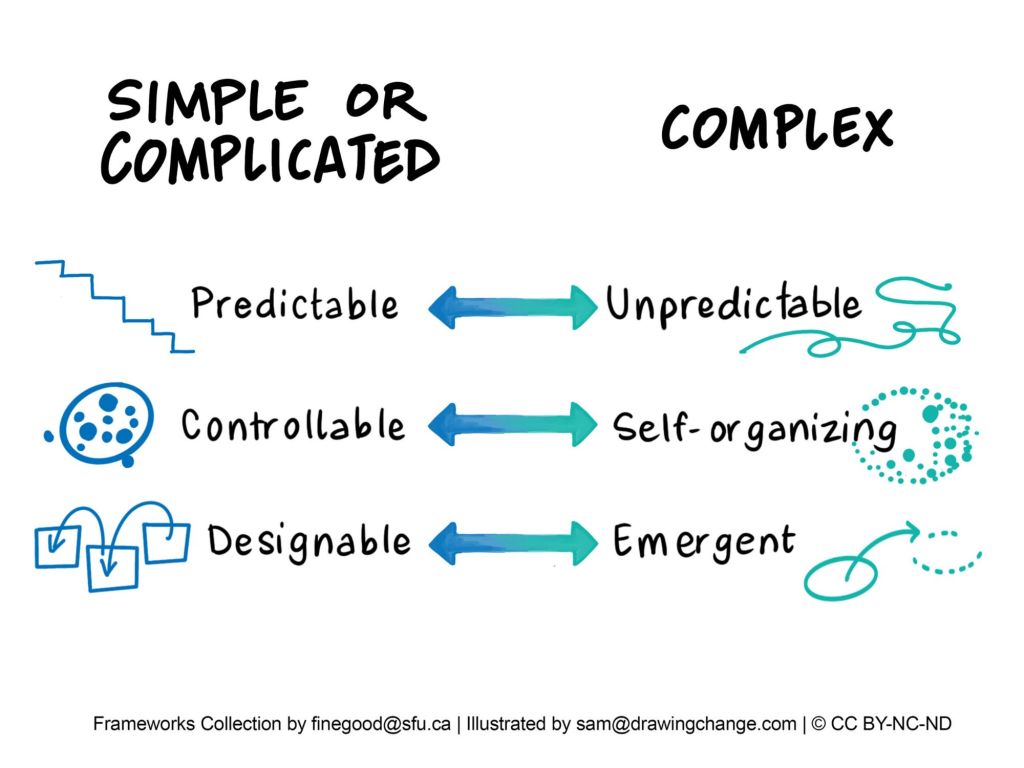
Even if the current intent of O’Leary is not to destroy your future, we need to consider the law of unintended consequences.  The rule is that a complex system will often react in unpredictable ways.  And not necessarily an AI going rogue either.  Sure, issues like the paper clip problem must be discussed, but it’s more the tendency of humans given too much power that should be considered.  So even if a leader now is opposed to using AI tools in a way that violates our rights—the next guy to take the reigns may not.  

What sent a chill through me as far as ICE and immigration enforcement was not that it is any different from any other arrest in some regards.  We take criminals off the street all of the time, rip men away from their families simply on the basis of accusations, and this is just an accepted part of civilization.  We have this system to punish the evildoer and it’s better than violent chaos.  But, this only can work when the mechanism is itself bound to law.  What bothers me is how quickly the Fourth and Fifth Amendments were pushed aside for sake of expediency.

Moreover, when U.S. Citizens were killed by ICE the same people who said that we need stronger enforcement to protect citizens did a complete 180 turn and cheered with a FAFO dismissal of those questioning the use of deadly force.

What this tells me is that propaganda from a political regime trumps our Constitutional law.  And it works both ways.  When parents speaking up at a school board meeting can be described as “domestic terrorists” and a Jan 6th rioter be held in indefinite detention, this isn’t about right or left and Democrats versus Republicans.  No, when a partisan sees a legal tool that can be stretched to gain on their enemies they will use it with a completely clear conscience.  There is not a shortage of excuses to abuse power.  That’s why we must stand for civil rights for all, we never know when we’ll be the inconvenience to be eliminated.

Our Hangman’s Noose

In the end, and returning to the thesis (those who plot and build their devices to destroy others end up facing the device they built), there’s been a critical lack of awareness about what we are actually building.  We cheer ICE as surveillance technology developed to kill in Gaza is deployed to our streets.  It is “Homeland Security” and, therefore, this would never be used against the American people, right?

That ‘security’ being the same DHS that a ‘glitch’ had mysteriously as in Tel Aviv, Israel—after X rolled out a feature showing the account location information. 

Strange, huh?

Thankfully our government and the  head of product at X dismissed it as being “fake” or “manipulated media” (it was not) while they took the feature down temporarily and then ‘corrected’ the issue.

So as far as the AI rollout and ICE tactics, what if they’re actually laying the ground work for the surveillance state—manufacturing consent by deploying an acceptable version first (as a trial run) against a population many of us see bad and giving us some tools for free?  We need to ask why are AI companies so willing to lose money (spend three dollars for every one earned) if it’s merely another business venture?  Could we be walking into a trap?  Could those same detention facilities also be used to warehouse American dissidents?

If you’re trying to catch a wild animal you’ll put out a trap.  You will present something for free, lure them into the device you have built to ensnare them, and at an appointed time the mechanism is triggered.  So, think, is there any reason why you would trust the people currently building AI infrastructure?  Are you absolutely certain that this political class that betrays us at every turn is really concerned about illegal immigrants?

Even if this isn’t the plan—what would stop it from becoming the reality?  

Did you see how fast the narrative shifted in Minneapolis?  You know if a Federal agency were to ever raid your home in the middle of the night, ship you away for crimes against the regime, there is nobody coming to save you, right?  If you were to totally disappear few would even care enough to inquire and those who might protest would be quickly drowned out by propaganda that painted you as extreme and dangerous.  Consider this: One moment people praised ICE for protecting citizens, but in the next they’re celebrating when ICE killed two citizens—Alex Pretti and Renee Good.  

Rights that aren’t universal, those which do not exist for everyone, are not long for this world.  We can’t give our abusive elites this kind of surveillance infrastructure and legal power without expecting it to eventually be used against us.  You can’t count on anyone to defend your own civil rights when you do not fight for the rights of others.  For sure, the government will not save you from their own power grabs.  We must see the foot in the door strategy and slam the door on their toes if need be.

We must be wary of those making special exceptions.  And we need to question those who give unexplained gifts.  When—at a flip of a switch—something we build is so easily turned against us, we may just be better off not to build it.  At the very least we should be taking time to consider all possibilities and then create safeguards which are up to the task.  Otherwise we may end up hoisted by our own petard.

A Better Union of Humanity 

We are the only line of defense.  

Our existing institutions are corrupted.

Government and corporations often will serve only the most powerful elites at our expense.

We need a Union of Human Individuals that goes beyond sending a representative to be bought or otherwise manipulated.  We need to address the growing power unbalance—a growing wealth gap that with AI will only be multiplied.  We must put aside old divisions, none of the red team versus blue team stuff really matters where this is all going, so it is time to leave it behind like a middle school clique.  Language doesn’t matter nor does a nation of origin.  Even religious differences are best set aside.  We all have something in common: We’re human.

If we can’t find common ground we’ll be destroyed by our own devices.

The guillotine was eventually used on those who initially used it.  We may build a system aimed at one group of people and yet these things tend to boomerang back at us.  We’re better off to judge as we wish to be judged, forgive as we wish to be forgiven, and stop building infrastructure that can be turned on us as easily as it is used against them.  So let’s do this right, not be a Haman, and just be human to all humans instead.  We don’t need more dual use detention facilities and data centers—we need to complete a more complete and better union of humanity.

Our Precious Sticks—From a Child’s Hand to a Community’s Legacy

Standard

My little daughter loves to clutch small objects she finds while meandering in the yard or park. A googly eye, a washer, a stone, small flowers, or just a stick on the path that caught her attention. This behavior—part of childhood development—could be about security and comfort, a sense of ownership, establishing independence, or simply having something to hold onto in an otherwise overwhelming world.

Now I suppose I could pry these silly objects out of her tiny hand, break them or throw them aside, and make her cry.  And yet why would any decent person ever intentionally destroy what someone else cherishes? No, even if we don’t personally understand the need for something, only an awful monster destroys what others love simply because they can. It’s vindictive and cruel.

House Upon the Hill

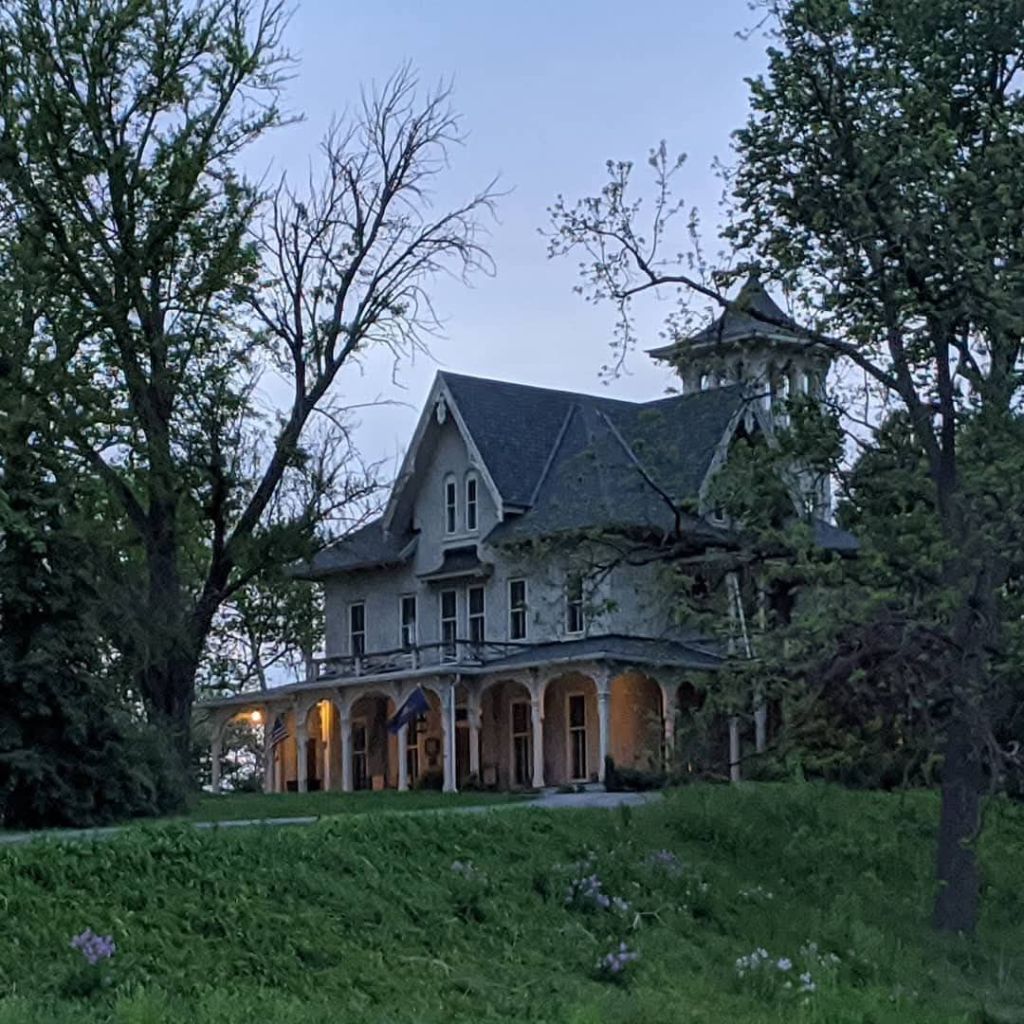
Taken on May 19, 2020.  My caption then read it was a museum.  I had not realized they had quietly shut down the museum.

A few years back, on a walk around the long block, I took this picture. This house, with its Italianate Victorian charm and surrounded by trees, was absolutely a postcard picture—despite the ugly senior care facility built to the right. It was also a familiar landmark and a place I had gone as a child on a school trip. I remember the high ceilings, floor-to-ceiling windows, and wide wraparound porch. On private land, it served as a community site: a place of births, and a few weddings, and a memorial garden where ashes of the deceased were spread.

This was a symbol. A waypoint. A place for people to reflect on where we came from to know where we are going. On that day, with my pace broken for a moment, I thought the legacy was secure. It was well-built in 1861, and still in great condition (better than my own house), certainly far too important to the local lore to be at risk. It was like a grandparent, an elderly voice, a legacy of a time past that deserved the respect we gave it for the role it served in the community. This wasn’t just a house—it was our heritage.

We need these landmarks—especially in the age of Walmartization where everything is cheaply made and disposable.

I remember when Walmart first came, how exciting it was, but now it’s sad to go to a completely new town, have all of the same corporate brands, and only an illusion of variety or choice.

In the Bible they would use a pile of stones as a marker to memorialize important events. I do believe common physical spaces, the locations connecting past with present, are as important today as ever in this age of endless abstraction. Sacredness is imbued on a site by the work and attention spanning time, creating a location for moments of grounding in a world that seems to be spinning out of control.

The old house built of stuccoed brick stood as a silent witness to a changing world. That tower overlooking River Road. For over a century and a half it endured seasons coming and going, lasted through decades of conflict and uncertainty, and watched over the flood waters that rose and fell. It was a guardian of the Susquehanna River, even on the day the body of a young drowning victim—the daughter of a close friend—took her final journey on the waters. Civil War reenactments were held on the grounds.

So, one may say it was just an arrangement of sticks, stones, and glass.  But it was built with human hands and human creativity, and thus carries a shadow of the human souls that built and carefully preserved it.

A Microcosm of Corporate America

The Slifer House, an immaculately preserved example of Samuel Sloan architecture and personal residence of Colonel Eli Slifer—a significant local businessman and Civil War figure (recalled as “one of the few unobtrusively great men of Pennsylvania” in the Philadelphia Times)—later used as an orphanage, the original home of Evangelical Community Hospital, then a museum, and listed on the National Register of Historic Places—has become a victim of cultural vandalism and corruption.

Through a combination of corporate greed and local government apathy—namely Asbury Riverwoods and Kelly Township—a treasured landmark is now a pile of rubble.Decades of effort. The equivalent of three hundred thousand dollars in today’s money raised in 1975 to keep the house in perpetuity—a past generation’s gift to us—has been forever destroyed. Why? Asbury, an out-of-state “non-profit” with a CEO Doug Leidig paid $1.4 million, seems to exist mainly to extract value from the elderly. A museum simply wasn’t going to produce the cheddar. The move likely came down to balance sheets or bonus structures—all while claiming the desecration of history was on behalf of their elderly residents.  Sure.  They destroy our inheritance and don’t even have the decency to admit the enterprise is motivated completely by their own exploitative machinations.

Maybe there was one miserable old coot who had wanted it gone and a dozen others fooled by their claims it was on the verge of collapse.

As touched on in my last post, our property rights are not absolute. Biblical law went as far as to mandate leaving crops in the field for the poor to glean—a Year of Jubilee when all land would be returned to the ancestors of the original owners. This recognized that economic outcomes aren’t all a matter of merit or morality. The authentic Christian tradition has always taught that our individual success is always a gift from God—thus we cannot be inconsiderate of others and should be open-handed.

The Slifer House could have been transferred to those interested in preservation. If the true reason was cost to residents, this would have been the obvious solution. Sadly, it wasn’t about the residents. The current regime prefers profits for the few over preservation for all. It gives priority to faceless corporations led by men who mimic human empathy as part of their manipulations, over community and genuine connectedness. It is not illegal for Asbury’s executives to have a historic treasure smashed and the site desecrated—but there is certainly a question of morality and ethics.

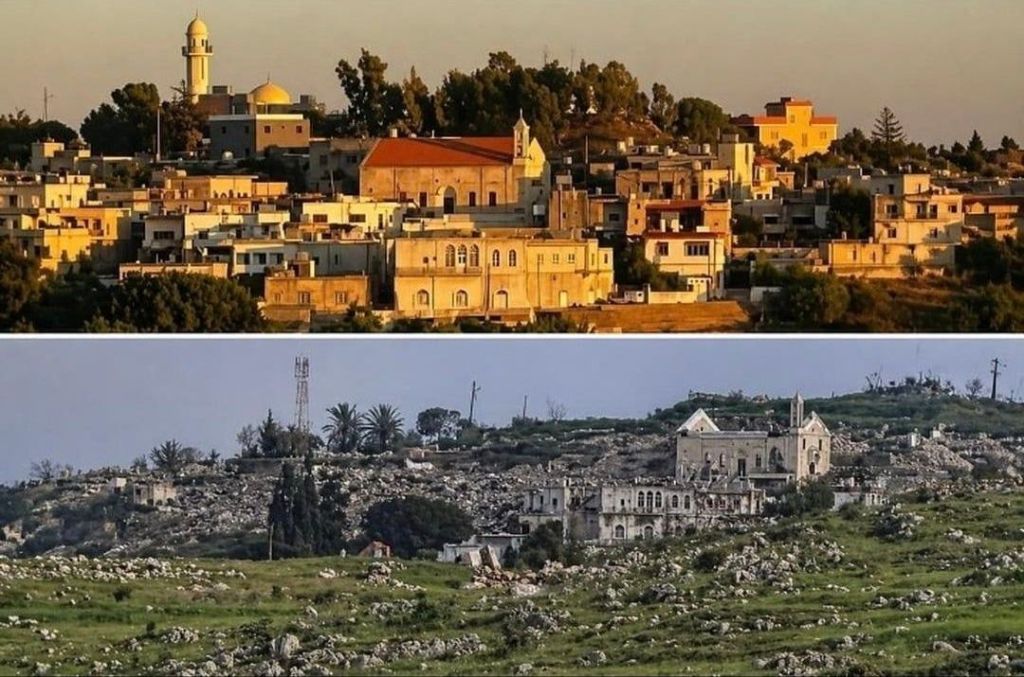
Those who have done this to the Christian village of Yaroun will also claim it is justified—maybe invisible terrorist tunnels?

Those who ruthlessly climb the ranks pride themselves on being forward-thinking and making the hard choices. But in these cases it is only ambition without reflection. They are calloused and unappreciative people who only care about money. That’s why the country is spinning out of balance. The “finders keepers, losers weepers” mindset—where merely having the legal basis to do something is enough—goes against good morality and enables elites to loot this country. When corporations think only of shareholders or those being compensated, the common good is sacrificed.

Capitalism only worked as part of a nation where Christian ethics provided restraint. When ownership is concentrated in the heartless machinery of distant corporations rather than distributed to actual people who live locally, we are dismantling the heart of the Constitutional Republic. We’ve reached a critical point: AI is unprecedented in power and this technology already concentrated in a few hands of men who aren’t even stakeholders in the nation—let alone local character. Small men, bound by convention that has outlasted design, will enable those who will steer us into the abyss.

Valuing Humanity Above ‘Progress

The sticks in the hand of a toddler seem useless to some, yet they serve a purpose. It is what the psychologist Donald Winnicott described as “transitional objects” (blankets, toys, sticks, stones) and they are a bridge that helps children move from total dependence to independence. Familiar objects provide comfort, security, and a sense of control in an overwhelming world. One may say they are points of orientation. And deliberately destroying or dismissing them disrupts this process and causes real distress.

Adults have similar needs, most especially in a world of rapid change and reminders to “touch grass” as the way to cope with the disconnect from reality that grows given an increasingly artificial environment.

Slifer House was a place solace to many—a small refuge where things didn’t change. The old rose bush that bloomed magnificently, the memorial garden, the tower overlooking, a hospital where people were born, and a final resting place where their ashes were spread. The desecration of this site deserves far more attention and beyond just Asbury Riverwoods earning the new lower star rating on Google.

We need a conversation like what is taking place in Albania. There are mass protests over an island compound for elites that has been legally approved and yet is now being challenged with chants of “Albania is not for sale” and “cancel the project.” Sadly, in the corporate U.S., we’ve been so conditioned to believe all that matters is money and even our cherished cultural heritage must give way to new development if that’s what the wealthy (and the corporations they control) want for themselves. It is Capitalism without any of the moral restraint the founders viewed as being mandatory:

The spirit of commerce…is incompatible with that purity of heart, and greatness of soul which is necessary for a happy Republic.

John Adams, Letter to Mercy Otis Warren, 1776

Unfortunately our government prefers those exempted from taxes and foreign interests over the good of taxpayers. My home could be seized if I was delinquent in paying local dues, but not those granted their non-profit status while no longer providing anything of a public good. No, Asbury Riverwoods does not technically profit from destruction of property at our expense—but those who hide behind this legal structure most certainly do. Kelly Township’s fault is not having a framework established, the initially flippant attitude elected supervisors had towards those of us who were concerned. They failed at vision, to care enough to have legal protection in place and their negligence will now cost every generation that follows.

What I could sense in the eye rolls at public meetings, sighs in the CC I wasn’t supposed to see, was just a passive-aggressive nasty streak under a plastic smile. The problem with evil in our time is that it conceals under layers of PR, manufactured consent, and insincere “I feel your pain” politicking. Yes, you’ll catch those glimpses of the truth and you know when someone is just going through the motions, but they are just so slippery and hard to pin down. P. Diddy soaked in baby oil is more easily held accountable.  And I do wish for the villains who would openly reveal themselves and just admit they just love breaking another child’s toys for sadistic pleasure.

Like the Dr. Seuss classic Horton Hears a Who!—where a stubborn elephant fights to save a dust speck as others conspire to boil it, what other people cherish should be protected and collective desire to preservation even be treated as being as valuable as a deed. Even if we can’t hear the little voices ourselves or can simply dismiss it as silly sentimentality, this basic lack of hidden value felt in human hearts is currently undermining the pillars of humanity itself—and at this moment when we need respect for feelings the most: As we blaze forward in our mindless commerce, and enter this new age of super intelligent machines without consciousness, will there be a rational reason for these decision makers to keep us?

What will ever stop the elites from bulldozing or boiling us when they find a ‘better’ use of world resources?

At this pivotal time, we need a generation of Eli Slifers to rebuild what was lost and to build the new foundation of morality and ethics.  Trust in institutions like corporations or government will not be sufficient.  If anything the powers that be are in cahoots as they divide us up and pawn us off like the artifacts of Slifer House.  No, we need to rise up like the people of Albania, and reassert ourselves, or  humanity will die with a wimper as the machine of indifferent ‘progress’ pulverizes everything in it’s path.