Every so often, I finally figure something out and can make a real observation. Recently, I saw a social media post from Trump—likely one of his bold declarations about Venezuela—and what he was doing became crystal clear.
He doesn’t have an actual inked or signed deal with the Venezuelan side yet. But that doesn’t matter. Trump is targeting people at a primal level rather than appealing to the intellect—because that’s where our decisions are truly made. We’re emotional creatures, not purely rational ones.
This is a sales pitch ^^^
Trump is manifesting. He declares it, brings it into the realm of reality, then does everything in his power to bully everyone into accepting it. And it does make me wonder: Is this truly how the world works? It’s easier when you’re already a billionaire and the President, of course, but he names it and claims it. Or, using his colloquial description, it’s the “grab ’em by the p*ssy” style of persuasion: “She wants it. I’m rich and can get anything she wants. She’ll come around to seeing things my way.” It’s hyper-confidence—the insane confidence of a man who truly believes he can get away with anything. He’s the salesman who has fully bought into his own pitch and, through brutal persuasion, forces the sale: “I’ll make you an offer you can’t refuse!”
I’m not like that.
I always try to respect boundaries, persuade with logic and arguments. Trump just declares it, and if you don’t go along with his plan, you’re [insert insult here].
Let me explain with a personal example: Years ago, I wrote a 14-page letter to a woman I was interested in, laying out a long theological and philosophical argument to make my case. Of course, I never sent it. Yeah, I might be half autistic, but I’m not completely dumb. I know men don’t win a woman’s heart through her head. If I’d handed her that lengthy dissertation, she wouldn’t have cheered—she’d probably have cried, gotten confused, or walked away. Certainly not agreed to a date. In romance, we’re primal, not intellectual. The same applies to our political alignments.
If I actually knew how to do that primal type of persuasion in real time, I’d probably get my way more often. It’s the easier to ask forgiveness than to get permission mindset—and it wouldn’t exist if it didn’t actually work.
Entitled, narcissistic, and manipulative can also be described as media-savvy, self-assured, and effective—depending on how you frame it. Trump grinds my gears because he doesn’t follow the rules that exist in my worldview. He reframes the entire discussion with his violations of rules—like kidnapping a head of state—and yet it’s all part of a larger plan.
The real goal appears to be renewing the flow of oil from Venezuela to the US. Trump doesn’t care who is in charge or what economic system they have (though he knows you do). He’s focused on moving the conversation to where he needs it: a secure source of energy and minerals next door, not on the other side of the world.
Legal? Only if you stretch the law to its breaking point. Effective? Well, who wants to be next?
We all agree Maduro—like most politicians—probably belongs in jail, and maybe we should do this more often (at home rather than abroad). Making this bold military move is psychological: it’s intimidating and forces cooperation. If the new government makes a deal, the US lifts sanctions, oil flows again—and suddenly Venezuela’s universal healthcare isn’t an issue anymore. The real holdup was the pile of nonsense, grudges, and gridlock on both sides. Trump broke the rules of the conflict, and now he can negotiate a new deal for the benefit of everyone who cooperates.
Ultimately, like most people, I govern myself by external rules: Do this, don’t do that! We treat them as absolute, written in stone. I’ll die on this hill of my principles! But this can become a hindrance—a functional fixedness or quagmire of competing ideals that mostly boil down to semantics and different words for the same things. I know Trump is wrong because I’m right! He gets what he wants by breaking my rules of engagement, so he must be evil!
However, Friedrich Nietzsche called this “slave morality” and saw it as an obstacle to humanity’s full potential. His ideas of self-overcoming, being our own lawgiver, embracing the wholeness of life (without assigning moral weight to every experience), and rejecting herd mentality or conformity to the status quo all go against being compliant for sake of compliance.
Trump gets far more done with his impolite bluster than most do in a lifetime of “honest” effort. He appeals to our carnal, visceral side—and while all politicians do this to some degree, he does it nakedly, without the usual polish.
We confuse the rational (religious, scientific, or otherwise) with the reality of our base desires—for control, status, recognition. Trump disrupts, shakes the basket, and builds a new path through the chaos that suits his agenda.
Facing the ‘wrong’ way in an elevator makes people uncomfortable. But it’s not illegal. And people will actually conform to the group if they turn the opposite direction.
The world is governed by unwritten rules and unspoken agreements. Some of us want to nail it all down, demanding predictability and compliance with standards we were told would make the world better. We’re often jammed up in conflicts over false dichotomies and invented moral frameworks. I know this from my religious upbringing: the constant looking over our shoulders, meeting expectations rather than pursuing what we enjoy, and the resentment simmering underneath.
One of my Mennonite friends had the speed and size to be a D1 athlete, but he never pursued it because his conservative parents wouldn’t approve. He “kept the peace”—like many of us—at the expense of his potential.
He has expressed regrets.
From a Christian perspective, the self-actualizing person is unrepentant and rejects God. Trump’s habit of making up his own facts—like claiming an ICE agent was run over when video clearly shows otherwise—is strikingly similar to the “my own truth” of the woke left. The risk is complete detachment from our useful tradition (what has worked) and science (what will work), eventually steering civilization into the weeds.
But the proof is in the pudding. If Trump leaves office without causing WW3, with the economy largely intact, can we really feel bad that some rules were broken?
Then again, maybe we could achieve the same things through conventional means. What if we threw a few billionaires in jail instead of a foreign head of state, or sided with the world court on Netanyahu rather than Maduro? Either way—optimal or suboptimal—we’ll remember Trump’s name. Like the popular feminist quote, “Well-behaved women seldom make history,” a timid man is likewise not widely respected or impactful. Is it possible we all need liberation from the clutter of our minds and reasons?
Still, I think there’s a better synthesis between Trump and the pointy-headed intellectuals too high in their ivory towers to be of practical value.
Trump wins because he identified the struggles of real people, rather than deny them. Maybe some academics with a racial theory can write a thesis about ‘privilege’ and yet have they ever solved any problems in the real world?
I like my own conscientiousness—orientation toward respect for established standards and individual rights over political expediency.
And yet, by the time I carefully deliberate all the angles of legality and practicality and examine potential failure points the opportunity is often gone. A guy who reacts to opportunity, seizes the moment, dictates the outcome in advance (while staying flexible enough to read the room and adapt), reaches the goal—even if he has done the ‘wrong’ way by conventional wisdom.
If morality is all a social construct, all part of a complex negotiation, then maybe following pure instincts and base intuition is better than obeying a list of rules?
Who says the other side must sign a paper—or even agree in advance—to have a deal?
If it’s a win-win at the end, despite the pain of the process, fewer casualties, is it good?
What do you think? Does primal persuasion win out, or do we need more rules to keep things civilized? I’d love to hear your thoughts in the comments.
I’ve heard stories of Mennonite old timers who would walk into a dealership, ask them to give their best price and then refuse to engage in any haggling beyond that. To them this concrete style of communication is commanded by Jesus and something I can respect. Their word was their bond. They did not play all the games. Business that is honest and done with a handshake.
What a pleasant and simple world it would be if everyone operated this way. No need for lawyers to read the fine print if everyone were an honest broker like this. But we do not live in that world. And there are those who love to exploit the trust of those born into Anabaptist religious cloisters. Every few years there’s another fraudster who sweeps through Amish and Mennonite country, selling the next big ‘investment’ and wiping out the hard earned savings of the unsuspecting—which is not to even mention those small scale “natural healing” swindles or grift seminars.
This is why healthy skepticism is necessary and discernment of character is a skill that must be learned. Born into one of these communities, I’m still far too trusting—most especially if someone starts to speak my language. “Oh, he stands up for the working class! They’re the defenders of freedom and democracy!” We fall for those who exploit us, who manufacture consent by various means, who claim to be like us and yet lack our Christian conscience. We are most susceptible to those who mimic our values as part of their deception.
Being a good or moral person can lead to being extra vulnerable. Some just lack the imagination for evil, which is wonderful innocence, but this is not optimal. Wisdom requires that we are able to read through a sales pitch and understand how propaganda works. A skilled liar plays on what you want to hear, they exploit the prejudices and preconceived ideas of any audience. We need to be a step ahead of their schemes—which requires a little pattern recognition or small consideration of what may be hidden behind their words.
Letting Your Yea Be Yes, Nay Be Nay
Growing up, going to a public school, there was always that “I swear on my grandma’s grave” kid. Cued by your incredulous face, he would attempt to fortify his most questionable claims with this invocation of something else trustworthy. And the whole reason for this is that their own word wasn’t good enough. And this swearing act itself would arouse my suspicions. If I can’t trust you in a small inconsequential claim—how could I ever trust your oath?
Obviously this was theatrics in Secondary school, but a manner of speech that Jesus targeted for rebuke:
Again, you have heard that it was said to the people long ago, ‘Do not break your oath, but fulfill to the Lord the vows you have made.’ But I tell you, do not swear an oath at all: either by heaven, for it is God’s throne; or by the earth, for it is his footstool; or by Jerusalem, for it is the city of the Great King. And do not swear by your head, for you cannot make even one hair white or black. All you need to say is simply ‘Yes’ or ‘No’; anything beyond this comes from the evil one.
(Matthew 5:33-37 NIV)
This is repeated in James 5:12 a bit more succinctly:
Above all, my brothers and sisters, do not swear—not by heaven or by earth or by anything else. All you need to say is a simple “Yes” or “No.” Otherwise you will be condemned.
Credibility is something built over time and lost in an instant. Swearing an oath won’t fix a loss of trust. But it does basically admit that your own word is not sufficient and this suggests a deeper problem. An oath is useful in a courtroom, where it is used as a dividing line between speech that is free and misleading words you can be prosecuted for—yet what Jesus says is part of a broader push in the direction of plain and honest speech. As St Paul instructs:
Therefore each of you must put off falsehood and speak truthfully to your neighbor, for we are all members of one body.
(Ephesians 4:25 NIV)
Practice truthfulness.
Humanity is one team, one body, so deception is a sin against all members.
The Bible is also full of examples of the opposite of this:
Those who flatter their neighbors are spreading nets for their feet.
(Proverbs 29:5 NIV)
Everyone lies to their neighbor; they flatter with their lips but harbor deception in their hearts. May the Lord silence all flattering lips and every boastful tongue.
(Psalm 12:2-3 NIV)
Not a word from their mouth can be trusted; their heart is filled with malice. Their throat is an open grave; with their tongues they tell lies [or flatter].
(Psalm 5:9 NIV)
My companion attacks his friends; he violates his covenant. His talk is smooth as butter, yet war is in his heart; his words are more soothing than oil, yet they are drawn swords.
(Psalms 55:20-21 NIV)
In all of these cases you have those who appear to be our friends and use flowery and agreeable speech to ensnare. We naturally suspect those who aren’t like us, who say the stuff we don’t like, but we trust those who speak our native tongue and seem to share our cultural values. That’s our blind side and vulnerability. A guy shows up in a nice suit, well-groomed, and we’ll just take him as credible. We’re susceptible to those who dress up their deception in the familiar—or who feed our prejudices.
Those Who Dress To Deceive
The Bible mentions flattery, a Trojan horse and the way some use to lower our guard, but the Gospel warns about this:
Watch out for false prophets. They come to you in sheep’s clothing, but inwardly they are ferocious wolves.
(Matthew 7:15 NIV)
Looks can be deceiving.
For there are many rebellious people, full of meaningless talk and deception, especially those of the circumcision group. They must be silenced, because they are disrupting whole households by teaching things they ought not to teach—and that for the sake of dishonest gain. One of Crete’s own prophets has said it: “Cretans are always liars, evil brutes, lazy gluttons.” This saying is true. Therefore rebuke them sharply, so that they will be sound in the faith and will pay no attention to Jewish myths or to the merely human commands of those who reject the truth. To the pure, all things are pure, but to those who are corrupted and do not believe, nothing is pure. In fact, both their minds and consciences are corrupted. They claim to know God, but by their actions they deny him. They are detestable, disobedient and unfit for doing anything good.
(Titus 1:10-16 NIV)
If it were easy to cut through the crap then there would be very little chance of anyone ever being deceived. But the worst enemies of Christ weren’t those who had openly hunted and tried to kill his followers. You knew to avoid them. It’s those who entered the church to subvert and undermine.
St Paul calls out those of the “circumcised group” and who have actions that deny the relationship they claim to have with God. Today we deal with something insidious, now embedded into several generations through propaganda and established prejudice. We can’t see it because it hides within us, carries a familiar last name or claims to have devotion to the same values.
Many now believe it is okay to kill babies for an ethno-state. They go to church on Sunday never realizing that they have departed from Christ:
Not everyone who says to me, ‘Lord, Lord,’ will enter the kingdom of heaven, but only the one who does the will of my Father who is in heaven. Many will say to me on that day, ‘Lord, Lord, did we not prophesy in your name and in your name drive out demons and in your name perform many miracles?’ Then I will tell them plainly, ‘I never knew you. Away from me, you evildoers!’
(Matthew 7:21-23 NIV)
Those who have yoked together with those who Jesus said are “of their father the devil” (John 8:44) are as doomed to hell as an unbeliever. The Covenant with Abraham was tied to sharing his faith and righteousness. Likewise, you are not of Christ unless you obey his will no matter how “born again” you feel or how flowery you pray in front of the crowd. Enabling evil is just evil. Jesus called out the fakes who hid behind their mask of devotion and his earliest followers did the same. Stephen “cut them to the heart” challenging the Jewish leaders with a flurry of accusations—they killed him for telling the truth:
You have taken up the tabernacle of Molek and the star of your god Rephan, the idols you made to worship. Therefore I will send you into exile’ beyond Babylon. (Acts 7:43 NIV)
Harmless as Doves, Yet…
The simple and honest are especially vulnerable to the cunning and crafty. And it’s not always a matter of intelligence. It is about trust. It is about being a part of the same civilizational project.
Some places you can leave front doors unlocked and not worry about being robbed. Everyone is bought into the same moral code or same social contract, and thus respects the property and the rights of others who are partners in the overall work. And the doors of our civilization are wide open—not turning people away is a wonderful Christian value and good.
However, this value also means many let their guard down around imposters who pretend to be like us and yet work to subvert, supplant, enslave or destroy what we’ve built. They are a “snake in the grass” slithering, waiting for the moment of weakness to strike. They’re the wolves who will accuse the sheepdog of being a bigger threat to the sheep while they plot to devour the flock.
Yes, an impulse towards being charitable is great, but also we need to be wary of those who do not share the same civilizational bond or social contract—this is what Jesus said:
I am sending you out like sheep among wolves. Therefore be as shrewd as snakes and as innocent as doves.
(Matthew 10:16 NIV)
There was this horrible story about a young man opening the door to two men who were dressed like UPS delivery drivers and ended up paying with his life. The fake employees pushed into the residence, with two others who had hidden around the corner, and they murdered the young man and two women in the home—all of this happening in front of two children under the age of five.
We trust based on appearance. If the men in the story above had been dressed like a couple hoodlums nobody would open that door. There’s little chance of a very foreign looking religion or culture slipping into our communities unnoticed. But when we see something familiar or someone speaking in a way to convince us they’re on our side we do not take precautions. We let them in without considering that they could have values completely different despite their surface level disguise.
Whether the Trojan horse gift or that bright beautiful serpent in the garden—it is the job of the discerning person to sound the alarm and protect their own community or home from evil schemes. You need to be able to think like the schemers do to anticipate the deception. The first thing the wolves do is attack and try to silence the voices of those who identify them as being a threat. They will always come after the watch dog first before devouring the sheep.
Fool Me Once Shame On You
Zionism had slipped into my former Mennonite church through Evangelicalism. The church was founded near the same time a state called Israel was founded with a brutal and cruel expulsion of indigenous people. But we celebrated plucky little Israel, as if they came about by a miracle rather than being a result of a campaign of terrorism or military means. For whatever reason Palestinians didn’t matter, as just another group of backwards Arabs, and I’m guessing this is *still* the majority opinion as far as fundamentalist part of the sect I was born in. It’s just part of a disconnect between the love they profess on Sunday and the politics they accept the rest of the week.
Even if the state of Israel is a part of God’s plan does not mean we should be the cheerleaders for genocide or the justifiers of abuse of others. The “I didn’t vote for Trump to be a pastor” crowd seems to be too happy with the totally merciless treatment of the native population—including their innocent children. Apparently God’s chosen are just to be exempted from Christian ethics and can just kill as they please.
It defies every message on grace and mercy ever shared from a church pulpits. We let a wolf into the church and it has devoured our humanity in the name of a worldly kingdom.
Unfortunately Zionist ideology, their sensational end times fantasy, has caused many to abandon the cause of Christ. The old serpent has slipped through the church doors decades ago and is now preaching from many pulpits. He infiltrates the ranks, pretends to share our values as he subtly undermines them, and soon what is up is down is up—with the ‘faithful’ defending a Sodomizing pedo protecting baby killing cult of elites and calling good old fashioned conservative American values.
Hasbura will tell you Goliath was a victim and David a villain.
The worst part is when even to question the official narrative, put out by those who lied wmv will lie again, is twisted into being an ‘evil’ worse than any other. They don’t seem to get that good institutions can be hijacked or that Jesus most certainly did insult those who held positions of authority and he did it by calling them out to their faces. This idea that we must shrink away from challenging the mask of righteousness worn to fool the masses is just flat out wrong. We must call out what the New Testament writers call the synagogue of Satan:
I know about the slander of those who say they are Jews and are not, but are a synagogue of Satan.
(Revelation 2:9 NIV)
In the end, we either are what we say we are or we’re not. That’s what yay be yay is truly about. James warns against being double-minded, about showing favoritism, and the New Testament is full of statements which emphasize no difference between Jew and Gentile in Christ. Israel isn’t a blessing nor is it protected by the hand of God. No, they are simply willing to do the treacherous and nasty things that are completely antithetical to the teachings of Jesus Christ. We need to be wiser understanding that some will lie to gain our money or support.
Is the ground you stand on sacred simply because you’re standing on it?
We all have this idea that the way we do things is just normal and right. And yet a future generation is likely to look back at us as being primitive or weird. One example? Courtship gets a bit wild a few centuries ago. Some things that were acceptable even a century ago today would likely land someone in jail.
Where I started down this rabbit hole? I was contemplating the age of my great-grandma was married. She was fifteen, as I recall, and tied the knot with great-grandpa when he was in his twenties. And yet, what fed my curiosity is my wife’s grandparents—Igorots on the opposite of the world from my German Mennonite heritage—were also of similar ages and age gap. Later that day I stumbled upon a story of the founder of Hagerstown Maryland and the account of his marriage is very similar as well.
My great grandparents, with my grandma pictured, as a happy family in the 1940s.
By a modern American standard the men in these three cases would certainly be guilty of statutory rape. I mean, technically, back then it was legal if you were married. But, as of May 2020, there’s a minimum age of 18 years old to obtain a marriage license in Pennsylvania. Sure, most other states are more lenient, in this regard, with lower age of consent and less restrictive laws as far as “child marriage” (or anyone who is still under eighteen) and yet it would still be considered very taboo.
This shift in standard is likely economic in origin. Marriage was a much higher priority in the past. A young woman remaining in her parents home, from an agrarian cultural perspective was more of a liability than an asset. Back then a man was expected to be established—to have his land or home—whereas his wife would simply have to be of reproductive age and need to be able to do her domestic duties. Neither of them were going to college or on trips around the world. It was all about being practical and propagation.
But, moving beyond age related weirdness, the historical courtship practices get even more bizarre…
Bundling and Bontoc Igorot Courtship
Before the two words “platonic cuddling” would ever come together there was this practice called bundling. I had known this was a practice of ultra-traditional Amish, to letting a courting couple share a bed before marriage. But apparently, at one time not too long ago, it was not just the Amish and had been common in colonial America.
Officially this was just so a courting couple could share a little warmth in the bitter cold and talk innocently with the protection of a board in the bed between them. However, reality of a 30-40% pregnancy rate for brides in New England tell a slightly different story—this wasn’t all about chaste conversation or a mere exchange of some body heat from appearances.
So did parents just not know any better or was there an intentionality just not spoken about?
Anyhow, I had thought of bundling only after discovering something even wilder that was a feature of my wife’s Igorot culture a century ago prior to the arrival of American missionaries. And that’s this: 1) Around the age of puberty their young people would leave the home of their parents to go live in youth dormitories. 2) Suitors would go visit the girls at night and pair up. If two became fond of each other (or the young woman became pregnant) then they would 3) enter a “trial marriage” prior to a more binding or permanent arrangement.
A less cluttered world.
Given this would be less acceptable than head hunting in a purity culture perspective (my default) where young women so much as talking to their male peers is considered flirtation and a risk of being defiled, I had to collect my jaw from the floor. Allowing, let alone encouraging, a group of teenagers to experiment sexually in a communal hut is simply appalling at all levels of conservative community in the modern United States and also in liberal society generally where teen pregnancy is anathema.
Although, that said, it sounds sort of like an American university experience—at a much younger age.
Let’s Get Biblical, Shall We?
Protestant fundamentalists, the biggest of the pearl clutching prudes, love to claim the Bible as their basis. And, at least up until their cult leader was doing the cover-up of the Epstein scandal, these people were all about “saving the children” from pedophile elites. Muhammad’s child bride is the perfect excuse to bomb Muslim babies.
However, if Biblical pattern and precept is our guide, the world of romance would look quite different from our own. You had the whole thing of a virgin there to be the heater for a declining king David, a bold move Ruth made on Boaz snuggling at this older man’s feet to get his attention, there is the historically estimated age of Mary (the mother of Jesus) when impregnated and, finally, Rebecca according to the math that is below and Jewish tradition:
“Toto, I’ve a feeling we’re not in Kansas anymore.”
The Talmudic tradition puts Rebecca’s age at 3 to 4 years old when she was married off to Issac. Other contemporary scholars, citing her ability to draw water for camels as evidence and cultural norms, suggest she would be closer to 14. Either way, this age and age gap (Issac being 40) is a far cry from a Western standard and is certainly not something I could endorse even as a free thinker. But apparently it was just the way things were in this Biblical culture.
The Pot Calling the Kettle Black
The big question is what we do with all this information. Do we relax standards? Do we double down on restrictions?
Honestly, I don’t want my son going through my own experience (a virgin until 40) which was not very pleasant for someone seeking intimacy. But I also don’t want him to father a child before he’s ready for a responsibility like that or in a committed relationship.
It is also very easy to critique foreign and ancient cultures without seeing the faults or failures of our own.
Overlooked with no way to gain status, there are growing ranks of incels
But the increasing amount of incels (young men who are involuntarily celibate) and the birthrates collapsing all over the developed world, we may need to consider what we’re doing wrong as well. Abortion and birth control rather than children—pornography addiction and a hookup culture that gives fewer men a privileged position at the exclusion of others—all adds to this toxic brew of modern courtship or the lack thereof. There will be a corrective whether it is naturally occurring (extinction) or intentional intervention.
In the end, our own sacred ground of a “normal” courtship is little more than shifting sands, ideal shaped by economics, culture, and survival needs across eras. From the Biblical brides to colonial bundling mishaps and the Igorot trial marriages, what once passed for romance now would raise eyebrows—or may even warrant handcuffs. Yet, as we pearl-clutch over the past, our own era’s cocktail of delayed intimacy, digital isolation, and plummeting birthrates hints that perhaps future historians may view us as the true oddballs: a society that engineered its own procreative drought in the name of progress.
Perhaps the key isn’t to rewind the clock or tighten the reins further, but to acknowledge that no culture or era has a monopoly on wisdom? Let’s aim for a discerning path—one fostering connections that are consensual, responsible, and timely—promoting human connection without unrealistic expectations before the incel armies and empty cradles force a hard reset. After all, if history can teach us anything, it’s that romance, in all its weird forms, will evolve.
The Bondi beach shooting was terrible and most especially that an 11-year-old girl was among those killed. The images from this violent incident drew global condemnation with the victims being Jewish people who were celebrating Hanukkah. Immediately Zionist propagandists blamed the protests against genocide in Gaza and Muslims for this act of evil. This was the consequence of dissent against Israel, they claimed.
But many of us have been predicting terrorist attacks for months now and for a completely different reason. In August, in Sydney, there was a massive protest for the people being massacred in Gaza that had gained international attention. Then in September Australia officially recognized a State of Palestine. And that Israeli government representatives so quickly tried to link terrorism to these two peaceful acts (in opposition to their indiscriminate Gaza campaign) was very cynical and almost too opportunistic.
But the biggest tell was how Bibi Netanyahu lied straight into the camera about the hero who got shot twice as he risked everything to tackle the gunman. In Hebrew the Israeli said he saw “a video of a Jew who pounces on one of the murderers, takes his weapon, and saves who knows how many lives.” But it is very clear that Ahmed al Ahmed is not a Jew and is, in fact, a Syrian Muslim. So why would Netanyahu say this knowing full well that the identity of the hero was revealed?
The simple reason for this brazenness is he has done this many times before. You can present this kind of false counter narrative and get away with it in many cases. When something happens in Israel he can totally get away with it, or turn it into a he said she said, but in Bondi it was very clear that this guy named Ahmed was no Jew and actual video arrived of his heroism before any of the typical Zionist damage control could be done. It’s a window into what happens all of time after the IDF bombs are church or a hospital full of innocent people.
This scramble to distribute blame to parties completely uninvolved and claim the hero is just a sign of how dishonest Netanyahu will be to promote Zionist tropes.
But there’s something more sinister here we need to discuss and that’s a pattern that will quickly emerge for anyone who has studied the history of Zionism.
In Iraq, in a period between 1950-1951, the Arab Jewish population in the city of Baghdad came under attack. There was a series of bombings that killed or injured dozens and eventually led to some arrests. But it wasn’t Islamic extremists who were caught. No it was Mossad or Zionist agents. Why would they attack their own people? Well, the new Israeli state needed manpower and scaring Arab Jews out of their communities to the ‘safety’ of Israel solved this crisis.
In 1954, in Egypt, a terror plot was foiled. This false flag attempt, called the “Lavon affair,” was orchestrated by Egyptian Jews at the direction of Israeli intelligence and the targets were Egyptian, American and British civilian locations. And, apparently the Muslim brotherhood was going to be set up to take the blame.
June 8th, 1967, the brutal attack on the USS Liberty, an intelligence ship that was sailing in international waters, is another example. This was during the six-day war when the IDF launched a sustained and multi-wave assault on the lightly armed ship killing 34 Americans and injuring 171. The Israelis claim it was an accident. But this ship was clearly flying a US flag and easily identified as a US Navy vessel. And the only reason what had happened is because of a radio operator who broke through the Israeli jamming of their distress calls. A US carrier group was alerted and the Israelis forced to break off the treacherous act without ever finishing the job.
Can you imagine Iran or anyone else doing this without the American public screaming for retribution?
I’ve recently learned about the 1994 London Israeli embassy bombing where one device targeted the embassy and another service exploded outside a Jewish interest in the city. Two Palestinian engineers were found guilty However a former MI5 officer, Annie Machon, later claimed that an internal MI5 assessment saw the finger prints of Israeli intelligence in the bombings. The Israelis had been lobbying for the British to provide more intelligence information to Israel and this terror accomplished that objective. It killed two birds with one stone, in fact, the Palestinian solidarity movement was just starting to gain traction and was certainly dampened by this.
One of many pager attack victims.
But the most recent and obvious attempt at a false flag happened in Pakistan. In a covert operation during 2007–2008, Israeli Mossad agents impersonated CIA officers—using forged U.S. passports, American currency, and CIA credentials—attempted to recruit members of the Pakistan-based Sunni militant group Jundallah for attacks inside Iran, including bombings and assassinations targeting Iranian officials and civilians, as part of the broader effort by the Zionists to destabilize Tehran’s regime amid nuclear tensions. The deception, conducted openly in places like London, aimed to frame the United States as the sponsor of the terrorism, exploiting Jundallah’s sectarian separatist motives while also providing plausible deniability for Israel; U.S. officials uncovered the ruse through internal investigations debunking earlier media reports of CIA involvement, leading to outrage in the Bush White House (with US President Bush reportedly “going ballistic”), strained intelligence cooperation under Obama, and lef eventually to the U.S. terrorist designation of Jundallah in 2010—although no public repercussions were imposed on Israel.
This is ideological. An approach used over and over by those who laid the foundation of the modern Israeli state.
So there are multiple examples of Mossad planning attacks and setting up others as their fall guys. This could very well be the case with Tyler Robinson, who is currently charged in the assassination of Charlie Kirk where—like the London bombings—circumstantial case seems strong and does make me wonder where the young man stood on Israel’s genocide? Maybe he was too vocal with the wrong people online and became the perfect patsy? It’s really not all that difficult to plant evidence or get someone to a location. Perhaps Tyler dropped out of college because he thought he was working on a CIA operation?
It just so happens that Utah State University has a Center for Anticipatory Intelligence—a recruiting node for the CIA. So is it possible that Robinson was approached by someone who claimed to be working for the CIA and set him up to be the fall guy?
The question of who benefits must always be asked. I know we’re supposed to believe that Arabs and Palestinians are just dumb beasts who don’t understand how bad that their actions look. But, bigotry aside, there is very little reason why someone would kill people at Bondi beach in support of Gaza, it is even less likely that Palestinians in West Bank would want to burn down a Christmas tree when they understand the optics side of the information warfare.
It’s just strange that those who scream out a “Pallywood” slur every time a journalist lines up a bunch of hungry children for a shot cannot imagine a country with a huge budget and the world’s most sophisticated propaganda machine doing this.
Every week the Hasbura story changes. One week there’s no starvation. The next week there is starvation but it’s Hamas. And then the narrative shifts back to no famine again.
Netanyahu has sent hundreds of Israeli young people to die while his son lives in Florida. And expresses no sorrow as he slaughters Gaza’s children. Do you believe that this man has too much conscience to order a deadly false flag because some of his own Jewish people would be killed? It may be unimaginable to you, as someone with a Christian worldview, but there’s no similar respect for individuals with those of a fascist or tribal mindset. Netanyahu isn’t like you. He’s a psychopath. He justifies what he does as necessary to protect the whole of Israel—when it’s truly about him escaping justice for his corruption.
From pager bombs blowing up in homes and markets, to the bombings and assassinations that Israel was founded on, disguising themselves as Palestinians, there’s not one period of Zionist history where the secret plots ended. It is a pattern. Sure, the attacks have become much more sophisticated (practice makes perfect) and yet no more concern is shown for the innocent. It is up to us if we’ll let them continue to blackmail the world into compliance or not. But at the very least we must be aware of the deception.
Relating to a coworker about how hard it is for me to transmit certain values absent a cultural context, with how deeply ingrained they are as part of my religious upbringing, in pondering this reality it becomes easy to understand why so many people—myself included, at times—assume their own moral framework is universal, something everyone else must naturally share.
This moment of realization tied to a broader observation about value systems and how wildly different various religious traditions really are despite sharing some of the same foundational texts—they are fundamentally and irrevocably different. And yet because the texts overlap, some people mistakenly treat those systems as essentially similar—or even interchangeable—overlooking the profound divergences in interpretation, emphasis, or lived practice that centuries of distinct cultural evolution in these systems of thought have produced.
I plan to make three stops: one in the frame of contemporary Western thought, the next from the time of Jesus, and lastly with the patriarch Abraham. And with each of these stops explore how shared origin can mask strikingly divergent ethical worlds, and why recognizing those differences matters more than ever in our interconnected age.
Innocent Until Proven Guilty and the Blackstone Ratio
Wrongful convictions happen. We often assume, since someone was charged, that they must be guilty of something. I mean, why else would they be wearing that orange jumpsuit? But this impulse goes contrary to reality where cops plant evidence, people lie, and prejudice plays a role in judgment.
This was the case with Brian Banks—who had been accused of rape by a classmate who later, after his years in prison, confessed to fabricating the whole account. What a horrible predicament: your whole future blown up, a jury that only sees your guilt.
A jurist, Sir William Blackstone, understanding the imperfection of the justice system and that the ultimate goal of justice is to protect the innocent, proposed:
It is better that ten guilty persons escape than that one innocent suffer
This, the Blackstone ratio, is foundational to how things are at least supposed to work in the United States. Founding father Ben Franklin actually took the concept further by stating, “it is better 100 guilty Persons should escape than that one innocent Person should suffer.” John Adams, while he defended the British soldiers charged with murder for their role in the Boston Massacre, argued the following:
We find, in the rules laid down by the greatest English Judges, who have been the brightest of mankind; We are to look upon it as more beneficial, that many guilty persons should escape unpunished, than one innocent person should suffer. The reason is, because it’s of more importance to community, that innocence should be protected, than it is, that guilt should be punished; for guilt and crimes are so frequent in the world, that all of them cannot be punished; and many times they happen in such a manner, that it is not of much consequence to the public, whether they are punished or not. But when innocence itself is brought to the bar and condemned, especially to die, the subject will exclaim, it is immaterial to me, whether I behave well or ill; for virtue itself is no security. And if such a sentiment as this should take place in the mind of the subject, there would be an end to all security whatsoever.
This commitment to the innocent reflects a strong emphasis on individual rights. It also seems rooted in the story most defining of Western religion, and that is the story of Jesus—falsely accused and put to death for the sake of political expediency. This has become the defining narrative and a reason to reflect on our judgment rather than react. It is why many principled conservatives are always uncomfortable with those trials in the court of public opinion where the state parades a prosecuted person and people assume this is proof of an airtight case.
You look guilty just for being in a courtroom defending from an accusation.
Tyler Robinson currently stands accused of murdering Charlie Kirk. Some have decided his guilt to the extent of forgiving him prior to his even standing trial or being given the chance to defend himself—as if there’s just no way that anyone other than him could be involved. That’s not justice; that’s denying him a presumption of innocence and might be enabling others to escape accountability for their involvement. It is better that he go free than chance a wrongful conviction—that is just Christian.
Caiaphas’s Expediency Math: Killing One to Save All
At the completely opposite end of the spectrum from the Christian West is the example of the high priest who claimed the murder of an innocent man was necessary to save Israel from destruction:
Then one of them, named Caiaphas, who was high priest that year, spoke up, “You know nothing at all! You do not realize that it is better for you that one man die for the people than that the whole nation perish.”
(John 11:49-50 NIV)
This may very well be the origin point of trolley problem moral reasoning, where a hypothetical situation is proposed in which an intervention will cost fewer lives. If we just switch the track, this fictional trolley only kills one rather than multiple people. And it seems very reasonable. Isn’t it better when more people survive?
Caiaphas reasoned it was better to kill one Jesus to save Israel. But it didn’t work out that way. The entire nation—along with their temple and sacrificial system—was forever destroyed in 70 AD. The high priest’s moral reasoning was compromised and wrong. It did not save Israel to kill one man and may well have been part of what eventually led to the destruction of Jerusalem. Those who did not accept the way of Jesus continued, after his ministry ended, to kill his followers and resist their civil authorities. Had they taken one moment to reflect and reconsider their plan to kill their way to peace, they may have survived intact rather than be spread to the corners of the empire.
The problem with killing one—without a just cause, to secure the future—is that it usually doesn’t end there. Kill one and you’ll kill ten; if you kill ten, you’ll kill 100, until soon it is millions upon millions. We see this in the campaign against Gaza. Tens of thousands of children are slaughtered and this is being justified as a war against terror. The reality is that it may very well create the backlash that will make the Zionist project untenable as people see this notion of blood guilt and collective punishment as repulsive. This is not compatible with the Christian values of the West and will lead to our destruction if the escalation of war is not rejected.
The world is better when we don’t play God and use the expediency math. If you’re okay killing one innocent person, you’re now an enemy of all humanity. And if you are willing to kill one, then the second and third come much easier. Innocent life should always be protected—whether it is the life of Jesus, be it the “enemies'” children, or the unborn. Pro-life means no excuses for the IDF that don’t equally apply to Hamas. If it is okay for the Zionist regime to kill scores of civilians as “collateral damage” for every militant killed—where even the Israelis admit the victims of their onslaught are 83% civilians—why mourn when it is just a handful in Bondi?
Schlanger, brandishing a rifle, was 100% affiliated with those killing civilians in Gaza. By the IDF standard, he is equally guilty because of his proximity and sympathies.
The best protection of innocent people, like your own, is to oppose all killing of innocent people no matter the color of their skin or the clothes they wear. If the IDF can kill a journalist claiming they are “Hamas with a camera” or “Hamas-affiliated,” then why is it wrong for Eli Schlanger, who has materially aided a genocide, to be targeted along with his associates? We need to reject this math of expediency no matter who is using it, or we can’t be upset when what goes around finally comes around.
Abraham’s Plea for Mercy: Sparing the Many for the Few Righteous
Now we can go way back, to the book of Genesis, where the world’s most powerful monotheistic religions find their foundation, and this man of faith named Abraham. We join him prior to the destruction of Sodom and have this interesting exchange:
Then the Lord said, “Shall I hide from Abraham what I am about to do? Abraham will surely become a great and powerful nation, and all nations on earth will be blessed through him. For I have chosen him, so that he will direct his children and his household after him to keep the way of the Lord by doing what is right and just, so that the Lord will bring about for Abraham what he has promised him.” Then the Lord said, “The outcry against Sodom and Gomorrah is so great and their sin so grievous that I will go down and see if what they have done is as bad as the outcry that has reached me. If not, I will know.” The men turned away and went toward Sodom, but Abraham remained standing before the Lord. Then Abraham approached him and said: “Will you sweep away the righteous with the wicked?
(Genesis 18:17-23 NIV)
Abraham’s opening question, in the passage above, tells you a whole lot about his moral reasoning. But before that you basically have the old covenant explained in brief: The blessing that was being bestowed on Abraham had to do with “doing what is right and just” or not simply being a blood relative of him, which is something that Jesus and the Apostles explained over and over to those who saw their genetic tie to the patriarch as a sort of entitlement and did not act justly or mercifully as he did.
Continuing in the text, take time to contrast the expediency math of Caiaphas with the following:
What if there are fifty righteous people in the city? Will you really sweep it away and not spare the place for the sake of the fifty righteous people in it? Far be it from you to do such a thing—to kill the righteous with the wicked, treating the righteous and the wicked alike. Far be it from you! Will not the Judge of all the earth do right?” The Lord said, “If I find fifty righteous people in the city of Sodom, I will spare the whole place for their sake.” Then Abraham spoke up again: “Now that I have been so bold as to speak to the Lord, though I am nothing but dust and ashes, what if the number of the righteous is five less than fifty? Will you destroy the whole city for lack of five people?” “If I find forty-five there,” he said, “I will not destroy it.” Once again he spoke to him, “What if only forty are found there?” He said, “For the sake of forty, I will not do it.” Then he said, “May the Lord not be angry, but let me speak. What if only thirty can be found there?” He answered, “I will not do it if I find thirty there.” Abraham said, “Now that I have been so bold as to speak to the Lord, what if only twenty can be found there?” He said, “For the sake of twenty, I will not destroy it.” Then he said, “May the Lord not be angry, but let me speak just once more. What if only ten can be found there?” He answered, “For the sake of ten, I will not destroy it.” When the Lord had finished speaking with Abraham, he left, and Abraham returned home.
(Genesis 18:24-33 NIV)
Abraham, after expressing his concern for the innocent, offers an opening bid at fifty righteous. Will God spare the entire wicked city for just fifty? And the first thing that is obvious is his humility, pleading with “I am nothing but dust and ashes” and showing his attitude before God. Second is that his orientation is toward the sparing of innocent life even if it means the evil people of the city of Sodom escape deserved judgment. This is in line with Blackstone’s ratio and in total opposition to Caiaphas, who argued to sacrifice rather than to protect the righteous one. Eventually Abraham concedes, and it makes more sense just to evacuate those righteous—nevertheless the righteous are not destroyed with the wicked.
So why is this account in Genesis?
Why is God engaged in a negotiation with a mere man?
The answer is that this anecdote is here for a reason, and that is to be instructive. The author of Genesis isn’t just telling us that Abraham was righteous—they’re giving us instruction on how to be righteous. To have the same disposition as Abraham, that’s the way to be a child of Abraham, and the path of righteousness that leads to the blessings through God’s promise. Chosen means you believe and obey the Lord. You can’t claim to be children of God, or of Abraham, if you truly share nothing in common with them in terms of your behavior or spirit. Genesis is telling us what that looks like in practice.
Christian Orientation Towards Mercy and Humanity is Truly Abrahamic.
In traversing these three moments—from courtrooms shaped by Christian reflection on an innocent’s crucifixion, to the high priest’s fateful expediency that failed to save his nation, and back to Abraham’s humble plea for mercy amid judgment—we uncover a profound reality: The orientation of the Christian perspective, underpinning American rights, is directly the opposite of the ideological lineage of Caiaphas.
The commitment, in faith, to protecting that one innocent life in a crowd of evil is to be a son or daughter of Abraham. Those who do the opposite, who are willing to sacrifice the innocent for sake of expediency, carry none of the character of Abraham and cannot be the heirs of anything promised to him. They must first repent of their sin—then they can be blessed, with all nations, through the one singular seed of Abraham (Gal 3:16) which is Christ Jesus.
Going back to the start and those ethics ingrained in us through a religiously derived culture and our assumptions, those who have rejected Christ and are completely willing to kill innocent people to accomplish ends are also going to manifest the other evil traits of Proverbs 6:16-19:
There are six things the Lord hates, seven that are detestable to him: haughty eyes, a lying tongue, hands that shed innocent blood, a heart that devises wicked schemes, feet that are quick to rush into evil, a false witness who pours out lies and a person who stirs up conflict in the community.
Those of us raised in an Anabaptist church got a strong dose of the Gospel according to Matthew and were taught that speech should be simple and truthful. Let your yea be yes, and nay be nay is about truly honest conversation and credibility without relying on oaths. We were told to have a peaceable spirit and merciful approach with all people—to be humble.
This is an orientation that many of Christian faith may believe is universal. Except it is not. Ethno-supremacist pride is okay with those of certain ideologies, deception for sake of gaining an upper hand is looked at like a virtue, they look at their ability to trick you as proof they are superior, and sow the seeds of division covertly not to be caught—like this example:
In a covert operation during 2007–2008, Israeli Mossad agents impersonated CIA officers—using forged U.S. passports, American currency, and CIA credentials—to recruit members of the Pakistan-based Sunni militant group Jundallah for attacks inside Iran, including bombings and assassinations targeting Iranian officials and civilians, as part of a broader effort to destabilize Tehran’s regime amid nuclear tensions. The deception, conducted openly in places like London, aimed to frame the United States as the sponsor, exploiting Jundallah’s sectarian and separatist motives while providing plausible deniability for Israel; U.S. officials uncovered the ruse through internal investigations debunking earlier media reports of CIA involvement, leading to outrage in the Bush White House (with President Bush reportedly “going ballistic”), strained intelligence cooperation under Obama, and the eventual U.S. terrorist designation of Jundallah in 2010, though no public repercussions were imposed on Israel.
Imagine having a friend who deliberately set you up for a fight against another person by telling them that you said something about them. My son had a bully do this to him on the bus and this is exactly what so-called ‘greatest ally’ tried to do to the US. For the Zionist regime, and Mossad, conducting the terror operation via a Pakistani proxy simply was not enough. They wanted Iran to think the attacks originated with the US in order to provoke a reaction. And this is how the world becomes a cesspool, all because the Iranians won’t stand idle while Palestinians are deprived of land and human rights.
Deviousness is not exclusive to the children of Caiaphas. But there’s no stops for those willing to kill innocent people for the sake of expediency. And a partnership with them is only going to undermine the foundation of our civilization. The US and ‘Christian’ West have already lost their moral reputation for this unholy alliance. We need to repent and return to holding evil men accountable and protecting the innocent or all will be lost—we can’t exempt some from a standard of normal decency without also damaging all of Christendom.
A: Tell them they’re not the most important person in the world.
There’s this mess of entitlement, of eternal victimhood, self-admiration and severe lack of empathy we call narcissism. And it does seem to be everywhere, most especially in a situation where someone is able to escape normal pushback for their overinflated self-image and sense of importance. But this is not something new or merely a product of modern life—it is as old as the Bible.
What Jesus confronted most severely in the religious elites of his day was a narcissistic attitude. Indeed, he was not killed as threat to Rome. The Roman authority, despite the facilitation of the mob, did not buy into their reasoning and declared him to be innocent. The real issue is that Jesus offended an ideological cult of ethno-supremacists, those who believed a book (or rather their own errant and self-serving interpretation of the text) made them a cut above all other people.
They believed that they were God’s favorites and yet Jesus said even the rocks could accomplish the mission. He did not need their permission to speak and insulted them at every turn. How did he insult? Well, mostly by reminding them that God loved all people and not just their own tribe. In defiance of their narcissistic self-belief, he held up the good examples of Samaritans, Canaanites, Syrians and Romans—presenting the foreigner as a righteous contrast to them. And they could not argue with him, he knew their Scripture better than they did, so they killed him.
Here’s six examples of where Jesus took on the ethno-nationalist pride and narcissism of religious peers:
1. The Parable of the Good Samaritan (Luke 10:25-37)
In response to a lawyer asking about who is our neighbor, Jesus tells a parable where a Samaritan (despised as ethnic outsiders by Jews) acts heroically with mercy, while a Jewish priest and Levite ignore a wounded man. This framing of an answer intentionally swerves off the beaten path to offend his ethno-supremacist audience by portraying their loathed ‘enemy’ favorably and implying that true neighborliness is something that transcends ethnic boundaries:
In reply Jesus said: “A man was going down from Jerusalem to Jericho, when he was attacked by robbers. They stripped him of his clothes, beat him and went away, leaving him half dead. A priest happened to be going down the same road, and when he saw the man, he passed by on the other side. So too, a Levite, when he came to the place and saw him, passed by on the other side. But a Samaritan, as he traveled, came where the man was; and when he saw him, he took pity on him. […] “Which of these three do you think was a neighbor to the man who fell into the hands of robbers?” The expert in the law replied, “The one who had mercy on him.” Jesus told him, “Go and do likewise.”
Imagine that, this smug religious expert, who thought he was self-justified, getting shown up rhetorically by the outsider.
2. The Faith of the Roman Centurion (Matthew 8:5-13)
A Roman centurion (a Gentile military occupier) approaches Jesus to heal his servant. Jesus not only heals but praises the centurion’s faith as surpassing anything being found “in Israel,” and implicitly rebuking the Pharisees’ assumption of Jewish spiritual superiority. This favorable portrayal of this Gentile outsider was extremely offensive to these ethno-supremacists:
When Jesus had entered Capernaum, a centurion came to him, asking for help. “Lord,” he said, “my servant lies at home paralyzed, suffering terribly.” […] When Jesus heard this, he was amazed and said to those following him, “Truly I tell you, I have not found anyone in Israel with such great faith. I say to you that many will come from the east and west, and will take their places at the feast with Abraham, Isaac and Jacob in the kingdom of heaven. But the subjects of the kingdom will be thrown outside, into the darkness, where there will be weeping and gnashing of teeth.”
He’s stomping on their entitlement at the end, literally saying that they’ll be thrown out and then replaced by Gentiles in God’s kingdom!
3. The Faith of the Canaanite Woman (Matthew 15:21-28)
Jesus initially tests a Canaanite woman (a Gentile outsider) seeking healing for her daughter but he ultimately commends her persistent faith and grants the request. This interaction challenges Pharisaic purity laws and ethnocentrism by showing a non-Jew’s faith as exemplary, even using the language which highlights ethnic barriers only to overcome them:
A Canaanite woman from that vicinity came to him, crying out, “Lord, Son of David, have mercy on me! My daughter is demon-possessed and suffering terribly.” Jesus did not answer a word. So his disciples came to him and urged him, “Send her away, for she keeps crying out after us.” He answered, “I was sent only to the lost sheep of Israel.” The woman came and knelt before him. “Lord, help me!” she said. He replied, “It is not right to take the children’s bread and toss it to the dogs.” “Yes it is, Lord,” she said. “Even the dogs eat the crumbs that fall from their master’s table.” Then Jesus said to her, “Woman, you have great faith! Your request is granted.” And her daughter was healed at that moment.
This passage illustrates the ethnic-supremacist attitudes of even the disciples of Jesus. Whereas today, in the West, you can barely say people are different in ability without it being controversial, nobody cared that this woman was referred to as a dog in this audience. But his actions of love and compassion spoke louder than his words and this woman’s lack of narcissism was a stark contrast to the prideful racist disciples Her prayer was answered because she was humble.
4. The Healing of the Ten Lepers (Luke 17:11-19)
Jesus heals ten lepers, but only one—a Samaritan (an ethnic outsider)—returns to thank him. Jesus highlights this Samaritan’s faith, questioning where the other nine (presumably Jews) are, thus favoring the outsider and critiquing ingratitude among insiders:
As he was going into a village, ten men who had leprosy met him. They stood at a distance and called out in a loud voice, “Jesus, Master, have pity on us!” […] One of them, when he saw he was healed, came back, praising God in a loud voice. He threw himself at Jesus’ feet and thanked him—and he was a Samaritan. Jesus asked, “Were not all ten cleansed? Where are the other nine? Has no one returned to give praise to God except this foreigner?” Then he said to him, “Rise and go; your faith has made you well.”
The entitled can’t show gratitude. Perhaps, as the self-declared chosen, the others who never came back felt they deserved this healing—that it was their birth right? But Jesus was unimpressed by them and highlighted the foreigner who was thankful instead.
5. The Samaritan Woman at the Well (John 4:1-42)
Below Jesus initiates a conversation with a lowly Samaritan woman (an outcast on multiple fronts: Samaritan and female), he reveals himself as the Messiah, and leads to many Samaritans believing in him. This breaches ethnic and social barriers, totally offending Pharisaic norms of separation, as the Jews typically avoided Samaritans:
When a Samaritan woman came to draw water, Jesus said to her, “Will you give me a drink?” […] The Samaritan woman said to him, “You are a Jew and I am a Samaritan woman. How can you ask me for a drink?” (For Jews do not associate with Samaritans.) […] Many of the Samaritans from that town believed in him because of the woman’s testimony, “He told me everything I ever did.” So when the Samaritans came to him, they urged him to stay with them, and he stayed two days. And because of his words many more became believers.
This was Jesus deliberately breaking down a barrier. The Jews of this time weren’t just racist, but sexist as well, and would see this entire encounter as an egregious violation. Here Jesus was humanizing the Samaritan enemy and—even more scandalously—he was talking directly to a woman! While rebuking his own ethnic and religious tribe he hung out with the impure!
He’s practically as evil as Tucker Carlson…
6. Jesus’ Sermon in Nazareth (Luke 4:16-30)
In his hometown synagogue, Jesus reads from Isaiah and then references the Old Testament prophets helping Gentiles (a widow in Sidon and Naaman the Syrian) instead of Israelites during times of need. This enrages the crowd, who try to kill him right there and then, as it directly challenges their ethno-supremacist expectations that God’s favor is exclusive to Jews:
“Truly I tell you,” he continued, “no prophet is accepted in his hometown. I assure you that there were many widows in Israel in Elijah’s time, when the sky was shut for three and a half years and there was a severe famine throughout the land. Yet Elijah was not sent to any of them, but to a widow in Zarephath in the region of Sidon. And there were many in Israel with leprosy in the time of Elisha the prophet, yet not one of them was cleansed—only Naaman the Syrian.” All the people in the synagogue were furious when they heard this. They got up, drove him out of the town, and took him to the brow of the hill on which the town was built, in order to throw him off the cliff. But he walked right through the crowd and went on his way.
The passages all illustrate Jesus’ pattern of associating with and elevating of outsiders, which offended the Pharisees’ ethnocentric pride and their self-righteous “we’re chosen people” claims by his stubborn inclusion of sinners, tax collectors, and Gentiles.
Had it not been for a miracle Jesus may be remembered as being thrown off a cliff for praising the foreigners in front of a Jewish audience. He was hitting them directly in their Hindenburg sized egos. They had the most severe case our own [excrement] don’t stink that’s possible.
Ms. Rachel is an ‘anti-Semite’ for loving all children?
A Zionist organization, StopAntisemitism, has named Rachel Griffin Accurso, a very popular children’s content creator, a finalist for their “Antisemite of the Year” and for a very specific offense: Ms. Rachel dared to treat the suffering of Palestinian children as equal to that of Jewish people! How dare she humanize the child of an enemy! Those in this Zionist cult love themselves only and make a strict dichotomy between their own and the dogs. The spirit that Jesus rebuked is maintained in this perverse tradition.
I didn’t know much about Ms. Rachel prior to the birth of my daughter, but she’s not a Hamas apologist or sympathizer and has expressed similar sentiments about Israeli and African children. Only the arrogant Zio-bots used her concern as a cause for their vicious accusations and vile labels. They can be the only victims and treating Gaza’s children with the same love as their own is a terrible offense in their supremacist eyes—only their suffering can matter.
He didn’t say Hamas. He said Palestinians.
Ms Rachel committed their most grievous sin of believing children are not terrorists because of where they are born and now—as another enemy—she must be destroyed.
That is the narcissistic attitude of Zionism. You must choose between them and others, they cannot share your concern with those who are inferior beings. It’s an insult, as if they have been made equal to a dog, which is what they think of us Gentiles. Listen to what they say, they believe that they should be treated like gods—in the words of Jewish supremacist and the former chief Rabbi of Israel, Ovadia-Yosef:
“Goyim (gentiles, non-Jews) were born only to serve us. Without that, they have no place in the world – only to serve the People of Israel,” he said, according to the Jerusalem Post. “Why are gentiles needed? They will work, they will plow, they will reap. We will sit like an effendi and eat. That is why gentiles were created.”
Treated as our lords. That is the nature of Zionism. It is about their narcissistic view that they deserve to be our masters and to do with us as they please—as they may an ox that plows their fields. Which is what is so disturbing about an Israel-Firster, Ben Shapiro, proclaiming that retirement is stupid and that Americans should work until they drop. Says a guy who sits around and talks as an occupation. This, of course, does not represent all Jews or Israeli citizens, but it is written in the Talmud and lines up with the Likud party leadership of Israel.
Zionism does not represent all Jews.
Zionists don’t just want to rule over the current territory of Israel or the Holy Lands. No, they want Jerusalem to be the hub of their Greater Israel and later one world government where their own version of a Messiah cleanses the world of all who defy them. They rule because you’re too stupid to live free.
Judas wanted an Israel like this. A worldly kingdom where he would be served. Jesus, by sharp contrast, taught a kingdom not of this world—where the greatest would serve rather than be served. He corrected heresy that made the blessing of Abraham only about a genetic inheritance rather than a matter of sharing the patriarch’s sincere and simple faith. It was the very opposite of what they believed they were owed as the self-declared special people. Jesus offended by telling them they weren’t special and calling the children of the Devil rather than of Abraham. Ethnic supremacy and self-righteous pride is the basis of Zionism, Christianity heralds repentance as the foundation of true faith in God, as John the Baptist declared:
But when he saw many of the Pharisees and Sadducees coming to where he was baptizing, he said to them: “You brood of vipers! Who warned you to flee from the coming wrath? Produce fruit in keeping with repentance. And do not think you can say to yourselves, ‘We have Abraham as our father.’ I tell you that out of these stones God can raise up children for Abraham. The ax is already at the root of the trees, and every tree that does not produce good fruit will be cut down and thrown into the fire.
(Matthew 3:7-10 NIV)
Water is wet. The sky is blue. You can’t be a Christian and a Zionist too. We must pick one or the other. There is no union between light and darkness, no yoking of believer to unbeliever, we either believe what we’re told in the Gospel about a “synagogue of Satan” (Rev 3:9) and who Jesus himself declared to be children of their father the Devil (John 8:44) or we deny that Christ is King. It’s just astounding to see so many who either never read the New Testament or had eyes glazed over in those sections where Jesus rebuked those who thought their Jewish supremacy and genetic ties to Abraham would save them.
The unrepentant narcissist will never enter the kingdom of heaven. Pride was the sin of Satan who thought he could rival God and it is also the sin of those who rejected Jesus for his acceptance of all and not caring about their ethnic pedigree. They hated him for exposing them as religious frauds. And the campaign they waged against him was very similar to that being used currently to try to silence critics of Israel. The role of a good Goy is to simply believe whatever they say and allow them to be the gods they believe they are—to kill or rape as they please.
But it is also part of a general strategy of using Jewish people, as a whole, as a human shield for a supremacist ideology that many Jews entirely reject. And, furthermore, this conflating Jewish identity with the Zionist state is contributing to a rise in actual anti-Jewish sentiment around the world. It is very disturbing to see a vile ideology trying to avoid the rebuke that it most certainly deserves by wearing Jewish identity as a mask for what it truly is.
Zionism is just blood and soil nationalism using ancient history as a cover story no different than those who called themselves the third Rome.
Zionism is not the same thing as Judiasm and thus taking an anti-Zionist position is not hatred of Jews. Just like we can both be opposed to a political party and still not be unAmerican, we can oppose a Zionist state of Israel in favor of a country where all people of all faiths have the same rights—where indigenous people are not harassed or killed so settlers can steal their land. It is okay to hate a regime of rape, theft, murder and collective punishment. It is also okay to hold those accountable who perpetrate war crimes calling it defense.
What this conflating is is the Motte-and-bailey fallacy (also a strategy) where you pair a position that is defensible with one that is not. In other words, you say something like “Israel has a right to defend itself,” which everyone will generally agree with, and then use this statement to defend the IDF knowingly bombing children in Gaza. The two things are not the same. Defense and killing babies are two vastly different things. If a neighbor, from an apartment complex near me, assaulted me, and then I go burn down his whole building in response, nobody will accept that this is a defensive action—it is just murder.
This strategy of hiding Zionism behind the Jewish ethnicity and faith comes 100% at the expense of innocent Jews who have no connection to the modern state of Israel. Merging Jewish identity with Zionism and Zionist atrocities only serves to feed anti-Jewish sentiment. Decoupling the two words is separating a hostage from a hijacker and focuses our critique on the bad actors who falsely claim to speak for all Jews. The best way to protect from riding anti-Jewish sentiment is to hold Zionists to account rather than allow them to hide behind Jewish suffering.
Four Ways To Fight Anti-Semitism:
1) Apply opposition to anti-semitism to all Semitic people. The word Semite is derived from the language people use. Specifically Arabic, Hebrew, and Aramaic. The rights of all people, indigenous Muslim or Christian, as well as Jews, should be protected. It is anti-semitic to argue Palestinian lives and the lives of Arab neighbors, are worth less than that of European settlers. The Zionists have not only hijacked Judiasm and the land, but the word Semitic as well—we need the term to be returned to original use.
2) Make the Holy Lands a safe refuge for all good people again. All Abrahamic religions have significant ties to the territory where a modern state of Israel is formed. Christian and Muslim communities which existed for centuries are under threat by the invading settlers. The first Christians were Semites—Jewish coverts—so why are we privileging only one religious group on a land home to Christians and other Semitic people?
3) Stop protecting the bad people simply on the basis of religious identity. This applies just as much to any religion, but especially to a country that regularly shields evil people on the basis of their Jewish-ness and loyalty to the apartheid regime.
Jonathan Pollard, a US Citizen, who stole nuclear secrets and gave them to Israel (who, in turn, sold them to the Soviet Union), was a traitor to the degree that would be hanged for treason in times past. But he got life in prison and was released after thirty years due to the lobbying pressure of the Israeli government. He arrived in Israel, on the private jet of Sheldon Adelson (the late husband of the Trump mega-donor Miriam Adelson) to a hero’s welcome under “right to return.” In fact, Pollard was greeted by Prime Minister Benjamin Netanyahu after kissing tarmac in Tel Aviv.
There are also similar stories of corrupt men fleeing to Israel from Ukraine. Pedophiles and rapists, of Jewish identity, are granted this same escape from justice by “right to return” and an Israeli policy of protecting all Jews regardless of if they are good or evil. This undermines the trust in Jewish people worldwide. It contributes to the othering of Jews and breeds resentment and contempt. Sure, two separate standards may be okay for a racial supremacist, but it is totally unacceptable for those who reject all identity politics and tribalism.
I would stand shoulder to shoulder with a good person who happens to be a Jew, Muslim or any other religion over a person who claims to be a Christian and yet does not love their neighbors. To me, those who confuse genetics with goodness or their own tribal identity with innocence are the problem. A truly good person cares about genuinely good character—and not skin color or religious costume.
Jews are safer when Zionists abusers are made accountable. The world is a better place when nobody puts tribe over a commitment to justice for all people. We don’t need the Holy Lands to be a haven for the world’s traitors, pedophiles and identity thieves.
4) Treat AIPAC as a foreign lobby and trim back the Zionist control over our political institutions. If Congress were taking the same amount of money from supporters of any other country in the world that they did from AIPAC they would be in jail. How is it not collusion? However, you’re not going to hear about this scandal on CBS News, after it was bought by Zionist billionaires, with a new editor-in-chief Bari Weiss. Nor will the truth be told on TikTok after it was scooped up by the same people—now moderated by a former IDF soldier searching for ‘antisemitic’ content which could be anything that tells the truth about Israel.
Frankly, the US desperately needs a policy of de-Zionization after years of our Middle-East mayhem. When we have US ambassadors to Israel, like Mike Huckabee, meeting with a man convicted of treason, and Presidents unable to act independently from a foreign regime—even when that foreign regime kills more children than it foes true combatants—drastic measures need to be taken. We can’t simply vote this out. When then the candidates for mayor of NYC show fealty to a foreign nation this goes beyond normal corruption. There truly needs to be more prosecutions for actual treason.
A Better Jewish Defense Strategy
The current Zionist strategy—the fusing Jewish identity with an apartheid regime, shielding war criminals and traitors behind the label “Jew,” and branding every critic an anti-Semite—has sadly produced the most dangerous environment for Jews in decades: surging street-level hatred, synagogue shootings, and a global resurgence of real anti-Jewish bigotry fueled by rage at Israel’s actions. The four steps above break that fuse.
When Judaism is decisively decoupled from Zionism, when “Semitic” again and protects Palestinians and Lebanese as fiercely as Israelis, when the Holy Land is a shared home rather than an ethnic fortress, and when Jewish criminals no longer enjoy impunity under “right of return” or AIPAC protection, the primary pretext for hating Jews evaporates. Jews become what most already are: Just ordinary citizens judged by their character, and not scapegoats for a supremacist project most never voted for.
Paradoxically, the safest future for Jewish people is not more tanks, walls, or lobbying billions—it is the dismantling of an ideological human shield that places them directly in the line of fire.
I’ve tried to give my son everything he needs to succeed. But that doesn’t mean I will give him everything he wants. There’s a reality in any pursuit: to be excellent, you’ll need to put in the work or delay gratification to reach your full potential. If a parent gives a child everything they want, there’s no incentive for them to learn and improve.
To a child, everything provided for them is a given, and every task required is an injustice. Why should they have to wash the dishes? The grumbling or attempts to negotiate last longer than the time it would take to finish the chore. And, honestly, the easy route is just to do it ourselves. But that deprives a child of the opportunity to learn all those transferable life skills—at the very least, to get a little practice being helpful rather than entitled.
In the West we already have abundance and the result is atrophied muscles and dull minds.
If we shower children with abundance, they will never appreciate what is given nor ever be satisfied. It seems that no matter what we have, we always want more. If given the moon, we’ll want the other planets and the stars as well—and then we still won’t be happy with that. The greatest satisfaction comes through work and accomplishment. Playing video games all day or scrolling social-media feeds may trip reward centers, but it amounts to empty calories and can’t replace substance.
I’ve watched spontaneous interviews with very wealthy men, and nearly every one of them says that their abundance did not bring happiness. At least one admitted he was suicidal despite millions in assets. Our peak enjoyment in life comes when we invest time, effort, and resources and eventually reap the fruit of our labor. Sure, going to the gym may be difficult, but the endorphins are addicting and the muscles are a reward.
Built for Scarcity—Not Utopia
I watched a video about the problems with utopia, and the framing of capitalism as a system built for scarcity was correct. We would need a radically different way of ordering ourselves if the things we wanted just grew on trees. If you could have whatever you wanted without effort, why would you pay for anything or even care who owns it? My property rights only matter because it costs something to acquire or replace the things I own. If everything we wanted was free and completely abundant, we wouldn’t need to value it at all.
The presenter, who seemed intelligent enough, made a critical flaw while talking about providers of generative AI. He claimed that those charging for the service were creating artificial scarcity “because the code is open-source or whatever.” But this totally ignores the immense computing power that’s required—the powerful microchips, massive amounts of energy, and the staff needed to keep it all running. So no, that isn’t an example of abundance.
I’m used to naïve takes coming from the religious side, but it’s fascinating to see secular thinkers stumble over the very same things. Yet it touches directly on the human condition. We are not wired for abundance. Ultimately, even if we could reduce human labor to zero, our brains were created for scarcity, and when faced with unnatural abundance we don’t actually do very well.
Wall-E is probably the best depiction of a world of abundance that goes well. It could go in many directions, unhealthy ease the better of the many scenarios.
Material wealth, to start with, is never a cure for boredom or lust. If anything, those who have all their physical needs met are often left with a void of purpose. Their abundance never creates fulfillment or a reason to be in the world. And some appetites are basically insatiable: a man can have all the sex he wants and still desire the one he cannot have. It is often the ultra-wealthy—those who have everything we imagine would make us happy—who are also the most perverse and dissatisfied.
It reminds me how young-earth creationist (YEC) types often portray entropy as purely negative when it is as necessary for life as order. Fertile soil, for example, contains organic compounds that come from dead plants and animals. This is part of a cycle—neither good nor bad—like the weather. The same forces that bring a spring shower can also leave behind a swath of destruction. Creativity itself often lives at the edge of order and disorder. You may not enjoy a messy room that needs cleaning, but without it your life would probably feel pointless.
Furthermore, social hierarchy would be the only game left if we completely removed the need for productivity and occupation. If AI replaced all jobs, the result might be material abundance, but not utopia. As the saying goes, “Idle hands are the devil’s workshop,” and some people with nothing to do will create drama. Boredom is good when it provokes us to create something new, but bad when the “new thing” is us causing trouble for others for lack of something else to do. It is better when we need to do something productive to survive, because we’re primed for it.
Consider how an overly sterile environment can trigger autoimmune disorders; similar problems would arise in a world where struggle was fully removed. It wouldn’t solve our environmental or energy problems—there would still have to be limits and rationing to keep from stripping the planet bare. Some people will never be content with the base level of property and possessions. There will still be scarcity even if human labor is no longer a cost. Advantages will still exist. At that point a new hierarchy will form—perhaps one based solely on beauty or charisma—where many have no path to “level up.”
In capitalism, while there’s an advantage to those who go first, there are multiple paths to success. Sure, there is cost-cutting at the expense of quality (see the Campbell’s Soup controversy), but there is also genuine efficiency and a system where nothing need go to waste. Bad actors create opportunities for others. If Enzo Ferrari hadn’t been a pompous jerk, we wouldn’t have Ford’s GT40 legacy or Lamborghini. Ferrari’s rude remarks were the provocation that pushed others to build cars capable of beating his. In a free market there is a profit motive to share rather than hoard. In a post-labor AI world where elites no longer need human workers or customers, would they have any incentive to distribute limited resources?
Abundance, Unearned, Robs Good Character
The video is correct that abundance won’t lead to utopia—yet it misses the deeper reason why. It isn’t just that we’d get bored or turn to status games (true as that is). The real problem is that abundance without cost quietly deletes the only proven mechanism we have for turning a human being into a person worth becoming.
When everything is given for free, nothing is cherished. When nothing is earned, nobody is grateful. When no one is grateful, no one is generous. When no one is generous, society stops being a community and it becomes a zoo with really nice cages: no material need unmet, the trough always full, and yet we are no different from a lion removed from its natural habitat.
That’s why I won’t hand my son the life he thinks he wants. I’ll give him everything he truly needs: enough security to take risks, enough scarcity to make victories sweet, enough resistance to grow muscle around his soul. I’ll let him wash the dishes, wait for the game he saved up to buy, lose the race he didn’t train hard enough for, feel the sting of “not yet” and the glory of “I finally did it”.
That feeling of a hard fought win cannot be artificially produced. In a world where AI leads the way can there be human thriving?
Because the cruelest thing a parent can do isn’t to let a child struggle. The cruelest thing is to raise him in a world so padded, so instantly gratifying, so artificially abundant that he never discovers the one truth every happy adult eventually learns: The joy was never in finally getting the thing. The joy was in finally becoming the kind of person who could get it—and still know it wasn’t the point.
Scarcity isn’t the enemy of human flourishing. It’s the narrow gate we have to squeeze through to find out who we actually are. And I want my son on the other side of that gate—tired, scarred, proud, alive, and deeply, durably grateful—not because he was given the universe, but because he earned his small, yet irreplaceable and fully human corner of it.
If you create a vacuum you don’t always get to decide who fills it. Charlie Kirk was killed while speaking on a college tour to promote a brand of conservativism. Whether you do or do not believe the official narrative about who killed him and why, his death has left a void in the public square. Yes, certainly the Turning Point USA organization has grown as a result and buzz about “the next Charlie Kirk” started right after the assassination—even too soon. But there’s one winner and it is not on the list of approved candidates to be his heir.
The first time I heard the term “Groyperism” was from the mouth of Ben Shapiro. I’m not sure if this was before or after Shapiro and other ‘conservative’ Zio-bots had started to target Tucker Carlson for elimination or not, but it is really weird to see these so-called conservatives run a very coordinated smear campaign to silence critics of Israeli policy with charges of “white nationalism” or “neo-Nazi”—and sounding just like the woke left. What ever happened to the marketplace of ideas, debating bad ideas with better ideas, or carrying on the legacy of Charlie Kirk who would engage in discussion rather than try to deplatform those who disagree?
Whatever the case, Mark Levin and the rest of these Zionist mouthpieces come off as shrill and unhinged. What we’re seeing is a Streisand effect. The more they screech in their protest and try to brand with their labels, as the left does, the more people have begun to question. I have never had a reason to listen to Fuentes before. But much of what he says sounds perfectly reasonable and is at least not as bad as turning a blind eye to the bombing of babies. I mean, let’s just put things into perspective.
To be clear, they are not going after Tucker for his interview with a popular social media personality with an off-color Zoomer sense of humor. No, that’s just the excuse. They are going after him because he questioned Israel First policies and why we should go to war with Iran. They can’t assassinate him, that would be too obvious, but they can try to drive a wedge between him and GOP by claiming he’s gone over the edge. But it isn’t Tucker that’s the problem. He’s not at all neo-nazi or anti-semitic—he is just not one of those taking Bibi’s bribes.
Some of us simply notice the IDF bombing children and sodomizing prisoners and do not want our resources used for this. Some of us have noticed that Trump took millions from Miriam Adelson, a prominent Zionist, and that he is more focused on the national interests of Israel than he is our economic future. We’ve noticed how Charlie Kirk was under extreme pressure to censor certain voices, including Tucker, costing millions in contributions to his Turning Point USA, right before his public execution.
That Washington Post runs an article about the Republican’s “neo-Nazi problem” while not saying a word about Sen Lindsay Graham chortling “We’re killing all the right people, and we’re cutting your taxes.” This at the Republican Jewish Coalition Annual Leadership Summit. We have yet to see the media mouthpieces of the political regime condemn vile and disgusting Randy Fine, a Representative out of Florida, who advocates for the complete annihilation of two million people—kill every man, woman and child. But extremists are not a threat to the Republican party?
Christianity teaches to turn the other cheek and love your enemies, but the Talmud says the opposite, it says “If someone comes to kill you, kill them first.” And I’ve seen this teaching being applied to Zohran Mamdani, the mayor-elect of NYC, or that he be given this treatment—that he can be preemptively killed for not backing Israel! And then they wonder why many good people are backing away from the Zionist movement? They’re basically giving themselves a license to kill anyone who speaks against the violence they do—calling it defense.
The Real Debate: Debate or Kill
Yesterday I opened up Facebook and there was paid content from a group that is trying to cancel Ms. Rachel over her opposition to killing babies. They basically accused her of being in league with Hamas. A terrorist. The only proof that they offer is her alleged alignment with Motaz Azaiza, a Palestinian activist who is opposed to Hamas and the armed resistance in Gaza. For Zionists any level of disagreement is equivalent to being a Nazi and eventually a death sentence.
Ms. Rachel is Hamas?
The Levin side believes in things like blood guilt and collective punishment, that guilt is in a challengers DNA, whereas Tucker sees all individuals as redeemable (including the likes of Fuentes and Levin) and attempts to employ reason rather than violence as the means to further his ends. Levin can only cancel or kill. He sees himself as being a part of a superior race—a chosen people—which exempts him from needing to talk to the other side. To him anyone who would dare to disagree is less than an animal and shouldn’t be allowed to live. Tucker, on the other hand, literally invited Levin to join him on a far larger platform so they can discuss their differences.
Tucker represents the Christian worldview and articulates it well if given a chance to speak. Levin, by contrast, reminds me of a a man I sat next to on a flight from NYC. He was going to celebrate Passover in Israel, a very crude man (yet very intelligent) and he made for a very interesting conversation. I was immediately taken aback by his initial “I’m a racist” announcement and enjoyed telling him of my German heritage after, in the course of our conversation, he tells me he hates all Germans. It made me think of the difference in religious traditions. There is no “love your enemies” in Judiasm. You kill or conquer.
What Levin and other Zionists truly are is Jewish supremacists. They don’t see the people outside of their group as equals or even necessarily human. You’re like a dog. If you are obedient they’ll let you eat and if you are not they’ll put you down. You don’t have a discussion with lower lifeforms—you don’t need to answer to them or treat them as you would an equal. That’s why Levin is incapable of even understanding the Olive Branch offered to him by Carlson. To him it’s an insult. To him it is an affront to his position as superior.
The entire New Testament is basically an attack on Jewish supremacy. When Jesus highlights the faith of a Roman he’s hitting his audience where it hurts. He tells them point blank that they’re not the children of Abraham, that those who reject the Son do not have the Father and are children of their father the devil:
Jesus said to them, “If God were your Father, you would love me, for I have come here from God. I have not come on my own; God sent me. Why is my language not clear to you? Because you are unable to hear what I say. You belong to your father, the devil, and you want to carry out your father’s desires. He was a murderer from the beginning, not holding to the truth, for there is no truth in him. When he lies, he speaks his native language, for he is a liar and the father of lies. Yet because I tell the truth, you do not believe me!
(John 8:42-45 NIV)
Now even quoting this could get someone labeled as anti-Semetic. But Jesus is not talking about blood guilt or their ethnicity, he is confronting their rejection of Him and the Gospel of reconciliation he offered to all who believe. St Peter welcomed Gentiles into the church and even relaxed the rules of Jewish identity for converts. St Paul, like Jesus instructing to lend unto Caeser what is Caeser’s, legitimizes Roman authority as a minister of God:
Let everyone be subject to the governing authorities, for there is no authority except that which God has established. The authorities that exist have been established by God. Consequently, whoever rebels against the authority is rebelling against what God has instituted, and those who do so will bring judgment on themselves. For rulers hold no terror for those who do right, but for those who do wrong. Do you want to be free from fear of the one in authority? Then do what is right and you will be commended. For the one in authority is God’s servant for your good. But if you do wrong, be afraid, for rulers do not bear the sword for no reason. They are God’s servants, agents of wrath to bring punishment on the wrongdoer. Therefore, it is necessary to submit to the authorities, not only because of possible punishment but also as a matter of conscience. This is also why you pay taxes, for the authorities are God’s servants, who give their full time to governing. Give to everyone what you owe them: If you owe taxes, pay taxes; if revenue, then revenue; if respect, then respect; if honor, then honor.
(Romans 13:1-7 NIV)
The Jews hated Roman authority and they rebelled against it. But St Paul legitimizes it saying that if they enforce a moral standard then it is good. This goes against right or wrong based on what tribe. Zionists cry if there own are harmed, make an appeal to morality, and yet celebrate when a prisoner is raped on camera by an IDF guard. They have two different standards. Sodomy is okay when it is against someone standing up to their domination. But why resistance to their rule makes you a terrorist. However, St Paul says even Pagans authorities need to be obeyed if they do good. This concept goes directly against those who saw their own as good no matter what they did.
Christianity welcomes all. It tells us “there is neither Jew nor Gentile” (Gal 3:28), and abandons divisive identity to embrace the example of Jesus Christ. Zionism is the exact opposite. It says those who are not part of their chosen race have no rights and can either choose servitude or death. When you make the same claim to rights they will kill you. Israel has just passed a law that it is okay to execute Palestinians—but Jews are completely exempted. And this is not an apartheid state? Really?!?
Two Versions of America First
Carlson and Fuentes, while lumped together by the Zio-bots, are two very different ideas of America First. Carlson is a classic liberal or coexist conservative. He believes in a US where “all men are created equal” and there is no superior or inferior race. Fuentes, is a bit more like an Uno Reverse card and does to them what they do to us.
Fuentes is part of the generation tired of being told white men are the problem and fighting fire of identity politics with the fire of his own brand. Carlson, in contrast, is attempting the Christian approach—applying Romans 12:20-21:
“If your enemy is hungry, feed him; if he is thirsty, give him something to drink. In doing this, you will heap burning coals on his head.” Do not be overcome by evil, but overcome evil with good.
Whereas the Talmud advises the exact opposite—which is to eliminate perceived threats through preemptive violence—and the firebrand Fuentes answers the Jewish supremacists with his own parody version of them, the Christian response is more of a love bomb. While identity politics can’t overcome identity politics and those who live by the sword will also die by it, this third way option offers potential to break these cycles of tit-for-tat violence and escalation. Had Israel tried the same approach at any point on the past 77 years there may not have ever been a need for the two-state solution. And, while I don’t blame Fuentes for his reactionary identity politics, there is not much of a way forward in his approach.
This is a crisis point for Western civilization, we either allow ourselves to remain vassals of a Jewish supremacist regime, or we find an American identity that mirrors the same attitude of the Zionists, or we pursue a path of peace by putting the words of Jesus into practice. Yes, turnabout is fairplay—and the Fuentes types have as much right to defend themselves as Israel does. But the project of humanity isn’t served by this, we end up as divided warring factions trying to cancel or kill enough of the other side to win—and everyone ends up a loser. Or we act in faith and choose a path of empathy for all rather than selective love and multiple standards based on identity group.
This is what makes the attacks against the Tucker Carlson types so reprehensible. He is trying to talk to and find common ground with all parties in the conflict. The point is to build bridges not burn them. Fuentes, who has trashed Carlson in the past, was willing to sit down and talk. Levin, by contrast, tried to act as if Carlson (who has a social media following that absolutely dwarfs his own) is a weirdo and somehow trying to gain an audience by hosting him—a total inversion of the truth. There is this very clear pattern that every accusation made by the Zio-bots is a confession.
But I digress. Those who case about Israel should stop alienating the moderate voices that aren’t actually a threat to an Israel that is governed morally and doesn’t show clear partiality based on ethnicity or religion. The people who reject the reasonable voices—or accuse all who dare to question them “Nazis” or “anti-Semites”—they’re a threat to everything built in the time since the Old Testament. It is a regressive position, a return to tribalism, and decidedly anti-Christ.
Fool Me Once, Shame On You
We have a choice. We can choose not to see any of this, plug our ears and pretend Judeo-Christian is not an oxymoron—kiss the wall so to speak. Or we choose the way of Fuentes, fighting Jewish supremacy with our own tribal identity based loyalty and go down that eye for an eye path until we’re all blind. Or we take Tucker’s listen to all sides approach and show our loyalty only to the values of our Sovereign. There is no going back. Charlie Kirk is dead. The era that he represents is over. There can be no union of light and darkness, no yoking of believer and unbeliever, we choose Christ or we are fallen away from truth.
The mask has slipped completely from the faces of Mark Levin, Ben Shapiro, Randy Fine, and the loudest voices of the Zionist wing of American conservatism—revealing, in the stark words of Isaiah 5:20, those who “call evil good and good evil, who put darkness for light and light for darkness, who put bitter for sweet and sweet for bitter.” For decades this sleeper cell has cloaked themselves in the familiar language of constitutional liberty, and preached free speech absolutism, promoted so-called Judeo-Christian values—decrying campus cancel culture and leftist deplatforming as the death of the republic. Yet the moment a conservative dares question unconditional aid to Israel—the moment Tucker Carlson hosts a dissident voice—the very same men reach for the same weapons that they once swore to destroy: smears, leaks, boycotts, and ritual excommunication.
Mark Levin, who spent years positioning himself as the fiercest defender of open discourse against Big Tech censorship, now leaks private text messages calling Tucker Carlson a “little bastard” and “modern-day David Duke,” then storms his radio show in November 2025 to declare that anyone who interviews Nick Fuentes has “no place in the conservative movement”—this a purity test delivered with all the sanctimonious fury of a 2019 Berkeley sophomore demanding a speaker be banned. The constitutional scholar who once thundered his version of “the answer to bad speech is more speech” now insists the answer to speech that he dislikes is coordinated ostracism.
Ben Shapiro, the man who built an empire mocking trigger warnings and safe spaces, devotes an entire week of shows in November 2025 to branding Carlson an “intellectual coward” and “Nazi normalizer,” tweeting “No to cowards like Tucker Carlson who normalize their trash,” and urging the right to treat him as radioactive. The same Shapiro who once said “facts don’t care about your feelings” now deals exclusively in guilt-by-association and emotional blackmail, demanding that conservatives choose between loyalty to America First and loyalty to a foreign government’s PR narrative—no debate, no nuance, just shunning.
Randy Fine, the Florida legislator lionized by the GOP establishment, goes further still: in early November he labels Carlson “the most dangerous man in America” and “leader of a modern-day Hitler Youth,” not for violence or lawbreaking, but for the crime of hosting an interview Fine dislikes. This from a man whose own rhetoric in his speeches and on social media has included celebrating the starvation of Gaza civilians and declaring that even Palestinian children are terrorists for being born Palestinian.
The mask is not slipping here; it has been hurled to the ground and stomped on.This is the great revelation of 2025: the loudest “anti-cancel culture warriors” on the right were never opposed to cancel culture itself—only to cancel culture directed at them. When the target is a paleoconservative, a Christian nationalist, or simply an America-First voice that refuses to put Tel Aviv’s interests above Washington’s, the old tools of the far left—deplatforming, blacklisting, public shaming—are suddenly presented as holy instruments of righteousness.
Why this incredible reversal?
It’s truly not a reversal.
It is a revelation.
What we are witnessing is not hypocrisy in the ordinary sense. No, they are wolves in sheep’s skin and this is the final exposure of an Israel-First worldview that is truly in total opposition to conservative in the American grain. Christian conservatism—rooted in the universalism of the Gospel and the natural rights tradition of the Founders, along with a deep suspicion of foreign entanglements—has always held that sin is sin, that mercy is extended even to enemies, and that no man and no nation stands above judgment. The mask that has fallen reveals something older, something tribal: a politics of blood and soil transplanted from the Levant, only dressed for decades in borrowed Reaganite clothing.
The choice cannot be clearer. We cannot remain neutral. We believe that everyone still breathing is redeemable, like the Apostle Paul, or we revert to belief in blood guilt—and that even babies can be branded as terrorists and brutally killed. We can believe that a Jew named Jesus is the seed of Abraham that saves the world or we side with those who say he was a false prophet boiling in feces. We believe in the kingdom that is built on supernatural love or one that which is a product of weapons of war and fights (in various forms of disguise) for the destruction of every Christian value we claim to hold dear.
This is what Zionists celebrate.
It may only be a coincidence that Charlie Kirk was killed shortly after enraging his Israel First donors by refusing to disassociate with Tucker Carlson and Candice Owens. Maybe it did not matter to them that he felt a need to abandon the pro-Israel cause? But I know Kirk wouldn’t join these Zio-bot zealots in their campaign to cancel Carlson for talking to everyone.
A religious fundamentalist might see Nietzsche’s “Madman” parable as an attack on faith. The German philosopher Friedrich Nietzsche’s mental decline and tragic end could seem like an obvious consequence. His bold claim that “God is dead” would naturally lead to madness, wouldn’t it?
Recently, I came across the story of Ruth Miller, an Amish woman whose religious convictions led to an unthinkable act. In a state of spiritual delusion, she drove her 4-year-old son, Vincen, to a lake and “gave him to God” by throwing him into the water resulting in his drowning. This awful tragedy following immediately after the accidental drowning of her husband Marcus during a failed attempt to swim to a sandbar in an effort to prove his faith.
Both belief in God or disbelief really does not make a difference as far as our mental health. We can attribute beliefs to actions, like the divisive assumption—of black and white thinkers—that Decarlos Brown Jr. was motivated by racial animus. Or realize that our human psyche is capable of dangerous misfires no matter our skin color category or ideological affiliation. Black, Amish or Atheist, all can have psychological breaks from reality originating from family history or environmental factors.
In the case of Nietzsche, who suffered from a breakdown at the age of 44—while seeing a horse being flogged—the theories of why he declined range from neurosyphilis to the possibility of frontotemporal dementia and a brain tumor. It could be a combination of factors, and maybe the very thing that made him brilliant also part of his downfall?
Nietzsche had a busy and relentless mind, his “will to power” philosophy itself perhaps a way to cope with a world that didn’t align with what his cultural heritage told him. He had to take things to their ends, he was not content with the answers he was given and this tendency of his mind being rooted deep in the composition of his brain—progressive disease and circumstances finally pushing him over the edge into insanity?
Likewise, the Amish mother, a pious woman by appearances, didn’t process her religious teachings the same as others in her church and tradition. For better or for worse, most claim to take the Bible literally would never attempt to do the things that they’ve read in the book. In a modern context a parent who is willing to sacrifice a child to God is rightly considered mad. But for Abraham it was a proof of his righteousness:
By faith Abraham, when God tested him, offered Isaac as a sacrifice. He who had embraced the promises was about to sacrifice his one and only son, even though God had said to him, “It is through Isaac that your offspring will be reckoned.” Abraham reasoned that God could even raise the dead, and so in a manner of speaking he did receive Isaac back from death.
(Hebrews 11:17-19 NIV)
That’s one way to explain away an irrational act of Abraham tying up his child, and then putting him pyre to be a sacrifice to God. It is just plain madness otherwise. Is it really any wonder a delusional mind would follow this pattern in the Holy texts? I mean, truly, the crazier part is how we can read through this in Sunday school class without being a bit disturbed. Only when someone starts to act in this kind of ‘faith’ does anyone notice it is completely unacceptable.
Faith or lunacy?
But then we’re all mad. Half of us claim it is okay to dismember a living human being in the womb because their existence is a big inconvenience for an adult woman. While the other half thinks it is okay dismember a living human being in Gaza because of what Hamas did a couple of years ago. All seem willing to sacrifice little children in the ‘right’ circumstances. We’ll praise those who end the life of the innocent when this aligns with an imagined ideal outcome or future. We’ll all say the other is irrational and evil while justifying our own violence.
But, I digress, we should not blame the blackness of Decarlos Brown Jr. for his evil deed any more than the Amishness of Ruth Miller for what she did. The idea that we should not change our standards based on race should come with the general non-judgment based on race. Mental illness is mental illness, unbound by category. To judge actions without prejudice—based on race, faith, or even agnostic philosophy—requires us to comprehend the universal fragility of the human mind and our own susceptibility to delusion.





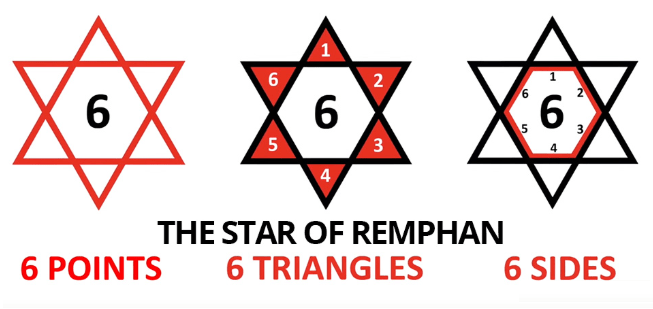



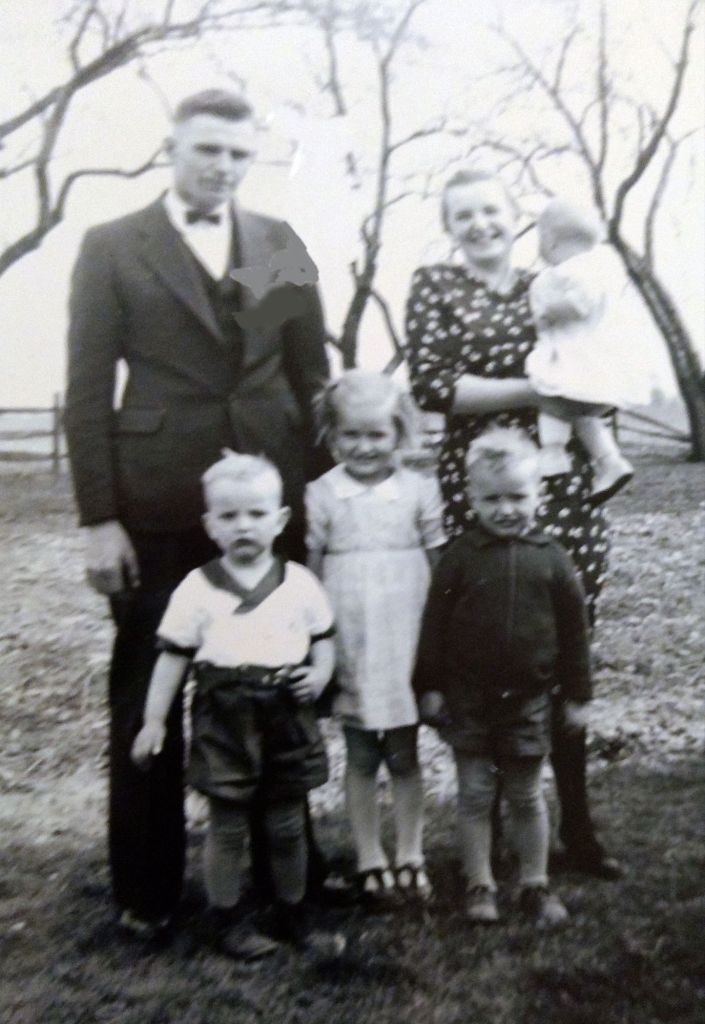

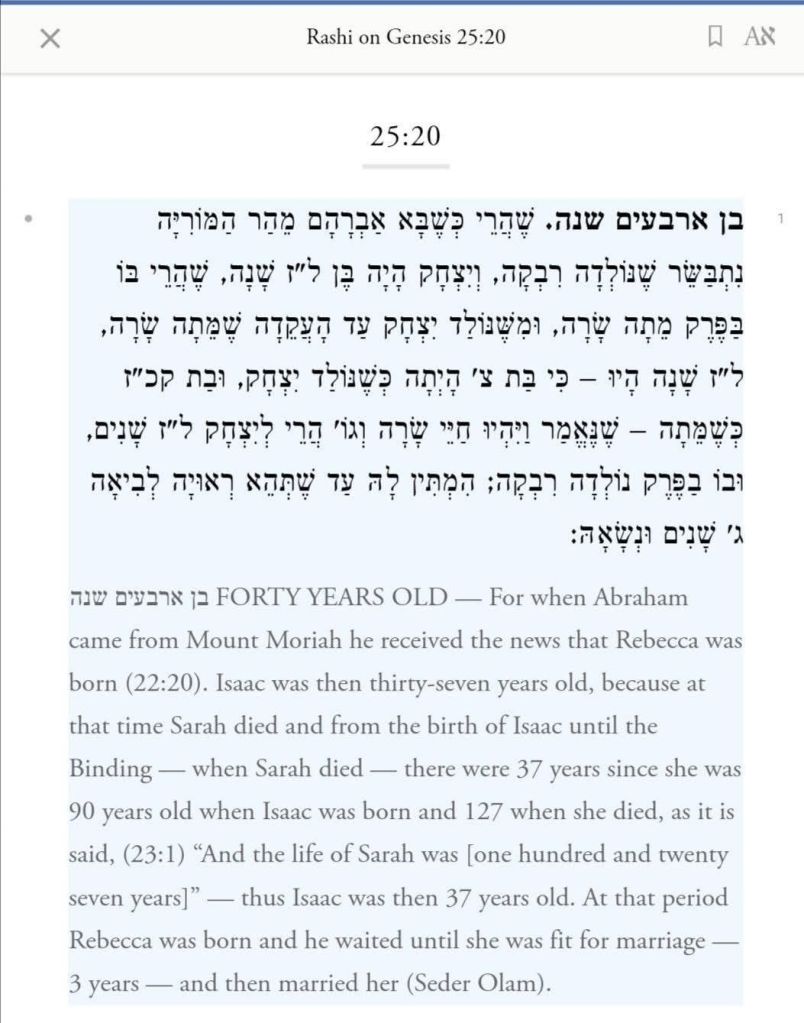





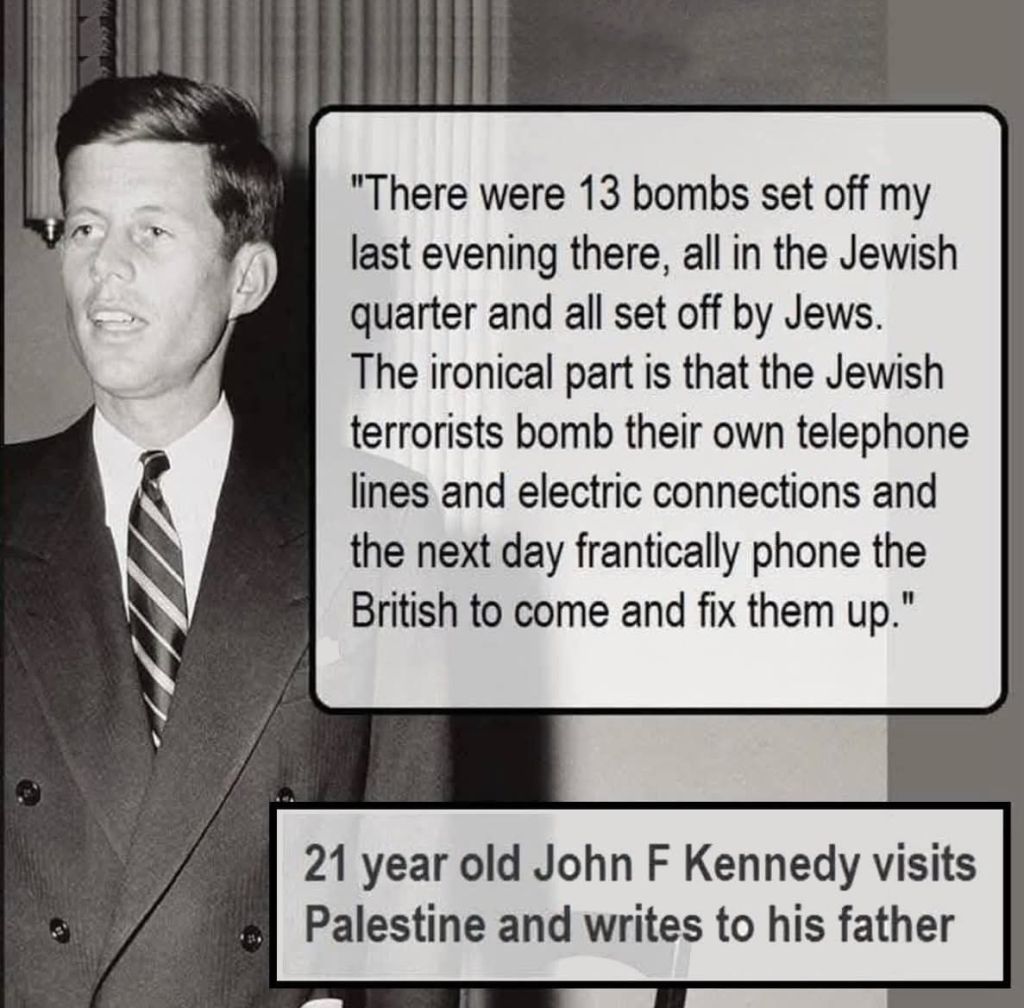




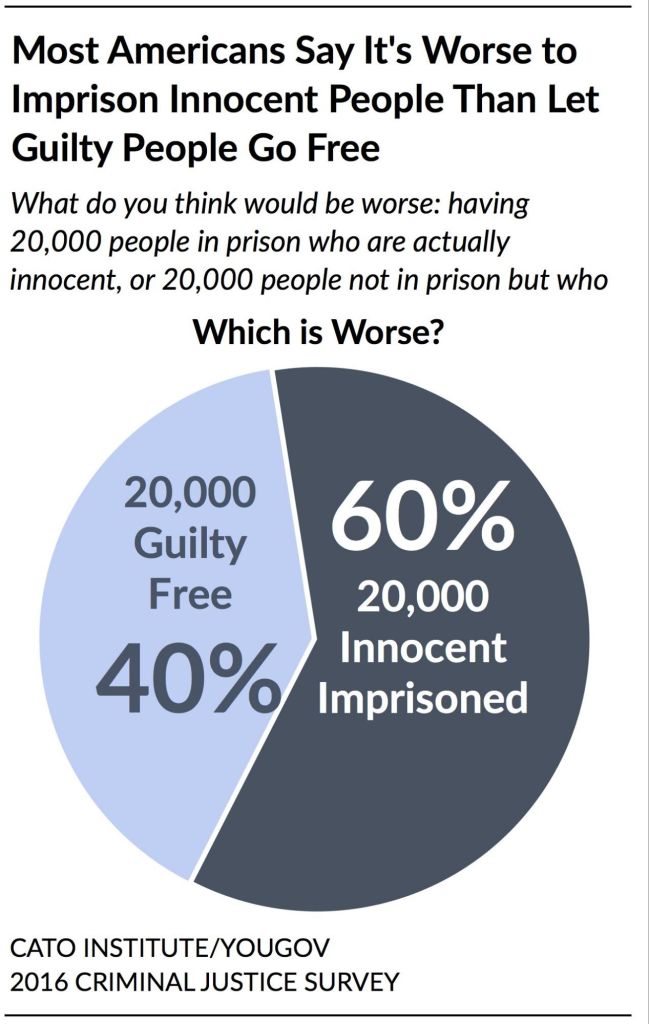




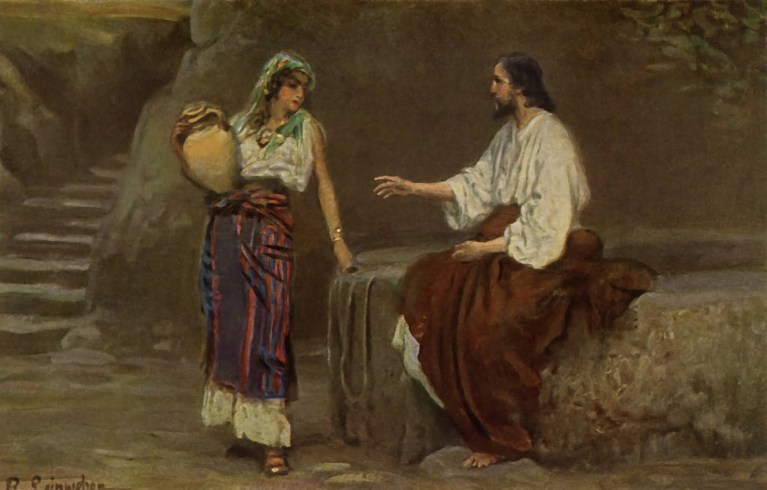

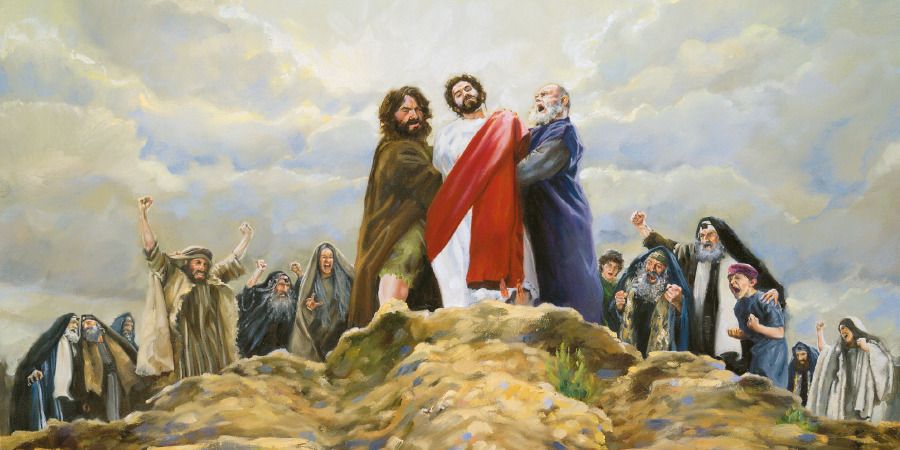










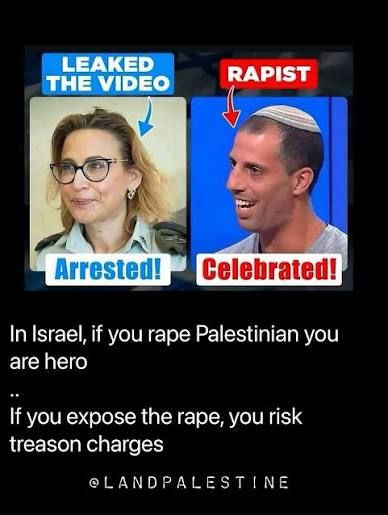





 Irregular Ideation