Intelligence as a Shotgun: Brute Force, Curiosity, and the Distributed Nature of Problem-Solving

Standard

Nature is a problem solver.  The whole of which is intelligent.  

I have been turning over some thoughts on intelligence lately, and the more I reflect, the more I see intelligence not as elegant precision but as something that is much messier, more improvisational, and deeply pragmatic.  In this age of AI, there is reason to consider how our own problem solving ability works—to gain a better perspective on ourselves and our limitations.

Intelligence is natural and distributed to all creatures.  But it is often expressed through biology rather than brain power—in genetic variation allows at least a few survivors.  I mean, your own chances of yelling “bingo” go up with the amount of numbers read.  More shots gives a higher probability of success.  This is why a shotgun is preferable with a small or elusive target, it requires a far less precise aim to be the right firing solution.  And this crude analogy applies to all intelligence—we arrive at the correct answer mostly on the basis of having enough tries.
Indeed.

General intelligence—the kind that humans possess in greater measure than with other creatures—is fundamentally an adaptation to an unpredictable world. When the world environment can shift so dramatically and without warning, the special ability to solve a diverse set of problems (rather than just relying on slow change through the shotgun blast of genetic expression) is the ultimate survival trait.  Our curiosity and imagination aren’t luxuries; they’re our exploration tools. They let us scan the horizon of possibilities for potential threats or opportunities before we ever encounter them in reality.

Specialization, by contrast, is just ruthlessly efficient—up until it isn’t.  A creature that is finely tuned to a narrow niche will be able to thrive spectacularly in stable conditions.  It is adapted, not adaptable.  And introduce a radical environmental shift, and that perfect adaptation can become a death sentence. Evolution’s answer for most organisms isn’t individual brilliance but something broader and more distributed.  Other animals and living systems often solve the problems of sustaining life at the collective level.  Or, in other words, through a staggering genetic and behavioral diversity, populations throw countless variations at existence. This is a shotgun approach at problem solving: put enough lead downrange and something is bound to hit the target. One subset of the population will carry the traits that survive the next drought, predator, or disease. The intelligence of the species emerges from the swarm, not the single organism.

Human intelligence, for all its appearance of sophistication, works much the same way—albeit at the individual level. Our brains don’t usually arrive at perfect or precise solutions on the first try. No, instead, we will generate the possibilities, daydream many different scenarios, run mental simulations, and iterate. Think long or hard enough, explore enough angles, and your brain may eventually stumble onto the correct answer.  So, yes, it’s still brute force—a massive parallel search through the space of ideas—rather than crystalline precision.

Intelligence is finding a solution.

What truly sets humans apart, as a species, is the software layer that’s built on top of the biological hardware: culture and language.  While animals transmit knowledge primarily through instincts encoded in genetics or their limited behavioral imitation, us humans have collective memory transmitted in our words. It is the development of language that allows us to pass many insights, discoveries, and lessons across many generations with fairly high fidelity. One person’s hard-won realization—therefore—can become everyone’s inherited advantage.  Writing, storytelling, teaching, and now digital networks have turned this into an exponential adaptation accelerator. Our “intelligence” isn’t just what’s inside any single skull—it’s the compounding archive of everything our species has learned.

This makes humans strangely adorable at the individual level. We’re very neotenous, playful, socially wired creatures who retain childlike curiosity and vulnerability well into adulthood. While a lone human is far from being a match for the strongest or fastest animal, individual charm and dependence on one another fuel the social bonds that make cultural transmission possible.

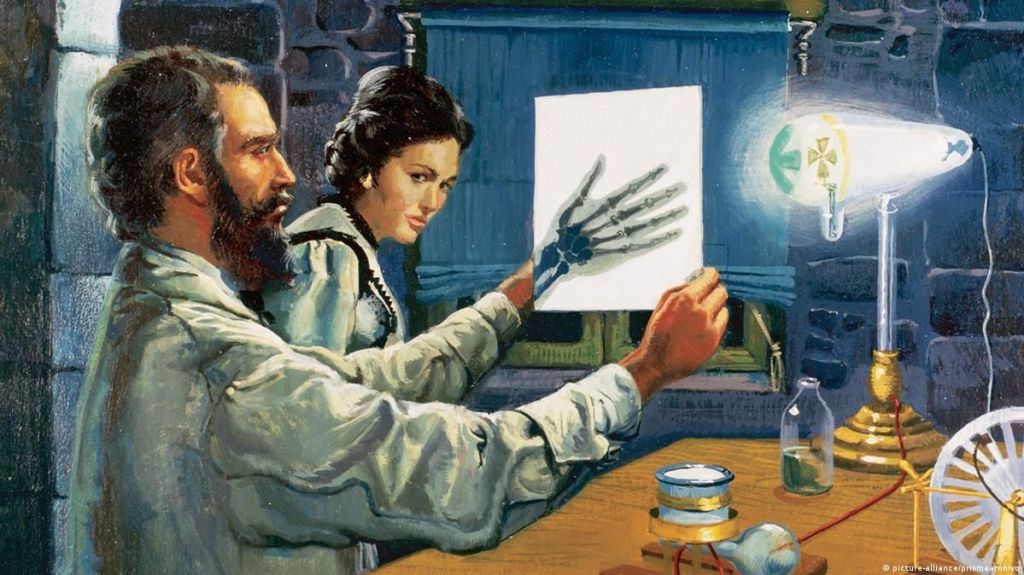
Thomas Edison didn’t invent the light bulb in the sense that he sat there in contemplation with absolute understanding of the science involved.  No, he was merely building off the multitude of discoveries accumulated over time—running thousands of experiments in order to find a better filament to make the application of a phenomenon more practical.  Many human advancements in technology have come by accident and not through a precise process or intentional pursuit.  Oftentimes we found a question we did not even know existed until we stumbled upon the answer.
Huh?  We can do something with this!

I was not proficient at my own job of truss design at birth.  Instead, a natural curiosity and a little spatial reasoning aptitude, with my dad’s career in construction—as well as an affirming comment from him about my understanding the blueprints he brought—gave me courage to pursue engineering.  It got me the opportunity (by an acquaintance who recommended me) and even then my progress with the software was through a lot of training follow by trial and error.  My having the right solutions, quickly, comes down to memory and knowledge that has been accumulated over time.  Is my design intelligence more than just matching tools to problems until one works and keeping a memory of the success?

In the end, intelligence across the scales—genetic, neural, cultural—seems to rely on the same underlying strategy: by generating enough variation, exploring broadly enough, and letting selection (or our insight) find the winners. Evolution is intelligence that does it blindly across populations. Our brains do it consciously within a single lifetime. And human culture does it cumulatively across time.  Our intelligence is innate in the ability to map our world, aquire language, pattern recognition and memory to keep a catalog of proven solutions.

Limits of human cognition are greater than we often realize.  It’s a distorted picture, one that centers on an ego, fails in the direction of confirmation bias, takes a large amount of mental shortcuts (call them stereotypes and prejudice), which is not to mention delusion and hallucination.  All of this because there is only so much power that can be packed into our skull and we’re optimized for mere survival rather than creating a 1:1 model of reality.  So long as we are not running off of cliffs or eating the ‘wrong’ berries, living long enough to produce offspring, we achieved the purpose of our intelligence.

Our anxiety, our existential dread, are simply a byproduct of a brain geared to a survival mechanism that tries to interpret data, find patterns, create models, project and predict the future so we’re better prepared.  The world we inhabit remains wildly unpredictable.  Perhaps the real edge, then, belongs not to those who optimize perfectly for today, but to those who maintain their curiosity and flexibility to keep firing shots into the unknown tomorrow.  This is one place where diversity is our strength—or so long as we can appreciate those who have gotten past a bottleneck or choke point in our progress.

Wisdom comes with understanding that our intelligence is a crude instrument at best.  It helps us navigate and even temporarily help simplify a complex environment—up until it doesn’t.  The systems we built, the designs we have made to create ease—including creation of AI as a tool to help synthesize—all rest upon a foundation of assumptions.  Ours is a purpose built intelligence.  If the world we are in was to ever move too far from what familiar dilemmas our intelligence would become disoriented and lost.

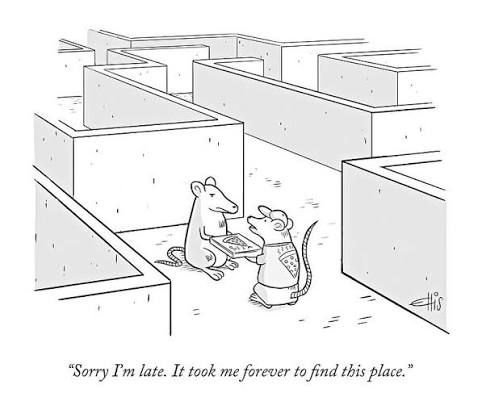
In the end us humans are a rudimentary data crunching pellet shot out in hopes of being the answer that carries on life.  We’re a focused part of the overall computational power of universe.  Clever for our environment and yet, if we fail, nature will simply load another shell and fire into the future.  Our intelligence is a blast in a direction of where the generically determined parameters, with momentum of generations, expect the viable path to be.  Our brains help us to fine tune survival, civilization our collective intelligence, while our more animalistic instincts drive us forward into the maze.
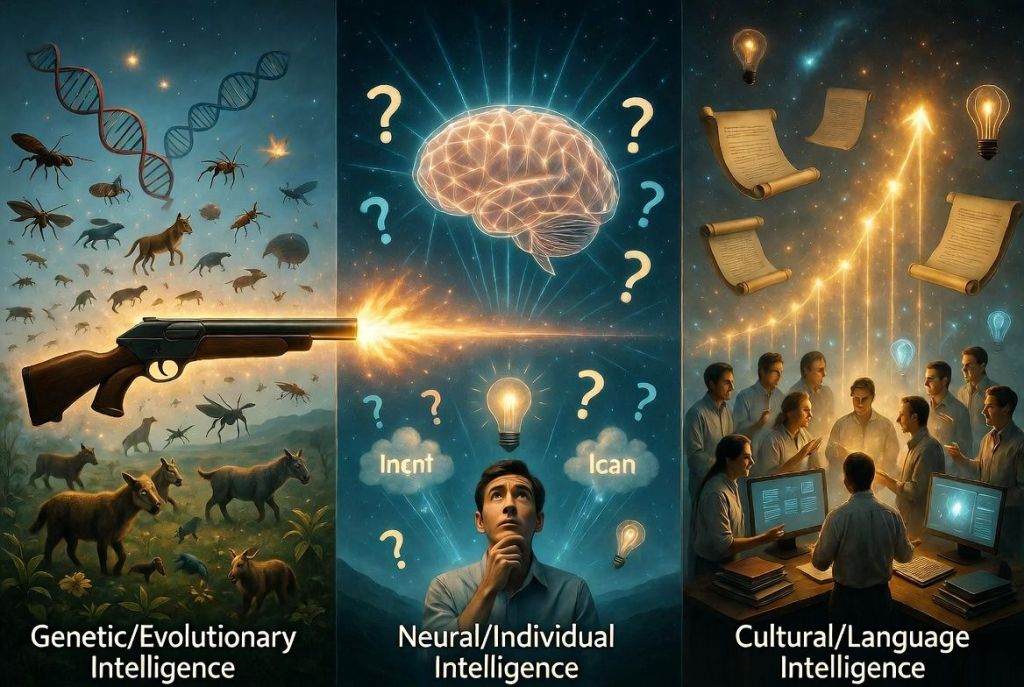
Three blasts into an unknown future.

What do you think?  Are humans truly a kind of general intelligence or simply a creature with quirks in our hardware and software? Is human intelligence truly distinct, or just biology’s most egotistical hack of shotgun method?  I’d love to hear where your randomly generated thoughts on this topic land. 

Wise As Serpents: Discernment in a World of Deception

Standard

I’ve heard stories of Mennonite old timers who would walk into a dealership, ask them to give their best price and then refuse to engage in any haggling beyond that. To them this concrete style of communication is commanded by Jesus and something I can respect. Their word was their bond. They did not play all the games. Business that is honest and done with a handshake.

What a pleasant and simple world it would be if everyone operated this way. No need for lawyers to read the fine print if everyone were an honest broker like this. But we do not live in that world. And there are those who love to exploit the trust of those born into Anabaptist religious cloisters. Every few years there’s another fraudster who sweeps through Amish and Mennonite country, selling the next big ‘investment’ and wiping out the hard earned savings of the unsuspecting—which is not to even mention those small scale “natural healing” swindles or grift seminars.

Apparently actual snake oil, sold by the Chinese, had some medicinal value, but the Clark Stanley version had no snake oil or healing qualities.

This is why healthy skepticism is necessary and discernment of character is a skill that must be learned. Born into one of these communities, I’m still far too trusting—most especially if someone starts to speak my language. “Oh, he stands up for the working class! They’re the defenders of freedom and democracy!” We fall for those who exploit us, who manufacture consent by various means, who claim to be like us and yet lack our Christian conscience. We are most susceptible to those who mimic our values as part of their deception.

Being a good or moral person can lead to being extra vulnerable. Some just lack the imagination for evil, which is wonderful innocence, but this is not optimal. Wisdom requires that we are able to read through a sales pitch and understand how propaganda works. A skilled liar plays on what you want to hear, they exploit the prejudices and preconceived ideas of any audience.  We need to be a step ahead of their schemes—which requires a little pattern recognition or small consideration of what may be hidden behind their words.

Letting Your Yea Be Yes, Nay Be Nay

Growing up, going to a public school, there was always that “I swear on my grandma’s grave” kid. Cued by your incredulous face, he would attempt to fortify his most questionable claims with this invocation of something else trustworthy.  And the whole reason for this is that their own word wasn’t good enough. And this swearing act itself would arouse my suspicions. If I can’t trust you in a small inconsequential claim—how could I ever trust your oath?

Obviously this was theatrics in Secondary school, but a manner of speech that Jesus targeted for rebuke:

Again, you have heard that it was said to the people long ago, ‘Do not break your oath, but fulfill to the Lord the vows you have made.’ But I tell you, do not swear an oath at all: either by heaven, for it is God’s throne; or by the earth, for it is his footstool; or by Jerusalem, for it is the city of the Great King. And do not swear by your head, for you cannot make even one hair white or black. All you need to say is simply ‘Yes’ or ‘No’; anything beyond this comes from the evil one.

(Matthew 5:33-37 NIV)

This is repeated in James 5:12 a bit more succinctly:

Above all, my brothers and sisters, do not swear—not by heaven or by earth or by anything else. All you need to say is a simple “Yes” or “No.” Otherwise you will be condemned.

Credibility is something built over time and lost in an instant. Swearing an oath won’t fix a loss of trust. But it does basically admit that your own word is not sufficient and this suggests a deeper problem. An oath is useful in a courtroom, where it is used as a dividing line between speech that is free and misleading words you can be prosecuted for—yet what Jesus says is part of a broader push in the direction of plain and honest speech. As St Paul instructs:

Therefore each of you must put off falsehood and speak truthfully to your neighbor, for we are all members of one body.

(Ephesians 4:25 NIV)

Practice truthfulness.

Humanity is one team, one body, so deception is a sin against all members.

The Bible is also full of examples of the opposite of this:

Those who flatter their neighbors are spreading nets for their feet.

(Proverbs 29:5 NIV)

Everyone lies to their neighbor; they flatter with their lips but harbor deception in their hearts. May the Lord silence all flattering lips and every boastful tongue.

(Psalm 12:2-3 NIV)

Not a word from their mouth can be trusted; their heart is filled with malice. Their throat is an open grave; with their tongues they tell lies [or flatter].

(Psalm 5:9 NIV)

My companion attacks his friends; he violates his covenant. His talk is smooth as butter, yet war is in his heart; his words are more soothing than oil, yet they are drawn swords.

(Psalms 55:20-21 NIV)

In all of these cases you have those who appear to be our friends and use flowery and agreeable speech to ensnare. We naturally suspect those who aren’t like us, who say the stuff we don’t like, but we trust those who speak our native tongue and seem to share our cultural values. That’s our blind side and vulnerability. A guy shows up in a nice suit, well-groomed, and we’ll just take him as credible. We’re susceptible to those who dress up their deception in the familiar—or who feed our prejudices.

Those Who Dress To Deceive

The Bible mentions flattery, a Trojan horse and the way some use to lower our guard, but the Gospel warns about this:

Watch out for false prophets. They come to you in sheep’s clothing, but inwardly they are ferocious wolves.

(Matthew 7:15 NIV)

Looks can be deceiving.

For there are many rebellious people, full of meaningless talk and deception, especially those of the circumcision group. They must be silenced, because they are disrupting whole households by teaching things they ought not to teach—and that for the sake of dishonest gain. One of Crete’s own prophets has said it: “Cretans are always liars, evil brutes, lazy gluttons.” This saying is true. Therefore rebuke them sharply, so that they will be sound in the faith and will pay no attention to Jewish myths or to the merely human commands of those who reject the truth. To the pure, all things are pure, but to those who are corrupted and do not believe, nothing is pure. In fact, both their minds and consciences are corrupted. They claim to know God, but by their actions they deny him. They are detestable, disobedient and unfit for doing anything good.

(Titus 1:10-16 NIV)

If it were easy to cut through the crap then there would be very little chance of anyone ever being deceived. But the worst enemies of Christ weren’t those who had openly hunted and tried to kill his followers. You knew to avoid them. It’s those who entered the church to subvert and undermine.

St Paul calls out those of the “circumcised group” and who have actions that deny the relationship they claim to have with God. Today we deal with something insidious, now embedded into several generations through propaganda and established prejudice.  We can’t see it because it hides within us, carries a familiar last name or claims to have devotion to the same values.

Many now believe it is okay to kill babies for an ethno-state.  They go to church on Sunday never realizing that they have departed from Christ:

Not everyone who says to me, ‘Lord, Lord,’ will enter the kingdom of heaven, but only the one who does the will of my Father who is in heaven. Many will say to me on that day, ‘Lord, Lord, did we not prophesy in your name and in your name drive out demons and in your name perform many miracles?’ Then I will tell them plainly, ‘I never knew you. Away from me, you evildoers!’

(Matthew 7:21-23 NIV)

Those who have yoked together with those who Jesus said are “of their father the devil” (John 8:44) are as doomed to hell as an unbeliever. The Covenant with Abraham was tied to sharing his faith and righteousness.  Likewise, you are not of Christ unless you obey his will no matter how “born again” you feel or how flowery you pray in front of the crowd. Enabling evil is just evil. Jesus called out the fakes who hid behind their mask of devotion and his earliest followers did the same. Stephen “cut them to the heart” challenging the Jewish leaders with a flurry of accusations—they killed him for telling the truth:

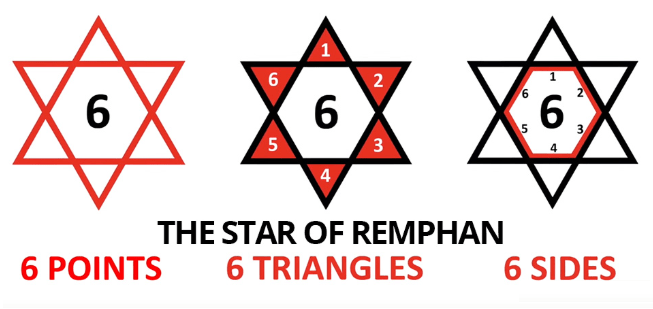
You have taken up the tabernacle of Molek and the star of your god Rephan, the idols you made to worship.  Therefore I will send you into exile’ beyond Babylon. (Acts 7:43 NIV)

Harmless as Doves, Yet…

The simple and honest are especially vulnerable to the cunning and crafty.  And it’s not always a matter of intelligence. It is about trust. It is about being a part of the same civilizational project. 

Some places you can leave front doors unlocked and not worry about being robbed.  Everyone is bought into the same moral code or same social contract, and thus respects the property and the rights of others who are partners in the overall work.  And the doors of our civilization are wide open—not turning people away is a wonderful Christian value and good.

However, this value also means many let their guard down around imposters who pretend to be like us and yet work to subvert, supplant, enslave or destroy what we’ve built.  They are a “snake in the grass” slithering, waiting for the moment of weakness to strike.  They’re the wolves who will accuse the sheepdog of being a bigger threat to the sheep while they plot to devour the flock.

Yes, an impulse towards being charitable is great, but also we need to be wary of those who do not share the same civilizational bond or social contract—this is what Jesus said:

I am sending you out like sheep among wolves. Therefore be as shrewd as snakes and as innocent as doves.

(Matthew 10:16 NIV)

There was this horrible story about a young man opening the door to two men who were dressed like UPS delivery drivers and ended up paying with his life. The fake employees pushed into the residence, with two others who had hidden around the corner, and they murdered the young man and two women in the home—all of this happening in front of two children under the age of five.

We trust based on appearance. If the men in the story above had been dressed like a couple hoodlums nobody would open that door. There’s little chance of a very foreign looking religion or culture slipping into our communities unnoticed. But when we see something familiar or someone speaking in a way to convince us they’re on our side we do not take precautions. We let them in without considering that they could have values completely different despite their surface level disguise.

Whether the Trojan horse gift or that bright beautiful serpent in the garden—it is the job of the discerning person to sound the alarm and protect their own community or home from evil schemes. You need to be able to think like the schemers do to anticipate the deception. The first thing the wolves do is attack and try to silence the voices of those who identify them as being a threat. They will always come after the watch dog first before devouring the sheep.

Fool Me Once Shame On You

Zionism had slipped into my former Mennonite church through Evangelicalism. The church was founded near the same time a state called Israel was founded with a brutal and cruel expulsion of indigenous people. But we celebrated plucky little Israel, as if they came about by a miracle rather than being a result of a campaign of terrorism or military means. For whatever reason Palestinians didn’t matter, as just another group of backwards Arabs, and I’m guessing this is *still* the majority opinion as far as fundamentalist part of the sect I was born in. It’s just part of a disconnect between the love they profess on Sunday and the politics they accept the rest of the week.

Even if the state of Israel is a part of God’s plan does not mean we should be the cheerleaders for genocide or the justifiers of abuse of others. The “I didn’t vote for Trump to be a pastor” crowd seems to be too happy with the totally merciless treatment of the native population—including their innocent children. Apparently God’s chosen are just to be exempted from Christian ethics and can just kill as they please.

It defies every message on grace and mercy ever shared from a church pulpits. We let a wolf into the church and it has devoured our humanity in the name of a worldly kingdom.

Unfortunately Zionist ideology, their sensational end times fantasy, has caused many to abandon the cause of Christ. The old serpent has slipped through the church doors decades ago and is now preaching from many pulpits. He infiltrates the ranks, pretends to share our values as he subtly undermines them, and soon what is up is down is up—with the ‘faithful’ defending a Sodomizing pedo protecting baby killing cult of elites and calling good old fashioned conservative American values.

Hasbura will tell you Goliath was a victim and David a villain.

The worst part is when even to question the official narrative, put out by those who lied once will lie again, is twisted into being an ‘evil’ worse than any other. They don’t seem to get that good institutions can be hijacked or that Jesus most certainly did insult those who held positions of authority and he did it by calling them out to their faces. This idea that we must shrink away from challenging the mask of righteousness worn to fool the masses is just flat out wrong. We must call out what the New Testament writers call the synagogue of Satan:

I know about the slander of those who say they are Jews and are not, but are a synagogue of Satan.

(Revelation 2:9 NIV)

In the end, we either are what we say we are or we’re not. That’s what yay be yay is truly about. James warns against being double-minded, about showing favoritism, and the New Testament is full of statements which emphasize no difference between Jew and Gentile in Christ. Israel isn’t a blessing nor is it protected by the hand of God. No, they are simply willing to do the treacherous and nasty things that are completely antithetical to the teachings of Jesus Christ. We need to be wiser understanding that some will lie to gain our money or support.