Intelligence as a Shotgun: Brute Force, Curiosity, and the Distributed Nature of Problem-Solving

Standard

Nature is a problem solver.  The whole of which is intelligent.  

I have been turning over some thoughts on intelligence lately, and the more I reflect, the more I see intelligence not as elegant precision but as something that is much messier, more improvisational, and deeply pragmatic.  In this age of AI, there is reason to consider how our own problem solving ability works—to gain a better perspective on ourselves and our limitations.

Intelligence is natural and distributed to all creatures.  But it is often expressed through biology rather than brain power—in genetic variation allows at least a few survivors.  I mean, your own chances of yelling “bingo” go up with the amount of numbers read.  More shots gives a higher probability of success.  This is why a shotgun is preferable with a small or elusive target, it requires a far less precise aim to be the right firing solution.  And this crude analogy applies to all intelligence—we arrive at the correct answer mostly on the basis of having enough tries.
Indeed.

General intelligence—the kind that humans possess in greater measure than with other creatures—is fundamentally an adaptation to an unpredictable world. When the world environment can shift so dramatically and without warning, the special ability to solve a diverse set of problems (rather than just relying on slow change through the shotgun blast of genetic expression) is the ultimate survival trait.  Our curiosity and imagination aren’t luxuries; they’re our exploration tools. They let us scan the horizon of possibilities for potential threats or opportunities before we ever encounter them in reality.

Specialization, by contrast, is just ruthlessly efficient—up until it isn’t.  A creature that is finely tuned to a narrow niche will be able to thrive spectacularly in stable conditions.  It is adapted, not adaptable.  And introduce a radical environmental shift, and that perfect adaptation can become a death sentence. Evolution’s answer for most organisms isn’t individual brilliance but something broader and more distributed.  Other animals and living systems often solve the problems of sustaining life at the collective level.  Or, in other words, through a staggering genetic and behavioral diversity, populations throw countless variations at existence. This is a shotgun approach at problem solving: put enough lead downrange and something is bound to hit the target. One subset of the population will carry the traits that survive the next drought, predator, or disease. The intelligence of the species emerges from the swarm, not the single organism.

Human intelligence, for all its appearance of sophistication, works much the same way—albeit at the individual level. Our brains don’t usually arrive at perfect or precise solutions on the first try. No, instead, we will generate the possibilities, daydream many different scenarios, run mental simulations, and iterate. Think long or hard enough, explore enough angles, and your brain may eventually stumble onto the correct answer.  So, yes, it’s still brute force—a massive parallel search through the space of ideas—rather than crystalline precision.
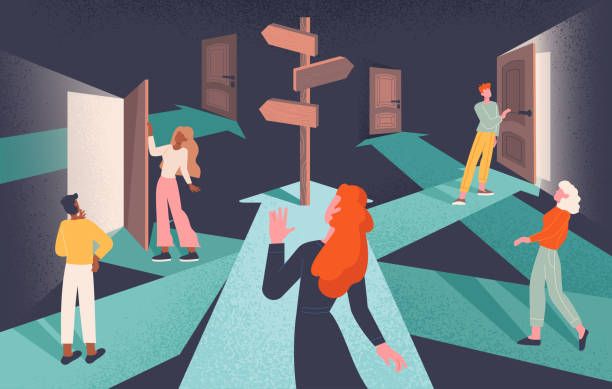
Intelligence is finding a solution.

What truly sets humans apart, as a species, is the software layer that’s built on top of the biological hardware: culture and language.  While animals transmit knowledge primarily through instincts encoded in genetics or their limited behavioral imitation, us humans have collective memory transmitted in our words. It is the development of language that allows us to pass many insights, discoveries, and lessons across many generations with fairly high fidelity. One person’s hard-won realization—therefore—can become everyone’s inherited advantage.  Writing, storytelling, teaching, and now digital networks have turned this into an exponential adaptation accelerator. Our “intelligence” isn’t just what’s inside any single skull—it’s the compounding archive of everything our species has learned.

This makes humans strangely adorable at the individual level. We’re very neotenous, playful, socially wired creatures who retain childlike curiosity and vulnerability well into adulthood. While a lone human is far from being a match for the strongest or fastest animal, individual charm and dependence on one another fuel the social bonds that make cultural transmission possible.

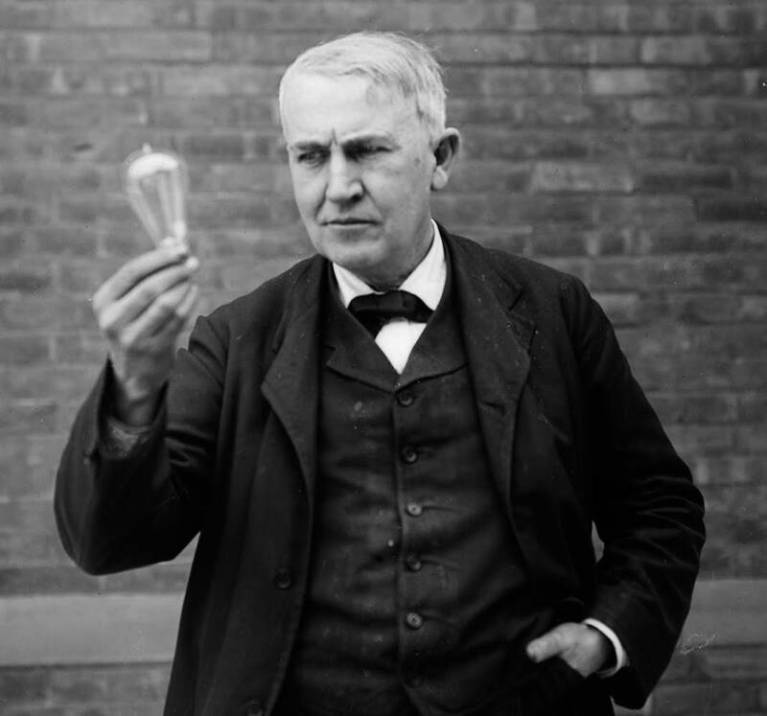
Thomas Edison didn’t invent the light bulb in the sense that he sat there in contemplation with absolute understanding of the science involved.  No, he was merely building off the multitude of discoveries accumulated over time—running thousands of experiments in order to find a better filament to make the application of a phenomenon more practical.  Many human advancements in technology have come by accident and not through a precise process or intentional pursuit.  Oftentimes we found a question we did not even know existed until we stumbled upon the answer.
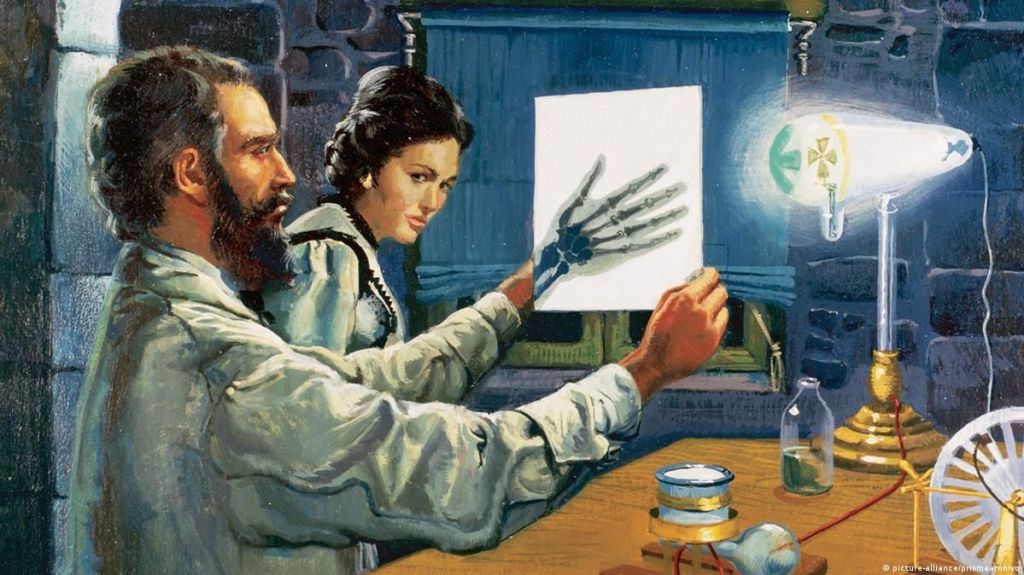
Huh?  We can do something with this!

I was not proficient at my own job of truss design at birth.  Instead, a natural curiosity and a little spatial reasoning aptitude, with my dad’s career in construction—as well as an affirming comment from him about my understanding the blueprints he brought—gave me courage to pursue engineering.  It got me the opportunity (by an acquaintance who recommended me) and even then my progress with the software was through a lot of training follow by trial and error.  My having the right solutions, quickly, comes down to memory and knowledge that has been accumulated over time.  Is my design intelligence more than just matching tools to problems until one works and keeping a memory of the success?

In the end, intelligence across the scales—genetic, neural, cultural—seems to rely on the same underlying strategy: by generating enough variation, exploring broadly enough, and letting selection (or our insight) find the winners. Evolution is intelligence that does it blindly across populations. Our brains do it consciously within a single lifetime. And human culture does it cumulatively across time.  Our intelligence is innate in the ability to map our world, aquire language, pattern recognition and memory to keep a catalog of proven solutions.

Limits of human cognition are greater than we often realize.  It’s a distorted picture, one that centers on an ego, fails in the direction of confirmation bias, takes a large amount of mental shortcuts (call them stereotypes and prejudice), which is not to mention delusion and hallucination.  All of this because there is only so much power that can be packed into our skull and we’re optimized for mere survival rather than creating a 1:1 model of reality.  So long as we are not running off of cliffs or eating the ‘wrong’ berries, living long enough to produce offspring, we achieved the purpose of our intelligence.

Our anxiety, our existential dread, are simply a byproduct of a brain geared to a survival mechanism that tries to interpret data, find patterns, create models, project and predict the future so we’re better prepared.  The world we inhabit remains wildly unpredictable.  Perhaps the real edge, then, belongs not to those who optimize perfectly for today, but to those who maintain their curiosity and flexibility to keep firing shots into the unknown tomorrow.  This is one place where diversity is our strength—or so long as we can appreciate those who have gotten past a bottleneck or choke point in our progress.

Wisdom comes with understanding that our intelligence is a crude instrument at best.  It helps us navigate and even temporarily help simplify a complex environment—up until it doesn’t.  The systems we built, the designs we have made to create ease—including creation of AI as a tool to help synthesize—all rest upon a foundation of assumptions.  Ours is a purpose built intelligence.  If the world we are in was to ever move too far from what familiar dilemmas our intelligence would become disoriented and lost.

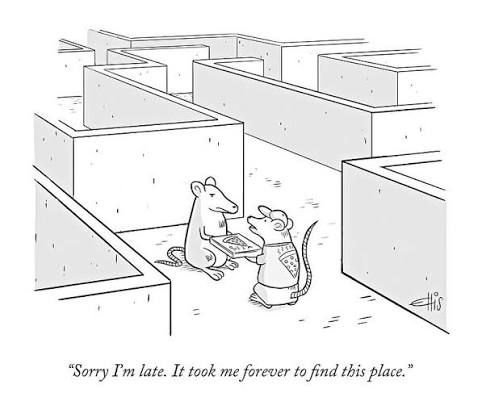
In the end us humans are a rudimentary data crunching pellet shot out in hopes of being the answer that carries on life.  We’re a focused part of the overall computational power of universe.  Clever for our environment and yet, if we fail, nature will simply load another shell and fire into the future.  Our intelligence is a blast in a direction of where the generically determined parameters, with momentum of generations, expect the viable path to be.  Our brains help us to fine tune survival, civilization our collective intelligence, while our more animalistic instincts drive us forward into the maze.
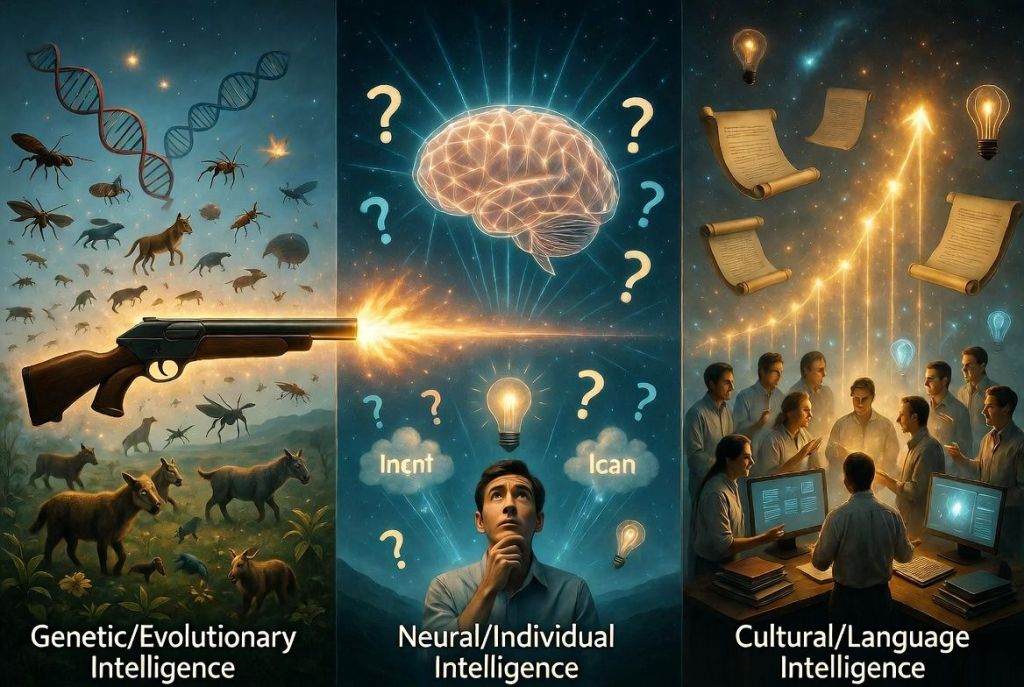
Three blasts into an unknown future.

What do you think?  Are humans truly a kind of general intelligence or simply a creature with quirks in our hardware and software? Is human intelligence truly distinct, or just biology’s most egotistical hack of shotgun method?  I’d love to hear where your randomly generated thoughts on this topic land. 

What Wears Me Out

Standard

I’ve always been a sort of magical thinker, my hopes always far outpacing my realities, and to the point that sometimes when my dreams would finally come true the pleasure had already been exhausted.

I had so wanted a go cart growing up.  On the school bus ride home my mind would start to wander into the fantasy realm.  I would picture a shiny new go cart, like the ones in the catalog, waiting for me at the end of the driveway and would actually be disappointed when it did not end up being true when we would finally pull up to to my stop. 

That’s not to say that I didn’t love the old go cart that my dad would finally weld up, using a rusted frame as a starting point, and an old lawnmower engine.  Anything with four wheels, that ran on gasoline, that could be slid around corners, definitely scratched that itch.  Still, my vivid world of make-believe did not always end with any fulfillment.

In my adulthood this tendency to be way out ahead of myself did not get any better.  I’ve cried, on more than one occasion, thinking of my beautiful bride walking towards me up the aisle.  And not in sadness either, it was in bliss having momentarily put myself in that wonderful place.  Of course, given that I never even so much as went on one date with this young woman, I pretty much ruined that music.

The world between my ears can be a paradise.  A place where there’s such thing as innocent love and anything is actually possible.  I used this as an escape.  My school years spent doodling and hoping for some kind of rescue from the mundanity of the classroom.

These visions were often grandiose.  A child scaled B-17 would land in the school yard.  I would run out to meet my faithful crew as the teacher and 5th grade class would watch in disbelief, stunned, as we revved the engines and were on our way to the nation (later a planet with two suns) that I benevolently ruled along with my brother Kyle and cousin Mel.

Truly, I had always thought that Kyle and I would always be together, build a house with a chimney in the center, like the ruins that I saw on a Civil War battlefield.  I’m not sure why, but it didn’t seem possible then (despite our fights) that we ever be separated, let alone hours apart, and I really can’t claim to have gotten over that disappointment yet.  He moved on, it seems that I could not.

And I have lived a sort of Peter Pan existence.  Holding on, hoping that some day the love that had eluded me, child-like and innocent, would finally magically arrive to rescue me from my torment for having failed to achieve.  I long overstayed the youth group.  Until I had my happily ever after, what choice did I have?  Get old by myself and alone?

Unfortunately, hope is not a strategy and I lacked the necessary social tools to approach an attractive young woman—let alone convince her to date me.  

Years would go by, where I would convince myself, “this time will be different,” and end up leaving the church retreat no closer to my goals and disappointed.  These beautiful wonderful thought going in would slowly morph into a nightmarish reality as opportunity would pass me by and I would be left with only my profound loneliness again.

It was only in my mid thirties that this optimism would crack and the pattern of hope followed by disappointment would finally overwhelm me.  Brimming with outsized expectations, I would arrive at the weekend, and suddenly shut down.  The wheels came off, I would collapse into the nearest couch, curl up, unable to push myself to try again—eventually ending up a sobbing mess.

The pressure had become too much.  The difference between my hopes and reality too insurmountable. 

Sure, I could entertain my delusions, the right one was going to finally arrive, we would look at our feet, shy at first, we would talk, she would smile at my earnest thoughts, I would finally be at ease and soon enough we would be walking hand in hand out the back of a church.  But the chances of that were as good as Gatsby somehow being able to turn back the hands of time and Daisy would be his.

My collapse from exhaustion came at the tail end of decades of forced optimism and sweeping aside my rational fears.  I did not want a world where my being 5′-8″ tall and rather unathletic disqualified me.  Love, to me, especially pertaining to my female religious counterparts, was supposed to be something transcendent.  Unfortunately, what I got instead was a brick wall of rejection.

Life is especially cruel to those with a high ideal.  If I were less able to see the marvelous maybe I could have more easily moved on to more practical aims.  But I could never get my head out of the clouds nor was I willing to acknowledge the harsh truth about romance.  The young women were also chasing their version of perfection and that perfect man wasn’t me.

Somehow, despite a mind that could span universes, I ended up being thirty years old living in Milton and thus ineligible for that kind of love.  How does a dreamer, still holding to those childish notions of escape, ever recover from that terrible pronouncement?

They don’t. 

It wears me out thinking about it.  

It makes me think of another novel and protagonist, Ethan Frome, an injured ruin of a man.  His house reduced in size as he limped, painfully, through what remained of his life.  Not even granted the merciful end to his suffering of that suicide pack those many years before.  Perhaps my life would have been better had my secret world been a little more stark, desolate and devoid of life?

The Confidence Conundrum

Standard

“Be confident!”  

Two words and some of the most unhelpful advice ever given.

Telling someone to be confident is like telling a depressed person to be happy or a short person to be tall.  A person who lacks in confidence does not know how to be confident or else they would already be confident.  Building confidence takes more effort than making a bold pronouncement upon someone.

People do not simply choose to be shy, unsure, uncertain, doubtful, confused, hesitant, timid, anxious or fearful.  No, those things are a product of life experiences and emotions that are all very real.  A confident person making a perfunctory statement does nothing to change the reality of a person who lacks confidence.

That said, confidence is desirable and something to be shared.  

Unfortunately, people who are confident often do not have reason to be introspective about it.  When you feel good about life there is not much need to know why or question it, there is only reason to be what you already are and enjoy the benefits.

Confidence is both a natural disposition and also something gained through positive experience.  Parents instill confidence in children through example or by helping them to overcome their fears and learn from failures rather than dwell in them.  Confident and successful parents seem to produce confident and successful children.

Confidence goes hand in hand with success, it frees a person to take the plunge rather than waste time in needless deliberation and makes them more attractive.  But, there is a sort of causality dilemma, in that confidence often leads to success while success builds confidence and without one the other becomes more difficult to maintain.

When confidence doesn’t produce success, it leads an intelligent person to doubt.  And with doubt comes less desire to risk effort and that results in even less opportunity for success, which often leads to even less success and even less confidence.  Pretty soon things can spiral downward into the pit of despair without a clear way out.

So, how do we help someone who lacks confidence gain it?

If you want a person to be confident then you must give them reason to be confident and good enough reason to overcome whatever reasons they have to lack confidence. To be helpful one must directly address root causes and not dismiss the realities that created the condition as silly or irrelevant.

What people need is T.IM.E.

Help must be practical.  Encouraging words don’t cut it.  Words, no matter how confident you are in saying them, are only words and do nothing to counteract the real life experience or emotional baggage of someone who has only known failure.  What is helpful, perhaps the only thing that does help in some cases, is meaningful long-term investment in the other person.

Loss of confidence happens over a lifetime, it comes as a result of traumatic experience or neglectful treatment, thus expecting a person to “snap out of it” because you say so is delusional at best and an excuse to be indifferent at worse.  There is more to be done than simple encouragement and that means an investment of time.

Here are three simple steps…

1) Take time to listen.  Confidence goes hand in hand with success, but success can lead to arrogance and unwillingness to hear first.  Many people want to “fix” another person without taking time to actually listen and assess the need.  This could mean many months or only a moment depending on the need.  It takes relating to the other person at their own level, earning their trust, without being in a rush or speaking in judgment of their situation.  Half the problem could be the lack of someone who will actually hear them out and care.  So listen empathically and try to identify with the other person emotionally.  Weep with them, laugh with them, eat with them and imagine with them.

2) IMagine a solution.  Without confidence, our ability to envision a better future dwindles and dies.  A successful person can easily take their ability to see a bright future for granted and yet a person who has continually failed does not share their rosy vision.  The first step towards any solution, therefore, is to think about it, to break the problem down into steps and help the other person mentally develop their path towards success.  After that comes execution of the plan.

3) Empower them.  This is where the rubber meets the road and is probably what is most lacking in our age of dog-eat-dog individualism.  Sure, there are many willing to spew their unhelpful advice and unasked-for judgments, but there are very few willing to partner in the success of another person and by this I mean make a substantive investment.  No, this does not mean a handout done in pity or religious obligation either, but an investment that physically and materially shows our confidence in the person who needs it.  Your willingness to partner together with them in a solution will, by itself, help build their confidence.

Anyhow, some final notes…

This is not a method or formula.  Each person and every situation is different.  Sometimes all that is needed is encouragement (more than saying “be confident”) which could mean something as little as a phone call.  While other times a lifelong commitment may be required.  It will likely require creativity, facilitating the right connections, and making recommendations.  

The goal is to get the person what they need to get on their feet and going in the right direction.  It also means getting out of the way and not being controlling or expecting anything in return besides enjoying their success with them.

Nobody is self-made.  If you are confident and successful, there are reasons why that go beyond your own abilities.  We did not pick our own home, communities, height, intelligence, personalities or luck.  We cannot take full credit for anything we have accomplished in our life.  This is reason to be humble and helpful.

If you are confident then share what you have been given with those who have little or less than you do.  Show your hope in their future with truth of action and not only your confidently spoken (but empty) words, be their heart…