
Excuse Me, Miss…

Standard

My wife and I were taking advantage of the spring weather, out on a walk together, baby in stroller, when a voice from behind us interrupted our stride:

“Excuse me, miss, why do you walk with your hands behind your back?”

Apparently, according to this inquirer, my wife was walking with her hands clasped together behind her and it made him curious.  And, after he said it, I immediately knew what he meant, I had seen her do this before and now considered that it wasn’t a common thing for American women to do.  

My wife—other than to answer the man with his New Jersey accent that it is something common with older people from her place—had no good answer.

She told me later it was something she recalls her grandma doing and was not something she ever gave much conscious thought to until he stopped us.  It was just what felt natural or right to her—a mannerism that the Igorot women of certain age and good reputation simply did.

The best explanation I have found is that this is social signalling in Asian culture.  It is an image of authority and composure.  And it could mean my wife feels confident, does not need to be in a rush or has earned the right to be contemplative, non-defensive and like a respected elder in her native culture. 

Whatever it is, it isn’t deliberate or something she tried to do, it had just naturally came to her.

Mennonite Matriarchs and Mirroring Behaviors

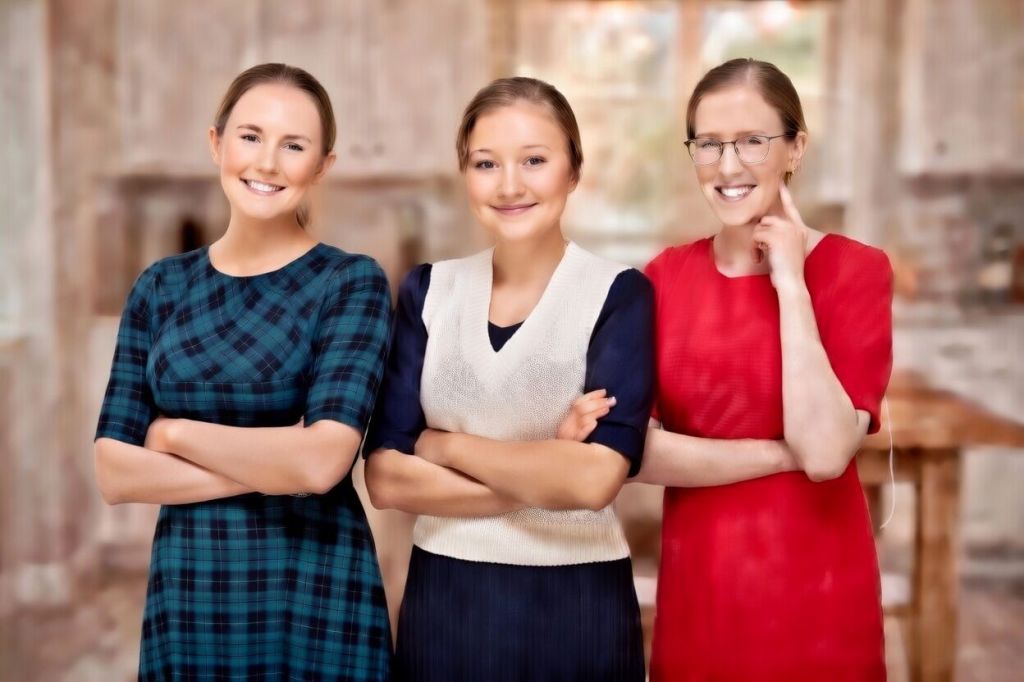
What piqued my further interest was a parallel conversation, led by Dorcas Smucker (a popular conservative Mennonite blogger), trying to figure out why her female religious peers cross their arms in front of them while standing.

The answers ranged from comfort to having no pockets in their traditional dress—or a resting position.  Others say it is a defensive posture or a symptom of women ashamed of their feminity or trying to hide themselves.   However, I have also noticed, in office meetings, my male coworkers—all of us from Amish or Mennonite background—sit around the table with their arms crossed.  The room is a bit cool.  Maybe that’s all it is?
I’m guessing this has very little to do with what is projected onto it by those who often seem to see the broader American culture as some kind of benchmark for normal. 

Yes, it is the case that those of us born into this religious subculture tend to be self-conscious about what we wear and appearance.  I knew I was odd, at a public school, wearing long pants during the heat of August, and had classmates who would remind me of my being Mennonite.  But is it the cause every mannerism?

Chimpanzees also cross their arms.  But it is described as just being a neutral relaxed position or simply a way to rest and relieve muscle strain.  The crossed arms as being a defensive posture has fallen out of favor with experts.  Could there be some post hoc rationalizing in how we explain human body language? 

Mirroring behavior provides a more plausible explanation.  This is to say we will just imitate the postures or mannerisms of others in our group without a thought.  This is called “chameleon effect” and part of the way we build rapport or trust.  It is part of our sense of belonging within a community.  It’s wired in our brain—the “mirror neurons” which fire off both when we perform a particular action as well as when we see someone else doing the same thing.  Nobody has to tell us to do it.

This is deliberate.  Whereas mirroring is subconscious.
This hand gesture is very common all throughout the Philippines.  The “I’m good looking” pose.  Click here for more gestures.

So what is likely, whether those Mennonite arms crossed or Igorot elders walking with their hands clasped behind, is that these postures are about a cultural identity and unconscious process where we copy those whom we respect in the group or just what we have seen thus accept as normal.  It is social glue—in the same way my cousin picked up her Southern drawl after marrying a Virginia boy.  This is similar to how we yawn when other people do.  It’s just an instinct.

Social Glue in Religious Ritual Too

What’s interesting is that religions attempt to capitalize on this by forced mirroring that becomes unconscious.  The extended hand, the greeting a non-relative as “brother” and all ritual is about building an artificial bond that makes us feel like we belong.  It’s in the silly cliché phrases, they’re part of that “hedge of protection” around community identity, and just social connection that makes us feel comfortable.
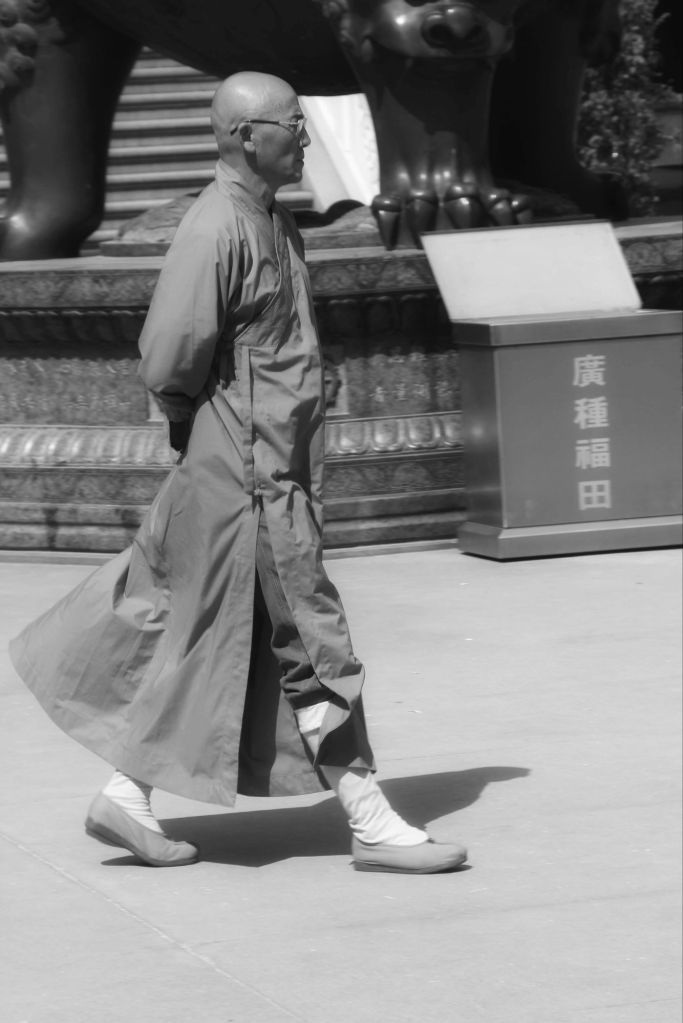
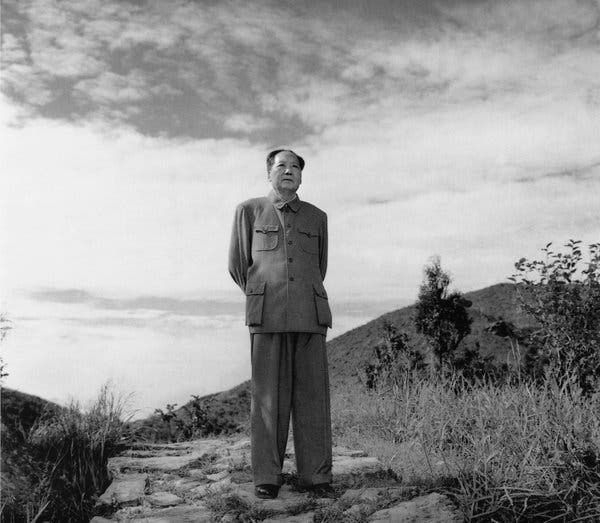
Common in the East.
The “Four Olds” (old ideas, old culture, old customs, and old habits) of the Cultural Revolution didn’t reach Chairman Mao.  His hands are still in the traditional Asian authority position.

However, this can also make life very difficult for those outside coming in.  An outsider that tries to go through the same motions will very likely look forced—like a mask or performance rather than genuine.  This “false signal” could be taken as mockery and give off an uncanny valley feel that makes people suspicious or uncomfortable. Not to mention it is hard for the person trying to keep up the appearance as well.  Like the time when I awkwardly did a full prostration rather than the requested bow from the priest for that part of an Orthodox service.

And yet, off the insecurities most contemptible, it is this need to explain or apologize for what was programmed into us by our culture.  Hands in contemplative clasp behind our back while we walk or an assuring restful self-hug, we need not ever feel awkward about our mannerisms and physical pose simply because it is unique to our own subset of humankind.  It is an unfortunate side-effect of modern pluralism and exposure is we’re left second guessing our status rather than just being a part of the social fabric.

We don’t need to defend or pathologize this. 

At the same time, like physical posture, culture is built on religion and our moral assumptions are basically inherited.  So there is a place for careful deliberation and more intentionality in what we do.  And we do this by understanding how new generations absorb many practices through a process of socialization osmosis rather than only verbally through instruction.  If more is caught than taught; if many things are learned through unconscious mirroring—then we need to practice much more than we ever preach.
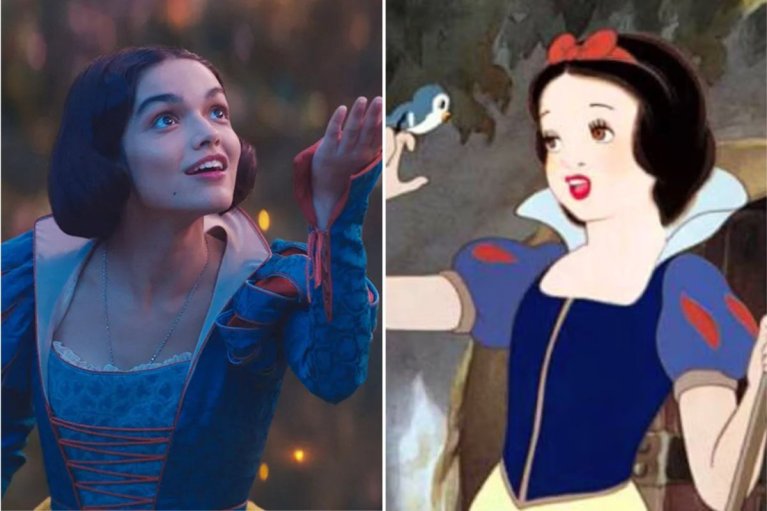
Snow Woke—Disney’s Female Empowerment Fairytale

Standard

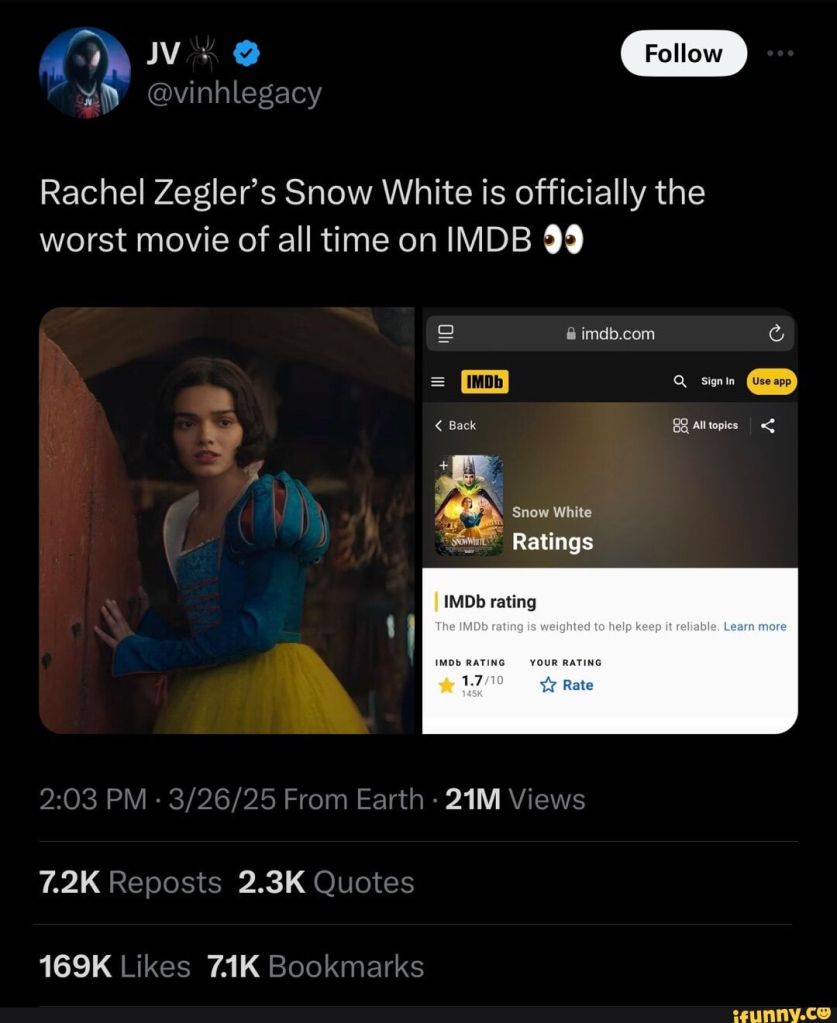
Apparently the Snow White remake bombed at the box office. We could just go with the standard “get woke, go broke” traditionalist assessment. Rachel Zegler comes off as the female equivalent of Andrew Tate—as being angry, entitled, selfish and toxic—which isn’t appealing to a broad audience.

But, before we get into the remake, let’s talk a bit about the original Disney animation of the fairytale. The character deviates quite a bit from the Grimm version. For a start, the fair-skinned protagonist is half the age (7 rather than 14) and there’s no “true love’s kiss” in this original version. Furthermore, she’s a sort of blank slate archetype—not some ideal 1930s homemaker mothering a bunch of dwarfs. In short, the adaptation then was not completely true to the source material and created an image of feminity relevant to that time.

The Grimm version was darker in tone and featured a prince weirdly obsessed with a dead girl in a glass coffin. The dwarfs did not have distinct personalities. And Snow White awakened when the poisoned apple is dislodged from her throat when a servant carrying her coffin stumbles. And it was at this point the prince professes his love and proposes marriage—which she accepts.

The latest Disney live-action takes liberties in a very different direction. It is even less true to the original (other than elimination of the Disney romance) and reimagines Snow White being a sort of feminist militia leader who leads a bloodless insurrection against the usurping queen. But the “mirror mirror on the wall” remains and a poisoned apple—despite the heavy edit of the script where an empowered woman replaces the worn damsel in distress trope.

Why People Don’t Like Snow Woke

People enjoy new takes on old genres, like Shrek or Furiosa and also powerful female characters such as Ellen Ripley in Aliens, Sarah Connor in Terminator or even Katniss Everdeen in the Hunger Games.  They were relatable, we saw them develop, circumstances made them tough to survive, and audiences loved them.  What they don’t like is preachy dialogue or lack of any real character development. A Mary Sue, a hero with no weaknesses, is unrelatable. It is the problem with Superman and with the many woke adaptations of stories.

We like the image of a woman against the machine.

Christian movies have a tendency to be bad for the same reasons. They can come off a little campy or forced. Sure, it may work for drawing your ideological camp, but it isn’t a compelling story for the unindoctrinated or the broader audience. Which is not to say that movies about Christianity can’t be great for entertainment.  I love gritty true stories like that of Hacksaw Ridge or profound, like Silence, will have anyone at the edge of their seats—the key being relatable characters.

Zegler is a bit much. Totally insufferable in the eyes of some. And she plays a part that is equally annoying. The departure from the source material is just too rude. Sure, there is room for an update, but you would never reinvent Rambo as well adjusted pacifist in a mission to avoid too much sun exposure. Disney dumped the essence of the original and replaced it with another tired ’empowered woman’ cliché. You wonder if Zegler herself wrote the script with lines like, “I’m not waiting for anyone to save me” or groaner, “The fairest isn’t about beauty—it’s about justice!”

Ouch.

Oh well, at least even apologists for woke seem to understand that it is just bad. They did not even bother accusing the audience of being racist or misogynistic this time around.

Smash the Symbolism!

What is truly lost is the symbolic depth of the original tale. Snow White was beauty and purity contrasted with the vanity and evil of the obsessed queen. They gutted what made the Grimm tale a significant message about the triumph of innocence over the destructive power of pride. This, obviously, is too nuanced for a superficial sexual organ obsessed militant far-leftist to understand. The producers of the new film replaced purity of motive against cunning with a banal competition for power.

It’s not even moral inversion. They totally lost the point. It makes me think they lack any layers to their being. It’s all about their grievance and getting back at those they’ve scapegoated for their own misery. Like the evil queen, with all the power, they envy the beauty and peace of others and attempt to kill it with their poisoned apple. Snow Woke is the toxic fruit. Zegler is an icon of their privileged ‘diverse’ female with an entitled chip on her shoulder and not the slightest bit of appreciation for all the good men who made her ignorance possible.

This is not to say those who are fixated on the literal whiteness of the actress are any better. Grimm was not writing about racial supremacy anymore than woke supremecy, if anything the original story was about our transcending politics and Zegler would be perfectly suited for the role if she were able to embody that spirit. But our culture, in a desperate need of critique, it dichotomizes everything—divides the world into friend or foe, as if life is a zero-sum game and there is never anything to gain through fusion of opposites.

Zegler is as Puritanical (and Pharisaical) as a religious fundamentalist. She reframes a rescuing prince as a stalker and romance as weird. More rigid than a patriarch, more domineering than the system she is taught to loath. A preacher rather than an actual protagonist. Basically, a young idealist who wields her moral certainty with a convert’s passion, and yet stumbling into hypocrisy under scrutiny—reaping benefits of every institution she claims to reject.

The Female Power of Beauty, Gentleness and Grace

A few years ago, I was in the checkout line and suddenly noticed the cashier. She was beautiful, pale or ashen-faced, with hair that was jet black, pleasant smile and yet there was something uncanny valleyish about her appearance. I could not quite put my finger on it. But then she spoke. This would send a shiver through me. Never before did I have that sort of feeling simply by hearing someone talk. There was a certain quality to her voice that was almost child-like, soft, pure, and really threw me for a loop. And it occurred to me that this young woman was a real life Snow White.  I had not thought this would actually be attractive in person, but it had me momentarily smitten.

As it would turn out, in a later conversation, I learned she was mixed race, Filipino mom and dad of some kind of European descent, which is likely what gave her this stunningly feminine appearance. Now, no doubt this gentle exterior was cover over a tough and capable individual. She drove an old pickup truck and lived apart from her family with a sister, and may well have been a teenager or in her early twenties. In many ways she is like Zegler (who is herself a mix of Colombian and Polish heritage), but this real-life Snow White wielded her beauty, gentleness, and grace as a quiet strength that captivated without preaching, Zegler’s strident zeal turns a timeless tale into a soapbox, losing the feminine power of subtlety for a hollow shout of self-righteousness.

This is what outspoken angry feminists fail to grasp, forcefulness isn’t the only kind of power. My petite wife could never command me to do anything. I’m 50% bigger than her and have twice the upper body strength, I would shrug it off. But she does not need to force me to do anything. She overpowers me by other means. For example, early on, before we were married, she convinced me to stop drinking so much soda, she told me water is a symbol of her love “pure and clean” and when I drink it I could feel her love. I didn’t need to be told twice.

When I look at my baby daughter I would do anything for her. She’s so vulnerable—there is a strong desire to protect and defend her—I’m drawn, not compelled.

So what does female empowerment really mean?

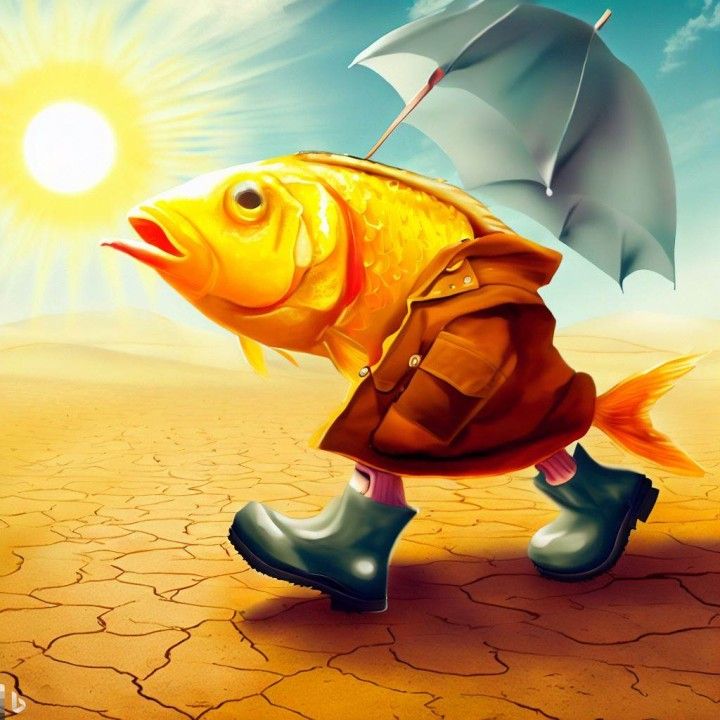
Is it empowering to a fish to be out of the water?

A visual representation of society telling individuals they need to be something else to be happy.

Humans are wired for their base biological and physical functions. Reproduction is a big part of this. It becomes clear after you see process through from courtship to baby in a carriage. Early in the pregnancy, given our financial goals, my wife had considered sending the yet to be both child to be raised by her mother. But as soon as the bundle of cuteness arrived, along with the appropriate hormones, it was never a question. Family is empowerment. My sacrifice, as a father, is more rewarding than the toys I could buy for myself as an independent bachelor.

We’re relational, not rational.

Therefore, the things we think will make us happy do not give us long-term fulfillment—the woke Zegler types are privileged, given preference as women or minorities, and yet always unhappy and looking at what others have and they do not. They are a paradox, enjoying female privilege—then miserable and wanting what men have.

It is toxic, it is their impurity of spirit, and it destroys their natural beauty and potential for true empowerment.

In all honesty, I don’t really have a problem with Zegler’s passion or outspokenness.  I guess I tend to prefer women with a real personality and feel she is right on the Gaza issue.  But what is wrong is that she’s not the right character to play what is supposed to be an embodiment of purity and the power of innocence against evil.  Snow White isn’t supposed to be Mockingjay or a story where physical force met with force—but of a different kind of power.

Ultimately, the 2025 Snow White stumbles not just as a film but as a misguided anthem, with Rachel Zegler’s shrill militancy drowning out the subtle power the Grimm tale once whispered. The original’s purity and even Disney’s 1937 grace knew strength isn’t loud—it’s captivating, like the cashier whose soft voice and uncanny beauty stopped me cold, a real-life Snow White wielding gentleness over force. My wife, too, overpowers me not with commands but with a love pure as water, turning a stubborn man into a willing protector, and just as our daughter’s vulnerability stirs my soul to shield her. Zegler’s remake, obsessed with preaching justice over enchantment, misses this: true feminine empowerment doesn’t need a megaphone or a militia—it’s the quiet, relational magic that binds us, a truth the poisoned apple of ‘Snow Woke’ chokes out, leaving a hollow echo where a fairytale’s heart once beat.