Excuse Me, Miss…

Standard

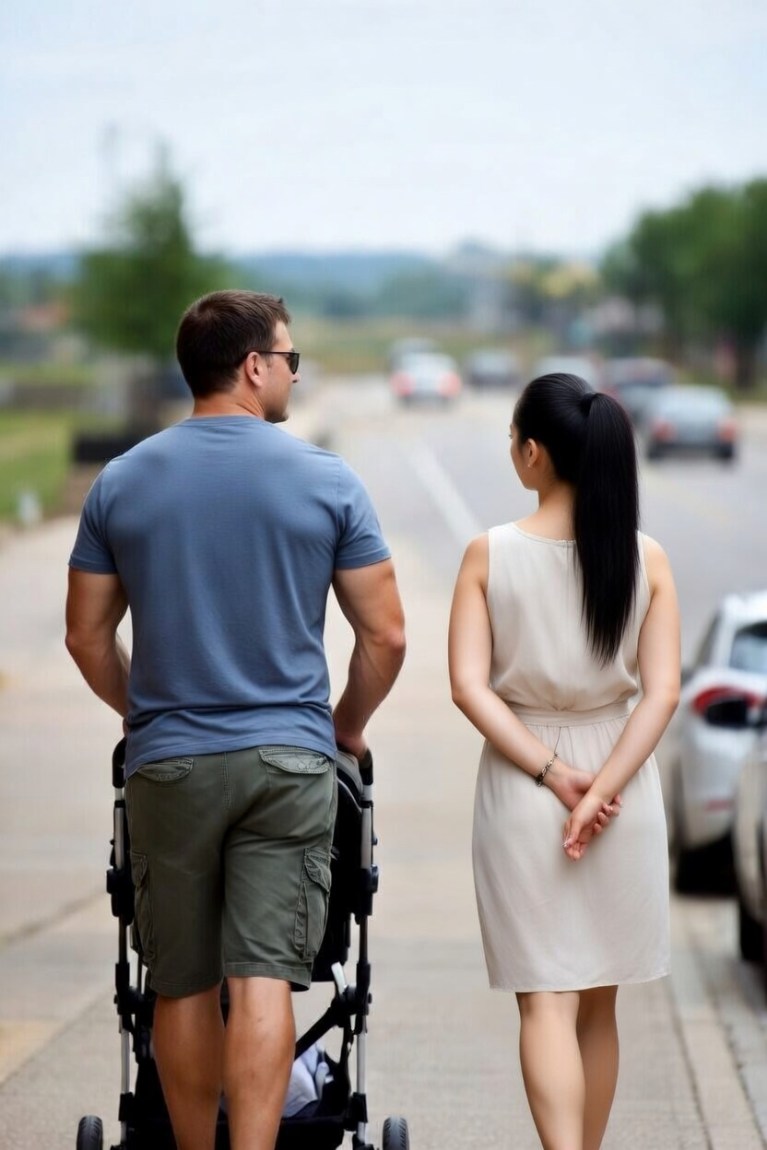
My wife and I were taking advantage of the spring weather, out on a walk together, baby in stroller, when a voice from behind us interrupted our stride:

“Excuse me, miss, why do you walk with your hands behind your back?”

Apparently, according to this inquirer, my wife was walking with her hands clasped together behind her and it made him curious.  And, after he said it, I immediately knew what he meant, I had seen her do this before and now considered that it wasn’t a common thing for American women to do.  

My wife—other than to answer the man with his New Jersey accent that it is something common with older people from her place—had no good answer.

She told me later it was something she recalls her grandma doing and was not something she ever gave much conscious thought to until he stopped us.  It was just what felt natural or right to her—a mannerism that the Igorot women of certain age and good reputation simply did.
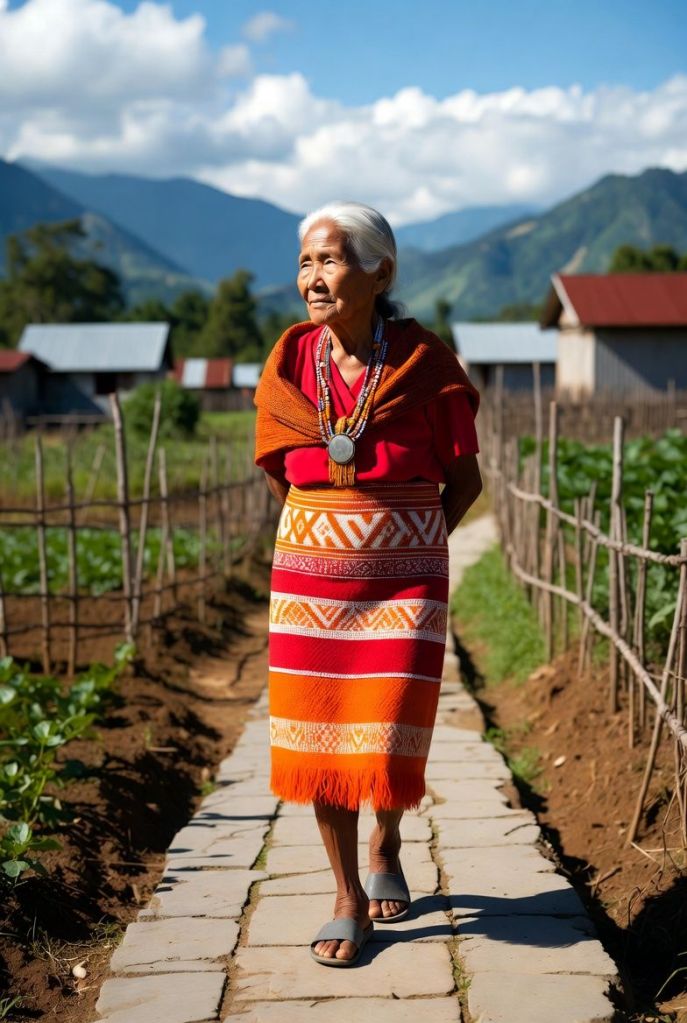
The best explanation I have found is that this is social signalling in Asian culture.  It is an image of authority and composure.  And it could mean my wife feels confident, does not need to be in a rush or has earned the right to be contemplative, non-defensive and like a respected elder in her native culture. 

Whatever it is, it isn’t deliberate or something she tried to do, it had just naturally came to her.

Mennonite Matriarchs and Mirroring Behaviors

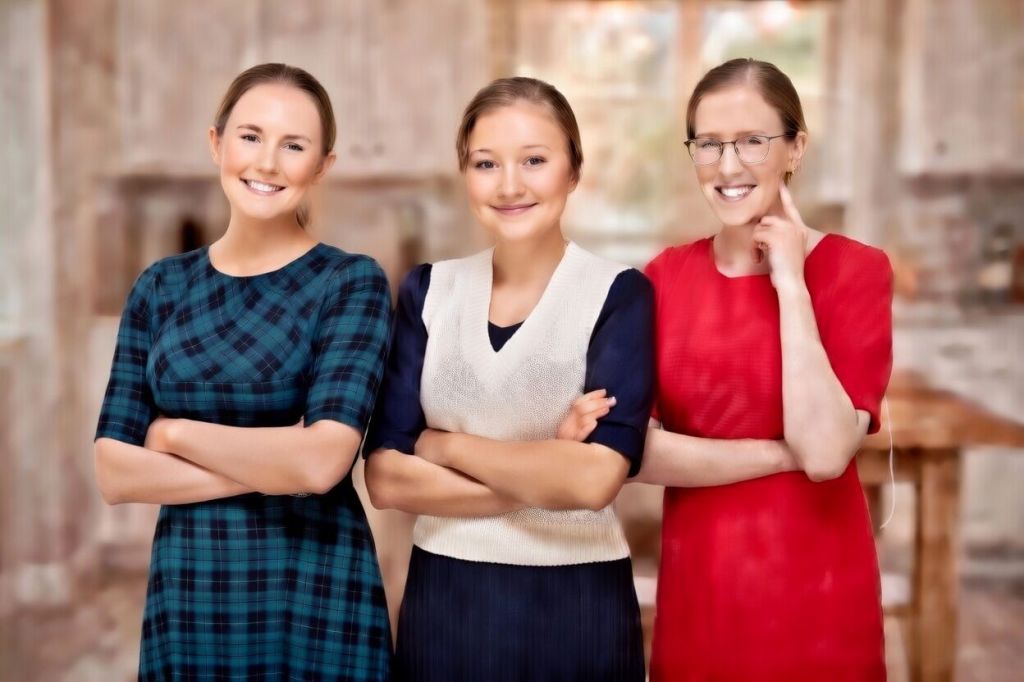
What piqued my further interest was a parallel conversation, led by Dorcas Smucker (a popular conservative Mennonite blogger), trying to figure out why her female religious peers cross their arms in front of them while standing.

The answers ranged from comfort to having no pockets in their traditional dress—or a resting position.  Others say it is a defensive posture or a symptom of women ashamed of their feminity or trying to hide themselves.   However, I have also noticed, in office meetings, my male coworkers—all of us from Amish or Mennonite background—sit around the table with their arms crossed.  The room is a bit cool.  Maybe that’s all it is?
I’m guessing this has very little to do with what is projected onto it by those who often seem to see the broader American culture as some kind of benchmark for normal. 

Yes, it is the case that those of us born into this religious subculture tend to be self-conscious about what we wear and appearance.  I knew I was odd, at a public school, wearing long pants during the heat of August, and had classmates who would remind me of my being Mennonite.  But is it the cause every mannerism?
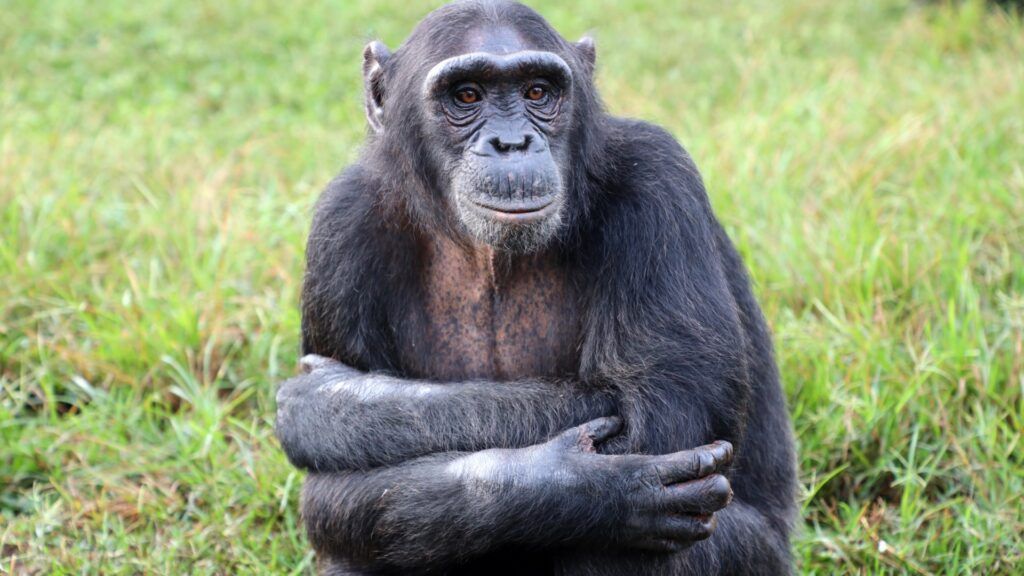
Chimpanzees also cross their arms.  But it is described as just being a neutral relaxed position or simply a way to rest and relieve muscle strain.  The crossed arms as being a defensive posture has fallen out of favor with experts.  Could there be some post hoc rationalizing in how we explain human body language? 

Mirroring behavior provides a more plausible explanation.  This is to say we will just imitate the postures or mannerisms of others in our group without a thought.  This is called “chameleon effect” and part of the way we build rapport or trust.  It is part of our sense of belonging within a community.  It’s wired in our brain—the “mirror neurons” which fire off both when we perform a particular action as well as when we see someone else doing the same thing.  Nobody has to tell us to do it.
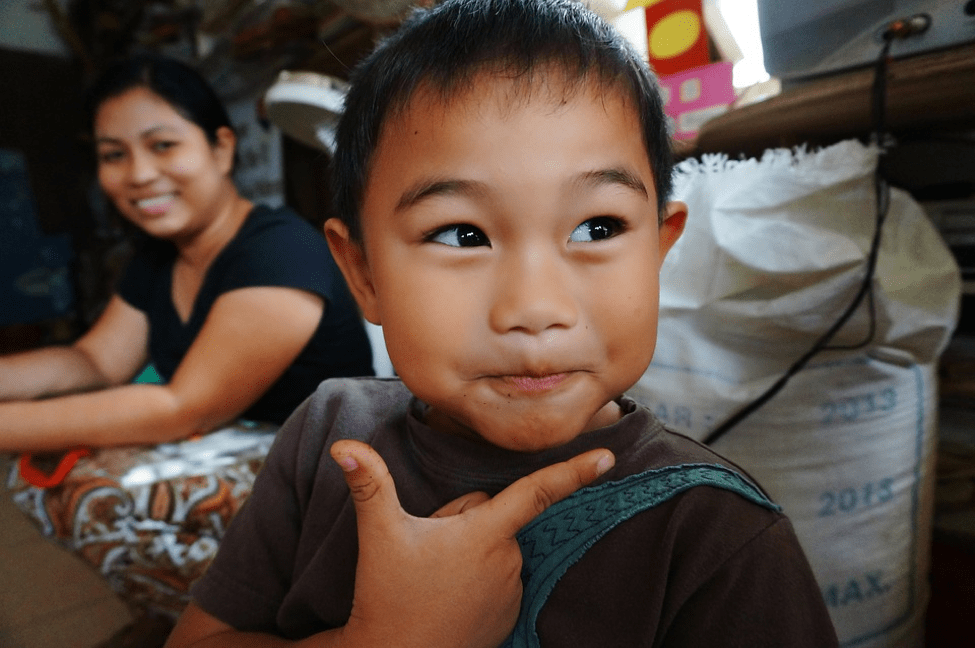
This is deliberate.  Whereas mirroring is subconscious.
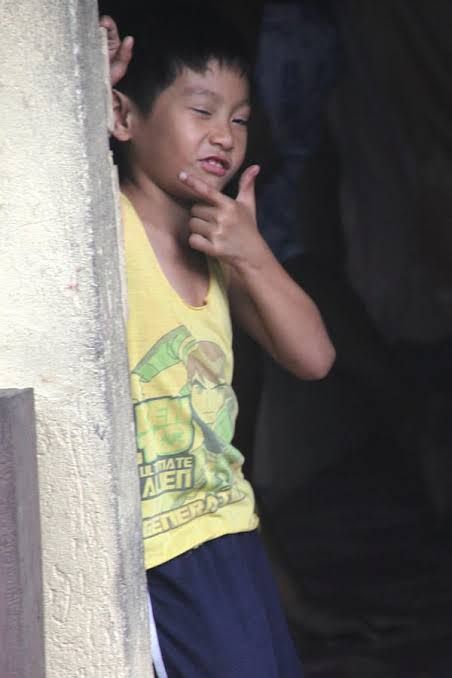
This hand gesture is very common all throughout the Philippines.  The “I’m good looking” pose.  Click here for more gestures.

So what is likely, whether those Mennonite arms crossed or Igorot elders walking with their hands clasped behind, is that these postures are about a cultural identity and unconscious process where we copy those whom we respect in the group or just what we have seen thus accept as normal.  It is social glue—in the same way my cousin picked up her Southern drawl after marrying a Virginia boy.  This is similar to how we yawn when other people do.  It’s just an instinct.

Social Glue in Religious Ritual Too

What’s interesting is that religions attempt to capitalize on this by forced mirroring that becomes unconscious.  The extended hand, the greeting a non-relative as “brother” and all ritual is about building an artificial bond that makes us feel like we belong.  It’s in the silly cliché phrases, they’re part of that “hedge of protection” around community identity, and just social connection that makes us feel comfortable.
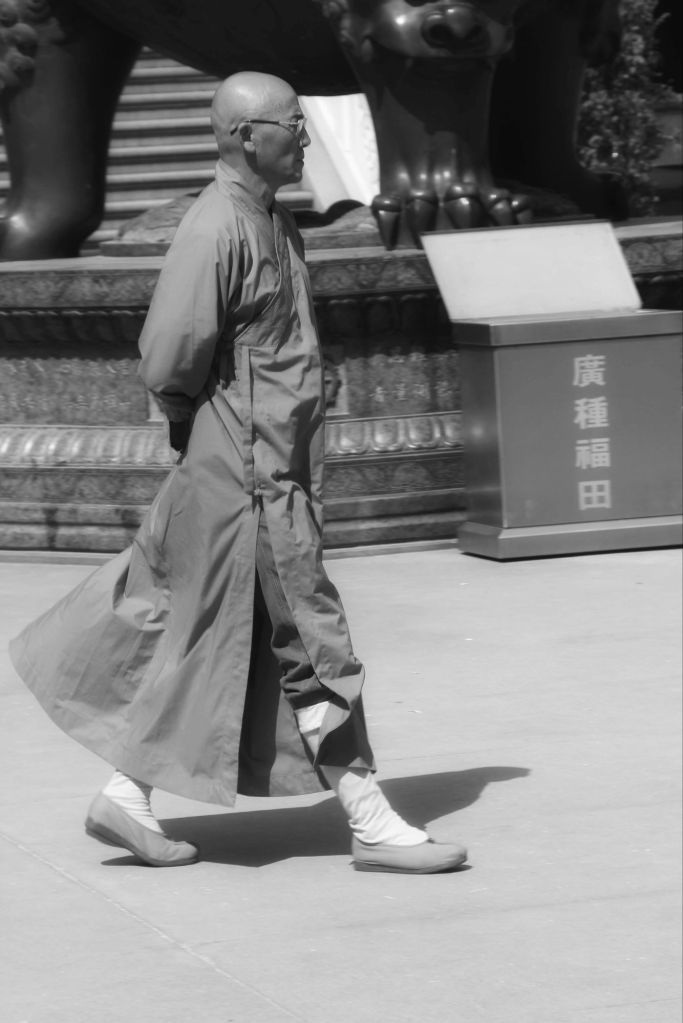
Common in the East.
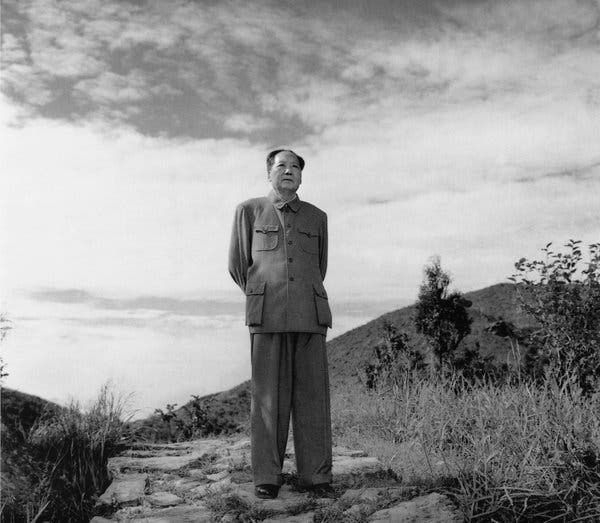
The “Four Olds” (old ideas, old culture, old customs, and old habits) of the Cultural Revolution didn’t reach Chairman Mao.  His hands are still in the traditional Asian authority position.

However, this can also make life very difficult for those outside coming in.  An outsider that tries to go through the same motions will very likely look forced—like a mask or performance rather than genuine.  This “false signal” could be taken as mockery and give off an uncanny valley feel that makes people suspicious or uncomfortable. Not to mention it is hard for the person trying to keep up the appearance as well.  Like the time when I awkwardly did a full prostration rather than the requested bow from the priest for that part of an Orthodox service.

And yet, off the insecurities most contemptible, it is this need to explain or apologize for what was programmed into us by our culture.  Hands in contemplative clasp behind our back while we walk or an assuring restful self-hug, we need not ever feel awkward about our mannerisms and physical pose simply because it is unique to our own subset of humankind.  It is an unfortunate side-effect of modern pluralism and exposure is we’re left second guessing our status rather than just being a part of the social fabric.

We don’t need to defend or pathologize this. 

At the same time, like physical posture, culture is built on religion and our moral assumptions are basically inherited.  So there is a place for careful deliberation and more intentionality in what we do.  And we do this by understanding how new generations absorb many practices through a process of socialization osmosis rather than only verbally through instruction.  If more is caught than taught; if many things are learned through unconscious mirroring—then we need to practice much more than we ever preach.

Spaghetti in Grandma’s Kitchen

Standard

Every moment spent with someone we love is precious.  But there are also those special and defining moments that stand out from the others.  The places where these memories were forged later become sacred reminders and a reason to reflect on love and life.

Grandma’s Kitchen

One of those significant places is my grandma’s kitchen.  Her kitchen table was once the hub that the family farm revolved around.  It was what met you walking through the front door, and was the central space of the home where my mother and her siblings were raised.

In years past, there was a fierce-eyed matriarch (the perfect complement and companion to the strong-willed patriarch) pacing about her domain.  Grandpa and the boys would come in for a break from their work and Grandma would be ready with a hot meal.

It was not an extravagant kitchen.  The decor, updated last in the 1980s as I recall, was nothing like those glossy magazine showplaces; it was a functional workspace and guarded by an extraordinary woman…the cooking area virtually off-limits to everyone (including my mom) at one time.

Nevertheless, it was a welcoming and warm place.  I remember many good meals, lively conversations, and happy moments around Grandma’s kitchen table.

Spaghetti with Mashed Potatoes

In recent years, I typically planned my visits with the intent to avoid mealtimes.  I knew my grandma would never let me leave without at least offering me something to eat, and I wanted her to relax rather than worry about preparing food for me.  But I would occasionally stopover before dinner because what bachelor can resist a home-cooked meal?

It was one of those occasional times when I stopped in around dinnertime.  Grandpa and I were talking at the table.  Grandma offered to cook a meal and as soon as she got the answer she was looking for there was no stopping her.  Promptly commenced sounds of steaming pots, frying ground beef, and clanking spoons, and an aroma of smells that would soon lead to a hearty meal.

That evening, an old standby recipe was served: spaghetti along with mashed potatoes and a green vegetable.  Spaghetti and mashed potatoes, strange as it might sound, is an absolutely wonderful amalgamation.  Served with Coke, provided as a special treat for us grandchildren.

I know I had seconds and probably even heaping even a third portion, in an awareness that this was an experience that might not continue much longer.  Perhaps my awareness was due to my consciousness of the frailty of life heightened by the suspicious lumps (swollen lymph nodes on her neck) she showed me that night.

It was, in fact, the last meal my grandma would ever serve me.  After that, tests revealed the lymphoma, ushering in a new chapter of chemotherapy and a precipitous decline.

My Opportunity to Serve

Grandma quit cooking while being treated, and; despite eventually winning the battle against cancer, she never did return fully to her former strength.  A mix of dementia and Parkinson’s disease began to erode her abilities.  Her process memory faded away, making her once nearly-unconscious routines into an impossible task.

It was during this time that I stopped in one day to chat around the table.  Before heading out the door, I jokingly made an offer to provide a meal and then quickly added with a smile, “it will need to be spaghetti; that is the only thing I’m good at making…”

“Nobody has brought us spaghetti,” they responded with pleading eyes.

To my surprise, none of the children (who took turns providing meals) had brought them spaghetti.  So I decided immediately, then and there, to return the favor of that last spaghetti meal Grandma cooked for me.

A week or two later, I returned with a pack of spaghetti noodles, a pound of hamburger, a jar of chunky tomato sauce and determination to not fail at my mission.  It is one thing to cook for yourself in your own kitchen, but quite another thing to cook in your grandma’s kitchen as your grandparents wait in expectation.

There were a few tense moments when Grandma attempted to help.  But Grandpa intervened, assuring her that I could handle the task, and ushered her into the other room.

Given a half hour and some ingredients, including my prayers, the meal was ready to serve.

We again ate spaghetti together at Grandma’s kitchen table.

The Strength of My Grandparents

It seems many people think of “strength” as being the ability to impose one’s will.  The brute force of a weight lifter hoisting a barbell comes to mind.  We might also envision a political movement that sweeps through and brings about dramatic change or at least garners a great amount of attention.

It is easy to believe that you’re strong when young and healthy.  It is not easy to be strong when your body and mind decline.  Nor is it easy to be strong for those watching the decline of a loved one to be strong.  That requires strength of character.

Grandpa, Grandma, and I

I have great admiration for my grandparents and their strength of character.  They worked day in and day out—with a commitment to love that has spanned over sixty years—they raised seven children together, and they did it all without much fanfare.

It has been difficult for me to see this incredible strength of my grandparents put to the test over the past few years.  There is no way to prepare.  No words of comfort or encouragement sufficient to take away the pall of inevitability.  The strong woman we had known, was fading.  There was nothing more to be done besides love her as best we could.

Grandma was provided with the best care possible by her loving husband and children.  She had given them many years of dedicated service, and they returned the favor with meals, medical care and attending to her needs.  Their resolve to repay her love to them mirrored the resolve she had shown in loving them.

Her strength became theirs.

A Loving Goodbye

Friday, three weeks ago, I had the opportunity to visit my grandparents again.  Grandma had been bedfast for weeks and was increasingly unresponsive.  But she was awake during my visit and still able to answer “yes” or “no” to my aunt’s questions.

She has not been able to recognize me over the past few months.  I wondered what was on her mind as she stared at me.  Maybe there was a vague memory of a familiar face?

I held her hand for a few moments hoping she could feel my love in the warmth of my touch and thought later how that hand that had touched and nurtured so many lives, including mine.

Her life was a life well-lived.

A couple of days later, I was again at Grandma’s house.  This time she was surrounded by her children, with my grandpa at her side.  The dreaded hour had arrived.  I wept and prayed for God to take my precious grandma into his loving hands.

The anguished silence was broken when we sang a verse of an old hymn together:

God be with you till we meet again;

By His councils guide, uphold you,

With His sheep securely fold you;

God be with you till we meet again.

Till we meet, till we meet,

Till we meet at Jesus’ feet;

Till we meet, till we meet,

God be with you till we meet again.

As we sang, Grandma took her last breath and entered into eternity.  The eighty years of her life remain written in the hearts of those gathered together at that moment as a clear testimony of Christian love.

Grandma’s kitchen was still full of love, but Grandma was now in a better place.

Mildred G. Moyer

Oct 8th, 1935 — March 19, 2017

Married May 12th, 1956 to Joseph Laverne Moyer

When Love Remains — A Guest Blog By Linda Stoltzfus

Standard

This is my first guest post.  It is written by my mom (a person who encouraged my writing) and resonated deeply with me.  It is something my mother shared recently about her own mother’s decline in health and I asked permission to share here.  I felt it was something relevant and worthwhile for those who have faced or are facing similar circumstances.  A story about memory loss and love…

Sitting on the couch my mom reaches for her phone. She snaps it open and stares at the face that greets her. The man who has been at her side for over sixty years stares back.  Her fingers haltingly push the button that calls him.  It rings and I hear his voice answering.

She pauses; words no longer come easily for her.  But I know what she will say.  She will ask him to come back into the house.

As I reach for the phone I reassure her that Dad has just gone out for a walk and he will be back in time for supper.  She seems to understand, but I know that as soon as I leave the room she will be trying to call him again.  Her mind can no longer retain anything that was said a minute or two ago.  She wants her husband, my dad, to be by her side night and day.  He has become her memory and her security in this foggy world of hers.

My mother has been given the diagnosis of dementia likely caused by Alzheimer’s.  At the age of eighty this isn’t really that unusual.  According to the Alzheimer’s Association, one in nine people over 65 has Alzheimer’s disease.  One of three senior citizens will die with Alzheimer’s or another type of dementia.

My Mom has beautiful eyes: big, bright and blue.  She had lovely long hair which never turned gray and kept its blonde streaks into her seventies.  She would faithfully wash it once a week, often using whipped egg whites as conditioner.  It was her pride and glory.  When she was diagnosed with Non-Hodgins Lymphoma, I believe the most severe blow was that treatment would cause her to lose her hair.  But to live she had no choice.  The cancer was stage four and her swollen lymph nodes were giving her a lot of pain.

Except for her hair loss, she tolerated the heavy duty cocktail of chemo drugs rather well.  It was with much relief that after her last treatment she was pronounced cancer free.  However, she seemed to becoming more and more confused.  Her once sharp memory wasn’t there and she constantly wanted pain pills for some ache somewhere.

Instead of getting her strength back she wanted to do nothing but curl up on the couch. She began refusing to shower, or even comb the hair which had begun to grow back.  Having to leave the house and attend any activity with people made her extremely anxious.  My dad desperately held on to the hope that she was still recovering from the cancer.  He insisted that once her strength came back things would get better.  But after cognitive memory testing by the doctor, it became obvious that she was showing signs of dementia.

I was aware of symptoms of dementia and saw the effects it had on my grandmother and the toil it took on my aunt as her caretaker, but they lived several hours away and our contact was minimal.  The reality is much harder when you deal with it day to day.

Dementia is often misunderstood as being something all old people have; however it is actually a part of different diseases.  Alzheimer’s is the one that often comes first to mind but mini strokes, vascular issues, Lewy’s disease, Parkinson’s and even brain trauma can lead to the diagnosis of dementia.   My mother has been diagnosed with Parkinson’s but the doctors seem to think the cause of her dementia is Alzheimer’s.

Today when I look into my mother’s eyes they look back at me empty of emotion.  Occasionally she surprises us with a smile, and for a brief moment I see them light up.  But most of the time, they remain dead to her surroundings.  Her face seems fixed into some sort of mask of confusion.  During her calm times her eyes stare blankly into the distance.  When agitated she has the look of a distressed child.

It is now supper time and my mother makes her slow trek to the kitchen gripping her walker for support.  I pull out her chair and she sits down.  I hand her some napkins which she seems to enjoy folding. It is one of the few things she still can do.

My dad comes into the house, and with his usual style, asks Mom how she is feeling.  Although he hasn’t had a positive answer from her concerning her health for months, he seems to retain some sort of illusive idea that it may yet happen.

He deeply misses his soulmate.  They were unusual by today’s standards.  There was no independence in their relationship: they did everything together and it seemed to work for them.  Dad enjoyed driving and Mom did the navigating.  Dad liked watching people while Mom did the grocery shopping.  They both enjoyed going out for fast food, Burger King was a favorite, and they preferred eating in the car together rather than inside.

Mom always made sure Dad had three meals a day and that his needs were well taken care of.  However, that all changed with her cancer diagnosis.  She hasn’t cooked since.  Today we all take turns making sure they have a cooked meal each day.

At the supper table, I try to bring back some sort of connection by talking about my birth fifty some years ago. Mom is still able to recall my date of birth but she isn’t sure how old she is or even what day or year it is.

One of the frustrating things about dementia is the way it plays with your emotions.  One minute the person can be reciting a date or event in perfect order but then a moment later have no idea who they just talked to or what was said.  A person with dementia has good and bad days just as any normal person does.  This puts caretakers on an emotional seesaw, since the good days make you want to believe that the person is getting better.

The first thing that comes to mind when you hear the word dementia is loss of memory.  Of course this is true but we all experience some loss of memories throughout the years.  The disease or injury that causes dementia is much more complicated than simply forgetting something.  It takes many cranial connections to make a decision, to recall how to turn on a stove, know the steps in taking a shower.  Once this processing is damaged, or gone, a person becomes more and more limited.  They need someone to give them step by step directions for each and every process of the day.

Today is one of Mom’s good days.  She seems relaxed, when several of her younger grandchildren show up, she smiles.  Instead of lying on her couch she remains sitting watching the activity.   She motions to me.  I can see that she wants to say something but her voice is subdued, and hard to hear.  I move next to her.

“Do we have any smarties?” she asks me.  It is her favorite treat for the children.

I check the dish she keeps next to her bedside.  It has several pieces and I give her the dish.  Her face lights up as she hands them to the children, and for a short time I see my mom back.

My mom’s biggest goal in life was to take care of her husband and family. She faithfully raised seven children and celebrated the birth of each 30 grandchildren and 20 some great-grandchildren.

My mom enjoyed listening to music, reading and going to church and social activities.  Now she no longer wants to attend any type of social activity and refuses to have any music playing around her.  She can’t focus to read.  Although still able to read the words the comprehension is no longer there.  She has always been a follower of Christ with strong convictions but now no longer prays before a meal unless my Dad reminds her.

One of the cruelest things of dementia is the loss of the personality of the person you love. The disease has robbed her and us of some of the most precious parts of the human relationship.

In exception of one thing:  unending love. My mom is surrounded by agape love.  For sixty years my dad has been with her and is committed to being there until the end.  Although he has taken on the role of caretaker, his love for her remains the same.

Each of her four daughters is involved in her care, making sure her daily needs are being met.  Her daughters in laws have faithfully been making meals for several years with even some of her grandchildren helping out.  We all play different roles motivated by love.

One evening as I sat next to my mom who was lying on the couch with her eyes closed, seemingly sleeping, she reached out her hand and put it in mine.  She then took her other hand and laid it on top.  A wave of warmth spread over me. I haven’t felt that kind of emotional connection from her in a long time.

In that simple gesture, I knew that in spite of her confused state Mom was feeling loved.  In return she was offering the one thing she could still give back: affirmation of her love.  No disease can ever take that away.