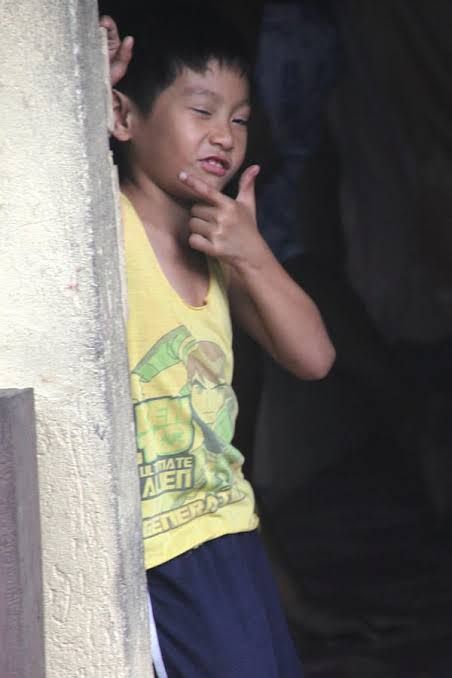
Excuse Me, Miss…

Standard

My wife and I were taking advantage of the spring weather, out on a walk together, baby in stroller, when a voice from behind us interrupted our stride:

“Excuse me, miss, why do you walk with your hands behind your back?”

Apparently, according to this inquirer, my wife was walking with her hands clasped together behind her and it made him curious.  And, after he said it, I immediately knew what he meant, I had seen her do this before and now considered that it wasn’t a common thing for American women to do.  

My wife—other than to answer the man with his New Jersey accent that it is something common with older people from her place—had no good answer.

She told me later it was something she recalls her grandma doing and was not something she ever gave much conscious thought to until he stopped us.  It was just what felt natural or right to her—a mannerism that the Igorot women of certain age and good reputation simply did.
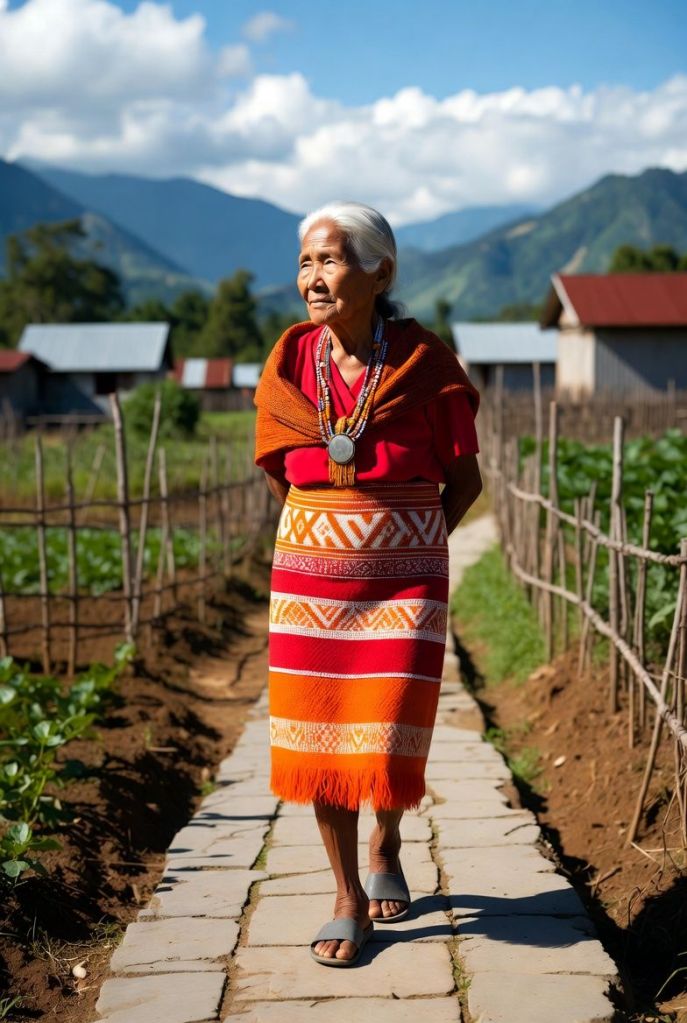
The best explanation I have found is that this is social signalling in Asian culture.  It is an image of authority and composure.  And it could mean my wife feels confident, does not need to be in a rush or has earned the right to be contemplative, non-defensive and like a respected elder in her native culture. 

Whatever it is, it isn’t deliberate or something she tried to do, it had just naturally came to her.

Mennonite Matriarchs and Mirroring Behaviors

What piqued my further interest was a parallel conversation, led by Dorcas Smucker (a popular conservative Mennonite blogger), trying to figure out why her female religious peers cross their arms in front of them while standing.

The answers ranged from comfort to having no pockets in their traditional dress—or a resting position.  Others say it is a defensive posture or a symptom of women ashamed of their feminity or trying to hide themselves.   However, I have also noticed, in office meetings, my male coworkers—all of us from Amish or Mennonite background—sit around the table with their arms crossed.  The room is a bit cool.  Maybe that’s all it is?
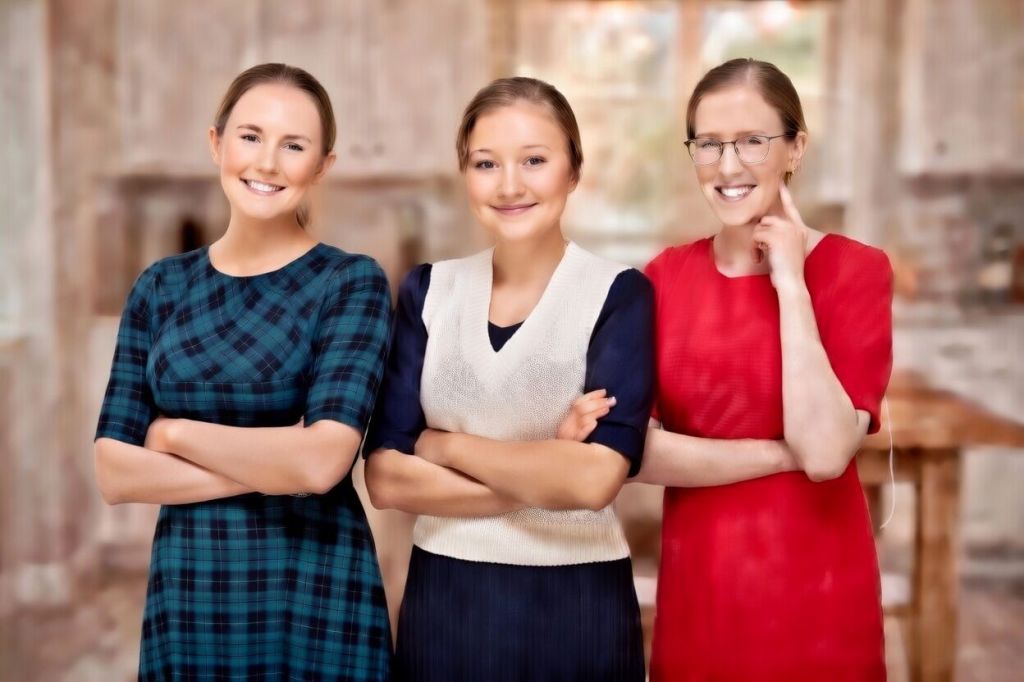
I’m guessing this has very little to do with what is projected onto it by those who often seem to see the broader American culture as some kind of benchmark for normal. 

Yes, it is the case that those of us born into this religious subculture tend to be self-conscious about what we wear and appearance.  I knew I was odd, at a public school, wearing long pants during the heat of August, and had classmates who would remind me of my being Mennonite.  But is it the cause every mannerism?

Chimpanzees also cross their arms.  But it is described as just being a neutral relaxed position or simply a way to rest and relieve muscle strain.  The crossed arms as being a defensive posture has fallen out of favor with experts.  Could there be some post hoc rationalizing in how we explain human body language? 

Mirroring behavior provides a more plausible explanation.  This is to say we will just imitate the postures or mannerisms of others in our group without a thought.  This is called “chameleon effect” and part of the way we build rapport or trust.  It is part of our sense of belonging within a community.  It’s wired in our brain—the “mirror neurons” which fire off both when we perform a particular action as well as when we see someone else doing the same thing.  Nobody has to tell us to do it.
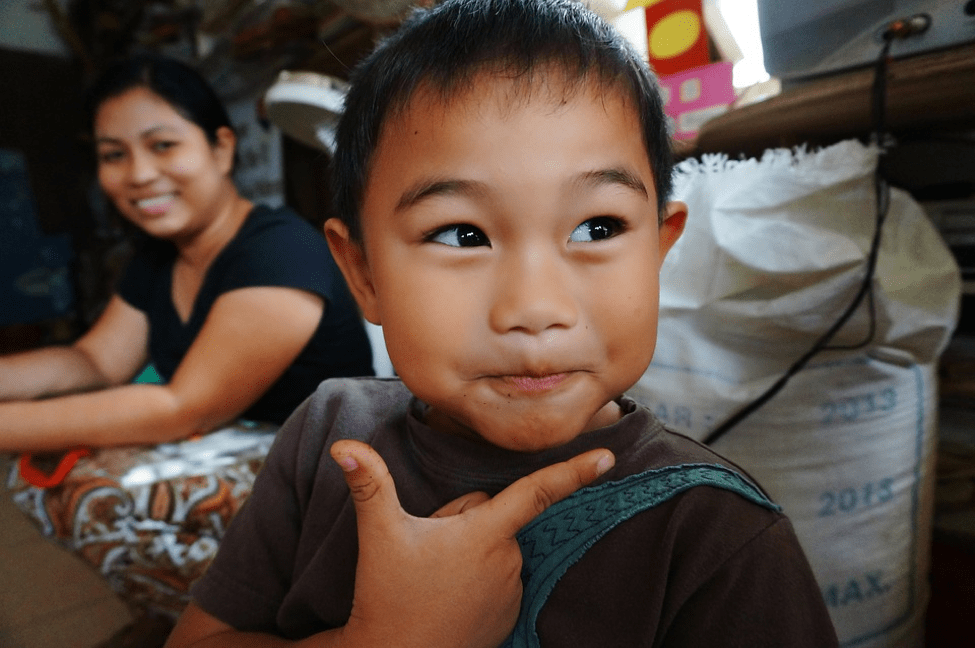
This is deliberate.  Whereas mirroring is subconscious.
This hand gesture is very common all throughout the Philippines.  The “I’m good looking” pose.  Click here for more gestures.

So what is likely, whether those Mennonite arms crossed or Igorot elders walking with their hands clasped behind, is that these postures are about a cultural identity and unconscious process where we copy those whom we respect in the group or just what we have seen thus accept as normal.  It is social glue—in the same way my cousin picked up her Southern drawl after marrying a Virginia boy.  This is similar to how we yawn when other people do.  It’s just an instinct.

Social Glue in Religious Ritual Too

What’s interesting is that religions attempt to capitalize on this by forced mirroring that becomes unconscious.  The extended hand, the greeting a non-relative as “brother” and all ritual is about building an artificial bond that makes us feel like we belong.  It’s in the silly cliché phrases, they’re part of that “hedge of protection” around community identity, and just social connection that makes us feel comfortable.
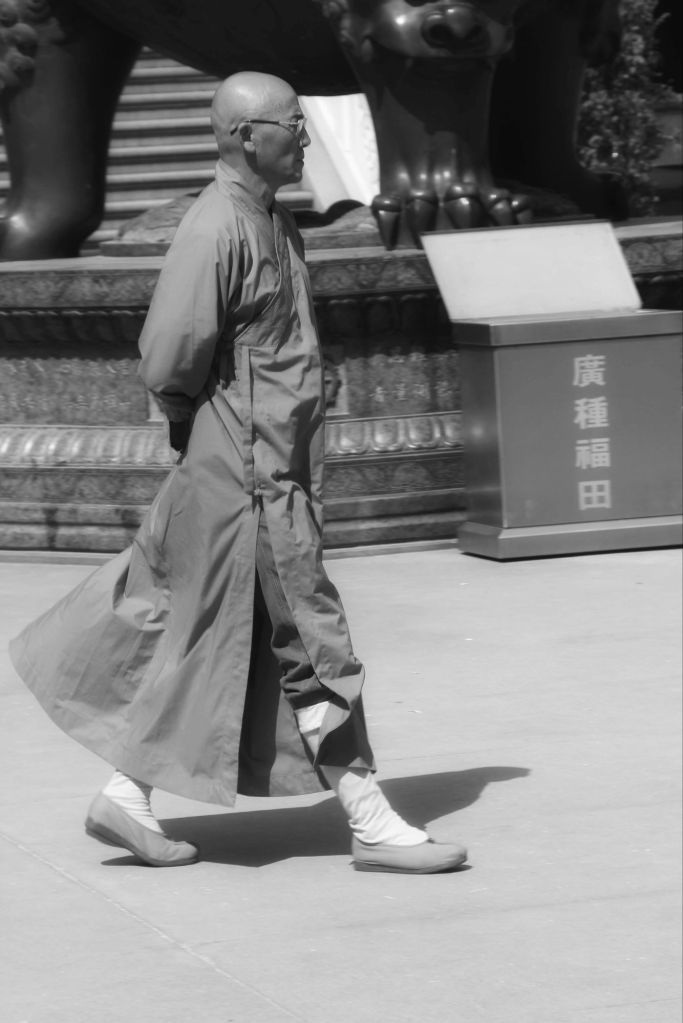
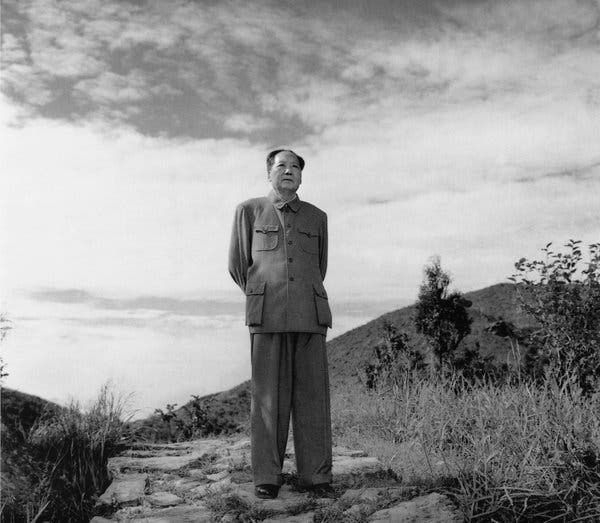
Common in the East.
The “Four Olds” (old ideas, old culture, old customs, and old habits) of the Cultural Revolution didn’t reach Chairman Mao.  His hands are still in the traditional Asian authority position.

However, this can also make life very difficult for those outside coming in.  An outsider that tries to go through the same motions will very likely look forced—like a mask or performance rather than genuine.  This “false signal” could be taken as mockery and give off an uncanny valley feel that makes people suspicious or uncomfortable. Not to mention it is hard for the person trying to keep up the appearance as well.  Like the time when I awkwardly did a full prostration rather than the requested bow from the priest for that part of an Orthodox service.

And yet, off the insecurities most contemptible, it is this need to explain or apologize for what was programmed into us by our culture.  Hands in contemplative clasp behind our back while we walk or an assuring restful self-hug, we need not ever feel awkward about our mannerisms and physical pose simply because it is unique to our own subset of humankind.  It is an unfortunate side-effect of modern pluralism and exposure is we’re left second guessing our status rather than just being a part of the social fabric.
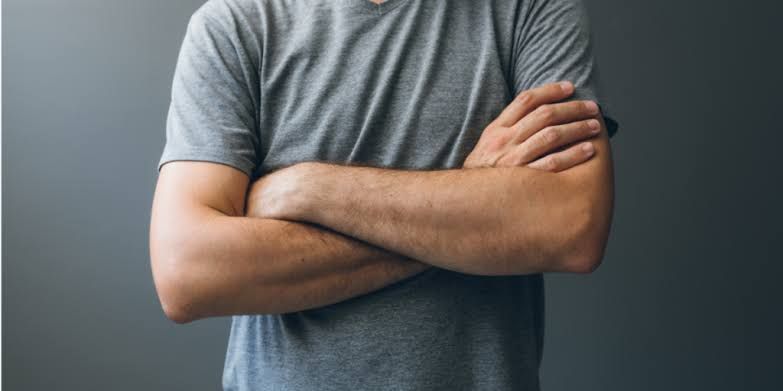
We don’t need to defend or pathologize this. 

At the same time, like physical posture, culture is built on religion and our moral assumptions are basically inherited.  So there is a place for careful deliberation and more intentionality in what we do.  And we do this by understanding how new generations absorb many practices through a process of socialization osmosis rather than only verbally through instruction.  If more is caught than taught; if many things are learned through unconscious mirroring—then we need to practice much more than we ever preach.
Too little [but never] too late…

Standard
I have always been a late bloomer, for my stature dubbed with nicknames that included ‘micro’ in them by classmates and stood only 5′-3″ on my first driver’s license.  In my class of over one hundred I was simultaneously second oldest and also, of the guys, the second smallest.  I was too light weight to even donate blood until my junior or senior years of high school.

Beyond that, I was also a little behind in motor skills and sorely lacking in coordination; it was as likely in my early teens that a football would hit me in the face rather than be caught by my hands.  It probably didn’t help anything that I didn’t grow up tossing a ball at home, my dad was equally undeveloped athletically, he did not follow professional sports and we just weren’t a sports oriented family.  It all added up to me often being close to last picked in gym class, which wasn’t much of boost of confidence to say the least and perhaps explains the antipathy I had towards athletic pursuits.  For the time I had concluded athletic competition was for big dumb brutes, not me.

Then, somewhat inexplicably, I became interested in the high school football team.  I do not recall what started it.  There may have been a combination of factors, I do not know for sure.  But, my junior year, I started to attend games (even hitched a ride with the team to an away game) and around the same time began to lift weights and imagine myself on the field.  Football, I discovered, was about more than one guy being able to run over another; football was also a chess match of strategy involving slight of hand trickery and all trying to gain an advantage or out smart an opponent with misdirection, formations and plays.  So, at 5′-8″ tall and 112lbs, I decided I would go out for the team despite my late start and my shortcomings of natural raw abilities understood.  I wanted to try.

Over the summer I practiced with the team, but the real commitment began with the ‘two-a-day’ practices and with the start of my senior year.  It was hard work physically.  I can remember a time in practice a collision that I had thought for a second had collapsed my entire spine like an accordion.  I also recall the sheer terror of having to occasionally face padded behemoths who were close enough to double my weight.  I have not forgot being ran over by a fellow senior in a tackle drill an act I imagine included a big grin on his face.  Had I known some of the bruises and pain beforehand I might have second thoughts about my decision to play, but once started I was determined to endure to the end whatever it took.  From the onset I knew I was not likely to play much due to inexperience and size, yet I was a competitor all the same and wanting to make the team better if only with a winning ‘no quit’ attitude.

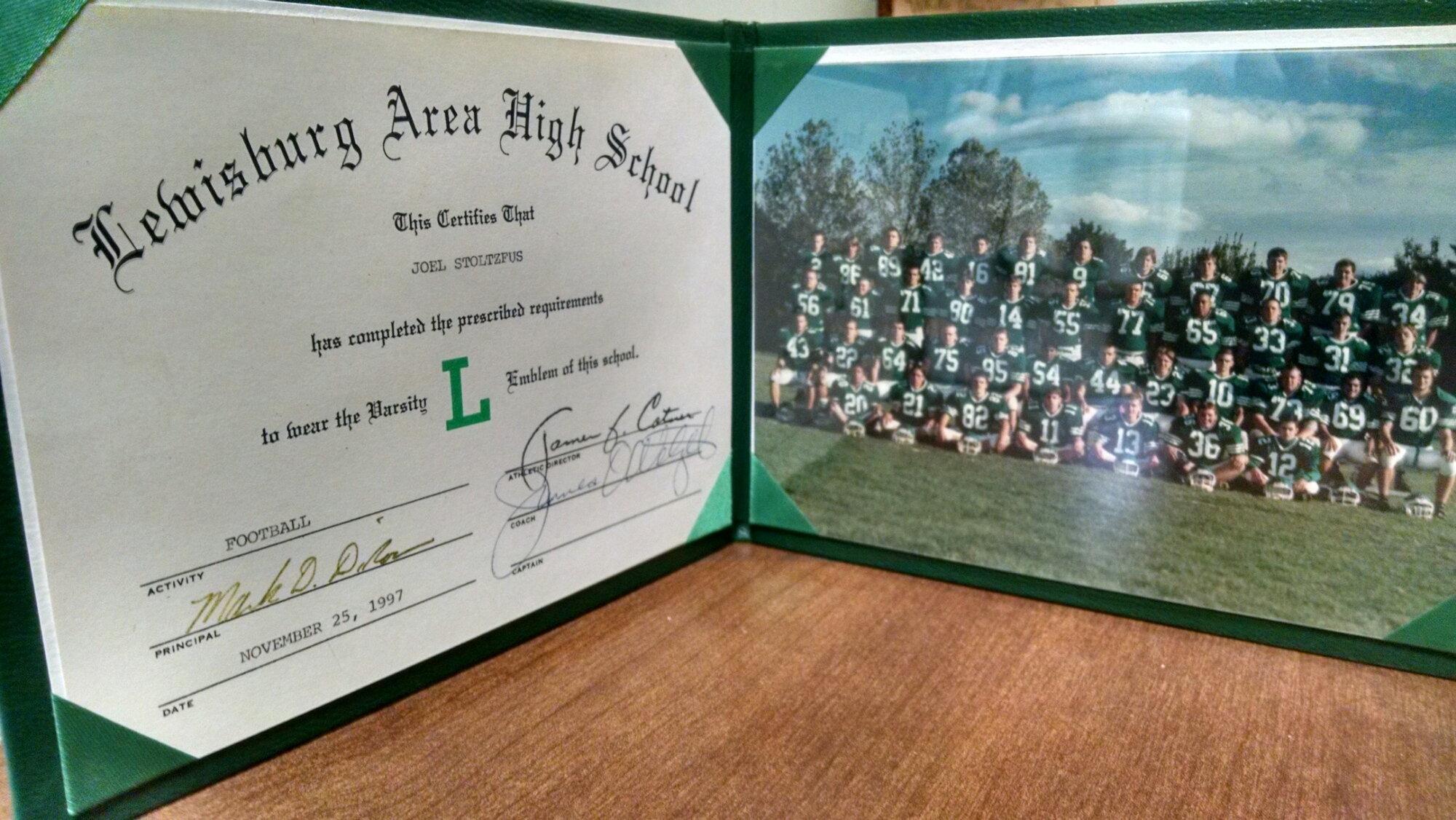
There was plenty of reward.  After weeks of practice there was the proud moment of wearing your game jersey on Fridays at school before game night.  Football made me part of something when I saw teammates in the halls or got ‘good luck’ wished upon me by random students.  I was a warrior, a representative of my school and had earned the team colors that I wore on my back.  I was #13 (I figured an unlucky number fit an unlikely player and couldn’t hurt) and now called ‘Stoltz’ or ‘Stoltzy.’  Those nicknames were the chant of teammates on the sidelines when I stepped onto the field for those few last plays that iced a blowout win.  I belonged.

But the biggest reward was the handshakes and hugs of coaches at the end of the season.  It was after a disappointing loss that ended our season in the first round of playoffs.  We lost to a team we had beaten prior in the regular season.  It was a very emotional moment to be at the end of my first and last season as a player.  Nevertheless it was satisfying to have finished, having survived from the blistering heat and throbbing shin splints of preseason camp to outlasting the bone chilling *shivering* cold of late season practices.  I received a varsity letter for my efforts and with it memories to last a life time.

If I would have any regrets it would be declining my chance to play in the waning minutes of that decisive last game.  An assistant coach had tapped my shoulder telling me to go in the game.  But, because I knew my entering the game was a tacit admission of defeat and keeping the starters in would increase the unlikely chances of victory, I refused saying, “I don’t want to play, I want [us] to win!”  I regret my choice, but only because the sophomore who went in my place caught my favorite route (a deep post) and seemingly could’ve scored with just a bit more heart; he came up a yard short.

I graduated from high school, but to me there is still nothing like a crisp fall night under the lights and watching those bright green jerseys take the field one more time.  And now I have another loyal fan who often accompanies me, who also (less inexplicably) began to love the sport he once thought was silly and that fan is my dad.  We sit there, it is our yearly ritual, we share memories of past games, talk about life and cheer on the team…

image