
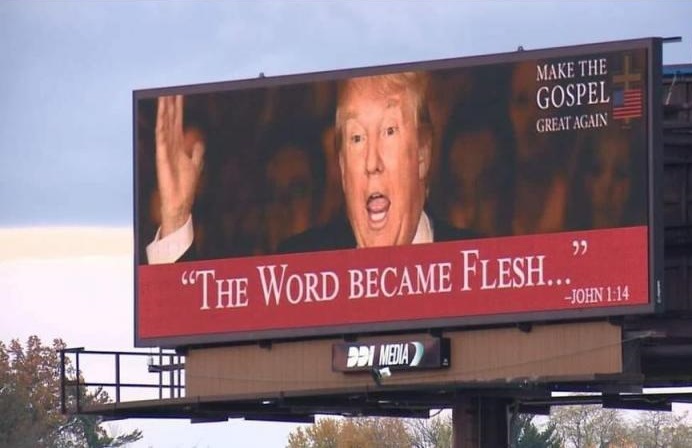
Character Over Symbolism — Rejecting Trump as a Political Messiah

Standard

I’ll make a confession. Before Paula White-Cain ever said it, I described Donald Trump as a type of Christ. I believed the judgments against him were largely vindictive and politically motivated rather than a genuine pursuit of truth and justice.

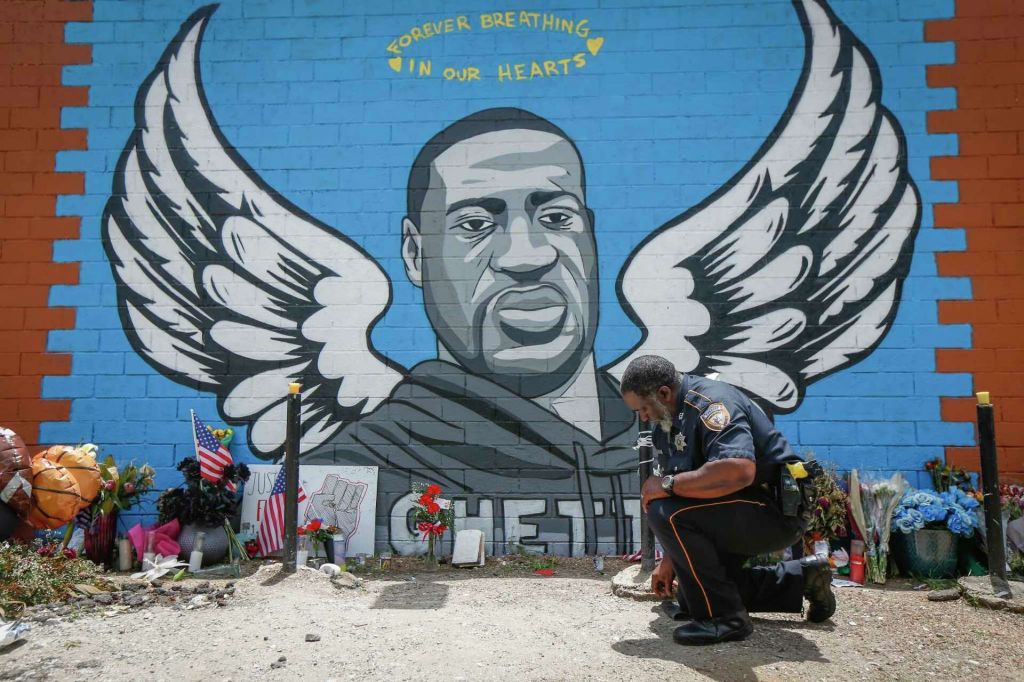
In my defense, I didn’t mean it the same way Paula White does. George Floyd can also be seen as a type of Christ—a man who died under tragic circumstances and became a powerful symbol of what many perceive as lingering racial injustice. Samson in the Old Testament was another flawed type of Christ: a strong but deeply imperfect man who ultimately brought the house down on his people’s enemies. The religious leaders of his day even declared it better that one man should die than the whole nation perish—the exact same justification used against Jesus.
Then there’s Jesus Barabbas, a man whose name literally means “son of the father.” The frenzied mob chose to free a violent revolutionary instead of Jesus of Nazareth.  He serves as a dark type: a chaotic figure the crowd preferred over the true son of God and Prince of Peace.

When I first called Trump a type of Christ, it was out of sympathy and frustration with lawfare. I opposed the clear double standards—Joe Biden openly bragging about his quid pro quo, James Comey giving Hillary Clinton a free pass, while Trump faced relentless legal pursuit. My support was rooted in a belief in equal justice under the law, not personal adoration. I never saw him as a good man, let alone an example to follow. I had accepted him as a necessary monster to fight other monsters.

But I’m now regretting even that loose analogy. Trump’s character has troubled me from the beginning. His style of politics often mirrored the very things I criticized on the left. The “we’re electing a commander-in-chief, not a pastor” argument never fully sat right with me. (More so now that Jerry Falwell Jr., the Evangeli-con leader who had coined this way to rationalize around Trump’s shortcomings, has since been disgraced in a lurid sexual scandal). Being burned by a man I quietly endorsed has forced me to reevaluate my own judgment.

Character is not just one factor among many—character is everything. The danger of electing a monster to fight other monsters is that the beast will eventually turn on you. Perhaps it’s better to “waste” a vote on someone of stronger character than on a “lesser evil” who may overachieve?

Trump won his reelection largely because his opponents cried wolf too many times. Decades of calling anyone to the right of Mao a “fascist,” coupled with the very weak evidence for Russian collusion compared to credible questions about Biden family corruption, made it easy for many to dismiss all criticism of Trump as just another partisan witch hunt. The perception of unfair treatment caused many people to rally around him, ignoring his serious character flaws.

I call it the “George Floyd effect,” where symbolic value of an individual and grievances shared by a demographic group cause people in that group to overlook glaring character issues. Trump also cleverly positioned himself this way with the line, “They’re not coming after me. They’re coming after you—and I’m just standing in their way.”

Yet Trump has increasingly imagined himself as a Jesus-like figure. He once questioned why he would need to ask for forgiveness if he doesn’t make mistakes—which is a stark departure from Christian teaching that all continually fall short of God’s glory. And the recent meme he posted of himself with healing hands, dressed in robes as a Christ-like figure (which he since has insisted was meant to show him as a doctor), crosses into very dangerous territory.  It’s blasphemous.
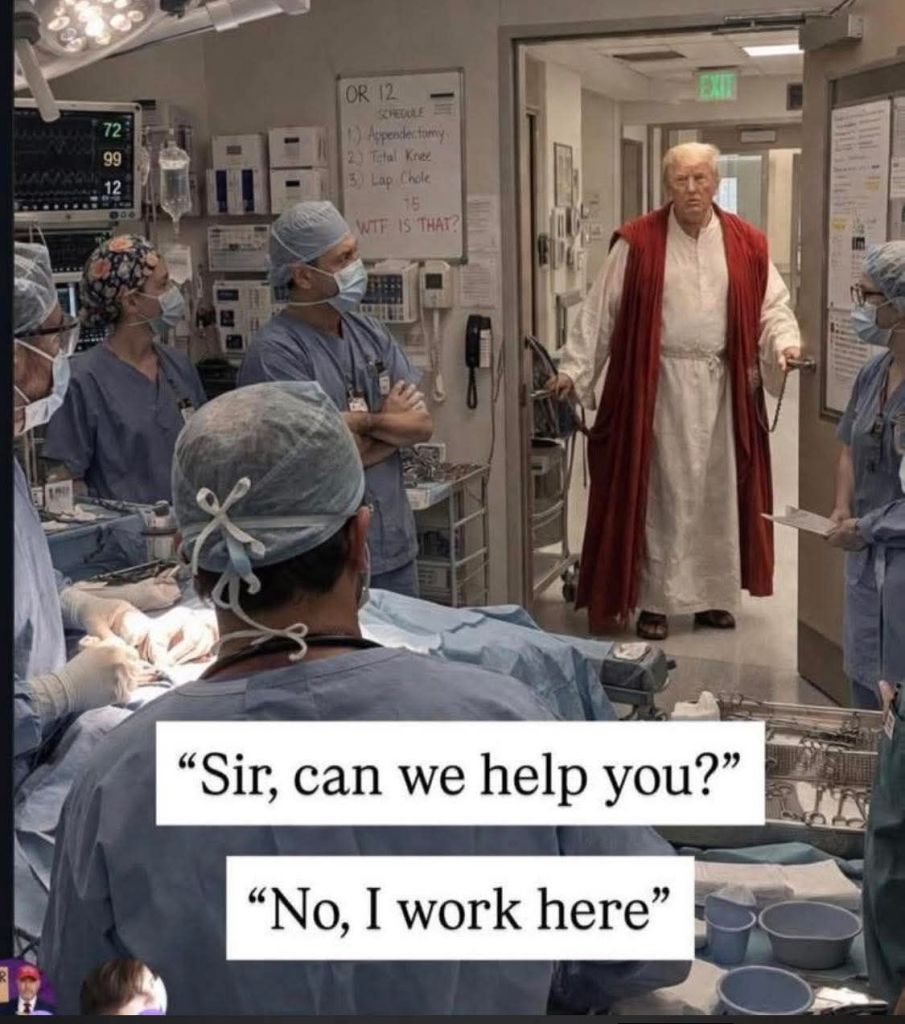
Only Trump could get away with saying he was portraying a doctor and that those who believe their eyes shouldn’t be trusted.

Anyhow, I’m old enough to remember Barack Obama being called the Antichrist or accused of thinking he was a god for far less. (See: pillars at DNC) The same voices who condemned Obama’s allegedly messianic imagery are now defending or downplaying Trump’s behavior.

I didn’t leave the MAGA coalition.

It left me.

To balance the record: Trump can also be seen as a type of Hitler in troubling ways. He is a populist with grandiose tendencies, quick to attack others while being extremely thin-skinned. He blames foreigners for America’s problems and has also sparred publicly with the Pope—much like Hitler clashed with the Vatican. Both men also survived assassination attempts in ways some called lucky or God’s hand of protection.

In the end, I regret using Christ-like language for any politician. The temptation to turn our flawed political leaders into sacred symbols—whether as redeemers or villains—ultimately does us more harm than good. Politics already pulls us toward idolatry. We should resist it by judging leaders on character first, not on how well they embody our grievances.

Law as a Tool, Not a Tyrant: Reclaiming the Spirit of Justice

Standard

There are many ways to get things wrong and one of those ways is to detach the law from its most foundational purpose.  That is a part of a legalistic mindset—which always will end up producing bad interpretation and misapplication of law.  

Law is not an entity separate unto itself or something stand alone.  It is a political tool, a guide or instrument for application of an agreed upon principle or cultural value, and application of the intended use requires a common set of assumptions to the creator.  It cannot float in space—never treated as an independent truth—it must be moored to a mission or the common good.

It’s the law!!!

I’ve been in conversations recently where some involved are in denial of the political nature of the law and treat it as if the words on a page somehow have their own life.  It is a misunderstanding of language.  There is nothing static or unassailable about any written code.  Everything depends on having an interpreter with values they are similar or basically the same as the originator of the law—the power of law, therefore, is in the interpretation and application.

When a person assumes that the law can speak for itself they’re delusional, they don’t grasp what law is or what it is for at a very basic level and end up using it to create a system of legalistic prescription rather than understand it through a practical lens.  They have essentially made dead words (applied in any way they want or are most familiar with) a focus rather than cutting through to the underlying principles that make correct application possible.  Their obsession over the letter of the law comes at the expense of following the spirit behind it.

Most people can’t read cursive let alone know what the founders truly intended.

This is what the Pharisees did and Jesus corrected.  He didn’t question the legality of his servants breaking Sabbath rules, rather he gave an example of when David did what was unlawful (only lawful for the priests) to show exceptional circumstances allowed a written law to be set aside.  It is at this point Jesus declared: “The Sabbath was made for man, not man for the Sabbath.” (Mark 2:27 NIV)  This is a higher principle not ever stated in the law but describes a purpose of the law that cannot be separated from the application.

Biblical law may not be relevant to matters of the US Constitution, but both the law of Moses and the law of the Constitution were established to safeguard a nation.  It was a law for the common good of the people and not something absolutely set in stone.  And, in fact, in the earliest days of the US, it was a matter of disagreement how much power should be in the judiciary—which led to the Judiciary Act of 1802 and to courts being dissolved by Thomas Jefferson.  

The point being is the law can’t be properly handled apart from the foundation it is built upon.  Law should serve the common good and needs a reset if it goes astray and ends up becoming a cumbersome burden that is in the way of pragmatic concerns.  Letter of the law people enforce a system for sake of the system alone—they claim the slightest deviation will destroy everything good and right—and end up with ridiculous results.

Don’t cross the street!

Suppose a child is told not to cross a street by their parent.  It is a busy highway and too risky for them to cross.  That’s the law and it is a good one.  However, if some unusual event were to happen, a real emergency, is it important that the child remain on their side of the road even at risk of death?

Those on the legalistic side would argue the law is what it is.  And that making a change based on this circumstance will only lead to more exceptions being made until nothing is left.  This is a slippery slope fallacy based on an assumption there is no authority that is higher than the law and that the system we is basically optimized.  But this idea that the current regime represents some perfect balance that should not ever be challenged is dumb.  There is nothing sacrosanct about the current business as usual.

A system of checks and balances requires some dispute and conflict.  Activist judges that obstruct the role of elected leaders— with an ever expanding definition of “due process” at our expense—hinder progress and might need to be checked.  

Worse yet, when the attention is selective.  It is nothing but loopholes for some and the lawfare for others.  Which is the irony of legalists.  They apply a withering standard for others while always finding exemptions for themselves—they may declare “nobody is above the law” and yet are always given an excuse when it is their turn.

There is a place for precedent or principle, tradition is a better guide than ideology, but then there is a time when a deterioration of values and good faith application bogs the country down and justice becomes slave to a system of perverse priorities.  It is when the application of law no longer serves the common good, but only the lawyers, corrupt prosecutors and jurists who all gain at our expense.  The legal experts claim to uphold the law and yet undermine public trust with their shenanigans that defy our values.

Lawless regimes

Law is a tool, and the hands wielding it are what matter more than what is written in it.  Words on a page are a weak defense when those tasked with applying them are evil or compromised.  A hammer can be used by a carpenter to build or by a criminal to kill and law is no different.  A nation of attorneys is potentially as lawless as country without a written law and enforcement mechanism—our moral constitution matters more than a jot and tittle legalism.

Jesus took on the legal system of his day and not to abolish the law.  No, he exposed the experts.  They strained on gnats while swallowing camels, missed the forest for the trees, and are like those today who will punish us with regulations while rewarding those who flout our laws.  We are shown no mercy while simultaneously the favorites of the political establishment need not worry about a day in court.  Law for thee, not for me.  It serves the elites, not the people.

Law is about setting boundaries and due process depends on the situation.  When the British invaded, in 1812, there was never a thought of applying the Bill of Rights for those who rose in defense of the nation.  In times of war the due process is pointing rifles at the invader.  And foreign gang members who crossed into this country illegally shouldn’t be allowed to abuse asylum laws.  Abraham Lincoln suspended the writ of habeas corpus or due process for citizens during the Civil War—a free ride home for non-citizens is a great deal compared to Union Army detention.

Lincoln was hated by Democrats for his use of executive power

Having dealt with the USCIS, I am not a big fan of paperwork and most especially not when they offhandedly reject your mother-in-law’s tourist visa (as they have done for years, see the time stamps) after all the fees are paid and a visit to the US embassy—and you can rest assured there is no grandstanding by US politicians about due process and assumed right to be in the country on the behalf of those who do it the right way. 

No law might be more fair than our currently convoluted regime—that does many times more to protect gang members than grandmas merely wanting to visit their children or grandchildren.  Sure, we can’t take lawful order for granted and we deal with this inconvenience for the sake of stability and security, but when we show excess concern for those who broke the law while then applying the letter to those trying to abide by it the law has become an immoral instrument and the current corrupt application of law should be set aside for a saner approach.

The perfect law is no law… 

In an ideal world there would be no laws, no borders, no governments.  Instead we would have a law written on hearts—where we voluntarily only do good for people based on internalized values—and have no need for legislation, enforcement or courts.  Borders would be unnecessary and airport screening an unthinkable invasive of personal space.   This is why we have a Bill of Rights to limit the power of government—more law tends to increase injustice rather than serve the common good. 

In the end, just as the Judiciary Act of 1802 sought to realign the law with the common good by curbing an overreaching judiciary, we must continually ensure that our laws remain tools for justice, tethered to their foundational purpose of serving us, not as rigid idols that enslave us to legalism.  We need to understand the limits of resources and get our priorities right.