
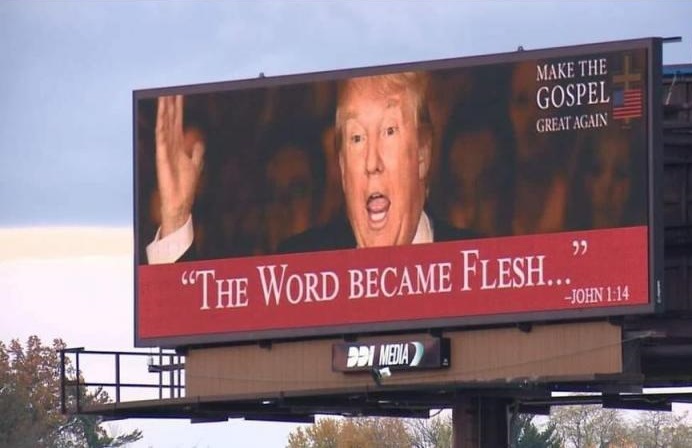
I’ll make a confession. Before Paula White-Cain ever said it, I described Donald Trump as a type of Christ. I believed the judgments against him were largely vindictive and politically motivated rather than a genuine pursuit of truth and justice.
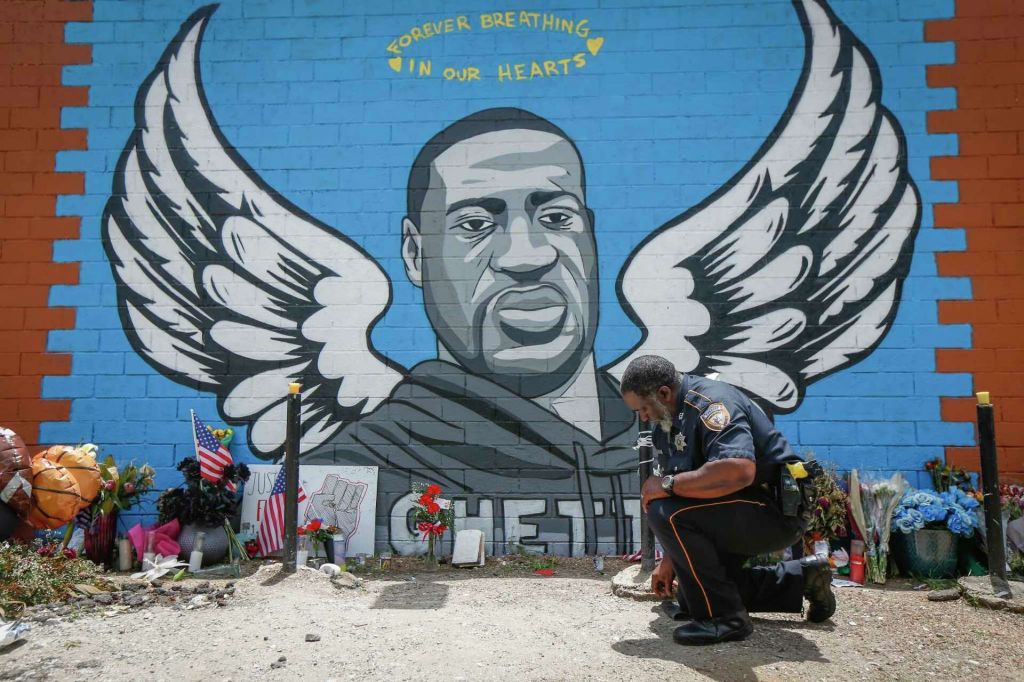
In my defense, I didn’t mean it the same way Paula White does. George Floyd can also be seen as a type of Christ—a man who died under tragic circumstances and became a powerful symbol of what many perceive as lingering racial injustice. Samson in the Old Testament was another flawed type of Christ: a strong but deeply imperfect man who ultimately brought the house down on his people’s enemies. The religious leaders of his day even declared it better that one man should die than the whole nation perish—the exact same justification used against Jesus.
Then there’s Jesus Barabbas, a man whose name literally means “son of the father.” The frenzied mob chose to free a violent revolutionary instead of Jesus of Nazareth. He serves as a dark type: a chaotic figure the crowd preferred over the true son of God and Prince of Peace.
When I first called Trump a type of Christ, it was out of sympathy and frustration with lawfare. I opposed the clear double standards—Joe Biden openly bragging about his quid pro quo, James Comey giving Hillary Clinton a free pass, while Trump faced relentless legal pursuit. My support was rooted in a belief in equal justice under the law, not personal adoration. I never saw him as a good man, let alone an example to follow. I had accepted him as a necessary monster to fight other monsters.
But I’m now regretting even that loose analogy. Trump’s character has troubled me from the beginning. His style of politics often mirrored the very things I criticized on the left. The “we’re electing a commander-in-chief, not a pastor” argument never fully sat right with me. (More so now that Jerry Falwell Jr., the Evangeli-con leader who had coined this way to rationalize around Trump’s shortcomings, has since been disgraced in a lurid sexual scandal). Being burned by a man I quietly endorsed has forced me to reevaluate my own judgment.
Character is not just one factor among many—character is everything. The danger of electing a monster to fight other monsters is that the beast will eventually turn on you. Perhaps it’s better to “waste” a vote on someone of stronger character than on a “lesser evil” who may overachieve?
Trump won his reelection largely because his opponents cried wolf too many times. Decades of calling anyone to the right of Mao a “fascist,” coupled with the very weak evidence for Russian collusion compared to credible questions about Biden family corruption, made it easy for many to dismiss all criticism of Trump as just another partisan witch hunt. The perception of unfair treatment caused many people to rally around him, ignoring his serious character flaws.
I call it the “George Floyd effect,” where symbolic value of an individual and grievances shared by a demographic group cause people in that group to overlook glaring character issues. Trump also cleverly positioned himself this way with the line, “They’re not coming after me. They’re coming after you—and I’m just standing in their way.”
Yet Trump has increasingly imagined himself as a Jesus-like figure. He once questioned why he would need to ask for forgiveness if he doesn’t make mistakes—which is a stark departure from Christian teaching that all continually fall short of God’s glory. And the recent meme he posted of himself with healing hands, dressed in robes as a Christ-like figure (which he since has insisted was meant to show him as a doctor), crosses into very dangerous territory. It’s blasphemous.

Anyhow, I’m old enough to remember Barack Obama being called the Antichrist or accused of thinking he was a god for far less. (See: pillars at DNC) The same voices who condemned Obama’s allegedly messianic imagery are now defending or downplaying Trump’s behavior.
I didn’t leave the MAGA coalition.
It left me.
To balance the record: Trump can also be seen as a type of Hitler in troubling ways. He is a populist with grandiose tendencies, quick to attack others while being extremely thin-skinned. He blames foreigners for America’s problems and has also sparred publicly with the Pope—much like Hitler clashed with the Vatican. Both men also survived assassination attempts in ways some called lucky or God’s hand of protection.
In the end, I regret using Christ-like language for any politician. The temptation to turn our flawed political leaders into sacred symbols—whether as redeemers or villains—ultimately does us more harm than good. Politics already pulls us toward idolatry. We should resist it by judging leaders on character first, not on how well they embody our grievances.

