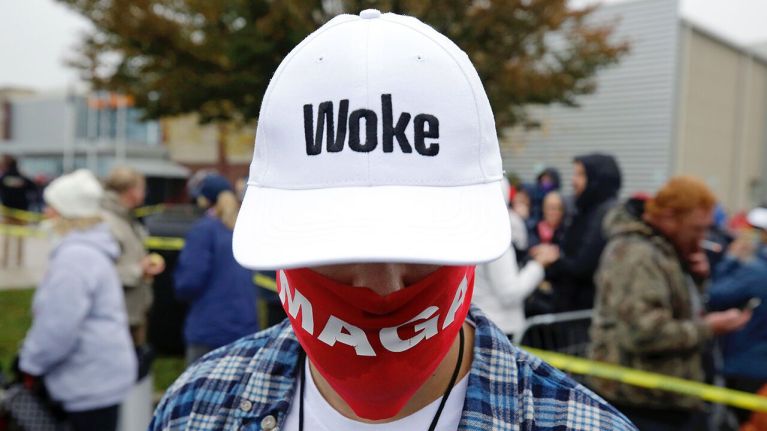
Why Woke Is Incompatible with Christianity (And Why MAGA Isn’t Much Different)

Standard

I never like it when I can’t explain something in simple terms.  But most important topics are not easily distilled.  I mean, a leftist may tell me they believe woke is compatible with Christianity.  And it (like MAGA) absolutely is not.  Sure, there’s a message of justice in the Gospels.  We learn how the first shall be last and the last shall be first.  Jesus broke down barriers of ethnicity and gender—took on the religious elites.  However, he taught a message of repentance rather than pride or demanding recognition.

1) Woke externalizes blame, Christianity takes responsibility: Jesus taught us to answer for our own sins—that God will judge those who mistreat us.  Basically Jesus turns fundamental attribution error inside out by asking us to completely own our own actions and then to be merciful to those who offend us.  This is not to say that we’re silent about injustice—we just remove the beam from our own eye first and never blame others for our own sins.

2) Woke replaces identity in Christ with group identity: Woke ideology organizes people into categories of oppressors and victims based on race, gender, or sexual orientation. The gospel teaches that primary identity is found in Christ (Galatians 3:28) and unites all people under one common banner of humanity rather than into competing factions arguing over who must serve who.  All should serve in the manner of Christ who died for the sake of his oppressor rather than fight and demand fair treatment.

3) Woke rejects absolute truth in favor of the subjective experience: Woke culture often promotes the idea that truth is relative and based on “lived experience” or their social construction, whereas Biblical Christianity is founded on the unchanging, objective truth of Jesus as being God’s Word.  The Gospels claim that Jesus was there from the beginning and that he is the one and only correct path to salvation: “I am the way, the truth, and the life.  No man comes to the Father but by me.” 

4) Woke promotes judgment, not forgiveness: Woke culture is “cancel culture,” which is very unforgiving and aims to ostracize those who deviate on even the slightest bit of the current dogma. Conversely, Jesus taught a path of mercy, forgiveness, grace, and redemption, offering hope and reconciliation for all, rather than a never-ending cycle of shaming others and condemnation.

5) Woke is a total inversion of the Christian standard: Woke ideology attempts to redefine traditional moral standards, and in particular with regard to sexual ethics, or marriage, and gender, which Jesus explicitly upheld.  Jesus confronted the Pharisees for their hypocrisy—not over disagreement with the law.  If the law does not matter there’s no hypocrisy.  However, Jesus did not say that there’s no set standard—only that the religious and political elites kept the letter of the law and neglected the spirit.

6) Woke focuses on political activism rather than spiritual renewal: Wokeism prioritizes changing societal structures and the power dynamics as the primary solution to human issues. In contrast the teachings of Jesus emphasize that the greatest problem is sin (our own first) and that all lasting change flows from spiritual transformation of us individually, not just structural reform.  Woke is about screaming into a bullhorn while the Gospel is focused on introspection and repentance.

7) Woke divides people by identity tribes and does not create unity: While Jesus calls for love and unity among believers, forgiveness of our enemies—woke political ideology creates more division, fuels conflict, resentment, and “hatred, contentions, [and] outbursts of wrath” (Galatians 5:19-21) by focusing on oppression narratives, or historical and group grievances.  There’s no love of offenders or forgiveness in woke—only role reversal and vengeance against the prescribed villains.

8) Woke assigns collective guilt rather than protecting individual rights: Woke ideology tends to attribute collective, inherited guilt to entire groups based on skin color or social status. The Gospel teaches that every individual is responsible for their own sin before God and is justified by their own faith. 

9) Woke focuses on vertical power struggles over reconciliation with God: Wokeism is concerned with the dismantling of traditional power structures, often adopting a Marxist-style analysis of human relationships. Biblical justice, on the other hand, is a hierarchy rooted in God’s perfect righteousness and focuses primarily on reconciling sinners to God, which then informs how they live with others. 

Both Woke and MAGA: Counterfeit Gospels of Grievance and Pride

Yes, there’s certainly some overlap between woke and the Gospel.   But one rejected the fight for control over worldly political power structures, the other simply attempts to flip the script on current rulers. 

One chants “down with the hierarchy” whereas the other restates hierarchy with a twist: Those at the top—rather than domineer—are supposed to serve those below them in an authority that their submission to God’s will gives them.

There’s never an inner change—they believe that their own bad behavior is a justified result of the external conditions.

Woke says you are fine the way you are, change is unnecessary for you—then it demands others change to accommodate you instead.  Yes, they claim to own love and kindness, but it is only in the same way Trump believes he should be awarded a Noble Peace Prize. 

Trump is basically woke right in that he uses the same power of identity and tribal grievance to advance his political agenda.  His calling out of “fake news” and inventing his own facts is more post-modern than it is conservative.  That’s why he has turned on those principled people of his coalition, like Thomas Massie, because his own ever-changing truth is all that matters. 

Woke—like MAGA—is unmoored from historical precedent, not capable of self-awareness and eats its own the moment they doubt the rage mob.

Furthermore, Trump and DEI wokeism believe that holding position and title or just identifying yourself as something is the same thing as being it.  Trump’s presidency is increasingly rejected by those who simply cannot respect his authority as a morally compromised man who constantly lies thinking we won’t notice.  The parallel is a man who believes we should call him “ma’am” simply because he is taking sex hormones and completes having his junk removed. 

As the Turkish proverb goes, “When a clown moves into a palace, he doesn’t become a king. The palace becomes a circus”.

Putting an unqualified person in a position only ever degrades the position.  Allowing transgender men to compete in women’s competition will not legitimize their transition.  If anything it serves to highlight the difference while dismissing the true uniqueness of the female gender.  Yes, Trump is legally the President, like I can legally become a woman, but the social contract has a vote as well and power abused to create an unreality tends to snap back like a rubber band pulled too far.
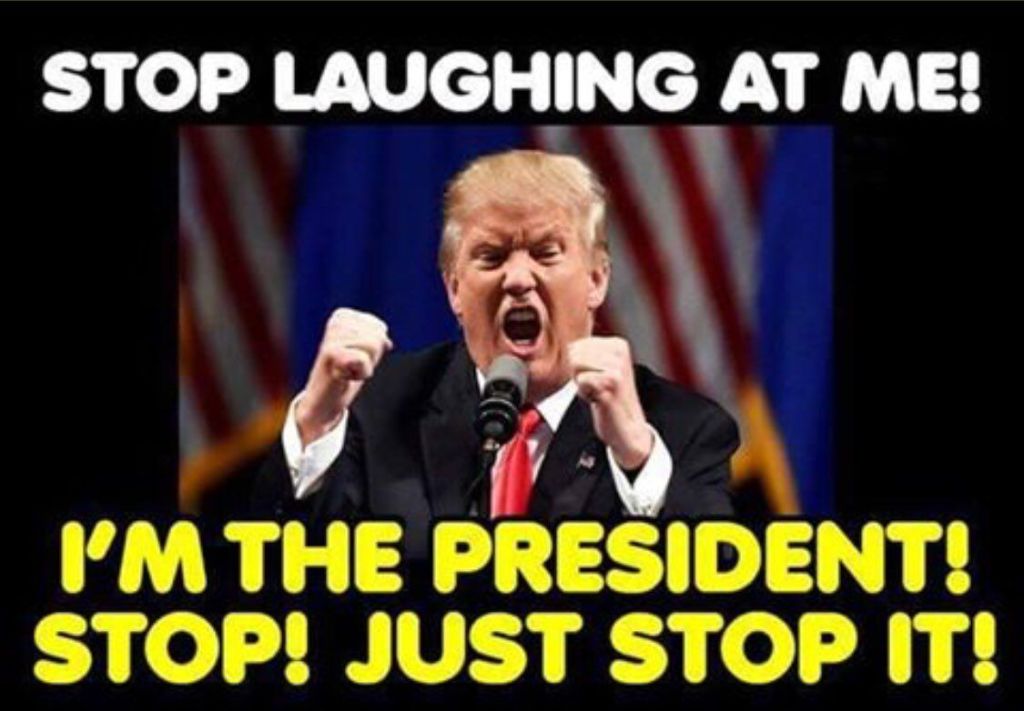
Trump and woke are just two grotesque forms of American exceptionalism.  Both are composed of people who feel entitled to special treatment and have no need to adjust themselves or their own attitudes—they believe wherever they stand is made sacred by their very presence.  It is exactly what Paula White-Cane (the ‘spiritual advisor’ of Trump) has said—anywhere she stands is “holy ground.”  That’s just narcissistic bull crap. 

White has also said, “Anyone who tells you to deny yourself is from Satan.”  Which is a direct contradiction with Jesus, in Matthew 16:24 (and Luke 9:23): “Whoever wants to be my disciple must deny themselves and take up their cross and follow me.” 

Must be her “Judeo-Christian values” that make her accuse Jesus of being from Satan?

Christianity is all about subduing the flesh and bringing our impulses under control—White, like woke, is about indulging herself and pride.  It’s no wonder there’s so much agreement between these Pulp Fiction Christians and a self-declared “chosen people” who never kept their own side of their Covenant.

MAGA uses Christian imagery, but always in this perverse manner that honors the Trump political brand and not Christ.  The shooting at the White House Correspondence dinner, for example, has already been described as God’s protective hand on Trump as if some guy in the lobby had even a remote chance of success.  Maybe we should just remember Jesus was killed and Hitler survived multiple attempts on his life?

In the end, both woke ideology and MAGA cult tribalism offer a counterfeit gospel: one of pride, grievance, and external blame rather than a life of repentance, taking personal responsibility, and genuine transformation through Christ.
From Tribal Vengeance to Universal Justice: In Pursuit of One Higher Standard 

Standard

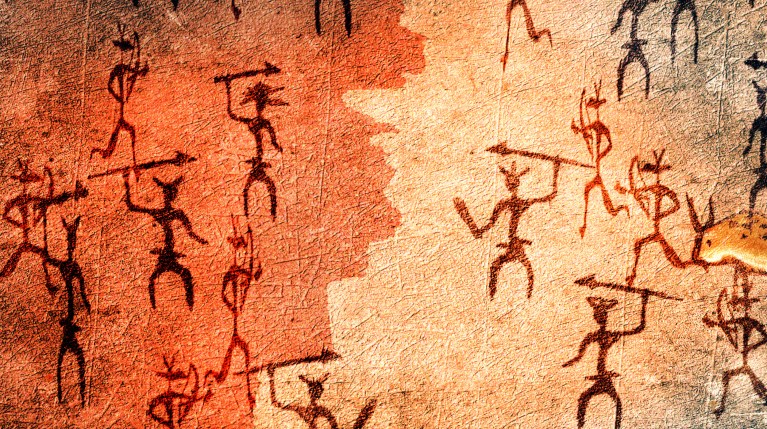
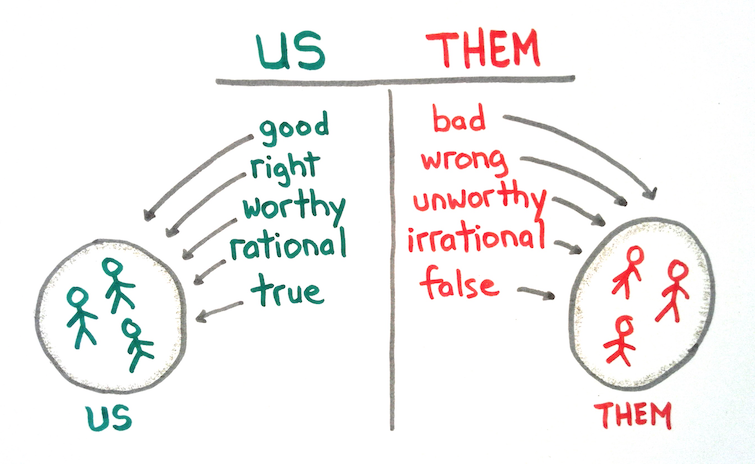
The default position for most people is some form of tribal ethic. If it is done to them or their own family by another tribe it is a horrendous and terrible crime. But, when only those in another tribe are hurt or if they are afraid that confronting the abuse will hurt their own tribal agenda—then suddenly the unforgivable becomes a “Who cares, everyone does it, why are you bringing that up again?”

Tribal ethics amount to doing only what is good for the tribe—usually sacrificing the rights of an individuals in the tribe and always denying the basic humanity of those outside of the tribe. Individual rights of those in the tribe are generally honored, but only so far as protecting them is useful to the collective and not as something that is absolute or immutable. If a few die for sake of the tribal order—are stoned to death for daring to pick up sticks on the Sabbath—that’s just how it is.

The Old Testament is full of this. Your own are completely free to enslave, rape or take from those outside the tribe and yet would be enraged if one of their own were treated in the same way—like when vengeance was taken by Dinah’s brothers who wiped out a whole city for sake of the family’s honor. If it were within the tribe the attitude would be quite a bit different. Under Moses law this was simply a matter of paying the price of the bride and not a death sentence. And it is clear that things morally abhorrent by a modern standard, like genocide, were done by the command of God.

Tribalism is a feature of politics, a natural or default condition, where we defend our own and demonize the other. To the left Charlie Kirk deserved to die for his sins of hate they claim were harmful to their woke collection of identities. The Evangeli-cons soak up the propaganda from Israel that paints children in Gaza as future terrorists. We protect the people most like us because and adjust our moral rules according to the situational and immediate needs of our tribe.

A Case For One Higher Universal Standard

But a Christian ethic is completely different from this. It says sin is sin.  Evil is evil no matter who is committing it or who it is against.

And, if anything, those who are in the church, who profess their faith in Jesus, should be held to a much higher standard. There is no room for favoritism (James 2:1, Romans 2:11) or carving out exemption for elites or even our friends and family. Jesus said to love our enemies (Matt 5:44, Luke 6:27) and even ‘hate’ our own family (Luke 14:26) if necessary to truly be his follower. Even our thoughts subjected to a standard of love and forbearance.

Jesus didn’t get hung on a cross for saying cutesy stuff that is easy to do. And I really do not expect anyone to live by that code. It requires actual faith and a true belief Jesus is what he said he was to make sacrificing ourselves for his ethic reasonable:

Do not repay anyone evil for evil. Be careful to do what is right in the eyes of everyone. If it is possible, as far as it depends on you, live at peace with everyone.  Do not take revenge, my dear friends, but leave room for God’s wrath, for it is written: “It is mine to avenge; I will repay,” says the Lord. On the contrary: “If your enemy is hungry, feed him; if he is thirsty, give him something to drink. In doing this, you will heap burning coals on his head.” Do not be overcome by evil, but overcome evil with good.

(Romans 12:17-21 NIV)

But even if you don’t truly believe in a future eternal reward or God, there is a reason why universal morality is better than our default tribalism. And that is an idea of what goes around comes around. Sure, you might not care about someone else’s daughter being sexually exploited by wealthy and powerful men—most especially if they are furthering your partisan political agenda—and yet we want to have a society where there’s justice or the injustice will eventually spread to us.

This is the big difference between my own understanding and the one that is far more popular: Good and evil never change on the basis of who is doing it or if I benefit. If it is wrong for the neighbor to kill my dog under most circumstances it is wrong for me to kill theirs. And if I (or one my own) start to act with impunity—are continually forgiven for things others are always condemned for—eventually this will piss off enough of the ‘others’ that they’ll dish out their version of justice against their abusers.

The Fallacy of Judeo-Christian Values

Evangeli-cons want the world to forgive for all their infractions and yet never forget if a victim fights back against their aggression. It is the very opposite of what Christ taught and anti-Christ. Jesus would likely warn us that how we judge we will be judged and the measure we use will be measured back to us. Which should make us tremble when we consider the slaughter and razing to the ground of Gaza using bombs we provided—there will be no call for mercy on the behalf of those who claim that young children are terrorists so they can kill them:

We are imposing a complete siege on Gaza. There will be no electricity, no food, no water, no fuel. Everything is closed. We are fighting human animals and we are acting accordingly.

October 13, 2023, Isaac Herzog, President

Just as it is clear that the right wing was right, today everyone says it is clear all Gazans must be annihilated… There is no logic in differentiating between uniformed [Hamas] and the rest of the inhabitants there.

September 2025, Moshe Saada, Likud MK

Every child born in Gaza is already a terrorist, from the moment of his birth.

January 15, 2024, Nissim Vaturi, Likud Deputy Speaker

And they were stating their genocidal intent long before October 7th:

Huwara needs to be wiped out. I think the State of Israel should do it… Water, electricity, and food must be cut off from the Gaza Strip. Those who do not die by bullets will die of hunger.

February 2023, Bezalel Smotrich, Finance Minister

This shows the absurdity of what is called Judeo-Christian values. Tribal logic says it is okay to kill man, woman and child of the rival so we can take the land for ourselves. Whereas Christian morality calls for all to be saved (1 Tim 2:4, 1 Pet 3:9) and erases the boundaries of tribal identities based on gender, race or social status. It is the polar opposite of having a chosen people with a license to take and kill. Jesus offended his ‘righteous’ ethnic audience by saying that a pagan had greater faith than all of Israel. To embrace this radical ethic is to reject the tribalism that fuels division and violence, choosing instead a universal justice that holds all accountable and protects all, not just the chosen few. Only by abandoning the hypocrisy of tribal loyalty can we hope to build a world where the measure of our judgment does not return to condemn us, but instead fosters a shared humanity that is grounded in love of Jesus.

A Fundamentally New Way of Thinking

The Christian ethic really is a total reversal of fundamental attribution error. It is easy to attribute what others do to us to a matter of their immutable character, they’re just evil and irredeemable, therefore do not need to be heard or understood. But for our own or ourselves we tend to blame only the circumstances and call it a mistake—one of those forgivable offenses. The reverse is to never make excuses for our own while also showing grace to those who offend us.

When someone cuts us off in traffic is it because they are a terrible driver? Or did they just have a bad moment? Or if we do the same, is it truly just an isolated incident or is our confirmation bias simply forgetting all of those times we transgressed with an “oops, sorry!” Reversing our fundamental attribution error is simply to apply grace we give to ourselves to others. It is, at the very least, to apply the same standard we do for ourselves as we do to others.

When a person of our own tribe does some kind of horrific deed, do we dismiss this as not representing us as a whole? Maybe we justify it? When the US Navy shot down Iran Air Flight 655 flying a routine route over the Strait of Hormuz, back in 1988, and killed all 290 on board—the US didn’t even apologize and, adding insult to injury, gave medals to the crew that did it! That is tribalism and is how fundamental attribution error works. If Iran did the same the US population would be calling for our military to turn the whole country into a smoldering ruin.

But the Gospel of Jesus Christ starts with a call for repentance. Repentance being an inward turn where we identify and confess our own faults rather than hide them behind rationalization or claims that our hand was forced by the other side. And, finally, after this deep introspection, we show the fruits of a changed spirit by showing the grace we have been shown to even those who we feel are most underserving. A true Christian will strive to love their worst enemies while also holding their own to a high standard.

If we want forgiveness of our sins we must show mercy and forgive others.

Evangeli-cons want all grace for themselves and yet give none to the enemies of their ‘Christian’ empire. They don’t want sins of some in their midst to count against them, they will deny the inconvenient violence of those on their side politically, but then make the whole left or all of Islam responsible for everything ever done by one of their own. It is a tribal ethic that has nothing to do with a Jesus of repentance. Or a spirit of grace to others that exists in those who understand their place before God.

Why Do Holocausts Happen? A Case Study in Gaza

Standard

Holocausts and genocides occur because atrocities are obscured by layers of justification, propaganda, and denial. Historically, these layers have enabled mass violence by fostering ignorance or apathy among populations. In Nazi Germany, the genocide of six million Jews was justified through antisemitic propaganda blaming Jews for economic woes and civil unrest, despite only a small fraction being involved in communist movements. Most Germans did not need to endorse the “Final Solution”; they only needed to remain ignorant or in denial, facilitated by censorship, secrecy, and moral rationalizations.

This pattern of denial and justification is evident in other genocides, such as the Communist purges in the Soviet Union, China, and Cambodia, where millions were killed to eliminate perceived threats to a utopian vision. The logic behind these atrocities often follows a “utopian cost-benefit analysis,” akin to the Trolley Problem in ethics: committing a painful or immoral act is justified if it promises immense societal benefits. For example, in Stalin’s purges, an estimated 680,000–1.2 million people were executed to “secure” the revolution, with the promise of a classless society outweighing individual lives. This reasoning holds that if a perfect society is achievable, no sacrifice is too great.

This same moral calculus can be applied to the ongoing conflict in Gaza, which constitutes a genocide. By examining the mechanisms of denial, propaganda, and prejudice, we can see how atrocities are enabled today, just as they were historically.

The Gaza Conflict as Genocide

The situation in Gaza meets the criteria for genocide under the UN Genocide Convention, which defines it as acts committed with intent to destroy, in whole or in part, a national, ethnic, racial, or religious group.

Since October 7, 2023, when Hamas attacked Israel, allegedly killing 1,200 people and taking 250 hostages, Israel’s military response has resulted in over 43,000 confirmed Palestinian deaths (as of June 2025, per Gaza Health Ministry estimates) and displaced 1.9 million people, or 90% of Gaza’s population, according to UN reports. The scale and nature of these actions—targeting civilian infrastructure, restricting aid, and statements of intent—suggest genocidal intent.

Israeli Prime Minister Benjamin Netanyahu’s 2023 reference to Palestinians as “Amalek”—a Biblical group the Israelites were commanded to exterminate—signals intent to dehumanize and destroy. This rhetoric has been followed by actions: the bombing of 70% of Gaza’s healthcare facilities (WHO data), the blockade of food and water leading to starvation (UNRWA reports of 1 in 5 Gazans facing acute hunger), and incidents like the February 2024 attack on a crowd seeking aid, killing 112 civilians (per Gaza authorities). These actions systematically target the conditions necessary for Palestinian survival, aligning with the Genocide Convention’s criteria.

Layers of Denial and Propaganda

Genocides thrive when atrocities are hidden or justified. In Gaza, denial is facilitated by restricting information. The unprecedented killing of 185 journalists since October 2023 (Committee to Protect Journalists data) limits independent reporting, while Israel’s control over access to Gaza restricts international observers.  The proposed U.S. TikTok ban, justified on national security grounds, may also suppress unfiltered footage from Gaza, as the platform has been a key source of firsthand accounts. For example, X posts from Gazan users often share videos of destruction, but these are dismissed as unverified or biased, while Israeli military statements are rarely scrutinized with the same skepticism.

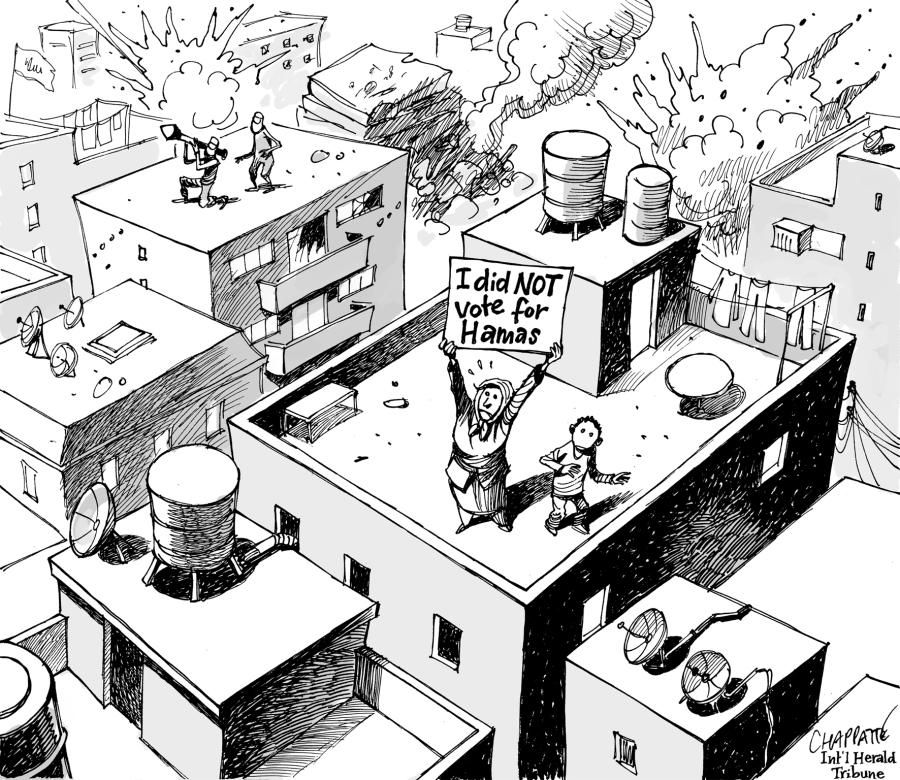
Does Israel deserve destruction because they voted for a terror sponsor named Netanyahu?

Propaganda further obscures the truth. The narrative that Gazans “deserve” their suffering because they elected Hamas in 2006 ignores key facts: only 8% of Gaza’s current population (given the median age of 18 and population growth) could have voted in that election, and no elections have occurred since. Collective punishment of civilians, including children who comprise 47% of Gaza’s population, is justified through this lens of collective guilt, a tactic reminiscent of historical genocides.

Prejudice and Moral Reasoning

Prejudice fuels apathy. In Western discourse, Islamophobia often leads to skepticism of Palestinian claims, even when supported by evidence from groups like Amnesty International or Human Rights Watch. For example, reports of torture in Israeli detention centers, corroborated by Palestinian Christians and secular activists, are dismissed, while IDF explanations face less scrutiny. This selective skepticism mirrors the antisemitic prejudice that enabled the Holocaust, where Jewish suffering was ignored or blamed on the victims.

The “utopian cost-benefit analysis” in Gaza is tied to ideological goals, such as fulfilling religious prophecies (e.g., Zionist visions of a Greater Israel) or ensuring Israeli security and long-term peace. These goals are presented as justifying extreme measures, much like the Nazi vision of a “pure” Germany or the Communist dream of a classless society. The logic posits that eliminating Hamas, even at the cost of civilian lives, will bring lasting peace. Yet, this ignores the disproportionate harm: 70% of Gaza’s casualties are women and children (UN data), undermining claims of precision targeting.

Addressing Counterarguments

Critics argue that Israel’s actions are defensive, targeting Hamas rather than Palestinians as a group. They point to Hamas’s use of civilian areas for military operations, which complicates urban warfare. However, the scale of destruction—leveling entire neighborhoods, as documented by satellite imagery—and the blockade’s impact on non-combatants (like the malnourished dying baby in the featured picture) suggest a broader intent. While Hamas’s actions are indefensible, they do not justify collective punishment, which violates international humanitarian law.

Others claim the genocide label is inappropriate because Palestinians are not being exterminated on the scale of the Holocaust. Yet, genocide does not require total destruction; the Rwandan genocide, for instance, killed 800,000 Tutsis in 100 days, and Gaza’s death toll, combined with deliberate starvation and displacement, fits the legal definition of targeting a group “in part.”

The Role of Silence

Silence enables genocide. In Nazi Germany, many who knew of the camps chose not to act, fearing repercussions or believing the propaganda. Today, those aware of Gaza’s suffering often choose apathy, swayed by prejudice or the promise of a greater good. This is not to equate all silence with complicity—some lack access to reliable information—but ignoring well-documented atrocities, such as those reported by the UN and NGOs, perpetuates harm.

Conclusion

Holocausts and genocides persist because societies allow them to, through denial, prejudice, and flawed moral reasoning. The situation in Gaza, with its systematic destruction and dehumanizing rhetoric, bears the hallmarks of genocide, enabled by global silence and selective outrage. To prevent history’s repetition, we must challenge propaganda, demand accountability, and reject the notion that any utopian goal justifies the sacrifice of innocent lives.  Speak out, seek the truth, and act—because silence in the face of atrocity is a choice with consequences.