
The Insidious ‘Good Men Must Do Bad Things’ Myth

Standard

A Few Good Men has memorable lines. The courtroom drama is about a pair of Marines charged in the hazing death of an unpopular recruit. One of the accused refuses to take a plea deal, standing on principle, believing they did nothing wrong—claiming they were just following orders. It all culminates with a verbal battle between the defense lawyer, Lt. Daniel Kaffee (Tom Cruise) and sneering Col. Nathan R. Jessep (Jack Nicholson) the superior officer who was behind a deadly hazing incident. Col Jessup, when finally pressed for the truth, exclaims “You can’t handle the truth!” and then he goes on a diatribe:

Son, we live in a world that has walls, and those walls have to be guarded by men with guns. Who’s gonna do it? You? You, Lt. Weinberg? I have a greater responsibility than you could possibly fathom. You weep for Santiago and you curse the Marines. You have that luxury. You have the luxury of not knowing what I know; that Santiago’s death, while tragic, probably saved lives. And my existence, while grotesque and incomprehensible to you, saves lives. You don’t want the truth because deep down in places you don’t talk about at parties, you want me on that wall. You need me on that wall. We use words like honor, code, loyalty. We use these words as the backbone of a life spent defending something. You use them as a punchline. I have neither the time nor the inclination to explain myself to a man who rises and sleeps under the blanket of the very freedom that I provide, and then questions the manner in which I provide it! I would rather you just said “thank you” and went on your way, Otherwise, I suggest you pick up a weapon and stand a post. Either way, I don’t give a damn what you think you are entitled to!

What is brilliant about this rant is it comes off as what it is: A justification from an arrogant man who sincerely believes that he is standing for good even when he’s clearly in the wrong.

Jessup is not a mustache twirling caricature of a villain.  He is someone with moral reasoning that many can relate to or even may side with. He’s arguing that those who put him on the stand are insulated from the truly life and death decisions he must make and should simply accept his role of protector—not question his judgment.

This fictional statement is a variation on the idea “…people sleep peaceably in their beds at night only because rough men stand ready to do violence on their behalf.” 

The quote above, often misattributed to George Orwell who actually said this: “Men can only be highly civilized while other men, inevitably less civilized, are there to stand guard and feed them.”

Orwell himself paraphrasing Rudyard Kipling who wrote of the “thin red line” and rebuked the people making a mockery of “uniforms that guard you while you sleep” in his 1890 poem “Tommy” written from the perspective of a British infantryman.

This rejection of pacifism is common. It’s a part of the jingoistic fervor and cult thinking of those who demand we fall into line when our political establishment beats those war drums.

Don’t you know they are protecting you?

We should be grateful, they say, or we would be speaking German, be Communist, or forced to convert to Islam!

We’re now at a stage of preemptive war, which directly violates our U.S. Constitution, claiming it is necessary to “defend freedom and democracy” from the uncivilized.

There’s certainly no end to the violence that these self-assured ‘defenders’ will do on behalf of us—and would do to us to save us from ourselves.

Good Men Must Do Bad Things

This blog is a response to a request:

After reading that piece on dogma, I’m curious. Should you be willing to create a similar criticism of the “sometimes, good men must do bad things” mantra, I’d be very interested in your take.

That quote might be a paraphrase of Suits—a television legal drama—where a character uses this reasoning as their excuse to bend or break rules. The full quote from the series: “Sometimes good guys gotta do bad things to make the bad guys pay.” And the show popular Yellowstone also has a line similar, “Sometimes good men have to do real bad things.”

I don’t know enough about those shows to know if this is intended as ironic. But it has a strong resemblance to the evil is competence and thus good statement by Peter Thiel, the co-founder and board chairman of Palantir. 

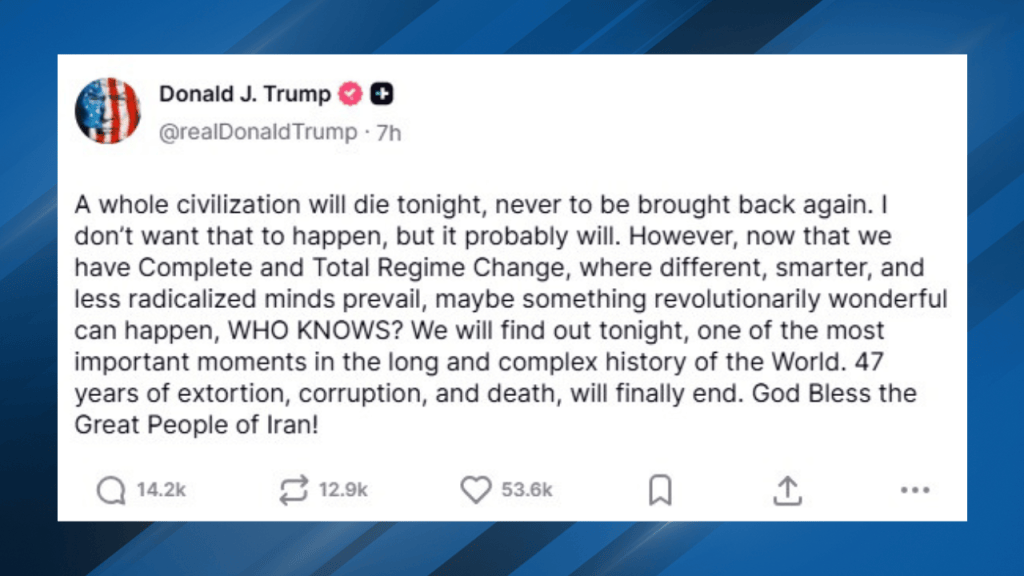
This idea of exemption to do evil for sake of good is something both the far right and left agree on—whether “punch a Nazi” memes by Antifa or it is Trumpanyau saying we may need to nuke Iran to prevent Iran from having nukes. Basically, it is an idea we can be good while we do bad things and yet the other side can never be forgiven.
“It became necessary to destroy the town to save it”

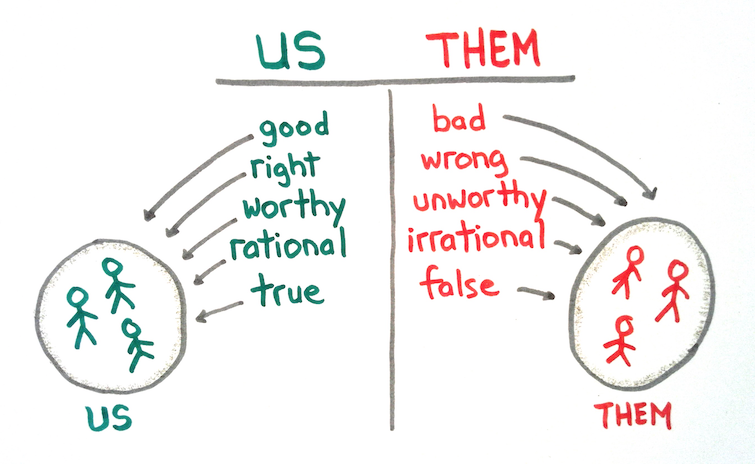
What this looks like is fundamental attribution error crossbred with moral relativism. I declare someone evil and list off the evil things they’ve done. And then justify things often many times worse in response and it’s all good because I’ve designated them as being evil. Unfortunately, as convenient as this circular thinking is for the dogmatic partisan, it is about as reliable as our ability to accurately assess our own driving skills—where 73% to 93% of people believe that they are an above average driver. We classify our bad as being a result of circumstances and then assess the failure of others as being something inborn or a character flaw.

The moral relativism accompanying this is how we judge an action by who is doing the action rather than apply the same standard to all. From the perspective of the Imperial Japanese, being economically and militarily strangled by the U.S. oil embargo, the attack on Pearl Harbor was a necessary evil. They had a better reason to surprise attack when and where they did than the U.S. has had in wars since then and yet our infamy must be always forgotten. During the Vietnam War the CIA “neutralized” (kidnapped, tortured or killed) tens of thousands who were accused of collaborating with the North—no trials or proof needed. Did you know that?

In 1988, Iran Air Flight 655 was shot down over the Persian Gulf, killing all 290 souls, by a U.S. Navy destroyer. The crew and commanding officer of that ship got medals. In the 1991 Gulf War the U.S. killed 408 Iraqi civilians in a single strike against the Amiriyah shelter—which we knew was being used by civilians during the Iran-Iraq War. And even after the bombs stopped dropping the brutal economic sanctions killed hundreds of thousands of Iraqis. The Vietnamese people, even to this day, suffer unusually high rates of rare birth defects due to the widespread use of Agent Orange and other chemical defoliant decades ago—to just dismiss this all as ‘collateral damage’ is not very pro-life.

But aren’t you glad we tried to save you from the Commies?!?

It is just so strange to see the same people who justify total obliteration of two cities in Japan being so upset when U.S. economic and military interests are targeted by those who have been subjected to far worse.

The point being, people always come up with justifications for their own evil.  Even the total psychopath can often defend heinous acts with a moral reasoning: “He looked at me wrong so—acting 100% in self-defense—I bashed his face in with a hammer.”  If we name a date, and ignore the context of all that happened prior, we can claim we’re fighting for justice—when, in reality, the other side has as much justification as we do or more.

It’s a world where all violent people believe they are the good guy forced to do bad things.

Tired Analogies and Immoral Math

On a religious forum, mostly pacifists, there was always a ‘sheepdog’ guy or that one person who self-designated themselves as a protector of the herd.

You see, he was not an unsuspecting sheep like everyone else.

No, not at all!

He was an exception, the ever protective guard of  decency and goodness—who only every so often took an accidental bite out of a sheep.

What’s interesting is you’ll never find a sheepdog metaphor anywhere in Biblical texts, it is simply something invented, a cover story.  What you do find is a division between sheep and goats.  The goats are those unruly, stubborn or independent animals—used in Scripture as a metaphor for the cruel and exploitative leaders or those who bully the sheep. They will be sorted out of the faithful flock at the final judgment.

And the other animal mentioned? 

The wolf in sheep’s skin.

These are actual predators who wrap themselves up in an innocent appearance—to divide and devour the sheep. It sounds a bit like those sheepdogs, right?

In my own experience this sheepdog schtick was often just an excuse for their aggression against voices defying their self-asserted authority in all things. Nobody had elected them to the role. It was all their own personal judgement.

Unfortunately, few seem able to see through the phony knights in shining armor—who turn rivals into a dragon to slay rather than an equal to treat with the respect they demand for themselves.

The real issue is when we make exceptions for ourselves that we don’t accept if turned on us. For example, collateral damage. We say that the death of innocents is simply a part of war and unavoidable. But if it were our own child burned alive would we be okay with it—as just a part of war?

True morality values all people and their rights like our own. It never justifies killing of innocents or the treatment of some lives as expendable.

Good people do good to all people and not only a chosen few.

All lives matter or none do.

If you make exceptions for yourself to violate the rule eventually it boomerangs back—those who live by the sword die by the sword.

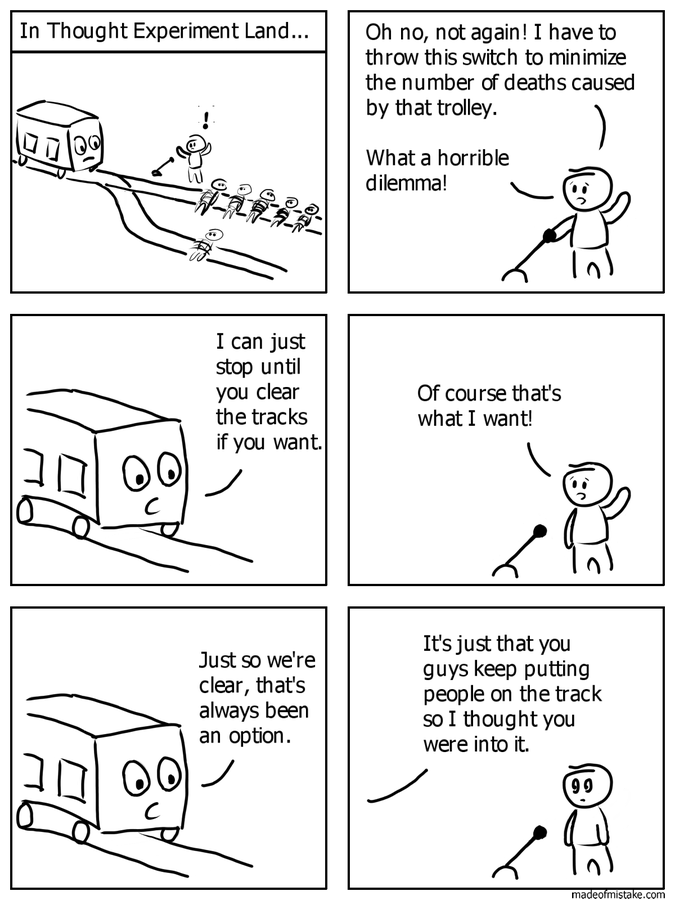
Using the ends to justify the means, playing God with Trolley problem math, choosing which lives matter—rather than treat all people with dignity and respect—is a moral logic 100% anti-Christ.
The ‘miracle’ is escaping the false dichotomy of those who aren’t good problem solvers.

Jesus, in his response to the condemning attitude of the Pharisees against sinners, told the Parable of the Lost Sheep.  In the story he reasoned that a good shepherd leaves their ninety-nine sheep to find the one lost.  In his morality saving 99% was not good enough.  And, like Abraham, he was not okay with close enough or even one person being harmed when it could be avoided.

If one sinner isn’t expendable in the eyes of God—then what is the worth of an innocent child’s life?

When you’re okay with killing one person for the sake of some imaginary “greater good” you’ll justify a million. That is the genocidal math, the cold calculation behind nearly all industrial scale mass murder campaigns—trying to kill their way to peace. They claim it is a binary choice, either us or them, save more lives by switching the track and killing one instead.

This is the kind of justification or rationalization that allowed men like Stalin, Hitler, Mao, Pol Pot, Truman and Netanyahu today. One might be completely fine with the slaughter of innocents when they’re ideologically aligned with those who are doing the killing, yet agreement doesn’t make it any less evil—and silence is to be complicit in the murder.

You’re Not Exceptional…

So maybe one suffers from main character syndrome, their own grandiosity delusions and narcissism—they understand good and evil only in terms of what serves them as an individual or a tribal identity group? Or they just think they have a special clarity of mind to make “hard decisions” on who should be sacrificed or saved? But this arrogance will only lead to hell. Those who claim to do evil for goodness sake are almost always just doing evil—dressing it up in the language of necessity so they never have to look in the mirror and be honest with themselves.

Every parent with a child understands that one evil doesn’t justify another.

Col. Jessep, while violating military ethics and the law, positioned himself as being a protector of civilization. Likewise many in the world make excuses for their own lack of civility—the “they started it” or “ist” labeling exemptions. The whole “violence is the only language they understand” rationale by those whom themselves only seem to be restrained from by force. 

Every accusation is a confession?

The difference is semantics—not substance. The worst offenders believe the sanitized descriptions of their own brutality and atrocities they commit makes them less a “terrorist” than those whom they hate—yet this righteous veneer is stripped away under cross-examination. It is only in their own mind they’re special.

Woe to those who call evil good and good evil, who put darkness for light and light for darkness, who put bitter for sweet and sweet for bitter. Woe to those who are wise in their own eyes and clever in their own sight.

Isaiah 5:20-21 NIV

You can’t be good while you are doing evil—good is what it continually does. Certainly we all fall short. We all have bad days and make mistakes. A good person is one who is able to admit wrong doing rather than try to whitewash evil. Giving exemptions for some and harsh penalties for others is just favoritism and a sin. There is one standard for all people and that is to love others (our neighbors) as ourselves. When you start to defend “your people” rather than humanity it leads to a breakdown of morality and ethics that only creates more conflict. The double standard is to make exceptions for evil and a good person does not.
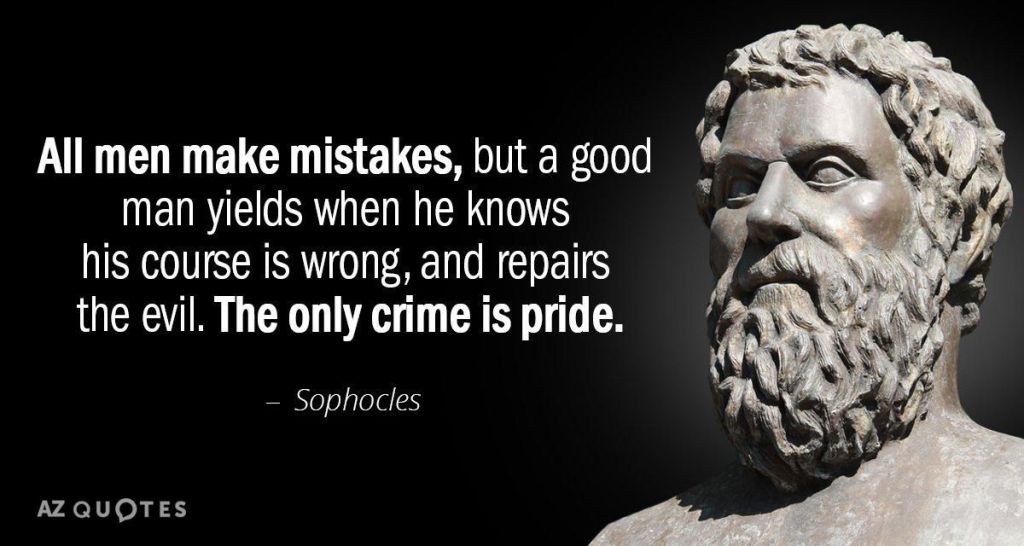
Good morality starts with an idea that we all stand in front of a neutral judge. It applies a consistent standard for all people.

Good morality doesn’t ask who is pulling the trigger—it asks whether a trigger should be pulled at all.

True integrity means abandoning self-serving or tribal math which values our rights more than theirs.  It means accepting that we are not the exception to the rule—and abiding by universal moral principle. Until we drop the self-righteous rationalizations of our own violations and submit ourselves to a single, impartial standard of love and justice, we will remain trapped in an endless cycle of violence of our own making—and prove to the rest of the world that we are precisely what we have accused our enemies of being: Lawless, agents of chaos, and just plain evil no matter how we dressed it.

Nobody thinks they’re evil. No they’re just a good person forced to do bad things. They are victims of circumstances, compelled by the evil of others to neglect common moral decency and do bad things. They may even claim to be on the wall guarding civilization from itself, but the truth is they represent an erosion of morality more than the foreigner beyond they say we should fear: They’re the barbarians and savages! But those who do evil for goodness sake are worse than the uncivilized who do bad in ignorance.

A person who knows what is right and exempts themselves is evil. If you’re good, then you will do good for goodness sake—without exception.
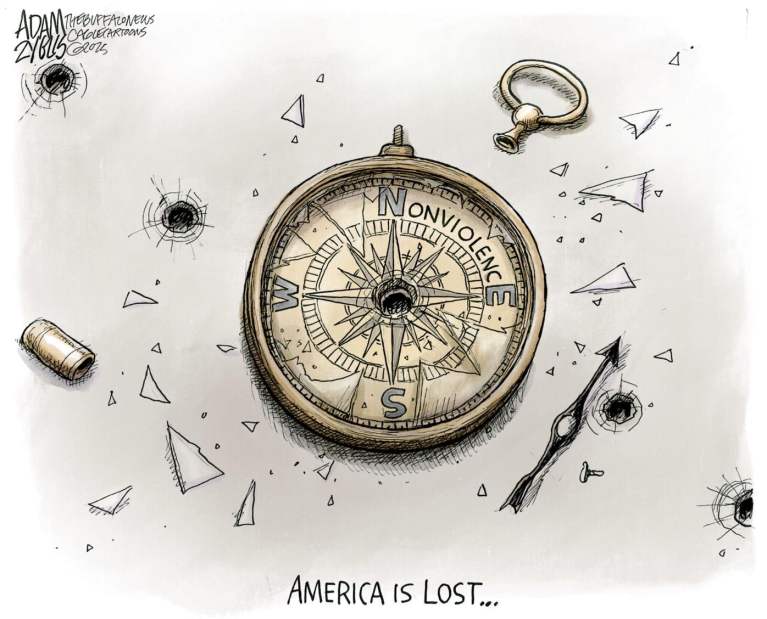
The Fragile Overlay: Morality, Rationality, and Human Need

Standard

Language isn’t reality. Morality likewise is an overlay. Even rationality itself does not arise from the substrate. Mathematics is probably our best 1:1 analog to something objectively real, and even that breaks down at the edges of reality.  It is important we work through until we find the substance of what matters.

We all have our reasons for what we do. It is often good from our perspective. But we have a perspective limited by our ability to accurately model the world based on what we know and extrapolate from that. Faulty information and assumptions will lead to bad reasoning and the suboptimal outcomes we wish to avoid.  That’s what this essay is about—explanation of what is truly moral and sustainable.

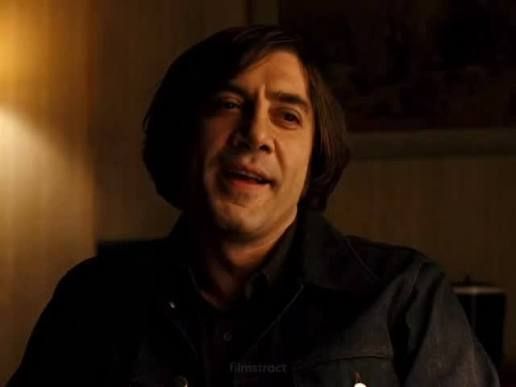
Moral reasoning is about human desire. It is an extension of our biology and part of an effort to survive—even thrive—in the environment we’re in. Morality is about a set of rules, and a good rule is one that produces optimal results. In the words of Anton Chigurh—a sort of force of nature and psychopathic antagonist featured in No Country for Old Men—mocking Carson Wells: “If the rule you followed brought you to this, of what use was the rule?”

Morality doesn’t exist “out there” separated from human need. It is negotiated between us, like language, where we all have a say (to a point), along with culture and tradition (essentially our moral programming), in setting the standard. The “Golden Rule” works as a code because most people have the same natural aims that we do. Morality is about mutual benefit or the win-win situation. And this can break down at the edges, in zero-sum games or times when one believes they can get away with harming another and lacks a true conscience to stop them.

Disproportionate power and differences of language are fracture zones. Reciprocity, as a rule, generally only works with those who are at the same economic level or have a voice. The reason we don’t care about the Armenian genocide of 1915 to 1923 is that we were never told to care. Our morality only applies when we can identify with the other person and see them as an equal. Conflicts arise when we don’t consider what is good from the perspective of another person and they lack the means to stop us.

What is the reason for morality?

To protect ourselves by respecting the right of others to exist as we want to exist.

What causes violence?

  • Low intelligence: If you don’t understand cause and effect or how what goes around comes around, then you’re more likely to do ‘bad’ things without ever fully considering the consequences. You want X, he stands in the way, so you murder him because you are strong enough to do it. This is the law of the jungle.
  • Low exposure: It’s hard to fool me into thinking that other races are subhuman. I have met them in real life. People living around the world may see the U.S. as a nation of school shooters and OnlyFans girls based on what they know of us. But the reality is we’re just a nation obsessed with violence and immoral sexuality. And yet, seriously, ignorance isn’t bliss—it is a propagandist’s haven and what allows them to convince otherwise good people to kill people who don’t look exactly like them or speak their language.
  • Low empathy: Some intelligent people are just psychopaths. They are part of the social contract (although they will pretend to be) and see their own needs as the only ones that are important. They can’t “walk a mile in another man’s shoes” without some innate ability to feel what other people feel and imagine their pain. Empathy is natural and also taught. Yet not all have the same capacity to show empathy or care. If you see other people the same as you do a fly, you won’t hesitate to exploit or kill them if there’s a low risk of consequences.
  • Low trust: We can recognize that others are human, no different from us, and yet still choose to kill them. Why? Well, if there is a fear that others will do violence to us, there’s an option of preemption. It’s also why men kill the guy in the opposite trench in a war—it is me or him. If we see another person as a potential threat, there’s a primitive impulse to eliminate the other before they act. This is how war is sold to the masses: violence as an answer for uncertainty and anxiety over not knowing what they may do.

The problem with violence is that it creates a cycle of violence. And if it doesn’t do that, it still comes at a cost. To prevent this, we must get ahead of the causes. Education, diplomacy, and building relationships are an ounce of prevention worth a pound of cure. Sure, violence can be a winning strategy in the game. However, violence turns what is possibly a win-win scenario into a zero-sum game with unpredictable outcomes. It may be possible to exploit trust and murder your way to the top, yet eventually it catches up to you—eventually someone bigger, smarter, and nastier comes along.

The highest form of morality must therefore serve the ultimate good. A tribal morality, or one where only people like you gain, is risky. It means chaos and conflict. Whereas with a universal morality that serves all, there is a possibility of peace, harmony, or stability. This is why consistent non-violence is the intelligent option. Innocent people are hurt in war. Violence begets violence. So if we want to maximize our own chances or those of our loved ones, then we must respect the rights of all others. Apathy and indifference are not a choice either—we must be united in opposition to violence and abuse of others if we want others to care when it is our turn to face down true evil.

Only in the most extreme circumstances is it moral to use force. Self-defense, or one of the very narrow circumstances where there is no other reasonable option, is a possibly justified exception. Of course, not a “right to defend” that tramples the rights of other people.  Unfortunately, we live in a world of propaganda where the most aggressive and disproportionate acts of revenge can be construed as defense—where unwanted words can be called violence. A clear standard can very soon be rationalized away to the point where defenders are made the aggressors while actually being the victims who are attacked.

This is the problem with any moral system we create. The overlay can be shifted, the language manipulated, and soon we end up back at square one fighting tribal wars over irrational fear of the other. This is why we cannot ever assume that our ideal is being transmitted perfectly in words. This is also the risk of making any exceptions.

Moral conscience must be built and passed on. We need to address the ignorance and show people how history is full of examples of unintended consequences. A war rarely goes as planned. We need to minimize the fear of the ‘other’ by encouraging positive interactions. Humanization is a natural byproduct of good relationships. It is past time to stop putting psychopaths in positions of power. We must resist those who manipulate us to fight wars for their financial or political gain.

We also need to equalize power so that all are represented and all are accountable. If we make some kings and others pawns—some “more equal” like the pigs in Animal Farm—it leads to endless conflict. Wealth inequality is a problem when it means that a few can buy their way out of morality. The Epstein-class—those who believe the law doesn’t apply to them as special people—will come to us in many forms when we let financial or political power concentrate into fewer hands. Morality is all about identifying with the other, and it is only possible when we are all at a similar level of status.

This is a Christian moral teaching:

Our desire is not that others might be relieved while you are hard pressed, but that there might be equality. At the present time your plenty will supply what they need, so that in turn their plenty will supply what you need. The goal is equality, as it is written: ‘The one who gathered much did not have too much, and the one who gathered little did not have too little.’

(2 Corinthians 8:13-15 NIV)

Morality is about considering others to be equal in value to ourselves. And that is easier when they basically are equal in terms of their social status and power. This is why the writers of the New Testament put so much emphasis on the elimination of special social status or favoritism. We are supposed to “submit to one another” rather than enforce our own advantage. We’re told God is impartial. We are told the greater should serve the lesser, to share “all in common” so none are ever in need. The Great Leveler (Galatians 3:28) is a confrontation of identity politics and only fighting for those like us.

It’s interesting how many people want the U.S. to be a Christian nation when it comes to their own sexual mores or religious customs, and yet don’t want to treat the foreigner as the native born (Leviticus 19:33-34) or love their ‘neighbor’ as Christ defined the term. They seek to accumulate power for themselves and impose rather than serve. This is false morality; it is just legalism and hypocrisy—forcing others to apply a morality we do not fully live out ourselves. Being truly moral is about what we consistently live, not merely what we claim about ourselves.

Which brings us to the final point. Morality needs to be consistent in logic and application. We can’t carve out exemptions or have double standards because it destabilizes the entire structure we’re standing on. Moral integrity is about rooting out our contradictions and being the same person in all circumstances. If you lie in one context, for example, eventually this habit is bound to bleed over into another. And if we enable our leaders to violate others, who (or what) will stop them from violating us? This is why we must battle against expediency math that violates consistent application of a moral rule. It is better to take the cost of maintaining these critical principles upon ourselves than risk their end.
Morality is an abstraction. A construct. But it is a very important one to get right.  Good morality is about aim more than it is about perfection.  And like driving when you look where you wish to go rather than at the edges.
Perspectives, Not Truth: Why Our Moral Codes Are Always Incomplete

Standard

Everything we hear is an opinion, not a fact. Everything we see is a perspective, not the truth.

Marcus Aurelius

I will attempt to bring multiple threads together in this blog and the quote above is a good starting point. If there is objective reality it’s not going to be something possessed by one human. We do not know all circumstances nor can we vet and independently verify every fact we receive.  Or at least not without becoming totally hamstrung by the details. We put our trust in parties, traditions, systems, credentials and the logic which makes sense to us.

The deeper we dive into our physical reality the murkier it all gets. The world ‘above’ that we encounter feels concrete. But there is not a whole lot of substance to be found as we get beneath the surface. The rules that we discovered—of time and space—end up dissolving into a sea of probabilities and paradoxes at a quantum level that we don’t have an answer to. And this is the ‘concrete’ observable reality. We all see our own unique perspective, a slice, and build our model of the world from it.

But it is even murkier when we get to topics of social science. Morality and ethics, built often from what we believe is fact or truth, is more simply opinion and perspective than it can be hammered out in words everyone is able to agree on. Even for those who are of the same foundational religious assumptions—despite even having the same source texts—do not agree on matters of interpretation or application. So who is right? And who is wrong? How do we decide?

1) Patrick: We Don’t Need God To Be Moral

My cousin, Patrick, a taller, better looking and more educated version of myself, an independent thinker, and has departed from his missionary upbringing—gives this great little presentation: “Where Do You Get Your Morality?“

His foundation for a moral value system is concepts of truth, freedom and love which he describes in the video. I find it to be compelling and compatible with my own basic views. Our cooperation is as natural as competition, it is what makes us human, and a conscience gives potential for better returns.

However, while I agree with his ideal, there is also reason why deception, tyranny and indifference are as common in the world—they are natural—and this is because it can give one person or tribe an advantage. Lies, scams, and political propaganda all exploit trust and can be a shortcut for gaining higher status or more access.

No, cheating doesn’t serve everyone. But the lion has no reason to regret taking down a slow gazelle. By removing the weak, sick, or injured, it inadvertently culls the less-fit genes from the herd, strengthening the prey population over time and even preventing overgrazing of the savannah. It’s just a raw service to ecosystem balance, much like a short seller who exposes those overvalued stocks, forcing the market corrections and greater efficiency—acts of pure self-interest yielding a broader good.

Herd cooperation or predator opportunism are different strategies, both 100% natural and amoral in their own context. I’m neither psychopath nor a cannibal, but I do suspect those who are those things would as readily rationalize their own drives and proclivities. Nature doesn’t come with a rulebook—only consequences.

I’m certainly not a fan of the “might makes right” way of thinking and that is because my morality and ethics originate from the perspective being disadvantaged. But I also understand why those who never struggled and who have the power to impose their own will without fear of facing any consequences often develop a different moral framework.

We need to be invested in the same moral and civilizational project. Or else logic, that works for only some who have the strength or propaganda tools, will rule by default. I don’t disagree with Patrick, but his core message caters to a high IQ and high empathy crowd—which does leave me wondering how we can bring everyone else on board?

2) Kirk: A Way To Focus Our Moral Efforts

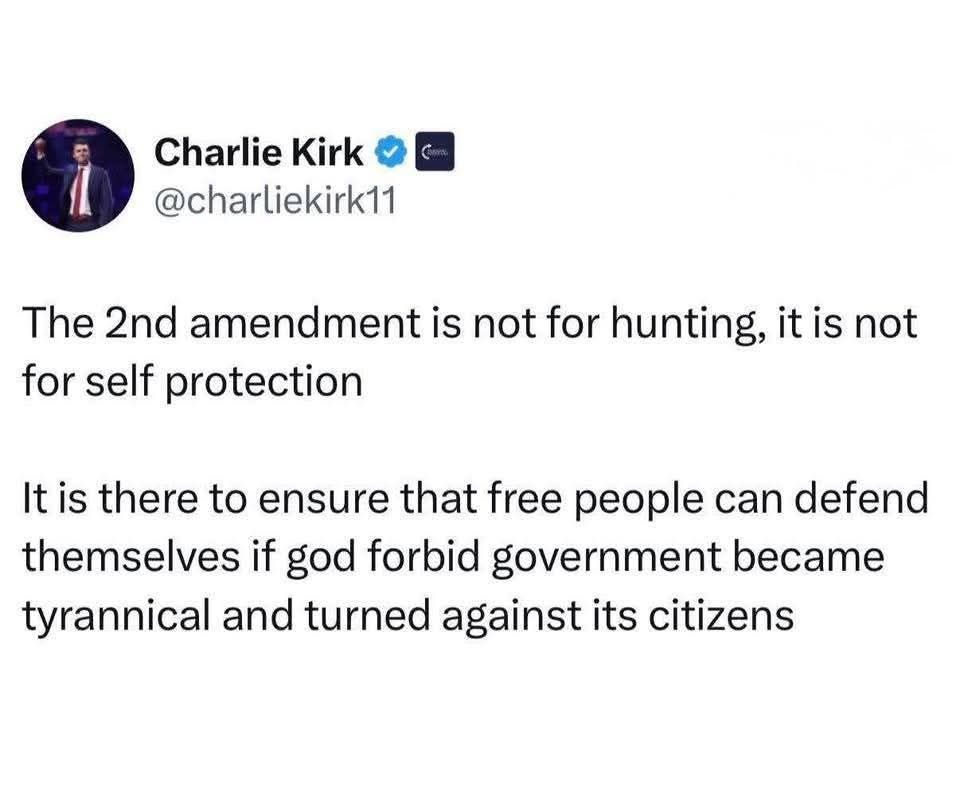
Charlie Kirk wasn’t a significant figure to me before his death. It may be a generational thing or just a general lack of interest in the whole conservative influencer crowd. I feel dumber any time I listen to Steven Crowder and assumed Kirk was just another one of the partisan bomb throwers. But, from my exposure to his content since, I have gained some appreciation.

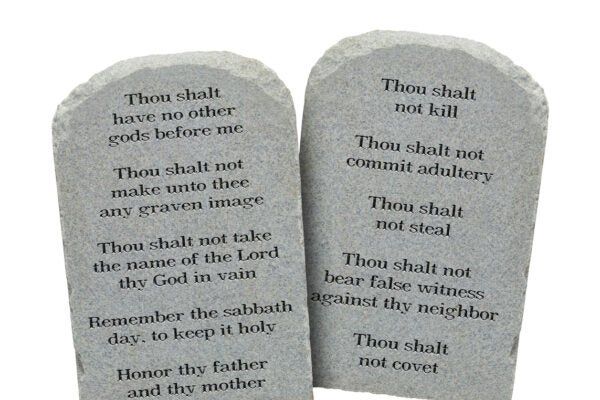
Arguing for the Ten Commandments has never been a priority for me. It’s a list with a context and not standalone. Nevertheless it is a starting point for a moral discussion and also one that it seems Charlie Kirk would go to frequently in his campus debates.  The two most difficult of these laws to explain to a religious skeptic are certainly the first two: “I am the Lord your God; Have no other gods before me and do not make idols.”

We generally agree on prohibition of murder and theft, or even adultery, but will disagree on one lawgiver and judge.

Why?

Well, it is simply because divine entity is abstract compared to things we have experienced—like the murder of a loved one or something being stolen from us. You just know this is wrong based on how it makes you feel. The belief in celestial being beyond human sight or comprehension just does not hit the same way as events we have observed. And it’s also the baggage the concept of a God carries in the current age. I mean, whose God?

It seems to be much easier just to agree the lowest common denominator: Don’t do bad things to other people.

But then we don’t. We justify killing others if it suits our political agenda, labeling people as bad for doing what we would do if facing a similar threat to our rights. If I’ve learned one thing it is that people always find creative ways to justify themselves while condemning the other side for even fighting back against an act of aggression.

Self-proclaimed good people do very bad things to good people. Like most people see themselves as above average drivers (not mathematically possible), we tend to distort things in favor of ourselves. Fundamental attribution error means we excuse our own compromises as a result of circumstances while we assume an immutable character flaw when others violate us. We might be half decent at applying morality to others—but exempt ourselves and our own.

So morality needs a focal point beyond us as individuals. There must be a universal or common good. Which might be the value of a theoretical ‘other’ who observes from a detached and perfectly unprejudiced point, the ideal judge. Not as a placeholder, but as the ultimate aim of humanity. One God. One truth. One justice. This as the answer to double standards, selective outrage and partisan bias. If we’re all seeking the same thing there is greater potential of harmony and social cohesion where all benefit.

At very least it would be good to promote an idea of an ultimate consequence giver that can’t be bought or bribed.

3) The Good, the Bad and the Aim for What Is Practically Impossible

The devil is always in the details. And the whole point of government is to mediate in this regard. Unfortunately, government, like all institutions, is merely a tool and tools are only as good as the hands that are making a use of them. A hammer is usually used to build things, but can also be used to bash in a skull. Likewise, we can come up with that moral system and yet even the best formed legal code or enforcement mechanism can be twisted—definitions beaten into what the current ruling regime needs.

The United States of America started with a declaration including the words “all men are created equal” and a Constitution with that starts: “We the people…” This is reflection of the Christian rejection of favoritism and St. Paul telling the faithful “there is no Jew or Greek” or erasing the supremacy claims of some. An elite declaring themselves to be exempted or specially chosen by God is not compatible with this vision. We never ask a chicken for consent what we take the eggs. We do not extend rights to those who we consider to be inferior to us or less than human. Human rights hinge on respect for the other that transcends politics.

That’s where the labels come in. If we call someone a Nazi, illegal, MAGAt, leftist or a Goyim we are saying that they are less than human and don’t deserve rights. This is the tribal and identity politics baseline. Those in the out-group are excluded for decency, their deaths celebrated as justice (even if there’s no due process) and we’ll excuse or privilege our own. All sides of the partisan divide do this—we create a reason to deny rights to others often using things like truth, freedom and love (Patrick’s foundation) as our justification: “Those terrorists hate our freedom and democracy, we must fight for those we love and our truth!”

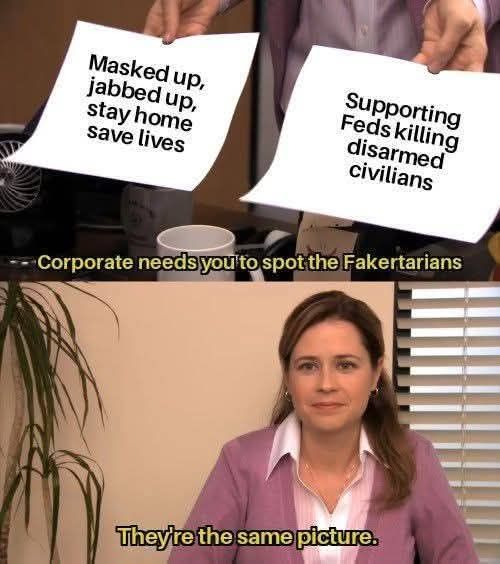
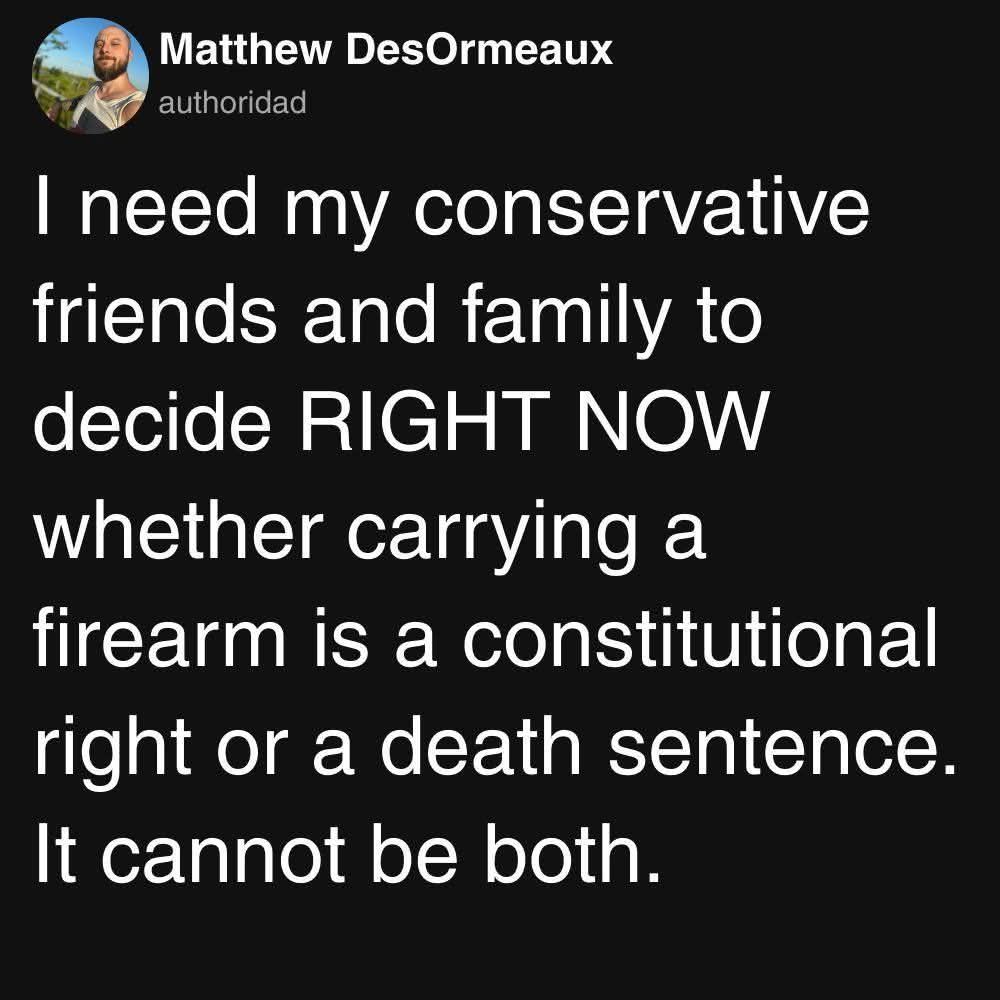
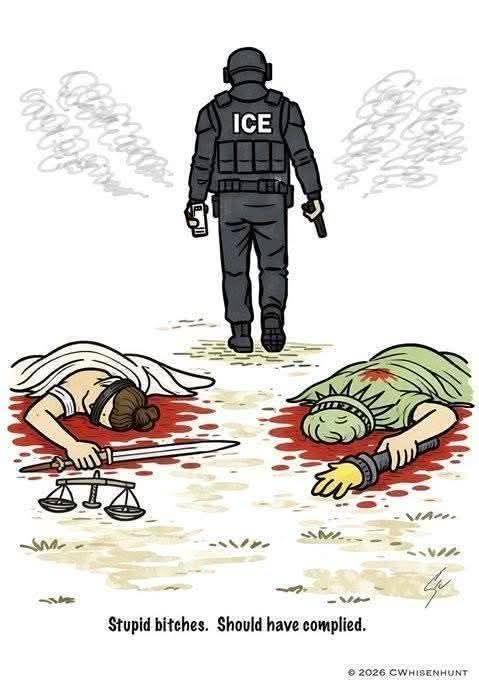
Bringing this to a practical level: Looking at Minneapolis, the ICE and anti-ICE activities, we have competing moral narratives and a different vision for application of American values. On one side of the debate you have those who say that “one is one too many” if an illegal immigrant kills a US citizen—then suddenly do not care when Federal agents shoot a fellow American. The defiant “don’t tread on me” opposition to mandates and masks during Covid somehow shifting to “comply or die!” On the other side you have those outraged about Kyle Rittenhouse and who have been traditionally opposed to the 2nd Amendment defending Alex Pretti while the Trump administration condemns a man for carrying a permitted firearm.

Judgment is for the other, it seems, rights for those who look like us or agree. It’s this inconsistent eye, the call for understanding of our own and grace for ourselves with the harsh penalties applied to those within the forever shifting lines of our out-group, that shows how our political perspectives cloud our moral judgment. The ‘sin’ is not the act itself, but whether or not the violation suits our broader agenda. This is why ‘Christian’ fundamentalists, who will preach the love of Jesus on Sunday, can be totally indifferent to the suffering of children with darker skin tones—their God is about national schemes not a universal good or a commonly applied moral standard.

The aim needs to be justice that is blind to who and only considers what was done. If pedophilia is excused for powerful people who run our government and economy, then it should be for those at the bottom as well. If the misdemeanor of crossing an invisible line is bad, a justification for suspension of due process for all Americans, then why is it okay to violate the sovereignty of Venezuela or Iran over claims of human rights abuse?

The US fought a war of independence, took the country for the British and yet has been acting as a dictator, installing kings, when it suits our neo-colonial elites.

That’s immoral.

We’re all immoral.

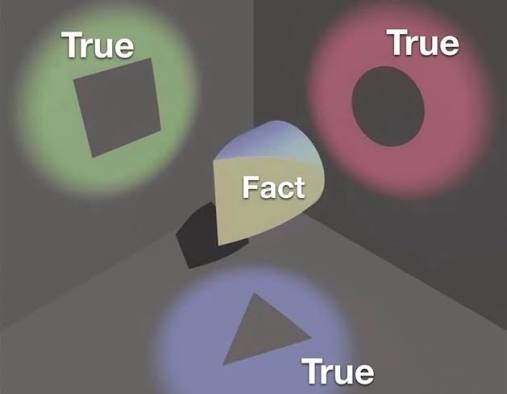
The moral code of Patrick, Charlie or myself is incomplete—because every moral code is incomplete when filtered through human eyes. We start from our different premises: Patrick’s secular triad of truth, freedom, and love; Kirk’s religious appeal to the Ten Commandments and a divine lawgiver as the only reliable check on self-deception; my own reluctant recognition that empathy and cooperation are real, yet fragile, against the raw arithmetic of power and advantage. Yet all of our approaches circle the same problem: without some external, impartial standard that transcends our biases, tribes, and self-justifications, our morality devolves into competing opinions dressed as facts—exactly as Aurelius observed.

We cannot fully escape the murk. Objective reality, if it exists, slips through our fingers like quantum probabilities—and moral truth fractures along lines of culture, experience, and interest. Even when we agree on broad principles (don’t murder, don’t steal), the application often splinters: whose life counts as being worthy of protection? Whose borders, laws, or children deserve a defense? And whose “justice” is merely revenge in better lighting?The temptation is cynicism—just declare all values relative, retreat to my own personal pragmatism, and then let might (or votes, or algorithms) sort the rest. But that is a path leads to the very outcomes we decry—dehumanization, selective outrage, and the erosion of the entire civilizational project that allows agnostic high-empathy and high-IQ arguments like Patrick’s to even exist. Yes, nature may be amoral, but us humans build societies by pretending otherwise, by our aiming higher than baser ‘animal’ instincts—reaching for God.

So perhaps the most honest conclusion is not to claim possession of the full truth, but to commit to pursuing it together—knowing we’ll never quite arrive. We definitely need focal points that force some accountability beyond ourselves: whether that’s a concept of one ultimate observer who sees without favoritism, or by a shared commitment to universal human dignity rooted in principle beyond biology or tribe, or simply just the hard-won habit of applying the same rules to our side as to the other. Blind justice isn’t natural or self-evident—it’s cultivated. Morality is an aim which requires vigilance against our own double standards, humility before the limits of our perspective, and courage to defend principles we claim even when they inconvenience us.

In the end, we don’t need perfect agreement on the source of morality to agree that inconsistency in application is poisonous.  What goes around will certainly come around and if we live by the sword we’ll die by it.  If we can at least hold each other (and ourselves) to a standard higher than “what works for my group right now,” preserve the space for mutually beneficial cooperation over cruel predation—a shared conscience over mere convenience. Anything less, and the gazelle never outruns the lion for long—and neither does the society which forgets why it tried.

“You’re Thirty Years Old Living In Milton”

Standard

The quote in title, an unintentionally honest comment from a pious young woman, will continue to ring in my ears for decades to come. Scripture describes the word of God being “sharper than any two-edged sword,” but her romantic rejection came more like a hammer blow to my Mennonite worldview where spiritual was supposed to outweigh physical gain. I had patterned my life, up to that point, around a sort of practicality over flash and suddenly realized what I thought was an asset was actually liability.

I was reminded of these words again as my wife’s glowing approval of the monstrosity in my driveway, a Ford Explorer ST, still feels out of place for me. I mean, granted, I was not keen on transitioning to family life with a pedestrian option like a minivan or boring SUV. But I didn’t expect my always frugal—cost conscious—female counterpart to go along with it 100%. She was supposed to pump the brakes and did not. I’ve realized, in this, that every woman is happy with the nice things and won’t say no if you provide it for them. We’ve both agreed to blame the baby for our reckless financial decision.

So, back to Milton, a place I’ve since moved on from and to the higher cost town across the river. Up until the words from the mouth of this wholesome girl, I had thought having a little house completely paid off would be worth something—even attractive. After all she claimed to be interested in missionary service and what better place to get a start, right? From what I had believed, there are needs anywhere there are people and where better to start than a deteriorating industrial town? Milton is an example of the rust belt, a place of declining opportunities and costs of outsourcing production.

The phrase “you’re thirty years old living in Milton” was simply accurate conveyance of her underlying priorities. There’s always the difference between what we say we are and the actual truth. Even in the secular culture there’s a romanticization of the love of two impoverished people who stand together in desperate circumstances. And those raised in an environment where Christian mission is supposed to be first, living as one poor as a church mouse amongst common people would seem the ideal.

But it is not. No, this young woman, like the one who had rejected me for not pursuing a title of “missionary” or “pastor” years prior, was clearly after status. They will not say it outright, probably are not even aware, but it is a kind of glamour they seek in service. A call to some exotic location to impress their religious peers. Sure, a Bentley may not be status in a conservative Anabaptist church, but the ability to jet around the world (often on someone else’s dime) is thrilling where it is considered sacrifice. It is currency, a way to gain status in a community of faith or be seen as righteous.

Resources are showered on the ministry or mission. Sure, it comes with stress, my 9-5 does as well, but the payoff is proportional. And not talking about “treasures in heaven” or God’s favor. A pastor has access to the community resources. It is social power as much as it is a position of responsibility and there are always those who want to curry a little favor. Again, it also comes with more scrutiny as well, but most tend to minimize the costs when they set off in a particular direction. Besides that, for the Mennonite woman, this is for the broad shoulders of her husband to bear, right?

The high expectations of my wife have been a little surprising to me. To her credit, she has been putting up with a partly finished remodel of old house since marrying and moving in. But yet, despite coming from the Philippines, her standards are now close to that of an American woman. We comment about our son’s demands for what the other kids have, but often fail the test ourselves. I mean, is it at all coincidence that I decide to finally pull the trigger on a new vehicle after a Mennonite workmate showed up with his new truck? Probably not.

And that’s the bottom line here. We are all after power in different forms. Be it money, be it land, access to resources or just status in our peer group. What I’ve found is that a religiously trained (or ‘spiritual’) person is no different. No, all they do is give a righteous cover to their personal ambition. They live in a delusion. Materialism is bad, they will say, but they are fine with your donation of money so they can buy a bigger missionary compound in Southeast Asia. And, under the fluff of my own pursuit of love was the same sexual motivation of all men.

I hated when a physiatrist summarized my obsession with the impossibility as being a “sexual attraction” and dismissed it initially as a woman who knew nothing of my heart as a man of God. But now I realized this is undoubtedly the correct assessment. Men want sexually attractive women and women want high status men. This is an essential part of our nature—a matter of survival for our genes—a young healthy woman is able to bear children and a wealthy or connected man can give them much more than a thirty year old living in Milton.

I’ve moved on from Milton, but cannot move on from the reality I have encountered head on, we’re sexual creatures living in material reality and can’t escape this by denial. I had been better to learn this decades ago rather than cling to a naive notion of love where it ends like a storybook. But I am now living the best life available to me and hope that my wife is happy with her decision. She’s won my heart asking for the “simple and happy life” and now I want to give her that and everything else wonderful this world offers. The best thing we gained was the child born almost a year ago now…

It’s never too late to live the life that you should—which is more about perspective than what you possess—even if you were denied love for being thirty years old and living in Milton.

From Tribal Vengeance to Universal Justice: In Pursuit of One Higher Standard 

Standard

The default position for most people is some form of tribal ethic. If it is done to them or their own family by another tribe it is a horrendous and terrible crime. But, when only those in another tribe are hurt or if they are afraid that confronting the abuse will hurt their own tribal agenda—then suddenly the unforgivable becomes a “Who cares, everyone does it, why are you bringing that up again?”

Tribal ethics amount to doing only what is good for the tribe—usually sacrificing the rights of an individuals in the tribe and always denying the basic humanity of those outside of the tribe. Individual rights of those in the tribe are generally honored, but only so far as protecting them is useful to the collective and not as something that is absolute or immutable. If a few die for sake of the tribal order—are stoned to death for daring to pick up sticks on the Sabbath—that’s just how it is.

The Old Testament is full of this. Your own are completely free to enslave, rape or take from those outside the tribe and yet would be enraged if one of their own were treated in the same way—like when vengeance was taken by Dinah’s brothers who wiped out a whole city for sake of the family’s honor. If it were within the tribe the attitude would be quite a bit different. Under Moses law this was simply a matter of paying the price of the bride and not a death sentence. And it is clear that things morally abhorrent by a modern standard, like genocide, were done by the command of God.

Tribalism is a feature of politics, a natural or default condition, where we defend our own and demonize the other. To the left Charlie Kirk deserved to die for his sins of hate they claim were harmful to their woke collection of identities. The Evangeli-cons soak up the propaganda from Israel that paints children in Gaza as future terrorists. We protect the people most like us because and adjust our moral rules according to the situational and immediate needs of our tribe.

A Case For One Higher Universal Standard

But a Christian ethic is completely different from this. It says sin is sin.  Evil is evil no matter who is committing it or who it is against.

And, if anything, those who are in the church, who profess their faith in Jesus, should be held to a much higher standard. There is no room for favoritism (James 2:1, Romans 2:11) or carving out exemption for elites or even our friends and family. Jesus said to love our enemies (Matt 5:44, Luke 6:27) and even ‘hate’ our own family (Luke 14:26) if necessary to truly be his follower. Even our thoughts subjected to a standard of love and forbearance.

Jesus didn’t get hung on a cross for saying cutesy stuff that is easy to do. And I really do not expect anyone to live by that code. It requires actual faith and a true belief Jesus is what he said he was to make sacrificing ourselves for his ethic reasonable:

Do not repay anyone evil for evil. Be careful to do what is right in the eyes of everyone. If it is possible, as far as it depends on you, live at peace with everyone.  Do not take revenge, my dear friends, but leave room for God’s wrath, for it is written: “It is mine to avenge; I will repay,” says the Lord. On the contrary: “If your enemy is hungry, feed him; if he is thirsty, give him something to drink. In doing this, you will heap burning coals on his head.” Do not be overcome by evil, but overcome evil with good.

(Romans 12:17-21 NIV)

But even if you don’t truly believe in a future eternal reward or God, there is a reason why universal morality is better than our default tribalism. And that is an idea of what goes around comes around. Sure, you might not care about someone else’s daughter being sexually exploited by wealthy and powerful men—most especially if they are furthering your partisan political agenda—and yet we want to have a society where there’s justice or the injustice will eventually spread to us.

This is the big difference between my own understanding and the one that is far more popular: Good and evil never change on the basis of who is doing it or if I benefit. If it is wrong for the neighbor to kill my dog under most circumstances it is wrong for me to kill theirs. And if I (or one my own) start to act with impunity—are continually forgiven for things others are always condemned for—eventually this will piss off enough of the ‘others’ that they’ll dish out their version of justice against their abusers.

The Fallacy of Judeo-Christian Values

Evangeli-cons want the world to forgive for all their infractions and yet never forget if a victim fights back against their aggression. It is the very opposite of what Christ taught and anti-Christ. Jesus would likely warn us that how we judge we will be judged and the measure we use will be measured back to us. Which should make us tremble when we consider the slaughter and razing to the ground of Gaza using bombs we provided—there will be no call for mercy on the behalf of those who claim that young children are terrorists so they can kill them:

We are imposing a complete siege on Gaza. There will be no electricity, no food, no water, no fuel. Everything is closed. We are fighting human animals and we are acting accordingly.

October 13, 2023, Isaac Herzog, President

Just as it is clear that the right wing was right, today everyone says it is clear all Gazans must be annihilated… There is no logic in differentiating between uniformed [Hamas] and the rest of the inhabitants there.

September 2025, Moshe Saada, Likud MK

Every child born in Gaza is already a terrorist, from the moment of his birth.

January 15, 2024, Nissim Vaturi, Likud Deputy Speaker

And they were stating their genocidal intent long before October 7th:

Huwara needs to be wiped out. I think the State of Israel should do it… Water, electricity, and food must be cut off from the Gaza Strip. Those who do not die by bullets will die of hunger.

February 2023, Bezalel Smotrich, Finance Minister

This shows the absurdity of what is called Judeo-Christian values. Tribal logic says it is okay to kill man, woman and child of the rival so we can take the land for ourselves. Whereas Christian morality calls for all to be saved (1 Tim 2:4, 1 Pet 3:9) and erases the boundaries of tribal identities based on gender, race or social status. It is the polar opposite of having a chosen people with a license to take and kill. Jesus offended his ‘righteous’ ethnic audience by saying that a pagan had greater faith than all of Israel. To embrace this radical ethic is to reject the tribalism that fuels division and violence, choosing instead a universal justice that holds all accountable and protects all, not just the chosen few. Only by abandoning the hypocrisy of tribal loyalty can we hope to build a world where the measure of our judgment does not return to condemn us, but instead fosters a shared humanity that is grounded in love of Jesus.

A Fundamentally New Way of Thinking

The Christian ethic really is a total reversal of fundamental attribution error. It is easy to attribute what others do to us to a matter of their immutable character, they’re just evil and irredeemable, therefore do not need to be heard or understood. But for our own or ourselves we tend to blame only the circumstances and call it a mistake—one of those forgivable offenses. The reverse is to never make excuses for our own while also showing grace to those who offend us.

When someone cuts us off in traffic is it because they are a terrible driver? Or did they just have a bad moment? Or if we do the same, is it truly just an isolated incident or is our confirmation bias simply forgetting all of those times we transgressed with an “oops, sorry!” Reversing our fundamental attribution error is simply to apply grace we give to ourselves to others. It is, at the very least, to apply the same standard we do for ourselves as we do to others.

When a person of our own tribe does some kind of horrific deed, do we dismiss this as not representing us as a whole? Maybe we justify it? When the US Navy shot down Iran Air Flight 655 flying a routine route over the Strait of Hormuz, back in 1988, and killed all 290 on board—the US didn’t even apologize and, adding insult to injury, gave medals to the crew that did it! That is tribalism and is how fundamental attribution error works. If Iran did the same the US population would be calling for our military to turn the whole country into a smoldering ruin.

But the Gospel of Jesus Christ starts with a call for repentance. Repentance being an inward turn where we identify and confess our own faults rather than hide them behind rationalization or claims that our hand was forced by the other side. And, finally, after this deep introspection, we show the fruits of a changed spirit by showing the grace we have been shown to even those who we feel are most underserving. A true Christian will strive to love their worst enemies while also holding their own to a high standard.

If we want forgiveness of our sins we must show mercy and forgive others.

Evangeli-cons want all grace for themselves and yet give none to the enemies of their ‘Christian’ empire. They don’t want sins of some in their midst to count against them, they will deny the inconvenient violence of those on their side politically, but then make the whole left or all of Islam responsible for everything ever done by one of their own. It is a tribal ethic that has nothing to do with a Jesus of repentance. Or a spirit of grace to others that exists in those who understand their place before God.

The Greater Good Fallacy: Morality Without Excuses

Standard

Setting aside moral principle to serve a greater good means you have no moral principles.

Moral relativists love their hypotheticals: “What if you had a chance to travel back in time and kill baby Hitler?”

Once they can establish the answer as “yes” then pretty soon thereafter anyone who stands in their way is a Nazi. Or, in other words, the morality of “everyone I don’t like is literally Hitler” where you will basically become Hitler killing all of those baby Hitlers before they become Hitler—kill them all, you can’t be too careful!

It is ends justify the means morality that justifies, ultimately, the most heinous and horrible acts by one projecting a possible outcome as an excuse to violate another person—in some cases even before they drew a first breath.

For example, the Freakonomics case for abortion pointing to how inner-city crime rates dropped in correlation with black babies being killed—used as a moral justification.

Contrast this with Matthew 12:20, with Jesus: “He will not break a crushed blade of grass…”

This prejudice is behind every genocide or ethnic cleansing campaign. The excuse: “We don’t want to kill babies, but if we don’t ‘mow the grass‘ then they’ll grow up to kill us.” I mean, it’s not like that attitude will create a backlash or stir the anger of the population being cynically targeted for a trimming back, right?

Oh well, at least when you are starting at the very bottom, relying on self-defense by precrime judgment and a doctrine of preemption, there is no slippery slope to be concerned about: Morality becomes a race of who can eliminate their potential opponents most efficiently rather than a social contract between people trying to live peaceably with their neighbors.

(Im)Morality of the ‘God’s Plan’ Excuse…

One of the sidesteps of treating others with human decency is that it is all part of God’s plan. Biblical fundamentalists often use a similar kind of ends justify the means moral reasoning as the far-left—except they dress it up as faith and seeing the bigger perspective.

This is their excuse to be Biblical, but not Christian. The moment you raise a moral objection about anything they’ll find their loophole in Scripture: “Oh, yes, God said not to take innocent life, but He also told Israel to wipeout the Amalekites, so it is up to us to decide who gets slaughtered or saved.”

This is the God’s eye perspective Jesus addressed in Mark 7:10-12:

For Moses said, ‘Honor your father and mother,’ and, ‘Anyone who curses their father or mother is to be put to death.’ But you say that if anyone declares that what might have been used to help their father or mother is Corban (that is, devoted to God)—then you no longer let them do anything for their father or mother.

What the Biblical experts were doing was using one command to nullify another by a greater good moral reasoning. Of course they, in their own minds, were the more spiritual. They had convinced themselves that—by neglecting their duty to parents—they were seeing things from God’s eyes and just better than everyone else. But, in reality, this is rationalization and an excuse to be immoral.

Morality isn’t about taking the God’s eye view, it is about our practically applying the Golden Rule or the law of reciprocity described in the passages below:

For if you forgive other people when they sin against you, your heavenly Father will also forgive you. But if you do not forgive others their sins, your Father will not forgive your sins.

Matthew 6:14-15 NIV

“Do not judge, or you too will be judged. For in the same way you judge others, you will be judged, and with the measure you use, it will be measured to you. “Why do you look at the speck of sawdust in your brother’s eye and pay no attention to the plank in your own eye? How can you say to your brother, ‘Let me take the speck out of your eye,’ when all the time there is a plank in your own eye? You hypocrite, first take the plank out of your own eye, and then you will see clearly to remove the speck from your brother’s eye.

Matthew 7:1-5 NIV

Speak and act as those who are going to be judged by the law that gives freedom, because judgment without mercy will be shown to anyone who has not been merciful. Mercy triumphs over judgment.

James 2:12-13 NIV

See the pattern here?

What we put into the world is what we will receive back. If we do not show any mercy to those under our power, then we will not be shown mercy. And that’s the point behind the parable that Jesus told about a man forgiven a great debt—then goes out demanding repayment from the man who owed him.

Seeing things from God’s perspective—according to this—is to apply Micah 6:8:

He has shown you, O mortal, what is good. And what does the Lord require of you? To act justly and to love mercy and to walk humbly with your God.

There are no excuses to set aside normal morality for the sake of God’s plan.

There is no special exemption given for a chosen race of people either.

Throughout history the most evil of men have excused their atrocities using God’s will. It is the reasoning of the Crusader’s command, based on 2 Timothy 2:19, of “Kill them, for God knows his own.”

The ‘Christian’ West killed more innocent people in the Holy Lands than Islamists.

With that kind of thinking, everything will become justified as part of God’s plan if you zoom it out and, therefore, we can’t take a moral stand against anything. If it is God’s plan that babies are killed—then who are you to decry it as murder?

This is logic which can neutralize every moral stance or turn every evil deed into some kind of ultimate good—if you just see it from ‘God’s perspective’ it all becomes okay.  Of course, at that point, accepting this, there is no morality—once everything is relative to God’s will or the outcome that we call good.

It essentially replaces the Golden Rule with: “Do unto others as you would have them do unto you—except if you can explain away the abuse by some kind of greater good excuse.”

Act Justly, Love Mercy, That’s the Conclusion…

Moral relativism, whether cloaked in the guise of achieving a greater good or justified as part of God’s plan, erodes the foundation of true morality—the Golden Rule.

By excusing heinous acts through hypothetical necessities or our ‘divine’ rationalizations, we are becoming the very monsters we claim to oppose. True morality demands consistency: acting justly, loving mercy, and walking humbly, without excuses or every resorting to preemptive judgments or selective exemptions.

When we abandon moral principles for the sake of outcomes we desire or divine loopholes, we replace mutual respect or an opportunity for understanding with a race to eliminate every perceived threat, leaving no room for peace, forgiveness, or humanity.

The measure we use—whether it is mercy or judgment—will be measured back to us, and no appeal to a higher purpose can absolve us of that final reckoning.

Post script: Morality is staying in our lane and abiding by the rules. Playing God is running someone off the road for daring to cross into our lane. It is about our keeping the law—not our enforcing of it. And when we start to justify the abuse of others, as Biblical, then we turn into a violator. James 4:11 explains: “When you judge the law, you are not keeping it, but sitting in judgment on it.” The end result of exemption of ourselves using God’s plan as cover is a cycle of violence where all see themselves as righteous—even while doing incredible evil.

The Christian and Civilized Slaughter

Standard

In the aftermath of the Israeli sneak attack on Iran, this being only the lastest of many provocations, some of my friends defended this move as necessity for the protection of Christian civilization. I mean, after all, there are crowds that chant “death to Israel” and “death to America” and couldn’t possibly be talking about the foreign policies or political regimes, right? It’s not like we dream about draining the swamp ourselves, is it?

But of the outrages of the Iranian response to yet another act of aggression—a missile landing near a hospital had the Zionist state going full propaganda mode. They called it deliberate, criminal, barbaric and gave this as the reason why there needs to be regime change in Tehran. The only thing is, only a day or so earlier the IDF had struck several Iranian hospitals and they have continued to do so even while calling it uncivilized for their enemy to do the same in response.

The American ‘Christian’ public is bigoted and easily bamboozled. They couldn’t tell you the difference between a Persian or an Arab—yet will tell you with total confidence that Iran has it coming while totally ignoring all of the atrocious acts of their own side in this conflict. When Israel began their Gaza campaign and deliberately struck a hospital, they justified it by claiming that there was a Hamas tunnel under it. The claim was not independently verified. Since then 31 of the 36 health care facilities in this occupied and besieged Palestinian territory have been severely damaged or destroyed.

It is hard not to see a systematic effort to eliminate access to food and medicine in Gaza. Children with limbs blown off from IDF bombs or sniper bullets endure surgery without anesthesia if they get help at all. If you’re okay with that, maybe you’re also fine with beating detained medical personnel and an orthopedic surgeon being raped to death while detained by the IDF? This is a pattern, it is not accidental, in Gaza they’ve killed more Palestinian journalists than were killed in all of WW2. They’ve attacked and slaughtered EMTs, burying them along with their ambulances—who does this?

https://dataverse.harvard.edu/dataset.xhtml?persistentId=doi:10.7910/DVN/QB75LB

There has been no accountability for what Israel does. The indiscriminate campaign in Gaza has potentially taken hundreds of thousands of lives, the vast majority of the casualties civilians and children given that Hamas represents only a fraction of Gaza’s population. Only 7% voted for them to rule. There is absolutely no justification for what is a campaign of collective punishment and annihilation of a native people. And this did not all start October 7th—the daring and deadly incursion currently being used as an excuse for the brutal destruction that has taken place since then—it has been the pattern for decades.

The question that one must ask is this: What is so civilized about bombing children in tents?

What is Christian about starving them to death?

This is all by design — not an accident.

This one-way outrage and pretending to have the moral upper hand while doing the same or worse is a feature of the Zionist doublethink.

Israel can take boys and then detain them indefinitely for merely throwing rocks at the occupation’s military vehicles—even rape or mistreat them—but Hamas is evil for taking captives mostly as a means of bargaining to get their own people back?

Zionists cloak themselves as the defenders of democracy while using hate speech law to crush those who dissent to the collective punishment of whole populations.

Zionists will wail over the Bidas family, act as if it is the most heinous of crimes when we don’t have an independent investigation to verify the claims, and then will say nothing of the scores of families that their favorite terror regime has buried under rubble.

They claim that Islam is barbaric, both cruel to women and intrinsically violent, but then ignore the millions of innocents that they’ve starved, delimbed or incinerated—building their fake Zion on the pile of corpses.

Do not take revenge, my dear friends, but leave room for God’s wrath, for it is written: “It is mine to avenge; I will repay,” says the Lord. On the contrary: “If your enemy is hungry, feed him; if he is thirsty, give him something to drink. In doing this, you will heap burning coals on his head.” Do not be overcome by evil, but overcome evil with good.

Romans 12:19-21 NIV

Lust, Modesty and False Dichotomies

Standard

Of the many issues that are defined by false dichotomies one of them is most glaring and that is who bears responsibility for lust.  It is very clear that Jesus makes us responsible for our own wandering eyes:

“You have heard that it was said, ‘You shall not commit adultery.’ But I tell you that anyone who looks at a woman lustfully has already committed adultery with her in his heart. If your right eye causes you to stumble, gouge it out and throw it away. It is better for you to lose one part of your body than for your whole body to be thrown into hell. And if your right hand causes you to stumble, cut it off and throw it away. It is better for you to lose one part of your body than for your whole body to go into hell.

(Matthew 5:27‭-‬30 NIV)

This is the ultimate case for taking personal responsibility and why I don’t buy it when men try to blame women for their lust or claim immodesty caused sexual assault.  If poverty is not an excuse for looting or theft from those with something desirable, why would a victim of rape be considered even partly responsible for what was done to them?

If people can blame-shift for one behavior they can for all. 

There’s always an excuse for aggression and yet Jesus says that we are responsible for even managing our temptations.

Is she responsible for male lust?

It makes sense.  In a world full of advertising telling us to consume, moderation depends on our learning self-control.  McDonald’s did not make you fat.  No, your choice to bend to the urge to grab yet another Big Mac, on the way home, did that.  Ultimately, A truly moral person learns how to avoid stumbling blocks and would sooner remove their own eyes than make excuses.

So where is the false dichotomy?

Well, while we can’t blame fast food restaurants for obesity, we have recognized that advertising does influence decisions. Marketing would not be an industry worth hundreds of billions of dollars if this were not the case. For this reason it is worth being aware and acknowledging reality, it is our responsibility not to lust and it is also just smart to recognize the power our physical bodies have over others.

The Two-way Street…

People love to display their bodies for the attention and recognition it brings.  We have body building competitions and beauty pageants for this reason.  Our bodies are beautiful, like great art, and especially attractive to our sexual opposites.

But then it seems only young women complain loudly when that “creeper” takes notice of them in a cleavage baring skin tight outfit, as if they aren’t posting pictures of themselves in the same outfit for the world to see on social media, and that’s just plain meanspirited.  So maybe they are just seeking more attention by bashing older and physically unattractive men? I mean, come on, do they really not know that their exposed bodies are not a magnet for the male gaze?

Some want to have it both ways: They want the positive attention that their bodies bring them and then become angry about being objectified by men.  It is as dumb as a sugar daddy being upset about the “gold diggers” when he was the one flaunting his wealth as a way of gaining access to women.  If you truly want other people to value you for your personality then make that the centerpiece by being modest about your other ‘assets’ and also seeking others on the same basis rather than being superficial.

The response to overbearing purity culture, where women are wrongly blamed for male struggle, is to deny biological reality and that being sexual attraction.  That is to say this ridiculous notion that a person can wear the most revealing and provocative clothing then be upset when they’re objectified.  It would be like me claiming that I can walk into a gay bar, wearing hot pants and a tank top, then claim I wasn’t inviting attention.

Modesty is not about preventing others from lusting so much as it is about not advertising what we’re not willing to give to all.  If I don’t want anyone to stare or appreciate my Shelby GT-350, I’ll keep it under a cover in the garage and never take it out on the street. Our bodies are an object, they are the most wonderful of physical things, and to appreciate this is not a matter of lust or sin. We should not be offended when people take notice of what we have very publicly displayed.

Finding the Balance…

Jesus said what he did about responsibility for lust as an instruction to those who are trying to be moral. 

What he did not do is contradict what others in Scripture told us about being modest nor did he recommend making a big display of our various valuable assets for all to see. 

While it is not my fault if my car gets stolen and, indeed, it could happen anywhere—I still understand that the streets of some Baltimore slums are not the place to park my new car with the keys in the ignition.

Don’t park your C8 Corvette in Detroit

What this does not mean is that immodesty is an excuse for sexual assault. 

Without exception, all cases of lustfulness and sexual abuse are wholly the responsibility of those who are commiting the immoral act.  But we should understand that 1) our bodies (albeit sacred) are a desirable object and 2) there are many evil and immoral people willing to take advantage of the unwise.  Being an adult means understanding that the world does not always live up to our own ideal we must therefore take reasonable precautions.

Sure, we can curse gravity when we get stumble-down-the-stairs-drunk yet it makes more sense to acknowledge the reality and avoid known risks.  For example, wearing a skirt that only leaves the last little bit to the imagination, then going to a frat house party and getting totally wasted, is obviously risky behavior.  By denying contributing factors we are, at some point, the enablers of negative outcomes.  We should teach our children to protect themselves by being aware of enter-at-your-own-risk situations.

It is why my wife has warned me against talking too openly about my many fanciful dreams in her home country: Although my ambitions are far bigger than my wallet. Some people hearing may misunderstand—think that I’m incredibly wealthy—and this would potentially make me or my family a target for crime.  I could complain about this, claim that I should be free to express myself as I please, but that won’t save me from a kidnapping or being murdered.

To be clear, many (if not most) cases of rape and sexual assault have absolutely nothing to do with what the victim wore or where they were.  It was a relative or someone they knew who took advantage of their trust and they really could not have done anything better.  And, again, even if the victim was ‘immodesty’ dressed, they did not cause the aggression inflicted upon them.  If we don’t tell people who were carjacked that they should have left their car in the garage, why would we ever tell a girl that her exposed legs caused an assault?

My point is simply that bad people do exist and aren’t deterred by a lecture about respecting other people or their property and bodies. We know not to put our valuables on display in a seedy neighborhood—it’s just unwise.

Appreciate the Good…

Many who rejected patriarchalism are more the embodiment of the very toxic attitudes that they claim to oppose than those whom they accuse.

As the saying goes, “When you point a finger, there are three fingers pointing back at you,” we should be careful in our zealousness for a cause not to fall into our own delusion.

 Or as Jesus taught:

“Why do you look at the speck of sawdust in your brother’s eye and pay no attention to the plank in your own eye? How can you say to your brother, ‘Let me take the speck out of your eye,’ when all the time there is a plank in your own eye? You hypocrite, first take the plank out of your own eye, and then you will see clearly to remove the speck from your brother’s eye.”

(Matthew 7:3‭-‬5 NIV)

Browbeating moral men about “rape culture” is no better than religious fundamentalists who constantly guilt-trip conscientious and modest women about male lusts.

Good men don’t…is this a controversy?

The vast majority of men are not rapists nor is someone a “rape apologist” for stating the truth about sexual attraction and additional risks for women.  The fact is that there are bad people in the world, willing to exploit the vulnerable if allowed, and that is why we put locks on our doors.  Clothing is just one of many layers of defense and also a way to keep the focus on something other than our bodies.

We take for granted the religious laws against rape, theft or murder, as if such things are written into the substrate of the universe, but the reality is that this is order built upon moral men who use their strength to protect rather than exploit.  It is truly only under the protective umbrella of civilization that a person can expect to walk around (without the direct protection of their clan) and not be immediately set upon by predators. 

We should, therefore, appreciate the good self-controlled men and distinguish between them and the bad.

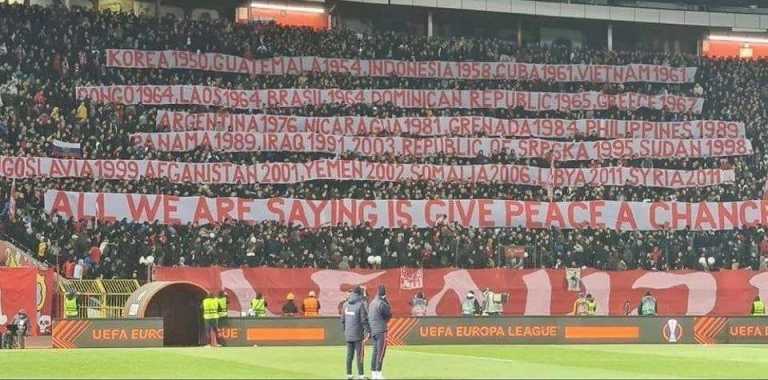
“All We’re Saying Is Give Peace A Chance”

Standard

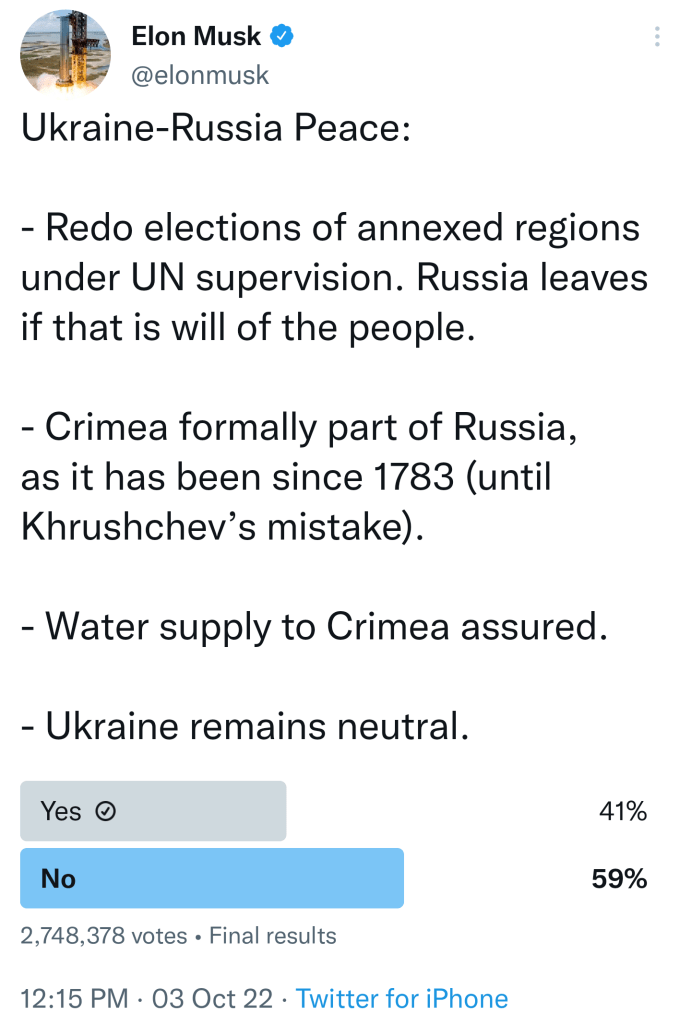
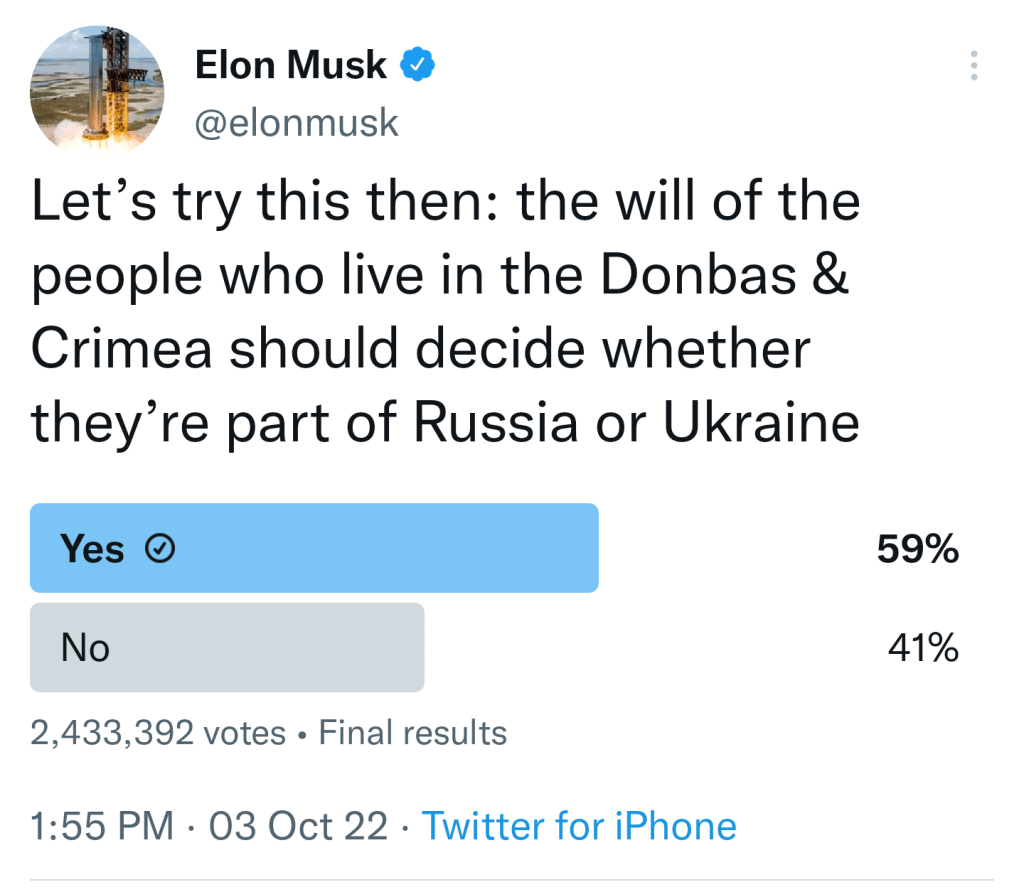
Elon Musk did what he does best and that is he disrupted the status quo.  This time he took on the conventional argument that the war over Donbas must be fought to the very last Ukrainian.  

His Tweets:

If you thought Trump was a mean Tweeter, you should see some of the nastiness in response to these polls.

Of course, social media midwits everywhere, full of sanctimony and rage, took to their usual easy explanation of any perspective that challenges their own: Musk is an idiot or Putin’s puppet and certainly doesn’t have the credentials to comment on geopolitics!  

And yet Musk’s own call for resolution very closely mirrors that of Henry Kissinger from months ago who called for the government of Ukraine to come to the negotiating table and be willing to cede territory for sake of peace.  

This is from an editorial written back in 2014:

The West must understand that, to Russia, Ukraine can never be just a foreign country. Russian history began in what was called Kievan-Rus. The Russian religion spread from there. Ukraine has been part of Russia for centuries, and their histories were intertwined before then. Some of the most important battles for Russian freedom, starting with the Battle of Poltava in 1709, were fought on Ukrainian soil.

(“Henry Kissinger: To settle the Ukraine crisis, start at the end,”Washington Post)

Kissinger, a diplomat of diplomats, former Secretary of State, and a renowned foreign policy expert, is no slouch when it comes to geopolitics, and that his sage advice was so quickly dismissed says more about the true lack of understanding and blind fanaticism of the hardliners.

It seems that some are plain vengeance driven and would rather punish Russia than find a way to peace that would end the destruction and save countless lives.  

They are either a) products of Western propaganda who knew next to nothing of the complex regional history and brutal shelling by Ukrainian partisans for eight years prior to the Russian intervention or b) Ukrainian nationalists who looked the other way when ethnic Russians were murdered in Odessa and then sought to impose their will on Donbas.

Musk and Kissinger, along with Emanuel Macron who warned not to humiliate Russia (as was done to Germany after WW1 and led to WW2), are only saying what an informed and responsible person should say when seeing an escalation that very well could lead to nuclear war.

The Boomer warmongers, the hawks like neocon Lindsey Graham or imperial-lib Joe Biden, are still very much stuck in the Cold War and would not think twice about sacrificing your sons or daughters for their latest power trip.  

They don’t tell you about how they personally profited from provoking a coup in 2014, like their predecessors did in pre-revolution Iran and all across South America.  

The United States has meddled in all parts of the world, both in form of covert CIA destabilization efforts to the too numerous to list overt brutal military invasions and occupations.  The political establishment and military leaders of the West have never thought twice about bombing those who do not submit back to the Stone Age:

The racial dehumanization of the Vietnamese found its classic expression in the words of General Curtis LeMay, head of the Strategic Air Command, who said that America’s aim must be to “bomb the Vietnamese back to the stone age.” And Washington tried to do just that: From 1965 to 1969, the U.S. military dropped 70 tons of bombs for every square mile of North and South Vietnam — or 500 pounds for each man, woman, and child.

(“Bomb them back to the stone age: Racism, genocide and denial at the heart of the American Way of War,” Milwaukee Independent)

Of course, this was done in the name of “democracy” and “freedom,” which justifies all violence, right?

Anything said about Putin is a projection. The war in Ukraine is not completely unprovoked, as our own propaganda says. No, it is the direct result of the US and NATO interfering in Ukrainian’s domestic politics. Back in 2014, the late Senator John “bomb bomb Iran” McCain, along with our current Under Secretary of State, Victoria Nuland, planned who would replace Ukraine’s President *before* he was overthrown in a coup.

The US only like democracy so much as the votes are counted our way and freedom so long as it benefits our current political establishment or their sponsoring banks and big corporations—that’s just the truth.

Like the jeering of our American hypocrisy by Serbian soccer fans—who saw their own country partitioned after NATO took the other side of the conflict, that of the separatists—holding a banner listing the dozens of places the US has attacked, invaded and occupied since the 1950s: “All we’re saying is give peace a chance.“

The world sees it, why don’t we?

The Hypocrisy of the Nice Guy Angle

Standard

The traditional male is supposed to be a little aggressive. There is something women love about swagger, the confident risk taking persona, and maybe because these men get things done. The bigger bolder man is going to give them more of what they want. They are the star athlete, they can dance, and (by outward appearance at least) are greatly endowed with those attributes most pleasurable. It doesn’t matter if he is entitled, arrogant, emotionally distant or otherwise a complete douche, nor that he’ll be bald with a potbelly at fourth, in his youth he’s that picture of masculine strength that immature women crave.

Success is a positive feedback loop. Even the tall handsome dude is going to have some approach anxieties. However, that self-talk goes a bit easier for the guy who has had his arm squeezed by an ogling female admirer or has never been turned down for a date. Men are not the choosers. Women make themselves available to the desirable men, they smile and laugh for him, will literally crawl into their pick-up truck, all he needs to do is make the move and very soon this flirtation leads into intimacy and meant to be. It didn’t require any faith or great courage on his part. He barely had a speaking role. Like men confuse beauty for virtue, women love that strong silent type for the character they can project onto his frame.

Outside looking in? The Nice Guy. That guy never picked first for any physical contest. The one who is a little timid or shy, awkward or clumsy, the late bloomer, and generally stayed out of the spotlight. He might have been on the receiving end of bullying or, at the very least, was disgusted by the insensitivity and crude sexuality of his male peers. If he’s lucky, women like him because he’s sweet and sincere, respectful and never a threat. While she gets the benefit of his companionship, he is lives under the delusion that if the girl simply gets to know him then she’ll see his golden heart and move him out of the friendzone. It never happens. And, worse, he betrays platonic assurance that gave him access to her.

I ran into this fair description of the infamous ‘Nice Guy’ while looking into the 9 to 10 attractiveness scale:

Recently, women took to Reddit to tell their scariest stories about “Nice Guys” — what our own Miles Klee described as a dude “who claims he only wants to be a woman’s friend, then gets mad about being ‘friendzoned’ and cruelly judges her for dating anyone who isn’t him.” The Nice Guy believes he lives outside of sexism and toxic masculinity, yet his schtick still hinges on the idea that basic decency toward a woman entitles him to sexual access.

The ‘Nice Guy’ wants the same things that any other male wants. But, because he is not 5′-10″ (or over) nor charismatic enough to gain her love, he plays the only angle that he has and that is to be ‘better’ than those other superficial losers. Except the reality is that he’s no different in what he actually wants and that is a relationship that ends in more than polite chatter. The whole thing of dating and romance is crass (a desire for sex hidden under a layer of sophistication) yet, in the cases of attractive men, the base desire for sex is categorized as wanted attention. However, in the case of ‘Nice Guys’ this desire is only ever a betrayal of friendship.

It is one of those all around loathsome things. Not being one of those cool sexy men doesn’t mean that a man wants to remain a celibate. However, to the women who wanted him as their pet rather than a partner, his bitterness and jealousy only confirms his status as an inferior man. In her mind, he was simply to take his place as supporting cast, the enuch to her queenly court, and that’s his only value to her. He’s the sounding board for her complaints, not even really a human with natural hopes to her, and therefore when he imagines himself as more she is appalled. How dare he be a sexual creature like her and the men that she prefers? How dare he mislead and be like those guys who she would allow in her pants!

I mean, she’s right, had she had an inkling that he ever sexual desires she would never have given him the time of day. Women might be best known for their nurture, but they sure can turn the cold shoulder to a guy who doesn’t meet their qualifications. And, again, who can blame them? If the top tier of attractive women could never say “no” or deploy that RBF shield, they would never be able to escape all of the unwanted male attention.

And yet, I’m also sympathetic to those who play that ‘Nice Guy’ angle, in so much that it is not entirely a lie and that they do often hear all of the complaints from women. Why did she go right from that abusive jerk to the womanizer who obviously only sees her as a fresh piece of meat? Why wouldn’t she at least give him a try, acknowledge his passion as valid, and stop denying him what she so freely gives to these others? It is insanely frustrating, especially in this age of equal opportunity politics, as his choice in stature and personality is no different than skin color. In the end his indignation is the most dignifying thing he has left after the rest of the world, including the ‘compassionate’ kind, have left him in the dust and trampled under their own ambitions.

The real problem with the ‘Nice Guy’ is that underneath his self-righteous facade lives a hypocrite. He lives in denial of his own sexuality, as a means to attain access to female attention, and yet is still pursuing the beauty queens like the jocks. He may have no choice. His lack of confidence could be the result of many rejections or simply disposition. It is entirely unfair too that his better qualifies are overlooked as well. And yet the only answer ever is for him not to be like those who are superficial and find one of those many women (truly his own counterpart) who aren’t the 9.5 on the 1-10 attractiveness scale. Because his sanctimoniousness and toxic entitled attitude is certainly not going to secure love.

The harsh reality is that we all, whether we hide it in religious babble or sophisticated explanation, want the same things. There are traits universally attractive and some are born with more of them. It’s not fair. It is most definitely superficial. But we’re all guilty and would be better to take responsibility for our own part. My own beautiful sister remains single, often overlooked by those guys pursuing those perfect 10s (who often lack character despite their angelic appearance) and has as much right as any guy to be upset. So maybe the first step is a little honesty? Both men and women are absolutely superficial and willing to overlook many things if someone scratches that itch. Love may emerge, but nothing after puberty is absolutely pure.

Note, not at all saying that truly platonic friendships do not exist between men and women. Many of my best friends are women. But to be in denial of our base level sexual attraction is the beginning of spiral into insanity, it is self-deception, and will eventually come bleeding out. We need to be real. People don’t date or marry as some purely spiritual experience, so why would our friendships be any different? We spend time with those who we are attracted to and often it is more complicated than mere common interests. It is a matter of maturity to a) fully acknowledge our sexual attraction to another person and b) also be completely fine with the friendship.