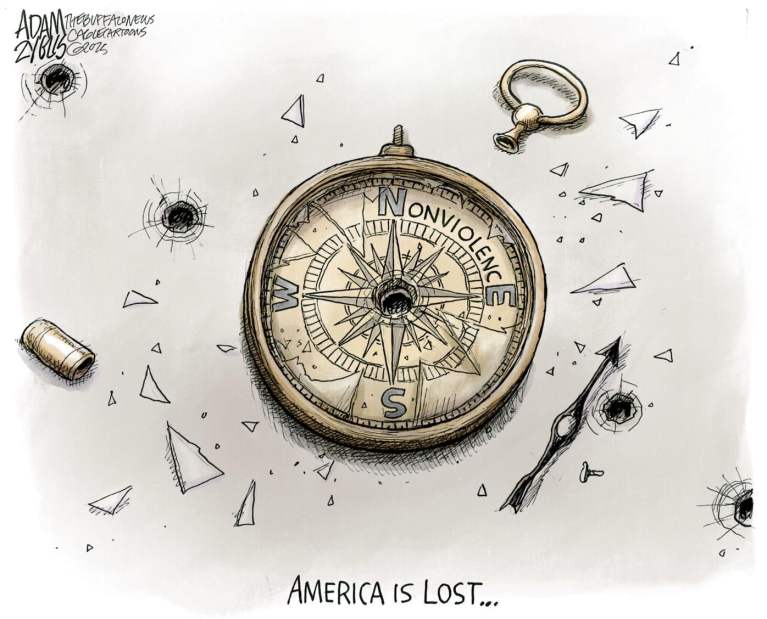
Language isn’t reality. Morality likewise is an overlay. Even rationality itself does not arise from the substrate. Mathematics is probably our best 1:1 analog to something objectively real, and even that breaks down at the edges of reality. It is important we work through until we find the substance of what matters.
We all have our reasons for what we do. It is often good from our perspective. But we have a perspective limited by our ability to accurately model the world based on what we know and extrapolate from that. Faulty information and assumptions will lead to bad reasoning and the suboptimal outcomes we wish to avoid. That’s what this essay is about—explanation of what is truly moral and sustainable.
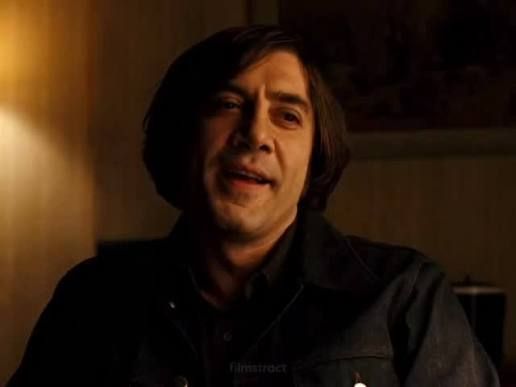
Moral reasoning is about human desire. It is an extension of our biology and part of an effort to survive—even thrive—in the environment we’re in. Morality is about a set of rules, and a good rule is one that produces optimal results. In the words of Anton Chigurh—a sort of force of nature and psychopathic antagonist featured in No Country for Old Men—mocking Carson Wells: “If the rule you followed brought you to this, of what use was the rule?”
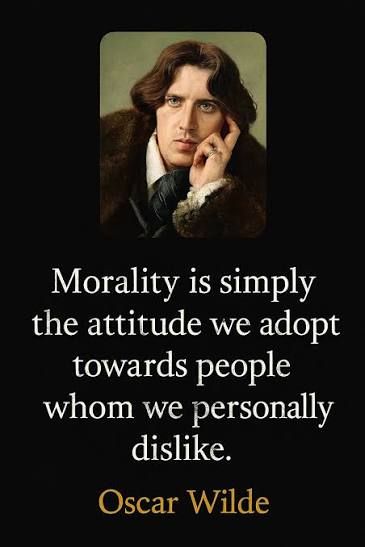
Morality doesn’t exist “out there” separated from human need. It is negotiated between us, like language, where we all have a say (to a point), along with culture and tradition (essentially our moral programming), in setting the standard. The “Golden Rule” works as a code because most people have the same natural aims that we do. Morality is about mutual benefit or the win-win situation. And this can break down at the edges, in zero-sum games or times when one believes they can get away with harming another and lacks a true conscience to stop them.
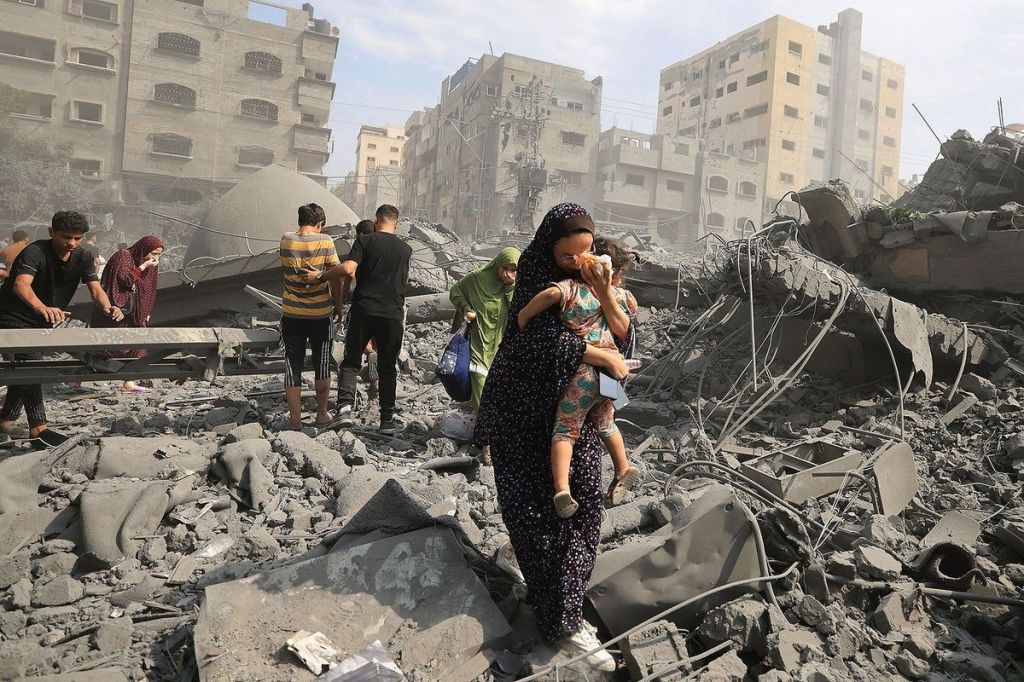
Disproportionate power and differences of language are fracture zones. Reciprocity, as a rule, generally only works with those who are at the same economic level or have a voice. The reason we don’t care about the Armenian genocide of 1915 to 1923 is that we were never told to care. Our morality only applies when we can identify with the other person and see them as an equal. Conflicts arise when we don’t consider what is good from the perspective of another person and they lack the means to stop us.
What is the reason for morality?
To protect ourselves by respecting the right of others to exist as we want to exist.
What causes violence?
- Low intelligence: If you don’t understand cause and effect or how what goes around comes around, then you’re more likely to do ‘bad’ things without ever fully considering the consequences. You want X, he stands in the way, so you murder him because you are strong enough to do it. This is the law of the jungle.
- Low exposure: It’s hard to fool me into thinking that other races are subhuman. I have met them in real life. People living around the world may see the U.S. as a nation of school shooters and OnlyFans girls based on what they know of us. But the reality is we’re just a nation obsessed with violence and immoral sexuality. And yet, seriously, ignorance isn’t bliss—it is a propagandist’s haven and what allows them to convince otherwise good people to kill people who don’t look exactly like them or speak their language.
- Low empathy: Some intelligent people are just psychopaths. They are part of the social contract (although they will pretend to be) and see their own needs as the only ones that are important. They can’t “walk a mile in another man’s shoes” without some innate ability to feel what other people feel and imagine their pain. Empathy is natural and also taught. Yet not all have the same capacity to show empathy or care. If you see other people the same as you do a fly, you won’t hesitate to exploit or kill them if there’s a low risk of consequences.
- Low trust: We can recognize that others are human, no different from us, and yet still choose to kill them. Why? Well, if there is a fear that others will do violence to us, there’s an option of preemption. It’s also why men kill the guy in the opposite trench in a war—it is me or him. If we see another person as a potential threat, there’s a primitive impulse to eliminate the other before they act. This is how war is sold to the masses: violence as an answer for uncertainty and anxiety over not knowing what they may do.
The problem with violence is that it creates a cycle of violence. And if it doesn’t do that, it still comes at a cost. To prevent this, we must get ahead of the causes. Education, diplomacy, and building relationships are an ounce of prevention worth a pound of cure. Sure, violence can be a winning strategy in the game. However, violence turns what is possibly a win-win scenario into a zero-sum game with unpredictable outcomes. It may be possible to exploit trust and murder your way to the top, yet eventually it catches up to you—eventually someone bigger, smarter, and nastier comes along.
The highest form of morality must therefore serve the ultimate good. A tribal morality, or one where only people like you gain, is risky. It means chaos and conflict. Whereas with a universal morality that serves all, there is a possibility of peace, harmony, or stability. This is why consistent non-violence is the intelligent option. Innocent people are hurt in war. Violence begets violence. So if we want to maximize our own chances or those of our loved ones, then we must respect the rights of all others. Apathy and indifference are not a choice either—we must be united in opposition to violence and abuse of others if we want others to care when it is our turn to face down true evil.
Only in the most extreme circumstances is it moral to use force. Self-defense, or one of the very narrow circumstances where there is no other reasonable option, is a possibly justified exception. Of course, not a “right to defend” that tramples the rights of other people. Unfortunately, we live in a world of propaganda where the most aggressive and disproportionate acts of revenge can be construed as defense—where unwanted words can be called violence. A clear standard can very soon be rationalized away to the point where defenders are made the aggressors while actually being the victims who are attacked.
This is the problem with any moral system we create. The overlay can be shifted, the language manipulated, and soon we end up back at square one fighting tribal wars over irrational fear of the other. This is why we cannot ever assume that our ideal is being transmitted perfectly in words. This is also the risk of making any exceptions.
Moral conscience must be built and passed on. We need to address the ignorance and show people how history is full of examples of unintended consequences. A war rarely goes as planned. We need to minimize the fear of the ‘other’ by encouraging positive interactions. Humanization is a natural byproduct of good relationships. It is past time to stop putting psychopaths in positions of power. We must resist those who manipulate us to fight wars for their financial or political gain.
We also need to equalize power so that all are represented and all are accountable. If we make some kings and others pawns—some “more equal” like the pigs in Animal Farm—it leads to endless conflict. Wealth inequality is a problem when it means that a few can buy their way out of morality. The Epstein-class—those who believe the law doesn’t apply to them as special people—will come to us in many forms when we let financial or political power concentrate into fewer hands. Morality is all about identifying with the other, and it is only possible when we are all at a similar level of status.
This is a Christian moral teaching:
Our desire is not that others might be relieved while you are hard pressed, but that there might be equality. At the present time your plenty will supply what they need, so that in turn their plenty will supply what you need. The goal is equality, as it is written: ‘The one who gathered much did not have too much, and the one who gathered little did not have too little.’
(2 Corinthians 8:13-15 NIV)
Morality is about considering others to be equal in value to ourselves. And that is easier when they basically are equal in terms of their social status and power. This is why the writers of the New Testament put so much emphasis on the elimination of special social status or favoritism. We are supposed to “submit to one another” rather than enforce our own advantage. We’re told God is impartial. We are told the greater should serve the lesser, to share “all in common” so none are ever in need. The Great Leveler (Galatians 3:28) is a confrontation of identity politics and only fighting for those like us.
It’s interesting how many people want the U.S. to be a Christian nation when it comes to their own sexual mores or religious customs, and yet don’t want to treat the foreigner as the native born (Leviticus 19:33-34) or love their ‘neighbor’ as Christ defined the term. They seek to accumulate power for themselves and impose rather than serve. This is false morality; it is just legalism and hypocrisy—forcing others to apply a morality we do not fully live out ourselves. Being truly moral is about what we consistently live, not merely what we claim about ourselves.
Which brings us to the final point. Morality needs to be consistent in logic and application. We can’t carve out exemptions or have double standards because it destabilizes the entire structure we’re standing on. Moral integrity is about rooting out our contradictions and being the same person in all circumstances. If you lie in one context, for example, eventually this habit is bound to bleed over into another. And if we enable our leaders to violate others, who (or what) will stop them from violating us? This is why we must battle against expediency math that violates consistent application of a moral rule. It is better to take the cost of maintaining these critical principles upon ourselves than risk their end.
Morality is an abstraction. A construct. But it is a very important one to get right. Good morality is about aim more than it is about perfection. And like driving when you look where you wish to go rather than at the edges.