
What Thomas Sowell (and Libertarians) Get Wrong About Trump’s Tariffs

Standard

The point of Trump’s tariffs is to get rid of all tariffs.  I can feel the blank stares of my ideological and indoctrinated friends who are hyperventilating about a blip in stock prices and loses for billionaires.  

I get it, Libertarians, you really do not want the government to do anything and Thomas Sowell said stuff about tariffs being bad, so in unison you bleat: “Tariffs are taxes!”

But your sloganeering is not argumentation and—while I generally believe less is more in the case of government—I’m stuck here in the real world with Trump.

Economic theory has it’s place, as do ideals, and yet this isn’t a matter of Sowell said it, I believe it, that settles it.  

Marxists also believe their man’s theory will work if properly applied.  Ideological people can’t accept when their theory doesn’t work in reality, they will always insist “that wasn’t true [insert ideology here]” and continue on their merry way muttering that next time it will work—if they could just brainwash more children and eliminate more enemies of the revolution.  There’s never a reevaluation in light of the actual evidence.
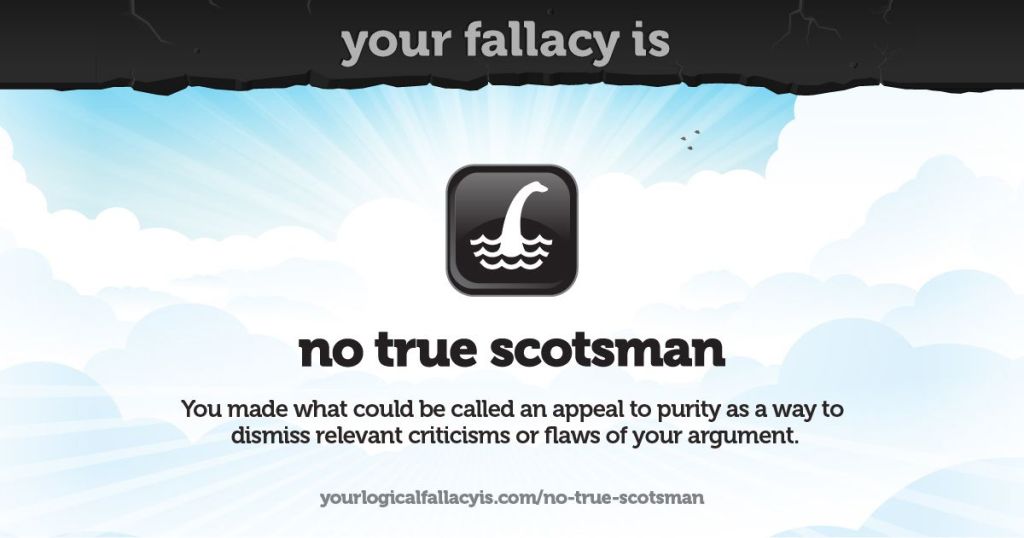
True X hasn’t been tried.

So, without further ado, let’s dive into where free trade fails and Thomas Sowell after we do that…

Can Hell Be Made Worse?

After the devastating earthquake of 2010, I joined a group of young people on a trip to Haiti.  It was a Christian mission and hosted by a Haitian pastor.  This grandfatherly man had, at one point, been in business and ran a factory manufacturing clothes.  

While I’m not going to make a case against charity or giving, there is often a cost that is unseen and a greater dependency created in the end.  The Haitian pastor was forced to shutter his operation and lay off all of his employees after the combination of cheap imports and donations made it impossible to compete in the marketplace.

But the even sadder story was in a place in the country called “little Africa” where rice farmers tried to make ends meet.  No, they were never rich.  However, they had scraped a living out of cultivation up until Bill Clinton started to dump subsidized American rice on the Haitian market.  These people were desperate.  They mobbed our delivery of a bit of relief and aid.

I know, I know, this isn’t real free trade.  But it is the kind of situation we are in.  Putting our favorite theories and fandom aside, and ideals that could possibly work if all abided by the same rules or assumptions, we don’t live in that fantasy land.  In the real world, it is like Haiti where subsidized products are exported and some will disproportionately suffer consequences.  

Yes, in theory, Haiti still benefits, as a whole, from importing cheap or free stuff.  But we can also make the argument that this kind of unfair trade has undermined a situation that was already fragile.  A government that would protect Haitian industries would not let subsidized products be dumped without something stabilizing in return.

Thomas Sowell vs Donald Trump 

Sowell is a great economist and provides a good answer to ‘progressive’ theories.  His being a guest on the Rush Limbaugh show has made him a favorite of conservatives—wanting validation for their free market and small government views.

As an academic, Sowell’s work dealt mostly with economic theory and to argue against all tariffs he uses abstraction “protectionism hurts market efficiency” and that they don’t solve issues like wealth gap, that they favor special interests, and retaliation against tariffs hurts exports, and they lead to long-term stagnation.  And he may be right if we lived in a vacuum sealed petri dish.

Trump, by contrast, lives in the very messy world of politics and negotiations.  He runs on instincts and intuition, not by intellectual exercises or writing papers or creating a set of principles.  He comes in with the big ask, the threat or the bluff, trying to disrupt and even create a bit of anxiety in the other side, before eventually bringing this process to a resolution that makes all parties leave with a feeling like they’ve won.

This is how we got from the “fire and fury” rhetoric—with the political class and corporate media hyperventilating about this being a path to war—to Trump being the first US President to set foot in North Korea and then shaking hand of Kim Jong Un.  It is just his method of changing the conversation or moving the Overton window.  You can’t get from point A to point B without shaking up the old status quo a bit.

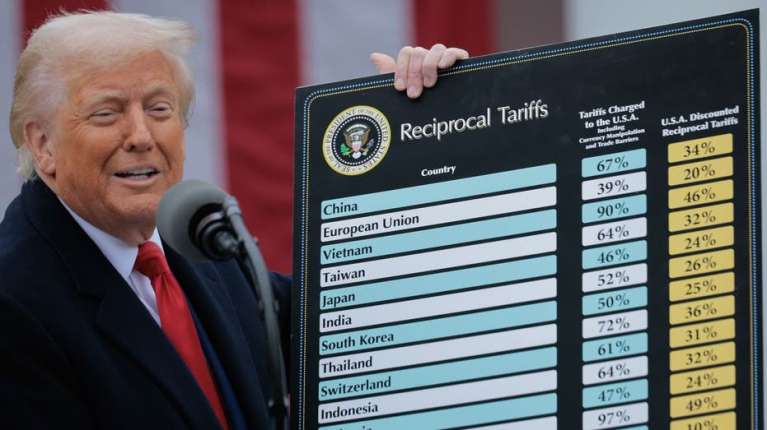
Trump isn’t ideological, like Sowell, or trying to live off a written in stone economic code of conduct.  No, when he has leverage, or sees an opportunity, he uses it.  There are many countries tariffing US goods.  And our trade deficit is enormous.  So why is it so out of line for our President to cry foul or use the threat of reciprocal tariffs in other to back these countries down and then get a better deal for his country?

Surely Sowell isn’t against pushing for the elimination of tariffs—which likely is the end game.  And, furthermore, Trump’s brazen actions are far more likely to get results than the fine professor’s best lecture on economics.  Already other countries are lining up to start talks about removing their unfair tariffs against the US.  It is a game of musical chairs and you don’t want to be the last one looking for a seat.

Power, Principles, and Persuasion 

Marxism is about the application of power, Libertarians are about strict adherence to a set of principles, but Trump is different.  He is about persuasion.

Marxism is a hammer—raw power of the mob, trying to smashing the old order to hand control to the workers, or so it claims. In reality, it’s a machine for centralization: seize the levers, dictate terms, and dress it up as justice. Think Soviet bread lines or Mao’s famines—equality morphing into control. Libertarians, by contrast, wield a rulebook, not a fist. Their creed—liberty, markets, entirely hands off—is sacred, rigid as stone. Tariffs? Sacrilege. Sowell represents this.  Marxism a power grab, and libertarianism a fortress of unattainable ideals—both are better to be left as theory rather than an approach to real world negotiations.

Marxism would’ve sparked a trade war, not talks; libertarianism would’ve let markets bleed out. Trump’s different—he’s making countries dance. China grumbles but hints at softening; the EU’s haggling too. Stocks have dipped, and Sowell’s costs loom, but the moves are now undeniable: Vietnam’s concessions, India’s play, Japan’s hustle. It’s not a system winning—it’s Trump, raw and loud, proving persuasion trumps power or principle. He’s bending the world his way, one bluff at a time.  He is about persuasion—messy, unscripted, a vibe that bends the room.  

Tariffs are the threat, but trade that is truly free and fair is the actual goal.  And Trump is further along in achieving this simply for his boldness alone.  Maybe he’s not doing it the ‘right’ way or by conventional means, yet who says that we can’t try a new approach to get some better results than we’ve been getting?  The people who have been leaving the American worker behind tot decades now?  As my 13-year-old son would say: Let him cook!

Do you believe, I mean do you truly?

Standard

image

Say we happened upon a rickety looking bridge over a deep canyon.  If I were to claim that the bridge was structurally sound, then urged you to test my claim and yet would not set foot on it, would you?

Many people claim to believe in God and say they believe what the Bible says is absolutely true, but few seem to live it.  It is one thing say faith makes all things possible (Mark 9:23) and quite another to live that as a reality.

I have heard all the excuses for those who claim faith while living a life that requires none.  Some accuse those who ask of making demands of God, they justify their own practical agnosticism as modesty and then hide behind God’s will as an excuse to live faithlessly.

Faith Means Investment and Action

When you do not believe that something can happen you will not act to make it a reality. Unbelief wears many disguises and one of them is a fear of God that results in inaction. It was not faith that condemned the man who did not invest his abilities and then blamed the harshness of his master:

“Then the man who had received one bag of gold came. ‘Master,’ he said, ‘I knew that you are a hard man, harvesting where you have not sown and gathering where you have not scattered seed.  So I was afraid and went out and hid your gold in the ground. See, here is what belongs to you.”  (Matthew 25:24-25 NIV)

It is not faith that causes a person to bury their abilities to intervene, but it is slothfulness, a distorted idea about God and fear. Not asking for anything from God is not humility, it is an excuse to sit on our hands rather than be a fulfillment of God’s will and a lack of belief in the power of God.

In the Bible commitment is a first step towards an answer to prayer or need. Our commitment is often nothing more than a symbolic act like dipping in a river, touching a hem or giving what little we have, nevertheless it is necessary:

“Here is a boy with five small barley loaves and two small fish, but how far will they go among so many?”  (John 6:9 NIV)

It did not take a rocket scientist to understand a few small loaves and a couple fish could not feed thousands of people.  The disciples, if they had calculators, would probably have whipped them out and tried to explain to Jesus why his plan was an impossibility. They were incredulous.

But, had the disciples refused to participate in the distribution of fishes and loaves, had they demanded a sign from heaven before starting, would they have seen a miracle that day? 

No. Probably not.

It does not require faith in God to participate in things we can completely understand.  It takes faith to invest fully in something that we do not understand and seems impossible from our own perspective.  Faith is believing and investing fully despite not understanding how our own contribution will help.

Faith Is Asking Boldly Without Fear

It is not faith that keeps us from asking boldly, it is fear.  It is not humility either, but is pride in our own ability to sustain ourselves and doubt of God’s ability to do the impossible.  We do not ask because we do not believe in a God who loves us enough to intervene on our behalf or we do not believe in God at all.  It is fear that the promises and assurances of Jesus are lies:

“Jesus replied, “Truly I tell you, if you have faith and do not doubt, not only can you do what was done to the fig tree, but also you can say to this mountain, ‘Go, throw yourself into the sea,’ and it will be done.  If you believe, you will receive whatever you ask for in prayer.”  (Matthew 21:21-22 NIV)

Promise #1 — God can do the impossible by our own logic or reasoning and will do the impossible for those who have faith.

“Ask and it will be given to you; seek and you will find; knock and the door will be opened to you.  For everyone who asks receives; the one who seeks finds; and to the one who knocks, the door will be opened.  “Which of you, if your son asks for bread, will give him a stone?  Or if he asks for a fish, will give him a snake?  If you, then, though you are evil, know how to give good gifts to your children, how much more will your Father in heaven give good gifts to those who ask him!”  (Matthew 7:7-11 NIV)

Promise #2 — God gives to those who show persistence and trust in His goodness rather relying on their own understanding.

“Then Jesus told his disciples a parable to show them that they should always pray and not give up. He said: “In a certain town there was a judge who neither feared God nor cared what people thought.  And there was a widow in that town who kept coming to him with the plea, ‘Grant me justice against my adversary.’  “For some time he refused. But finally he said to himself, ‘Even though I don’t fear God or care what people think,  yet because this widow keeps bothering me, I will see that she gets justice, so that she won’t eventually come and attack me!’”  And the Lord said, “Listen to what the unjust judge says.  And will not God bring about justice for his chosen ones, who cry out to him day and night? Will he keep putting them off?  I tell you, he will see that they get justice, and quickly. However, when the Son of Man comes, will he find faith on the earth?”  (Luke 18:1-8 NIV)

Will Jesus find the faith of that widow woman who refused to quit in you?

We can rationalize our lack of faith and even claim it is virtue.  We can claim that we do not believe God would want to be bothered and accept what is as faithless fatalists.  Or we can believe the words of Jesus are true, we can believe all things are truly possible with God and live with the confidence that God will bless our persistence:

“Let us then approach God’s throne of grace with confidence, so that we may receive mercy and find grace to help us in our time of need.”  (Hebrews 4:16 NIV)

Love Truly, Invest Big and Pray Bigger

With faith we invest.  When we invest fully, we love fully and act in love rather than hold back in doubt or fear.  There are many things that would not require a miracle to be possible if we were actually committed to a love that invests. Many more things that would be made possible if we loved as we ought.

“There is no fear in love. But perfect love drives out fear, because fear has to do with punishment. The one who fears is not made perfect in love.”  (1 John 4:18 NIV)

A faithful life is an active and bold life.  A person who believes is not passive or ashamed to ask for what they need. Love is not fearful, love is faithful and bold.  Faith is not tentative, faith is tenacious and proactive.  We cannot expect God to answer if we aren’t willing to act ourselves and be an answer to prayer for those around us.

If you believe Scripture is trustworthy then live it.  If you believe God is big, then pray big, invest big and put your money where your mouth is. Do not hide behind a false notion of God’s sovereignty as a way to avoid having to invest and persist. God is not honored in our rationalizations or excuses.

Faith is taking the first step over the canyon and trusting the bridge to hold.