
What is clothing for?
Why do we put fabric all over our bodies—why not be naked?
For protection.
We wear clothes for a layer of protection against the elements.
Clothing helps us keep our body heat in the cold air. It is a barrier against harmful solar radiation. This invention allows us fragile creatures to navigate harsh environments that would kill us otherwise.
We also wear clothes as a matter of public health. This covering is beneficial from a sanitation perspective and for keeping all of our disease spreading bodily fluids off of shared surfaces.
There is a significant social component or function as well. Having the ‘right’ clothes matters if you want to fit in. It could be a religious group you wish to belong to or just the popular kids at school—but you will be judged by the outfits you wear.
My son, for example, found out the pair of sneakers (bought with his money) weren’t cool because they weren’t some recognized name brand. Agree or not, I know there’s no point in fighting this pressure to conform. If a kid does not want to be ridiculed they will wear the currently acceptable style.
Even those counter-cultural types are just responding to this pressure by going in an opposite—yet as completely predictable—direction. From Hipsters who all looked the same trying to be different to the Goth kids with their own uniform that is stricter than the typical and mainline dress regime—all are obeying a rule.




Dress is a part of group identity—a way to belong to a group. Amish will know other Amish in the same way gang members or police officers recognize each other. It is by wearing the correct colors, or following the correct patterns, that an individual gains the necessary recognition to gain the benefit and protection of a community. Sure, we may not always like it, we might see this as being superficial, but clothing sends signals that can either make us more vulnerable or more safe.
Conservatives have long valued modesty over inviting attention. This is something developed from tradition. But not tradition without any practical purpose or merit. My wife, from a place where the government is a bit weaker, told me never to display any signs of wealth as this would make me into a target. And I could certainly protest the recommendation as an infringement on my freedom—that I am American, with rights, and can therefore will do whatever I please! However, that belief won’t save me from a mugger in a back alley, will it?
Modesty is about protection. It is about keeping hungry eyes off of those assets we don’t plan on giving away. No, that does not mean our immodesty justifies assault, theft or rape. It also does not mean our modesty is a foolproof protection. Rather, it is sort of like N95 masks and Covid, this is only one part of a larger strategy that is designed to minimize a particular risk rather than fully eliminate it.
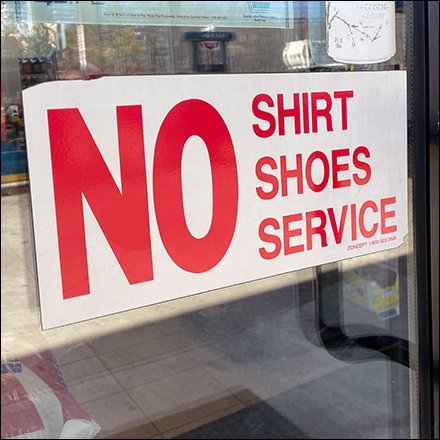
It is sometimes a matter of public decency and respect for others. If there’s a sign on the door of a business: “no shirt, no shoes, no service” Why make a scene?
We should understand—as conservative people—that this public space comes with a set of public expectations and should probably comply without causing drama.
There was a time—and not very long ago—for the reasons outlined above, a woman wouldn’t leave the house without a proper dress, blouse and bonnet. Both men and women covered up, to be prepared for an environment that was harsh and only the insane did otherwise. Clothing was part of being civilized and a value of modesty tied very intimately to Christian religion and the Biblical standard.
Wolves in Sheep’s Skin
Some clothing is dishonest.
A disguise.
In order to gain acceptance and trust (going back to group identity and belonging) some will wear a costume of something they do not represent to gain trust And the “wolves in sheep’s skin” have infiltrated every conservative institution in this nation and turned them into a propaganda tool of godless empire.
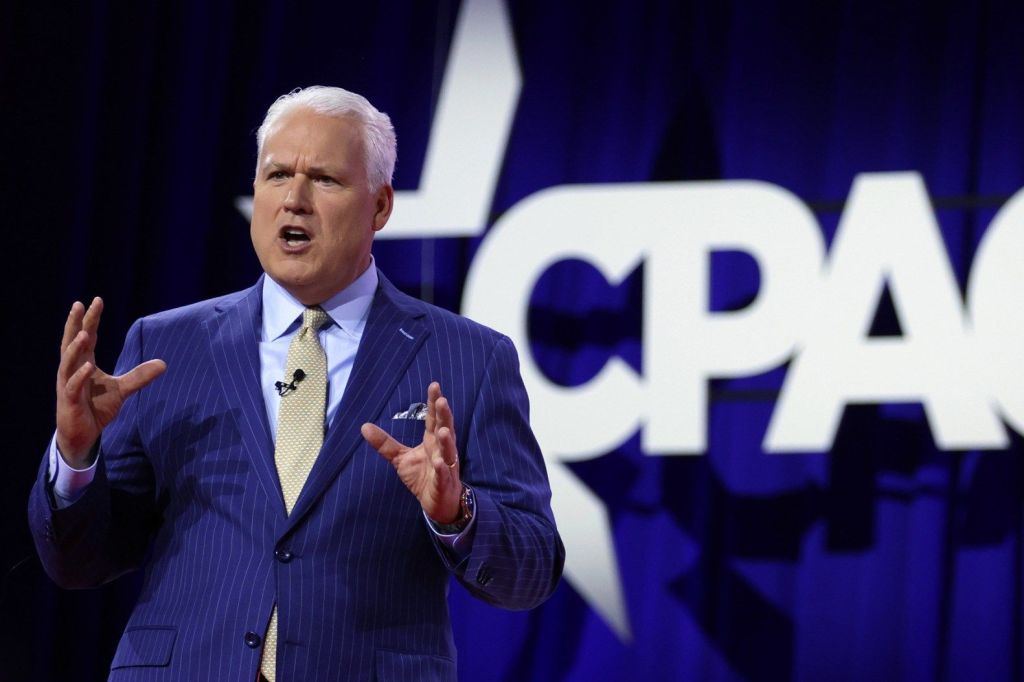
Take Matt Schlapp, for example, the present chairman of American Conservative Union—also the first ever paid chair of Conservative Political Action Committee (CPAC) where he received a modest $600,000 in annual compensation—and an additional $175,000 for his wife on top of that. All while he has faced multiple allegations of groping men when he’s out drinking. One of the accusers—who had publicly apologized for the “misunderstanding”—was also quietly paid off (by a insurance company that represents ACU) to the tune of $480,000! More recently he got a little too touchy-feely with men at a Virginia bar. This is your conservative leadership.
Schlapp, speaking recently on Piers Morgan Uncensored, attempted to justify the killing of 175 elementary school girls in southern Iran—reasoning that they were saved from religious extremism:
Beinart: “We know that if the U.S. and Israel had not attacked a country that poses no serious threat to them—Israel has hundreds of nuclear weapons, America has thousands—that those girls would be alive…”
Schlapp: “They’d be alive in a burqa … this is … a barbaric society…”
Morgan: “hang on.”
[The conversation continues…]
Schlapp: “It’s hypocritical to say that these attacks harmed women and children when those women and children, the young girls that you reference, would be … live a life in a barbaric, unequal society behind a burqa, with no ability to make career choices…”
Uygur: “So just kill them?”
Schlapp: “No, that’s not what I’m saying either…”
Uygur: “That is what you said…”
While Schlapp apologists will claim that their accused man-groping ‘conservative’ was not actually saying what he seemed to be saying—it is abundantly clear that this was trying very hard to minimize a horrific slaughter.
Where do you even start?
Schlapp is directing his appeal to people who hate feminism and yet desperately want to get one over on their evil ‘liberal’ women by their disingenuously siding against ‘the patriarchy’ to justify murder? Either that or he’s a closeted leftist who hates women and religion so much that ridding the world of a school full of youngsters indoctrinated to believe that his unconsenting grabs of male parts is a sin feels right to him?
I won’t pretend to know what goes on in the twisted moral rot of this man’s mind, but as one who is friends with traditional women (Christian and Muslims) who do wear a veil his take is appalling. It would be equivalent to a feminist saying—“Well, at least those Amish girls killed at Nickel Mines will be spared a life of oppression speaking PA Dutch, getting married and working around the house!” What total horse shit. Women are as happy in traditional cultures are they are in any other—maybe even happier—the “happiness paradox” refers to the increase in female financial independence which has corresponded directly with decrease in happiness.
Sure, Schlapp does not come right out and say they’re better off dead. But what is he saying? What is he implying?
There this insane level of arrogance, which is reflected in Schlapp’s statement, of these people just assume that people who do not look exactly like them—share their cultural values, religious traditions or political perspectives—are better off dead. It is just plain bigoted nonsense.
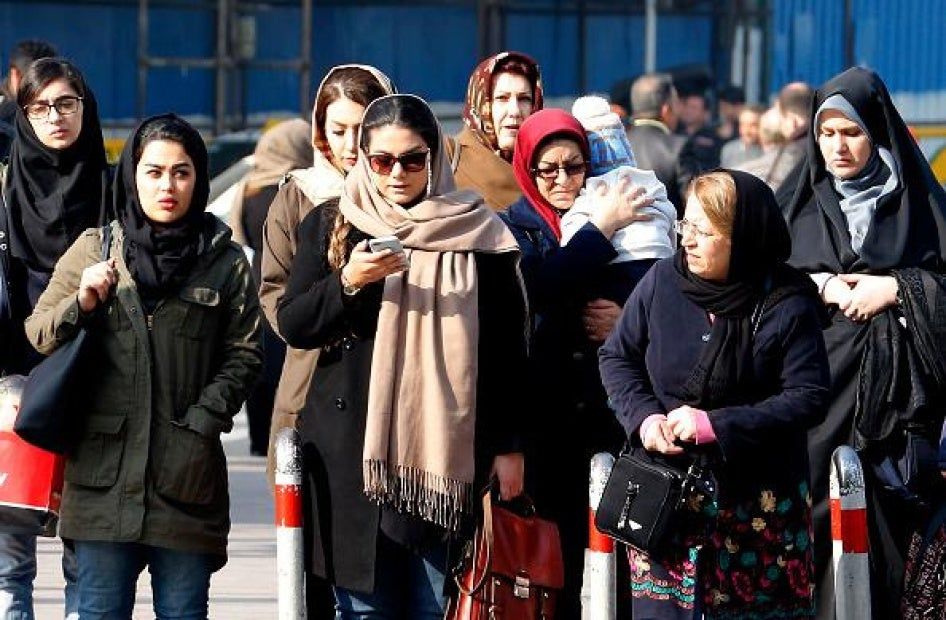
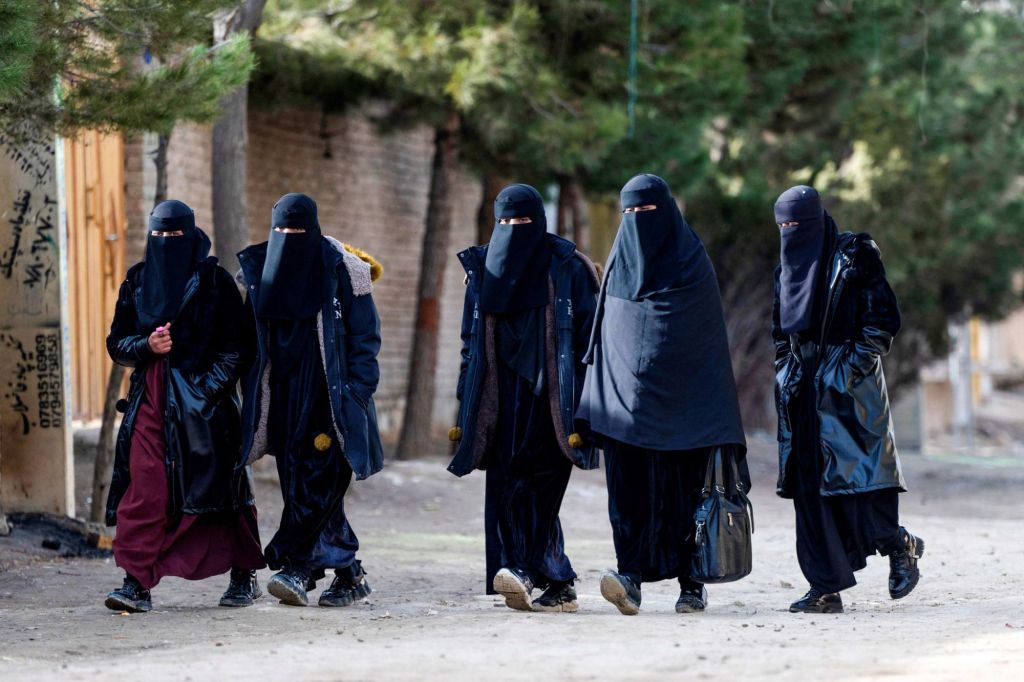
Furthermore, showing his ignorance, Iranian women don’t wear the burqa. They wear a hijab. It’s a detail that likely doesn’t matter to his MAGA target audience. And yet this is a huge difference. The burqa covers an entire face, it is more common with Sunnis (Saudi Arabia), and not required by Iranian law. The hijab, by contrast, doesn’t cover a face, it is a hair covering that is very similar to what Christian women wore for centuries before the society liberalized. Sure, maybe it shouldn’t be mandated, but it’s as Biblical as the Ten Commandments:
Every man who prays or prophesies with his head covered dishonors his head. But every woman who prays or prophesies with her head uncovered dishonors her head—it is the same as having her head shaved. For if a woman does not cover her head, she might as well have her hair cut off; but if it is a disgrace for a woman to have her hair cut off or her head shaved, then she should cover her head.
(1 Corinthians 11:4-6 NIV)
Incidentally, it is this passage above which makes it so strange that so many ‘Christian’ (Zionist) Presidents and public officials will wear a hat while praying and kissing a wall—deliberately dishonoring Christ. But more to the point, is this a “barbaric” practice? Is religious headgear, a Nun’s habit, some kind of terrible evil which totally excuses blowing up an elementary school?
Or is there something else going on here?


I’m going with something else. Schlapp is a neo-con grifter. A warlike and lying sexual deviant who will proclaim American values then fights for a nation that sodomizes their detainees, without consequences, now seeks to execute the people they oppress, and then calls those who oppose this “barbaric.” A society that drives it’s own abused daughters to suicide. The same people vigorously defend bombing of schools, hospitals, residential areas, the killing scores of children and civilians, then claims that the war about the liberation of women?
This is as much moral inversion as anything from the ‘woke’ left. We kill to save?
Furthermore, for all this talk about career choice, Iran graduates a significantly higher percentage of females in STEM fields than Israel or the US. So, in response to that part of Schlapp’s absurd statement: What are the career choices Iranian women are currently unable to make? Is he talking about OnlyFans?


If we’re such great defenders of feminity, so much so that we can dictate to sovereign states what standards of decency they can or cannot have, why haven’t there been any Epstein client arrests?
Phony Fat Cracker Barrel Conservatives
The Schlapp types, neo-con Zionists, aren’t conservative at all. Sure, they always wrap themselves in Christian identity, but they’re not peacemakers, they feed prejudices and promote endless war that has cost trillions of dollars as well as millions of lives around the world. They will fein concern for Iranian rights in one breath then promote bombing the country into oblivion in the next.
They exploit jingoistic sentiment in the beer gut football crowd who (in their lack of Christian character) confuse toughness and masculinity with excessive violence. Every problem is solved with a gun or a bomb for them. This phony ‘conservativism’ of these war-mongering empire building neo-cons is antithetical to Christianity—it is anti-Christ and one part of their Epstein-class campaign to dismantle American values.
The Republican elites are as totally opposed to traditional American values as the Democrats—they just need our conservative votes.
The Cracker Barrel conservatives—people who get riled up over a change in corporate kitsch—enable these cultural vandals. The religious right talks incessantly about every tempest in a teapot controversy and then go mute when the Trump administration has worked overtime to protect billionaire pedophiles. These are the type that Jesus had called out for their straining on gnats and swallowing camels. They have no principles other than vote for the ‘red’ team on election day because we can’t let ‘blue’ team ‘liberals’ win—they imagine themselves as defenders of Western civilization yet will put their weight behind an oppressive regime if it is dressed right according to their own partisan fashion.
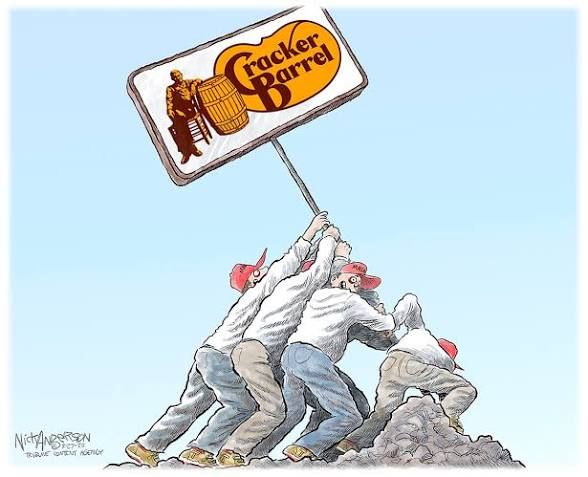
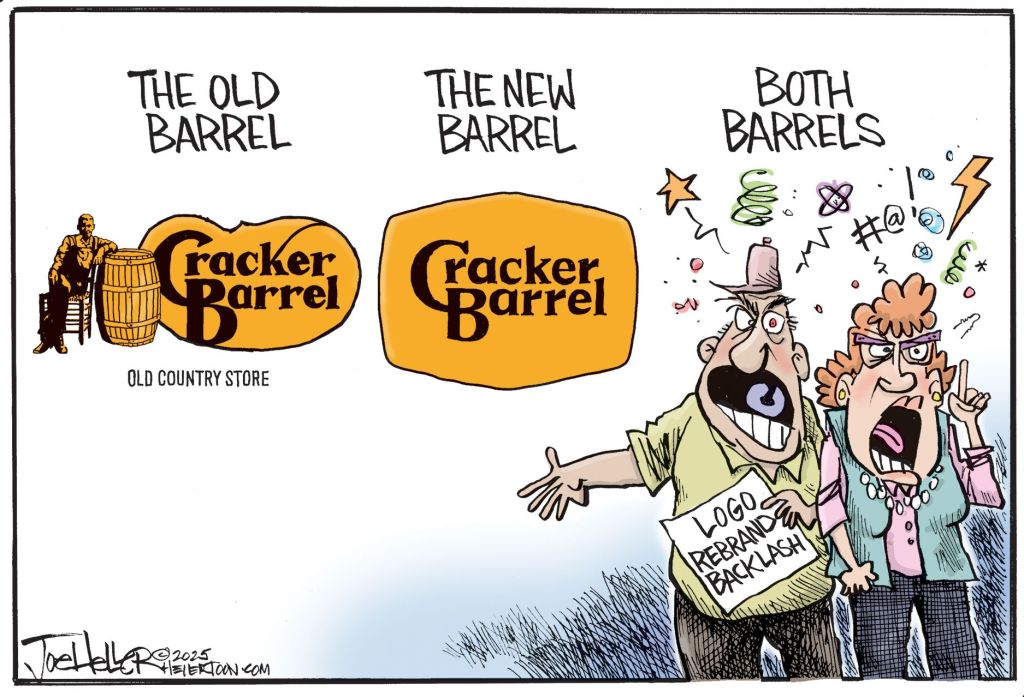
They side against our own dissidents, make fun of Renee Good who was killed by ICE agents shouting conflicting orders, say Alex Pretti deserved getting shot in the back for being a guy who intervened when a woman was being assaulted, and then suddenly do a complete reversal to express moral outrage when Saleh Mohammadi, 19, was executed after a trial for murder of two police officers. The same people who can justify the deaths of 175 innocent children as “part of war,” are siding with an accused and convicted cop killer? What a mindless propaganda-blinded and flip-flopping lot—we’re living in a scene from 1984.


Trump wrapping himself in a flag (literally) is all it took. All he needs to do is hold up a Bible, hand out a few signed copies of the Bible for the MAGA faithful, and suddenly he’s the next thing to Jesus in the Evangeli-con pantheon. His aggression becomes integrity, his lewdness honesty, and arrogance a virtue. And he is aware, see how Trump described the cult’s devotion during the run up to his first term: “I could stand in the middle of Fifth Avenue and shoot somebody, and I wouldn’t lose any voters, OK?”
Trump is a manifestation of cultural rot, we celebrate immodesty and excess. The book of Philippians describes some who profess faith as the “enemies of the cross of Christ” (3:18) and proceeds to warn, “Their destiny is destruction, their god is their stomach, and their glory is in their shame” and “their mind is set on earthly things.” And this is our American consumerism. We see ourselves as the heroes, as representing freedom and democracy, when we’re really Egypt and Sodom (oppressor and corruption) cloaked in a pretense of righteousness.
We could use a bit of modesty. A moment of introspection and self-awareness.
Reclaiming American Christian Values
The U.S. has never been the “shining city on the hill” envisioned in John Winthrop’s 1630 sermon and highlighted by Ronald Reagan.

Moral excellence is certainly a great goal even if we fall short. However, it is an aim which requires repentance. There are many things for this American nation should want to turn from. The ethnic cleansing of native populations, the institution of slavery, many wars of aggression and expansion—there is no purity here.
The U.S. has, if anything been exceptionally violent—from massacres in North America to the brutal occupation of the Philippines to the millions killed across the world as a result of aggressive policies—this country has never ceased in wars for control over resources. This conquest, sold to the public as some kind of moral mission or “Manifest Destiny,” was to conceal greed and a desire for things not ours to have.

There is no special American exception to the Christian requirement that all repent of their sins. That’s a starting point to the U.S. being great. To be truly great the goal is not to turn back the past mistakes, but turning away from them.
We should consider both bad and good examples from the past as a basis for improvement in the present.
This takes humility, not hubris.
The sin at the root of all moral pretense and posturing is pride—the very first sin, the one that changed Lucifer from God’s second in command into the father of lies. Pride tells us our culture, our politics, and our ways are just superior. Pride is what lets us dress up in sheep’s clothing of “conservative values” while living like wolves. Pride is what lets Matt Schlapp (or any of the other neo-con grifters) lecture on liberation while his own hands grope men in the dark and his mouth justifies the slaughter of schoolgirls. Pride is what lets the Cracker Barrel crowd wave a Bible one minute—rant against abortion, feminism, wokeism—only to cheer endless war and merciless bombings in the next, ignoring the plank in their own eye.
Christian conservatism worthy of the name begins with the opposite of pride: humility. It begins with the recognition that we are not owed respect—we must show it first. Just as modesty in clothing is not about shame but about protecting what is sacred, a respect of what is God’s, so too is respect in every other sphere. You do not demand entrance to another man’s house, another nation’s culture, or another woman’s dignity by force. Traditional modest dress of the past was never “oppression.” It was armor. It was just a public declaration: “I belong to something higher than my appetites. I will respect and you will respect me.”
The same principle applies to foreign policy, to political leadership, to every claim of “American exceptionalism.” An authentic conservatism does not bomb a school to “free” the girls inside it. It does not wrap imperial greed in the language of feminism or democracy. It does not make demands with threats of violence. Rather it says, with the Apostle Paul, “Let your gentleness be evident to all” (Phil 4:5) and “If it is possible, as far as it depends on you, live at peace with everyone” (Rom 12:18).
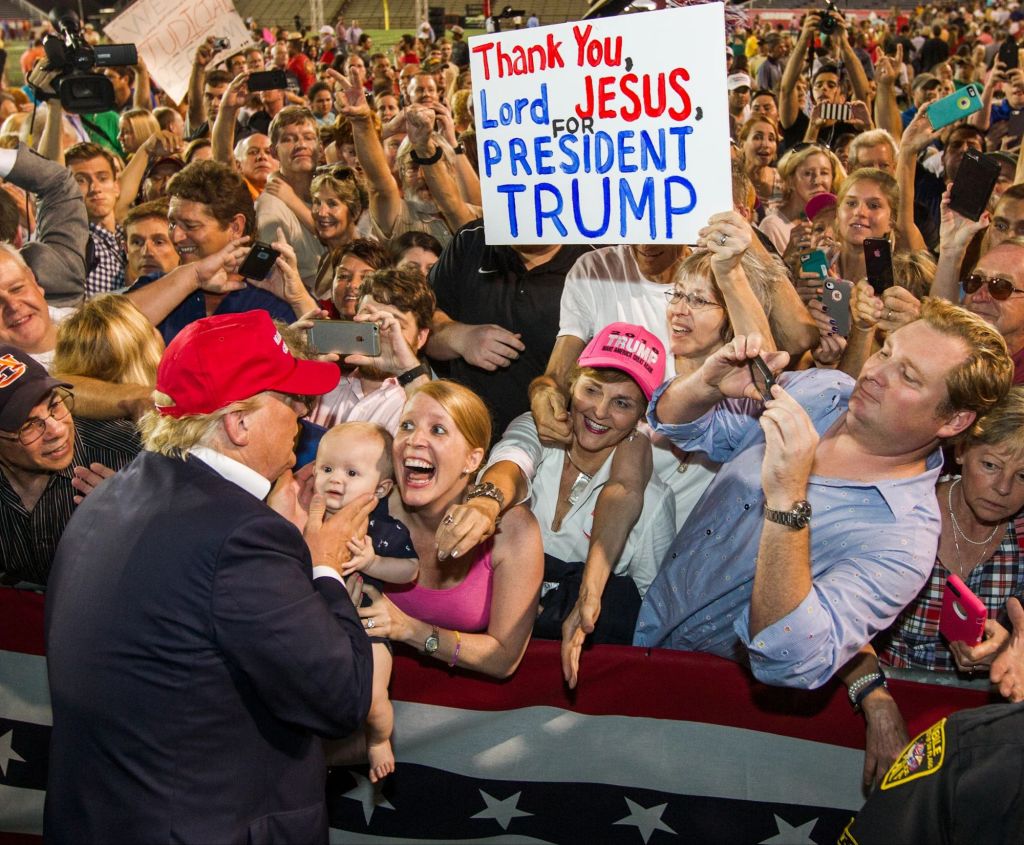
Principled Christian conservatism is not a costume. It is not red hats, Cracker Barrel nostalgia, or trillion-dollar defense contracts dressed up as patriotism. It is living a life of repentance. It is about mutual respect. It is the refusal to celebrate pride in any form—whether of immodesty, the aggressive “grab ’em by the pussy” arrogance of entitled men or just indifference about how our actions impact others. It is discipline of protecting what should be protected and also refusing to sacrifice our values for expediency.
If we want to belong to the Body of Christ then we must wear the right uniform code: humility, not hubris; respect, not ridicule; modesty, not exceptionalism. We must stop pretending America is already righteous or beyond reproach and start acting humbly like the sinners we are. Only then will we ever regain the respect we have lost. Only then will our clothing—literal and spiritual—actually protect instead of provoke.

Let the attire of our attitude preach truth: we are fragile, we are fallen, and the only safety worth having comes from walking in fear of the Lord, not by military might. That is the conservatism worth conserving—the repentance that can make us an example in the world and is the actual foundational basis of Christian civilization.
Schlapp says that Iran is a “barbaric culture” for dress standards different from our own and that bombing them is about defense of civilization. But a principled conservative is about consistent rules, true impartiality and no favoritism. It doesn’t decide if cop killers (or killer cops) are heroes or an attack on us all according to political needs. A civilized person seeks coherence and harmony, not unpredictability, brutality and dominance. It prefers local control and respects sovereign space of others. It gains a position through competency, not by trickery and deception, nor by threats and coercion.
Christian civilization rejects use of violence and notions of blood guilt. All must clothe themselves in the righteousness of Jesus—a clothing that we put on through Baptism, not our birth or bloodline:
For ye are all the children of God by faith in Christ Jesus. For as many of you as have been baptized into Christ have put on Christ. There is neither Jew nor Greek, there is neither bond nor free, there is neither male nor female: for ye are all one in Christ Jesus. And if ye be Christ’s, then are ye Abraham’s seed, and heirs according to the promise.
(Galatians 3:26-29 KJV)
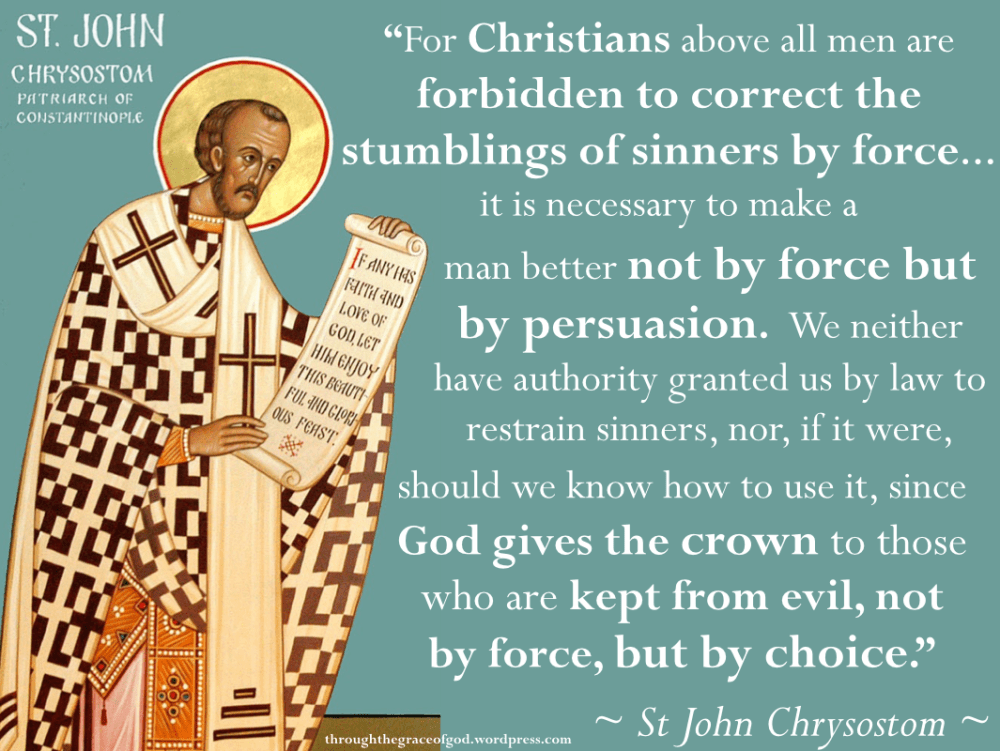
We replace lying with truth, maliciousness with kindness, fury with forgiveness, theft with generosity and are told “to put on the new self” and with this to be “created to be like God in true righteousness and holiness” (Eph 4:22–32, Col 3:5–14) John Chrysostom (c. AD 347—407) described this putting on of Christ as “never to be forsaken of Him, and His always being seen in us through our holiness, through our gentleness”
We must reject the perversion of those who promote moral inversion where killing is an act of liberation and a society where more women graduate with STEM degrees called “barbaric” by the Epstein-class.
Schlapp’s depraved reasoning is a symptom of arrogance, not righteousness. If Jesus is our Lord, then we should be clothed in humility and a gentle example rather than a force of fury or violence.
The militarism of neo-cons is not the armor of God—it is a false protection—we need the attitude of repentance.
************************
Postscript: The point of this essay isn’t to defend the Islamic Republic of Iran. I have no doubts about it being a very brutal and intolerant regime. I also don’t write this as a strong advocate of modesty standards. But only to promote introspection about what we excuse and condemn. In one breath we are outraged by an execution in Iran, in the next we ignore the bombing of children in Gaza, Lebanon, and Iran. The same people who decry liberalism in the West celebrate the leftists in the East. This isn’t only about other people. This is also about me. After warning about Trump in 2014, I voted for the narcissist three times. He promised he would drain the swamp, to end the forever wars, and release the Epstein files. It was when he tried to gaslight about continued interest in Epstein that I realized I had been had. What I will say in my defense is that it wouldn’t be much improvement to vote for team blue. Kamala Harris couldn’t think of anything she would have done differently than Joe Biden. She shushed those trying to bring attention to the Gaza genocide and the Democrat party establishment has been as warlike as the Republicans despite their constituents. I must concede that we will not vote ourselves out of this. Society must change. True devotion to the base Christian principles—where Jesus is way more than a bobblehead on the dashboard of empire. If we want to change the world we need to lead by example rather than by force. The people of the world easily see through our facade, our oblivious talk of freedom and democracy, they see Egypt and Sodom.







 Irregular Ideation