
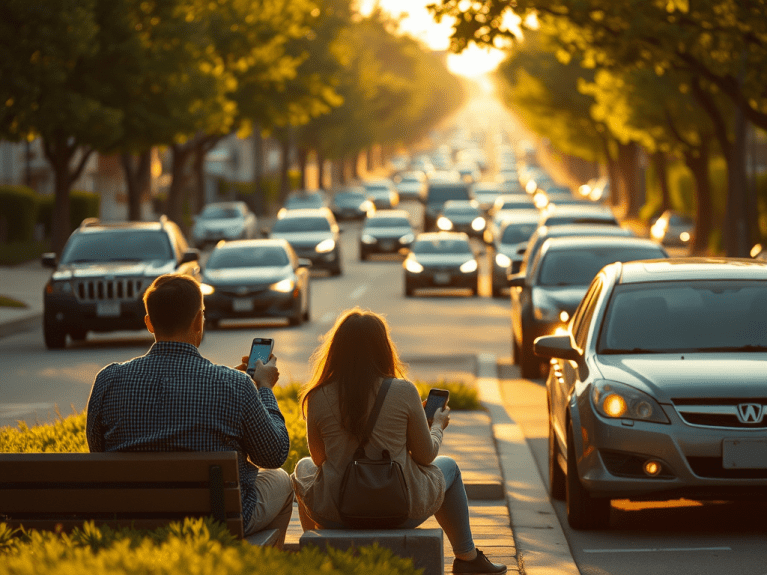
We love technology because it makes our life easier. Machines do the back-breaking labor that once took an army of men, we all get more as a result, travel between places is a matter of gassing up the car and going rather than a perilous ordeal. In general social media platforms and online retailers reduce friction. That is to say, they facilitate an interaction at a much lower cost of time and effort. Why go shopping or hang out at the mall when you can sit on the couch?
That was a key revelation this week: Snapchat and TikTok have taken the place of roaming the corridors of what was once a retail Mecca. Entertainment is as simple as picking up your smartphone and finding out what Mr Beast is doing. He’s so much cooler than even the cool kids at school, so why even bother to see what they’re doing? It is too hard to make plans with friends, to get dolled up, to drive ten miles and walk on your feet when you feel as if you can get the same reward wearing your underwear at home in your bedroom.
More are living in a fantasy of life, following a path of least resistance, and not realizing the full cost. Social media is to the community what pornography is to sex. Sure, you have escaped the grip of boredom. That desire for interaction has been gratified. It is even more sterile and safe. That pretty girl won’t reject you here in virtual reality, she doesn’t compare to what is available at your fingertips anyways, so why be treated as second rate by what is second rate? We escape our limitations with our imagination.
However, it all comes at a cost, much of this cost is hidden or deferred. The cost is that we don’t accomplish what we could—in the real world—by our reliance on a meaningless space where nothing of value is accomplished.
Our convenience-seeking way is a form of depravity, that is to say, it is trading current pleasure for future pain. If we don’t get any physical exercise, for example, because the machines do all the work for us, we will lose our muscle mass and gain weight. Cuts in calories and gym time can counter this, but there must be proper sacrifices, or diabetes and quality of life decline will follow. Why not walk rather than ride in a vehicle? The exercise would do us good.
Oh, you don’t live in town?
Everywhere you need to go requires a drive?
The suburban sprawl and development built around the automobile have led to an increasingly dependent lifestyle. And that is not a typo. Our convenient mode of travel has made it easier to close a distance; we don’t need to live next to our sources of food, employment, or social interaction. Yet, as a result, everything is now more distant, and this is how we end up commuting forty minutes to work rather than spending the day in our own neighborhood. We can be everywhere all at once and are scattered to the wind because of this.
This is true regarding schools. Even after the one-room schoolhouse had gone away the schools were within talking distance in my hometown. But now nearly every child is either bussed or dropped off since all of the schools are part of the sprawl. It just amazes me, that in an age where we’re worried about sustainability and subsidizing EVs for a marginal reduction in carbon emissions, we are still—as a public policy—developing our communities in the direction of more dependency rather than less.
A smartphone feels so secure in our hands, so intimate, and yet will divulge our secrets (without our knowledge) to anyone with resources. For all we know it is a bomb waiting to explode given we are only the end user of the device and have no idea of its inner workings—let alone who had hands on it before it came to us. And simultaneously, while vulnerable to every nefarious actor that exists, we’re more isolated when it all goes down. Suddenly, in North Carolina, after the flooding, they can’t do business without cold hard cash.
One cost of convenience is dependency on long supply chains. Even those face-to-face transactions often involve third parties who skim a bit for themselves. We empower the global corporate conglomerates and are always at the expense of local control. Could your community survive without trucked-in food and consumer goods? How far would you need to walk for basic needs if the electric power went out or tankers stopped bringing in fuel? A century or two ago most people could find enough to eat simply stepping into their own backyard.
Sure, having a big garden and animals is inconvenient day to day, but it is much more sustainable. Our cars and phones make it easier to travel, but they also have put us in a bubble. As in, not being 100% present even to our own family beside us, where we drive past each other in a metal shell at 70 mph and never meet the people who supply our needs. We feel sophisticated because of the gadgets in our hands, when in reality an Amish man living a century ago had life figured out better than we do.
Given what we’re discovering about microplastics, the Amish were right even in their rejection of rubber tires. Why? Well, it isn’t because they had special knowledge. No, in simply rejecting most new technology they also avoid the unintended consequences as well. This disposition to be wary of what is generally accepted as improvement, asking what it will take away from the community and our humanity, is good. It is moral to take a little time to consider the long-term costs of our technology decisions.
As soon as we embraced technology that we could not manufacture or sustain by ourselves we became vulnerable. Humanity suffers as we look to technology. Sure, the benefits of innovation also can’t be ignored or downplayed. But we must always be as aware of the downside and, therefore, have an intentional approach when adopting the next new device. There is always a price to be paid for convenience. We need to do the hard work, to help rebuild those strong local communities and foster robust humanity.

 Irregular Ideation