
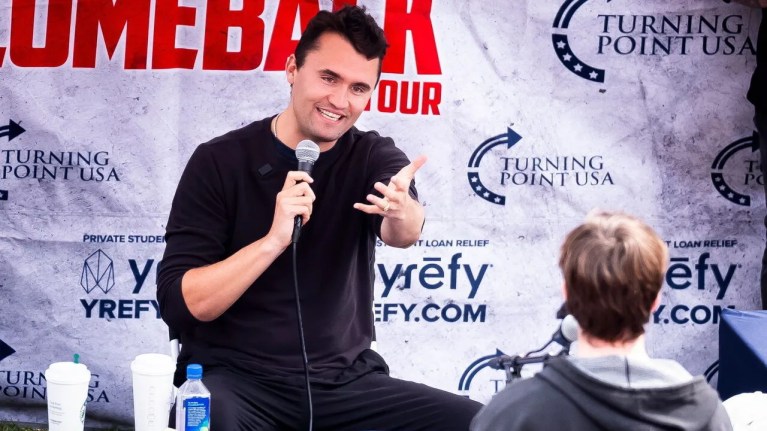
The Pendulum Swings: Charlie Kirk and the Turning Point of a Nation

Standard

Watching my son’s football game, it felt as if there was an inflection point. The game got off to a rocky start—their offense stumbled on the first drive, the defense gave up a score, and that was the story of the first half. But in the second half, the game’s momentum changed—the defense sparked a three-and-out, their offense finally got on the board, and it was a whole new game. Even luck tilted in their favor, unlike the first half.

So what happened?

How does a team that gave up eight points rally to score fourteen in a comeback?

An inflection point is a change where it feels as if a giant pendulum has swung, reached a peak in one direction, and shifted to a new or opposite course. The momentum shift may become clear only afterward, but often it’s something detectable in the air—an event or palpable shift in attitude that changes the entire complexion. In the game, it could’ve been a small adjustment by the coaches or simply an opportunity to reflect on mistakes and correct them. It could be that the ball broke in the right direction, a matter of probabilities, with the change mostly an illusion. But football is an emotional sport, and even dumb luck can inspire better play from everyone.

We also witnessed a similar shift during the presidential election. Biden was apparently leading in the polls (if such things are to be believed), and then Butler happened. The event came after the disastrous first presidential debate, where Biden clearly was not as advertised, yet it was the image of defiance—“fight, fight, fight”—that sealed the deal. Elon Musk saw this as reason to put his full weight behind Trump, and with a few McDonald’s drive-through moments and photo ops with garbage trucks, the greatest upset win since 2016 was complete.

Love him or loath him, Butler should have been a warning shot for the left—trying to kill your political opposition only makes them stronger and Trump won with a younger browner vote.

The paragraphs above were written before the murder of Charlie Kirk. Over the past few days, he went from the “prove me wrong” guy debating college kids to the center of a national debate. Since his death, there has been a groundswell of support. As those on the left reveal themselves through celebrations of his death and mockery, Kirk’s Turning Point organization has been flooded with 54,000 requests for new chapters at high schools and colleges. His death is a catalyst, much like the two assassination attempts against Trump, and a potential inflection point in the national conversation.

Before the U.S. Civil War officially began, there was an early attempt to free the slaves. John Brown, an evangelical Christian, believed he was on a mission from God to end slavery in the U.S. and led an insurrection that ended with a raid on a federal armory at Harpers Ferry in October 1859. Even before this, the issue of legal slavery had resulted in violent confrontations. In 1837, the abolitionist Elijah Parish Lovejoy was shot while facing down a mob of pro-slavery vandals who were attempting to destroy his printing press. This event sent shockwaves through the U.S. and galvanized John Brown to publicly declare:

“Here, before God, in the presence of these witnesses, from this time, I consecrate my life to the destruction of slavery.”
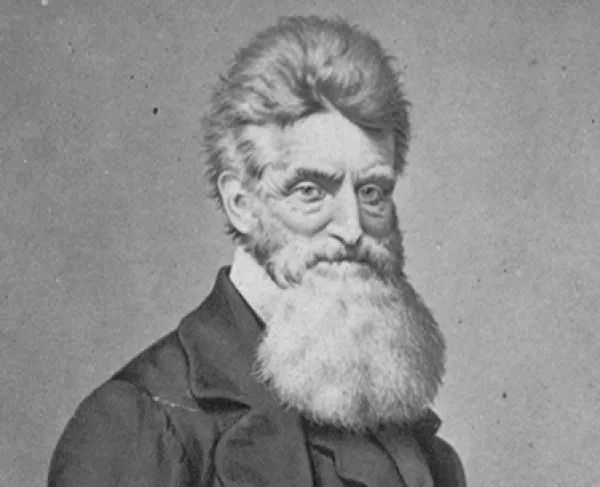
John Brown fired the opening shots of civil war, his fierce opposition to slavery inspired by the murder of abolitionist Elijah Parish Lovejoy.

As a writer, I do not create the sentiment of my audience. I merely put into words what other people are thinking or help them organize their thoughts. In other words, if it resonates, it is only because I’ve stated something they’ve already noticed. It also emboldens—when people realize they are not alone in what they see—which is how regimes fall. When people know that others share their understanding and are given a means to articulate it, all it takes is a little push to turn popular sentiment into decisive action.

Synchronicity is one way to describe this. I have often observed many of my friends—likely tuned into similar sources and sharing the same basic assumptions—simultaneously reach an identical conclusion in response to events.

The assassination of Kirk is a moment that galvanizes. It has starkly illustrated how far apart the two partisan sides have become. Some celebrate the murder, spewing vile hatred for a man who was truly a moderate with views similar to those of many Americans. Others are rightly appalled, realizing there is no reasoning or unity with those who believe disagreement deserves a death sentence—that Kirk deserved the bullet.

In a civil society, matters can be debated. If a person says things we don’t like, we still honor their human rights and show respect despite disagreement. But to those on the far left, a statement of fact or an opinion they hate is declared “hate speech,” and saying it out loud constitutes a crime of “spreading hate” that deserves death. This is not an embellishment—a direct quote: “Let this be a lesson to all those conservative freaks, all those weirdos… you’re next in line.” This is a threat we must take seriously when the other side laughs and mocks Kirk’s death—they are not like us.

This is an inflection point, one of those culminating moments where conservatives are independently reaching the same conclusion, and a movement can become galvanized. It will arm Trump to crack down on Antifa and the left-wing in ways he could not have before, with the critical mass of public support he needs.

Freedom of speech doesn’t mean people must associate with you.  I’ve never seen the ‘right’ react with such energy before.

In reality, Charlie Kirk wasn’t an extremist leading anything; he represented the quiet majority who are still able to appreciate the difference between men and women and who want laws applied equally for the protection of all Americans—not favoritism or special preferences for some based on identity or political ideology. They are Charlie. He did not radicalize anyone. All he did was try to explain his perspective and articulate what many believe. But he will now be a rallying cry—like the death of Lovejoy that led to John Brown’s vow—that point in a conflict where the tolerance has been exhausted and it is necessary for the sane to make a stand.

Even for me, as someone who attempts to stake out a position independent of both popular sides, I must go with the side least likely to kill me as a default. There’s nothing I share in common with those who are gleeful and cracking jokes about a man deliberately killed in front of his fans, wife, and young daughters. Cheering for domestic terrorism cannot be tolerated. The backlash against those who couldn’t show civility even after a man’s murder will be a turning point, like the momentum shift in a football game—the people are done playing nice with these monsters.
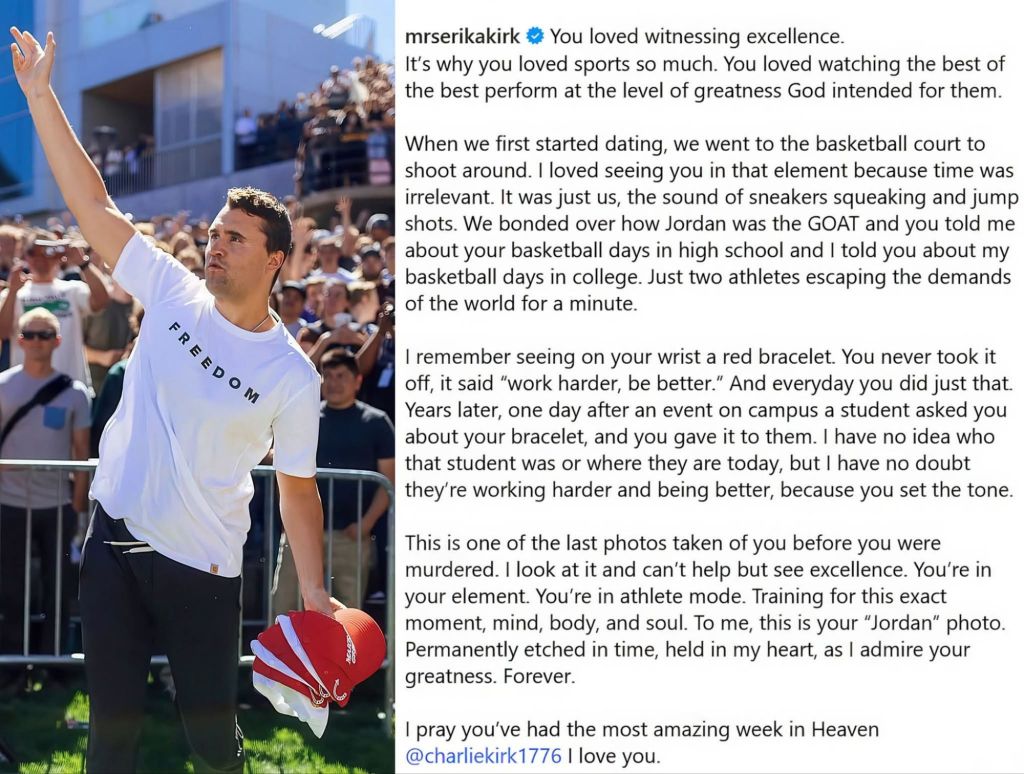

RIP Charlie Kirk

The Man I Never Met — Remembering Wayne_in_Maine

Standard

There are some characters you meet online and never forget.

Such was the case with Wayne_in_Maine, who could come off as a sort of cranky or cantankerous old man and yet seemed (even then) to have a golden heart under the bluster. There is a way or an intuition I have, that can cut through the harshness on the surface. I can just know when someone is full of themselves and cruel despite their nice-sounding words or truly compassionate despite their surface-level unpleasantness.

Wayne was the latter kind.

The first thing notable about Wayne was that he was intelligent, he had been a nuclear engineer, could articulate his arguments well, and clearly was not going to be backed into a corner. The second thing was that he had a very unique journey and a different perspective from the other ethnic cultural inhabitants of the MennoDiscuss forum. He had gone from a hippy leftist to a conservative-minded neo-Anabaptist and could speak with authority on matters of science unlike the religiously indoctrinated parroting their fundamentalist teachers.

Initially, I saw him as a sort of threat to my worldview, another person compromised by secular influence trying to get Mennonites to shift to his views, and yet later his perspective would actually strengthen my faith when it faltered against the scientific evidence clearly pointing to the appearance of age in the universe.

Because of Wayne, I learned that young-Earth Creationism (or YEC) is not necessary to have a sincere and grounded faith in Jesus Christ.

In fact, it might actually be a liability and cause many to fall into a serious crisis of faith when they go to university, study biology or almost any science and find out the case for YEC is not as clear as it was presented. That Wayne, a rational mind and well-educated, could both reconcile modern scientific theory and his faith was more useful to me (a critical thinker) than some Hammy tourist attraction put there to feed the confirmation bias of fundamentalist midwits. I came around to his position and haven’t looked back.

I have long respected Wayne despite our sometimes clashing and my occasionally coming away feeling unappreciated by him.

He was a man a conviction. He gave up lucrative career paths, actually tried communal living, literally sold all from what I recall, and had come much further in developing his own perspective than most do.

However, despite my respect, Wayne’s version of Christianity didn’t appeal to me. He had, inadvertently, pushed a friend of mine away from Anabaptism with one of his responses. I still believe his take on the rich young ruler account misses the mark, where he read the response of Jesus as a sort of legalistic prescription rather the same as we understand Luke 14:26 where Jesus says if someone “does not hate father and mother, wife and children, brothers and sisters—yes, even their own life—such a person cannot be my disciple.”

I know, for a fact, that he did not take that literally. He came across, from my limited ability to see, as a very loving father and committed husband. I can’t imagine him hating his family to prove his commitment to Christ. Nevertheless, he was adamant about being completely Anabaptist in his perspective about wealth or warfare, an inconsistency of thought that bothers me about him and others of that fold. It did annoy me too when he characterized the Orthodox tradition as “smells and bells” as if worship was supposed to be something other than a beautiful or full sensory experience.

The Cancer and Change

After I heard about Wayne’s cancer diagnosis, none of our previous sparrings mattered much to me. Wayne, despite our differences, was a true friend and someone that mattered to me. It was especially important to me, given my mourning of Uriah, to talk to someone coming to terms with their poor prognosis and yet not giving up hope.

When I reached out on Facebook Messenger, mentioning Uriah and my desire to meet with him, he replied quickly and with more warmth than I had expected. There was no standoffishness, as had kind of been a feature of his personality, he reciprocated the desire to meet and we talked about various matters of faith.

I took a look at some of the MennoNet discussions he was involved in and got a laugh together about the various bad arguments being used. That’s one thing about him, his humor was dry and always fun, or at least fun when you were on the same side.

It was a sort of therapy, talking to this different side of the pragmatic engineer. Truly, it was special, the man that I saw emerge in this final trial was different. My own thought was that this was the Wayne that was always there under the snide comment and cynicism. Men can put up their walls, to not appear vulnerable, and that was no longer there. We were just two old keyboard warriors with nothing left to prove to the other.

And that’s not to take away from anything he said as far as the grace he was given to endure to the end. It was definitely something spiritual. His testimony of faith was clear. As a friend described him, in this transformed version, “It was like he became a totally different person. Happy, cheerful, optimistic.” He would not be defeated in death and I wanted to hear more about how a rational man, such as himself, given my own struggles, could continue in hope of the eternal.

I had to think of this Scriptural passage:

Praise be to the God and Father of our Lord Jesus Christ! In his great mercy he has given us new birth into a living hope through the resurrection of Jesus Christ from the dead, and into an inheritance that can never perish, spoil or fade. This inheritance is kept in heaven for you, who through faith are shielded by God’s power until the coming of the salvation that is ready to be revealed in the last time. In all this you greatly rejoice, though now for a little while you may have had to suffer grief in all kinds of trials. These have come so that the proven genuineness of your faith—of greater worth than gold, which perishes even though refined by fire—may result in praise, glory and honor when Jesus Christ is revealed. Though you have not seen him, you love him; and even though you do not see him now, you believe in him and are filled with an inexpressible and glorious joy, for you are receiving the end result of your faith, the salvation of your souls.

(1 Peter 1:3-9)

More important than all of his intellectual endeavors and Christian apologetics, theory or theology, is Wayne’s undying faith through trial is of the greatest comfort to those still in the fight. I never did get to have that face-to-face meeting that we had committed to upon his planned move to Pennsylvania to be closer to his daughter and grandchild. We had planned to meet in order to give us both something to look forward to when he did.

Now that meeting will have to change locations. Wayne took his final breaths yesterday evening, on August 12th, a couple of days after his 65 birthday. By God’s grace, in triumph, we’ll see each other on that other side.

I’m sad that Wayne remains a man that I’ve never met, in the flesh, despite our interactions over the years. However, in his terminal illness, there was also a man that I never met, that softer side, and feel blessed have finally met this man. I loved him and believe that he loved me too. I’ll remember our last interactions for much more fondly than our first. It was beautiful to see his golden heart revealed.