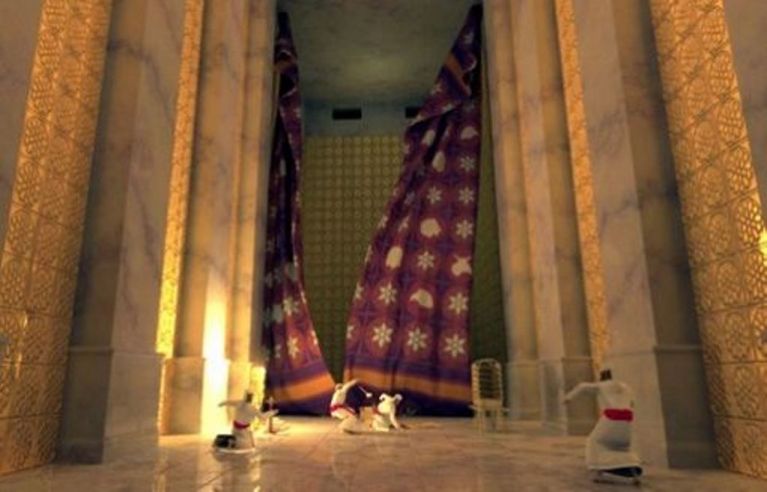
Seeing Behind The Veil

Standard

In storytelling, there is a plot device called a MacGuffin.  This is an object, character, or event used to push the narrative forward and yet isn’t all that important in and of itself.  In other words, a thing that creates motivation and yet never even needs to be revealed to the audience.  We are supposed to believe this is something significant or valuable and that’s all we need to be told.

The contents of the briefcase are left a mystery despite being pivotal in motivating the characters.

While reading through the Old Testament and pondering how temple worship worked, it is hard not to see the Ark of the Covenant as a sort of MacGuffin.  Sure, their God was not a thing.  And yet this sacred object, we’re told, contained something of God’s presence and would even strike dead those who innocently mishandled it.  Of course, most people may never have seen it, it was kept behind a veil in the temple where few had access, but all would be told of the sacredness.

“Then spake Solomon, The LORD said that he would dwell in the thick darkness. I have surely built thee an house to dwell in, a settled place for thee to abide in for ever.”

(1 Kings 8:12‭-‬13 KJV)

In fact, it was made sacred as much by this treatment as much as what actually dwelled within it.  The mythology surrounding it, as in the cultural or religious significance that was given to it, was extremely powerful.  Starting a special priestly class, Tabernacle and ritual practice, later the impressive structure of the Temple, there was a huge investment in this sacred object.  And yet, for all the attention it got, the Ark itself was usually kept hidden in darkness, guarded, within the Holy of Holies and behind a veil.

Holy Of Holies 

There are other things hidden behind a veil with significant motivational power.  One of them being the marriage MacGuffin.  For me this was a pursuit of something sacred, the church does consider the marriage bed to be sacred, and there is a whole mythology that is constructed around marriage.

This is what made it so jarring when, during my pursuit of the impossibly, a psychiatrist would classify it as “sexual attraction.”  They had just heard me describe a pure and faith-driven quest only to reframe it in such crass terms.  How dare they!  I was after love, not sex!  It really did offend me at the time.  With their clinical roughness, they had penetrated the veil of my marriage delusion.  It was an act of sacrilege.  

My childhood innocence is beyond recovery at this point.  For whatever reason, those of us born into a fundamentalist purity culture believe that we must be in denial of our own sexual urges that lead to marriage.  This is strange given how blunt St. Paul is on the topic, in 1 Corinthians 7:9, advising those who “burn with passion” to get married and basically get a room.  Why the veil of secrecy, these many euphemistic expressions to cover and mystify the bumping of uglies?

Speaking of erotic euphemism:

“Awake, O north wind; And come, thou south; Blow upon my garden, That the spices thereof may flow out. Let my beloved come into his garden, And eat his pleasant fruits.”

(Song of Solomon 4:16 KJV)

Why blush, be embarrassed or ashamed by this?

Could it be that without dressing this whole affair up with great ceremony, white bridal veils, teary-eyed parents, and such, we would have to face the reality of being creatures as hormone-driven as two ducks on a pond?  I mean, why aren’t we as honest as Solomon was in his poetry: “Roses are red, violets are blue, you have large breasts, that’s why I love you!”  Without white lies or half-truths, would our version of romance even survive?

So what is underneath the veil?

All of those things that I’ve discovered in the intervening years, that’s what…

To the extent I was in deep denial of my own sexuality, I was doubly in denial of the sexual nature of my female counterparts within the conservative Anabaptist culture.  The young lady who first propositioned, then made it all awkward and worried about somehow being ‘defiled’ if she got coffee with me has long since dropped the veil.  She has joined the others whom I had held in such high regard, revealed now as not being nearly as prudish or pure as I had once imagined.  That’s not a criticism or judgment either.  It is just the reality of the situation.

So, when the impossibly told me “I cannot not love that you the way that you wanted to be loved” what she was really saying the same thing as those Tinder girls with “must be 6′ or over to ride” in their profiles.  She wanted a guy who got her juices flowing, certainly someone a bit more rugged and traditionally masculine than me.  And, I mean, why not?  Why hide it?  Marriage is not only (or even primarily) about the high ideal that is advertised.  It is also about our scratching the itch.  Which is to say getting down and dirty with someone who meets the correct physical qualifications.

Also, perhaps it is that the fantasy is more satisfying than the act itself?  We read how Amnon, King David’s eldest son, had such an infatuation with his half-sister Tamar.  It tells us after having his way with her he despised her.  Or consider the disgust of Victorian-era art critic John Ruskin when, in marriage, he discovered that women aren’t like porcelain dolls.  You’ll have to forgive him, they put skirts over piano legs back then to keep the eyes of men safe from the unveiled feminine form.  Maybe there are some things that are better chased than caught?  If we find what we went looking for we might be shocked at what we found.

Sacred Fertility & Symbolism 

The final stop on this exploration of sacred and taboo has to do with something that I can’t unsee now that I’ve seen it.  I’m bound to lose half of my final two readers for going here. 

Nevertheless, I’m not here to please the pearl-clutching crowd. 

For me, this is not about toppling sacred cows or making people uncomfortable, it is about being honest enough to see reality for what it is and correcting our own perspectives of the cultural baggage we’ve inherited.

First, what drives much of the Old Testament Biblical narrative?  We know Abraham’s story, how he wanted an heir, and yet how Sarai, his wife, was unable to produce.  In this Genesis account we see various cases where wombs are opened or closed.  And the punishment of Michal, for rebuking her dancing husband, was that she had no child until the day of her death.  Being fruitful and multiplying was a high priority, as well as having sons to carry on the family line.

As an aside, we live in a very sterile world in comparison to our ancestors, we’ve become sheltered and sensitive to the point many do not eat meat or want their children exposed to death.  This wasn’t an option at the time when Scripture was written.  There is a kind of earthiness to their world and perspective, something more primal or real, a brutality of life difficult to stomach.  It is with this reality in mind, that we also have different sexual taboos and could be more prudish than they were about such things.

Second, I was sitting in church and taking a look at the colorful streams of light pouring through a stained glass image of Jesus pulling Adam and Eve from the grave.  My moment of appreciation for this beauty was interrupted by my noticing part of the symbolism.  Jesus is shown to be emerging from an oval shape, at the bottom of which are the covers of their opened tombs.  Requiring very little, if any, imagination, it bears striking resemblance to one Christian symbol even an iconoclastic Protestant would likely recognize, and that being a vertically arranged “Jesus fish” or Ichthys.

Light and life shining down…

However, concurrent to this, and a cause of some momentary shame, was the thought “That’s a vulva!”  I mean, how inappropriate to think that any part of the female anatomy, let alone those private nether regions, be put on prominent display or be associated with Christ!  

But is it really?

A mother, Mary, is necessary for the birth of Jesus.  Without her, and her womb that is miraculously made made more spacious than the heavens, there is no salvation for mankind.  It didn’t matter if God could have used any other way, all we know is that he used this young woman and all of the faithful since have followed the lead of Elizabeth, who full of the Holy Spirit loudly proclaimed:

“Blessed are you among women, and blessed is the child you will bear! But why am I so favored, that the mother of my Lord should come to me?”

(Luke 1:42‭-‬43 NIV)

As far as the symbolism, I would find that indeed my observation had basis in reality as the Ichthys is a version of Vesica Piscis (literally “fishes bladder” in Latin) or, in sacred geometry, the oval that two intersecting circles create an oval and said to be the place where spiritual and physical worlds interface. According to Syriac Press, in ancient Mesopotamia, it was used as a symbol of the combination of masculine and feminine energies that create a Divine Child.  Any pagan coincidence, like those with baptism, only serves to reinforce the power of the symbolism.

In a time when many settle for ‘fur babies’ over producing human offspring and the unique female contribution to the world is dismissed by feminists seeking male roles— when real women are mocked by men who pretend to menstruate—we need to start doubling down on our celebration of this reproductive role of women.  Phrases like “saved through childbearing” did not come into the Bible by accident.  The world was saved by the one who came out of Mary’s fertile womb and we ought not to downplay or be embarrassed by this.

Empty Vessel—Dying Corpse

Solomon’s Temple was destroyed in 586 BC, by the Babylonians, and the fate of the Ark within it is unknown.  This loss of sacred relics did not stop the Jewish faithful from rebuilding the temple, in 515 BC, but does make one wonder how much the contents mattered.  So long as the people were kept in awe that’s all that really seemed to be the point whether the edifice truly contained anything of real value or not.  With nothing behind the veil, the people still did the ritual and sacrifice. 

Why?

It seems sort of analogous to the US Dollar, a currency once backed by actual gold and now only by faith people continue to hold in the economic system it represents.  The harsh reality is that it has become merely a means to exploit. It is a way for a few elites to rob the value of the savings of other people by printing more money for themselves.  Those money changers Jesus chased out of the Temple were the amateurs. The real professionals never get caught.  The carefully maintained veil of secrecy around the Federal Reserve ensures that this particular scam continues for a long long time.

But, I digress.  

G. K. Chesterton once wrote, “a corpse crawling with worms has an increased vitality,” and that “a dead man may look like a sleeping man a moment after he is dead,” trying to describe the subtle yet significant difference between truly sacred tradition and a cheap gimmick version of this religion that was intended to replace it.  Perhaps this is what has me disillusioned?  With so many things, once the veil is lifted (which few ever dare to do) so much of the enticing mystery and popular mythology which propelled us forward falls apart.  And in this way some of the life I had felt early on feels more like decomposition.
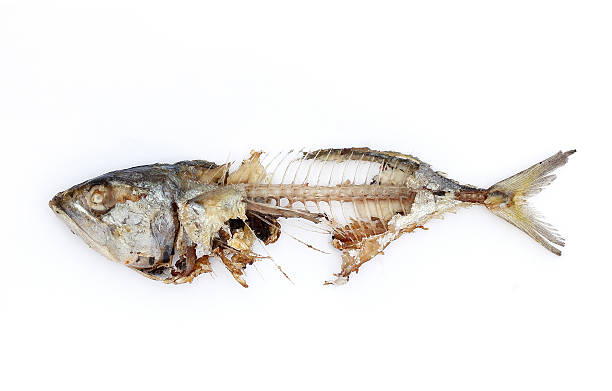
Perhaps this is what is left when you’re the dog who has finally caught the car?  Nothing left to do but pee on the tire and continue on your way again.  The anticipation leading up to the day of revelation may be more exciting than the moment the veil is lifted and when all is seen.  Ruskin may have spent the rest of his life waxing eloquently about his female love interest.  Or maybe—just maybe—that MacGuffin which led us to the point we’re at today was merely a plot device to move the story forward and the only truly sacred part of the encounter is the fruit produced?

Sexual pleasure is fleeting.  We’re lured there by our imaginations, by our desire for what is beyond the veil of marriage, but it can all be a bit anti-climactic and even repulsive once you consider it after it is finally unwrapped from the flowery speech and those flawless air-brushed mental pictures.  But fatherhood, by contrast, seeing the great potential of my son, tending to his needs, pruning as needed, is something extremely fulfilling.  It is what has emerged from the womb that brings us renewed life and hope.  Pity the barren, the dying corpse who has lifted the veil and only saw the emptiness of their pursuits.

The Patriarchal Protection Paradox

Standard

The order and protection of patriarchalism and purity culture could appear to be the alternative to the chaos, confusion, risk and hurt of sexual liberation.  We know that women are taken advantage of all the time by men who have no intentions of making a commitment, they do naturally bear the higher cost of sexual promiscuity and therefore it does make sense to offer them some special protection, right?

Men should be protectors.  This is a role that men are well suited for and, in correct form, actually enables women to thrive and be the best version of themselves.  Does this mean that women can’t do what men do?  No.  But it is simply optimal, in a trade relationship, that both parties specialize and do what they are better suited to do.  For the betterment of the whole and ultimately for themselves.  My grandma kept the books for the farm while my grandpa ran the equipment and did the field work.  Why?  Well, it’s simply what worked for them. 

The patriarch, the elder man of a household or a community, should indeed protect those who are under his care.  That’s what he is there for.  He can provide food, shelter, shepherding and defense for the vulnerable.  His age and experience, his humbly knowing his own place under God, can give him perspective valuable to his children and appreciated by the woman that he has committed to love.  This may be patriarchy, I’m not sure, but the good kind.

Unfortunately, patriarchalism, like that often found in religious purity cultures, tends to be the wrong kind of protection.  It elevates women while simultaneously not treating them as equals.  It protects some women, but not all.  And, while framed as a male advantage, because it does privilege some men, actually hurts men.  It may prevent some promiscuity, but it doesn’t protect people or truly show Christian mercy to anyone.  Worse, since it never gets to the heart of the matter, it often only covers for abuse.  That’s the paradoxical part: Below the surface it is not really any different from the degrading and demeaning alternative. 

1) Paradox: Both Elevates And Demeans Women

Patriarchalism is often framed in terms of dominant men who think women should follow two steps behind, which is certainly one part of it.  But it can also be much more subtle than those notions of women remaining barefoot in the kitchen, pregnant, submissively waiting on their husbands. 

In fact, many men who identify with feminism are very often unwittingly patriarchal in their overzealous protective and preferential treatment of women.  Coddling or patronizing women, assuming their motives are always pure, is ultimately another form of patriarchal protection.  This is, incidentally, the reason why some feminist women resent having the door held for them.  Is it a kind gesture or is it an assumption of her inferiority and need for male help?

What I’m talking about is this idea that a woman can do no wrong, that assumes that she is always a hapless victim of male abuses and basically lacking any agency or discerning capacity equal to a man.  

I know women like this, who look adoringly at their husband as he compliments her (patronizingly) for her being able to pick the drapes.  He gets to make all of the real decisions and she can live comfortably without the stresses of adulthood. 

And, not surprisingly, some women are completely fine with this arrangement.   Why not stay on the gravy train if you can?

However, many more women are uncomfortable with this protection.  They sense this treats them as if they’re not fully formed humans and, in the end, will stifle their God-given potential. 

Of these backhanded insults that intelligent and capable women face constantly in this current social paradigm is that they are either a) in need of some crusty politician to help them or b) they are some sort of faultless Mary Sue, with no need of character development, who only had to show up to dominate men.  Nobody truly wants to be treated as special simply because they have a certain type of genitals.  Putting women on a pedestal (even if called feminism) is patriarchalism.

The protection of patriarchalism is the wrong kind of protection.  It treats women sacred objects, idols, faultless and not real people with complexity or depth.  It protects the female body, at least in theory, yet neglects her soul.  It objectifies.

2) Paradox: Protects Some Women, But Not All

In purity cultures (both secular/political or traditional/religious) only those who meet a certain standard or subscribe to a particular ideological agenda are actually protected.  Those who do not conform the cultural expectation are not valued or respected.

In the religious culture which I was born into, the woman who follows the rules (kept up outward appearances and acted the part of innocent) is always treated as pure-minded and virtually incapable of evil.  A young woman, who outwardly obeys, is her daddy’s little angel, practically divinity, and subject to unceasing praise.  Women are protected, but not as equal to a man, and only so long as they represent the ideal.

Perhaps this ‘protection’ is motivated by guilt and a way to make up for the extra pressure put on women to conform and submit?  Or simply a way for some men to advantage themselves over other men by playing the hero?  Maybe it is just a bias of those in a culture where everything is judged by outward appearances and men can’t imagine their female counterparts as being anything but porcelain dolls, where it is unimaginable that a beautiful young woman, from a good home, wearing the prescribed attire, could be anything but sinless and a saint.  Whatever the case, it is real and is a privilege (albeit perverse) that women enjoy in patriarchal purity cultures.  

This privilege, and pedestal, of course, does not apply to ‘worldly’ women.  No, only the girl who meets the patriarchal religious standard is sort of viewed as some kind of unattainable perfection.  A woman is either a paradigm of virtue, a Madonna, or she is a Jezebel, a Potiphar’s wife and temptress, with very little room in between.  An too often, the woman who stands up for herself a bit or defies their cultural expectations, to the patriarchal men, are comparable to a prostitute and totally debased.  They need women to be weak so they can feel strong by comparison.

The patriarchal paradox is that it does elevate and protect women, but not in a way that humanizes or allows women to have the same fullness of character as a man. Patriarchalism doesn’t protect women as people, but rather as they represent an image of femininity and cultural ideal.  This is revealed or exposed, in the reality that patriarchal men do not protect all women.  No, they only protect their women and only so long as they fit the cultural prescription. 

Furthermore, the protection patriarchal purity culture is mostly focused on defending the physical body of a woman, managing her outward behavior, rather than her actual spiritual well-being.  She is the trophy on a man’s shelf, a conquest, but not recognized as a fully formed person.  Women are valued for their virginity and only protected if deemed pure by some cultural standard. A woman is only worthy of protection if his purity fantasies can be projected onto her feminine frame.

This ‘protection’ (or at least as it is combined with purity culture) labels those who fall short as “defiled” and treats them like damaged goods rather than broken people to be loved. The paradox is that patriarchalism protects a cultural ideal for women rather than protect women.  It offers condemnation, not care, for those who fall short.

3) Paradox: Hurts Rather Than Helps Most Men

Patriarchal treatment of women also leaves many men feeling inadequate amongst women who are truly their equals and not perfect as imagined.  In my own life, I’ve put Mennonite women so high on a pedestal that their rejection felt like a judgment from God.  That is unfair to the men, it is unfair to the women, and yet is very common in patriarchal religious purity cultures.

Again, in patriarchal purity culture, so long as a woman dressed and acted in a particular manner she was basically immune from criticism.  I’ve seen very patriarchal pastors side with a wife against her husband, when she was as much at fault, and suspect it was a matter of sexual preference.  And I do mean “sexual preference” in the crassest and literal manner, in that they were protecting women to preserve their own sexual status with her.  Somewhere, in their reptile brain, they needed to impress the woman, play savior to the damsel in distress, and did a terrible disservice to both sides with their prejudice.

Young conservative Mennonite men, unlike the females within the culture who are treated as blameless, are frequently called out for their more open expression of their lusts and pornography addictions.  It is as if it never registered to them that Jesus called out those who appeared to be righteous more harshly than those caught in their sin.  Mennonite women sin.  They have their vices, even if less obvious.  Anyhow, when some are left feeling dirty and irredeemable rather than sinners in need of God’s grace like anyone else, this is patriarchal purity culture and unChristian.

Men in patriarchal purity culture, rather than love other men, enjoy eliminating competition.  By highlighting and haranguing about the more visible weaknesses or inadequacies of other men they hope to increase their own social stature.  This is even more pronounced in purity cultures where polygamy allowed.  The “lost boys” of fundamentalist Mormonism, where young men are accused and run off, a clear example. 

Other men are a far bigger threat to abusive patriarchal men than women.  And this is why Biblical fundamentalist (Protestant) men demand submission to themselves and yet absolutely refuse to fall under any authority other than their own.  It is not so much about women or purity as it is about protecting the overblown ego of some men and comes at the expense of all.  It is actually about power not protection.

4) Paradox: Patriarchal Protection Often Covers For Abuse

The great irony of patriarchal purity cultures are that they are as focused on sex as the ‘worldly’ whom they condemn.  Even in their condemnations of promiscuity there is this “methinks thou dost protest too much” feeling and sense that this constant bluster is for their titillation or pleasure.

But, more than that, this display doesn’t mean these moralizers are free from sexual sin themselves. 

No, they are as obsessed with the physical bodies as anybody in the world outside their cults. 

And, while they consider themselves to be moral authorities, they often blame-shift responsibility for their own lust onto women.  From pulpit pounding sermons about “immodesty” (in front of an audience of women wearing  long dresses) to men who literally blame the young girls they molested for the abuse. 

However, the worst part is when those in these cultures are more concerned about the victims remaining silent than they are about the abuse.  This is probably not so much about keeping individual abusers from justice so much as it is about protecting the culture.  To feel good about themselves, to keep up the “holier than thou” show, they must conceal the impurities.  It is about protecting image not people.

Purity cultures are about preserving an outward image of purity and avoid looking inward at all costs.  They need to externalize blame, keep the focus on the sins of those outside of the group, or it would be impossible to sustain the system.  So deny the extent of their own problems, to try to keep their sins secret, is a means to protect their special identity and culture. 

The Wrong Kind Of Protection

In the end, patriarchalism protects the cultural ideal of purity rather than actually loving people.  It is concerned primarily with a woman’s body, or outward behavior, not her being.  It is centered on the physical rather than the spiritual.  It stifles women who don’t fit the cultural mold, does not protect their dreams or ambitions, and also gives cover to bad behavior that flies beneath the radar of dress standards and superficial obedience.  It protects the power of a few men at the top, but does not serve many (or most) of the males within the culture very well. 

It does not follow the example of Jesus, who did associate with prostitutes and others who did not keep up their righteous image according to the standards of the religious paradigm of that time.  He intervened on behalf of a woman accused of adultery and condemned the sanctimonious elites.  They Pharisees were obsessed with maintaining an outward image, creating physical separation between themselves and those deemed impure, yet knew nothing of spiritual transformation or even their own need of an inner change.  They loved status and outward image, they protected a religious ideal, but not real people.

The problem with the patriarchal purity culture protection is that it protects women like property, as sex objects, and not as people.  It is dehumanizing in the way that it puts women on a pedestal.  The problem is not male leadership.  The problem is any leadership that does not protect other than for it’s own benefit.  Despite what it claims, patriarchalism is about defending the status of some men, keeping their lust satiated, rather than Christian love.  It is ‘protection’ of the wrong spiritual source. 

And, thus unlike what popular mythology would suggest, this is not a problem that would be solved by replacing men in leadership with equally domineering women.  That is the one big absurdity of our time, we are told that women would be better more empathetic leaders than men and then given purple-haired Vice-Admiral Amilyn Holdo berating a subordinate man as an example.  That’s not an empowered woman, that’s a woman that is dangerously entitled or so uncertain of her own command that she needs to make an example of anyone who dares to question.

It is the spirit of patriarchalism that’s wrong and why it creates such resentment.  Most of us would fall willingly behind a fatherly figure that we trusted was not in it for himself and had our best interests in mind.  If we knew that our unique personhood was being protected rather than how we fit into their own cultural ideal and scheme then we would be less skeptical.  More would fall into place as God intended if we would all start here, with humility and a truly serving spirit:

In your relationships with one another, have the same mindset as Christ Jesus: Who, being in very nature God, did not consider equality with God something to be used to his own advantage; rather, he made himself nothing by taking the very nature of a servant, being made in human likeness.

Philippians 2:5‭-‬7 NIV)