

The People Want a King, Part II: The Idolatry of the State and the Call to Self-Rule

Standard

A decade ago, in “The People Want a King, Part I,” I wrestled with the ancient cry of Israel—“Give us a king!”—from 1 Samuel 8, seeing in it a mirror to our own craving for centralized power. I cast Trump, then a looming figure on the horizon, as a Saul-like pretender—brash, self-absorbed, a king unfit for the throne. The heart of man, I argued, is frail and fearful, ever eager to trade liberty for the illusion of security. Now, ten years on, we revisit that cry, turning the lens inward and upward: what happens when the king we demand becomes a god we worship? And what might it mean to cast down that idol and govern ourselves under a higher law—one that admits no rival?

Let us begin with a heresy: government is not sacred. It is not a divine institution bestowed from on high, nor are its stewards a priestly caste anointed with heavenly oil. Scripture offers no such mandate. The state is a human construct—a tool, a mechanism, a servant of necessity. It is not the ekklesia, the called-out assembly of God’s people, nor the Kingdom of Heaven breaking through the veil. It is, at its core, a business: a transactional entity exchanging services for tribute. When it ceases to serve—when it grows fat and lazy, a Blockbuster Video in a Netflix world—it deserves no reverence, only replacement. To treat it otherwise is to fashion a golden calf from the scraps of bureaucracy.

Yet the cry persists: “The nation is too complex for such simplicity!” I encountered this objection recently, a rebuttal to my call for radical restructuring. The argument, draped in the garb of sophistication, insists that governance transcends mere commerce—that its intricacies demand a permanence beyond critique. This is a shade thrown at those, like the DOGE reformers, who dare to wield the axe of efficiency against the overgrowth of empire. It is a plea for the status quo, cloaked as concern for “public trust.” But trust in whom? The regime that has ruled longer than memory, entwined with corporate titans and special interests, bleeding the commons dry? The trust was shattered long before any billionaire CEO took the helm; it crumbled under tax rates that plunder and wars that pulverize the defiant.

Here lies the theological crux: complexity is not a virtue—it is a veil. In 1 Samuel 8, Samuel warned Israel that their king would take and take—sons, daughters, fields, flocks—until they were slaves in all but name. The modern state has fulfilled this prophecy with chilling fidelity, its mission creep a slow idolatry. What begins as a servant becomes a lord; what promises order delivers oppression. The labyrinthine bills, the thousand-page tomes of legislation—these are not signs of wisdom but of deceit, a Sanhedrin of scribes hiding corruption behind the law’s letter. To call this sacred is to confuse the Temple with the moneychangers’ tables.

Government as business is no mere metaphor—it is a functional truth. It trades protection and infrastructure for our coin and consent, a covenant not unlike the marketplace. Yet unlike the agora, where competition hones the blade of excellence, the state resists renewal. Private enterprise, for all its flaws, bends to the will of the consumer: Sears falls, Amazon rises. Governance, enthroned as monopoly, calcifies. Its priests—elected or appointed—crown themselves with divine right, decrying reform as sacrilege, a “threat to democracy.” But democracy is not their god; power is. And power, unchecked, builds altars to itself.

This is the sin of the political establishment: they have conflated the nation with their institution, the people with their rule. The nation is not the state, nor the state the nation—just as Israel was not its kings, nor its kings Israel. Government should reflect the imago Dei in its people, a stewardship of justice and flourishing. Instead, it mirrors Baal, demanding sacrifice from the many for the feast of the few. How is this sustained? Through a catechism of control—children reciting pledges, citizens taught to venerate the machine as eternal. To question it is to court excommunication.

Yet Scripture beckons us elsewhere. The restoration of governance requires a return to first principles: simplicity as clarity, transparency as righteousness, accessibility as the leveling of pride. The state’s convolution is no accident—it is a shroud for sin, a “you wouldn’t understand” that echoes the serpent’s whisper. To dismantle it is not anarchy but exorcism, a stripping back to the studs to expose what festers. The old guard, like Saul clinging to his throne, shriek at the loss of their sacred monopoly. But their divinity is a lie, and their temple must fall.

The Stagnation of the External, the Promise of the Internal

Consider the contrast: a business that squanders its capital dies; a government that squanders ours endures. This is the curse of external governance—its inertia defies the natural law of adaptation. Were it subject to the crucible of choice, only the fittest form would stand. Instead, it grows sclerotic, a Leviathan too holy to slay. And the people, seduced by its permanence, make it their idol. They crave a king to think for them, a mediator to absolve their agency. Politicians—prostitutes of the soul—oblige, peddling promises they half-believe, deluded into messiahs of their own making. Zelensky’s advisors call him mad with grandeur; Washington’s geriatrics are no different, mistaking their tenure for providence.

This is not governance but bondage, a learned helplessness masquerading as piety. The privately employed know their limits—life persists beyond their shift. But the state’s acolytes preach indispensability, as if only they can wield the scepter. Contrast this with self-governance: a people ruled not by fleshly lords but by principle, by the law written on their hearts. Jeremiah 31:33 whispers of such a day; Hebrews 8 seals it in Christ’s blood. At the civic level, this need not mean chaos but discernment—shuffling roles, pruning branches, trusting that micromanagement by fools yields only thorns.

Why, then, the sanctity of the status quo? It is the coward’s theology: easier to bow to mystery than to wrestle truth. As Israel preferred a king to the uncertainty of judges, so we prefer bureaucracy to responsibility. Samuel’s warning rings anew: the king takes, and we cry too late. External governance is not our salvation—it is our stagnation, a false god promising safety while forging fetters.

The Myth and Monuments of the Federal Cult

To cement this idolatry, the Federal government has woven a mythology and erected monuments rivaling the temples of old. Consider the Capitol, that domed sanctum of marble and myth, its steps ascending like an altar to a civic deity. The Lincoln Memorial, a brooding Parthenon, gazes over a reflecting pool as if to baptize the nation in its own reverence. These are not mere buildings—they are shrines, designed to awe, to whisper: “This is eternal, this is beyond you.” Like the ziggurats of Babylon or the temples of Rome, they fuse power with divinity, demanding obeisance from the pilgrim and the peasant alike. The Founding Fathers, recast as demigods, stare down from friezes and statues, their words carved into stone as if they were Moses descending Sinai. Big Brother is not God—yet here he looms, a surveillance state cloaked as savior, its all-seeing eye promising protection while its fist tightens the leash.

This cultic architecture is no accident—it sells the lie that the state is sacrosanct, its form immutable. The pledge of allegiance, recited by schoolchildren, is a liturgy; the flag, a totem; the Constitution, a holy writ too sacred to amend save by the high priests of amendment. Yet this is a sleight of hand. The Constitution, for all its brilliance, is a human document, not a divine oracle—its framers knew it, urging vigilance against its abuse. The Federal cult inverts this, turning a tool into a god, a means into an end. As the temples of Baal housed idols to blind the masses, so these monuments obscure the state’s frailty, its susceptibility to rot.

Enter January 6th, 2021—a day branded as a desecration, a violation of the “sacred ground” of democracy. The narrative drips with priestly indignation: rioters stormed the Capitol, profaned its halls, threatened the holy order. Politicians clutched their vestments, decrying the “insurrection” as an assault on the nation’s soul. But let us parse this claim with a smirk—how many have died at the hands of this government, overseas and at home, in the name of “protecting democracy”? Millions, if you tally the wars and drones, yet the single death of that day gets the sackcloth and ashes. If the Capitol is sacred, what makes it so? Not its service to the people—its corridors have long echoed with the clink of corporate coin and the murmur of self-interest. Not its fidelity to justice—its laws have sanctioned plunder at home and terror abroad, not least against Argentina, whose people still bear the scars of U.S.-backed meddling and economic strangulation. The sanctity, then, is a projection, a mythos guarding the idol. January 6th was chaos, yes—ugly, reckless, and lawless—but to call it a sacrilege assumes the temple was holy to begin with. It wasn’t. It was a house of power, not of God.

The true violation predates that day: the slow consecration of a bureaucracy into a deity, the elevation of marble over morality. Ancient temples hid their emptiness behind splendor; the Federal cult does the same, crying “blasphemy” when the curtain is pulled. January 6th didn’t defile a sacred space—it exposed a hollow one, a monument to a king the people demanded but never needed. And here’s where Argentina’s President Javier Milei enters, grinning like a Cheshire cat as he handed Elon Musk a chainsaw in 2025, etched with “Viva la libertad, carajo” (“Long live liberty, damn it”). Milei, who’s taken his own chainsaw to Argentina’s bloated state, wasn’t just gifting Musk a tool for bureaucracy—he was practically dancing with glee to see Musk turn it on the U.S. regime that’s bullied his nation for decades, from IMF debt traps to covert coups. It’s less a symbol of shared efficiency and more a middle finger to the empire, wrapped in a libertarian bow.

Trump’s Mandate and the Singular King

So where does Donald Trump fit in this unholy pantheon? In Part I, I cast him as a flawed Saul—brash, impulsive, a king more enamored with his own mirror than his people’s good. I stand corrected, or at least refined. Trump is no savior, nor should he be—Christians have but one King, enthroned above all earthly powers (Colossians 1:16-17). Yet he wields a mandate, both legal and theological, to tear down these idols, and therein lies his purpose—not as messiah, but as iconoclast.

Legally, Trump’s authority stems from the Constitution itself—a document that vests executive power in a president elected by the people (Article II, Section 1). His 2024 victory, a roar against the entrenched cult, grants him the democratic right to wield that power against inefficiency and corruption. The Federal government, swollen beyond its constitutional bounds, has no divine charter to resist pruning. The framers envisioned a lean state, not a Leviathan; Trump’s DOGE-inspired axe—however blunt—aligns with that original intent. He can shutter departments, slash budgets, and fire the high priests of waste, all within the law’s letter. The shrieks of “threat to democracy” from the old guard are the death rattles of a dethroned idol, not a defense of principle.

Theologically, his warrant runs deeper. Scripture abhors idolatry—Exodus 20:4-5 commands no graven images, no bowing to crafted gods. The Federal cult, with its temples and myths, is precisely that: a false deity usurping allegiance owed to Christ alone. When Jesus declared, “Render to Caesar what is Caesar’s, and to God what is God’s” (Matthew 22:21), He drew a line—Caesar gets coins, not worship. Trump, for all his bombast, serves as a wrecking ball to this blasphemy. He need not be pious to smash Baal’s altars; Gideon was a coward before he toppled the poles (Judges 6:27). If Trump’s tenure exposes the state’s hollow sanctimony—January 6th as symptom, not sin—then he fulfills a divine irony: a flawed vessel breaking a greater folly.

Yet here’s the correction to my 2015 take: Trump is not the point. I overstated his flaws as disqualifying, missing the forest for the trees. He’s no king to crown—Christians must reject all earthly thrones save one. “My kingdom is not of this world,” Christ said (John 18:36), and Paul echoed, “Our citizenship is in heaven” (Philippians 3:20). Trump’s role is transient—permitted, not ordained—to dismantle a false god, not to replace it. The Christian’s allegiance lies with the King of Kings, whose rule brooks no rival, be it Trump, Biden, or the marble gods of DC. Self-governance, then, is not just civic—it’s spiritual, a refusal to outsource our souls to any throne but His.

The Eschatological Hope

The people want a king, but the King we need refuses a throne of stone. To cling to the state as sacred is to repeat Israel’s folly, to trade the Spirit’s freedom for Saul’s spear. Self-governance is not utopia—it is obedience to a higher call, a shedding of idols for the stewardship God demands. Complexity is a liar’s refuge; trust is a martyr of our making. Let Trump tear down the temples—legally, he can; theologically, he should—but let us not crown him in their place. Overturn the tables, tear the veil, and build anew—not a kingdom of men, but a commonwealth of the free, under no crown but His.

Useless Speculation

Standard

People who are obsessed with eschatology tend not to share the attitude of Christ and are, at very least, more consumed with their own pet theories then practical application—I tend to avoid such people:

‭‭I urge you, brothers and sisters, to watch out for those who cause divisions and put obstacles in your way that are contrary to the teaching you have learned. Keep away from them.  For such people are not serving our Lord Christ, but their own appetites. By smooth talk and flattery they deceive the minds of naive people. 

Romans-16-17-18 NIV

There are many who fancy themselves as being wise and able to decode the cryptic language of Biblical revelation, who gather a following for themselves, but are not doing God’s work:

As I urged you when I went into Macedonia, stay there in Ephesus so that you may command certain people not to teach false doctrines any longer or to devote themselves to myths and endless genealogies. Such things promote controversial speculations rather than advancing God’s work—which is by faith.  The goal of this command is love, which comes from a pure heart and a good conscience and a sincere faith.  Some have departed from these and have turned to meaningless talk. They want to be teachers of the law, but they do not know what they are talking about or what they so confidently affirm.  ‭‭

1 Timothy‬ ‭1:3‭-‬7‬ ‭NIV‬‬

Revelation in the hands of these kinds of people is as useful as a Marvel comic and that meaning it is strictly for entertainment value.  Feel free to laugh as they confidently spew their speculative garbage.  Let them accuse you of being a scoffer for not buy-in to their nonsense.  Sure, these people may believe they have special insight, but are not qualified to speak and would be better off to keep their mouths shut.  

Slapping a label of “Malgog” on a modern state and then running with it doesn’t make you a great Biblical scholar.  No, you’re just another Harold Camping or William Miller and more likely to be a disappointment than to see the end of a dispensation.  It should be ridiculed and mocked as it has nothing to do with living out the Gospel of Jesus Christ and is a distraction at best—and, at worse, a cause for others to stumble.

If your focus is on Christ you will not fail no matter if the anti-Christ is the Pope George or your own beloved mother.  So why would we fritter away our time promoting theories that are not essential and often wrong?

But the real evil in this kind of endless end times speculation is how it too often turns other people into pawns rather than those we are commanded to love.  Obedience does not require a God’s eye perspective or foreknowledge, it takes a child’s heart and full trust that all things will work out for the good of those who live in faith.  Anyone can make a horoscope or fortune cookie apply to themselves—few love their enemies.

When we should be praying that both sides of the Israeli and Palestinian conflict repent, many who profess Christ are cheerleaders for their own predictions instead.  They’re vultures, like Jonah wanting to see Nineveh destroyed because they don’t care about the people involved, and not like the Jesus who wept over Jerusalem knowing the city was going to be totally destroyed. We don’t need to know the future, we simply need to live in faith and do good to all people.

As a postscript, while we’re breathing, it is never too late to repent of this foolishness:

Camping admitted in a private interview that he no longer believed that anybody could know the time of the Rapture or the end of the world, in stark contrast to his previously staunch position on the subject. In March 2012, he stated that his attempt to predict a date was “sinful”, and that his critics had been right in emphasizing the words of Matthew 24:36: “of that day and hour knoweth no man”. He added that he was now searching the Bible “even more fervently…not to find dates, but to be more faithful in [his] understanding.”

At least Camping lived to see the error of his own ways and change his focus.  But how many did he trip up before he reached this conclusion?

Should Christians Flee Jerusalem?

Standard

In 1630 John Winthrop, an English Puritan leader, wrote a thesis titled A Model of Christian Charity that described a spiritual vision for the new settlement in America.  He explains an ideal love that if practiced would make them “a city upon a hill” and seen by all people. 

But, Winthrop warns that with this great potential there will be great consequences if and when this ideal is abandoned.  In his words: 


“We shall open the mouths of enemies to speak evil of the ways of God, and all professors for God’s sake. We shall shame the faces of many of God’s worthy servants, and cause their prayers to be turned into curses upon us till we be consumed out of the good land whither we are going.”


America has formed into a great nation, an exceptional nation in many respects, and has become the place seen by the world.  Two Presidents (John Kennedy and Ronald Reagan) made reference to the “city upon a hill” imagery and at a time which was arguably the peak of our influence. 

I firmly believe that our lingering greatness is a reflection of the moral character of those who came before us.  However, our end will be as dramatic as our rise when we neglect love for our fellow man that Winthrop envisioned and is the true evidence of faith in God.

There was another city on a hill (seven hills actually) and that being the historical city of Jerusalem described in the Bible.  Jerusalem was a place of great importance to the Jewish religion and the location of their temple to God.  It was an impressive awe inspiring place by ancient standards and also the place where Jesus went with his disciples and made a startling prophecy about the unimaginable destruction that would soon come to that city.

Six days that marked the beginning of the end.

It was the Passover, a significant event on the Jewish religious calender, and what would turn out to be a most pivotal week for Christianity.  Jesus, after having raised Lazarus from the dead, departs from Bethany and continues with his disciples to Jerusalem despite the obvious risk to his life. 

The Scripture describes Jesus coming down from the Mount of Olives towards the great Holy City:

“As he approached Jerusalem and saw the city, he wept over it and said, ‘If you, even you, had only known on this day what would bring you peace—but now it is hidden from your eyes.  The days will come upon you when your enemies will build an embankment against you and encircle you and hem you in on every side.  They will dash you to the ground, you and the children within your walls. They will not leave one stone on another, because you did not recognize the time of Godʼs coming to you.'” (Luke 19:41-44)

This moment of emotion and prophecy marks the beginning of a tumultuous week.  Jesus was greeted as a king and yet simultaneously weeps over Jerusalem.  The week continues with him dramatically cleansing the temple of commerce.  He spends an intimate last meal with his disciples after which he is betrayed by one of them.  He is put on trial, crucified under a mocking “king of the Jews” sign.  But not before making several claims about a destruction coming and an end that was very near at hand.

In a sermon (Seven Woes of Matthew 23) Jesus severely rebuked his religious critics for their hypocrisy.  He told them that they are no better than their ancestors who murdered prophets.  Jesus warns once again of a judgment that would befall their generation, and laments:

“Jerusalem, Jerusalem, you who kill the prophets and stone those sent to you, how often I have longed to gather your children together, as a hen gathers her chicks under her wings, and you were not willing.  Look, your house is left to you desolate.  For I tell you, you will not see me again until you say, ‘Blessed is he who comes in the name of the Lord.'” (Matthew 23:37-39)

Jesus laments their unwillingness to trust him.  But also uses “desolate” (erémos) to describe their “house” (oikos) which is a strange way to describe a thriving city and is a foreshadowing statement.  He ends the sermon by saying only those who acknowledge him will see him again.

Following that, in the next chapter, we read this account:

“Jesus left the temple and was walking away when his disciples came up to him to call his attention to its buildings. ‘Do you see all these things?’ he asked. ‘Truly I tell you, not one stone here will be left on another; every one will be thrown down.'” (Matthew 24:1-2)

Wow!  Talk about shocking!

Can you imagine?

It would be like being with a group of friends taking in the sights in Manhattan and talking about the beauty of the architecture, but then in response the tour leader tells you that in forty years it would all be rubble. 

It was the temple (according to Luke 21:5) that had the disciples most captivated and Jesus tells them it will soon be destroyed.  Naturally, as we continue to read, this awful prediction provoked more questions from those who heard about when and how:

“As Jesus was sitting on the Mount of Olives, the disciples came to him privately. ‘Tell us,’ they said, ‘when will this happen, and what will be the sign of your coming and of the end of the age?’ 

Jesus answered: ‘Watch out that no one deceives you. […] Truly I tell you, this generation will certainly not pass away until all these things have happened.  Heaven and earth will pass away, but my words will never pass away.'” (Matthew 24:3-5)

Two observations: 1) These words are all spoken entirely in the context of the temple and the Jerusalem that the disciples saw with their own eyes.  2) This is the second time Jesus promises that “this generation” (to the audience with him then) would see these things happen.

So what did happen?

The end of Jerusalem and temple worship came to pass in AD 70.

It is amazing to me that this event, an astonishing fulfillment of prophecy, is not front and center for more Christians.  The destruction of the temple and sacrificial system it represented was so complete that it has lasted until this day.

Furthermore, this total destruction happened (as predicted) in the very generation that first heard the words of Jesus about the end of the age.  It is a well-documented historical event that would seem to completely fulfill the words of Jesus and yet it is hardly acknowledged.

So why is this such a secret?

Well, maybe because it throws a monkey wrench into the eschatology of many modern Bible readers who have been indoctrinated to believe Jesus is speaking of events in our own future?

Who knows?

But we do know that the historical evidence is clear.  The city of Jerusalem was destroyed, the temple of stone at the center of Jewish religion reduced to rubble, and with that came an ending of an age.  Some skeptics may dispute the details, yet one only need to go to the modern city built on the ruins of historical Jerusalem and see for themselves that the temple is gone.

The end of the former age is the beginning of something new and better.

The end of earthly Jerusalem had begun the week Jesus was crucified.  The destruction of the old way came as the beginning of a new and better way.  It is as Jesus promised:

“‘Sir,’ the woman said, ‘I can see that you are a prophet. Our ancestors worshiped on this mountain, but you Jews claim that the place where we must worship is in Jerusalem.’

‘Woman,’ Jesus replied, ‘believe me, a time is coming when you will worship the Father neither on this mountain nor in Jerusalem.  You Samaritans worship what you do not know; we worship what we do know, for salvation is from the Jews.  Yet a time is coming and has now come when the true worshipers will worship the Father in the Spirit and in truth, for they are the kind of worshipers the Father seeks.  God is spirit, and his worshipers must worship in the Spirit and in truth.'” (John 4:19-24)

There is a city spoke of by Jesus in the Sermon on the Mount.  It is a metaphor used to describe a greater reality “You are the light of the world. A city that is set on a hill cannot be hidden.” (Matthew 5:14)  It is also the likely origination of Puritan John Winthrop’s “a city upon a hill” phrase.  

We also know, in the writing of Paul, that he says the church is collectively and together is the temple of God:

“Don’t you know that you yourselves are God’s temple and that God’s Spirit dwells in your midst? If anyone destroys God’s temple, God will destroy that person; for God’s temple is sacred, and you together are that temple.” (1 Corinthians 3:16-17)

It is a funny thing how so many who claim to be Biblical literalists read that and still await a third temple built of stone.  Paul says that his audience, believers, are the temple and God dwells in them.  Believers, according to Scripture, are literally the temple of God and yet some wait for the constitution a third temple?

Perhaps those still waiting for a third temple have also missed out on the promised second coming of Jesus as well? 

Read this assurance that Jesus left for his disciples:

“‘Very truly I tell you, whoever believes in me will do the works I have been doing, and they will do even greater things than these, because I am going to the Father.  And I will do whatever you ask in my name, so that the Father may be glorified in the Son.  You may ask me for anything in my name, and I will do it.  If you love me, keep my commands.  And I will ask the Father, and he will give you another advocate to help you and be with you forever—the Spirit of truth.  The world cannot accept him, because it neither sees him nor knows him. But you know him, for he lives with you and will be in you.  I will not leave you as orphans; I will come to you.  Before long, the world will not see me anymore, but you will see me. Because I live, you also will live.  On that day you will realize that I am in my Father, and you are in me, and I am in you.  Whoever has my commands and keeps them is the one who loves me. The one who loves me will be loved by my Father, and I too will love them and show myself to them.’    

Then Judas (not Judas Iscariot) said, ‘But, Lord, why do you intend to show yourself to us and not to the world?’  

Jesus replied, ‘Anyone who loves me will obey my teaching. My Father will love them, and we will come to them and make our home with them…'” (John 14:12-23)

So there we have a new city, a better temple and a greater coming of Jesus—each of these iterations being far better than the ones replaced.  If we believe we will be the fulfillment of Scripture in the same way as Jesus and do even greater things as he promised we would.  We will not be looking forward to a new version of the old way and instead be bringing the better kingdom into our reality.

Why then do some amongst us still wait for another physical fulfilment rather than live in the fullness of the kingdom promise today?

Perhaps it is because they, like those who rejected Jesus in his first coming, do not have the truth in them and need to repent?

So, anyhow, cutting to the chase, why is the fall of Jerusalem relevant to us today?

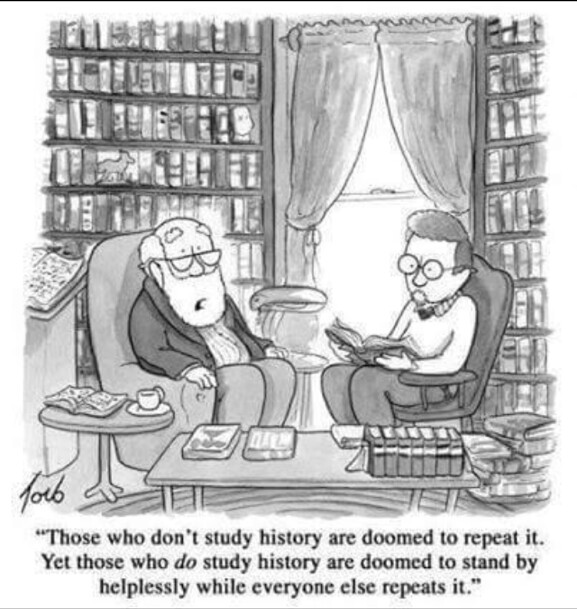
The point of this blog post is not history or eschatology, those can be topics for another day, but it is to discuss the choice we have to learn from history or repeat it again.  We can look at the future as something set in place and beyond our own influence or we can consider that Jerusalem had a choice and that is contained in the last words of the Old Testament:

“See, I will send the prophet Elijah to you before that great and dreadful day of the Lord comes. He will turn the hearts of the parents to their children, and the hearts of the children to their parents; or else I will come and strike the land with total destruction.” (Malachi 4:5-6)

Do you see the option A and the option B?

John the Baptist, while not literally Elijah, came in the Spirit of Elijah, preaching “repent, for the kingdom of heaven has come near” (Matthew 3:2) and yet was rejected by those who expected a literal return.  Because of their refusal to repent they choose the “or else” of option B  and we too face that choice: Will we repent and bring the Lord’s prayer “thy kingdom come” to life or will we continue waiting for fulfilment on our own terms and be destroyed?

The American church today is not much different from Jerusalem.  We face an uncertain future, we have been divided into competing political factions, there are angry zealots ready to run amok railing against foreigners, oppressors, etc.  We too have become woefully arrogant and blinded by our ambitions.  It is very much the same climate Jesus lived in two millennia ago.  It is the attitudes that Winthrop warned against nearly four hundred years ago:


“But if our hearts shall turn away, so that we will not obey, but shall be seduced, and worship other Gods, our pleasure and profits, and serve them; it is propounded unto us this day, we shall surely perish out of the good land whither we pass over this vast sea to possess it.”


We are at a crossroads as a people today.

The next forty years will probably hold dramatic changes.  How we respond to opportunities today could very well define the future of our nation.  America will need to choose repentance or it will continue to slide further away from greatness and towards destruction. 

Our end as “a city upon a hill” may not be as spectacular as the fall of Jerusalem, we might simply fade from prominence like other great nations before us, but be ready.    

Be ready for the fall.