
God and Mammon: From Prosperity Gospel to Epstein Redactions

Standard

No man can serve two masters: for either he will hate the one, and love the other; or else he will hold to the one, and despise the other. Ye cannot serve God and mammon.

(Matthew 6:24 KJV)

This teaching popped into my mind a few weeks ago and while reflecting on where our morality has broken down in the United States. Mammon is an interesting Biblical word and refers to more than just money as currency. Jesus is not talking about having material wealth here, rather he’s addressing about misplaced trust and devotion put in it. And “serve” seems like a key operational word here. In Greek it is “douleuó” (δουλεύω) and the term refers to slavery or bondage.
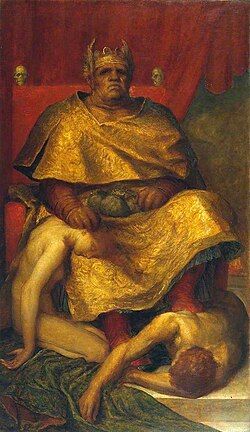
Jesus was confronted on this teaching by the Pharisees—who we’re told sneered at him. But we are also told they were the same people who would shortchange their own parents by abusing the practice of ‘Corban’—by claiming money was set aside for God (Matt. 15:1-9, Mark 7:1-13)—when it was all about their own gain. When you’re addicted to material gain, you’d likely sell off your own mother for another hit of the money drug and can’t be a good person. A slave to the ‘almighty dollar’ will basically do any evil to obtain more of it.

For we brought nothing into the world, and we can take nothing out of it. But if we have food and clothing, we will be content with that. Those who want to get rich fall into temptation and a trap and into many foolish and harmful desires that plunge people into ruin and destruction. For the love of money is a root of all kinds of evil. Some people, eager for money, have wandered from the faith and pierced themselves with many griefs.

(1 Timothy 6:7-10 NIV)

Pray for contentment, not cash. You can have enough to eat and live without a big bank account. We may enjoy—or imagine—a feeling of security from having more, but it is false security and pursuit of it leads to moral compromise. As Mark 8:36 asks: “What good is it for someone to gain the whole world, yet forfeit their soul?”

The American Evangelical landscape does not handle this very well. The ‘health and wealth” or prosperity gospel might not be openly preached in every church, but there’s often the underlying assumption that those who have money are blessed. I mean, you don’t want to ever offend those who fill the offering plate, do you?

This errant belief that material success equates to divine favor has seeped deeply into political alliances, particularly among Evangelicals who have thrown their support behind leaders promising them economic prosperity above all else. Donald Trump, with his gilded persona and “art of the deal” ethos, became a symbol of this worldview—tremendously blessed by wealth, endorsed by faith leaders, and appearing to be toualluntouchable.


Yet, as his second term unfolds, we’re now seeing how devotion to money over all else manifests in government—prioritizing billionaire gains over accountability and human suffering. It isn’t the paradise promised.

Life Under Bondi-age

One of the big reasons Trump had seemed like a better choice than a continuation of a Biden administration, under Harris, was his ‘green’ policies. He appeared to be a “make money, not war” candidate, given his history of draft dodging and no new war first term. Maybe it was just weariness of the conflicts in Gaza and Ukraine that made him a hope to the “it’s the economy, stupid” crowd. He also promised to release the Epstein files—which would mean some justice, right?

Attorney General Pam Bondi’s testimony to Congress is a revelation of a mentality that is completely detached. Who knows who coached her—or maybe it was completely her own idea? But the answers she gave only raised more eyebrows.

For example, when asked:

How many of Epstein’s co-conspirators have you indicted? How many perpetrators are you even investigating?

She replied:

Because Donald Trump, the Dow, the Dow right now is over — the Dow is over $50,000. I don’t know why you’re laughing. You’re a great stock trader, as I hear, Raskin. The Dow is over 50000 right now, the S&P at almost 7,000, and the Nasdaq smashing records. Americans’ 401(k)s and retirement savings are booming. That’s what we should be talking about. We should be talking about making Americans safe. We should be talking about — what does the Dow have to do with anything? That’s what they just asked. Are you kidding?

Is she kidding?

That’s astonishingly callous.

With victims in the crowd, she really thought it would play well to deflect with a pivot to a stock market highs?

Now, sure, this sort of hearing is a very partisan and high-pressure event. And a great many of those lawmakers are guilty of a cover-up as the Trump administration. Lest we forget it, around 80% to 90% of Epstein’s political donations went to Democrats. But now responsibility for the continued lack of transparency about this lies squarely on the Trump administration.

Bondi’s Justice Department has violated the law, The Epstein Files Transparency Act—a bill demanding the unredacted release of the files pushed through by representatives Thomas Massie (R) and Ro Khanna (D), by continued use of redactions that extends a cover-up that has gone on for decades. And both parties are neck-deep in this scandal, which is why nothing was done about it last administration despite Trump’s name being in the files tens of thousands of times—and probably many more mentions still hidden under all those black lines.

The administration that ran on a promise to tell the truth about Epstein has become one where Trump gaslights:

Are you still talking about Jeffrey Epstein? This guy’s been talked about for years, are people still talking about this guy? This creep? That is unbelievable. I can’t believe you’re asking a question on Epstein at a time like this, when we’re having some of the greatest success, and also tragedy with what happened in Texas. It just seems like a desecration.

I mean, why would we still be talking about a guy who was apparently sex trafficking a bunch of underage girls to a very long list of elites who have yet to be prosecuted, right?

The truth is a ‘desecration’ of Texas flooding response somehow?

Wherever the case, Bondi isn’t a fraction as skilled as her boss at this game. If you are going to pivot off a question about horrible sexual crimes and ritual abuse not leading to dozens of arrests, then at least deflect away to matters of an equal moral weight. As in this “We have arrested X amount of pedophiles, more than any administration since Genghis Khan—we’re making America safe again!” That would sound much less tone deaf than turning to the economy as if this nullifies questions about Epstein.

What does Bondi’s pivot scream?

It shouts that money can take her attention off of crime—that she can be bribed. More importantly, it suggests she thinks we will be distracted by money and forget about a total lack of prosecutions.

In the end, Bondi’s deflection and the Trump administration’s broader pattern reveals the stark truth: when mammon reigns supreme, justice for the vulnerable becomes optional, and the soul of a nation is quietly sold off in exchange for an economy that mostly benefits billionaires.  True contentment—and true greatness or lasting gain—will never come from chasing a dollar or at expense of seeking justice for all people.

The crazy part is that most who voted for Trump thinking it would help their portfolio and would keep us out of war—will find out that those who bought him have no problem with sending your sons to die in Iran. 

In Search of Authenticity at an Amish Wedding…

Standard

Protestantism aimed to strip away the inauthentic part of Christian tradition and, in the process, fractured the church into many competing sects all claiming to be the authentic article.

I was reminded of this while attending an Amish wedding and thinking of how quickly many outside of this peculiar tradition would dismiss Amish forms as dead religion.  The rituals of the service, all in German, while beautiful in their own rite, did not speak to me as an English speaking person.  I’m also doubtful the words did much for the many dozing throughout the three hours of singing and sermon.

Many Evangelicals, because Amish do not hand out tracts or speak of their “born again” experience and whatnot, openly question the salvation of Amish.  This includes many conservative Mennonites who (while also denouncing other Evangelicals as being too unorthodox) at least go through the motions of missions and schedule “revival meetings” every year to remind each other to be more authentic.

The Dilemma of a Doubly Non-conformed Mennonite…

Normally, in a traditional Mennonite context, non-conformity means conforming to their written (and unwritten) standards and being intentionally different from their “worldly” neighbors.  But for me non-conformity has always meant more than only doing things acceptable for a Mennonite.  For me non-conformity meant a) independence from public school peers and also b) authenticity at church.

I have spent my life as a non-conformed Mennonite.  This was a constant tension for me.  It made me uncomfortable with inauthentic conformity to Mennonite culture yet also always longing for full acceptance and wishing to be fully conformed.  I never wanted to be anything other than Mennonite and accepted there.  But it was equally important, as one seeking to be authentic as a matter of conscience, that I never do anything just to be accepted.

In practical terms this meant that I would not go to Bible school or to the mission field hoping to find a mate.  I know this is how many Mennonites do find a partner (despite their stated intentions and anti-fraternization policies) but it seemed dishonest to me.  So, as a result of this conviction to be forthright, I didn’t go and planned to go only when the reasons for going fully matched my expressed aims.  That, more than anything else, is probably what ensured my bachelor status and one of many ways my desire for authenticity cost me.

Doing anything without a full commitment, including singing hymns while down and only half-hearted, was painful for me.  I would sooner risk offense and remain silent than utter words without being completely genuine.  For me authenticity meant not going through the motions and not doing cliché things only to please culture expectations.  Unfortunately, in a culture that values conformity over authenticity, this was at odds with my hope for full acceptance.

What Does It Mean to Be Authentically Christian?

The other day I was talking to a couple curious about my religious roots.  The question came up, “Do Mennonites love Jesus?”  To that I answered “yes” but then went on to explain what differentiated Mennonites from other denominations.  Mennonites, like their Amish cousins, claim to love Jesus.  However, to be one of them you will need to prove your authenticity by keeping their traditions and following their rules.

Sadly, being authentically Mennonite does not make a person is authentically Christian.  Even assuming that Mennonite standards were absolutely correct, even if a person were able to follow those standards perfectly to the letter, and even if these forms are of temporal benefit, there is no salvation to be found in religious conformity.  We know this because Jesus said this when he encountered a man who had kept his religious tradition perfectly and was still lacking something:

Just then a man came up to Jesus and asked, “Teacher, what good thing must I do to get eternal life?”

“Why do you ask me about what is good?” Jesus replied. “There is only One who is good. If you want to enter life, keep the commandments.”

“Which ones?” he inquired.

Jesus replied, “‘You shall not murder, you shall not commit adultery, you shall not steal, you shall not give false testimony, honor your father and mother,’ and ‘love your neighbor as yourself.’”

“All these I have kept,” the young man said. “What do I still lack?”

Jesus answered, “If you want to be perfect, go, sell your possessions and give to the poor, and you will have treasure in heaven. Then come, follow me.” (Matthew 19:16-21)

We read that the disciples were “greatly astonished” by what Jesus had told this man.  How could anyone be saved by this new standard that Jesus gave?  This man had followed all the rules.  He was the good Mennonite, did his missionary service, attended every service, tithed faithfully and was a reputable man, perhaps even homeschooled his children, but somehow this was not enough for Jesus.

1) Authenticity is not preserved in keeping tradition…

Tradition is intended to guard authenticity.  Many measure the authenticity of others by how they measure up against their own tradition.  Mennonites question if authenticity can be found amongst Amish singing their centuries old Ausbund hymns.  Those not Mennonite, despite admiring our devotedness to our religious practices, question if we love Jesus.

Early Anabaptists and early Christians were right to understand that authentic Christianity was about more than keeping religious traditions.  In fact, they often, to the vexation of the religious, dispensed with the established rules and defied tradition.  They are like Paul and Barnabas who were adamant in their opposition to defenders of tradition:

Certain people came down from Judea to Antioch and were teaching the believers: “Unless you are circumcised, according to the custom taught by Moses, you cannot be saved.” This brought Paul and Barnabas into sharp dispute and debate with them. (Acts 15:1,2)

Basically these Judaizers (Galatians 2:14) were trying to force non-Jewish converts to keep Jewish customs and be circumcised as a condition for acceptance.  But the apostle Paul preached against this and used language quite strong to express his contempt:

Mark my words! I, Paul, tell you that if you let yourselves be circumcised, Christ will be of no value to you at all. Again I declare to every man who lets himself be circumcised that he is obligated to obey the whole law. You who are trying to be justified by the law have been alienated from Christ; you have fallen away from grace. For through the Spirit we eagerly await by faith the righteousness for which we hope. For in Christ Jesus neither circumcision nor uncircumcision has any value. The only thing that counts is faith expressing itself through love.

You were running a good race. Who cut in on you to keep you from obeying the truth? That kind of persuasion does not come from the one who calls you. “A little yeast works through the whole batch of dough.” I am confident in the Lord that you will take no other view. The one who is throwing you into confusion, whoever that may be, will have to pay the penalty. Brothers and sisters, if I am still preaching circumcision, why am I still being persecuted? In that case the offense of the cross has been abolished. As for those agitators, I wish they would go the whole way and emasculate themselves! (Galatians 5:2-12)

Paul is saying that these traditionalists are at odds with authentic faith.  He comically calls these defenders of circumcision to go further and completely emasculate themselves.  It seems that the real problem with the Judaizers was not that they followed Jewish customs themselves, but that they tried to force to new converts to keep their traditions as if salvation depended on them and this came at the expense of authentic Christian love.

2) Authenticity is not a produced by destroying tradition…

Many in search of authenticity abandon tradition and try to rebuild from scratch.  This has been the modus operandi of many since Martin Luther hammered out his ninety-five theses in 1517 in protest of the selling of indulgences and has led to the great fracturing of the church.  Those seeking authenticity apart from established church traditions have gone in a thousand contradictory directions.

Some think authenticity comes from spontaneous and disorderly outbursts during church services, which goes against Paul’s instruction in 1 Corinthians 14:26-40:

If anyone speaks in a tongue, two—or at the most three—should speak, one at a time, and someone must interpret.  If there is no interpreter, the speaker should keep quiet in the church and speak to himself and to God.  Two or three prophets should speak, and the others should weigh carefully what is said.  And if a revelation comes to someone who is sitting down, the first speaker should stop.  For you can all prophesy in turn so that everyone may be instructed and encouraged.  The spirits of prophets are subject to the control of prophets.  For God is not a God of disorder but of peace—as in all the congregations of the Lord’s people.

Originality is not evidence of faith, innovation in worship is not a sign of deeper spiritual life, and being anti-formality does not make a person more authentically Christian.  And, according to Paul, “God is not a God of disorder but of peace…”

In practical terms, this means God is probably not bedazzled by our light shows and high-powered musical programs.  Conversely, nor is God likely to be impressed by our long-winded sermons, our wielding of giant leather-bound Bibles on Sunday mornings, our flowery prayers with “thees” and “thous” nor any of our other attempts to create authenticity apart from living in true faith and loving as Jesus commanded.

In a generation or two those who attempt to remedy dead orthodoxy by destroying tradition often end up in a weaker position and with a tradition more corrupt, more incomplete and more unbalanced than the one they left behind.  Their innovations evolve into forms and soon the only stability they have comes from their condemnation of everyone who doesn’t conform to their own particular denominational brand.

3) Authenticity transcends our dichotomies…

Evangelicals (especially conservative Mennonite evangelicals who fear being confused with their more non-conformed brethren) look down on Amish and question the authenticity of their faith because they don’t use evangelical terms to describe their experience.  But, in my working with Amish, I have found them to be very genuine and generous towards me.  I do not see them as much different from conservative Mennonites in their focus on outward conformity and there is nothing that makes the conventions of modern Evangelicalism more authentic than the more traditional alternatives.

You can worship in a non-denominational house church or recite liturgy in a cathedral in Rome and miss the point of Christian faith entirely in both places.  As many Mennonite ordained men lament, pleading and trying to prod through the blank stares of their congregations, “Did you think about the words you just sang?”  And thus they prove that even the best-written hymns of the past couple hundred years can be sung beautifully and yet the meaning of the words missed.  Which makes me wonder why they think their own appeals will be heard?

Whatever the case, true authenticity is not a product of the religious form one follows, it is not a matter of being more or less traditional.  I have actually found it easier to worship God in a liturgical service than I did in the less ordered and less orthodox Mennonite setting that I grew up in.  Why?  Well, because it is an authentic love of God that gives our worship life.  I’ve found it easier to lay aside all earthly cares while in a liturigical service.  For me there is greater peace in the cloud of witnesses and ancient tradition than there is in the many opinions of a men’s Sunday school class.

That said, I firmly believe there are authentic Christians in the whole swath of traditions old and new from Anglican to Zionist and everything in between.  What matters, what makes a Christian authentic, is not the costume that a person wears nor the prescribed language they use, what truly matters is whether or not we love each other as we were commanded.  All tradition, and all abandonment thereof, is only meaningless noise without love:

If I speak in the tongues of men or of angels, but do not have love, I am only a resounding gong or a clanging cymbal. If I have the gift of prophecy and can fathom all mysteries and all knowledge, and if I have a faith that can move mountains, but do not have love, I am nothing. If I give all I possess to the poor and give over my body to hardship that I may boast, but do not have love, I gain nothing. (1 Corinthians 13:1-3)