

It has been twenty-four years since 9/11. I recall working in town, for a painter, hearing for the first time—and right after seeing the image of smoke pouring from the WTC and the airliner striking the second tower. The tenant of the house where we were working let us watch on his television. This was a moment of great uncertainty about what would happen next. By the end of the day my car battery drained from the radio blaring so I could hear the reports while we worked on the house exterior.

Much has changed since that surreal day in the fall. I went to college, and have worked various jobs—left the Mennonite tradition—got married, became a dad—witnessed the birth of my daughter and many things that twenty something version of me could not have imagined. And while I still drive Ford products and vote for the same party (albeit grudgingly), my worldview and perspective have evolved dramatically since the fateful day in September 2001. Many things I once thought were impossible are now possible and even likely.
I decided to write this reflection partly for anniversary and partly because Facebook has been flooding my feed with pictures of 9/11 and it is weird. It’s as if some bot farm is tasked with putting this in the forefront of our minds and one can only imagine why. It is most likely an attempt to feed availability heuristic, to keep the 9/11 attacks vivid in our minds—and possibly for the coming war with Iran. A propaganda campaign of those who understand that many Americans have blamed all Muslims for what happened on that day. Maybe the powers that be want to squeeze just one more war out of this day America stood still?
Maybe it’s just that I tripped the algorithms by responding to too many of the repeated claims about melted steel?
We live in the post-information age—a time when we may very soon not even be able to believe our own eyes due to advancement in AI technology, where our institutions have failed us and no source can be trusted. The mistrusted is earned. But the feeling can be misdirected and counterproductive. At the very least we should not just believe a claim we have heard because it fits our narrative. We may never know the full truth. However, we can do a better job forming our theories by employing a broader base of scientific understanding or real world experience to calibrate our judgment.
There is no doubt that the 9/11 attack was a conspiracy, we simply disagree on the full scope and nature of it. It was clearly used as an excuse to pass the Patriot Act and to invade Iraq. There’s evidence that Mossad knew in advance with the “dancing Israelis” reports and suspicious shorting of airline stocks before the attacks. However, it is as clear that Osama Bin Laden planned these attacks as a response to US wars and that—from an engineering standpoint—nothing is inexplicable about the events of 9/11 being caused by fuel-laden commercial jets.
The Conspiracy Condensed
Typical 9/11 conspiracies center around a mix of claims about melted steel, witnesses who heard explosions, an insurance policy bought before the events, or asking about how three buildings collapsed despite only two being hit by the 767s. They’ll claim all of the buildings were rigged with thermite and explosives, even that the aircraft were holograms. There is simply no way for me to address all of the theories and claims being made. There are excellent resources that provide detailed analysis and in-depth explanations. This list below is intended to only address a few engineering or physics related claims, not to make a complete and comprehensive response to all questions related to the 9/11 attack.
“Jet fuel can’t melt steel beams”
This meme, used as part of the controlled demolition conspiracy narrative, is the very definition of a strawman argument. Nobody has ever said the buildings fell because the steel beams completely melted. But what can happen is that steel, heated by an intense fire and with heat protection material knocked off, will lose significant tensile strength. Ane a little bit of deflection—especially to a structure that was already severely damaged by an enormous jet hitting it—is all that is needed to explain a cascading failure and collapse.
“Buildings don’t collapse from fire”
This is not only another strawman, but it proves that most people repeating these claims don’t do any research nor do they think things through. High rise buildings have collapsed without fires, from design flaws or unaccounted for loads, and the list includes the 2012 spontaneous collapse of the Vieira Fazenda office block—which was due to unauthorized renovations that had removed key support columns and failure. Interestingly, two adjacent buildings, hit by debris during the collapse, likewise were reduced to piles of rubble. Then we have Edifício Wilton Paes de Almeida, also in Brazil, that fell from just fire in 2018.
So, yes, buildings can collapse from just fire alone. However, in the case of the WTC, fire alone is not a requirement. Clearly the Twin Towers were struck by commercial airliners prior to the collapse, this doing an immense amount of structural damage, and that the reason why raging fires brought them down in the aftermath. As someone who works in an engineering related field, this is not hard to understand, we deal with sheer loads and also see the results of loads not being fully accounted for. There are no totally indestructible buildings, all are designed for a certain set of requirements and will collapse once the limits are exceeded.
“Empire State Building got hit and didn’t fall”
Next up is the comparisons by those who are clueless about structural engineering and failed physics. Back in 1945 a pilot, who was lost in the fog, slammed a B-25 bomber into New York City’s most iconic skyscraper. It didn’t bring down the tower and this fact is used as proof that the WTC couldn’t fall due to being struck by a much larger faster aircraft.


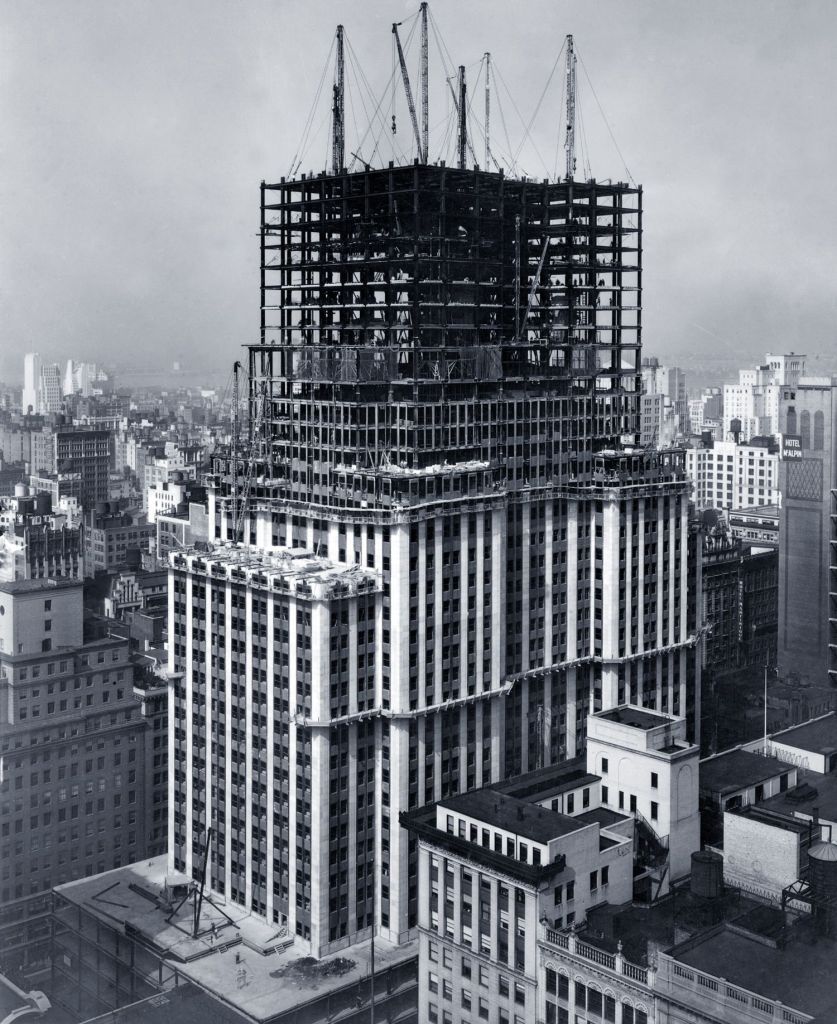
This, of course, is absurdity akin to saying that since a bicycle can’t go through a brick wall nor can a semi truck. Or that if you can catch a falling baby you should be able to catch a full-grown man.
I’ll let Grok explain:
In 1945, a B-25 Mitchell (35,000 lbs, ~272 mph) struck the Empire State Building with ~86.6 million ft-lbs of kinetic energy, causing localized damage due to its small size and modest speed. The World Trade Center was designed to withstand a Boeing 707-320B (336,000 lbs, 180 mph) impact, delivering ~3.64 billion ft-lbs, assuming a low-speed accidental collision. However, the Boeing 767-200ERs used in the 9/11 attacks (395,000 lbs) hit at 470 mph (Flight 11, ~29.2 billion ft-lbs) and 590 mph (Flight 175, ~46.0 billion ft-lbs), producing exponentially greater energy—approximately 8 and 12.6 times the 707’s, respectively—due to their higher speeds and slightly larger mass, compounded by massive fuel loads that caused devastating fires and structural collapse far beyond the WTC’s design capacity.
Do people really not understand that there’s a difference between the force of a baseball tossed and one thrown at 100 mph? Randy Johnson exploded a bird with a pitch and it wasn’t because the ball was rigged with C-4 or thermite. What is amazing is that these towers withstood the impact and stood for nearly an hour afterwards. Furthermore, a relatively small bomber hitting a completely different kind of structure is absolutely not a valid comparison. The WTC and Empire State Buildings rely on completely different designs—a 1957 Chevrolet and a brand new Toyota Prius are both cars, but do we truly expect them to act exactly the same in an impact?
“So, what about Building 7?”
What about it? The smarty-pants response to the analysis above is to bring up Building 7 which was never hit by an airplane. This is yet another case of half-truth. Sure, there was never a direct hit by a fuel-laden airliner and yet there was an impact of a collapsing tower and a resulting fire. Due to inoperable sprinklers and because available firefighting assets were pinned down elsewhere, there were fires on four different floors that raged out of control for almost seven hours. This, obviously, goes well-beyond any scenario a typical building is designed for. It really isn’t a big surprise that one fire heated structural column would buckle and lead to a chain of nearly simultaneous failures throughout the building. Once one goes the others (having also been weakened by fire) given weight is shifted to them by the failures down the line and as fast as the load is transferred.
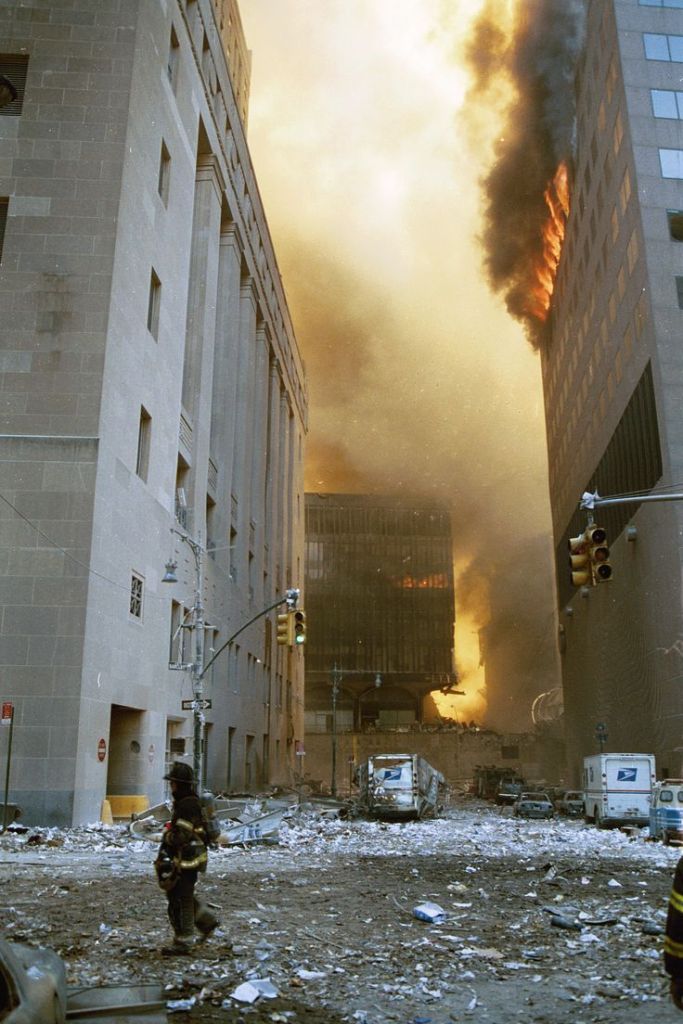
“Nothing remained of the airplanes.”
Thermite is silent. The conspiracy theories contradict each other. And this is another frequent problem with these theories and points to motivated reasoning rather than honest inquiry or an unbending quest to find truth. So the so-called truthers who claim thermite was used and then cite the sound of explosions as proof are incoherent and unwittingly debunking themselves.
When all else fails just make stuff up, right? And that’s what conspiracy theory truthers do. Nevermind the eyewitness testimony or the actual videos, they’ll just say that those airliners don’t exist and no debris was ever found. That’s just false.
But first an anecdote.
Kee Bird, a B-29 Superfortress, was left in the Artic during the Cold War after making an emergency landing in 1947. Decades later, in the 1990s, a team of enthusiasts decided to dig this intact WW2 relic out of the ice and bring it home. Unfortunately, nearly ready to fly, catastrophe struck their mission, a space heater was tipped over and a fire started in the hull. The aluminum beast melted in half and the recovery effort doomed. It was the first I thought about the fact that such a big heavy thing could just melt away into a puddle.

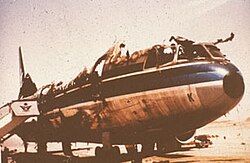
Airliners are big, but they are also made out of lightweight materials. After velocity took them through those outer steel structure of the impact zones, they were most likely as smashed as a crushed soda can. Much of the structure likely stayed within the burning buildings and was then melted away in the intense heat. But some of the heavier parts did go through, like the landing gear and an engine found scattered below. Commuters saw an airliner flying into the Pentagon and it clipped poles coming in, but of course not much remained recognizable as an airliner after it hit a reinforced concrete wall.

“But what about the passport found?”
They say fact is stranger than fiction and a passport of a hijacker being found may fit in that category. This has been used as proof of conspiracy and yet this is the least likely thing someone would come up with fabricating a narrative. Seriously. If they were pulling off a false flag on this scale I am fairly certain they would do better to make the details of their investigation seem plausible. The key is, nobody has ever said this is all that was found and in the violence of the collision it is possible that parts of the aircraft severed off and came through relatively intact. It is similar to straw found stuck in trees after a tornado. Yes, it is counterintuitive, but weird enough that it is unlikely to be part of a cover-up lie meant to convince us of nothing suspicious in the attacks.
“You forgot about the molten metal”
One of the frustrating aspects of rebutting a conspiracy theory is that regardless of how thoroughly one refutes various claims, the conversation will always be circular. This is because the evidence is not actually what matters. With conspiracy theory thinking the theory is what comes first. Evidence is accepted or rejected entirely based on if it fits the overall theory rather than the other way around. And thus when every point is answered there will always be yet another anomaly found. There’s simply no way to answer everything all at once: “A man who is convinced against his will is of the same opinion still.”
One of these small items and yet helpful to demonstrate a point is what appeared to be molten metal that was dripping from one of the towers before it fell. This goes back to the controlled demolition theories involving use of thermite. And just shows how such endless possibilities exist in a scene so big to come up with the unexplained. Looking at the WTC towers from the outside they do not look complicated. And yet, within them were many utility spaces and even electrical transformers to keep things running. There are many possibilities to explain these drips coming out the window that do not require a controlled demolition—perhaps an airliner made out of aluminum that became lodged within the structure?

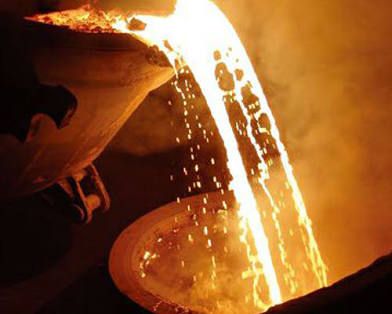
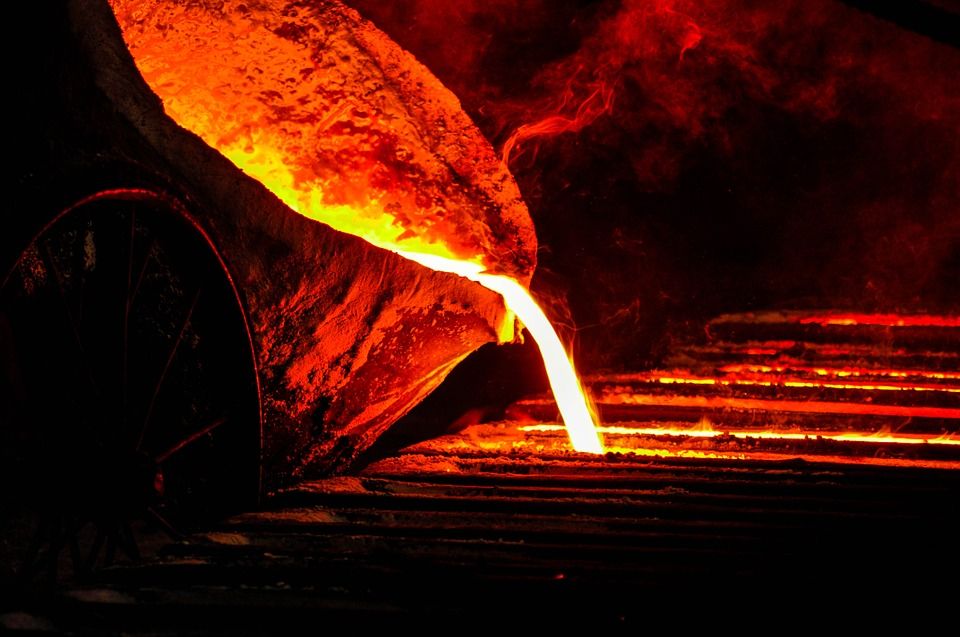
One of the things being claimed by truthers is that aluminum doesn’t glow orange when molten. This is possible to keep their favorite theory alive after someone pointed out the obvious. But, while it is true that aluminum silvers when poured in small amounts or is white at the temperatures where it initially becomes molten due to reflectivity, there is a red glow becomes visible as more heat is applied and it pours red like any other metal when there’s enough heat or volume. So it is misinformation. An inferno from burning office furniture doused with tons of jet fuel will produce more than enough heat to cause an orange glow. So again the theory is based on incomplete knowledge and on pre-drawn conclusions rather than an open inquiry or honest pursuit of the truth.


“Bu-but explosion sounds…”
But eyewitness testimony and description is certainly evidence that can’t be dismissed—so what about the sound of explosions?
First, though, as a child I had witnessed an in-flight breakup of a twin engined airplane and from the ground it was really hard for us to interpret at first what exactly we were seeing above. Initially we heard the sound of what had appeared to be a laboring pair of small aircraft engines. Then, as we had started to observe like inquisitive boys do, what happened next didn’t make a whole lot of sense. The engines wound out and what was one airplane appeared to be two stunt planes doing acrobatics. It wasn’t until we saw papers raining down on the highway as we drove home that we understood the full weight of this horrific circumstance.
All that to explain that it is hard to find the right words for an experience way outside of our ordinary. I mean it’s absolutely nutty to think that a building owner saying “pull it” to the firefighters can mean anything other than an acknowledgement of the risk of this building—with uncontrolled fires raging on four floors for seven hours—may also end up collapsing. No, we’ll just pretend that a co-conspirator would just blurt this out for all to hear it. More likely is the obvious, he was saying to pull out those trying to save the building.
Finally we get to the sounds described as “explosions” in interviews. Going back to confusion about what we saw and heard the Sunday an overloaded airplane came apart over us in the church parking lot—we sometimes just don’t have the most correct or precise technical language. And, while there are theories on aluminum explosion, what is most likely is that people heard the incredible sound of the tons of steel and concrete smashing floor by floor. What is an explosion sound other than a pressure wave—a pressure wave which can easily be caused by the compressed air being forced throughout as the floors collapse one into the next?


The Johnstown flood was said to have had a sound like a “thunderous rumble” as a 40 high wave of water and debris flowed down into the city through a valley where the dam once stood. We wouldn’t assume that they heard literal thunderclaps any more than we would assume thunder is actual claps. The vocabulary for such large and catastrophic events just doesn’t exist. The scale of 9/11 was incredible, a size that was far outside anything else most of experienced, booms, pops or bangs don’t even come close to the noise this would’ve made.
Conclusion: Questioning Wisely in an Age of Doubt
In the shadow of 9/11’s enduring impact, we’re left navigating a world where truth is increasingly elusive, shaped by distrust in institutions and amplified by algorithms that exploit our biases. The “jet fuel can’t melt steel” slogan, while being as catchy as a fire on jet fuel soaked office furniture, oversimplifies complex engineering realities and distracts from more plausible questions about the events—like the foreknowledge suggested by suspicious stock trades or the “dancing Israelis” reports. These deserve scrutiny, but not at the cost of credibility through ungrounded claims of holograms or silent thermite. It’s not that we shouldn’t question the official narrative; we must, but in a way that anchors our skepticism in reason and evidence, not sensationalism.
The real conspiracy may lie not in secretly rigged explosives, but in how 9/11’s trauma has been leveraged to justify policies like the Patriot Act or deadly wars that reshaped the Middle East. By focusing on half-truths, we risk playing into a cover-up that thrives on distraction—and aid our corrupted institutions which very much love to paint reasonable objections together with kooks—we’re also missing the broader, more probable truths hidden in plain sight. Let’s instead honor the pursuit of truth by questioning wisely, and ensuring our doubts don’t undermine the very clarity we seek.
 Irregular Ideation