
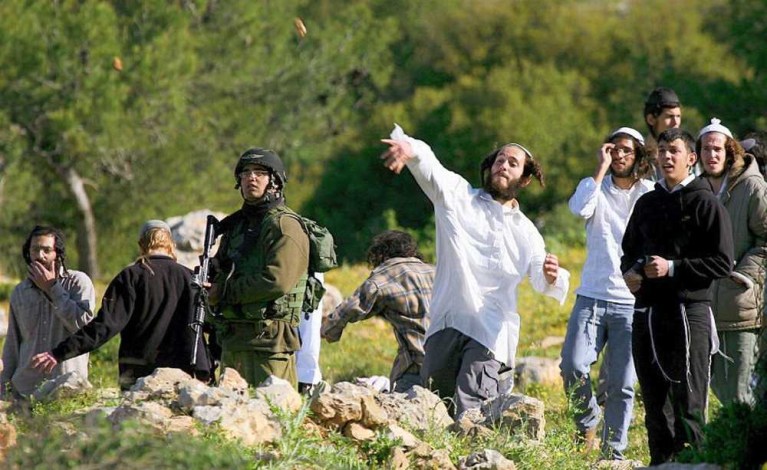
Naboth’s Vineyard: A Biblical Mirror to the Injustice of Land Theft in Palestine

Standard

A disturbing Penn State poll conducted in 2024 revealed that 83% of Israelis support ethnic cleansing, with nearly half expressing approval for the complete killing of Palestinians in Gaza.

This level of consensus is chilling, arguably surpassing the public support for such policies in Nazi Germany between 1933 and 1945. The roots of this sentiment can be traced to the founding of Israel itself, where Zionist militias employed tactics of rape, murder, and terrorism to expel Palestinians from land they had inhabited for centuries. This violent dispossession undermines any claim to respect for property rights—a principle often championed by those who defend Israel’s actions.

The hypocrisy is particularly stark among American conservatives, who in one breath decry property taxes and champion the sanctity of life—down to the frozen embryo—yet in the next, justify the deaths of Palestinian women and children as “deserved” because 2% of Gaza’s men resisted occupation. This contradiction mirrors the selective outrage of a nation founded on the cry of “no taxation without representation,” yet which now supports a cruel occupying colonial power denying Palestinians self-determination and basic human rights.

The erasure of Palestinian identity is a key tool in this moral failure, with many Zionists claiming Palestinians “never existed” despite historical evidence to the contrary. Palestine is referenced as far back as Shakespeare’s Othello (1603): “I know a lady in Venice would have walked barefoot to Palestine for a touch of his nether lip.” Early Zionist cookbooks, from the 1920s (to teach European settlers how to use local spices and oils unfamiliar to them) have “Palestine” in the title acknowledging the region’s distinct cultural heritage.
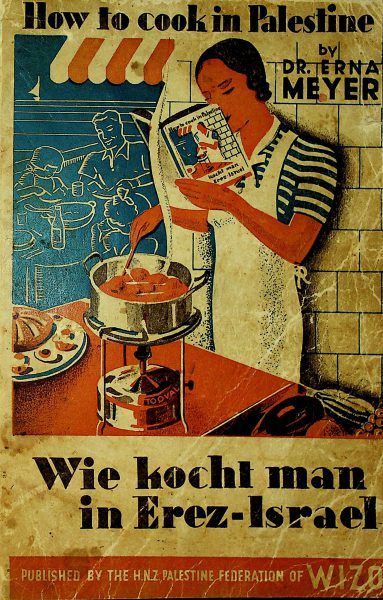
https://blog.nli.org.il/en/hoi_cooking_in_palestine/

This ongoing effort to remove inhabitants echoes a biblical story of greed and injustice:

Some time later there was an incident involving a vineyard belonging to Naboth the Jezreelite. The vineyard was in Jezreel, close to the palace of Ahab king of Samaria. Ahab said to Naboth, ‘Let me have your vineyard to use for a vegetable garden, since it is close to my palace. In exchange I will give you a better vineyard or, if you prefer, I will pay you whatever it is worth.’ But Naboth replied, ‘The Lord forbid that I should give you the inheritance of my ancestors.’ So Ahab went home, sullen and angry because Naboth the Jezreelite had said, ‘I will not give you the inheritance of my ancestors.’ He lay on his bed sulking and refused to eat. His wife Jezebel came in and asked him, ‘Why are you so sullen? Why won’t you eat?’ He answered her, ‘Because I said to Naboth the Jezreelite, “Sell me your vineyard; or if you prefer, I will give you another vineyard in its place.” But he said, “I will not give you my vineyard.”’ Jezebel his wife said, ‘Is this how you act as king over Israel? Get up and eat! Cheer up. I’ll get you the vineyard of Naboth the Jezreelite.’ So she wrote letters in Ahab’s name, placed his seal on them, and sent them to the elders and nobles who lived in Naboth’s city with him. In those letters she wrote: ‘Proclaim a day of fasting and seat Naboth in a prominent place among the people. But seat two scoundrels opposite him and have them bring charges that he has cursed both God and the king. Then take him out and stone him to death.’

1 Kings 21:1-10 NIV

This evil plan succeeded, and Naboth was murdered for his land with the complicity of a manipulated mob. The parallels to modern times are striking: Palestinians are dehumanized as “wild,” “barbaric,” or “terrorists,” just as Naboth was falsely accused to justify his execution.  In the West Bank unarmed Palestinians are being driven off their land—even a US citizen was recently beaten to death by settlers.  Jezebel and Ahab eventually faced divine judgment, but not before their treachery destroyed an innocent man.  Today’s leaders, spurred by similar greed and power, rely on a complicit public—modern “useful idiots”—to enable ethnic cleansing and cultural erasure.

Suspicion surrounds the events of October 7, 2023, when Hamas launched a devastating attack on Israel. Reports indicate that IDF guards were ordered to stand down from their normal patrols an hour before the incursion, despite Gaza being one of the most heavily surveilled regions in the world. This raises questions about whether the attack was truly a surprise. Historical parallels, like the shorting of airline stocks days before the September 11 attacks, suggest insider knowledge rather than direct orchestration. While there’s no concrete evidence that intelligence agencies planned the October 7 attack, circumstantial factors—such as the “dancing Israelis” linked to Mossad during 9/11—fuel speculation that Israel’s intelligence may have known of Hamas’s plans and allowed them to proceed. Unlike conspiracy theories that overcomplicate events, the simpler explanation is that the attack was permitted to serve as a pretext for escalating military action.

This pattern of exploiting crises is not new. The 9/11 attacks, carried out primarily by Saudi nationals, were used to justify the invasion of Iraq, despite no evidence linking Saddam Hussein to the plot. The invasion served special interests seeking to eliminate a regional rival, much as Israel’s current actions align with the Likud party’s long-standing goal of a “final solution” for Palestinian territories. Israeli Prime Minister Benjamin Netanyahu, who had covertly supported Hamas to weaken Palestinian unity, likely saw the October 7 attack as an opportunity to galvanize public support for extreme measures. By allowing Hamas’s unprecedented success, he manufactured consent for policies that would otherwise be unthinkable.

The world’s leaders rarely let a crisis go to waste. Through propaganda, they direct public anger to serve their agendas, erasing the humanity of the oppressed in the process. Just as Naboth was slandered and killed for his land, Palestinians face cultural erasure and violence, enabled by a global audience too quick to accept the narrative of their dehumanization. To learn from history, we must discern the truth and reject the lies that justify such atrocities.

Blessed Are the Peacemakers

Standard

My heart sank when I saw the image of Jonathan Price.  I’ll admit, while the lives of George Floyd, Breonna Taylor, and Jacob Blake do matter, it is hard for me to identify with those who turn them into blameless victims and saints.

But this was different. Price, according to reports, was a “pillar in the community” and had been intervening in a domestic incident when Tazed, then fatally wounded, by a responding officer.

The officer has been charged with murder and it will be up to the justice system to decide his guilt or innocence. There is no reason for me to demonize him nor to defend his actions. There are always multiple sides to every story, the bodycam footage is likely to tell us more about the circumstances that led to the shooting, and the officer deserves his day in court.

However, the reason I’m writing this is that there some who are now mocking Price for his taking to social media, back in June, to encourage peace with law enforcement officers.  They would have you believe that this is some sort of lesson to him or those who would follow in his footsteps.

This is his post:

The glee that this man learned the hard way and that “they will still want to kill yo’ ass” is wrong on so many levels.  No, the death of Price does not disprove his advice nor help to prove the narrative that black men are being gunned down for being black.  It certainly does not justify the hatred of the police or make anything he said wrong.

1) There is no proof (yet) that the officer acted with malicious intentions.  Police officers are human.  Humans make mistakes.  It could be very possible that the officer who shot Price horribly misinterpreted the situation or that Price himself did something unintentionally that made him appear to be a threat.  If he was simply out to kill black men there would be many far easier ways he could satiate those aims without being as clearly identified as the killer.

2) With rare exceptions, it is still far better to cooperate with law enforcement and not see them as our enemies.  Most deadly encounters with police involve some kind of criminal behavior and resistance to lawful commands.  That is why I can’t see many of those killed by police (or who died in police custody) as being hapless victims as they are often presented.  If people did not fight with officers or run there would be very few deaths.

Price, despite his own tragic end, was right.  Yes, he was a black man killed by a police officer.  But the officer was promptly charged and, more importantly, this case is the rare exception.  The fact remains, no matter your skin color, a person who does not engage in criminal behavior or resist the lawful commands of a police officer is at a much lower risk than a person who does those things.

No Good Deed Goes Unpunished

Those trying to make a positive difference in the world are taking a risky posture.  The sardonic quip, “no good deed goes unpunished” pays homage to this reality that being a Good Samaritan is often not safe.  Doing the right thing, getting involved, can cost a person their life.  A Google search for “Good Samaritan killed” shows many times where those intervening were harmed and that’s why many keep their heads low rather than get involved.

Chris and Taya Kyle

Chris Kyle, the ‘American Sniper’ was one of those go-getter types.  He took an active role in the lives of others and with this trying to help made himself more vulnerable.  He took a man under his wing who had some serious mental health issues and ultimately paid with his life.

The reason the sick man murdered them?

I was just riding in the back seat of the truck, and nobody would talk to me. They were just taking me to the range, so I shot them.

That, above, is precisely why many run the opposite direction from a crazy person.  It is a self-preservation instinct.  We know when something is off and we run.  This man couldn’t even appreciate the fact that the only reason that he was included at all is that the men he murdered cared about him.  They took the risk, they were doing something good that very few are willing to do and paid the ultimate price for their courage.

Price too, by getting involved in a domestic dispute, put himself in a position that was very risky to himself and certainly could’ve just been a bystander.  He would very likely still be alive today had he not gotten involved.  And yet his bravery took him into a confusing circumstance, led to a police officer mistaking him for the offending party and ended up with him being shot.

Price, like Kyle, had their lives together.  They very well could’ve avoided dangerous people and risky situations.  They could’ve taken the safe position that many people do.  But quite obviously they were willing to stand apart from others.  Price by humanizing law enforcement and refusing to go along with the easy tribal narrative.  Kyle in his willingness to lay aside his privileged life, as a successful warrior and publicly known personality, to spend time with a troubled man that most would avoid.

These stories could be used as a cautionary tale against this sort of faithfulness.  The tribal cynics and true cowards now ridicule Price.  They will have you believe that being like him will lead to you being shot.  And these same people would probably have stood by, as bystanders, laughed, and made a video for YouTube rather than attempt to intervene on behalf of another.  Kyle and Price should be commended for not being content to steer clear of danger as many do.  They were being peacemakers.

For They Will Be Called Sons of God

The Beatitudes are a regular part of the liturgy and a wonderful reminder to think beyond our present circumstances.  It is basically a list of what true righteousness looks like and the rewards of righteousness:

Blessed are the poor in spirit, for theirs is the kingdom of heaven.
Blessed are those who mourn, for they shall be comforted.
Blessed are the meek, for they shall inherit the earth.
Blessed are those who hunger and thirst for righteousness, for they shall be satisfied.
Blessed are the merciful, for they shall obtain mercy.
Blessed are the pure in heart, for they shall see God.
Blessed are the peacemakers, for they shall be called sons of God.
Blessed are those who are persecuted for righteousness sake, for theirs is the kingdom of heaven.
Blessed are you when men revile you and persecute you and utter all kinds of evil against you falsely on my account. Rejoice and be exceedingly glad, for your reward is great in heaven.

Matthew 5:3-12

All of those things listed come at a short-term cost.  Humility as opposed to arrogance; sobriety as opposed to mindless merriment; taking a submissive rather than aggressive posture; leaving our comfort zone rather than being complacent, all of these things require one to sacrifice something in the present tense.  But the promise, in relation to all, is a later and greater reward.

This is completely at odds with the “get mine” attitude and pursuit of instant gratification of this age.

The idea of a “peacemaker” is not to be in denial of the personal risks of involvement.  Entering into the conflict-zone is always a risky affair.  Those on either side of a divide could easily mistake you for an enemy combatant.  In the fog of war, friendly fire or getting caught in the crossfire are very real possibilities and those entering the fray usually are not unaware of this.

It is courage, not ignorance, that drives a peacemaker into danger.  A Christian is supposed to “count the cost” (Luke 14:28) of following after Jesus, the ultimate peacemaker, and consider the price of His obedience.  Jesus, the son of God, came into the fray, knowing full well of the pain and suffering He would endure, as a means to make a path of peace between us and God.

It is by the God-man Jesus, the word of God made flesh, that we can become the sons of God through adoption.  To be a peacemaker at personal cost is to live beyond ourselves, to live by faith rather than fear, and put on the divine. For those of faith, doing what is right will be rewarded in the end and even if it costs us everything in this life.

Blessed are the peacemakers, for they will be called the sons of God.

Kanye West and the Choice to Be Free

Standard

I’ve been following the career of Kanye West since hearing “Jesus Walks” for the first time in 2004. His lyrics then spoke about the struggle of finding his way in life:

Yo, we at war
We at war with terrorism, racism, but most of all we at war with ourselves

God show me the way because the Devil’s tryin’ to break me down

I could identify with that much of the controversial rapper’s message. And, throughout the song, the memorable hook, “Jesus walks with me” was another point of our shared perspective. He seemed a man much like me in many ways.

However, his antics, particularly his pushing aside Taylor Swift at the VMA’s and his defining a natural disaster response in terms of race, really turned me off to him. Still, I couldn’t be too critical of someone who, like me, was attempting to navigate life as honestly as he knew how and, truthfully, only our specific complaints were different.

Like Kanye, while successful in so many ways in comparison to most people in the world, I’ve also felt marginalized and mistreated. In fact, much of my blogging over the past few years has been to share my frustrations. No doubt many reading my thoughts and perspectives feel I’ve spoken out of turn for daring to share my grievances.

My writing was, in a sense, a prayer “God show me a way because the Devil’s trying to break me down.” I wanted answers. I wanted my readers to tell me that part that was missing from my life and present a solution that worked for me. I did all I could and still was not completely healed.

A story of being paralyzed and so close to the healing pool.

I’ve found parallels between my own spiritual journey (of thirty-eight years) and that of a paralyzed man finally healed by Jesus:

Here a great number of disabled people used to lie—the blind, the lame, the paralyzed. One who was there had been an invalid for thirty-eight years. When Jesus saw him lying there and learned that he had been in this condition for a long time, he asked him, “Do you want to get well?” “Sir,” the invalid replied, “I have no one to help me into the pool when the water is stirred. While I am trying to get in, someone else goes down ahead of me.” Then Jesus said to him, “Get up! Pick up your mat and walk.” At once the man was cured; he picked up his mat and walked. The day on which this took place was a Sabbath, and so the Jewish leaders said to the man who had been healed, “It is the Sabbath; the law forbids you to carry your mat.” (John 5:3‭, ‬5‭-‬10 NIV )

Imagine that. Thirty-eight years of waiting for someone who cared enough to lift him into the pool to be healed. I’m guessing many did notice this man, they might have felt a little compassion, and yet for whatever reason they did not make an effort to help him into the healing waters. Perhaps they lacked the faith he had and didn’t think putting him in would make a difference? Perhaps they were too busy with their own problems?

I do not know why this man had to wait thirty-eight years—so close to healing and yet at a distance impossible for him to cover without help. But we do know about the encounter he had with Jesus. We also know that after he was healed and began to walk he soon encountered critics who seemed to care more that he wasn’t following their rules (by walking on the Sabbath) than the miracle of his new found freedom.

Kanye finds freedom to love as Jesus loves.

Kanye has again found himself in the middle of a firestorm and this time for a comment on Twitter expressing his love for President Trump:

You don’t have to agree with [T]rump but the mob can’t make me not love him. We are both dragon energy. He is my brother. I love everyone. I don’t agree with everything anyone does. That’s what makes us individuals. And we have the right to independent thought.

Given his own brash personality and the Christian themes in his music, it is no surprise that Kanye can find some common ground with Trump—and desires to love him despite their differences. He, like Jesus taught, has decided to truly love all people (including his enemies) and this includes Trump.

West, going a step further, in a recent TMZ interview, shared how he felt bad about a previous attack on another unpopular president:

Even with George Bush, people said don’t apologize. I’m like, wait a second, I just saw George Bush pushing George Bush senior in a wheelchair, and he just lost his wife. Do you know how bad I would want to go to George Bush and say, ‘I’m sorry for hurting you. I was an artist, I was hurting when I went up to the telethon, I said something in the moment but when I look at you as a dad and a family member, I’m sorry for hurting you.

Instead of seeing Bush as the face of the enemy as he one did, as a racist (for being a conservative) and someone beyond redemption, he saw him as a dad, as family member and as being a human like him.

Perhaps Kanye, having lost his own mom in tragic circumstances, could more readily identify with the beleaguered and bereaved Bush?

Whatever the case, the motive for his change of heart is clear:

Does God want you to love everyone? … If you start thinking about love and start feeling love and thinking about forgiveness, then you can overcome things…

That is the Gospel in a nutshell. We are to love as God first loved us and forgive others so we will be forgiven. Christians were told to honor each other, other people and even the emperor. Honor does not mean agree. Honor does not mean we do not speak the truth in love and risk losing our heads like John the Baptist did in speaking out against sin either. But it does mean that we see our enemies as people to be loved rather than demons to hate.

Today we must choose not to be bound to our past.

As if telling people to love Trump wasn’t already bad enough, Kanye also made this comment:

When you hear about slavery for 400 years … For 400 years? That sounds like a choice. You were there for 400 years and it’s all of y’all. It’s like we’re mentally imprisoned.

West later explained that he understood that slaves did not come of their own free-will:

[T]o make myself clear. Of course I know that slaves did not get shackled and put on a boat by free will. My point is for us to have stayed in that position even though the numbers were on our side means that we were mentally enslaved.

His point wasn’t that slavery never happened nor to take away from the wrong that had been done to his ancestors. But explains that eventually their slavery became a mental prison and that people should not continue to choose to be enslaved years after the institution of slavery has been abolished.

He continued:

[T]he reason why I brought up the 400 years point is because we can’t be mentally imprisoned for another 400 years.

It is interesting that he uses the 400 years.

Slavery, as an institution in the United States, started in 1619, was legal in all thirteen colonies when they declared their independence from British rule in 1776, and ended formally with the 13th amendment in 1865.

For those of you bad at math, that is 246 years and not 400 years. It seems the suggestion being made is that some are still mentally enslaved despite being legally free.

Kanye’s point resonates with me as one trying to escape my own mental prison. It is difficult to live beyond our past experience. All my expectations were built around being a Mennonite and, despite my free-spiritedness, it was impossible for me to see beyond this past—I was enslaved.

But I didn’t want to spend my next 40 years repeating the same failures. I wanted to overcome, I called on Jesus to heal me and was willing to do whatever it took to be made whole—even let go of the Mennonite identity that meant everything to me.

It is interesting that the paralytic, Kanye West, and myself are so close in age. I guess there just comes a point when the longing for freedom from our enslavement becomes greater than our fears and we are finally willing to break the rules that keep us bound. And, when you do, when you find your freedom, those who choose to remain in bonds will come for you.

Speaking of “mental prisons” comes at risk of being killed by the victims.

I worked in a factory years ago. It was a sort of dead end job with low pay and certainly not where I wanted to spend the rest of my life. However, when I expressed my dreams of life beyond that place my coworkers would laugh it off and tell me that I would always be there with them. They were serious, from all appearances, and their ridicule only gave me more motivation to leave.

It reminds me of Dr. Jordan Peterson’s advice to those who wish to change the world. He says, “clean your room.” But Peterson also warns that, when you do this, there will be those who prefer their disorder and will resist. They will react negativity rather than with happiness. The critics will question: “Who do you think you are? Do you think you’re better than us?”

Those who are in mental prisons prefer to believe that they have no choice and therefore will hate anyone who tries to show them otherwise. The religious hypocrites, seeing the miracles of Jesus, were more concerned that he had broke their rules and eventually killed him. I’m sure there are many who would rather I stopped speaking my thoughts as well. And, likewise, Kanye West will likely face the consequences of breaking ranks with those still imprisoned.

Victims of racism, other multi-millionaire celebrities, have accused West of being a traitor to his race and have made threats against him. One radio station has already stopped playing his music and I’m guessing there will be many other costs. My own popularity as a blogger will probably never recover from my taking a walk with Jesus away from the Mennonite plantation. Many will never understand and will simply cut you out of their life. There are real repercussions for choosing to be free.

If the world hates you, keep in mind that it hated me first. If you belonged to the world, it would love you as its own. As it is, you do not belong to the world, but I have chosen you out of the world. That is why the world hates you. (John 15:18‭-‬21 NIV)

I’ve had many conversations in my life. I have always tried to speak the truth in love and have generally been well-received even by those who disagree. But, my own experience trying to talk about race have almost always left me disappointed—sometimes even resigned to the notion that we will always be ruled by our baser instincts. Some of the nastiest words spoken to me came as a result of my taking a stand for truth as it pertains to race.

Apparently as a white man, to the victims of racism, I can’t possibly have anything to offer besides an apology for my own gender and skin color. No, I could not possibly be a person who, like them, has experienced the pain of prejudice, discrimination and rejection, right?

Ironically or perhaps inevitably, it is often the victims of abuse who become the next generation of abusers. And that is because they are still bound to the abuse, the abuse has become their identity, and they’ve never known freedom.

I choose not to build an identity around my skin color and fears. I choose against being bound to my past failures and present anxieties. I refuse to be a mental prisoner to injuries and injustices. I refuse to live as a victim. I choose to transcend. I choose to love.

Jesus means freedom from our past. Jesus means peace of mind, a secure future, even when presently mocked and persecuted.

To silence me you will have to kill me.

God forgives and I forgive.

I am free.

A Mother’s Response: Forgiveness or Vengeance?

Standard

Dzhokhar Tsarnaev has been tried and found guilty of playing a role in the deadly Boston Marathon bombings. I have not studied the evidence against him, but a jury has decided that the evidence implicates him as being guilty of all charges and he awaits sentencing.

His mother, interviewed on WhatsApp, unleashed a tirade in response. She refuses to believe her son is guilty of anything, she alleges conspiracy and promises vengeance. If there’s truth to the saying about the apple not falling far from the tree, then one could wonder if her son wasn’t just following after her example.

An innocent man killed and forgiveness offered

Walter Scott was gunned down while trying to flee from a police officer. Clearly the use of deadly force was unwarranted and the officer who pulled the trigger has been charged with murder. It is a tragedy for two families and a grave injustice to one.

Scott’s mother has ever reason to be upset. Her son (besides being back on his child support) was innocent, had no trial, and was shot in the back. However, in a CNN interview, while clearly heartbroken, she would not take her interviewer’s bait and offered forgiveness.

Which mother more closely represents you?

The contrast is amazing. One is a picture of beauty and grace; a real taste of heaven on earth. The other seems to be painting a path that can only lead to indiscriminate violence and more destruction. One is a solution to the cycle of violence and a way to peace, but the other is fuel for hellfire.

The world will not be made better by those who take vengeance themselves. I hope more choose the way of forgiveness of even a terrible injustice. Choose love over hate.

“Do not take revenge, my dear friends…” (Romans 12:9a)

Statistics hate men…and police too?

Standard

If I were to tell you that one category of American is twenty-seven times more likely to be killed by police, would you sense an injustice?

Well, it is true that men were twenty-seven times more likely to be killed by police than women in the years between 1988 and 1997.  In fact, according to the NCBI data, of those killed by police from 1979 to 1997 of them 97% were male.

I suppose we could conclude from the statistical data that men are victims being systematically slaughtered by the law enforcement agencies.  But, that would likely be the wrong conclusion and I believe most of us can come up with theories as to why men are more likely to be killed by police than women that do not include a nefarious plot or even include mention of anti-male sexism.

Men are typically more testosterone driven and aggressive.  Men are also probably more likely to be involved in criminal behavior.  Men are killed more often by police because they are more likely to be involved in activities that put them at risk of being killed.  I could spend time proving those statements, but I think most people do not need further proof because it is fairly obvious and understood without needing to go into great depth.

There is another ‘endangered’ group of people that includes men, women and minorities.  This group is those who respond to our calls for help, they are tasked with bringing law breakers to justice and the people we complain about when their serving their duty involves enforcing laws pertaining to us.  This group is those who are police officers.

According to one statistical analysis I found, more than ten per 100,000 police officers are killed in the line of duty each year.  In a recent column Michelle Malkin gave this breakdown of the numbers:

“The National Law Enforcement Officers Memorial Fund (NLEOMF) reports that a total of 1,501 law-enforcement officers died in the line of duty during the past ten years, an average of one death every 58 hours, or 150 per year.”

But, how many, one may ask in retort, are killed by police per year?

Reliable statistics are hard to find on police homicides.  However, from what I have found, from those trying to fill in the gap of information, is that around one thousand people are killed by police per year.  In a population of around 316 million people that works out to be around 0.31 people killed per 100,000 people living in the US.  So, combined and compared, police are over thirty-two times more likely to be killed by us than we are to be killed by them.

Understandably, police have chosen a career that increase the chance they will encounter violence and the occasional innocent person who is gunned down had less of a choice.  However, the vast majority of those killed by police have made choices that have increased their likelihood of a violent encounter and in most likely could’ve avoided the outcome had they employed a bit of restraint themselves.

The real tragedy in recent cases that have been deemed newsworthy where young men have been killed by police is the absence of conversation on more obvious reasons.  The mainstream media is quick to point out a possible racial motive, but fail to mention all of the other factors from culture to behavior that have an influence over outcomes.  We do a great disservice to both police and young men by claiming that this is a matter of systematic oppression.

It is not a matter of oppression or sexism that men are vastly more likely to be killed by police than women.  No, it is a matter of men being more likely to do things that lead them to violent encounters and to fix that we need to encourage men to work out their problems differently.  Similarly, disproportions between men of different races may also be explained by other factors rather than by oppression or racism.

I do not believe we should ignore statistics nor should we downplay history either.  However, if we are to have a conversation, we should make it an honest and fair conversation.  We should not just be discussing police abuses, but we should also be discussing fatherless homes, cultural glorification of violence, the idea that manhood means avenging all insults and a mentality of blaming circumstances rather than overcoming them.

The real injustice is that we apply a different logic or reasoning when it comes to considering the statistics that show men are disproportionately more likely to be killed by police than women.  If we would apply the same logic and reasoning we would be holding ‘male lives matter’ signs and creating hashtags like #alivewhilemale or #crimingwhilefemale would be trendy.

And, yes, apparently women do get away with criminal behavior.  That is, at least at DWI checkpoints where men are disproportionately selected despite not being more likely to drink and drive.  From the article linked:

“A surprising study finds women have the advantage when it comes to DWI checkpoints. They are more than 3 times less likely to get singled out for inspection.”

Encouraging outrage will likely only contribute to a continuing cycle of violence.  At very least angry protests or promotion of mistrust and hatred for police is not a solution.  We need less dividing people into categories of blue, black or white and more discussion of factors other than race or gender that have an influence.

More understanding, more truth and love all around is what we need.