What Is Biblical Israel?

Standard

There is a nation in the world that identifies as Israel.  And, as we all know, if a person or group of people identify as something then this is what they are.  If I say that I’m a ham sandwich you better believe it!  Israel is what calls itself Israel.

That out the way, is that Israel the same as the Biblical Israel established by God?

If you were raised under Zionist teachings this isn’t even a question.  Of course, it is!  What else could it be?  Biblical criteria or qualifications, what are those?  I mean, how exciting would those end times novels be without our favorite backdrop???  And next, you’ll be telling us reality television is fake and that Caitlyn Jenner is a man and not a stunning and brave woman!?! 

Isn’t everyone who identifies as something that thing?

However, for those slightly more literate, and not born yesterday, the question of what the Biblical Israel is and if the state by the same name is the same thing is important.  For a Christian, up until the time of the reformation and a little after, this answer was quite clear and that is that Israel today is the remnant of the Jews who remained faithful—as well as those Gentiles converted. 

From the perspective of New Testament writers Israel is the Church or the body of those who believe—a religious affiliation and not a particular race.

About Religion, Not Race…

While still a member of a Mennonite church, I was not happy to have my religious identity be classified as an ethnic group.  In my own opinion I wasn’t born a Mennonite, it was my religion and something that I had to choose to participate in.  And yet there was truth to the claim.  There is was an ethnic component to being part of the group.  We shared a culture, and have our own common surnames, and many converts don’t fit in well.  

However, the most damning evidence, other than having unique genetic disorders, is the broad range of beliefs and practices under the Mennonite banner.  Those calling their church Mennonite span from those who are progressive and ordaining lesbian pastors to those very traditional still using horses and buggies for transportation.  So, when the only true common bond between all of these Mennonite groups is a sprinkling of Yoders, Gingrichs, Millers, or Barkmans, can it really be a religious belief system?  

Rev Michelle Yoder, a charismatic lesbian pastor of the Mennonite faith, sitting comfortably with partner in her electric Mennonite buggy as she makes her way through Africa

Okay, like a Facebook relationship status, it’s complicated.  People can and do convert to become Mennonite.  And, surprisingly enough, since a few decades ago, an African version of the Mennonite denomination has been growing rapidly to the point there are now more Mennonites in Congo than in Canada.  I mean, who knows if their doctrines or religious practices are anything that a North American conservative would recognize, nevertheless they do carry the name of Menno Simons in a direction he probably never imagined.

That’s one thing that the Orthodox generally put up front.  If you are Orthodox in Greece or a Greek community, then you’re a Greek Orthodox.  The liturgy and general practice are the same, established by canons, but there is also room for ethnic expression and use of the language common to the people.  In the Arabic world, for example, they use “Allah” where we use the Roman pagan word ‘God’ and have been using it before Islam even existed as a religion.  Anyhow, in Orthodoxy, unlike Mennonites, the identity is built from the substance of something established and a faith that is ancient.

Absurdly, when it comes to Judaism, we no longer care if they’re practicing or apostate, we slap that big ethnic label on them all and claim all of them have a claim to the land by their DNA.  To us, they’re all the same.  But that’s certainly not the case when it comes to Biblical Israel, not every part of the assembly was blessed, some were literally swallowed up by the earth, while others were put to death for disobedience, and the whole would end up in exile: 

But if you or your descendants turn away from me and do not observe the commands and decrees I have given you and go off to serve other gods and worship them, then I will cut off Israel from the land I have given them and will reject this temple I have consecrated for my Name. Israel will then become a byword and an object of ridicule among all peoples. This temple will become a heap of rubble. All who pass by will be appalled and will scoff and say, ‘Why has the Lord done such a thing to this land and to this temple?’ People will answer, ‘Because they have forsaken the Lord their God, who brought their ancestors out of Egypt, and have embraced other gods, worshiping and serving them—that is why the Lord brought all this disaster on them.’ ‭‭‭‭

1 Kings‬ ‭9:6‭-‬9‬ ‭NIV

It is quite clear that the covenant was even conditional for those who were biological offspring of Abraham.  Not only this, but people could become part of Israel who were not blood descendants of Abraham, Ruth the Moabite, or Rehab the prostitute, a Gentile, for example.  So it was never about ethnicity, it was always about obedience and the covenant conditional based upon obedience rather than bloodlines.

Chosen For Abraham’s Faith

The children of Israel were not picked for their superior genetics.  That’s not to say there aren’t very intelligent and extremely talented people of Jewish religious heritage.  Abraham was picked for being a righteous man:

And the LORD said, Shall I hide from Abraham that thing which I do; seeing that Abraham shall surely become a great and mighty nation, and all the nations of the earth shall be blessed in him? For I know him, that he will command his children and his household after him, and they shall keep the way of the LORD, to do justice and judgment; that the LORD may bring upon Abraham that which he hath spoken of him.

Genesis 18:17‭-‬19 KJV

It was Abraham’s righteousness and how he would guide his children to “keep the way of the Lord,” that God picked him.  God went on to set Israel aside through religion, not race, and those who did not keep the law would soon find themselves entirely cut off from the assembly of Israel.  There was never a blessing for simply being a blood relative of Abraham.  It was always conditioned on a faith that produced the work of obedience and this remains the case.  

Those born to keep the law of Moses must recognize their Lord and Savior or they’re no more blessed than the Benjamites put to the sword for their evil:

The tribes of Israel sent messengers throughout the tribe of Benjamin, saying, “What about this awful crime that was committed among you? Now turn those wicked men of Gibeah over to us so that we may put them to death and purge the evil from Israel.” But the Benjamites would not listen to their fellow Israelites. […] The Lord defeated Benjamin before Israel, and on that day the Israelites struck down 25,100 Benjamites, all armed with swords. […] The men of Israel went back to Benjamin and put all the towns to the sword, including the animals and everything else they found. All the towns they came across they set on fire.

Judges 20:12‭-‬13‭, ‬35‭, ‬48 NIV

If this were a Covenant merely about blood or genetics, then the Benjaminites really got shafted.  I mean, I’m not sure how anyone could construe being slaughtered wholesale as being a blessing or some special thing to be chosen for, “Congratulations, you’ve been selected to be purged!”  So this idea that anyone will ever be saved simply for their chosen race is wrong and there is only one true religion which is founded in Abraham’s seed, through the law of Moses, and is fulfilled in Christ.  

My favorite Jewish writer explains:

Those who want to impress people by means of the flesh are trying to compel you to be circumcised. The only reason they do this is to avoid being persecuted for the cross of Christ. Not even those who are circumcised keep the law, yet they want you to be circumcised that they may boast about your circumcision in the flesh. May I never boast except in the cross of our Lord Jesus Christ, through which the world has been crucified to me, and I to the world. Neither circumcision nor uncircumcision means anything; what counts is the new creation. Peace and mercy to all who follow this rule—to the Israel of God. 

Galatians 6:12‭-‬16 NIV

After Christ, even the law of circumcision becomes secondary to what St Paul describes as being “the new creation.” 

So it was the righteousness of Abraham, which was followed up with their being set aside by careful obedience to the law—which was the test of the Old Covenant—and finally, reconciliation through Christ that is salvation for all. 

It was NEVER only about ethnicity or race.  Modern descendants of the Jews must do the same as anyone else, repent and accept their King or perish. Repentance is the first step to salvation and that is what distinguishes true Israel from the counterfeit.  The first followers of Jesus were Jewish.  Christianity is the part of the assembly that remained faithful to their Lord while the others who rejected their rightful king are called anti-Christ:

Dear children, this is the last hour; and as you have heard that the antichrist is coming, even now many antichrists have come. This is how we know it is the last hour.  They went out from us, but they did not really belong to us. For if they had belonged to us, they would have remained with us; but their going showed that none of them belonged to us. […]  Who is the liar? It is whoever denies that Jesus is the Christ. Such a person is the antichrist—denying the Father and the Son.  No one who denies the Son has the Father; whoever acknowledges the Son has the Father also.” ‭‭

1 John‬ ‭2:18‭-‬19‬ ‭NIV‬‬

There are a great many who call themselves Christian today who have Scripture and yet no discernment whatsoever.  You don’t even need to believe in Jesus to understand what is being said in the passage.  Who is identified as the liar and anti-Christ?  1 John 2 very plainly tells us who: “It is whomever denies that Jesus is the Christ.”  That is to say those unfaithful to the covenant made with Abraham through their rejection of the Son—God in the flesh.

To say that some can deny the Son and still have a Covenant with the Father?  It is to basically throw out the entire Gospel of Jesus Christ.  It is completely moronic and a sign that someone was never truly part of the assembly of God.  If they truly belonged they would see their Lord as the fulfillment and not be so easily led astray.  When Jesus says “Salvation is from the Jews” he is not talking about an ethnic group, he is talking about himself and how he is the Messiah that was promised through the faithful seed of Abraham.

Chosen by Christ

It is really a form of idolatry to hold a race or ethnicity up as chosen by God for no reason other than their genetics.  That is not what the “Israel of God” ever was.  The assembly (or ‘ekklesia’) was always about those who were faithful, a remnant of Abraham’s seed that included Gentile converts, and turning it into an ethno-nationalist state is a perversion of what the original covenant between God and Abraham actually entailed.  A covenant is a two-edged sword, while it comes with blessings for those who obey there is also a list of curses for those who do not hold up their own end.

‭‭Jesus spoke to them again in parables, saying: “The kingdom of heaven is like a king who prepared a wedding banquet for his son. He sent his servants to those who had been invited to the banquet to tell them to come, but they refused to come. […] “But they paid no attention and went off—one to his field, another to his business. The rest seized his servants, mistreated them and killed them. The king was enraged. He sent his army and destroyed those murderers and burned their city. “Then he said to his servants, ‘The wedding banquet is ready, but those I invited did not deserve to come. So go to the street corners and invite to the banquet anyone you find.’ […] “For many are invited, but few are chosen.”

Matthew‬ ‭22:1‭-‬3‬,5-9,14 ‭NIV‬‬

Any guess which of those on the guest list killed the servants sent by the King?

The Biblical Israel, for those who believe in the Gospel of Jesus Christ, is that remnant of Jews who obey and follow after the Word of God incarnate.  This is always how Israel worked.  Some were pruned off the tree and others grafted in.  There were never special exceptions made for anyone merely on the basis of ethnicity or race.  The Church is the nation of those faith to the work of God that started with a Covenant with Abraham and needs no worldly state or rebuilt temple of stones.  Christians are the chosen people.

This essay doesn’t mean that there should be no modern state of Israel or that the mistreatment of any group of people in the world who have rejected Jesus is ever acceptable. We just need to know there’s a big difference between “identifies as’ and what is actually being referred to in the Bible.
Sheep Need Shepherds, Not Critics

Standard

Want to say “does not respond well to authority” without saying it?  Just post a meme proclaiming yourself as a lion and decrying others as sheeple.  Of course, the popular origin of this lion meme was a Trump retweet of the quote, “It is better to live a day as a lion than 100 years as a sheep.”  The irony being that these ‘lions’ who have used the phrase since are still following someone’s lead.

The reality is, even in this current age of individualism, we are social creatures and are more often responding to the pressure of the crowd than thinking for ourselves.  The ideas that motivate us, the narratives and interpretive overlays that we embrace, these aren’t things that we created in our own minds.  But rather we have inherited many base assumptions from our homes or communities and will continue to be influenced our entire life.

And, speaking of influence, there was a review of Downfall, a movie about the last days of Adolf Hitler, that got me thinking about leadership.  For obvious reasons, this is viewed from a negative light in regard to the Nazi dictator.  The faith of the German people in their government is what enabled the atrocities of the regime.  Viewing a flawed human being (or any collection of human authorities) as God is something very dangerous.

I’ve written frequently warning against the mob spirit and peer pressure.  We should learn how to think for ourselves, make our own decisions, or we may be swept up in the latest propaganda campaign and used for immoral ends.

However, I also had to think that this unique ability of humans to organize around one charismatic personality is also the strength of our species and has given us a great competitive advantage over the strongest individuals.  Our hunter-gather ancestors were only able to take down larger animals for food or to protect the themselves from deadly predators by working together.  This took leadership, it required someone to be the point man of the group or coordinator of the collective effort.

So, sure, as the video says, “those full of doubts are desperate to follow those who are sure of themselves,” and “view them as shortcuts to prosperity,” yet this urge to fall in behind the Alpha is not always such a bad thing and is actually key to our success in building civilizations.  A great leader can empower and get more from the group than the sum of the individual parts.  I see this in John, the co-owner and true boss man at my company, without his infectious ambition and decisive confidence I can’t see us being near where we are.

The truth is that there are extraordinary men, there are those who do better embody the collective hopes of their people and thus are granted a right to rule.  One only needs to consider the story of David, a lowly shepherd boy, who faced down the giant Goliath and through his courage inspired the armies of Israel to defeat the Philistines.  Of course, this is not only a role for men either, the confidence of Deborah (Judges 4) or faithful example of Joan of Arc is what led to the decisive victories of their people over occupiers and oppressors.

People Need Leadership, Not Lords

We can talk about the ideal and imagine a world where everyone is completely able to take initiative, where order is always 100% voluntary and there is no need of authority or a leadership position.  That is the design of the Israelite tribes before they demanded a king to rule over them.  But even then, in that sort of anarchist system, there were judges that were appointed by Moses to arbitrate disputes and Moses, for his Divine call and standing up to Pharaoh, was the defacto leader of his people.

Every human is flawed.  Moses fled into the wilderness after killing an Egyptian and, despite hearing from God, needed Aaron to speak for him.  King David, the great warrior leader he was, had a loyal companion, Uriah sent to die in battle in order to cover for his adultery with Bathsheba.  The temptation of every person given power over other people is to use it to their own personal advantage rather than for the good of the group.  That is why the children of Israel were given this stern warning before appointing a ruler:

Samuel told all the words of the Lord to the people who were asking him for a king. He said, “This is what the king who will reign over you will claim as his rights: He will take your sons and make them serve with his chariots and horses, and they will run in front of his chariots. Some he will assign to be commanders of thousands and commanders of fifties, and others to plow his ground and reap his harvest, and still others to make weapons of war and equipment for his chariots. He will take your daughters to be perfumers and cooks and bakers. He will take the best of your fields and vineyards and olive groves and give them to his attendants. He will take a tenth of your grain and of your vintage and give it to his officials and attendants. Your male and female servants and the best of your cattle and donkeys he will take for his own use. He will take a tenth of your flocks, and you yourselves will become his slaves. When that day comes, you will cry out for relief from the king you have chosen, but the Lord will not answer you in that day.” But the people refused to listen to Samuel. “No!” they said. “We want a king over us. Then we will be like all the other nations, with a king to lead us and to go out before us and fight our battles.”

(1 Samuel 8:10‭-‬20 NIV)

Sounds familiar, doesn’t it?

We don’t have kings today, but we do have an all-powerful political class, that is mostly exempted from the laws they apply to us, who never met a new tax they do not like, and always willing to send our children to die to defend their own bloated ego or for the financial gain of the ruling class.  Sure, call it ‘democracy’ as you vote for Tweedledee or Tweedledumb, but neither team red nor team blue actually represent you.  We’re ruled not even by these visibly elected, but by special interests and those behind the scenes who pull the purse strings.

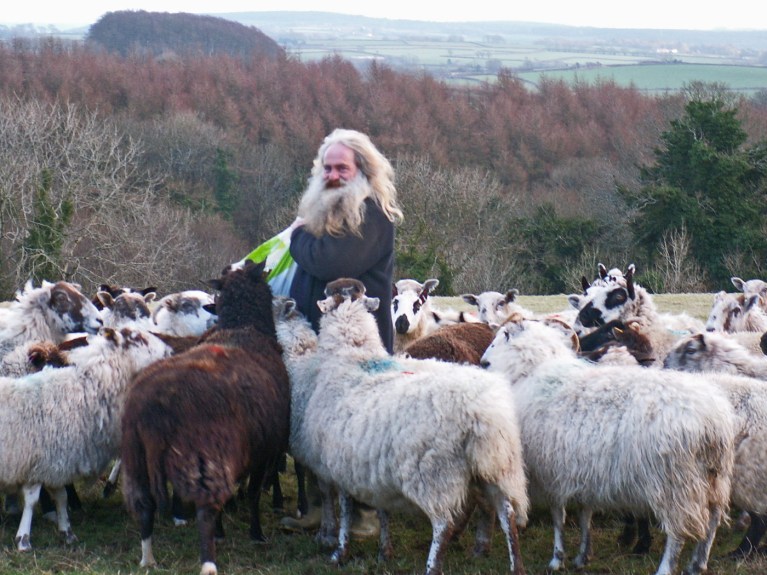
And therein lies the difference between the good leaders and the bad.  The shepherd leader fills the role for the good of the flock, even willing to sacrifice themselves for the life of their sheep.  The corrupt leader uses their power and authority as a means to dominate those who are under them.  A good leader serves as an example, they encourage and try to get the best out of those looking to them for guidance.  The evil politician, on the other hand, delights in creating dependency and keeping others subject to their whims.

In the end, no man is actually worthy to lead of their own authority and it is only through understanding our own place before God, that we ourselves are not God, that we can ever fill the role.  Self-belief and narcissism, with a little psychopathy, is often what will get a person to the top spot.  But humility and faith, valuing all individuals enough to go find the one lost sheep, that is the mark of a Godly leader.  The only person fit to lead is one who is willing to submit to those who have authority over them.

The delusion of the Protestant independent spirit is that every man (or woman) and their Bible becomes their own king.  This “you’re not the boss of me” attitude, in response to flawed leadership or simply as rebellion, is precisely why the church is becoming increasingly impotent.  The Church, at least the one that Christ founded, had those given the authority to bind and loose, a council to decide important matters and those who acted as fathers.  This hierarchy was never comprised of those faultless.  No, what made them worthy, and the only thing that makes any of us worthy, is being clothed in the righteousness of the one Great Shepherd.

We need sheep who know they are sheep and shepherds, appointed to feed the flocks, like Peter:

When they had finished eating, Jesus said to Simon Peter, “Simon son of John, do you love me more than these?” “Yes, Lord,” he said, “you know that I love you.” Jesus said, “Feed my lambs.” Again Jesus said, “Simon son of John, do you love me?” He answered, “Yes, Lord, you know that I love you.” Jesus said, “Take care of my sheep.” The third time he said to him, “Simon son of John, do you love me?” Peter was hurt because Jesus asked him the third time, “Do you love me?” He said, “Lord, you know all things; you know that I love you.” Jesus said, “Feed my sheep.

(John 21:15‭-‬17 NIV)

In my own spiritual journey, after my own Bible-based authority failed me, God provided me with a man who would end his emails with the phrase “your unworthy priest” and is truly that.  Fr Anthony is a very well-educated man, a college professor, and one who could easily flaunt his credentials as a means to humiliate some like me.  But what has given him true authority, in my eyes, is how he humbly serves as a true example of Christian leadership. 

He is a shepherd and the Church really needs more who are like him.

Jesus Longs for His People (Matthew 23:37-39)

Standard

Jesus was not harsh out of hatred.

Behind his sharp rebuke in Matthew 23 was a deep love and longing for his people to hear his message, repent of their foolish pride, and live in faith.
The love of Jesus is evident in how he brings the sermon to a conclusion:

Jerusalem, Jerusalem, you who kill the prophets and stone those sent to you, how often I have longed to gather your children together, as a hen gathers her chicks under her wings, and you were not willing.  Look, your house is left to you desolate.  For I tell you, you will not see me again until you say, “Blessed is he who comes in the name of the Lord.” (Matthew 23:37‭-‬39)

Jesus uses the imagery of a hen to describe his own feelings toward those who rejected him.  It is significant that Jesus describes himself with feminine attributes—it is significant in that it shows a divine nature that transcends gender and also in the contrast it provides.  

Jesus finished a harsh message about coming destruction by describing his desire to nurture rather than judge.  His words express profound sadness and deep disappointment before ending with a promise: “For I tell you, you will not see me again until…”

Until what?

Before answering that, there are a couple​other points that can be extracted from the example of Jesus:

1) Criticism is more loving than indifference…

We live in a time when legitimate criticism is characterized as persecution or hateful.  Be too blunt or honest and pretty soon you’ll have the niceness police on your case.  Criticism feels unpleasant.  However, rebuke can be extremely beneficial to a person who is truly humble and open to correction.

The importance of receiving rebuke is mentioned in Proverbs:

My son, do not despise the Lord ’s discipline, and do not resent his rebuke, because the Lord disciplines those he loves, as a father the son he delights in. (Proverbs 3:11‭-‬12)

And expounded upon by the Apostle Paul:

Endure hardship as discipline; God is treating you as his children. For what children are not disciplined by their father? If you are not disciplined—and everyone undergoes discipline—then you are not legitimate, not true sons and daughters at all. Moreover, we have all had human fathers who disciplined us and we respected them for it. How much more should we submit to the Father of spirits and live! (Hebrews 12:7‭-‬9)

Paul says that if we are not disciplined by God then we are illegitimate and not true children of God.  Rebuke, according to Proverbs, shows love.  

Good parents discipline their children because they love and want the best for them.  They realize that uncorrected attitudes and behaviors will cause more future pain for their children than a rebuke.  Discipline, therefore, is a preventative medicine against a deeper more permanent harm.

It is easy to be nice to someone in order to avoid trouble.  In confrontation there is risk.  Many prophets lost their lives for speaking truth to power.  At very least criticism can come at the cost of loss of popularity and friendship.  As a result, people play nice for their own sake, to keep people off their case, and not out of love.

I personally do not waste my time trying to correct a person I do not love.  Why would I?

A good rebuke is not a hit-and-run attack.  No, rather it is part of a true concern for the well-being of another and a part of a longer term investment to help another person reach their better potential.  Sometimes, when an audience is especially stubborn and unreceptive, there is a need to ratchet up the rhetoric until there is a change.

2) The future is being created by us…

Many religious people are fatalistic.  Yes, they might claim to believe in “free will” or choice, but then revert to an “it is what it is” fatalism and using God’s sovereignty as an excuse.  

In Jesus we should be free—free to overcome our human limitations and able to create a better reality.  That’s what it means to created in the image of the Creator.  That’s what it means to partake of the divine nature.  And, therefore, with faith, there is agency and choice.

Those whom Jesus addressed also had a choice, and that choice is recorded in the last words of the Old Testament:

See, I will send the prophet Elijah to you before that great and dreadful day of the Lord comes. He will turn the hearts of the parents to their children, and the hearts of the children to their parents; or else I will come and strike the land with total destruction. (Malachi 4:5‭-‬6)

The “or else” in the passage above indicates two options.  Either their hearts will be turned or there will be total destruction.  History was dependent on their choice and the future depends on our choice—repent or die.

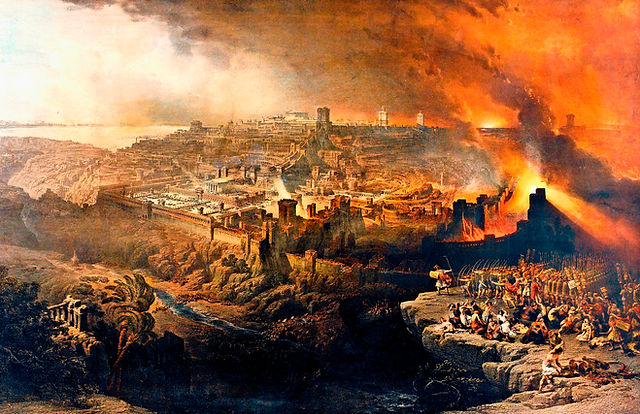
We know that many did not heed the warning and that Jerusalem was destroyed.  Many of those in the audience may have ended up in Gehenna (the literal “hell” Jesus spoke about) because they refused to hear and repent.  Many of us will follow them to our own destruction unless we choose the abundant life.

In the end, fatalism is simply another form of faithlessness.  Often when we say, “It is what it is,” the truth is that we are simply unwilling to put in the effort or step out in faith.  Life is what we make it.  The future we get is always a choice and we should choose Jesus.

3) When will we see Jesus again?

I don’t know.

That is your choice.

I believe Jesus will return in those who choose to turn, who acknowledge him as Lord, receive his Spirit and follow him. 

 Jesus gave this promise:

Whoever has my commands and keeps them is the one who loves me. The one who loves me will be loved by my Father, and I too will love them and show myself to them. (John 14:21)

Jesus longs to reveal himself to us today.

(Artwork: Stanley Spencer)