The Madness of Nietzsche and Amish Mothers

Standard

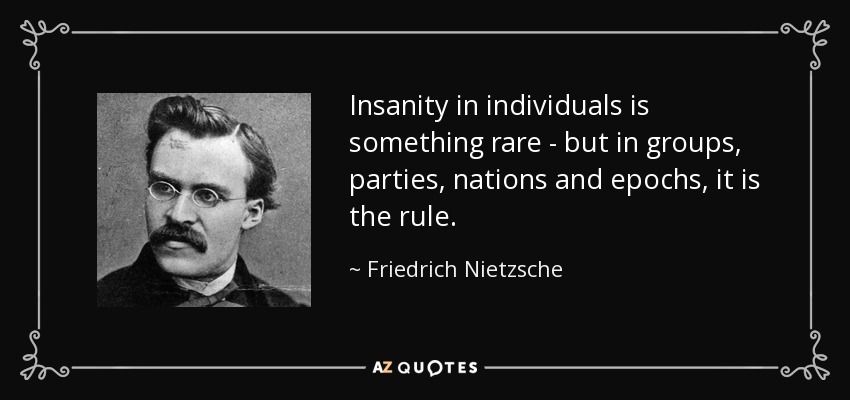
A religious fundamentalist might see Nietzsche’s “Madman” parable as an attack on faith. The German philosopher Friedrich Nietzsche’s mental decline and tragic end could seem like an obvious consequence. His bold claim that “God is dead” would naturally lead to madness, wouldn’t it?

Recently, I came across the story of Ruth Miller, an Amish woman whose religious convictions led to an unthinkable act. In a state of spiritual delusion, she drove her 4-year-old son, Vincen, to a lake and “gave him to God” by throwing him into the water resulting in his drowning. This awful tragedy following immediately after the accidental drowning of her husband Marcus during a failed attempt to swim to a sandbar in an effort to prove his faith.

Both belief in God or disbelief really does not make a difference as far as our mental health. We can attribute beliefs to actions, like the divisive assumption—of black and white thinkers—that Decarlos Brown Jr. was motivated by racial animus. Or realize that our human psyche is capable of dangerous misfires no matter our skin color category or ideological affiliation. Black, Amish or Atheist, all can have psychological breaks from reality originating from family history or environmental factors.

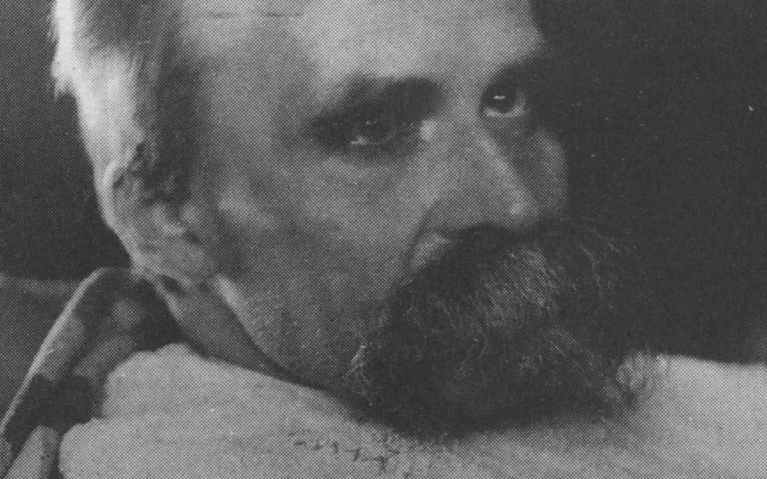
In the case of Nietzsche, who suffered from a breakdown at the age of 44—while seeing a horse being flogged—the theories of why he declined range from neurosyphilis to the possibility of frontotemporal dementia and a brain tumor. It could be a combination of factors, and maybe the very thing that made him brilliant also part of his downfall?

Nietzsche had a busy and relentless mind, his “will to power” philosophy itself perhaps a way to cope with a world that didn’t align with what his cultural heritage told him. He had to take things to their ends, he was not content with the answers he was given and this tendency of his mind being rooted deep in the composition of his brain—progressive disease and circumstances finally pushing him over the edge into insanity?

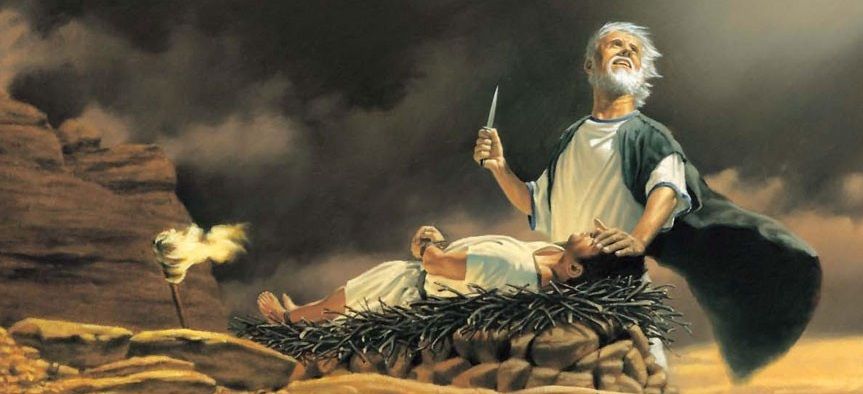
Likewise, the Amish mother, a pious woman by appearances, didn’t process her religious teachings the same as others in her church and tradition. For better or for worse, most claim to take the Bible literally would never attempt to do the things that they’ve read in the book. In a modern context a parent who is willing to sacrifice a child to God is rightly considered mad. But for Abraham it was a proof of his righteousness:

By faith Abraham, when God tested him, offered Isaac as a sacrifice. He who had embraced the promises was about to sacrifice his one and only son, even though God had said to him, “It is through Isaac that your offspring will be reckoned.” Abraham reasoned that God could even raise the dead, and so in a manner of speaking he did receive Isaac back from death.

(Hebrews 11:17-19 NIV)

That’s one way to explain away an irrational act of Abraham tying up his child, and then putting him pyre to be a sacrifice to God. It is just plain madness otherwise. Is it really any wonder a delusional mind would follow this pattern in the Holy texts? I mean, truly, the crazier part is how we can read through this in Sunday school class without being a bit disturbed. Only when someone starts to act in this kind of ‘faith’ does anyone notice it is completely unacceptable.
Faith or lunacy?

But then we’re all mad. Half of us claim it is okay to dismember a living human being in the womb because their existence is a big inconvenience for an adult woman. While the other half thinks it is okay dismember a living human being in Gaza because of what Hamas did a couple of years ago. All seem willing to sacrifice little children in the ‘right’ circumstances. We’ll praise those who end the life of the innocent when this aligns with an imagined ideal outcome or future. We’ll all say the other is irrational and evil while justifying our own violence.
But, I digress, we should not blame the blackness of Decarlos Brown Jr. for his evil deed any more than the Amishness of Ruth Miller for what she did. The idea that we should not change our standards based on race should come with the general non-judgment based on race. Mental illness is mental illness, unbound by category. To judge actions without prejudice—based on race, faith, or even agnostic philosophy—requires us to comprehend the universal fragility of the human mind and our own susceptibility to delusion.
A Rose By Any Other Name

Standard

It is hard to feel unique in a world of 7.75 billion people.  Due to mass media we are also more aware of this and also now have all of the best in the world there to compare ourselves to.  We see the best athletes, the most beautiful bodies, those with wealth and power day in and day out.

I am insignificant

At the same time, many young people did not have siblings to share the attention of their parents, only were given affirmation in their formative years, a participation trophy for showing up and—special as they are—don’t need to follow rules or ever answer to anyone.  

In other words, we have a generation with deep insecurities, worried about their place in the vast sea of humanity, and then also raised to be self-absorbed narcissists.  

Unlike the past generations, where you could be a big fish in a small pond, yet also needed to learn respect for boundaries and how to share or negotiate with others. 

Unlike the meritocracy of the past, where you needed real accomplishments to earn privileges or praise, we have conditioned young people to believe that their satisfaction should come without sacrifice or effort.

It is very little wonder why so many of them are unfulfilled, dissatisfied with life, and out there seeking cheap distinction.

Distinction—Cheap or Valuable

We all know names like Elon Musk, Serena Williams, or Ron DeSantis.  They are leaders in their realms of popular culture and sport, business or politics.  And we can probably agree that some of their success is an inheritance of genetics, good fortune or the opportunities granted them.

However, what they are doing, like them or not, is producing results and with this are being rewarded for the things they do.  They have outcompeted many, they distinguished themselves by showing up for work and by putting the time in.  It is for that reason their recognition is earned.  They do the things we care about and we make them famous for this unique resume.

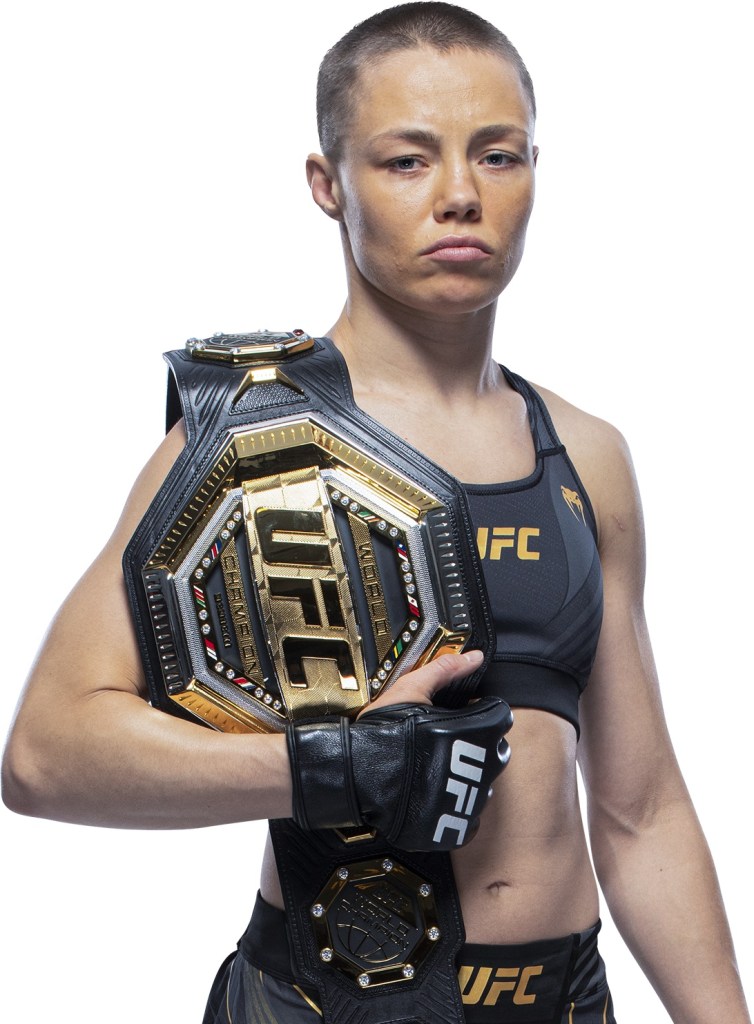
Earlier this week I saw a story about Rose Namajunas, a diminutive female UFC fighter with a very big attitude that earned her the nickname “Thug Rose” in school, and how she’s being featured in a Victoria’s Secret ad campaign.  The message “all expressions, no definitions,” with the word “undefinable,” do certainly fit her outsized personality and the mean head kicks she can deliver, all the while being very emotional.

The point a marketing strategy is cynical, it is to tickle ears and encourage more consumption of a particular good or service.  Those who produced this advertising campaign did it trying to target a certain demographic in the hope of profit.  And that target is probably not those who will ever have the same work ethic and skills as Rose, but is those who crave the same notoriety and ‘undefinable’ uniqueness.

We all wish to be significant, to distinguish ourselves from the pack, to be appreciated and loved.  There are many who are looking for a shortcut or feel entitled to these things, they want the same acceptance, recognition and rewards as those at the top.  They buy expensive clothes, the latest smart phones or cars beyond their budget, all trying to gain attention through their appearance rather than actual character.  

There is hard-earned distinction and there is the cheap kind.  There is the content creator who shares of their substance and then the one who destroys things for clicks.  There is the pleasing gift of Abel and that unworthy offering of Cain.  There is that real fulfillment which comes from making contribution and then the imitation that is outwardly prideful, expresses itself loudly, while truly being an envious, bitter and impoverished soul.

Personal Pronouns and No-name Jerseys

Penn State football has a long tradition of not putting the names of players on jerseys and this is to reinforce the notion of selfless team effort over a bunch of individuals only in it for themselves.  

No name, all game

Success on the field and in life depends on our plugging in and sometimes putting aside our own preferences for the good of others.  We can get more done by working together, respecting the established system, rather than demand that everyone makes special accomodations for us.

Yes, there is a time for grievances.  We also should be a reasonable give and take so far as how individuals and the members of the group interact with each other.

And yet this idea that we should rewrite cultural conventions, negotiated over many centuries, simply so some ‘woke’ Karens can have power over others, is not a grievance I can ever honor.  It is not reasonable for a person to decide the pronouns that apply to them or force us to go along with their newly invented categories.  

We don’t need to be Amish, severely limiting individual expression to maintain community cohesion, but we also don’t want to keep on this path of total atomization either.  There’s a reason why the barn raising religion is able to flourish while the rest of us are headed for Babal, confusion and collapse.

Rose By Any Other Name

This morning, pondering how the categories of mental illness are a bit arbitrary and how much I dislike how these labels pigeonhole  people, there was the thought that my given name was the best possible diagnosis of me.  I mean, I’m Joel.  I don’t need a personal pronoun when I already have my own name and identity completely my own.  

Ironically, the same people who want to have new pronouns for themselves also seem to revel in their mental illness as well.  Anything to be different.  It is a sort of humble-brag, a title of distinction of our era, to talk about your PTSD or bi-polar disorder.  If you are the right person, if you can make yourself a part of the right identity group, then your self-declared victimhood will be treated as a virtue.

It goes beyond moral inversion.  People think that you can slap the right label on a person and it will make up for their deficiencies.  If only they were described right, if we would see their pink hair as an accomplishment, then they would love themselves.  Of course, this is a lie, people so into themselves are always a black hole and no amount of love given will fill their deep void.

It is the spirit of those who are content to remain nameless, who get their numbers called for what they do for the whole, that actually matters.  People will know what is great and what is not no matter what label is applied.  I can never forget what W.E.B Du Bois wrote to a student:

Do not at the outset of your career make the all too common error of mistaking names for things. Names are only conventional signs for identifying things. Things are the reality that counts. If a thing is despised, either because of ignorance or because it is despicable, you will not alter matters by changing its name.

The Name “Negro”

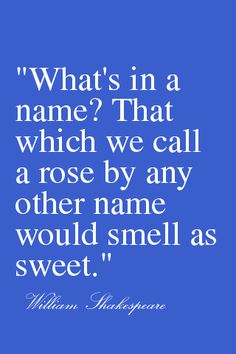
We can manipulate and massage language all we want, give people all the fancy titles they wish for, but in the end none of this word play can take away or lend to their value. If you want recognition contribute to the whole and your name will be known. Not to the whole world, but to those helped by your deeds. A rose called by any other name is still a rose.