I was struck the other day by a quote in an article I read about Michel Foucault, a French philosopher, and a conversation about that quote is some of the reason for this blog post.
The quote:
“Was not the death of God, in fact, revealed in a doubly murderous act that, at the same time that it put an end to the absolute, assassinated man himself? Because man, in his finitude, is inseparable from the infinite, which he both negates and heralds. The death of God is accomplished through the death of man.” (Michel Foucault)
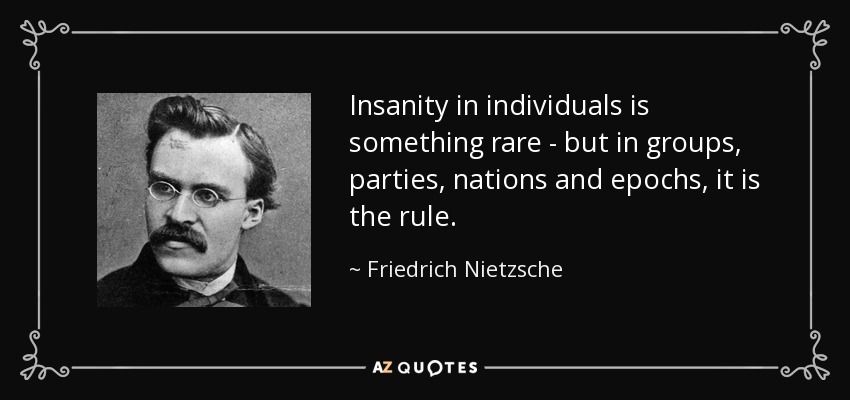
It was a response to the statement “God is dead” used by Nietzsche to describe the crisis those have who reject the established religious morality as he did. The quote is an acknowledgement of the cost of western rationality, a philosophical perspective that depends solely on revelation through the physical sensory and dismisses spiritual experience.
Western thinking focuses on what can be known through natural or rational means. The result of this pursuit of knowledge has been greater understanding of the world and technological advancement. But this has led many to abandon all belief in the supernatural as superstition, it has undeniably come at the cost of moral purpose, and I know because I’ve been there.
The unbelieving believer phenomenon and lack of faith in the church.
Many in Western religious communities, while thinking themselves to be at odds with this western rejection of God, have a very worldly perspective of reality and are simply unaware of the implications of following their own theological ideas to completion.
Many Biblical fundamentalists, with their complete dependency on book-based circular reasoning and human interpretive ability, seem to actually be agnostics who simply have yet to come to the realization of their own real lack of faith.
Yes, the language of these ‘Christian’ religious unbelievers is often the same or similar to those of true faith. Yes, they will emphatically declare up and down that they believe that the Bible is true, call the book the “word of God” even, and yet these unbelieving believers reject the very means of revelation described in the Bible. They, like their more reasonable and logically consistent secular neighbors, have made human knowledge gained by natural means their god.
This pathology of unbelieving belief comes in many degrees and in various forms. But underlying is always a reliance on human perception of physical evidence (inspired books or reliable science) and a partial or complete rejection of direct spiritual means of revelation.
It is actually humanism, disguised or hidden in a cloak of religious devotion and spiritual sounding language, because it depends primarily on human decision rather than something divine. It is faith based in ones own ability to experience God through means of human effort.
It is what Paul addressed in the early church as foolishness:
“You foolish Galatians! Who has bewitched you? Before your very eyes Jesus Christ was clearly portrayed as crucified. I would like to learn just one thing from you: Did you receive the Spirit by the works of the law, or by believing what you heard? Are you so foolish? After beginning by means of the Spirit, are you now trying to finish by means of the flesh?” (Galatians 3:1-3)
The idea that God is primarily revealed through physical media or other intermediary mediums (institutions) is logically incoherent and ultimately a rejection of the teachings in Scripture. Paul describes the Galatians as foolish because they were reverting to completely human means to know God and rejecting the primacy of the Spirit as the only true agent of spiritual revelation.
When little gods replace a big God there is division rather than unity.
The problem is that many people think God is governed by human rationality and therefore can only communicate through means they can understand.
Protestants too often prefer a little book god and call this “sola scriptura” which is Latin for through Scripture alone. Catholics, the religious parents of Protestants, make a little god of the institutional church or the man who leads it through an idea of papal supremacy.
Yes, certainly the official story is more complicated than the simple explanation I give. Both Catholics and Protestants acknowledge special revelation and the power of the Spirit. And both western traditions are right in their own perspectives to some extent: Acountability to the collective church body, the catholic “universal doctrine” (katholikismos) is a true expression of faith through submission. Likewise the written tradition of Scripture is obviously important for a believer and should not be abandoned.
However, the problem with both Catholic and Protestant traditions is when the overall emphasis is put somewhere other than the truth revealing Spirit of God. Both have too often replaced the core of Christian faith, the living spiritual reality of Jesus Christ, with their own religious efforts of traditions, doctrines and dogmas.
In Galatians there was a reverting back to “the works of the law” and “means of the flesh” rather than “means of the Spirit” which caused a schism to form. We can actually know with certainty when dependency on the Spirit of God is being neglected when there is disunity in the church:
“As a prisoner for the Lord, then, I urge you to live a life worthy of the calling you have received. Be completely humble and gentle; be patient, bearing with one another in love. Make every effort to keep the unity of the Spirit through the bond of peace. There is one body and one Spirit, just as you were called to one hope when you were called; one Lord, one faith, one baptism; one God and Father of all, who is over all and through all and in all.” (Ephesians 4:1-6)
Clearly today, especially in the Western church, there is not unity in the Spirit. No, instead there is unity only, and quite literally, on our own human terms. There is a widespread refusal to hear anything that goes contrary to our own personal opinion and perspective. Few are willing (or able?) to reconsider their own base assumptions about the nature of their reality or the truth of their religious indoctrination.
The fruit of Western thinking is the rule of men rather than God, it eventually leads to everyone being their own Pope and a tragic kind of individualism that wrecks meaningful community. Now even our marriages do not last because of this growing lack of faith. It is only through means of the Spirit that we are able to transcend our differences and submit to each other in Christian love.
We need fewer little gods with the spirit of Diotrephes (the early church leader in the third epistle of John who put himself first and judged unilaterally based on his own ideas) and seek after a truth greater than ourselves. We need to realize our idolatry and flee from our small god perspective.
Dead religion relies on human judgment rather divine nature and their own fleshly instincts rather than intuition of faith.
Dead religion must rely on the work of man. It must create mood through music and other emotional manipulation. The focal point is often denominational labels or charismatic leaders, religious commentators, and not Jesus. Growth comes primarily through by biological means, children are indoctrinated, brainwashed and pushed to commit before they can “count the cost” rather than encouraged to make an adult decision as an adult. A negative fear-based cold calculus, a cancer, has replaced a true walk of faith, has displaced a positive spiritual vision and agape love.
Those who rely on themselves do not know grace, they cannot trust God to work in the lives of others and must therefore take judgment into their own hands. They cannot reconcile the radical teachings of Jesus to love their enemies (Matthew 5:43-48, Luke 6:27-36) into their reality. They must reason around these clear instructions because they do not have faith in God to judge. They usurp God’s authority because they are not themselves able to live under it:
“Brothers and sisters, do not slander one another. Anyone who speaks against a brother or sister or judges them speaks against the law and judges it. When you judge the law, you are not keeping it, but sitting in judgment on it. There is only one Lawgiver and Judge, the one who is able to save and destroy. But you—who are you to judge your neighbor?” (James 4:11-12)
One must have the Spirit of God in them to show true grace. It is work of the Spirit, not our own righteousness, that we can have “fruit of Spirit” (Galatians 5:22-23) that include “love, joy, peace, forbearance, kindness, goodness, faithfulness, gentleness and self-control.” It is because people do not have the Spirit of God that they revert back to their own human judgment and graceless application of law. Without the Spirit we are left with a mind governed by fleshly desires and are spiritually dead:
“Those who live according to the flesh have their minds set on what the flesh desires; but those who live in accordance with the Spirit have their minds set on what the Spirit desires. The mind governed by the flesh is death, but the mind governed by the Spirit is life and peace. The mind governed by the flesh is hostile to God; it does not submit to God’s law, nor can it do so. Those who are in the realm of the flesh cannot please God.” (Romans 8:5-8)
Elsewhere in Scripture we are told “without faith it is impossible to please God” (Hebrews 11:6) and therefore we must have faith. However, we are also told faith is gift from God rather than our own works and something given to us while we were yet dead in sin (Ephesians 2:1-10) which is the paradox of faith. How do we get faith if we do not have it? Both religious and secular minds do not have an answer for this and for that reason both turn to their own small gods.
Both secular and religious people attempt to kill a big God, but now even science defies them.
Many people in the Western world are trapped in a delusion of a materialistic view of reality, they cannot accept explanation that does not fit their own religious or scientific dogmas and attempt to kill off any possibility of a bigger extra dimensional reality. Understanding, to them, is only gained through physical eyes and literal ears. They want a little god that can be understood by a human mind and reject a God bigger than their own abilities to comprehend.
They are like the religious authorities who demanded a rational explanation of how a man’s physical blindness was healed by Jesus (read the account in John 9) and rejected, based in their own understanding of Biblical law, that this was a miracle from God. These religious hypocrites concluded that the man was a fraud who faked his blindness and they cast him out as a sinner because it went against their own confirmation biases and understanding of reality. But, truthfully, many reasonable people today (religious or otherwise) would conclude as they did and assume it was trickery.
There is no rational explanation of how a man born blind could be healed through having mud rubbed into his eyes. Modern medicine does not tell us of any form of blindness that can be healed externally in this way and going by a reasonable standard this is literally a physical impossibility. There are many scientific laws violated by miracles and this is why many reasonable people reject them as possibility. The natural world is governed by a time based causality. In other words, A leads to B which always without exception leads to C and there is no rational way that this causality chain can be broken without disrupting everything known about this universe.
So how could it happen?
It couldn’t happen, not in terms of rational thought or science, at least not without massive energy from a source outside of the closed loop system of our universe. Any miracle, even the smallest epiphany of revelation inserted from a spiritual dimension into our physical brain to healing the blind or raising the dead, would need to disrupt the entire reality of this universe from the beginning and end of time to happen. Any true miracle would require a force with power literally beyond the comprehending of a finite mind.
Therefore, everything Jesus did, from turning water into wine to walking on water, defied the idea that this universe is a closed loop system. The life and witness of Jesus supported the idea that there is a source of power that is available beyond our universe and energy (for good or evil) that can be brought in through acceptance of these spiritual means.
This is the power of the Spirit.
And, believe it or not, that is also part of the huge implications of quantum mechanics. Physicists, using the double slit experiment, have discovered a phenomenon called wave particle duality. This, and other scientific evidence, points to a reality that defies rational explanation. What it shows is that at the smallest level of the universe there is a break down of time based causality and with it possibility of spontaneous events. What this means is there could be energy leaking into the universe from dimensions beyond it and more that there is only a thin veil between us and this higher dimensional reality.
Quantum computing, still in it’s infancy, promises to reach beyond the bounds of our natural universe and allow calculations impossible otherwise. Some theorize that our brain is a quantum computer and may have backdoor of consciousness access to the spiritual realm. This, to me, is the point of access to the realm of good and evil. Those who have the Spirit can have close communion with God the Father through spiritual rather than physical means.
Living faith that reveals God only comes through spiritual means, not through our own works or understanding.
There is a story of a man described as a “rich young ruler” who asked Jesus what he must do for eternal life. He was a religious man who faithfully followed all of the commandments from his youth. But Jesus, instead of telling him “good job and keep up the good work,” yanks the rug out and tells him to sell everything, give all to the poor and follow him.
The disciples, with their little religious minds, are stunned by this and ask: “Who then can be saved?”
Jesus replies: “With man this is impossible, but with God all things are possible.”
The point of the story is that faith is not a product of careful religious practice. It is not something we earn by our diligent study of Scripture and our good works. Faith is rather something that is a gift from God and a result of the Spirit working out from within us.
Jesus describes an idea of being “born again” and completely befuddles a religious expert, Nicodemus, who takes him quite literally and asks:
“How can someone be born when they are old? Surely they cannot enter a second time into their mother’s womb to be born!” (John 3:4)
Jesus replies with more metaphor from the physical world to explain this spiritual reality:
“Very truly I tell you, no one can enter the kingdom of God unless they are born of water and the Spirit. Flesh gives birth to flesh, but the Spirit gives birth to spirit. You should not be surprised at my saying, ‘You must be born again.’ The wind blows wherever it pleases. You hear its sound, but you cannot tell where it comes from or where it is going. So it is with everyone born of the Spirit.” (John 3:5-8)
The Spirit is not literally wind. This is not something that originates in the physical world at all. It is instead the breath of God that enters us through mysterious means and brings us to life spiritually. It is something that transforms our mind and changes us literally from the inside out. It is something divine, not originating in this sin cursed world, and the only true evidence of another kingdom. It is a knowledge born of heavenly rather than physical worldly origins:
“Very truly I tell you, we speak of what we know, and we testify to what we have seen, but still you people do not accept our testimony. I have spoken to you of earthly things and you do not believe; how then will you believe if I speak of heavenly things? No one has ever gone into heaven except the one who came from heaven—the Son of Man.” (John 3:11-13)
Jesus was, as the son of God, conceived by supernatural means of the Spirit, and we must also be. No one has given physical birth to themselves and likewise nobody is spiritually born of their own efforts. Understanding of “heavenly things” does not come through physical means. You cannot find a God bigger than the universe by studying things in universe, that is circular reasoning and will turn a rational person into an agnostic.
Only a blind person who gains their sight can know for certain they were blind and now they see. Only a person born physically knows they exist in a physical reality and only through spiritual birth can someone know God exists. Even if they can’t explain it, even if nobody believes them, they know simply because they know. Our existing in any reality is a self-evident truth.
The West, in trying to kill God, has only killed their own spiritual connection and this is suicidal.
Western thinking has put emphasis on human will, knowledge or reasoning rather than the power of the Spirit and God’s grace to humanity. People want a God governed by their own human reasoning and logic. They try to make God subject to their own time based causality and turn spiritual life into some kind of physical process. They reason things can only be know through natural means, by their physical eyes, ears or touch, and reject direct revelation through supernatural means.
Western thought, using human reasoning and worldly knowledge, attempting to kill the idea of a supernatural God. But the tragedy in this is that we are blaspheming the true source of life (Mark 3:28-30) and effectively only killing the divine nature in ourselves. The end result is hedonistic and meaningless life not worth living. Those who cannot distract themselves in materialistic pursuits are soon left staring into a dark hopeless void of time and empty space. This is leading many to premature death through drug abuse and suicide.
The Western church still holds on to a delusion of knowing God through their own works of faith and the symptoms of their humanistic pathology are still able to be masked through group hypnosis. Many are able to maintain appearances through artificial conformity to tradition and are satisfied in their experiencing the ripples of Christian love passed down through the Spirit-led tradition left to them. But eventually this spiritual momentum will run out and with it the life of the church.
It started with the elevation of one man (the Pope) and now has resulted in an unhealthy every man for himself mentality that first undermined the church, then the local community, then the family unit and is leading to a cultural suicide unless we repent and return to true faith. We have embraced a rationality that leads us to death rather than life.
We need a return to a reality of faith based in a bigger God than the little god of human rationality, understanding that only comes from the physical world and dogmas both secular or religious. It is time to see God through the supernatural means Jesus promised to those who truly have faith and follow him. It is time to remove the veil of falsehood that western thought has put between us and God.
And it is time to take a quantum leap both forward in grace and backward to a faith that truly makes all things possible again. There is a more abundant life that is only possible through spiritual means, we can know the truth and be set free, so seek direct revelation from God and reject western delusion.









 Irregular Ideation