
Built for Scarcity: Why I Won’t Give My Son Everything He Wants

Standard

I’ve tried to give my son everything he needs to succeed. But that doesn’t mean I will give him everything he wants. There’s a reality in any pursuit: to be excellent, you’ll need to put in the work or delay gratification to reach your full potential. If a parent gives a child everything they want, there’s no incentive for them to learn and improve.

To a child, everything provided for them is a given, and every task required is an injustice. Why should they have to wash the dishes? The grumbling or attempts to negotiate last longer than the time it would take to finish the chore. And, honestly, the easy route is just to do it ourselves. But that deprives a child of the opportunity to learn all those transferable life skills—at the very least, to get a little practice being helpful rather than entitled.

In the West we already have abundance and the result is atrophied muscles and dull minds.

If we shower children with abundance, they will never appreciate what is given nor ever be satisfied. It seems that no matter what we have, we always want more. If given the moon, we’ll want the other planets and the stars as well—and then we still won’t be happy with that. The greatest satisfaction comes through work and accomplishment. Playing video games all day or scrolling social-media feeds may trip reward centers, but it amounts to empty calories and can’t replace substance.

I’ve watched spontaneous interviews with very wealthy men, and nearly every one of them says that their abundance did not bring happiness. At least one admitted he was suicidal despite millions in assets. Our peak enjoyment in life comes when we invest time, effort, and resources and eventually reap the fruit of our labor. Sure, going to the gym may be difficult, but the endorphins are addicting and the muscles are a reward.

Built for Scarcity—Not Utopia

I watched a video about the problems with utopia, and the framing of capitalism as a system built for scarcity was correct. We would need a radically different way of ordering ourselves if the things we wanted just grew on trees. If you could have whatever you wanted without effort, why would you pay for anything or even care who owns it? My property rights only matter because it costs something to acquire or replace the things I own. If everything we wanted was free and completely abundant, we wouldn’t need to value it at all.

The presenter, who seemed intelligent enough, made a critical flaw while talking about providers of generative AI. He claimed that those charging for the service were creating artificial scarcity “because the code is open-source or whatever.” But this totally ignores the immense computing power that’s required—the powerful microchips, massive amounts of energy, and the staff needed to keep it all running. So no, that isn’t an example of abundance.

I’m used to naïve takes coming from the religious side, but it’s fascinating to see secular thinkers stumble over the very same things. Yet it touches directly on the human condition. We are not wired for abundance. Ultimately, even if we could reduce human labor to zero, our brains were created for scarcity, and when faced with unnatural abundance we don’t actually do very well.

Wall-E is probably the best depiction of a world of abundance that goes well.  It could go in many directions, unhealthy ease the better of the many scenarios.

Material wealth, to start with, is never a cure for boredom or lust. If anything, those who have all their physical needs met are often left with a void of purpose. Their abundance never creates fulfillment or a reason to be in the world. And some appetites are basically insatiable: a man can have all the sex he wants and still desire the one he cannot have. It is often the ultra-wealthy—those who have everything we imagine would make us happy—who are also the most perverse and dissatisfied.

It reminds me how young-earth creationist (YEC) types often portray entropy as purely negative when it is as necessary for life as order. Fertile soil, for example, contains organic compounds that come from dead plants and animals. This is part of a cycle—neither good nor bad—like the weather. The same forces that bring a spring shower can also leave behind a swath of destruction. Creativity itself often lives at the edge of order and disorder. You may not enjoy a messy room that needs cleaning, but without it your life would probably feel pointless.

Furthermore, social hierarchy would be the only game left if we completely removed the need for productivity and occupation. If AI replaced all jobs, the result might be material abundance, but not utopia. As the saying goes, “Idle hands are the devil’s workshop,” and some people with nothing to do will create drama. Boredom is good when it provokes us to create something new, but bad when the “new thing” is us causing trouble for others for lack of something else to do. It is better when we need to do something productive to survive, because we’re primed for it.

Consider how an overly sterile environment can trigger autoimmune disorders; similar problems would arise in a world where struggle was fully removed. It wouldn’t solve our environmental or energy problems—there would still have to be limits and rationing to keep from stripping the planet bare. Some people will never be content with the base level of property and possessions. There will still be scarcity even if human labor is no longer a cost. Advantages will still exist. At that point a new hierarchy will form—perhaps one based solely on beauty or charisma—where many have no path to “level up.”

In capitalism, while there’s an advantage to those who go first, there are multiple paths to success. Sure, there is cost-cutting at the expense of quality (see the Campbell’s Soup controversy), but there is also genuine efficiency and a system where nothing need go to waste. Bad actors create opportunities for others. If Enzo Ferrari hadn’t been a pompous jerk, we wouldn’t have Ford’s GT40 legacy or Lamborghini. Ferrari’s rude remarks were the provocation that pushed others to build cars capable of beating his. In a free market there is a profit motive to share rather than hoard. In a post-labor AI world where elites no longer need human workers or customers, would they have any incentive to distribute limited resources?

Abundance, Unearned, Robs Good Character

The video is correct that abundance won’t lead to utopia—yet it misses the deeper reason why. It isn’t just that we’d get bored or turn to status games (true as that is). The real problem is that abundance without cost quietly deletes the only proven mechanism we have for turning a human being into a person worth becoming. 

When everything is given for free, nothing is cherished.  When nothing is earned, nobody is grateful.  When no one is grateful, no one is generous.  When no one is generous, society stops being a community and it becomes a zoo with really nice cages: no material need unmet, the trough always full, and yet we are no different from a lion removed from its natural habitat.

That’s why I won’t hand my son the life he thinks he wants. I’ll give him everything he truly needs: enough security to take risks, enough scarcity to make victories sweet, enough resistance to grow muscle around his soul. I’ll let him wash the dishes, wait for the game he saved up to buy, lose the race he didn’t train hard enough for, feel the sting of “not yet” and the glory of “I finally did it”.

That feeling of a hard fought win cannot be artificially produced.  In a world where AI leads the way can there be human thriving?

Because the cruelest thing a parent can do isn’t to let a child struggle.  The cruelest thing is to raise him in a world so padded, so instantly gratifying, so artificially abundant that he never discovers the one truth every happy adult eventually learns: The joy was never in finally getting the thing.  The joy was in finally becoming the kind of person who could get it—and still know it wasn’t the point.

Scarcity isn’t the enemy of human flourishing.  It’s the narrow gate we have to squeeze through to find out who we actually are.  And I want my son on the other side of that gate—tired, scarred, proud, alive, and deeply, durably grateful—not because he was given the universe, but because he earned his small, yet irreplaceable and fully human corner of it.
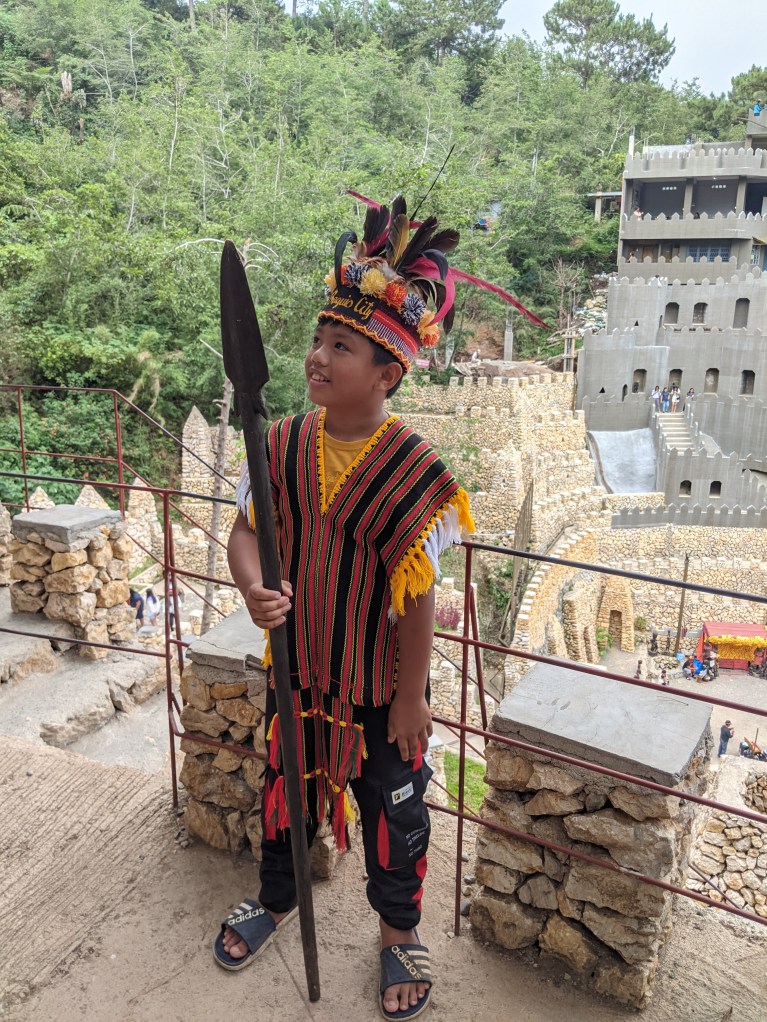
My First Two Weeks Of Fatherhood

Standard

My decades of being single came to a rather abrupt end on November 3rd.  Two people, a mother and son, arrived at JFK after a trip around the world and our lives will never be the same.  

A few years ago, I was worried about how it may be to be a stepfather and hoped Charlotte’s son, CJ Y-dran, would accept me.  One day, soon after this thought, and out of the blue, Y-dran told his mom he had something that he wanted to ask me.  

The voice on the other end of the video call gave me the assurance that I needed:

“Can I call you daddy?”

Crazy, right?

More amazingly, after I told him he could, he asked if we could pray together.  That was, of course, another request granted and the whole thing a wonderful confirmation.  But, that said, it is one thing to be called “daddy” and another to be a good father.

CJ Y-dran is now ten years old.  

A Crash Course In Parenting Begins

Saturday, after our arrival together in central Pennsylvania, we visited Ed and Judy, my aunt and uncle.  Ed surprised us with an early Christmas gift by getting Uriah’s bike out and offering it to Y-dran.  

It was fun to see a young boy’s face light up in amazement.  Y-dran rode around happily while we all enjoyed the unseasonally warm weather.  Later we were able to secure the bike in the trunk of my car and then brought it home.

It was the first Monday back to work after the trip to the airport and I was just settling in for the day when a message notification popped up.  It was Y-dran.  What did Y-dran want at this early hour of the day?

“I cen not bike naw”

“Becos momi not let me”

“Lets pot it back to ante”

“I can not yos it”

Uhoh.  

Unwittingly, having missed some details he had included, namely that he was allowed to ride albeit only in the yard, I answered him exactly as his mom did and said he could ride in the yard and only in the alley after I was home from work.  So it was great to be on the same page with his mother.

The Knife At School Incident

Y-dran found a small Leatherman-type tool in my utility drawer and was fascinated. He wanted to whittle away at the banister, which was immediately discouraged, and directed to a cardboard box to satisfy his stabbing need.

Boys love tools and especially tools used as weapons.

The blades on this multi-tool were too small to be lethal and yet were enough to keep a ten-year-old’s imagination captive.

But, when I discovered this tool in his backpack after coming home from his fourth day in school, I very quickly gave a stern warning to never ever bring a knife to school. I took the tool and returned it to the drawer to emphasize the point.

It was around nineteen hours later, at my desk during lunch, when I got that dreaded phone call from the school office. It was the principal. He told me Y-dran was in his office and went on to say how my son was displaying a knife to classmates.

The irony of this situation struck me. I had bought a house and moved across the river, in anticipation of Y-dran’s arrival, and the thought of him being expelled in the first week was not one that I had entertained until this moment.

Making matters worse, when confronted by his teacher about this, Y-dran, thinking he was helping himself, he tried to justify carrying the bladed instrument and claimed it was for self-defense.

In his defense, his citing potential “kidnappers” as a reason to be armed is not completely without cause. In his home country that is something that parents are concerned about given stories of human trafficking and thus part of his own thought process.

However, this explanation was also more incriminating than had he just kept his mouth shut or said he just thought it was a fun thing to play with. Never give away intent like that! /Facepalm

Fortunately, while having a zero-tolerance policy, they didn’t do like they did to a co-worker’s grandson, also a 5th-grader, who was not only expelled from his elementary school but was also fined and had a court date—all for having a knife discovered by other students rifling through his backpack!

Lord have mercy!

The real dilemma for me, after learning that this wasn’t going to be taken further than reprimand and confiscation of the tool (which I told the principal to dispose of rather than hold for me to retrieve), was how to handle this at home.

I wasn’t sure that I should involve his mom or just take him aside and tell him that I would keep his secret so long as it didn’t ever happen again.

Thankfully, returning after work, I didn’t have to decide. Y-dran had already confessed to all believing that I would eventually spill the beans on him anyways.

I really need to teach this kid how to read the room better.

What Have I Learned About Fatherhood?

The first thing I have to come to terms with is that I’ll make mistakes. Right now everything has been so new and uncharted that there is no way for me to map my progress.

He is a handful. He weighs as much as I did when I graduated from high school and has the tenacity of a rabid gorilla too. He just does not stop when he gets going. But then he’s also appropriately gentle with younger children and, despite some wildness, has a great heart underneath it all.

Things have gone relatively well so far.

Still, I keep thinking of the verse:

“Fathers, do not exasperate your children; instead, bring them up in the training and instruction of the Lord.”

(Ephesians 6:4 NIV)

The KJV may say it better using the words “provoke not your children to wrath,” but what does this Biblical commandment truly mean in practical terms. Does it mean I give him everything he wants to keep him from being angry or upset? What exactly is the training and instruction of the Lord?

Y-dran can be very persistent. When we’re out shopping he seems to feel entitled to a sugary drink or whatever else he can grab from the shelves. What he does not realize is that this constant pestering, needing to even be in control of what gifts he gets at Christmas, really takes the joy out of giving and makes us less likely to oblige the request.

I suppose there is no systemic or cut-and-dried answer to these things. It isn’t about balancing either. It takes wisdom, and putting them first (that doesn’t come easy), to gain and keep the credibility required to guide a son. Children see our inconsistencies. He will tell me if I look at my cell phone at the table or forget the prayer before we eat. He’ll know if I care about him or not.

Maybe the more important thing is to realize that I don’t know what I’m doing and can only do my best. My success or failure as a parent will not be a product of my perfection. I mean, even if I could check all of the right boxes and make no mistakes, that does not mean he’ll be reasonable or accept that as enough, right?

I’ll try to be consistent, to give him the best opportunities and all the good for him that I am able to do. But, ultimately, I’ll fail as a father if it is all about my own effort. In the end, I can only depend on the grace of God (generous uncles and lenient principals) to even have the slightest chance.  Otherwise, I’m already well over my head without any hope. 

Our power to influence reality…

Standard

My life would be incomplete without the influence of my brothers.  I was in conversation with my brother Kyle about the book I am working on, about life and faith. That dialogue eventually resulted in the thought that sparked this post.  Much of what we discussed seemed blog-worthy, but one particular thought came that I knew I would need to expand on and that is the idea of our influence.

We influence reality even if we squander the opportunity to exercise that ability in an intentional and directional way.  No matter if you have resigned yourself to ‘it is what it is’ fatalism, or if you live deliberately to change the world, you will have an influence in creating reality and not just reality for yourself either.  We are creating reality for ourselves, but we are also creating reality for those whom we come in physical contact with and possibly even in realms beyond that.

I believe it is easy to understand that if a person shoves another person physically they have altered something about the other person’s physical outcomes.  No, that action will not determine if the person has a good day or bad day, but you might change the way their day plays out if you push them hard enough that they fall and break their arm.  Again, they could be happily in the emergency room despite the pain, but you still have shaped some part of how their day progresses even if it did not break their spirit by your influence.

Good parents attempt to influence the decisions of their children.  I believe it is safe to presume that most parents do not want their children to become violent criminals and would attempt to in some way prevent that outcome.  Parents do have some influence over the direction of their children, perhaps mostly by genetics and not by things taught or at least that is where Steve Pinker suggests the evidence points.  However, parents do have an influence and that true whether or not they have given up on trying or if they stay entirely engaged.

The epidemic of fatherless homes bears out the reality of parental influence.  I would make the argument myself, but fortunately, another blogger has done the numbers for me and you can click that link if you need convincing.  The absence of a father correlates with many things we would consider bad and therefore the opposite is also true.  Statistics cannot tell us the whole story, but there is definitely some sort of connection and I am guessing the type of interaction also would have a part in the outcomes of children.

The influence of our physical proximity to other people is likely not something that is too much dispute.  Our intentional attempts to influence outcomes are a sign also of our belief in an ability to influence others.  But what if that is just the tip of the iceberg?  Could our very thoughts influence the outcomes for our neighbors beyond even our outward actions? Is our influence deeper than the surface level influence of our own physical reality?

Speaking of the ‘tip of the iceberg’ idiom, one could visualize the Titanic streaming the frigid Atlantic ocean and consider the implications of the block of ice it encountered.  The iceberg was visible on the surface and yet the destructive mass of the iceberg was actually below the surface.  The Titanic avoided a direct collision with the above water portion, but it was the underwater or invisible influence of the iceberg that ripped open the hull and actually doomed the ship.

Our influence likewise could be more than our spoken words or even our visible actions.  I speak now of the realm of our attitudes, spirituality, and faith.  We know if we push someone it could shape the outcome of their day, but what if we think well or ill of a person?  Do our very thoughts change reality for ourselves, but not only for ourselves and also for others as well?  I say, if we are more than just physical beings, if we do also dwell in an extra-dimensional spiritual reality, then we certainly do and should exercise that influence with responsibility as well.

My evidence, if you are Christian and accept the Bible is true, is that the ability of Jesus to heal was blunted where he was not believed (Mark 6:1-5 and Matthew 13:53-58) and the implications of this are huge.  If even Jesus, with a more complete faith, was hindered by the faithlessness of others, then how much more will we who struggle with faith be hindered and prevented by those in our midst who do not have faith in our abilities or God’s?  I believe we need to be aware of the influence we wield below the surface of physical reality, take ownership of it and use it for the glory of God.

What does it practically mean?  I believe it means we extend our love for others to our very thoughts about them.  I believe it means we recognize that we might be hindering other people by our very attitudes towards them, severely unfairly limiting the potential they have because of our negativity and perhaps creating them in the image that we have decided for them.  This is serious stuff if we consider the implications.  The words of Jesus equating hate to murder could be more literal than we realize.

At very least, we do have an influence over what other people think of another person.  Things like poisoning the well do actually to some degree shape the opinions of others and could do literal harm to a person by damaging their reputation.  We wouldn’t have laws against slander and libel if our words could not be literally destructive of something of value.  A person’s reputation is a priceless commodity.  Our reputation is what allows us to obtain a job, what another person says about us could be the difference between getting a chance or not.

Do you take seriously how you wield your influence both above and below the water line?  Perhaps you do not attempt openly to shape the opinions of others, but do you realize the potential influence of your non-verbal communication and thoughts about the other person?  Our influence is not only what we do for a person, but our influence is also what we deliberately choose not to do for a person and our very thoughts could be the spiritual power we withhold from them.

Belief is a powerful influence on reality.  Belief is a powerful influence over other people.  If we do not have faith in another person we may be effectively killing their ability to use their spiritual gifts effectively even if we do not realize it.  Belief also seems to hold some influence over God’s will.  The Bible is full of promises for those who have faith, but also gives many examples of where faithlessness influenced outcomes in a negative way and thus we who are spiritual should be aware.  Our doubt may cause harm to others.

We need to think of ourselves less as individuals and more as part of an interconnected whole.  Certainly, I am a big believer in our individual responsibility.  However, I do not see it as an either/or that we are either individual or we are not individual.  I believe reality is often better explained as a both/and, which means we are both individual and also a part of the collective whole.  We should not tend to one extreme or the other in this regard, we need to embrace both and take 100% responsibility for both.

We are, in fact, our brother’s keeper and he is our keeper as well.  In this regard, I am truly blessed to have brothers who care, share and pray for me.  I speak first of my thankfulness for biological brothers who are of shared faith and a similar mind, but also of my spiritual brothers as well.  I am glad for those who understand their influence over my outcomes and exercise their influence deliberately on my behalf knowing they could be the difference between my success or failure, these are the brothers who I seek.

But, lest this blog post be incomplete, the influence of sisters is as great or greater.  In my own religious setting this is an influence downplayed and gender separation outside of marriage encouraged, but to do that is to forget that the best example of love for Jesus was probably the pouring of expensive perfume on his feet by a woman (other than his wife) that drew the ire of his male disciples.  I for certain do not underestimate the influence of women.  My mother is probably the most influential person in my life and I believe the opinions of women go further with me than those of my male counterparts.

So, in conclusion, one should acknowledge their own full range of influence beyond just what they openly say or intentionally do.  One should perceive the potentiality that what is visible on the surface is not the beginning nor the ending of their influence and maybe the smaller part of their influence.  We need to take responsibility for how our influence shapes others for better or worse and exercise that influence in a positive way.  We should never limit the power of good by our faithlessness in our own influence and shown towards others.

If your influence of word, action or hidden attitude can harm or help other people, what has your influence been? Do you love others with more than just your words, but also with the influence of your thoughts (prayers) and actions?  Is your influence positive, do you build the good of others and your own character, or dwell on the negative and destruction?