
Why I Stopped Asking Why

Standard

With God, all things are possible.  That was a phrase that got me in trouble.  If pursued to the full literal extent this is an assurance which leads to disappointment.  All things may be possible, but in the sense that you only want what is about to happen.  What we have is more like the quote attributed to Henry Ford: “Any color the customer wants, as long as it’s black.”

Anything is possible if you want the possible.

It is what it is.  That has more or less been my life of the past few years.  Marriage has been good for me.  There is less need for a fight for a faith in the impossible when the actual has been decent enough.  This could simply be a matter of age.  You’ll become a little agnostic after being on the other side and seeing some of those foolish hopes of a child.  Not saying it is impossible, but it is just improbable that my Filipino son will be over six feet tall as he hopes.

The biggest chance in my life is not asking the question why anymore.  Now I am that father figure supposed to give answers and needing to play a stabilizing role.  There is just not enough time, the dishes need to be done, the baby needs to be fed, and nobody could ever answer my questions.  It seems my own answers were as good as any.  Why is a cry for answers, an underlying belief in an authority that can answer.  Why ask why if there is no authority to ask?

Sunday evening went a bit sideways soon after my wife and I crawled into bed.  I had seen a story, soon before going to the stairs for the night, that made me briefly consider that it could fit the profile of a family friend: A ten-year-old girl being swept away by the swift river current, friends trying to help, an adult woman going in after them.  But then, now in bed, I saw the post on social media confirming that indeed it was a tragedy that was hitting very close to home.

It was Claue

Kevin and Michelle are a couple very similar to my wife and I.  We met a few years back at a Filipino-American event.  He was also employed in an engineering related field, a guy with German background similar to my own, and also had chronic back issues that gave us a common bond considering what a pain my neck had been.  But what I liked most about him is that he was a family man who put his wife and children first.  Michelle likewise is a dedicated mother, one of those hardworking and unassuming types—who offered her quiet support to my wife as we dealt with the immigration gauntlet.

Claue had come with her mother from the Philippines.  Like my son, she had no real choice in the matter and suddenly found herself in South Williamsport with a school of American kids.  Unlike my son, she was shy and spoke very little English.  And, from what I recall, it was difficult for her initially to leave her mother’s side.  That’s why I was so happy to see her in a basketball jersey—it meant that she was finding her niche.

I knew the river was a special place for the mother and daughter.  Many pictures were posted of Claue wading in the shallow parts and enjoying a break.  

On May 4th, with baby in the stroller, Claue was splashing around again as her mother watched from shore.  The river was up just a little after some rains—the water slightly murky at this point—and she slipped.  The current pulled her away into deeper water where she was clearly in distress.  Her two friends tried going out to save her and also were being swept downstream.  Michelle, seeing it all unfold, did not hesitate to enter the water despite—like her daughter—being unable to swim.

The whole group would soon end up over the dam in the turbulence that is known to keep even experienced swimmers trap in its watery grasp.  Miraculously Michelle was pulled out.  But she did not escape without injury, she was taken to the hospital where she was treated for broken heart syndrome and remained for days.  The words “help me Mom” the last thing she heard her precious Claue say before she disappeared.  The two other children were saved—only Claue lost.

A design to keep dams from washing out keeps the victim in the froth where even a great swimmer will be helpless and in danger of drowning.  That our friend, the mother, escaped is a harrowing account requiring presence of mind, will to survive, and a hand from above.

The rescue operation has changed into recovery, but no signs of Claue have emerged a week after she disappeared.  I’ve set up a GoFundMe for the family as we wait and hope for our dear Claue to be brought home.

Waist deep in tragedy…

My life has been rather average, I suppose, in that I can’t claim it has been very tragic in comparison to some.  Nevertheless, there is a ‘tortured soul’ aspect to my existence that has once been called out by my little sister and is to some extent true.  I do tend to feel things very deeply and cannot ignore all the suffering in the world as some seem a little more able to do.  And always with this care came a big question: Why?

Why do such awful things happen to such undeserving people?

It is a question that will stay swirling in your mind if you let it.  Religious people will say it is for some greater reason we don’t know—the judgmental will try to assign blame with their Monday morning quarterbacking skills—and both never satisfied me.  If death is a path to salvation for a child, why would we ever oppose abortion?  We would celebrate the millions of babies sent straight to God to eternal worship.  And if you’re one of the people who think life can be risk free—that all suffering is preventable—you’re either a very lucky person or as dumb as a box of rocks.  

Every year there are around twenty cases of commotio cordis.  That is when a hit within a certain window of time stops the heart.  A young baseball player takes a line drive to the chest—collapses and dies.  

Does this make me a monster for allowing my son to play this dangerous game?

No!

Someone could spend their life hiding under their bed sheets, afraid to do anything, and get hit by a re-entering Soviet-era spacecraft.  The only tragedy, in that case, being that a person so risk adverse has not lived life and is already dead.  My cousin Uriah, who was diagnosed with terminal lung cancer near the start of the Covid shutdowns, had every reason to remain home and ‘safe’ from the disease—yet, with only a year to live, he decided he would live.  My most cherished memories with him would not have been possible if he picked a path of total risk avoidance.  Life is always risky and we cannot prevent tragedy by avoiding it.  Why huddled in fear?

They want easy answers.  Those who look for someone to blame or explain it by some hidden heavenly cause.  But the true reality is murkier.  Job was doing everything right and yet his friends found fault.  That’s not to say that we should not make an attempt to manage probabilities.  But something much bigger than us ultimately holds the dice and there may be no reason why other than that it happened.  Some can cope with a simple explanation—bad parenting or cosmic plan—great if that works for you.

Go with the flow…

Unlike my siblings, who were basically fish, I could not float and could barely swim.  My mom had tried to help and she sent me to swimming lessons, but when the instructor lowered me in the water I would stiffen up like a board and sink.  Some of the problem was that my BMI was probably five, skinny, and my lips would turn blue after a minute or two in the water.  All I could think about is getting back out and being cozy wrapped in a towel.  Add to that, one of my earliest memories was laying face down in a pool thinking it was game over.

That’s the funny part of advice given to “just relax” or “be confident,” we would without all the fear, anxiety, experience or regret in our lives, right?  

But then those who fight for control, who do not deal with life as it truly is, they are most miserable.  Acceptance is key.  It is what it is and what will be will be—because there is no other answer I can find.  That is also to truly choose compassion rather than judgment—it is people with the answers who are harsh in times of tragedy, who truly know nothing and yet believe they are morally superior or act as if they never fail.  Those who don’t lead with mercy either lack self-awareness or have never been chewed up and spit out by those beasts that lurk on the edges of their placid waters—which could draw them in at any moment despite their assumed sure-footing or preparation.

Faith too can also become a banal attempt to right equations that can’t be righted.  This is where I can appreciate Orthodoxy when it doesn’t offer answers, but does offer that a priest (with the right permission) may lead a service for a non-Orthodox person as an act compassion.  I would be more impressed if someone could command Claue to rise and she walked out of the river.  However—with no better answers—I learned to be content with compassion as an answer.  

Asking why does not ease a mother’s pain, nor does criticism, nor do those “God has a plan” pat answers.  Sometimes the best we can do is sit together, talk and laugh a little, humanity has continually won against those devouring forces of nature by sacrifice for the tribe or looking out for each other. Hugs never tell us why, but they do silence those nagging questions even for a moment.  A tear with a friend is medicine for a broken heart.  It is better to rest, not knowing, and be okay with it, because we’ll never know why…
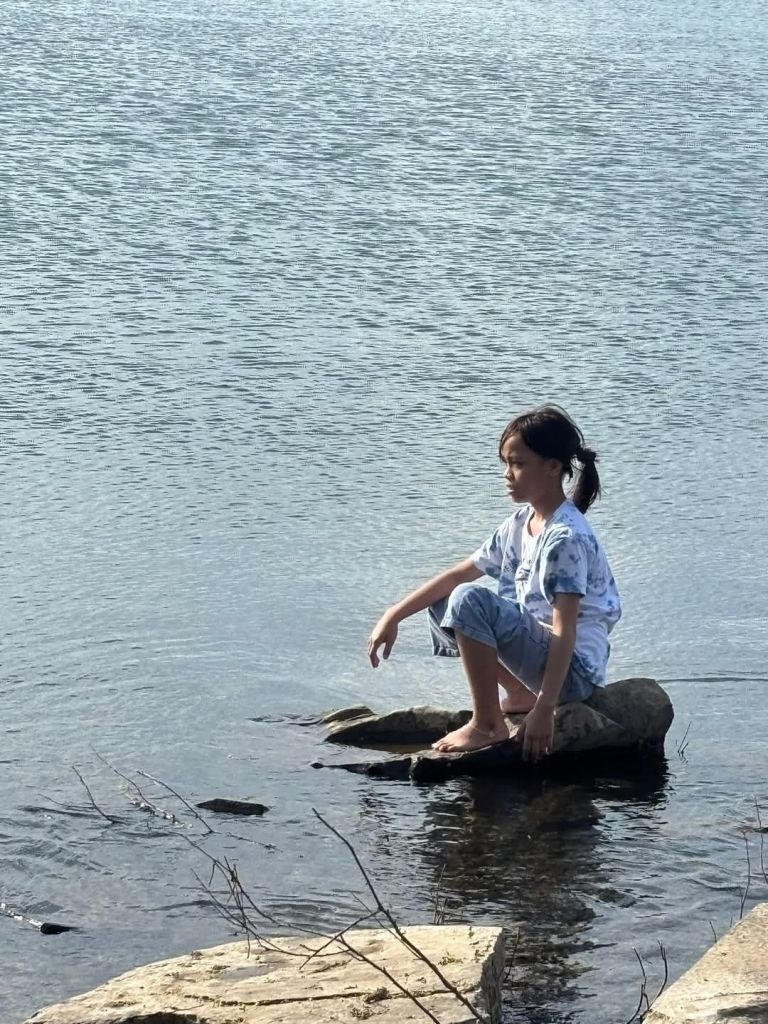
Small, initially shy and yet energetic, Claue came from the Philippines with her mother knowing very little English.  This year she went out for basketball and seemed to be adjusting.  Her classmates miss their friend.

What We Believe, Does It Matter?

Standard

What we believe matters.  What we believe changes our reality.  Belief matters because it changes the way we act.  If a person believes something they will live in a way that reflects the reality of their mind and work to create that reality.

If I believe I am disadvantaged, discriminated against or am cut off from a path to success, then I have also excused myself from making a full effort to overcome.  However, if I believe success is achieved by meeting challenges and adversity without making any excuses, then my trying may overcome the obstacles.  If I believe success comes from hard work and perseverance I will actively pursue it rather than wait around for my fate to be determined by my circumstances.

In practical or pragmatic terms it is better to believe there is hope.  Hopeless people go through the motions of life, they hold back because of their cynical attitudes and when their lack of effort results in failure they take it as proof of determinism.  When we believe things cannot be changed we are actually promoting that end.  There is truth to the idea of a self-fulfilling prophecy.  We can build positive or negative feedback loops depending on what we believe and how what we believe changes the way we act or react.

Some saw only giants…

What we believe changes how we view the evidence.  In the Bible there are multiple accounts where perspective had practical consequences.  There is the story of twelve Israelite men sent to spy on Canaan (Numbers 13) who saw the same evidence differently.  Ten of the twelve saw only impossible odds, plead their reasonable case against the promise, convinced the multitude to fear and doomed themselves to wandering.  However, two of the twelve saw victory over the obstacles and they did eventually see the promise fulfilled for them.  Unfortunately, because of the unbelief of others, even their fulfillment was delayed.

With a negative perspective could very well be robbing ourselves of a chance for success.  But, not only that, we may be robbing others as well because we aren’t giving our full potential.  When we take a fatalistic ‘it is what it is’ attitude towards something what we are actually doing is saying that we are unwilling to take steps to change what ‘is’ and make it better.  It is not an acceptance of reality, no, it is an excuse to be mediocre.  It is justification of our being indifferent rather than taking steps in faith to change circumstances for ourselves or others.

Cynicism and skepticism seem to be the ‘gods’ of our time.  And, while I am an advocate for critical thinking, I desire to use it as a means to strengthen humanity and not to destroy faith in the better.  I am not arguing in favor of foolhardiness.  I do not believe faith in the future is an excuse to be ignorant or unaware.  But, what I am saying is that we need to shoot for the impossible or we won’t even live the best of the possible.  It is the faithful who should be leading the way towards the ideal and without compromise or fear.

Unbelieving Christians…

There are many who claim to believe that the fantastic claims of the Bible are true and yet few who seem to accept the full implications of what doth dwell therein.  It is subtle, it often hides under cloak of theology or spiritual language, but underlying this ‘appearance of godliness’ (2 Timothy 3:5) is a heart of unbelief and doubt.  I can tolerate defeatism outside the church, but within the community of faith defeatism is inexcusable, it is spiritually dangerous ground and robs of us of our full potential as people of faith.  There are three areas where I see Christians accepting defeat and in the process defrauding themselves and the world.

“Be perfect, therefore, as your heavenly Father is perfect.” (Matthew 5:48)

The Bible tells us all have sinned and fallen short of the glory of God (Romans 3:23) and that to set the stage for our understanding a need for saving grace.  Yet that is NOT an excuse to continue in sin. (Romans 6:1) The mentality that will lead to spiritual victory is that which seeks to overcome sin rather than wallow in excuses for sin.  I can hear the chorus of “yeah, buts” in protest.  I know all the excuses because I have made them.  To those making excuses by citing religious tradition and theological exemption, read Mark 7:13.

Ironically, it is sometimes the same who attempt to apply the letter of their own law or tradition, who justify their own personal and group shortcomings.  They strain on gnats and swallow camels (Matthew 23) sowing the seeds of their own failure.  All have sinned.  Sin is falling short of perfect love.  We need grace for our own failings and need to show grace as those shown grace.  However we aim for perfection because to aim for less we are actually sabotaging our full potential and will likely feel need to justify ourselves by pointing out the failures of our neighbors.

To those I have judged for their sins while not dealing completely with my own, I apologize and offer my repentance.

“This, then, is how you should pray: “‘Our Father in heaven, hallowed be your name,     your kingdom come, your will be done, on earth as it is in heaven…” (Matthew 6:9)

This is the prototypical prayer Jesus offered his followers.  It is commonly referred to as the “Lord’s prayer” and recited religiously.  But, if one were to consider the implications, it should change our expectations and how we live.  There are two things we can assume, a) we could assume we are to pray this as mere wishful thinking, or b) we can take it literally and do our part to bring heaven to earth in faith.  It is an unfortunate feature of popular eschatology that seems to dampen the enthusiasm of some to make a positive contribution by a presumption that it will not make a difference what we do.

When we see the world with a rental car mentality we cease to take care of it as a gift from God.  Worse, too often this attitude is not just negligence towards the environment, but it also seeps into our attitude towards people and we become as Jonah sitting waiting (even hoping) for the judgment of the polluted and imperfect world.  To have that perspective is to extinguish our potential as a salt and light in the world (Matthew 5:13-16) and deprive our neighbors along with future generations of a better world.  We are essentially tying the hands of God (goodness) when we accept a corrupt world.  It is our job as people of faith to swim against the current and bring heaven to earth.

“Have faith in God,” Jesus answered. “Truly  I tell you, if anyone says to this mountain, ‘Go, throw yourself into the sea,’ and does not doubt in their heart but believes that what they say will happen, it will be done for them.  Therefore I tell you, whatever you ask for in prayer, believe that you have received it, and it will be yours.”  (Mark 11:22-24)

The passage above, a refrain repeated in the Gospels. It identifies the real root of our low expectations and the root of our low expectations is a heart of faithlessness.  We do not see the full potential of God’s love for us because we do not believe, pray in belief and act in full faith.  This cynical faithless attitude is the same that prevented Jesus from doing works he was doing among others who had faith (Matthew 13:53-58, Luke 4:14-30, Mark 6:1:6) and it is a spirit still alive today in religious circles today.  It is a spiritual ignorance, it is an idea that boxes in God by our own understanding, and limits our full potential.

Beware of what you think you know lest you repeat the same mistakes of those who limited not only themselves but also those who were with them.  Faith is not fatalistic.  Faith is a mind set on success in all areas of life, having a heart that believes all things are possible and acting with a will to overcome impossibility.  It is an attitude without fear of giants, not deterred by walls or oceans and has hope in all people.  It is with this kind of faith that the promises of God are made real as experiences today rather than a mythology in the past or a delusion about the future.

The radical faith…

I say, instead of spreading unbelief or doubt, and instead of living in doom or despair, become open to the better possibility and act to make it a reality.  I’m not saying to be ignorant of suffering, nor that life is all sunshine and rainbows for those with radical faith.  No, if anything, with higher expectations comes a greater burden; a person who believes does not sit idle waiting for the future to come to them.  A person with faith is more active and vulnerable.  Still, those who try and stumble occasionally are better than those who spiritualize their defeatism and never act practically to bring what is better into reality.

“In the same way, faith by itself, if it is not accompanied by action, is dead.   But someone will say, “You have faith; I have deeds.” Show me your faith without deeds, and I will show you my faith by my deeds.” (James 2:17-18)

Believe and live life an abundance rather than be resigned to fear or failure.  Be wise, be aware and live in faith.

Go bring heaven to earth.

Make no excuses.