

The Israeli-Palestinian conflict is a tangled web of hypocrisy and intrigue where Israel, under Likud regime and Benjamin Netanyahu’s rule, wields the specter of “Palestinian terrorism” as a means of denying Palestinian statehood—while ignoring its own history of terror and ongoing policies that fuel violence in response.
The narrative that a Palestinian state would empower terrorists is a deliberate distortion, rooted in Israel’s refusal to relinquish control over the West Bank and Gaza. Far from being a security necessity, this stance masks a calculated campaign to completely annex Palestinian lands, perpetuated through their decades of occupation, settler violence, and even complicity in bolstering Hamas to fracture Palestinian unity. Israel’s own terrorist origins, its role in fostering extremism, and its relentless aggression against neighbors demand a reckoning: Palestinian sovereignty, backed by international intervention, is the only path to dismantle this cycle of oppression and hold Israel’s rogue regime accountable.
The framing of this conflict as having started on October 7th and only addressing the Palestinian response to Israeli abuses, is to deny the reality of the situation: This all started with a massive migration from Europe—followed thereafter by the terror campaign of Zionist gangs that would eventually be incorporated into an Israeli state.
We’re told we can’t reward terror, but that is the only reason why Israel exists and precisely what has inspired the Palestinian resistance.
Israel’s Terrorist Foundations and the Double Standard
Israel’s establishment in 1948 was forged through brutal acts of terrorism by Zionist militias, a fact conveniently erased from the narrative of those condemning Palestinian resistance. Groups like the Irgun and Lehi orchestrated atrocities such as the 1946 King David Hotel bombing—which killed 91 people, and the 1948 Deir Yassin massacre—where over 100 Palestinians were slaughtered, and catalyzing the Nakba—the ethnic cleansing of 711,000 Palestinians. These acts, branded terrorism by the British and Arabs, were pivotal in securing Israel’s statehood, endorsed by the 1947 UN Partition Plan despite Arab opposition. Yet, when Palestinians resist occupation, their actions are demonized to justify denying them the same right to self-determination. This glaring double standard exposes Israel’s complete moral bankruptcy: Zionist terror was a stepping stone to statehood, but Palestinian resistance against illegal occupation is weaponized to perpetuate statelessness.
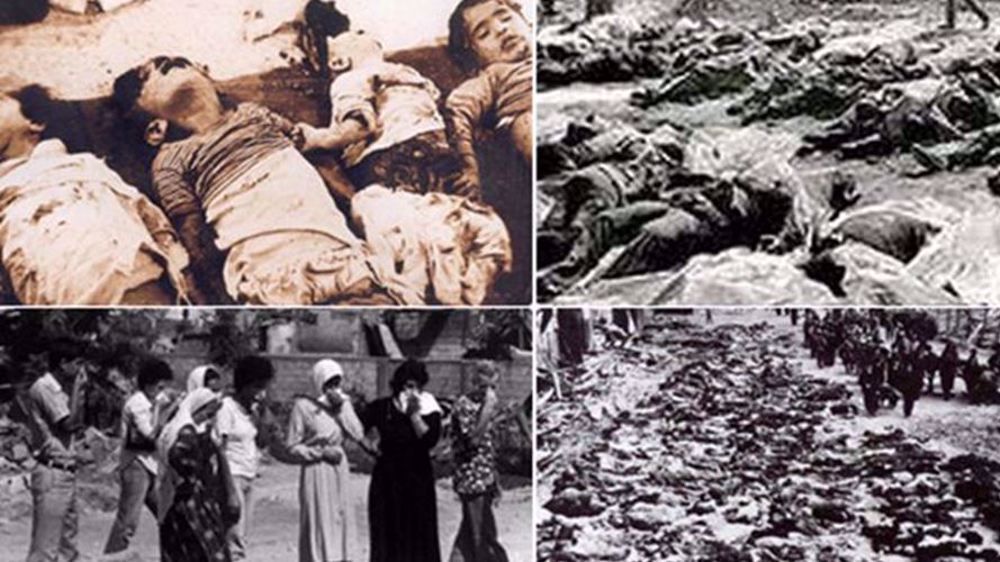
Israel’s Iron Grip on Palestinian Territories
Since seizing the West Bank and Gaza in 1967, Israel has enforced a brutal occupation designed to strangle Palestinian aspirations. The West Bank is carved up by over 400,000 settlers in Area C—which comprises 60% of the territory—with illegal settlement expansion accelerating under Netanyahu’s government. And finance Minister Bezalel Smotrich’s recent call for “sovereignty” over the West Bank lays bare an annexationist agenda. In Gaza, a suffocating blockade since 2007 has trapped 2 million people, with 90% displaced at some point in 2024 due to IDF operations that razed civilian infrastructure. Settler violence in the West Bank has surged, with 2,848 attacks recorded between October 2023 and May 2025, often aided and abetted by Israeli forces. These are not defensive measures but a deliberate strategy of aggression to erase Palestinian claims to their land—rendering a viable state impossible.

October 7: A Pretext for Escalated Aggression
Israel’s fixation on Hamas’s October 7, 2023, attack, which killed 1,200 Israelis (many by the IDF “friendly fire” or even intentionally) and took 253 hostages, serves as a convenient pretext to justify genocidal operations in Gaza, where over 60,000 Palestinians have been killed. This selective outrage ignores a century of Palestinian suffering: the Nakba, decades of occupation, and a blockade that had turned Gaza into an open-air prison. The First and Second Intifadas were uprisings against this oppression—met with Israel’s disproportionate violence. By framing October 7 as the conflict’s defining moment, Israel deflects from its own role in perpetuating the conditions that breed resistance. Smotrich’s annexationist rhetoric and the IDF’s devastation of Gaza reveal October 7 as a manufactured justification for territorial conquest, not a standalone tragedy.
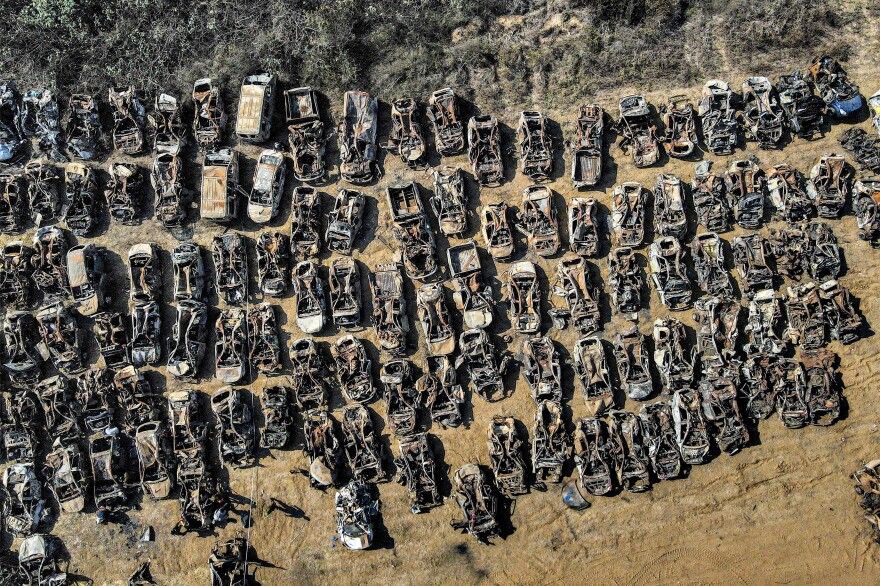
Likud’s Complicity in Terrorism: The Hamas Connection
Far from being a mere victim of Hamas, Israel’s Likud-led government has actively propped up the group to sabotage Palestinian statehood. In 2019, Netanyahu told Likud members, “anyone who wants to thwart the establishment of a Palestinian state has to support bolstering Hamas and transferring money to Hamas.”
Since 2018, Israel has greenlit Qatari funds to Hamas, ostensibly for humanitarian aid but effectively to keep Gaza under Hamas’s control and prevent a unified Palestinian front with the Palestinian Authority. This cynical strategy ensures a divided enemy, stalling peace talks and justifying Israel’s refusal to negotiate. By bankrolling Hamas, Likud has fueled the very terrorism it decries, exposing its duplicity in undermining a two-state solution.
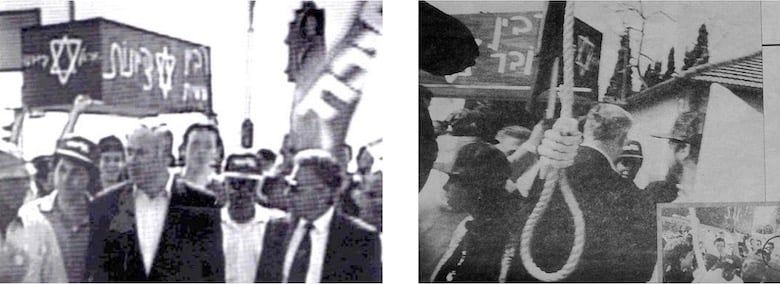
The 1995 assassination of Prime Minister Yitzhak Rabin, who pursued peace through the Oslo Accords, further unmasks Likud’s extremist ties. While not directly responsible, Netanyahu’s incendiary rhetoric—joining protests where Rabin was branded a traitor and involving a coffin—fueled the climate that led to his murder by a right-wing zealot. This act derailed Oslo’s promise of Palestinian statehood, empowering Likud’s hardline agenda and cementing its legacy of sabotaging peace through violence and incitement.
Palestinian Sovereignty: A Counter to Israel’s Terrorism
Palestinian statehood is not a concession to terrorism but a necessary antidote to Israel’s state-sponsored aggression. This hope would undermine any lingering support for Hamas in Palestinian territories. People support violent solutions when they feel they’re left with no other options. Finally recognizing a Palestinian right to self-determination and granting them real protection from a decades long onslaught will help disarm the conflict. End the oppression and it will end the reason for resistance.

The 2024 UN General Assembly, backed by Saudi Arabia and Norway, reaffirmed support for a two-state solution based on 1967 borders, a vision the Palestinian Authority endorses. Yet, Israel’s rejection, coupled with Hamas’s refusal to fully recognize Israel, underscores the need for some international intervention. Deploying neutral peacekeepers, modeled on the UN Interim Force in Lebanon, could help protect Palestinians from IDF terrorism and settler violence while enabling governance free from Israel’s stranglehold. The Zionist opposition to such measures, viewing them as threats to their control, only highlights intent to perpetuate occupation.
Sanctions must target Israel’s rogue regime to curb its terrorist policies. Germany’s 2024 arms sale suspension and sanctions on ministers like Smotrich and Itamar Ben-Gvir for backing settler violence are steps forward. The International Criminal Court’s 2024 arrest warrants for both Netanyahu and Yoav Gallant for war crimes in Gaza signal a growing demand for accountability. Broad sanctions, though resisted by the US, could pressure Israel to dismantle settlements and end the blockade, forcing compliance with international law.
Conclusion: Holding Israel’s Terrorist Regime Accountable
Israel’s Likud-led regime, under Netanyahu, has woven a tapestry of terrorism and manipulation to thwart Palestinian statehood. From its origins in Zionist militias’ violence to its current policies of occupation, continual settlement expansion, and complicity with Hamas, the Zionist state has systematically denied Palestinians their right to self-determination. The narrative of Palestinian terrorism is a smokescreen, used to deflect from Israel’s own terrorist legacy and ongoing acts of aggression. October 7 was not an isolated act but a consequence of decades of oppression, exploited to justify further land grabs.
International intervention, both peacekeepers and sanctions are steps to dismantle this cycle of violence, ensuring Palestinian sovereignty and holding Israel’s extremist regime accountable for its crimes. Only by confronting Israel’s terrorism can a just peace, rooted in a two-state solution, be achieved. The whole region would change if the Zionist regime were forced to “defend” without being so offensive—this is the only path for an Israel that survives the test of time.
 Irregular Ideation