
The Big Box Church

Standard

Sitting in “The Well,” a coffee shop within the campus of Christ’s Wesleyan, a local mini mega-church.  Why a coffee shop? It is pretty much the same reason a Target store has a Starbucks. It is a trendy and cool place to chill out as the service plays out on the big screen.  The ‘church’ here is as American as a big box store.  It is quite the production, with many programs tailored to children and all needs in the congregation.  The wonderful thing is that you are free to participate to the level that you want.  I’m not alone as I sip my caramel frappe while the administrative pastor goes over bulletin announcements and the highlights of Miami versus Kansas City play on the small screen.

The thing is, I was once threatened by this, the professional musicians mimicking rock stars on the stage.  How could this really be called a church?  And, as they currently ruin “How Great Thou Art” with some ridiculous contemporary rendition, I would definitely be tempted to pile on.  There’s certainly a kind of consumerist hokeyness to the whole enterprise.  I mean who looks at Walmart and an Alanis Morissette wannabe, then says, “Wow, this is the perfect model for the church!”? It’s all as cheap and throw away as the American culture in general.  Nevertheless, this is the place most people are today and also as close to an actual community as many get in this age of suburban sprawl.

Yes, I’m a worship snob.  To me, nothing can rival true Orthodox worship.  Old hymns, like those in a traditional Protestant church, and the Psalms and Scripture of the liturgy feel much more meaningful.  But is this really a substantive difference?  Is the worship here more or less about our personal preference than it is there?  Even Orthodoxy, with its simple images and chanted theology, was trying to make the message accessible to the people at the time.  Would Jesus have filled a stadium had he had the opportunity to do so?  Maybe so.  Certainly, the church has always taken some of its form from the local culture. But then shouldn’t the church create the culture rather than the other way around?

The thing is the biggest problem that I have with all of this is that it exposes religion for what it is.  The reason some of us need to stay traditional is because if worship is allowed to change then we start to question.  Could it all be fake?  We find our security keeping it all the same.  If it has a timeless feel then we don’t need to struggle with the foundation of our faith.  My cynicism takes over because this chintzy architecture exposes the framework that some of us would rather keep hidden under the ornate historical facade. It works like satire to undermine my confidence.  Oh well, as the couple prepares in front of the lights and cameras in the lobby, like television reporters, I suppose it is time to wrap this blog up.

Postscript: I attended with my wife, out of convenience due to our busy afternoon, who prefers this style of service as it is similar to her church in the back in the Philippines. I was reflecting on the similarities of this to Orthodoxy, in that you have “coffee hour” after the Orthodox church. The biggest difference really is the size and organization. One models itself after the Byzantines and the other off a shopping mall or shopping plaza. And yet both require donations from viewers like you. What really is the big difference between dropping money in the offering plate and tapping your credit card to pay for the brew? The church calendar and the many programs to help make the Gospel accessible? Being in awe of the temple and being impressed by the light show? It all basically serves the same purpose.
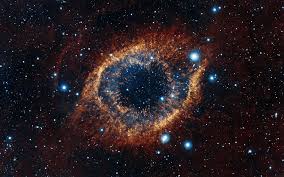
What Are the Practical Implications of Consciousness?

Standard

Have you ever pondered the complete impossibility of your existence as a finite conscious being?

Think about it.

What are the chances of your arriving at this precise moment of time given the infinite possibilities before and after?

Our existence seems finite.  We have vague memory of our beginnings as a sentient creature.  We were given a month, date and year of our birth; our first conscious moments arrived at some point in time before that (during the 24th and 28th week of gestation) in our mother’s womb.  All indications point to a beginning to our conscious existence and all things with a beginning will eventually end—or at least that is the pattern we can observe in everything in the universe.  (Well, everything besides death and taxes, both of those things apparently permanent fixtures…)

But, if we are finite, and time stretches infinitely in both directions from the point of our existence in this present moment, how did we end up here?  Why is it not a million, billion or quadrillion quadrillion years before or after this moment of now?  There is infinite possibility of it being any moment but now and yet inexplicably here we are contemplating our existence together.  How?

I believe the answer could be a matter of perception.  While it is true that what we perceive is our reality—there is a vast difference between our individual perception and reality as a whole.  For starters, as finite beings, we can only perceive an infinitesimally small portion of the universe we live in and can’t truly imagine anything beyond it.  And, beyond that, our perception is often skewed and distorted in ways we are unable to see ourselves.

One thing we do not perceive correctly is the reality that we are inexorably linked to the universe.  From our own perspective of consciousness we are something separatean individualand apart from everything else in the universe.  However, we did not just materialize out of thin air, every part of us was part of the universe long before it became part of us and will probably continue to exist long after our physical bodies die and become worm food.  Despite our perception of being something outside of the universe looking in, somehow a unique entity in our mind, we are still one with the universe and can’t be separated from it.

An immaterial soul, a part of us separate from the material universe and undetectable, is not required to explain our consciousness.  There is sufficient evidence to suggest that human consciousness is an emergent property of electrical activity in our brain.  And still, no matter how much science can explain, there’s a great mystery to our existence, as finite beings, at this time and place.

Timelessness and the divinity of Christ

At risk of being labeled heretic (not that anyone has the right to do that, especially not a Protestant armed with only their own opinion of the Bible and a denominational bias) I will postulate an idea about our consciousness and what it means.

Remember how Jesus turned the “you are gods” of Psalm 82:6 into a defense for his own claim of divinity?

Here’s the reference:

“We are not stoning you for any good work,” they replied, “but for blasphemy, because you, a mere man, claim to be God.”

Jesus answered them, “Is it not written in your Law, ‘I have said you are “gods”’?  If he called them ‘gods,’ to whom the word of God came—and Scripture cannot be set aside—what about the one whom the Father set apart as his very own and sent into the world? Why then do you accuse me of blasphemy because I said, ‘I am God’s Son’? (John 10:33‭-‬36 NIV)

The interesting thing about the passage Jesus quotes is how it applies to us.  If Jesus is using this verse as a defense of his own divinity, then what does that make us?  Does receiving the word of God (via the Spirit) give us the right to claim divinity as well?

There seems to be no other logical conclusion besides our being in some way divine.  We are told elsewhere that “those led by the Spirit of God are the children of God” (Romans 8:14-17) and “heirs of God and co-heirs with Christ,” which is an astonishing claim.  It means that, through adoption, we are and will be fully divine, like Christ.

And this gets even more bizarre when you consider the further implications.  We exist in time.  However, God exists at the beginning and ending of time simultaneously and thus is outside of time as we perceive it.  Therefore, when we complete this process of divinization (or theosis) described throughout Scripture and become one with God, in timeless eternity will we save ourselves before we even existed?

Maybe predestination is our choice?

Only God knows…

So, what does divinization have to do with consciousness?

To exist in eternity future, a timeless infinite future, then one also pre-exist time.  In fact, words like “past” or “present” or “future” do not exist in a timeless reality.  Something that exists as both infinite and eternal can be (without contradiction) at all points (of space and time) while, at the same time, also at none.

Our linear perception of time comes from a limited perspective of reality and is a perspective that falls apart at the edges of our universe.  At the quantum level things become irrational from a time-based perspective; quantum particles borrow energy from the future, they are somehow entangled together across vast swaths of space, and this all strongly suggests there is something “off” about our intuitions.

Consciousness, on one hand, is an emergent property of our physical brain.  But it also seems to be more than that or how could we be experiencing the present moment given the infinite possibilities?  Time defines our conscious experience and yet our consciousness of time allows us to contemplate timelessness.

To follow after Jesus, take on the divine nature and be “children of God” requires that some part of our being must exist beyond time.  The question is, if this is true, do we even exist as a separate consciousness or are we already part of something bigger and divine?

Could our conscious mind, like the individual neurons in a brain that have no awareness of the whole mind, also be individually unaware of our own part in a larger consciousness?

Are we in some mysterious way already timeless and divine?

Are we gods?