

The other day I looked across the gym and saw a familiar grin.
Oh, Ydran decided to pump iron!
My son, still twelve years old, isn’t the most committed to strength training or conditioning and prefers to spend his time lounging at the pool. But with Junior High football being right around the corner he (completely of his own volition) was putting some work in. I gave a salute and then we both continued with our respective workouts.
However, what really impressed me was the weight he had on the bar. His bench is right around 100 lbs, for reps. And this brought me back to when I started lifting weights. I can recall doing the same weight, except in my Junior year of high school! And also how some of the football players would curl my bench weight, as in literally take what I had on the rack and use it to curl. But it was not totally embarrassing for me I only weighed 112 lbs as a Senior. It shows what a difference his genetics make. With a bit of work ethic, he’ll be an athletic freak—while I never was going to be great.
As for myself since school?
I’ve put on enough mass to make up for the sunken chest (which was a consequence of my traumatic birth) and am above average in terms of bench strength—even after being effectively reduced to zero twice due to my neck injury and having to rebuild. With my current body weight around 180 lbs, I have recently broken a personal record with six solid reps of 225 lbs. Which is more than most men will ever do and a result of discipline. I was determined to overcome my limitations.
Still, given where he is now, with a little bit of effort and a few more years, he will do more than what I’ve ever done. He’s just athletically gifted, has very good hand-eye coordination, and is already big and strong enough to give some serious competition. It is only a matter of time until I won’t have any advantage. Fair or not he will be better than me at everything he wants to do and probably with less overall struggle. So long as he will remain healthy he is destined to crush me in any competition.
There is no such thing as an even playing field in sports and competition. If we were all built the same, with the same opportunities or abilities, every contest would end in a tie—there couldn’t be winners or losers. But we do have differences in size, speed, endurance, and even in motivation and desire. Some had parents who pushed them, gave them more opportunities, and made sure they had the best nutrition and coaching, and that’s what gave them their edge.
So what is fair or not fair?
PIAA vs Aliquippa vs Southern Columbia
Pennsylvania has some hard-nosed smash-mouth high school football. In particular, the towns of the coal region have produced dominant players and programs. The Red Tornados, of Mount Carmel, is the storied winningest team in the state (6th in the nation) with a total of 899 wins. But, have taken a step back, it is their neighbors to the North that are setting records today, and that being the Tigers of Southern Columbia with six consecutive State Championships.
However, on the complete opposite side of the state, in a Pittsburgh suburb, they have another team with an incredible tradition of winning, the Aliquippa Quips.
Southern and Aliquippa started in the class A, small school category, they’ve battled in the State Championship game and online it is clear there is some bad blood on the side of the Quips, being humiliated 49-14 in the final back in 2015. But what has really been grinding their gears is that—as the result of new PIAA rules intended to help maintain a competitive balance—they’ve been bumped up multiple classifications (the Tigers only going up one) due to transfers and success in the post-season.

The same exact rules apply to both teams and yet have impacted the Quips more dramatically and this has led to cries of foul—and a big whataboutism.
Their player safety is the first reason they’ve argued. Despite Aliquippa having walloped an undefeated Selinsgrove Seals team, in the AAAA championship, earning them their latest bump in classification, and despite their having a roster with quite a bit of D1-destined talent for a typical small school—the Quips’ loyal fan base has been viciously accusing the PIAA organization of favoritism and their cross-state rivals of being a cheater for avoiding reclassification. But there is zero evidence for either charge. It seems that the reality, under all this bluster about player safety or fairness, is that they want to keep beating on a weaker field year after year.
They’ve taken it to court and have won their first appeal. But the PIAA is fighting against this decision with their own appeal and who knows where it will go. What I do know is it will likely be a matter of prejudice, not merit or metric, that decides the case.
Racial overtones hang over this, as well as the fact that this is East versus West, the Tigers with their rural population while the Quips come from an urban community. Southern Columbia sits in a cornfield, near the beautiful Knoebels amusement park and resort, representing a vibrant community of Elysburg and on the edge of the economically depressed coal region. While jobs and a better place to live is a big enough draw—there is very little doubt that a few parents do move into the school district only for the sake of their child’s athletic future. However, being on the edge of a big city like Pittsburgh is a massive advantage for Aliquippa.

There is talk now of a new “Southern Columbia rule” which effectively will target the Tigers specifically for their unprecedented success within the current regime. Is it sour grapes or retaliatory rules? Who knows. But both of these powerhouses insist that the work they put in is what makes the difference. It is true to an extent. The Tigers, under the tutelage of Jim Roth, went from basement dwelling to the point of nearly eliminating the football team to totally mauling their local schedule and stacking up trophies for decades—coaching with discipline got the ball rolling before it became a dynasty that creates its own weather.
But the sore losers do have a point, talent does gravitate towards Southern like bees to honey. One example is that outstanding quarterback prospect from my hometown who ended up there, with rumors swirling that his dad rented an apartment in Elysburg so he could play and that this kid (who ended up going to Alabama) was still spending most of his time away from Tiger territory. And yet, with the very high level of scrutiny the program has faced I am fairly certain all is done within the rules.
The point is that there is no perfect formula and thus never a fair competition. Yes, they all need to suit the same amount of players to play, scoring rules should apply equally to all teams, and officials should have no bias, but there are a myriad of factors that can’t be controlled or properly accounted for. No two communities in the state of Pennsylvania are exactly the same, some schools are advantaged in ways that others are not, so there will never be a perfect competitive balance.
Olympic Women vs Algerian Boxer
The trans controversy has taken yet another turn as a female Italian boxer, after only 46 seconds, collapsed in tears and she quit the bout. The reason for this is that blows from her opponent, an Algerian, Imane Khelif—a “biological male” according to the blazing headlines—were too much to take. And true enough, Khelif looks like a dude and had also previously been disqualified from international competitions due to having an XY chromosome.
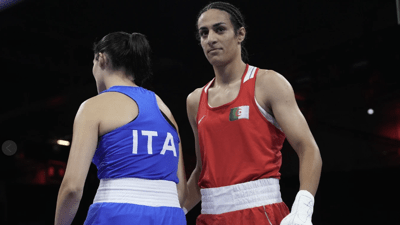
My initial knee-jerk reaction was outrage. It was wrong that this woman would have to face this obviously masculine figure. And yet, when I started to dig, it turns out the “That’s a man!” reaction is a little bit of an oversimplification. Khelif has always identified as a woman. And that is because ‘she’ was assigned to the female category at birth. Why? Well, it’s because, no fault of anyone, they were born without the male organ. They are one of those very rare cases of being intersex. In other words, the ‘down there’ expression doesn’t match the chromosomal gender rule.
So the “Well Ackshully” mid-wits, armed with this little knowledge, proudly noting that Algeria (Muslim) is a conservative country, dunked on their dimwitted counterparts who saw what they saw. They’re right in that Khelif is officially female because of ‘her’ female genitals. But the weird part is how these same people who believe stuff like “misgendered” despite male anatomy suddenly can’t see the controversy when this competitor is also chromosomally a male and they’ve visibly benefitted from male hormones. The real question is whether or not it is fair they’re allowed to be in the female category so far as boxing is concerned, not if they had been described as female on a birth certificate.
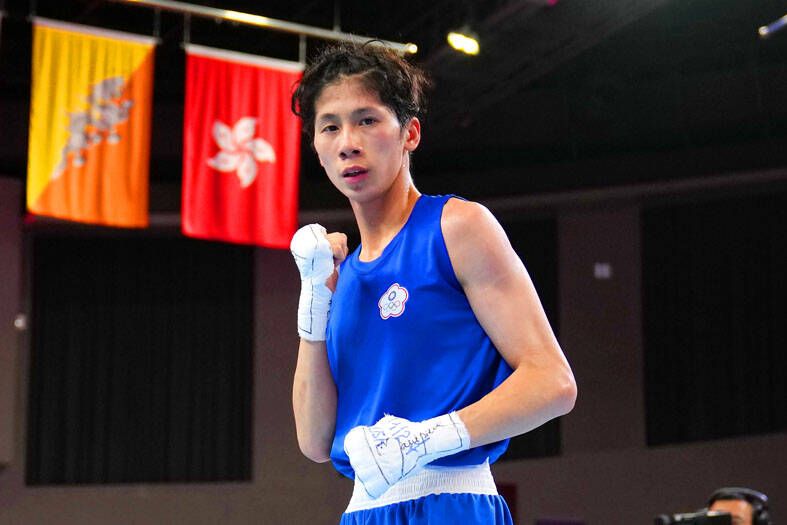
The reason that there are two categories—one for men and another for women—it is a clear advantage to being a male when it comes to high-level competition. Caitlin Clark, as phenomenal as she is against other women, wouldn’t make an NBA roster. That’s not at all sexist, it is just reality in the same way I won’t post up with LeBron James. And to deny this is on par with Flat-Earthism, they can say gender is a social construct (some of the expression is cultural), and yet there’s also overwhelming hard evidence that men have a distinct physical advantage, according to The Trans Athlete Debate “Dilemma”:
Even before puberty, when the differences effectuated by the influence of sex hormones sets in, from a purely genetic perspective, biological males are significantly advantaged.
Case in point, one study published in the British Journal of Sports Medicine extensively researched peer-reviewed studies on the health-related fitness data of 85,000 Australian children aged 9-17. It found that when “compared with 9-year-old females, 9-year-old males were faster over short sprints (9.8%) and 1 mile (16.6%), could jump 9.5% further from a standing start (a test of explosive power), could complete 33% more push-ups in 30 seconds and had 13.8% stronger grip.”
Another study of Greek children, published in the European Journal of Sports Science compared 6-year-old females and 6-year-old. Researchers found that the “boys completed 16.6% more shuttle runs in a given time and could jump 9.7% further from a standing position. In terms of aerobic capacity, 6- to 7-year-old boys showed a higher absolute and relative (to body mass) VO2max than 6- to 7-year-old females”
If this weren’t the case, if women were equal to men, why not eliminate classification based on gender and let the best athletes of every country—male or female—compete for one gold medal in each event?
No, the reality is, if women had to compete with men, no woman would ever get to the Olympics—let alone stand on the podium.
It has little to do with work ethic or desire.
There is no point even having a separate female category if some with an XY chromosome and higher levels of testosterone are allowed in the competition. While athletic competition has roots in male versus male combat—I am not right-wing and want my daughter to have the opportunity to participate in sports. I believe there needs to be a return to rationality, fairness, and safe competition.
Khelif doesn’t belong in a ring against a normal woman any more than I do. Get real.
High-level Competition Is Not a Right
The progressive left has got all tied up in a knot over the idea that the difference between genders is a myth—merely a social construct.
It is a feminist fantasy that a woman is capable of everything a man can do and that the only reason women are not equally represented is because of injustice.
We hear complaints all of the time from female athletes who believe they deserve equal pay to men who a) produce far more revenue given they are the very best competitors and b) would no doubt humiliate any female challenger.
Note, for the purpose of this discussion, I’m talking only about athletic events, not about intellectual or other capabilities. The other differences in ability based on gender can be a topic for another day, women have distinct advantages and superior abilities in other areas. But my commentary here is strictly about physical strength, speed, and size—where men are gifted.
Also, my wife and I are equally valuable to each other and the family, she works as hard as I do (or harder) and both of us play important roles in our home and the local community, and yet this doesn’t change the fact I could physically dominate her—or that even her own twelve-year-old son is taller and heavier than she is.
Truly, if I completed in the female category of power-lifting I would have elite strength and a chance for gold—as a slightly above-average male weight-lifter.
If it is a right to be an elite athlete, and if all women deserve a special category so they can have a chance to be recognized, is it fair that short and unathletic men are not represented? Should we keep expanding professional leagues so that all can be champions? Or is the point of these kinds of events to have only the best reach the top for the entertainment of those of us who know that we don’t belong there?
Female athletes, instead of griping about unequal pay, should be grateful that they are privileged with a second-tier category that has given women an opportunity to compete.

No two people are equal. There is no such thing as a fair competition. But if there is a category for females, to accommodate their biological differences from men, then those with a clear competitive advantage because of male hormones or chromosomes should be excluded and how they identify or what is down there doesn’t matter. Sure, the right gets things wrong for not understanding that exceptions do exist, but the left does worse and fails to comprehend that women need protection from those who are physically bigger and stronger. The entire reason for separate categories for men and women is to protect women.
This is why we need to have criteria that go beyond the “identifies as a woman” leftist minimum. We need a standard that also considers the level of testosterone or chromosomal pairs. If those who have very rare intersex characteristics don’t have a huge advantage, then how did two of them beat the odds to end up in the Olympics? Why even have a women’s division at all? This is about fairness for all competitors, not about one individual. Our participation in a competition is a privilege, not a right, and can’t be granted to all or it becomes worthless. In the end, it is always a little arbitrary who is allowed or disallowed.


 Irregular Ideation