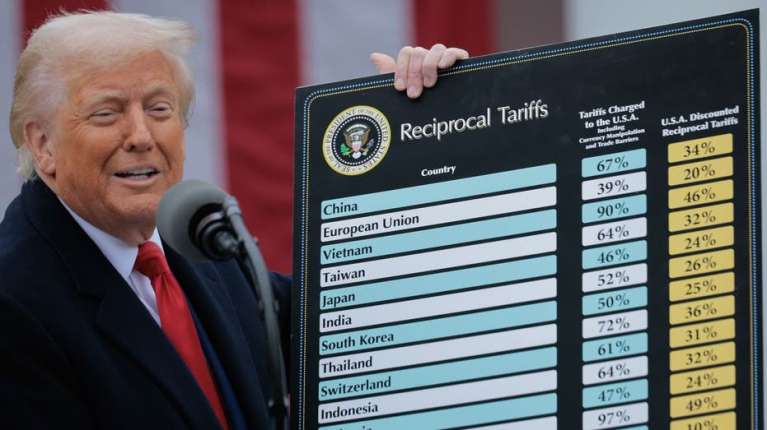
What Thomas Sowell (and Libertarians) Get Wrong About Trump’s Tariffs

Standard

The point of Trump’s tariffs is to get rid of all tariffs.  I can feel the blank stares of my ideological and indoctrinated friends who are hyperventilating about a blip in stock prices and loses for billionaires.  

I get it, Libertarians, you really do not want the government to do anything and Thomas Sowell said stuff about tariffs being bad, so in unison you bleat: “Tariffs are taxes!”

But your sloganeering is not argumentation and—while I generally believe less is more in the case of government—I’m stuck here in the real world with Trump.

Economic theory has it’s place, as do ideals, and yet this isn’t a matter of Sowell said it, I believe it, that settles it.  

Marxists also believe their man’s theory will work if properly applied.  Ideological people can’t accept when their theory doesn’t work in reality, they will always insist “that wasn’t true [insert ideology here]” and continue on their merry way muttering that next time it will work—if they could just brainwash more children and eliminate more enemies of the revolution.  There’s never a reevaluation in light of the actual evidence.
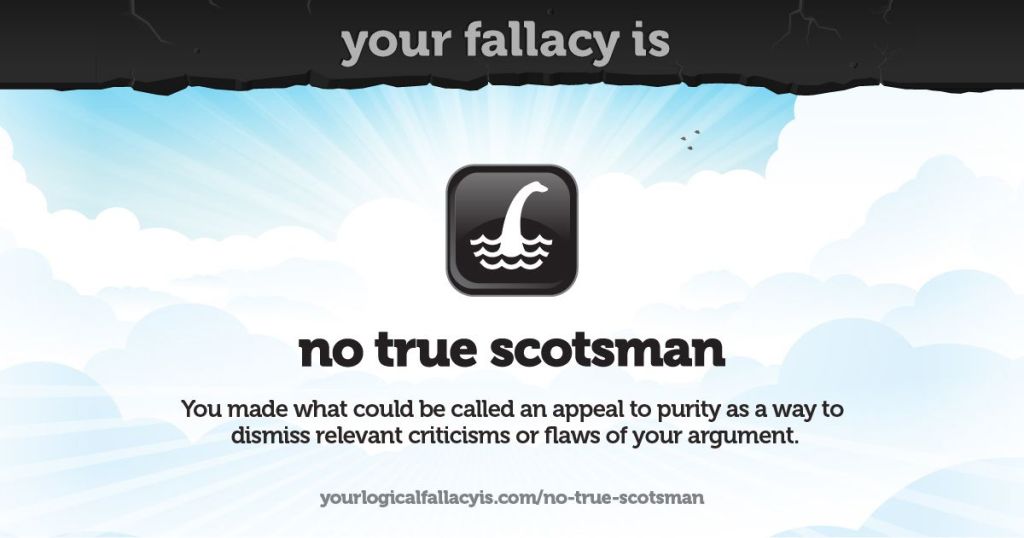
True X hasn’t been tried.

So, without further ado, let’s dive into where free trade fails and Thomas Sowell after we do that…

Can Hell Be Made Worse?

After the devastating earthquake of 2010, I joined a group of young people on a trip to Haiti.  It was a Christian mission and hosted by a Haitian pastor.  This grandfatherly man had, at one point, been in business and ran a factory manufacturing clothes.  

While I’m not going to make a case against charity or giving, there is often a cost that is unseen and a greater dependency created in the end.  The Haitian pastor was forced to shutter his operation and lay off all of his employees after the combination of cheap imports and donations made it impossible to compete in the marketplace.

But the even sadder story was in a place in the country called “little Africa” where rice farmers tried to make ends meet.  No, they were never rich.  However, they had scraped a living out of cultivation up until Bill Clinton started to dump subsidized American rice on the Haitian market.  These people were desperate.  They mobbed our delivery of a bit of relief and aid.

I know, I know, this isn’t real free trade.  But it is the kind of situation we are in.  Putting our favorite theories and fandom aside, and ideals that could possibly work if all abided by the same rules or assumptions, we don’t live in that fantasy land.  In the real world, it is like Haiti where subsidized products are exported and some will disproportionately suffer consequences.  

Yes, in theory, Haiti still benefits, as a whole, from importing cheap or free stuff.  But we can also make the argument that this kind of unfair trade has undermined a situation that was already fragile.  A government that would protect Haitian industries would not let subsidized products be dumped without something stabilizing in return.

Thomas Sowell vs Donald Trump 

Sowell is a great economist and provides a good answer to ‘progressive’ theories.  His being a guest on the Rush Limbaugh show has made him a favorite of conservatives—wanting validation for their free market and small government views.

As an academic, Sowell’s work dealt mostly with economic theory and to argue against all tariffs he uses abstraction “protectionism hurts market efficiency” and that they don’t solve issues like wealth gap, that they favor special interests, and retaliation against tariffs hurts exports, and they lead to long-term stagnation.  And he may be right if we lived in a vacuum sealed petri dish.

Trump, by contrast, lives in the very messy world of politics and negotiations.  He runs on instincts and intuition, not by intellectual exercises or writing papers or creating a set of principles.  He comes in with the big ask, the threat or the bluff, trying to disrupt and even create a bit of anxiety in the other side, before eventually bringing this process to a resolution that makes all parties leave with a feeling like they’ve won.

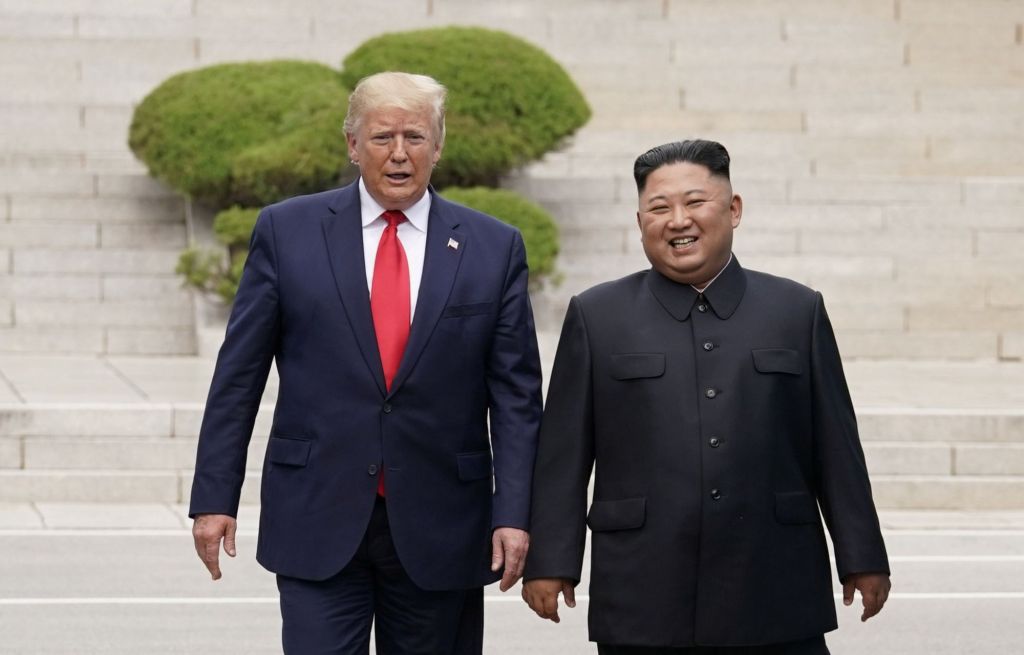
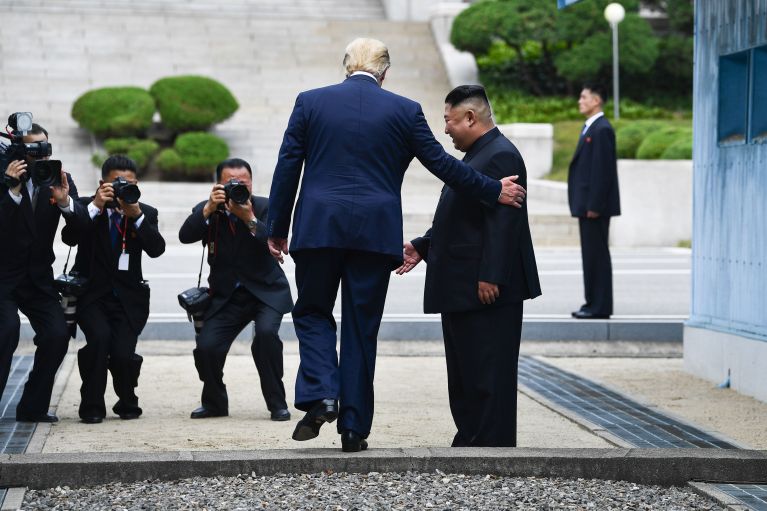
This is how we got from the “fire and fury” rhetoric—with the political class and corporate media hyperventilating about this being a path to war—to Trump being the first US President to set foot in North Korea and then shaking hand of Kim Jong Un.  It is just his method of changing the conversation or moving the Overton window.  You can’t get from point A to point B without shaking up the old status quo a bit.

Trump isn’t ideological, like Sowell, or trying to live off a written in stone economic code of conduct.  No, when he has leverage, or sees an opportunity, he uses it.  There are many countries tariffing US goods.  And our trade deficit is enormous.  So why is it so out of line for our President to cry foul or use the threat of reciprocal tariffs in other to back these countries down and then get a better deal for his country?

Surely Sowell isn’t against pushing for the elimination of tariffs—which likely is the end game.  And, furthermore, Trump’s brazen actions are far more likely to get results than the fine professor’s best lecture on economics.  Already other countries are lining up to start talks about removing their unfair tariffs against the US.  It is a game of musical chairs and you don’t want to be the last one looking for a seat.

Power, Principles, and Persuasion 

Marxism is about the application of power, Libertarians are about strict adherence to a set of principles, but Trump is different.  He is about persuasion.

Marxism is a hammer—raw power of the mob, trying to smashing the old order to hand control to the workers, or so it claims. In reality, it’s a machine for centralization: seize the levers, dictate terms, and dress it up as justice. Think Soviet bread lines or Mao’s famines—equality morphing into control. Libertarians, by contrast, wield a rulebook, not a fist. Their creed—liberty, markets, entirely hands off—is sacred, rigid as stone. Tariffs? Sacrilege. Sowell represents this.  Marxism a power grab, and libertarianism a fortress of unattainable ideals—both are better to be left as theory rather than an approach to real world negotiations.

Marxism would’ve sparked a trade war, not talks; libertarianism would’ve let markets bleed out. Trump’s different—he’s making countries dance. China grumbles but hints at softening; the EU’s haggling too. Stocks have dipped, and Sowell’s costs loom, but the moves are now undeniable: Vietnam’s concessions, India’s play, Japan’s hustle. It’s not a system winning—it’s Trump, raw and loud, proving persuasion trumps power or principle. He’s bending the world his way, one bluff at a time.  He is about persuasion—messy, unscripted, a vibe that bends the room.  

Tariffs are the threat, but trade that is truly free and fair is the actual goal.  And Trump is further along in achieving this simply for his boldness alone.  Maybe he’s not doing it the ‘right’ way or by conventional means, yet who says that we can’t try a new approach to get some better results than we’ve been getting?  The people who have been leaving the American worker behind tot decades now?  As my 13-year-old son would say: Let him cook!
Trump: Business, Not Bombs

Standard

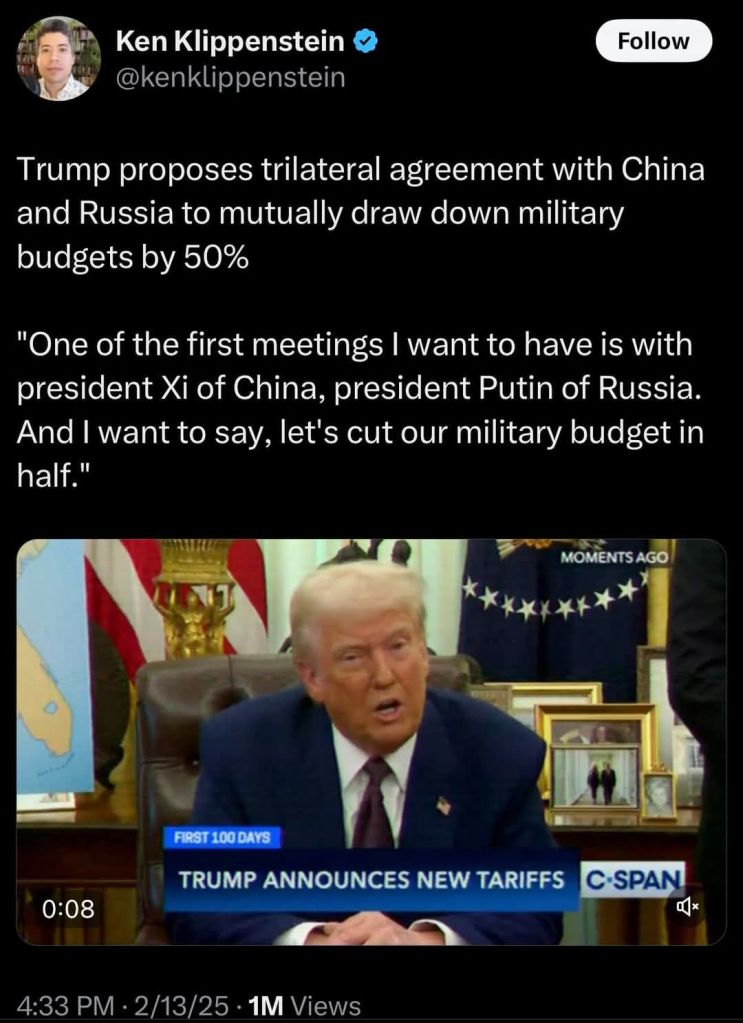
Trump has been full of surprises in the first few weeks of his delayed second term, but this latest proposal was the least expected and one even the professional fault-finders won’t be able to oppose.  He has just made a proposal that could change the world for a generation to come: A trilateral agreement between Russia, China and the US to reduce military spending by 50% and decrease our nuclear stockpiles.

But this isn’t out of character for Trump.  He got started then before he officially entered the office.  According to the Israelis, Trump, who told Netanyahu that the war must end, deserves full credit for the Gaza ceasefire deal.  And this is just a pattern.  Trump has no interest in wars.  He is about business, not bombs, and it goes all the way back to his youth when he, rather the be beholden to phony patriotism, stayed out of Vietnam.

Avoiding War By Any Means

Back in 2016, when Trump was running for President against Hillary Clinton, there was a hearsay report that the MAGA candidate had avoided military service in Vietnam by using a diagnosis of a foot injury.  There is yet to be documentation to prove this.  But it has led to some ridiculing him as “Captain Bone Spurs” and alleging his cowardice.  

To me, knowing what I do about Vietnam, I can’t see how avoiding that meat grinder is a reflection of poor character.  

No, the war was an absolutely horrendous waste of life and resources, a quagmire, in defense of a dying colonial order.  What the US government did to that country and it’s people is beyond the pale.  

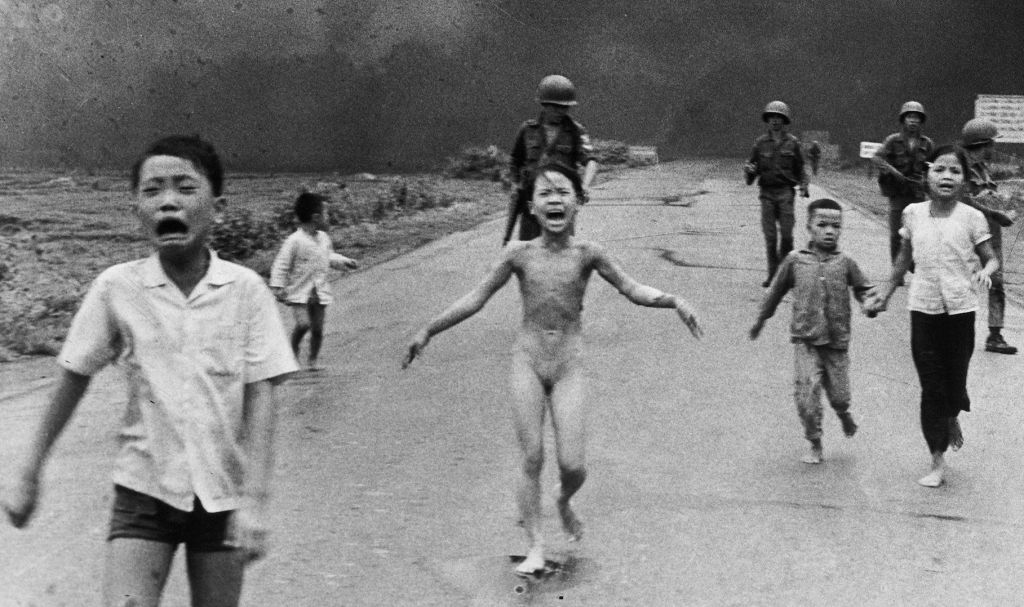
Over one million people died, bombed with napalm in their villages—scores of young American boys killed in the process—and nothing was gained besides an ecological disaster.  Our veterans were left scarred and many of them (like the father of a friend of mine) suffering from debilitating illness—which is likely due to the widespread use of chemical defoliant agents.  

It is easy to see the vanity now.  In the end Vietnam did become a Communist nation.  And yet this did not lead those dominoes falling across Southeast Asia, as ‘experts’ predicted (like they do now claiming Putin has ambition to take all of Europe) and we should be celebrating that anyone avoided this pointless conflict.

Trump may have avoided the Vietnam War for selfish reasons, nevertheless the moral reasoning was correct: Why kill thousands of Asians, at risk of your own life, when you can just do business instead and everyone wins?

Trump Angers Neo-cons

In his first term Trump did something even Obama didn’t do and despite being given a Nobel Peace Prize.  Both Obama and Trump would continue the war in Afghanistan, but it was Obama who bombed Libya in pursuit of “regime change” and turned that country into the hellhole it is today.  Trump, on the other hand, avoided war and even started negotiations for peace with a country we’ve been at odds with since 1953.

I recall being told by a die-hard Democrat friend that Trump, the terrible loose cannon and narcissist he was, would start WW3.  It is quite interesting, to see how that this dire prediction compares to actual reality where the last administration had pushed us to the brink of a nuclear Armageddon.  But in four years of Trump’s presidency, despite all the insane fear-mongering rhetoric from his opponents—nothing close to this happened.  

Instead, what happened under Trump, but not Biden, was a slight thaw of relationship with North Korea.  Yes, Trump engaged in a little rocket size comparison, but eventually would walk across the DMZ to shake hands and get some pictures with Kim Jong Un his counterpart.  That is unprecedented.  And is a legitimate reason to award a peace prize, but nobody recognized that moment and it has faded as Biden returned us to a status quo of use of threats and the proliferation of arms deals, rather than diplomacy, in an attempt to dictate terms.

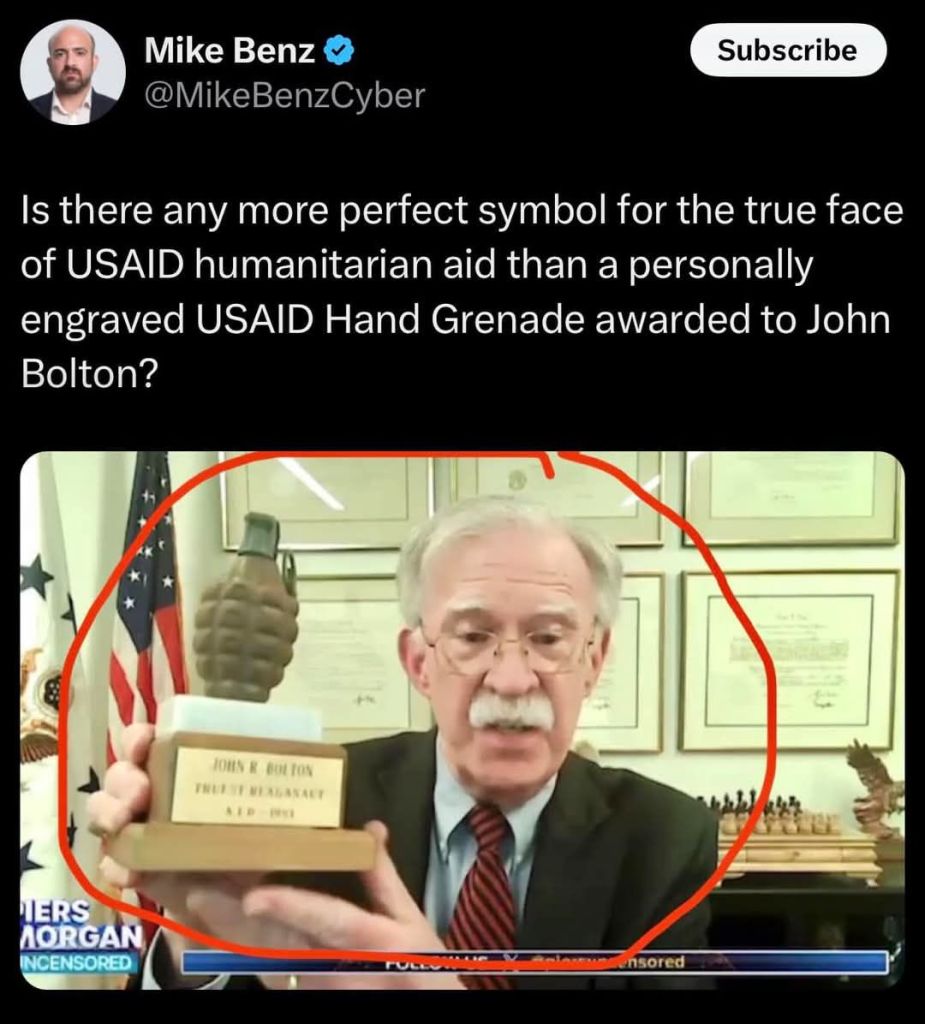
No, Trump is not a peacenik or even a nice guy (depending on who you ask), but he did avoid a dangerous escalation with Iran over a down surveillance drone.  With neo-cons salivating and only ten minutes from strikes, Trump—learning that 150 Iranians may die—called it off.  This is likely why John Bolton turned on him.  The warmongers wanted a violent confrontation, dead bodies, whereas Trump valued human life.

And maybe it was all just a cynical ploy and part of deal making strategy?

Nevertheless, those Iranian men got to go home to their families rather than die so a President could look like a tough guy.  And, when all lives matter peace is possible.  A President that is even doing a little bit of lip-service in concern for enemies will be even less likely to put US service members into harms way.  Yes, he would retaliate against Qassem Soleimani, the Iranian General who was responsible for the deaths of American people, which shows Trump prefers to hold decision-makers accountable rather than subordinates.

Business, Not Bombs

What makes Trump unique, as a President, is his willingness to entertain different ideas in the open.  Our tireless defenders of the status quo claim it is unpresidential, that he suggests alternatives, but this is how a true innovator works.  Why not float a thought or start a conversation?

A prime example is his proposal for Gaza.  I mean, certainly, the Palestinians have truly got the short end of the stick.  They, being Semitic people themselves, get labeled as being anti-Semites, for fighting for their own deeded land, by the most powerful lobby in the world.  Theirs is a legitimate grievance, if there is any, they were chased off of their land by a campaign of violence and terror—are now portrayed as the villains.

So when Trump proposed they walk away it seemed grotesque. Israel is the one country in the world that didn’t see their foreign aid disrupted by Trump’s America-first doctrine and clearly Netanyahu is in agreement with the plan or they would not be doing a joint press conference.  Palestinians had nobody to represent them in this.  How do you make a deal with only one party present?

However, upon some further thought, this could be the best deal Palestinian people can ever can expect to get.  What really is the alternative?

They are in a war they can’t win.  October 7th caught the IDF off guard and yet it was never a serious threat to the Isreali state nor a reason for the Israeli government to come to the negotiating table.  Hamas may have hoped for a hostage exchange in order to get their own captives back.  But hardliners, like Netanyahu, saw it as an opportunity and used it.  Sure, many in the world do protest indiscriminate bombing that kills far more non-combatants and children than it does members of Hamas, but holding a sign or occupying buildings won’t stop this ethnic cleansing campaign.  

Enter, “Riviera of the Middle East”

Trump reframed the conversation from one of fighting for soil, that has led to decades of suffering and death, to what is truly best for me and my children.  Sure, Hamas may disagree, but many Palestinians will likely take a buy-out deal.  Why stay in Gaza if you have a choice to relocate?  There is no new real estate, the Saudis have a lot of money to invest, so why not redevelop Gaza into a modern vibrant city, like Dubai?

The reality is Palestinians aren’t only being kept walled in by the Israelis.  They are truly caught between the two stubborn sides of a regional conflict, like Ukraine, and they (with their children) are paying the full price.  The nations of this region have not forget about colonialism and obviously consider a nation of expansion-minded European settlers to be a thorn in their side.  Add to this that the official policy of Israel is to destabilize their neighbors and you have a breeding ground of resentment.  Palestinians are their way to return the favor—used as a tool to provoke and prove the evil of the Jewish state.

So, for my liberal friends, is this land really so important that we should, for perpetuity, continue to sacrifice more children.  Or do we find a new and creative way to break the deadlock?  And, for my conservative friends, is it better that we send Israel bombs, at the expense of taxpayers, when we could help to broker some kind of buy-out instead?  It is time for a business deal, to give those in Gaza—who just want to live normal lives—a chance.  

So, Trump, I realize this is at your “ridiculous first offer” stage, but I’m listening.  

Tell me more.

The Status Quo Alternative 

The political establishment has only known old divisions and escalation.  It is one big area of bipartisan agreement.  Republicans and Democrats in Congress may disagree on details, but nearly all support an endless war with Russia and China, through proxies or even direct threats.  The goal is always to box their rivals in militarily or back then into a corner economically—as if this is the only way forward.  

Diplomacy took a back seat.  Instead of the slightest acknowledgement of Russian and Chinese security concerns, our government has made regime change the goal with even near-peers with a nuclear deterrence.  And it is this attitude that led to the bloody conflict in Ukraine that has cost countless lives and billions upon billions of US taxpayer money, all after the US had orchestrated a coup on Russia’s doorstep, leading to a civil war in that country and—after eight years of Kiev’s regime lobbing shells at civilians—a direct intervention by Russia.

The problem is a combination of Cold War ideology and institutions.  Endless war is where the big money is.  Many, in the West, profit off conflict and chaos.  That and they are old.  They’ve become functionally fixed, see only one solution (to further humiliate or defeat those who stand in their way) and lack imagination or even the will to come up with win-win resolutions.

Truly, the only way to win any war is not to fight it.  Wars cost both sides.

Trump, for better or worse, is disruptive of the status quo.

As for his proposal, I would consider 50% to be the “ridiculous first offer” stage of negotiations and do not expect China or Russia will go along with it.  For them that would leave the US on top of the balance of power—given our tremendous head start in comparison—and this maintaining our advantage over them leaves their interests vulnerable.  They will probably come back with an alternative proposal and the horse-trading will begin.

Nevertheless, it sure beats a strategy of endless escalation—that eventually ends in a nuclear war or our bankruptcy.  Even a 10% reduction in defense spending would go a long way to slowing down inflation and give hardworking Americans more bang for their buck.  Our sons not dying in Europe or in the East China Sea the biggest benefit of avoiding confrontation.

Lead, Follow, or Get Out of the Way

Like him, love him, or loath him, Trump is the President of the United States and has resolve to make his second term historic in ways nobody imagined.

Even if we disagree on some policies or we have a different understanding of his drive for government efficiency, we should agree with this aim to convince the great powers to beat their swords into plowshares. 

There is just too much to lose (and also too much to gain) by this to not jump on this unique opportunity to challenge existing order and build a better one. 

Business (and buy-outs) rather than bombs—that’s the Trump way of doing geopolitics.

Even his idea of buying Greenland, as part of a containment strategy for Russia and China, is far better than the alternative we see playing out in the steppes of Ukraine.  There is no way to bomb and kill our way to world peace or at least not a kind of peace where humanity survives and thrives.  We need to find a different approach, we need to dissolve the Cold War organizations and agencies that encourage military solutions or regime change.  We need to double down on diplomacy and fair-trade agreements.

It is time to give peace a chance.  We need to be disruptive, to change the conversation, and work with those who are willing to work towards a better future together.  If Trump is a partner in this, then we should embrace this as his role and not hinder this with old partisan battle lines.  Maybe he’s not pure or perfect, but at least he’s oriented right as far as war and avoiding the costs.

When the time for pragmatism has passed…

Standard

Conventional wisdom is usually your best bet in many circumstances.  But there are times when following regular protocol and procedure is not a good option.  Following the rules can ensure failure in some cases.

What I have in mind is a story from the waning moments of the Vietnam war and an amazing last ditch effort. 

image

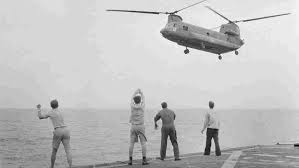
In a desperate bid to escape a Vietnamese pilot commandeered a Chinook helicopter, loaded up his family and headed out to sea.  Short on fuel they found the USS Kirk. 

Unfortunately, the large twin rotor helicopter was too big to land on the ship, but undeterred they hovered over the deck and dropped children into the waiting arms of sailors. 

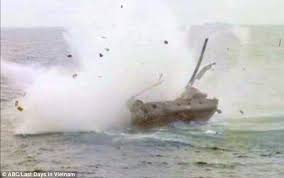
The copilot bailed, but the pilot had to find a way to ditch in the ocean and survive.  So he lowered the aircraft, tilted it one way and jumped the other.  His strategy worked.  The pilot survived the crash unscathed and was rescued.

image

Following the rules would not have produced the desired results in those circumstances.  Determination, not losing hope despite obstacles and creative effort were the keys to success.

Sometimes winning requires wrecking a few helicopters.