

Up until a few years ago, I basically trusted the medical establishment. Sure, even then I would question—like I do with everything else—and then make my own analysis the risks, costs and benefits. My mom’s rule of thumb “everything in moderation” seems to be reasonable in most circumstances. But I’ve grown more skeptical and not because I believe there is a conspiracy to make us all unhealthy either. I just think hubris can be blinding and institutions compromised.
So when it came time to decide whether or not to vaccinate my newborn daughter, my feelings were mixed. She is too precious to gamble. It is my job to protect her. And for that reason I needed to take another look at the question of childhood vaccines. This is my analysis as someone who is not trained in biology, I’m not a medical professional or an expert in any way, shape or form. This is merely the thought process of a concerned father wanting to do what is right and didn’t like the answers he was getting from those ‘credible’ sources.
So join me in a critical look at the topic of childhood vaccines and some things that raised my eyebrows as far as the science, some ethical questions raised recently and the online testimonials versus professional advice. It would take a book to properly cover a topic of this magnitude, but this is an overview and give some reasons for the decision I’ve made. This is a reach into the barrel to examine a few apples and get a little better picture of what else we may find upon further review.
Science: Ingestion… Injection… What Difference Does It Make?
One of my “does their own research” friends reposted a chart posted by Physicians for Informed Consent (PIC) showing the safe amounts of aluminum versus the amount injected with the hepB vaccine—according to their post, 250mcg is an amount 75x more than what is considered safe to be in the bloodstream of a 7.3lb infant. That sounds bad. But this information does beg a few questions.
First, why is aluminum toxic over a certain amount?
Second, does an injection go into the bloodstream?
And, third, why is this in the shot?
What was disconcerting is when I went CDC and WebMD sites and found that they were making an inaccurate comparison. In their defense of aluminum in vaccines they made a case based on the safe amounts to ingest and yet vaccines are injected. This is that kind of presentation that would leads fact-checkers to declare it misleading if it was in a Trump speech. Maybe my neighbor with the “believe science” placard in their yard isn’t going to notice this sleight of hand, but I certainly did. It certainly didn’t assure me much about their actual authority when they tried to pass to different means of entering the body as one and the same.
However, the PIC information is equally as misleading. And they know it. The post is talking about safe amounts of aluminum in the bloodstream. And yet vaccines are not injected directly into blood vessels. No, the shot goes into soft tissue and the aluminum is slowly dissolved from there. So clearly it is not aiding a mission of informed consent anymore than the drug company sponsored content. It’s just propaganda. It is put out to feed the confirmation bias of anti-vaxxers and muddies the waters. The freaked out #protectyourkids mothers are not going to ask further questions.
The bigger question is what aluminum does in large amounts. Words like “toxic” can be tossed around in the same manner of Nazi or racist. But slapping a label of something does not make it accurate description nor is it equal to comprehension of the topic. The same authority establishing a “safe” versus “unsafe” levels of aluminum also tells us to get vaccinated. The whole point of adding aluminum is as an adjuvant, it is supposed to provoke an immune response and only is bad when it begins to build up—typically it is just expelled from the body without doing any damage.
Practically speaking one would need to be an expert on toxicology to truly know what ‘the science’ is and give informed consent, the rest of us are merely picking which side we want to trust. For me, I lean towards the consensus over the outliers, what it means is generally not ranking a relatively group—like PIC—over the larger group of physicians (who have children themselves) and believe that the benefits of vaccines outweigh the risks. Yes, professionals have blindspots, they are more married to the system too as bigger beneficiaries, but they’re also smart people trying to help and heal.
Ethics: Myth of the Abstaining Amish and Abortion Cells
One of those claims that come up over and over again online is that Amish are healthier because they don’t get the vaccines. Given what I know, working with Amish, I’ll put this somewhere between “96% of statistics are made up on the spot” and “Amish don’t pay taxes,” because it is just plain untrue. Back in 2011 my sister, a medical doctor, worked on a survey of 1000 Amish people and their attitudes towards vaccines. 85% of those surveyed had vaccinated at least some of their children. Sure, Amish lag behind the general population, and uptake varies as they’re not a monolith, and attitudes have likely shifted in the post-Covid era, but they aren’t totally abstinent—just hesitant.
To get into the complexity of the picture, in my brief survey of my office co-workers (I work for an Amish-owned company) there was an interesting anecdote. Apparently, his mother contracted measles while she was carrying one of his older sisters. The result were complications and his sister’s lifelong health issues. Needless to say, his mom became more in favor of vaccines after this and that has been the story for some time. The discomfort of subjecting our children to shots looms larger until we get a first-hand experience with the actual disease. A day or two of soreness and high temperatures is better than measles, polio, or other preventable diseases. The ethics shift towards the risk of intervention.
Speaking of ethics, another coworker—not Amish—piped up about how vaccines use aborted fetuses. This is technically true in the case of some vaccines, I’ll let Grok give a brief explanation:
Certain vaccines—like those for rubella, chickenpox, and some hepatitis strains—rely on cell lines originally derived from fetal tissue decades ago. These aren’t “aborted embryos” in the sense of fresh tissue being scooped up and tossed into a vat. Instead, we’re talking about two specific cell lines: WI-38 and MRC-5. WI-38 came from a fetus aborted in the 1960s in Sweden (elective, legal termination), and MRC-5 from a similar case in the UK. Scientists took lung cells from those fetuses, grew them in labs, and kept them replicating ever since. These cell lines are immortalized—meaning they’ve been dividing for generations, far removed from the original source.
Why use them? Viruses for vaccines (like rubella or varicella) often need human cells to grow, and these lines are stable, well-studied, and safe for producing big batches. The cells aren’t in the vaccine itself—they’re like a factory. The virus is grown in them, then harvested, purified, and processed so the final shot has no fetal cells, just the viral bits needed to trigger immunity. Think of it like using yeast to make beer—the yeast doesn’t end up in your bottle.
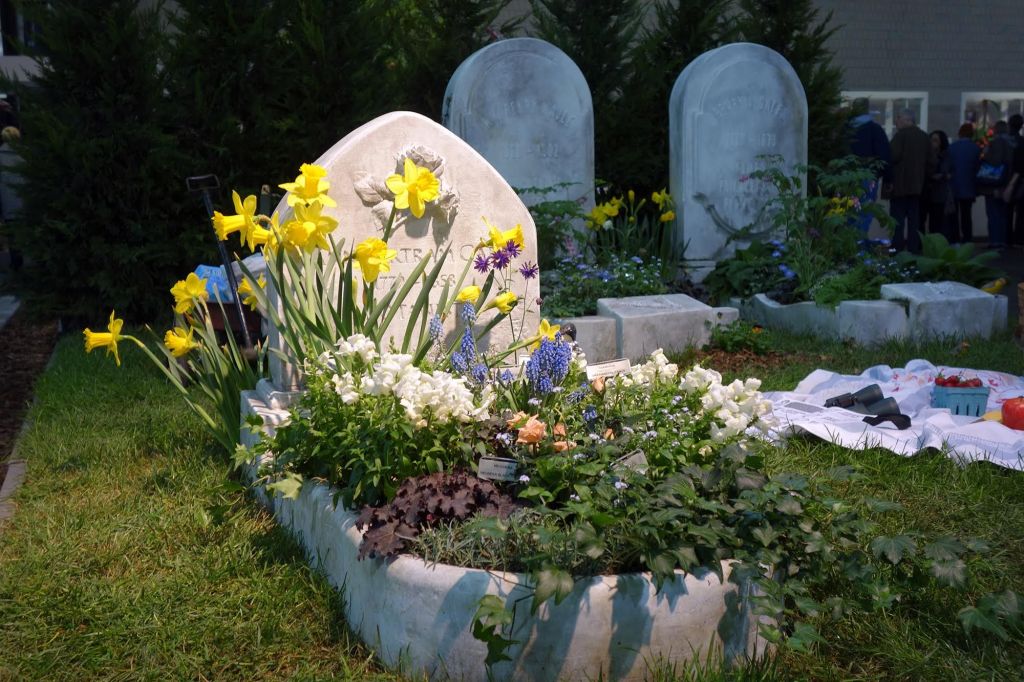
This longer explanation does not have the same punch as “they use aborted fetuses to make vaccines.” But, for me, it answers the ethical question. This use of these two cell lines to save lives is basically equivalent to planting of a flower garden over the grave of a murder victim. I’m no more guilty of that than I am for the land under my feet being soaked in the blood of conquered people. It is just what is. What was done is done and refusing to use vaccines derived from those cell lines is not going to restore the life that was taken. I have more of a problem with the characterization of this being too vague to give proper understanding.
In the end, both sides of this debate peddle their myths, misinformation and deception, calling those mRNA Covid jabs “safe and effective” one of those establishment lines that fell flat in the test of time. But, for me the ethics of putting my children at risk of preventable disease outweighs misgivings about something done over 50 years ago. We can’t bring back those killed, but we can make their lives worthwhile and honor the legacy they’ve created for us. My opinion would be vastly different if they were still harvesting fetal tissue to grow viruses.
It is more important that we are honest than we win a debate. There’s no excuse for the repeated and easily debunked claims about Amish or aborted cells to be shared. Those in the “do their own research” crowd need to do better. When I see people share videos made by a chiropractor, in a lab coat, going only by doctor, it makes me question their judgement more than anything else. Being an expert in doing bone adjustments is one thing, biology is completely another. People aren’t very good about picking their sources, let alone producing coherent ethics.
Tragedy Testimonials Versus Professional Recommendations
Another thing I’ve come across, on social media, is that case of a child that died very shortly after the vaccine was administered. The grieving parents, one of them a nurse, disagree with the autopsy report, that cited SIDS, and put blame on the shots. First off, the pain of losing a child is beyond anything else I’ve ever experienced (you can read my personal account, “The Day My Little Hope Died“) and always will leave many questions for those left behind. Second, in this case, it may feel better to externalize blame.
I’ll admit, I was a little put off by my medical provider (a Physician’s Assistant) who just brushed off my concerns about too much—too soon. This is my little darling, and it is my job to protect her, so at least entertain my anxieties a little. So that part where of her worry about her son’s sickness prior to getting a dose of vaccines being dismissed does resonate. That doctor should have shown a little more respect for a mother’s intuition and a nurse’s instincts. That said, we’re only getting one side of the story and from the perspective of someone not really in a good state of mind.
Just taking the testimonial at face value—not verifying any of the claims—they give a clue about what really happened with their own choice of words:
Melissa, who worked remotely, heard the baby fussing around 6:15 p.m. Her husband went in to check on him. He readjusted him, and rubbed his back as Fathers do. Baby Sawyer fell back to sleep.
When we were in the hospital for the birth of our daughter, before we took her home, they pounded it into our heads not to put loose items in her crib with her and never to allow her to sleep belly down. This is about SIDS (Sudden Infant Death Syndrome) when a perfectly healthy baby is put to bed, often laying on their belly, suffers from positional asphyxia and dies. Infants are completely helpless, they can’t readjust their position if their airway is somehow restricted and they could be gone in a matter of minutes.
So that particular paragraph really jumped out at me. I’m very sensitive to how people structure their thoughts, the phrases, and I have even identified a false accuser once only on the basis of the use of words that were conveyed through another person in a paraphrase. When I saw “as Fathers do” it came off as a slightly defensive posture—most especially next to “rubbed his back” in the context of a sleeping infant. One hand they’re being as honest as they are able to be in the circumstances. On the other hand they’ve just given corroborating evidence for the official autopsy report.
They can be forgiven for their blame game. It is hard enough to lose a child, but totally unthinkable to believe something you did may have contributed. When Sanyiah died I stopped speaking to two of my siblings (not that they noticed as busy as they were) for a year or two. Why? Well, they both were not at the funeral, in my mind they did not care enough about the little people in their lives (that meaning my ex-fiance who had personal ties to them) and were, in a round about way, part of the problem that caused the child’s death.
The real reason my anger was taken out on them, however, was that psychological need we have to find a scapegoat. And Melissa, rather than pile on her husband, which won’t help, has pointed somewhere else instead—which is better than their negative feelings being turned in on the marriage. It is a way of coping with tragedy. As far as testimonials go, three of my cousins had a seizure disorder, one of them died and two of them are severely disabled. After their issues with the first child, they decided not to vaccinate. But this made no difference in the end. The impulse to blame intervention is strong, yet correlation isn’t causation and often the truth is messier than those simple narratives we prefer.
In the case of baby Sawyer, it doesn’t have to be one thing or another. The risk factors for SIDS include both second hand smoke and overheating. It seems quite possible a bunch of vaccines, on top of being already sick, and then possibly being on their belly, all contributed to the end result. Medical professionals face big liabilities if they are at fault. There is a tendency to circle the wagons or become tight lipped rather than speculate when million dollar lawsuits can be the result. So maybe in a perfect world vaccines would be a bigger part of the SIDS discussion?
Still, aluminum in the bloodstream does not cause suffocation and 34 hours later is not description of a biological mechanism that links the injection to the outcome.
A Respectful Conclusion, My Final Risk Analysis…
No parent ever wants to be responsible for the suffering or death of their child. When I see my daughter’s eyes looking up at me it melts my heart. She already has me totally wrapped around her finger and I would not do anything that put her at an unnecessary risk. There is a temptation to take the “If it isn’t broke don’t fix it” approach to vaccines or basically do nothing. At least this way an intervention you signed off on didn’t directly cause the harm. Without the nudge of the doctor’s office I might fall off the schedule they have simply because it feels better.
But the body of evidence points to benefits that outweigh the risks. That is to say there are risks, vaccine injury is real, but there are risks to everything we do or don’t do. Would anyone have stepped on board the Titanic if they knew the icy ordeal that awaited them in the middle of the night? In 2022, motor vehicle accidents took the lives of 42,514 people. And yet we don’t see emotional testimonials online about the “mistake” it was to drive to Kansas or trying to caution us against this dangerous activity. This is because we have normalized the risk and tune it out—that and we think that only the bad drivers die when any of us could.
What could be improved is a little respect all around.
First off, this advice applies to the medical establishment. From Fauci on down there has been this attitude of near contempt for those who question their authority. A prime example is the statement of Dr Fauci when faced with scrutiny:
So it’s easy to criticize, but they’re really criticizing science because I represent science. That’s dangerous. To me, that’s more dangerous than the slings and the arrows that get thrown at me. I’m not going to be around here forever, but science is going to be here forever. And if you damage science, you are doing something very detrimental to society long after I leave. And that’s what I worry about.
Beyond hybris. Beyond martyr complex and a misdiagnosis of the situation. No, Fauci, you cannot say “I am the law” like a rouge police officer. That’s not science, that is just a delusion. Sure, it sucks to be questioned in your own area of expertise. I think this is why some physicians do sometimes gloss over concerns of patients. But this is what damages the credibility of the institutions of science more than anything else. When the top doctor confuses “the science” with his own position he’s dangerous.

Second, those of us self-educated people, who have not gone through that rigorous process of medical school or taken any kind of advanced biology course should remain humble. No, my lack of proper terminology does not make me an idiot. Nor should a nurse and mother’s concerns about her sick baby getting shots be dismissed. But “did your own research,” while in the lobby of the chiropractor, does not make you an expert or unbiased.
In the end, no parent wants to gamble with their child’s life. Staring into my daughter’s trusting eyes, I feel the weight of that responsibility—and the pull to do nothing, to avoid any chance of harm through action. Yet, after sifting through the science, wrestling with ethical dilemmas, and listening to both heartbreaking stories and professional guidance, I’ve landed on this: the evidence tilts toward vaccines’ benefits outweighing their risks. It’s not a perfect system—vaccine injuries happen, and the medical establishment could stand to listen better—but the data holds up against the diseases they prevent. We all deserve more humility and respect in this conversation, from doctors to doubters like me. For my little girl, I’m choosing the path that keeps her safest, not just from needles, but from what they guard against.
Hit me up in the comments section below with your most powerful arguments for or against childhood vaccines.
Do you vaccinate your children, why or why not?
 Irregular Ideation