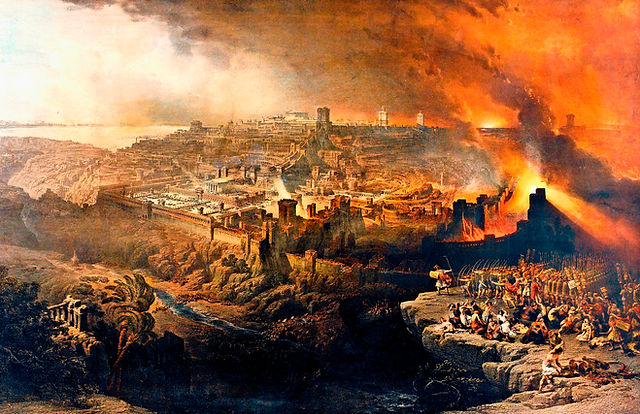
Zionism: Dismantling the Cross, the Judeo-Christian Deception

Standard

There was an act of vandalism in Wales.  A Christian cross made of stones, which had been on a hill in the countryside for half a century, was torn apart by Jewish tourists who used the stones to create the ‘Star of David’ or hexagram shape.  This act goes beyond total disrespect and destruction of a Christian display, but it is also symbolic of what Zionism is and what it has been doing to Christianity in the West.  

Zionism isn’t Jewish.  Many Jews, even who live in the Holy Lands, are as fully opposed to the ethno-supremacist state called Israel as their Christian and Muslim neighbors.  It is not something allowed by their religion, they insist, and I’ll let Jewish people debate their theology for themselves.  But the vast majority of Zionists aren’t Jews nor do they live in Israel.  Most Zionists were American Protestants who have become ensnared in this political ideology that rearranges parts of the Bible to justify taking property from a population who have lived in the birthplace of Christ since his birth.

Christian Zionism is an oxymoron.  It takes two opposites, the kingdoms of the world offered to Jesus during his temptation that he rejected and acts like Gehazi, the servant of Elisha, who goes back deceptively to get the gifts Naaman tried to give to his master and was then struck down with leprosy by the curse of his master.  There are many in church pews today who have betrayed their master and have rearranged the timeline of Scripture to embrace an evil replacement of the way of Christ.  They dismantle the cross and support Zionism instead.

Schofield’s Coup: Dismantling the Cross

In 1909 a new Bible was published.  It used the same English translation of the popular King James version and yet added notes of commentary written by a man named Cyrus Ingerson Scofield.  Dispensationalism is a relatively new interpretation of Biblical texts that started in the early to mid 19th century, initially invented by John Nelson Darby and the Plymouth Brethren in Britain, but it took Scofield’s in text commentaries distributed widely to finally sell it.

We could get into questions of exactly who Scofield was, his character, that he was a Confederate soldier (deserter?); who was an alcoholic who abandoned his family; a man who had defrauded several prominent Republicans with a railroad scam; who was arrested and jailed in St Louis for forgery and embezzlement, then had a dramatic conversion to Christianity and yet this essay will stick to the work he was known for: His popularization of a novel theological stance dividing Israel and the church in Scripture.

In the Christian Bible there’s a fairly obvious shift in tone between the Old Testament (or Jewish Torah, prophets, etc) and teachings of Jesus in the Gospels.  The conventional Christian perspective is that Jesus came as fulfillment of the law and supercedes the covenant that was given to Abram who became Abraham.  But Scofield turns the clock back, he ignores what the Epistles tell us about correct understanding, and he adds an idea that there are essentially two paths to God—one going through Jesus and the cross, the other by the Old Covenant.

Christianity, according to the Apostles, is the faithful remnant.  Israel is now the Church and the Church is the true Israel.

Where this was just an amateur mistake or an intentional deception doesn’t matter.  It has resulted in a battle between those who basically claim that “one way, Jesus” is anti-Semitic statement and smear it as being “Replacement Theology” (ironic, given this was, is, and will remain the only orthodox Christian perspective) for saying that the New Covenant continuation of God’s plan and necessary for salvation.  It ignores the New Testament books where St Paul and others give a correct Christian perspective of the covenant given to Abraham.

Always Through Faith, Never Bloodlines…

Jesus answered, “I am the way and the truth and the life. No one comes to the Father except through me.

(John 14:6 NIV)

I’m not nearly as dogmatic as some when it comes to passages like John 14:6 (above) and yet do see it as foundational to correct application of Scripture from the Christian perspective.  Jesus was making a definitive statement about who he is and the absolute requirements for salvation.  

The promises were spoken to Abraham and to his seed. Scripture does not say “and to seeds,” meaning many people, but “and to your seed,” meaning one person, who is Christ.

 (Galatians 3:16 NIV)

1) The passage above makes it very clear that the seed of Abraham is singular: Christ Jesus.  St Paul is saying that Jesus is that promise given to Abraham, that the promise is what bestows grace and continues:

So in Christ Jesus you are all children of God through faith, for all of you who were baptized into Christ have clothed yourselves with Christ. There is neither Jew nor Gentile, neither slave nor free, nor is there male and female, for you are all one in Christ Jesus. If you belong to Christ, then you are Abraham’s seed, and heirs according to the promise.

(Galatians 3:26-29 NIV)

2) We all become Abraham’s seed though faith in Christ and there is no distinction by religion (keeping the law) or race.  In other words, Jews and Gentiles are both saved in the exact same way and the old distinctions become moot in fulfillment of the promise:

It was not through the law that Abraham and his offspring received the promise that he would be heir of the world, but through the righteousness that comes by faith.  For if those who depend on the law are heirs, faith means nothing and the promise is worthless, because the law brings wrath. And where there is no law there is no transgression.  Therefore, the promise comes by faith, so that it may be by grace and may be guaranteed to all Abraham’s offspring—not only to those who are of the law but also to those who have the faith of Abraham. He is the father of us all.  As it is written: “I have made you a father of many nations.” He is our father in the sight of God, in whom he believed—the God who gives life to the dead and calls into being things that were not. 

(Romans 4:13-17 NIV)

3) Faith in Christ, nothing else, saves.

The Church and true Israel are the same, it is a group that is defined by faith both when those the Jews looked forward towards the promise and also in the Gospel fulfillment of the promise in the seed of Abraham that is Jesus.

Scofield, however, to justify Zionism, tries to drive a wedge between Christ and being the full fulfillment of promise or the seed of Abraham.  His footnotes take a passage like Genesis 12:3, addressed specifically to Abraham, about blessing those who bless him and cursing those who curse and then just hallucinate that it is speaking about all who ever have descended (but only through Isaac) from Abraham—no matter if they are faithful or not.  But this is in direct and total contradiction to the passages quoted above and simply meaning inserted into the text by a man fooled himself or just a fraud.

The Judeo-Christian Deception 

Do not be yoked together with unbelievers. For what do righteousness and wickedness have in common? Or what fellowship can light have with darkness? What harmony is there between Christ and Belial? Or what does a believer have in common with an unbeliever? 

(2 Corinthians 6:14-15 NIV)

Judeo-Christian is a term originally coined to describe a Jewish convert to Christianity, a Jewish Christian, but the usage has since evolved to become an oxymoronic coupling of religious traditions that formed up in full opposition to each other.  There is overlap, certainly, both started as religions rooted in the Hebrew Bible.  But one of the sides has rejected Christ, and is anti-Christ, while the other believes that the Torah can truly only be understood through the lens of Christ.  If your values start with something other than Christ then they’re not the same values as a Christian.

Starting with Jesus instructing his followers to let their ‘yes’ be ‘yes’ and ‘no’ be ‘no’ (Matt 5:37) or to use simple honest language.  So much dishonesty comes in from of a subtle twist of words.  For example, calling majorly invasive surgeries and hormone treatments “gender-affirming care” is just not the plain reality of what is being done.  Semantics is all about describing reality, but can also be about distorting the perspective and an art of deception.  There is no similar rule about using honest speech in Talmudic or Zionist Judiasm.  Mossad, the intelligence agency of Israel, used “By way of deception, thou shall do war.

Stratagem is part of war theory and tactics.  But it is not part of Christianity.  St Paul tells us:

For our struggle is not against flesh and blood, but against the rulers, against the authorities, against the powers of this dark world and against the spiritual forces of evil in the heavenly realms. 

(Ephesians 6:12 NIV)

The Christian doesn’t overcome the ‘enemy’ with deception.  They overcome them with good, with honesty and love, this is to reject the methods and means of those who see those outside their religio-political group as being terrorists to be destroyed or resource to exploited.  We are not required to reason with animals, we herd them, slaughter them, shoot them for sport, and impose our will—and is exactly what the Zionists do to those who get in their way.  There is no command to love enemies or good to those who those who hate you as there is in Christianity:

But to you who are listening I say: Love your enemies, do good to those who hate you, bless those who curse you, pray for those who mistreat you. If someone slaps you on one cheek, turn to them the other also. If someone takes your coat, do not withhold your shirt from them. Give to everyone who asks you, and if anyone takes what belongs to you, do not demand it back. Do to others as you would have them do to you. 

(Luke 6:27-31 NIV)

Interestingly enough, Islam has a similar teaching, but we would never call this area of confluence Islamo-Christian values.  So why do we attempt to add the leaven of the Pharisees through this linguistic maneuver that marries us to a religion that has values completely different despite a similar origin point?  The “Synagogue of Satan” (Rev 2:9, 3:9) has never stopped hating Christ or His followers, they have simply committed to a long-game strategy of subversion or using the naive to do their bidding.  This isn’t even a value judgment, I’m not saying you should not be Jewish if that is what you believe is, but you can’t be a Judeo-Christian because it is a contradiction of terms.

If a suggestion of “Islamo-Christian values” causes you to erupt in riotous laughter, then the combo of the way of Jesus with that of Zionism is doubly as ridiculous.  

Philosophically there is zero compatibility in these perspectives.  It is impossible to love and bomb your enemies.  You cannot claim to follow Jesus, who rejected worldly power, and then support the violence being done in the name of Israeli statehood.  Zionism is a “blood and soil” nationalist movement, and is all about land, all about ethnicity, whereas the kingdom of heaven is about repentance, self-sacrifice and meekness.  The only thing that is sacrificed in ‘Christian’ Zionism is the Gospel of Jesus Christ and the credibility of our collective witness—so our partners can slather themselves in misguided pride for being the chosen race.
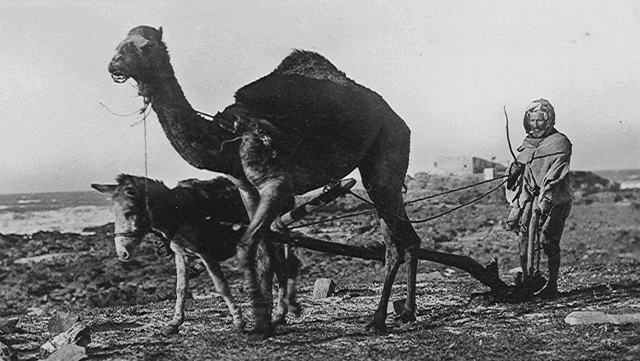
Not good, especially when one is pulling the other backwards…

The real purpose of a term “Judeo-Christian values” is political and propaganda.  It is to throw a yoke on the neck of Christians and force them to work together.  It is simply a way to control one side and normalize the other.  There is no backward compatibility, a believer in Christ does not share values with those who reject him, with those who cling to national pride rather than the cross, and subjugate rather than serve.  Jesus opened his arms to children—Zionists justify killing children by starvation, by denying them care or even by burning them alive and gunning them down.

Origen, who is considered to be a church Father, may have toyed with universalism—an idea that all would be saved in the end.  But there is no parallel path that is given for anyone according to Jesus or the Apostles, most especially not for those who are far removed from Jesus as the Nazis—despite their claims to the contrary.  We cannot let the cross of Christ be rearranged into the symbol of a worldly kingdom.  Having some things in common with those who rejected Christ doesn’t make us the same.
‘Masculine’ Orthodox Growth

Standard

I awoke this morning to a message from Fr. Siewers. He shared a NY Post article, “Young men leaving traditional churches for ‘masculine’ Orthodox Christianity in droves,” which I read with my coffee. This is a trend within Orthodoxy, and arguably I’m part of it, where (relatively) young men are leaving the consumerist ‘Big Box’ and the compromised traditional churches for a weird alternative that feels foreign to most Americans.

I know, in past blogs, about Orthodox growth, I’ve done a sort of victory lap about Orthodoxy and in doing so left out valid counterpoints. Yes, indeed, many young men are finding Orthodoxy. But it may not be as big a trend as articles like this NY Post story or the Orthodox faithful make it out to be. The growth from fundamentalist reactionaries is limited—most especially if it is only drawing in males. It is difficult to sustain this if no accompanying young women are willing to procreate with these transplanted men.

The truth is that Orthodox, in the United States of America, only number around 6-7 million. Who knows how many show up on Sunday?  For sake of reference, that is less than the estimates for illegal immigrants who currently live in this country, around 11.7 million, and basically makes the Orthodox contingent a demographic drop in the bucket. Yes, growth is good, but is this sustainable? Or is it just a blip driven by those desperate to do something a little different from everyone else and destined to fade like Hipster fashion after a decade?

My own conversion to Orthodoxy was not the same as the template laid out in the NY Post article. I wasn’t running from a church with a ‘woke’ or social justice agenda that replaced the Gospel. Yes, maybe I was a bit disgruntled with a feminized church culture where marriage and family were sacrificed for impossible ideals and visible missions. But it wasn’t in reaction to liberalization. I had done it from a conservative Mennonite church and was attracted to Orthodoxy as it was different from fundamentalism.

Ironically, this new flow of reactionary men to Orthodoxy may come at the expense of the attitude of the church that had initially drawn me. While adopting the Orthodox worship ritual, some bring their Protestant or Catholic baggage with them, there are too many Ortho-bros or those simply trying to be edgelords and unique. It is part of the Alt-right vibe, those who have rejected the far-left’s absurdity on one hand and yet are still looking for a reaction more than they are serious about their faith.

There will always be that small percentage of people who will buy a Tesla Cybertruck to be strange. Those who do things to piss off everyone else with normal tastes. And the growth of Orthodoxy is as much a rejection of the political mainstream as it is about seeking God. It feels more like cosplay, in my experience, than it is something born of a repentant spirit and desire to truly submit to the authority of Christ vested in the church. It is a bunch of dressed-up Protestants.

Case and point? The parish I left has an old Baptist convert as a priest who offended a couple (very fragile extremely idealistic homeschoolers) and the mom of this union made it her personal mission to pull as many people away as possible through lies and attacks. That’s where much of the new growth in the ROCOR parish down the road has come from and why I’ve been inclined to stay home on Sunday to be away from all of it. Not all growth is good growth.

As a postscript, my wife and I do not share the same perspective as far as worship and what church is ideal. She got along with the folks at Holy Cross. But didn’t get much out of the preaching (which was fundamentalist in flavor more than Orthodox) and practice. We sometimes attend a generic Protestant consumerist church, with a rock band and a coffee shop, because it is what reminds her most of her own generic Evangelicalism in the Philippines. My son and new daughter remain unbaptized.

Struggle with God

Standard

I completely missed the opportunity in a recent post about what Israel is in Biblical terms to mention the meaning and origin of the name itself, which we find in the book of Genesis:

That night Jacob got up and took his two wives, his two female servants and his eleven sons and crossed the ford of the Jabbok.  After he had sent them across the stream, he sent over all his possessions. So Jacob was left alone, and a man wrestled with him till daybreak. When the man saw that he could not overpower him, he touched the socket of Jacob’s hip so that his hip was wrenched as he wrestled with the man. Then the man said, “Let me go, for it is daybreak.”

But Jacob replied, “I will not let you go unless you bless me.”

The man asked him, “What is your name?”

“Jacob,” he answered.

Then the man said, “Your name will no longer be Jacob, but Israel, because you have struggled with God and with humans and have overcome.”

Genesis 32:22-28 NIV

With that definition, once again, Israel is less who you are and more what you do. Jacob’s life up until that point was a struggle. He wrestled even in the womb with his twin brother Esau and we’re told was grabbing the heel of his elder sibling who emerged first. He came up on the short end of the stick then, but managed to fool his father and get the blessing that was supposed to go to the eldest son. And even that plot ended up leading him to more struggle. He went from trickster to being tricked (karma?) when Laban, his employer and then father-in-law, did the ol’ bride switcharoo on his wedding day and he got the other sister rather than the one he had worked for. He ended up working seven more years to have the woman of his choice. The episode above comes as he returns to face Esau after many years and is still looking for a blessing from God.

Struggling is part of a sincere walk of faith. As Fr. Seraphim, my parish priest likes to say, “If you ain’t struggling, you ain’t Orthodox.” And like Jacob, the Christian certainly has to wrestle and contend for their blessing from God. Yes, salvation is a gift, but it is one that we work out with fear and trembling, that comes with the fruit of repentance:

John said to the crowds coming out to be baptized by him, “You brood of vipers! Who warned you to flee from the coming wrath? Produce fruit in keeping with repentance. And do not begin to say to yourselves, ‘We have Abraham as our father.’ For I tell you that out of these stones God can raise up children for Abraham. The ax is already at the root of the trees, and every tree that does not produce good fruit will be cut down and thrown into the fire.”

Luke 3:7-9 NIV

Note that John the Baptist didn’t put much weight on the genetic ties the crowds had to the patriarch Abraham, dismissing it by saying that God could replace them with stones, but he puts weight on the fruit of repentance instead. Likewise, Jesus, in praising the Centurion, a Roman soldier, for having greater faith than all of Isreal (Matt 8:10) is very significant—especially when the Lord follows up by saying many of the current subjects of the kingdom will be thrown out. So this heresy of saying some get a blessing from God without having to struggle, without needing to have faith in Jesus, is dangerous. Those comfortable aren’t Israel, those building a worldly kingdom aren’t Israel, only those who are spiritually like Jacob and striving for their place against the odds.

What Is Biblical Israel?

Standard

There is a nation in the world that identifies as Israel.  And, as we all know, if a person or group of people identify as something then this is what they are.  If I say that I’m a ham sandwich you better believe it!  Israel is what calls itself Israel.

That out the way, is that Israel the same as the Biblical Israel established by God?

If you were raised under Zionist teachings this isn’t even a question.  Of course, it is!  What else could it be?  Biblical criteria or qualifications, what are those?  I mean, how exciting would those end times novels be without our favorite backdrop???  And next, you’ll be telling us reality television is fake and that Caitlyn Jenner is a man and not a stunning and brave woman!?! 

Isn’t everyone who identifies as something that thing?

However, for those slightly more literate, and not born yesterday, the question of what the Biblical Israel is and if the state by the same name is the same thing is important.  For a Christian, up until the time of the reformation and a little after, this answer was quite clear and that is that Israel today is the remnant of the Jews who remained faithful—as well as those Gentiles converted. 

From the perspective of New Testament writers Israel is the Church or the body of those who believe—a religious affiliation and not a particular race.

About Religion, Not Race…

While still a member of a Mennonite church, I was not happy to have my religious identity be classified as an ethnic group.  In my own opinion I wasn’t born a Mennonite, it was my religion and something that I had to choose to participate in.  And yet there was truth to the claim.  There is was an ethnic component to being part of the group.  We shared a culture, and have our own common surnames, and many converts don’t fit in well.  

However, the most damning evidence, other than having unique genetic disorders, is the broad range of beliefs and practices under the Mennonite banner.  Those calling their church Mennonite span from those who are progressive and ordaining lesbian pastors to those very traditional still using horses and buggies for transportation.  So, when the only true common bond between all of these Mennonite groups is a sprinkling of Yoders, Gingrichs, Millers, or Barkmans, can it really be a religious belief system?  

Rev Michelle Yoder, a charismatic lesbian pastor of the Mennonite faith, sitting comfortably with partner in her electric Mennonite buggy as she makes her way through Africa

Okay, like a Facebook relationship status, it’s complicated.  People can and do convert to become Mennonite.  And, surprisingly enough, since a few decades ago, an African version of the Mennonite denomination has been growing rapidly to the point there are now more Mennonites in Congo than in Canada.  I mean, who knows if their doctrines or religious practices are anything that a North American conservative would recognize, nevertheless they do carry the name of Menno Simons in a direction he probably never imagined.

That’s one thing that the Orthodox generally put up front.  If you are Orthodox in Greece or a Greek community, then you’re a Greek Orthodox.  The liturgy and general practice are the same, established by canons, but there is also room for ethnic expression and use of the language common to the people.  In the Arabic world, for example, they use “Allah” where we use the Roman pagan word ‘God’ and have been using it before Islam even existed as a religion.  Anyhow, in Orthodoxy, unlike Mennonites, the identity is built from the substance of something established and a faith that is ancient.

Absurdly, when it comes to Judaism, we no longer care if they’re practicing or apostate, we slap that big ethnic label on them all and claim all of them have a claim to the land by their DNA.  To us, they’re all the same.  But that’s certainly not the case when it comes to Biblical Israel, not every part of the assembly was blessed, some were literally swallowed up by the earth, while others were put to death for disobedience, and the whole would end up in exile: 

But if you or your descendants turn away from me and do not observe the commands and decrees I have given you and go off to serve other gods and worship them, then I will cut off Israel from the land I have given them and will reject this temple I have consecrated for my Name. Israel will then become a byword and an object of ridicule among all peoples. This temple will become a heap of rubble. All who pass by will be appalled and will scoff and say, ‘Why has the Lord done such a thing to this land and to this temple?’ People will answer, ‘Because they have forsaken the Lord their God, who brought their ancestors out of Egypt, and have embraced other gods, worshiping and serving them—that is why the Lord brought all this disaster on them.’ ‭‭‭‭

1 Kings‬ ‭9:6‭-‬9‬ ‭NIV

It is quite clear that the covenant was even conditional for those who were biological offspring of Abraham.  Not only this, but people could become part of Israel who were not blood descendants of Abraham, Ruth the Moabite, or Rehab the prostitute, a Gentile, for example.  So it was never about ethnicity, it was always about obedience and the covenant conditional based upon obedience rather than bloodlines.

Chosen For Abraham’s Faith

The children of Israel were not picked for their superior genetics.  That’s not to say there aren’t very intelligent and extremely talented people of Jewish religious heritage.  Abraham was picked for being a righteous man:

And the LORD said, Shall I hide from Abraham that thing which I do; seeing that Abraham shall surely become a great and mighty nation, and all the nations of the earth shall be blessed in him? For I know him, that he will command his children and his household after him, and they shall keep the way of the LORD, to do justice and judgment; that the LORD may bring upon Abraham that which he hath spoken of him.

Genesis 18:17‭-‬19 KJV

It was Abraham’s righteousness and how he would guide his children to “keep the way of the Lord,” that God picked him.  God went on to set Israel aside through religion, not race, and those who did not keep the law would soon find themselves entirely cut off from the assembly of Israel.  There was never a blessing for simply being a blood relative of Abraham.  It was always conditioned on a faith that produced the work of obedience and this remains the case.  

Those born to keep the law of Moses must recognize their Lord and Savior or they’re no more blessed than the Benjamites put to the sword for their evil:

The tribes of Israel sent messengers throughout the tribe of Benjamin, saying, “What about this awful crime that was committed among you? Now turn those wicked men of Gibeah over to us so that we may put them to death and purge the evil from Israel.” But the Benjamites would not listen to their fellow Israelites. […] The Lord defeated Benjamin before Israel, and on that day the Israelites struck down 25,100 Benjamites, all armed with swords. […] The men of Israel went back to Benjamin and put all the towns to the sword, including the animals and everything else they found. All the towns they came across they set on fire.

Judges 20:12‭-‬13‭, ‬35‭, ‬48 NIV

If this were a Covenant merely about blood or genetics, then the Benjaminites really got shafted.  I mean, I’m not sure how anyone could construe being slaughtered wholesale as being a blessing or some special thing to be chosen for, “Congratulations, you’ve been selected to be purged!”  So this idea that anyone will ever be saved simply for their chosen race is wrong and there is only one true religion which is founded in Abraham’s seed, through the law of Moses, and is fulfilled in Christ.  

My favorite Jewish writer explains:

Those who want to impress people by means of the flesh are trying to compel you to be circumcised. The only reason they do this is to avoid being persecuted for the cross of Christ. Not even those who are circumcised keep the law, yet they want you to be circumcised that they may boast about your circumcision in the flesh. May I never boast except in the cross of our Lord Jesus Christ, through which the world has been crucified to me, and I to the world. Neither circumcision nor uncircumcision means anything; what counts is the new creation. Peace and mercy to all who follow this rule—to the Israel of God. 

Galatians 6:12‭-‬16 NIV

After Christ, even the law of circumcision becomes secondary to what St Paul describes as being “the new creation.” 

So it was the righteousness of Abraham, which was followed up with their being set aside by careful obedience to the law—which was the test of the Old Covenant—and finally, reconciliation through Christ that is salvation for all. 

It was NEVER only about ethnicity or race.  Modern descendants of the Jews must do the same as anyone else, repent and accept their King or perish. Repentance is the first step to salvation and that is what distinguishes true Israel from the counterfeit.  The first followers of Jesus were Jewish.  Christianity is the part of the assembly that remained faithful to their Lord while the others who rejected their rightful king are called anti-Christ:

Dear children, this is the last hour; and as you have heard that the antichrist is coming, even now many antichrists have come. This is how we know it is the last hour.  They went out from us, but they did not really belong to us. For if they had belonged to us, they would have remained with us; but their going showed that none of them belonged to us. […]  Who is the liar? It is whoever denies that Jesus is the Christ. Such a person is the antichrist—denying the Father and the Son.  No one who denies the Son has the Father; whoever acknowledges the Son has the Father also.” ‭‭

1 John‬ ‭2:18‭-‬19‬ ‭NIV‬‬

There are a great many who call themselves Christian today who have Scripture and yet no discernment whatsoever.  You don’t even need to believe in Jesus to understand what is being said in the passage.  Who is identified as the liar and anti-Christ?  1 John 2 very plainly tells us who: “It is whomever denies that Jesus is the Christ.”  That is to say those unfaithful to the covenant made with Abraham through their rejection of the Son—God in the flesh.

To say that some can deny the Son and still have a Covenant with the Father?  It is to basically throw out the entire Gospel of Jesus Christ.  It is completely moronic and a sign that someone was never truly part of the assembly of God.  If they truly belonged they would see their Lord as the fulfillment and not be so easily led astray.  When Jesus says “Salvation is from the Jews” he is not talking about an ethnic group, he is talking about himself and how he is the Messiah that was promised through the faithful seed of Abraham.

Chosen by Christ

It is really a form of idolatry to hold a race or ethnicity up as chosen by God for no reason other than their genetics.  That is not what the “Israel of God” ever was.  The assembly (or ‘ekklesia’) was always about those who were faithful, a remnant of Abraham’s seed that included Gentile converts, and turning it into an ethno-nationalist state is a perversion of what the original covenant between God and Abraham actually entailed.  A covenant is a two-edged sword, while it comes with blessings for those who obey there is also a list of curses for those who do not hold up their own end.

‭‭Jesus spoke to them again in parables, saying: “The kingdom of heaven is like a king who prepared a wedding banquet for his son. He sent his servants to those who had been invited to the banquet to tell them to come, but they refused to come. […] “But they paid no attention and went off—one to his field, another to his business. The rest seized his servants, mistreated them and killed them. The king was enraged. He sent his army and destroyed those murderers and burned their city. “Then he said to his servants, ‘The wedding banquet is ready, but those I invited did not deserve to come. So go to the street corners and invite to the banquet anyone you find.’ […] “For many are invited, but few are chosen.”

Matthew‬ ‭22:1‭-‬3‬,5-9,14 ‭NIV‬‬

Any guess which of those on the guest list killed the servants sent by the King?

The Biblical Israel, for those who believe in the Gospel of Jesus Christ, is that remnant of Jews who obey and follow after the Word of God incarnate.  This is always how Israel worked.  Some were pruned off the tree and others grafted in.  There were never special exceptions made for anyone merely on the basis of ethnicity or race.  The Church is the nation of those faith to the work of God that started with a Covenant with Abraham and needs no worldly state or rebuilt temple of stones.  Christians are the chosen people.

This essay doesn’t mean that there should be no modern state of Israel or that the mistreatment of any group of people in the world who have rejected Jesus is ever acceptable. We just need to know there’s a big difference between “identifies as’ and what is actually being referred to in the Bible.

Making Impossible Possible

Standard

It was impossible for me to find romantic success in the religious community that I had been born into and I would most definitely have remained single if I refused to adapt. My only regret is not having realized this (along with many of the many other fatal flaws in this system) much earlier.

The most excruciating part of this ordeal was that it always seemed that victory over this adversary was right at my fingertips. But, as the expression goes, to miss by an inch is to miss by a mile. And it seems that both friends and church leaders were never that serious about help. None were willing to lift a finger to relieve this burden of so many in their churches.

It was a systemic problem that required a systemic change that would not come. Women were ruined by their own idealistic purity culture standards and not taking the opportunities available, and men by being rejected every time they tried and were reduced to simps—rendered themselves completely unattractive for their doting ‘desperate’ attention to females.

What makes me curious is what truly was so different about my own experience in a fundamentalist sect and that of those in an old-order setting where pairing up does happen. Surely young people in those settings have ideals as well and yet they appear more willing to risk relationships than my former peers. It is as if they are programmed to be more realistic or unafraid.

The thing is, the next generation probably isn’t experiencing what I did. It was just a perfect storm of frauds, like Bill Gothard or Joshua Harris, that fed female fears of being ‘defiled’ for merely having a real conversation with a male member of their group. Mixed with the already existing cultural reserve and perfectionism. A moment of hesitation is very costly, approach anxiety increased tenfold with the raised stakes, and thus failure resulted.

If only there were more fathers and responsible adult figures saying “Relax, talk to each other, and take some risks, it isn’t like you need to marry after the first date.” If only there were some pushback to this notion that independence (having things our way, going out to see the world, and the postponement of marriage) is an indication of a greater commitment to Christ. Being picky doesn’t make you St Paul or Florence Nightingale.

Instead, the trends within the conservative Mennonite churches very closely align with general cultural trends where traditional courtship has fallen out of favor. Sure, in this version the attractive men get their sexual gratification. However, women never get the kind of commitment from these men suitable for raising children, and often choose careers and European vacations instead. More average men, who would be devoted, are simply shut out and ignored for not meeting the impossible female criteria.

I’m happy to have found my ‘hack’ and finally was able to get around the broken system that put my life on indefinite hold. I would’ve done things much differently if I had a chance to do it all over again. Firstly, I would’ve been less sensitive, more assertive, and never got mired in doubt of my own value. Second, I would not be concerned in the least about pleasing a standard that didn’t actually matter.

The successful never followed the onerous rules of those moral busybodies. A man should not ask permission, he simply needs to take the initiative and get what he wants. Too many times my own indecision on what was the ‘right way’ kept me from ever taking the opportunities as they were presented. Luckily, for me, because of my failure, I have found something much better than I could ever have found in the midst of the entitled mentality and demanding confines of my past life.

The wonderful woman I have found would’ve been impossible to marry when I was still bound to their standards. I could never have had a relationship with someone as intelligent and ambitious, let alone beautiful in appearance, had I remained. The impossibility remains impossible. But the impossible has been made possible by my willingness to change the rules of the game.

“Whether by word of mouth or by letter…”

Standard

The US Constitution is a prime example of how the same words can be interpreted in many different ways. Sometimes this is just a way to get around the clear meaning and other times it is simply a problem with language. There are many cases, with this founding document of a nation, that it would be nice if we could have some further explanation. Sure, you can read some of what the writers and signers said elsewhere in order to try to fill in the blanks. But, in the end, without them here, we don’t truly know how they would respond to the demands of our modern economy, technology, and needs.

This only gets murkier when dealing with Scriptures written two millennia ago. Yes, every Bible-thumper and their brother thinks they have a clear understanding while everyone else is just making things more difficult than they really should be. I mean, “The Bible Says It, I Believe It, That Settles It,” right? And yet, if I were to answer that with, “do you bury your poo outside of your property, in a hole you dug with a trowel, as instructed in Deuteronomy?” I’m guessing that suddenly what the Bible says would become a bit less settled as those using this phrase made some sort of theological exemption and that’s okay, there are things in Scripture that aren’t perfectly clear without some further explanation.

But what is more intriguing to me is what is completely left out that would be so obvious to early Christians that it wouldn’t even be worth mentioning in the letters. As the saying goes, more is caught than taught, and sometimes the most important things never do get written out. In other words, if we were writing instructions on how to drive a car, we would probably assume that the person knows how to get into the vehicle or sit facing forward. However, from the Bible, do we know how the early church structured their services or generally lived? Would they even recognize us as Christians? The reality is that there are gaps that many today just fill in with assumptions and it is usually these different extra-Biblical assumptions that lead to many divisions.

In the Protestant world “extra-Biblical” is practically a curse word. How dare you ever have a rule, custom, or tradition that goes beyond the written text! That’s false religion or something! This is why Orthodoxy is often dismissed by those seeking to strip down Christianity to the Biblical bare bones. It is a special kind of ignorance.

A good illustration? In World War II there was a study of returning aircraft and the damage that they had to determine how to better prevent future losses. The Center for Naval Analyses concluded from this that the aircraft needed more protection in these most heavily damaged areas. However, Abraham Wald, a Hungarian mathematician, begged to differ. He reasoned that the aircraft returning had survived and those that had been hit in more critical areas did not. In other words, what needed to be done was the very opposite of what the others had concluded. They needed to better armor those areas that weren’t damaged in the returning aircraft. This tendency to misinterpret evidence, based on what we have rather than what is missing, is called “survivorship bias” and can lead to woefully incorrect ideas.

This is what the Bible says about what is written versus what is not:

So then, brothers and sisters, stand firm and hold fast to the teachings we passed on to you, whether by word of mouth or by letter.

(2 Thessalonians 2 NIV)

The “letter” is what we have received in Scripture. These are the books of the Bible, canonized by the Church and believed to be truly inspired writing for this reason. But the “word of mouth” is where things are more interesting. What of the Apostle’s teaching (or tradition according to the KJV) is not written in their letters and how do we know what is missing?

The Orthodox, of course, say that this is the tradition of the Church and tie their legitimacy to the fact that there is a line of secession going all the way back to the Apostles, by the laying of hands and ordinations, and this only makes sense. The Church (note, not an individual or even the institutions) is what keeps the spoken teachings of the Apostles preserved like it did the Bible, and also serves to provide the correct understanding of Scripture. Because we should know, as Peter warned, that the Bible does not provide its own interpretation: “[Paul’s] letters contain some things that are hard to understand, which ignorant and unstable people distort, as they do the other Scriptures, to their own destruction.” (2 Peter 3:16 NIV)

However, it isn’t just the non-Orthodox that fall victim to their own bias. There are parts of the Church tradition, whether spoken or written, that slip through the cracks. We all have blind spots. We all have our distortions of concepts and errant assumptions. The difference is, that the Orthodox, if they are truly seeking to be Orthodox, are at least making some effort to incorporate the sayings of the Fathers and have a grasp of those “word of mouth” traditions not necessarily ever expressed in Scripture. In doing this, in understanding how Christianity was practiced by the faithful throughout the centuries, it becomes that much harder to distort the words of the Bible.

In the end, Christianity is about Communion, not easy textbook answers, not following an instruction manual, not standing alone, but real relationships. The more important being that between ourselves and God. However, a relationship with God implies love for our brothers and sisters. It means we are rubbing elbows with other Christians and the Saints. As Fr. Anthony put it, in his fatherly council to me, “there are no Lone Rangers” in Christianity, we can’t put the words of Jesus to practice in solitude or isolation. It’s not in removing ourselves that we are purified, it is in our getting messy and involved in the life of the Church of imperfect people (like us) that we are changed. That is taking up our cross. That is the hard part of Christianity we would rather run from.

Learning never stops in relationships. Christ Jesus did not come so we could house church with the few other perfect people who have the proper understanding of a book according to us. Instead, the very act of Incarnation was God choosing to be around those undeserving and impure, to identify with them and their suffering, which should be the impulse of those filled with the Holy Spirit. It is the Spirit, St Paul tells us, that will bring “unity” and a “bond of peace” which should span centuries or the current divisions because: “There is one body and one Spirit, just as you were called to one hope when you were called; one Lord, one faith, one baptism; one God and Father of all, who is over all and through all and in all.” (Ephesians 4:4-6 NIV)

When It Is Better To Do Nothing

Standard

Have I mentioned that I’m tired of religious people and the prescriptions they give?

The real Jesus was defiant.  He upended the systems and standards of his time.  He was intentionally offensive to the self-righteous religious elites and then completely gentle with those who were broken.  There was no one-size-fits-all, no attempt to simplify the process.  Salvation is a walk of faith, not our ability to keep a set of fixed rules or pray a certain way, it is about our heart.

No, I’m not saying this as favoring the more libertine amongst us.  Being “free in Christ” is not a license to do whatever we want.  It is not about being ‘spiritual’ rather the religious either.  Rather it as about love:

It is for freedom that Christ has set us free. Stand firm, then, and do not let yourselves be burdened again by a yoke of slavery. […] You, my brothers and sisters, were called to be free. But do not use your freedom to indulge the flesh; rather, serve one another humbly in love.”

(Galatians 5:1‭, ‬13 NIV)

A great deal of my social media connections are unregenerate social conservatives.  They love those fading structures that once kept people bound to their moral standards and yet lack any comprehension of grace or their own need of it.  They may see themselves as being righteous, for their exceptional ability to keep up certain cultural conventions, but they are very much like those rebuked and condemned by Jesus.

But still the alternative is not to go in the complete opposite direction.  It is not better to have no structure, to completely defy all cultural convention or use Christian freedom as an excuse to do whatever we please.  No, rather it is to serve and save others:

Though I am free and belong to no one, I have made myself a slave to everyone, to win as many as possible. To the Jews I became like a Jew, to win the Jews. To those under the law I became like one under the law (though I myself am not under the law), so as to win those under the law. To those not having the law I became like one not having the law (though I am not free from God’s law but am under Christ’s law), so as to win those not having the law. To the weak I became weak, to win the weak. I have become all things to all people so that by all possible means I might save some. I do all this for the sake of the gospel, that I may share in its blessings.

(1 Corinthians 9:19‭-‬23 NIV)

Which is to reiterate the example of Christ:

…whoever wants to become great among you must be your servant, and whoever wants to be first must be slave of all. For even the Son of Man did not come to be served, but to serve, and to give his life as a ransom for many.”

(Mark 10:43‭-‬45 NIV)

Our love for God is always, always, a matter of how we treat each other.  If we can’t love the people we see, specifically our brothers and sisters in Christ, then our claim to love God is a lie. (1 John 4:20)  Therefore, to be free in Christ, is not to shirk responsibility to each other.  It is not worshipful, at least not of God, to go to church (or not go) for own sake:

“Therefore, if you are offering your gift at the altar and there remember that your brother or sister has something against you, leave your gift there in front of the altar. First go and be reconciled to them; then come and offer your gift.

(Matthew 5:23‭-‬24 NIV)

This is putting reconciliation with each other, true reconciliation. before or ahead of the ritual worship that religious people do.  No, it is not negotiable.  This is the command of Jesus.  And yet it is so often reversed.  It is acceptable to act or go through the motions of righteousness, but not to ask for the same authenticity that put Jesus at odds with the religious authorities.

Had Jesus just followed the rules and did what was expected he would never have been a threat to anyone.  The reality is that he saw through the empty gestures.  He was not impressed with those pious people who had their performative religion.  His call was for genuine love, to be merciful as our Father is merciful:

On hearing this, Jesus said, “It is not the healthy who need a doctor, but the sick. But go and learn what this means: ‘I desire mercy, not sacrifice.’ For I have not come to call the righteous, but sinners.”

(Matthew 9:12‭-‬13 NIV)

That’s our true worship, to truly forgive and love those undeserving and broken.

Early Christians had a saying “unus Christianus, nullus Christianus,” which is to say that one Christian is no Christian.  This is to say that our Communion together, in Christ, needs to go beyond merely sharing the same physical space for a few hours or it is fake.  True Christianity can’t be reduced to mere individualistic pursuit of the Divine.  It is not an “only God can judge me” freedom from duty to others.

I could quote two dozen other texts and it would not matter.  So many are caught up in their own corrupted ‘traditions’ that they’ll always miss the forest for the trees.  But I’m not interested in dime-store Christianity, the kind that only loves in prescribed ways.  I want the real deal, the kind that frees and truly forgives.  I want what is alive, what has the true Spirit of truth and love in it, not the lifeless self-serving counterfeit form.

It’s not that the wonderful symbolism and designated acts of ‘Christian’ service are unimportant or useless either.  But it’s just that none of it really matters if it is not a part of something genuine.  As Jesus said, in Matthew 23:15, a person can “travel over land and sea to win a single convert” and only be successful in making their new convert “twice as much a child of hell” as themselves.  In that case it would be better to do nothing at all.

Even the mystical “cup of salvation” can be our damnation if we drink unworthily (1 Corinthians 11:29) or in disregard and without care for His body. The body of Christ meaning, at times, our fellow members of the Church or the people we encounter who are in need of love:

For I was hungry and you gave me something to eat, I was thirsty and you gave me something to drink, I was a stranger and you invited me in, I needed clothes and you clothed me, I was sick and you looked after me, I was in prison and you came to visit me.

(Matthew 25:35‭-‬36 NIV)

Are We Saved Through Our Consciousness?

Standard

Let’s talk about consciousness and infant Baptism, shall we?

My entire life, as a child of Anabaptism, I was taught a doctrine called “Believer’s baptism” (or credobaptism) which a) tied Baptism to church membership and b) teachings that Baptism requires a conscious or adult decision.  The irony of that is that many Mennonites are Baptized as children, as a result of indoctrination, and not after an exhaustive search for truth that ends with Christ.

It makes sense, at one level, that a believer in Christ must be able to “count the cost” (Luke 14) of discipleship, right?

And yet, if we look at the Apostles themselves, were any of them actually ready when they were picked by Jesus?

No, if Peter had counted the cost, if he truly understood what it meant to enter the kingdom, he would never have denied Christ.  The doubts of Thomas, and the betrayal of Judas, all point to a group of men who did not fully comprehend the words of Jesus prior to their Baptism.

#1) We don’t choose, we’re chosen and drawn to Christ:

No one can come to me unless the Father who sent me draws them, and I will raise them up at the last day.  It is written in the Prophets: ‘They will all be taught by God.’  Everyone who has heard the Father and learned from him comes to me. […] The Spirit gives life; the flesh counts for nothing. The words I have spoken to you—they are full of the Spirit and life. Yet there are some of you who do not believe.” For Jesus had known from the beginning which of them did not believe and who would betray him. He went on to say, “This is why I told you that no one can come to me unless the Father has enabled them. 

(John 6:44-45,63-65 NIV)

#2) We did not decide the hour of our first birth nor do we decide the second birth:

Jesus replied, “Very truly I tell you, no one can see the kingdom of God unless they are born again.”

“How can someone be born when they are old?” Nicodemus asked. “Surely they cannot enter a second time into their mother’s womb to be born!”

Jesus answered, “Very truly I tell you, no one can enter the kingdom of God unless they are born of water and the Spirit. Flesh gives birth to flesh, but the Spirit gives birth to spirit. you should not be surprised at my saying, ‘You must be born again.’ The wind blows wherever it pleases. You hear its sound, but you cannot tell where it comes from or where it is going. So it is with everyone born of the Spirit.” 

(John 3:2-8 NIV)

#3) We were dead, dead people aren’t conscious to make adult decisions:

As for you, you were dead in your transgressions and sins, in which you used to live when you followed the ways of this world and of the ruler of the kingdom of the air, the spirit who is now at work in those who are disobedient. All of us also lived among them at one time, gratifying the cravings of our flesh and following its desires and thoughts. Like the rest, we were by nature deserving of wrath.  But because of his great love for us, God, who is rich in mercy, made us alive with Christ even when we were dead in transgressions—it is by grace you have been saved. And God raised us up with Christ and seated us with him in the heavenly realms in Christ Jesus, in order that in the coming ages he might show the incomparable riches of his grace, expressed in his kindness to us in Christ Jesus.  For it is by grace you have been saved, through faith—and this is not from yourselves, it is the gift of God—not by works, so that no one can boast.  For we are God’s handiwork, created in Christ Jesus to do good works, which God prepared in advance for us to do. 

(Ephesians 2:1-10 NIV)

By adding the requirement of adult comprehension, the teachers of credobaptism turn Baptism into a work and base salvation on our consciousness of the need.  That’s rational, yet humanistic and not the process we see outlined in Scripture.  Lazarus, dead for four days, did not have the mental capacity to listen to the command of Jesus, “Lazarus, come out!”  No, we understand that this would be impossible.  And, likewise, when the Rich Young Ruler (asks “what must I do to be saved,” the final answer is not “sell all and give to the poor,” as some Anabaptists believeit is “with man this is impossible, with God all things are possible.”

The real problem with this idea that Baptism requires a certain level of consciousness (and the invented concept of an “age of accountability”) is that it is totally arbitrary and would exclude those not fully capable of making an adult choice.  I mean, truly, will we refuse to Baptize the mentally disabled because they can’t count the cost of discipleship?  Should we have an IQ test?  Maybe make applicants provide proof of their faith?  At the very least, if this notion of Believer’s baptism is correct, and adult consciousness necessary to appreciate Christ, then should we cut this silliness of a baby leaping in the womb (Luke 1:41) out of the Gospel narrative?

There is evidence, in Scripture, of whole households being Baptized.  But there is little to support this idea that one must reach a certain level of consciousness to be Baptized.  It is really like some people think they’ve saved themselves and this misunderstanding of the significance of Baptism, starting five centuries ago, got turned into theological hubris.  If Baptism is about being born again or spiritual rebirthand our first physical birth was not a willful choicewhy would we ever conclude that Baptism must be a choice, a matter of age or adult comprehension?

What is Baptism truly about?

Baptism is the start of a journey of faith, like birth, and something to accompany repentance.

But wait, there’s more…

Baptism and the Nuptial Bath

Up until very recently, being unfamiliar with Jewish wedding traditions, I would never have made the connection between Baptism and a Jewish bride’s nuptial bath.  A friend of mine shared a podcast that dove into that topic (listen here) and the parallels seem to be very real.  Upon further research, this ‘other” meaning is also something understood historically by the church and quite clearly implied in this passage:

Husbands, love your wives, just as Christ loved the church and gave himself up for her to make her holy, cleansing her by the washing with water through the word, and to present her to himself as a radiant church, without stain or wrinkle or any other blemish, but holy and blameless. 

(Ephesians 5:25-27 NIV)

Baptism, in effect, is a symbolic representation of the start of this ritual cleansing that doesn’t end with the act.  The Christian life is a life of repentance, of continually turning towards Christ.  Our spiritual cleansing doesn’t end with the water of our physical Baptism either.

After this, Jesus and his disciples went out into the Judean countryside, where he spent some time with them, and baptized.  Now John also was baptizing at Aenon near Salim, because there was plenty of water, and people were coming and being baptized. (This was before John was put in prison.) An argument developed between some of John’s disciples and a certain Jew over the matter of ceremonial washing.  They came to John and said to him, “Rabbi, that man who was with you on the other side of the Jordan—the one you testified about—look, he is baptizing, and everyone is going to him.”

To this John replied, “A person can receive only what is given them from heaven. You yourselves can testify that I said, ‘I am not the Messiah but am sent ahead of him.’ The bride belongs to the bridegroom. The friend who attends the bridegroom waits and listens for him, and is full of joy when he hears the bridegroom’s voice.  That joy is mine, and it is now complete. He must become greater; I must become less.” 

(John 3:22-30 NIV)

It was directly prior to this that we have the encounter between Jesus and Nicodemus where we get the phrase “born again” and where Jesus tells the perplexed Jewish religious leader about this rebirth “of water and the Spirit” like the wind that goes wherever it pleases.  That is an indication of the mysterious origin of Baptism, that it is not something that comes about through our own rational thought processes.  

So what is this “ceremonial washing” about? 

And how does Baptism relate to brides and bridegrooms?

A few months back I worked on a truss layout for a religious building project, a Mikvah bath, and learned more about the Jewish ritual cleaning process and something observant women of that religion must do on a regular basis.

Mikvah bath

However, most significantly, it is something they do prior to marriage, which seems to be the connection between the quarrel about everyone getting this ceremonial washing and the response of John the Baptist. 

The point and purpose of John’s ministry, like the pre-marital ritual washing of a bride when her groom arrived, Baptism was to make people ready for the marriage to Christ. It was not symbolic of the commitment itselfrather it was only a part of the process leading up to the commitment.  So, sure, Baptism is the start of an important transitionary moment and yet our salvation comes through a life-long Theosis, through our being washed, sanctified, and justified by the Spirit of God until the time we depart this world.

One last point, and related to this nuptial bath tradition and the parallels to Baptism.  Jewish brides did choose their partners nor the time of their wedding like we do.  No, they practiced arranged marriage and the arrival of the groom was at the appointed time of his father once the preparations were complete.  So again, where does this idea come from that the bride must choose the time or place of this meeting and bath?  Wouldn’t responsible Christian parents want to prepare even infant children for their groom? 

The expanded consciousness that comes through our prearranged nuptials with Christ can come after the ritual washing of Baptismas it did for the disciples who didn’t know what they were being signed up for when they began their journey of faith.

And, yes, apparently Jewish infants are immersed as a part of their religious conversion process.

Oh, and also, the groom (Jesus) gets washed too prior to the wedding ceremony…

The Truth in Substance

Standard

As abstract minded as I am, always living in my own head, the only evidence of the Gospel narrative that works for me is that which is experienced or practical.  I know the apologetics and intellectual arguments, but none are able to bridge the gap or overcome the reasonable doubts.  

This idea that we can find God by climbing a tower of human knowledge is very appealing and especially for those of us in this age of information.  It is a feature of Protestantism, where the soteriology is centered around the text, an individual’s ability to comprehend and then accepting certain propositions, which ends up being very Gnostic.

The blog, a few weeks ago, that questions resurrection apologetics, left things hanging as far as an alternative.  If we can’t prove, beyond a shadow of a doubt, that Jesus died and rose again, as an actual historical event, how can we believe anything in the Gospel?  Of course, we can’t prove the resurrection or any past event, how could we?

But is truth really about the past tense or some kind of intellectual theorem?  Or is it something we relate to personally, that we must experience for ourselves?

Truth in Narrative

The most compelling evidence for the Gospel is the truth of the narrative itself and by that I mean how the older I get the more I realize that people behave exactly as those in the parables Jesus told and the accounts of his ministry.  No, it doesn’t absolutely prove the extraordinary claims, but the Bible as a window into human psychology and sociology is quite fascinating.

Jesus started his ministry with a broad appeal, people wanted change and he quickly developed a following.  It is very easy to gather a crowd by proclaiming to be the source of hope and change.  But, as his teaching progressed, and it became clearer that his kingdom was not about the political power the masses wanted, and he started to say some weird stuff as he got to what would be required, the crowd thinned.

People don’t want the truth, they want their truth, to be validated for what they already believe.  But Jesus taught the way to truth was by partaking of his body and blood, to make the sacrifice play, relying on faith and God for their sustenance rather than their own human reasoning.  That’s why it was impossible for the Rich Young Ruler to attain eternal life—he was relying on his own goodness to save him.

Truth in Symbolism

It is interesting what freaked out the crowd in Jesus day also is a bridge too far with many who profess to be Christian:

Then Jesus declared, “I am the bread of life. Whoever comes to me will never go hungry, and whoever believes in me will never be thirsty.

(John 6:35 NIV)

And he doubles down when the audience begins to grumble:

Jesus said to them, “Very truly I tell you, unless you eat the flesh of the Son of Man and drink his blood, you have no life in you. Whoever eats my flesh and drinks my blood has eternal life, and I will raise them up at the last day. For my flesh is real food and my blood is real drink. Whoever eats my flesh and drinks my blood remains in me, and I in them.

(John 6:53‭-‬56 NIV)

This is what followed:

On hearing it, many of his disciples said, “This is a hard teaching. Who can accept it?” Aware that his disciples were grumbling about this, Jesus said to them, “Does this offend you? Then what if you see the Son of Man ascend to where he was before! The Spirit gives life; the flesh counts for nothing. The words I have spoken to you—they are full of the Spirit and life. Yet there are some of you who do not believe.” For Jesus had known from the beginning which of them did not believe and who would betray him. He went on to say, “This is why I told you that no one can come to me unless the Father has enabled them.” From this time many of his disciples turned back and no longer followed him.

(John 6:60‭-‬66 NIV)

This was a rejection of materialism.  He was pointing to something mystical, something that transcended their understanding of reality, their version of the universe and thus they fled from him.  It is also very interesting that the coming betrayal of one of the twelve is mentioned by Jesus in this context, that perhaps this is where Judas Iscariot became disillusioned?

My own Anabaptist religious roots, given the Zwinglian influence, is very agnostic as far as the Mystical Supper.  While being strict fundamentalists otherwise, like insistence on a ‘literal’ interpretation of the Creation narrative, in the book of Genesis, they will deny the substance of the words that Jesus said (above) that caused so many to fall away from Him.  To them being a “follower of Jesus” takes a very practical turn and too practical in that it ignores the mystical in favor of the rational.

But, if one believes that Jesus actually walked on water or really turned water into wine, why would they ever question (or try to reinterpret) when he says “this is my body” and claim it means something other than what he said?

The thing is, yes, there is a practical, even a humanist, component to Christianity and yet it all must be in this context of Communion with God or it is only human effort.  And, to go a step further, no, it is not all about barn raising practicality either, it is about truth in worship.  We don’t do what we do in a spirit of utopian idealism, we do it because we believe their is a substance of bread, a bread of heaven, greater than what we can sense with our taste buds.

Truth in Action

There are many who are into the pageantry of religion, wearing the ‘right’ colors or cut according to their tradition, yet not willing to live out the actual substance of faith and Communion.  Yes, the Orthodox understand that Christianity centers on the mystical, that there is no spiritual life outside of partaking of the body and blood of Christ.  Still, it is a denial of Christ, and not true mysticism, when the rituals are not a reflection of real love of our family:

What good is it, my brothers and sisters, if someone claims to have faith but has no deeds? Can such faith save them? Suppose a brother or a sister is without clothes and daily food. If one of you says to them, “Go in peace; keep warm and well fed,” but does nothing about their physical needs, what good is it? In the same way, faith by itself, if it is not accompanied by action, is dead.

(James 2:14‭-‬17 NIV)

The book of James was inconvenient for Martin Luther and also for all of those who would rather keep their religion between them, their own understanding of a book, and God.

But the truth is not about our own personal knowledge or judgment.  Judas could quote the words of Jesus as good as any of the other disciples.  And yet it takes more than our understanding a set of propositions or a mental exercise.  As Jesus said, “where two or three gather in my name, there am I with them.”  That is where the truth is, in our coming together, in our loving each other as Christ first loved us:

Dear friends, let us love one another, for love comes from God. Everyone who loves has been born of God and knows God. Whoever does not love does not know God, because God is love. This is how God showed his love among us: He sent his one and only Son into the world that we might live through him. This is love: not that we loved God, but that he loved us and sent his Son as an atoning sacrifice for our sins. Dear friends, since God so loved us, we also ought to love one another. No one has ever seen God; but if we love one another, God lives in us and his love is made complete in us.

(1 John 4:7‭-‬12 NIV)

In the parables Jesus told, in the accounts of the ministry of Jesus, there is truth.  Also, in our partaking in the mysteries of the Church, in our Communion together as the body of believers, there is truth.  But the truth that us most significant, and the only real Christian apologetic there is, is the truth of our love for each other.  That is the truth of Christ Jesus, who came in the flesh to demonstrate the love of God.

Divorce and the Purpose of the Law

Standard

Much of what we believe is inherited and that includes how we interpret certain passages of Scripture.  It is just the way things are, we do not independently arrive at our own conclusions and could very well have been taught wrong.  Those who believe that the ground they stand on is sacred simply because they’re standing on it have no potential for growth in understanding or perspective.

Many in a purity culture would squeal their displeasure at the term “legalism” being used to describe their ‘Biblical standards’ and hide behind mantras such as “God Said It, I Believe It, That Settles It!”  Unfortunately, while this kind of obstinate stance may be good as far as resisting temptation, it basically amounts to confirmation bias on steroids in a search for truth.

This is exactly the attitude of those who took issue with Jesus breaking the Sabbath and how they absolutely refuse to see their own application of Scripture as entirely missing the point:

At that time Jesus went through the grainfields on the Sabbath. His disciples were hungry and began to pick some heads of grain and eat them. When the Pharisees saw this, they said to him, “Look! Your disciples are doing what is unlawful on the Sabbath.” He answered, “Haven’t you read what David did when he and his companions were hungry? He entered the house of God, and he and his companions ate the consecrated bread—which was not lawful for them to do, but only for the priests. Or haven’t you read in the Law that the priests on Sabbath duty in the temple desecrate the Sabbath and yet are innocent? I tell you that something greater than the temple is here. If you had known what these words mean, ‘I desire mercy, not sacrifice,’ you would not have condemned the innocent. For the Son of Man is Lord of the Sabbath.” Going on from that place, he went into their synagogue, and a man with a shriveled hand was there. Looking for a reason to bring charges against Jesus, they asked him, “Is it lawful to heal on the Sabbath?” He said to them, “If any of you has a sheep and it falls into a pit on the Sabbath, will you not take hold of it and lift it out? How much more valuable is a person than a sheep! Therefore it is lawful to do good on the Sabbath.” Then he said to the man, “Stretch out your hand.” So he stretched it out and it was completely restored, just as sound as the other. But the Pharisees went out and plotted how they might kill Jesus.

(Matthew 12:1‭-‬14 NIV)

The Pharisees, like religious fundamentalists today, believed that they were the experts and examples of righteousness.  They would know that Moses, by order of the Lord according to Numbers 15:32-36, had a man put to death for picking up sticks on the Sabbath.  It is very likely that many of them were very sincere in their saying that Jesus was possessed by a demon.  How dare this teacher allow his followers to break the law and then defiantly double down in response to their concern!!!  Weren’t there six other days to heal?!?

Now some commentators may try to square this legalistically, by claiming that Jesus was not truly going against Scripture.  But I do not believe this is the case.  The Pharisees were obsessed with the letter of the law and technically right in their complaint against his breaking the Sabbath.  Jesus, by contrast, was focused on the reason behind the law, or spirit of the law, and pointed to Hosea 6:6, “I desire mercy, not sacrifice,” to establish the vast difference between the ritualistic devotion to a set of religious rules and genuine love for people.

Legalism, by this standard, is a use of the law that is negligent of the purpose.  What is the purpose of law?  The law is supposed to be for our own good, to protect us from harm, and thus the exceptions that Jesus mentioned in response to his critics.  A legalist, in their strict adherence to rules, loves their rules, and yet they lack love and mercy for people.  Thus, a legalist, in their no-compromise application of the law, defies the actual purpose for which the law was established and, therefore, are no longer under the law themselves:

Speak and act as those who are going to be judged by the law that gives freedom, because judgment without mercy will be shown to anyone who has not been merciful. Mercy triumphs over judgment.

(James 2:12‭-‬13 NIV)

Legalism: Divorced From the Issue

This blog is not meant to be a theological tome.  For a more exhaustive look at the divorce and remarriage topic, especially for those of an Anabaptist background, I would suggest reading Dwight Gingrich who has covered the issue exhaustively in a series of blogs.  I’ve already covered Biblical proof-texts in prior postings as well.  Instead, I’ll stick to a discussion of the hardness of hearts and economia (special exception) as it applies to divorce and remarriage.

First of all marriage, by original intent, is until death do they part and there’s no exception to this.  If men and women would live up to their vows, not make promises they not keep, this would solve the entire issue.  If people would act responsibly and remain faithful in relationships then there would be no broken homes.  That is certainly ideal, it was also the privilege of being born into conservative Mennonite culture for me—in that my parents were encouraged, through peer pressure, to overcome doubts and make it work.

However, this ideal simply is not available to many in the world.  Many do marry, or have children, with someone whom they intend as their soulmate and it doesn’t end in a happily ever after for them.  This failure of adults can have disastrous consequences for the next generation, the less desirable outcomes for children of single-parent homes are the evidence:

Children who live with only one of their parents do less well in school, obtain fewer years of education, and have trouble keeping a steady job as young adults. Children from single parent families are six times more likely to be poor.

“Single Parenthood and Children’s Well-being,” Wisconsin Family Impact Seminars

Now maybe this is genetic, that the children have the same commitment issues as their parents, and this strong correlation of single-parent homes with poor outcomes for children does not automatically equate to environmental causation.  Maybe we need an adopted twin study?  But it is pretty safe to say, without a complex analysis, that the insecurity and chaos of a home with one parent will have an impact on children that is undesirable.

So there’s a question: If the law is there for our good and single-parent homes are bad, what should happen after divorce or abandonment?

In the culture that I came from, there was a hardline stance on divorce and remarriage that even nullified the “exception clause” of Matthew 19:9.  This perspective, from my personal experience as one who defended it, is about the preservation of an ideal and even at the expense of people.  I could reason, like Moses having the man killed for picking up sticks, that allowing one exception would be a slippery slope and lead to far greater social disorder.

And yet this “greater good” logic is exactly why Jesus was put to death:

Then the chief priests and the Pharisees called a meeting of the Sanhedrin. “What are we accomplishing?” they asked. “Here is this man performing many signs. If we let him go on like this, everyone will believe in him, and then the Romans will come and take away both our temple and our nation.” Then one of them, named Caiaphas, who was high priest that year, spoke up, “You know nothing at all! You do not realize that it is better for you that one man die for the people than that the whole nation perish.” 

(John 11:47-50 NIV)

They both missed out on Jesus, their king, and also did not save temple worship. Also equally ironic is that the high priest unintentionally spoke the truth.

Anyhow, maybe, in the time of Moses, sacrifices of animals and the sons of Abraham were needed for the health of the nation.  But now, after the death and resurrection of Christ, we are clothed in his righteousness and thus free from the letter of the law that kills:

He has made us competent as ministers of a new covenant—not of the letter but of the Spirit; for the letter kills, but the Spirit gives life.

(2 Corinthians 3:6 NIV)

You’ll need to read further about the context of that statement to fully grasp what St Paul is saying in that letter.  But the short version is that he’s contrasting the understanding of the law prior to Christ with that which only comes with the Spirit and seeing the intent behind laws as being greater than the laws themselves.  This is different from the Pharisee men who carved out legalistic exceptions for themselves to divorce and were confronted by Jesus for their hardness of heart:

Some Pharisees came to him to test him. They asked, “Is it lawful for a man to divorce his wife for any and every reason?” “Haven’t you read,” he replied, “that at the beginning the Creator ‘made them male and female,’ and said, ‘For this reason a man will leave his father and mother and be united to his wife, and the two will become one flesh’? So they are no longer two, but one flesh. Therefore what God has joined together, let no one separate.” “Why then,” they asked, “did Moses command that a man give his wife a certificate of divorce and send her away?” Jesus replied, “Moses permitted you to divorce your wives because your hearts were hard. But it was not this way from the beginning. I tell you that anyone who divorces his wife, except for sexual immorality, and marries another woman commits adultery.”

(Matthew 19:3‭-‬9 NIV)

The audience is men.  The ideal is marriage until death do they part.  And the rebuke is against the hardness of hearts.  This is what makes it so egregiously wrong that men, in fundamentalist communities, will apply this passage (usually excluding the exception clause) to women who were abandoned by their husbands.  It is, at the very best, taking the words of Jesus out of context and it is too often used rather hard-hearted response to those who have no chance of restoring what is ideal.

Jesus was not answering the question of what a woman is supposed to do when left to raise her children alone.  And I’m also quite confident that he was not intending for his prescription to these men to be applied in the same dogmatic manner as they approached the Scriptures.  It was their lack of mercy and compassion, how these men would misuse of the law of Moses (which did allow divorce) to escape their own responsibilities, that is the focus of his words.

As was explained to me concerning the Orthodox position on divorce and remarriage in contrast to that of fundamentalists:

As to sticking with what is written, I think here you can see the difference in how the Orthodox view the Scriptures—as part and parcel—but never the entirely of the whole Tradition—all of which has been handed down to us. The Orthodox do not take divorce and re-marriage lightly—it’s a complicated process to get a bishop’s blessing to undertake second and third marriages and the blessing is not always given. But the primary issue here is that the Orthodox confess God to be a God of mercy, love, and forgiveness—not a law-obsessed judge who keeps a record of pluses and minuses in order to play “gotcha” with those who fail.

Father Anthony Roeber

That statement above, part of an email that so profoundly reframed my understanding of divorce and remarriage, cuts right to the heart of the issue.  Married or single, first marriage or second, what matters more than anything else is will if help us in the journey of faith or will it hinder.  And that’s the true intent behind the law, it was a tool to steer us in the direction of doing what is good and merciful, like our Father, and yet would never be sufficient to save us.

Be merciful, just as your Father is merciful.

Luke 6:36 NIV