For the Love of Truth

Standard

“Truth does not need a bodyguard”  (Rhonda Strite)

The news out of Paris today (read here) is a reminder again of the power of ideas.  Twelve people are dead and apparently in killed defense of something deemed sacred.  Charlie Hebdo, a French satirical newspaper that showed less than flattering images of the prophet Muhammad, was the target of assassins today who apparently yelled “we have avenged the prophet” and fled the scene.

I do not believe these murderers speak for all Muslims nor even for the one they claim to have avenged and who should all be left to speak for themselves.  However, what the violence does speak for is the power of ideas.  It is obvious those responsible have been influenced to believe that prophets of God need to be honored by spilling of blood.  It is an idea that ‘truth’ must be defended by violence.

Defending the Image of Our God

This idea of violence in the name of honor isn’t exclusively religious territory either.  In fact, it is a quite common theme in personal romances gone sour.  I don’t even know where to start a list of popular songs about the angry and jilted person taking out their wrath on the vehicle of the a former lover who insulted their dignity by choosing to be intimately involved with someone else.  It is the same sentiment that leads a man to kill his wife and her new boyfriend in a fit of rage.  It is a defense of honor. It is an idea that the other person did damage to you or the reputation of what you value and now deserves to be harmed in return. But this kind of behavior does beg a question about character and specifically the character of a person who thinks violence is their right when insulted.

Since I am not an expert on Islamic teachings, I will leave that analysis to those who are and stick to what I do know.  What I do know well are teachings of another man who is recognized as a prophet by Muslims and that is the man named Jesus. The one who is called both “word” and “truth” in the Bible:

“The Word became flesh and made his dwelling among us. We have seen his glory, the glory of the one and only Son, who came from the Father, full of grace and truth.”  (John 1:14)

“Jesus answered, “I am the way and the truth and the life. No one comes to the Father except through me.  If you really know me, you will know  my Father as well. From now on, you do know him and have seen him.”  (John 14:6-7)

We, in this age of democracy and freedom of the press, can easily forget history. But there was a time not too long ago when insulting a king could cost a person their head.  Throughout human history leaders have demanded, upon penalty of death, that their image be honored and even worshipped. In the time Jesus lived and his followers after it was no exception.  There is speculation that the last book of the Bible was written in response to imperial cult in Rome to encourage believers who had to choose between faith and physical life.

A Different Image of God

Jesus was also referred to as a “king” or “lord” in scripture and yet one quite different from others in example.  He was was the king who served in the lowliest capacity and in a way that even confounded his most loyal followers.  He claimed a different type of leadership, a leadership by example and a radical idea even today in a day of competing individual rights:

“Jesus called them together and said, “You know that the rulers of the Gentiles lord it over them, and their high officials exercise authority over them.  Not so with you. Instead, whoever wants to become great among you must be your servant, and whoever wants to be first must be your slave—just as the Son of Man did not come to be served, but to serve, and to give his life as a ransom for many.”  (Matthew 20:25-28)

It is really an impossible standard in human terms.  Even self-proclaimed Christians are seemingly not able to live out this standard.  I am often caused to wonder about this commitment when I see outrage expressed over a song being played that openly calls religion a lie and overt concern with individual rights among those claiming to be of Christian faith.  It would appear the image of Jesus some claim to defend with their anger is more like the prophet Muhammad than the man described as being stripped naked, beaten mercilessly without a word, humiliated and killed like a common criminal.

Killing as a response to blasphemy is not unique to Islamists and was taught as part of the law of Moses in the Bible.  This Biblical law was enforced in ‘Christian’ United Kingdom (fully up until 1697 and in part until 1921) before falling out of favor.  We could blame religion for this idea of killing to honor or defend a person and idea, but that would be ignorant of the many examples of those who killed only because they themselves felt disrespected.  People have killed in the name of ideas ranging from defense of the Constitution of the United States to Imperialism and Marxism.

Does real truth need to be defended by killing those who dishonor it?

I believe an idea that needs us to kill to defend it is a weakling idea.  A god established on the blood of those who offend is a puny god indeed.  Unfortunately people like little gods and that includes many “people of the book” who confuse Bible for God and their own ideas for truth.  They confine God to the understanding of their own mind and the work of their own hands.  These are the fundamentalists who take offense on behalf of ‘truth’ and kill to defend it.  But I believe in a truth greater than my own mind, one that frees me of need to kill others to defend it and is personified in our following the ultimate example of self-sacrifice:

“To the Jews who had believed him, Jesus said, “If you hold to my teaching, you are really my disciples.  Then you will know the truth, and the truth will set you free.”  (John 8:31-32)

Many have killed in the name of Jesus.  Many feel God is honored in their defense of prophets or books.  Many study the scripture diligently without ever finding the word of God despite their best efforts and that is in fact recorded in the Christian scripture in John 5:16-47.  But there is another way to live.  I believe in a “way” a “truth” and “life” that is bigger than mere human knowledge.  I believe in an advocate that is beyond my own efforts to religiously memorize texts or methods.  The truth is a spiritual person and teacher, not a book or religion:

“If you love me, keep my commands.  And I will ask the Father, and he will give you another advocate to help you and be with you forever—the Spirit of truth. The world cannot accept him, because it neither sees him nor knows him. But you know him, for he lives with you and will be  in you. […] But the Advocate, the Holy Spirit, whom the Father will send in my name, will teach you all things and will remind you of everything I have said to you.”  (John 14:15-17, 26)

A Different Defense and Truth

The bigger view is that God can speak for himself and real truth does not need murder to protect it.  Silencing the voices that oppose us is a weak defense.  Do not kill the messenger and think you are defending truth.  Instead, speak the truth with love, because God is love.  There are many ideas that people use as justification to kill, but just one that is worth dying for and that is love.

“When you are brought before synagogues, rulers and authorities, do not worry about how you will defend yourselves or what you will say, for the Holy Spirit will teach you at that time what you should say.”  (Luke 12:11-12)

The law brings judgement, but the Spirit brings love and life. That should be our source and guide to all truth.

The Dilemma of a Colorful Thinker

Standard

I write this post with trepidation. I have been accused before of being too open with my thoughts by some. But I have been told by others that I am very guarded about my personal life and have been urged to express more of that. The truth is that my sharing is often intentionally not vulnerable. Talk may be cheap, but sharing my innermost feelings always comes with an emotional price tag and the risk feels too great. I can discuss abstract ideas for hours without wearying, but when I lay my deeper feelings out it leaves me exhausted, often also feeling degraded and disappointed.

I believe all people desire affirmation or acceptance. We also want to maintain our own separate identity, to be different from others and still be accepted. I had that conflict growing up as a religious minority. I wanted to be identified with my unique heritage. However, I also wanted to be treated as a unique individual and resisted being cornered with the many stereotypes of classmates. Questions, frequently asked without ill-intent, would often be framed as statements categorizing me, “you are X therefore you do Y and Z…”

Uniquely Mennonite; also a Unique Mennonite

I was born into a Mennonite home. Mennonites are a small Christian sect, a product of the Anabaptist movement that swept through Europe in the 1500’s and are known today for their traditional way of life and non-violent stance. Mennonite is both a religious denomination in that ‘members’ conform to certain established standards and, because historically many members come from within existing Mennonite families, it can also classify as a distinct ethnic group.

Most Mennonite children attend private schools and some, more frequently over the past couple decades, are home schooled. However, my parents chose differently, my siblings and I all attended the local public school. It was a consequential decision and a source of some inner turmoil for me as well. I am a proud alumnus of Lewisburg Area High School, yet there was a time where I begged my mom to home school me and throughout my schooling I always identified more strongly with my Mennonite sub-culture.

At school I conscientiously did not join my classmates in various activities. I would stand respectfully and silent during the reciting of the pledge of allegiance. As a devout Christian, I believed my allegiance was owed to something greater than country and I felt I could not pledge to anything besides God. I was separated in other ways as well. I did not grow up with a television at home, so I was out of the loop as far as popular culture and could not identify with much of the chatter about this or that celebrity. I didn’t wear shorts in the summer. I was odd.

But, in church, I did not always identify well with my Mennonite peers either, they had their own school experience and cliques. Prayers by church leaders would give specific mention of the students and staff of the Maranatha Christian School, but would leave out those few of us who attended elsewhere and I noticed it. The neglect of mention was completely unintentional, but it did contribute to a feeling of not mattering, that feeling was a source of insecurity then and lingers in my mind today. I never felt I fit into my school or church culture.

I savored my independent mindedness. I could feel privileged over both my public school and Mennonite peers at times. I had a spot amongst the misfits in both categories too. But, my finding a place among the misfits was to still feel excluded from the mainstream of both settings and was to be a double misfit. It was exclusivity with some exclusion or at least I felt excluded. I had one foot in with mainstream American thinking, with another in a culture that celebrates a persecuted past, and with that a mixed identity all my own.

My Place Amongst the Persecuted

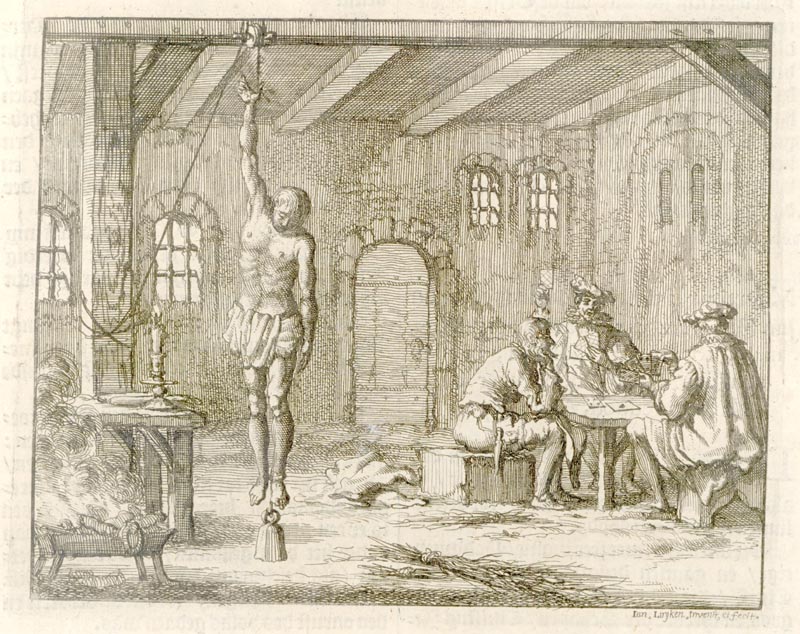
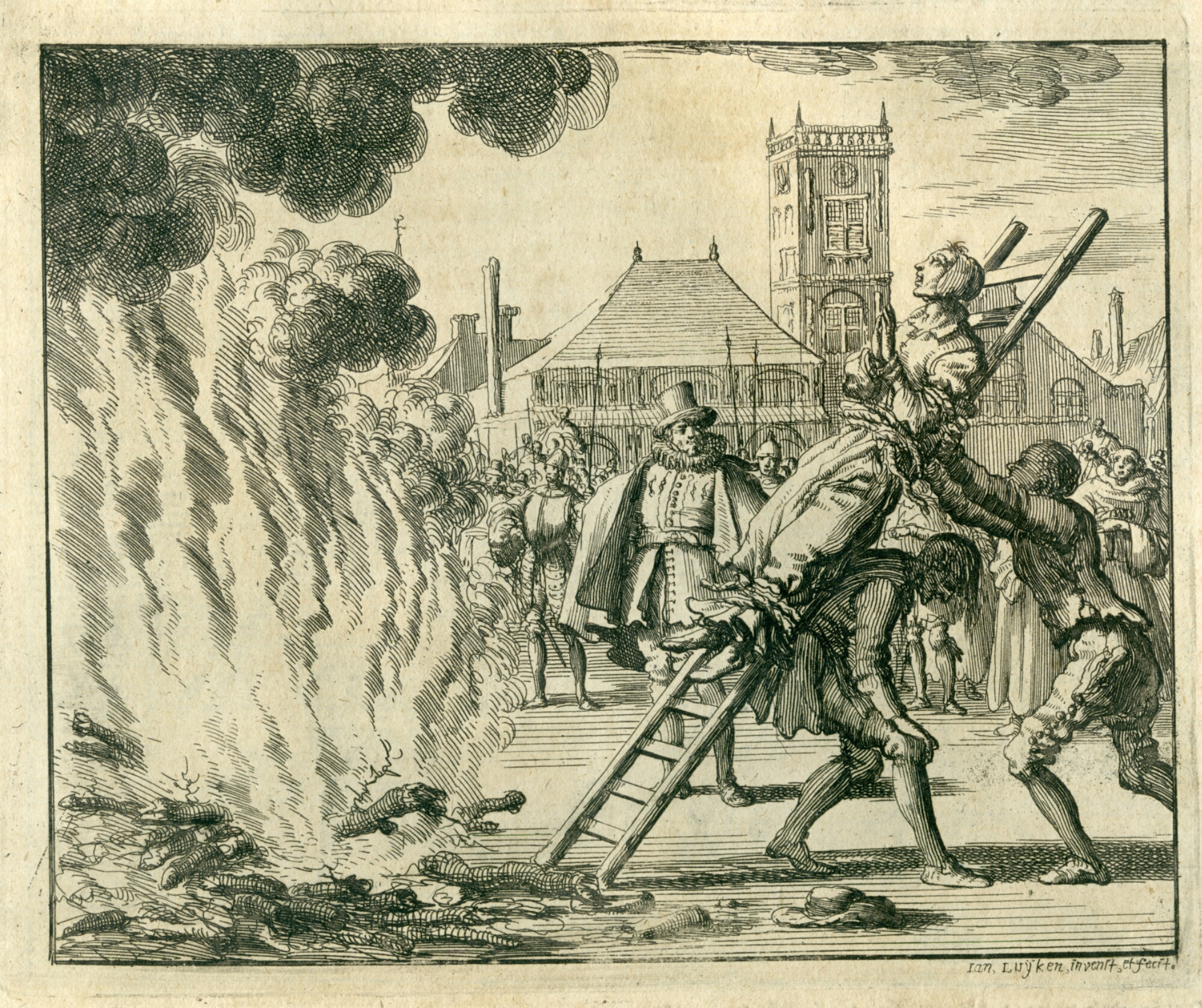
Mennonites have a long memory. We are dutifully reminded of acts of gruesome torture committed against our people from hundreds of years ago. There’s a book, Martyr’s Mirror, nearly as sacred as the Bible in many Mennonite (and Amish) homes, which is basically a chronicle of the violence done to Christian believers. The book includes haunting etchings of the terrifying ends of some who would not recant their faith under trial and these stories help shape Mennonite identity as a persecuted minority.
image

Torture of Geleijn Cornelus, Breda, 1572

Mennonites have a mistrust of mainstream society. Part of it is in a product of a religious emphasis to intentionally maintain a ‘non-conformed’ outward appearance and lifestyle. But the other big part is a real fear that persecution is just around the corner and that we could all soon suffer the same fate as our spiritual/ethnic fathers. Mennonites (and Amish) have been so insular and so separated from mainstream society that they actually have their own unique genetic disorders. Many still maintain their own German dialect, commonly referred to as “Pennsylvania Dutch” or “PA Dutch” for short, and church outsiders are referred to as “English” by Amish people.

The irony of it all is that Mennonites are more frequently adored than they are despised. Our biggest critics tend to be those who are disgruntled ex-members or those who had a bad experience in one church and judge all Mennonites based in it. We are treated both with respect and also patronizingly at times. My sister, a medical doctor, was once asked by a non-Mennonite if she would be interested in cleaning houses or babysitting, which could be taken as an insult to a person who was qualified for much more. Many have assumed my ignorance as well and apparently because of my rural and religious upbringing.

People do judge by outward appearances. People do make prejudiced assumptions based on ethnic heritage or religious connection and I have experienced this first hand. I believe that is likely why I have instinctively classified myself with the victims of prejudice rather than with the perpetrators. My unique upbringing may have been the reason why I was fascinated with history of racism in America. I read books; some of them required reading, but many others by curiosity and choice. The titles escape me, but I remember experiencing the civil rights era from the perspective of a woman in the NAACP, then living life as a young woman in Japanese internment camps and later spending time with a fictional lawyer named Atticus Finch.

My Struggle to Find Acceptance

I also have another identity and that one created in my slow development that earned me nicknames which included “micro” in them. I was short and small for my age. I was a late-bloomer beyond even my then diminutive size. I was older in my class, a polite and respectful student, I would often find more in common with adult teachers than my age-group peers, I had keen interest in history, was knowledgeable, but was also very innocent. I had little more than platonic interest in girls until my late school years and had mostly kept a safe distance from them. I did not seem to draw a whole lot of female attention either. I was an introvert in a crowd and shy around women.

With my struggle with stature, with a lack of strong social skills, athletic abilities, or other especially developed talents (besides being a non-stop daydreamer with some artistic gifts) and having not received an abundance of popular attention, I developed a bit of an inferiority complex. It only intensified as I became interested in dating and noticed many girls were more interested in a muscular, square shouldered or smooth talking male figures and I realized that just wasn’t me. I was this sensitive bundle of analytical thoughts without an adequate ability to express them. It was also furthered by the fact that I felt I was a misfit. I was way too religious for the more secular public school girls, but I was way too nuanced and philosophical for the cut-and-dried products of my own conservative religious culture.

For whatever reason, fate or fortune, I struck out with the first Mennonite girl I asked and that experience was where my confidence really began to wane. I had a an acute awareness of nuance differences of how people treat each other and knew too well how girls treated the ‘cool’ guys compared to those less popular. I was not disliked or mistreated. But I was also not that quintessential Mennonite guy either. It seemed the average Mennonite girl wanted this simple, macho, disinterested, reserved fellow and I did not fit that conventional mold. I was complicated; I alternately talked too much while not saying enough of the ‘right’ things, was fully Mennonite in some ways and not enough in others. I also lucked out with a church full of first cousins.

I was a deep-thinker, a conscientious person, fiercely loyal, told multiple times (by marriageable women) that I would make a wonderful husband, earnestly faithful, protective and gentle. I wanted to be the hero of the woman I admired, unfortunately I always seemed to play the cards of the villain or that’s how it felt my sincere efforts were received. It is against my nature (or maybe my Mennonite training) to harbor ill-will towards anyone. But feelings of rejection (both real and perceived) are as a poison to the soul. I have had my flashes of misogyny or jealousy, with those feelings immediately followed by longer moments of self-loathing and contempt for everything I was or was not. I was a victim of bad-timing, I was disadvantaged by my genetics, I was unfairly categorized and felt it all to be an injustice.

image

Drowning of Mattheus Mair, Wier, 1592

It may be irony, but it was black women who later affirmed my strengths and restored some of my confidence lost along the way. Like in the books I read, where I could identify with the female minority lead character, I felt minority women could somehow understand me and with them is where I felt most accepted. I was treated like I mattered. It did not hurt that some were educated beyond my Mennonite peers and could appreciate discussions of philosophy, psychology, sociology, identity and race.  Not wanting to produce a stereotype about Mennonites, but I would probably be more popular with my ethnic kinfolk if I would shoot more deer, get a big diesel truck, be an outstanding volleyball player and learn to love card games.

The Schizophrenic Demands of Insecure People

We live in a culture that both tells us to “be you” and yet also encourages conformity of thought or action and shames divergent thinking. We live in a society that preaches against stereotypes, that celebrates individuality and yet continually it categorizes people by race, religion or gender. I am simultaneously castigated as the perpetrator of racism and sexism, as a white male, but then instructed not to build identity around race or to make any judgments about sexuality. It is a feeling of being whipsawed, assailed for doing something that I have not done by those who are doing exactly what they say I shouldn’t do and that I didn’t do.

That is the dilemma of a colorful thinker: Do I go with those who say I should be identified with the perpetrators of historical violence? Or should I go with my instincts, my experience as a minority, and make my identity with the victims?

For me the choice is clear: I am neither victim nor villain. I have felt a victim of circumstance in the past. I have been treated unfairly, excluded unjustly, felt like a perpetual underdog. I have been condescended to and even discriminated against based in my race or religion. I have withstood bullies who picked on me because of my differences (my genetics did not lend to physical intimidation) and I have endured educated elitists who hurled insults, alleged my ignorance for challenging their perspectives and then would burned their straw-man effigies of me with an unwarranted glee. But I refuse to make my identity center on my claim to victimhood.
image

Burning of Anneken Hendriks, Amsterdam, 1571

I will not be like the bitter white co-worker who blamed his lack of success in college on not having the special privilege of affirmative action and would spout one racist opinion after another. I rebuked him without hesitation. I share no identity with his racism and hatred. I will likewise not patronize, show favoritism or cater to others simply on the basis of skin color and historical injustices. We all have challenges to overcome in life and it is easy to assume that our own are bigger or more real than someone else’s. I am not going to coddle and perpetuate the insecurities of any person, white, black or otherwise. I do not believe we help people overcome by treating people as helpless and hapless victims.

In discussions over race, with constructions like ‘white privilege’ and such, I have more frequently been lumped in with the perpetrators of racism rather than treated as a unique individual. It is frustrating, because Mennonites were some of the first to protest slavery and that is the identity that is more real to me than my skin color. Amish and Mennonites were even singled out in America for their ethnicity and conscience, some locked in prison during the First World War because they refused to fight. I feel, at times, that I have more in common with a persecuted minority than with anyone else. Yet, because I am a white male, some assume I could not possibly understand them and seemingly dismiss my perceptive without ever hearing it.

image

Burning of David and Levina, Ghent, 1554

I may not understand exactly what it feels like to be black in America. But I do know how it feels to be treated as inferior and less of a man on the basis of superficial things. I know too well what it is like to be categorized and stereotyped. I understand the conflict of one who loves their own heritage, has a defensive urge against those who attack their ethnic community and yet is still aware of the problems of their own people. I have a love-hate relationship with my own Mennonite religious/ethic heritage. I was taught to be afraid, not just of the police, but of mainstream society in general and some of my religious peers think they are persecuted because of perceived slights.

I have felt insulted and belittled at times. The slights were real and sometimes intentional too, but not always. I have found my reactions are a product of personal insecurities and sometimes little more than that. People all have their sources of insecurity. Conservatives fear a tyrannical government will soon take away their rights, thus fearfully stockpile guns and ammunition. Liberals think that the economic system is stacked against them and want government to impose on their neighbors allegedly as an act of justice. We can build identities around these insecurities. We may find people who share our fears and can look for evidence to ‘prove’ our own disadvantaged status or victim role. Unfortunately, while we do this, while we are demanding respect of our own person or people like us, we are also often leaving a wake of destruction behind us.

Insecure people produce more problems for themselves and others. We all know them, that super-sensitive person who is so insecure that they see an insult in even the most innocent requests or gestures. Take, for instance, a guy who told a story (apparently thinking his audience would be sympathetic) of a time he was driving down the road and a woman driving in the opposite direction scratched her nose as they passed. He knew an insult when he saw one. So he spun his vehicle around, aggressively pursued the offending party and gave a lecture on her disrespectful behavior. Of course, who knows why she touched her nose at that moment. Much more disturbing is a man who assumes an insult or injustice at every turn—and does not see his own offending belligerence.

Seeing Beyond Divisions of Black and White

I am a person with multiple identities and with none in particular. I am not alone either, I believe many Americans have many different identities and do not fit neatly into statistical categories. That said, Americans do also have bigger common identities of race or gender and these identities can sometimes be used to divide us. Our differences can be a cause for celebration, but they are also the basis of falsely dichotomous ‘us’ versus ‘them’ narratives and are used feed existing insecurities. But, treating every person like a unique person to be individually loved as a unique person, rather than in category of victim or villains, would solve a multitude of problems.

Pigeonholing, finger-pointing, scapegoating or shaming those who have offended me probably will not solve my own insecurities and I’m doubtful this type of action would ever create desirable results those whom I deem as guilty. Demonization usually only creates another class of victim. When we treat people like problems rather than people, when we throw them into categories of perpetrator on the basis of their appearance or history, then we have become contributors to the disease of prejudice rather than healers and helpers. If we want more heroic people in the world, then we must treat more people like heroes and as we wish to be treated. If we want dignity and respect for ourselves, then we need to stay committed to treating others with dignity and respect.

Healing of existing wounds will not come from two sides beating each other with superior arguments or competitive claims to offense. Tensions certainly will not be solved by making any person feel inferior or labeled as a villain. The urge to point out statistics about black men in response to those who cite statistics about police will not bring us closer to peace. The truth is if there is to be healing it will come from us learning to identify with all men, and not with only those who look like us or share our own opinions.

We need to recognize even our own intuitions, even those that are informed with history or statistical evidence, might be skewed, prejudicial and wrong. What we perceive to be true is not always whole or complete truth. We need to be more introspective, practice more constructive self-criticism, and address our own faults squarely. The assumptions we make about ourselves and about other people can hurt our chances for success. Yes, I could build a pretty solid rationalization to defend my own insecurities, but it would get me nowhere towards overcoming the obstacles to my success and, if reinforced long enough, could become a reason to not try at all.

Creating Shared Identities

It is impossible to say categorically that every white man has it better or every black woman has it worse and it is foolishness to assume it. A single black mother probably has more in common with a single white mother than she does with a black woman who is happily married. Then again, a black woman, who endures assumptions about her appearance, might actually be able to identify with a young Mennonite woman who dresses differently because of her own religious/ethnic heritage.

image

Dirk Willems rescuing his pursuer, Asperen, 1569

We need to endeavor to create shared identities bigger than race or gender or religion or even economic status and rid ourselves of crippling victim identities entirely. There are more of us misfits than there are those of us defined by statistics or stereotypes. We all have unique advantages or disadvantages and also our own special challenges to face. So, rather than dwell on ourselves only, or focus solely our own specific problems, we could realize struggle in various forms is common to all people and part of our shared humanity. I have my own struggles, you have your struggles and in sharing our burdens together we become brothers and sisters in the same fight rather than rivals or enemies.

I am not saying we should lose our unique identity either. What I am saying is that categories of white and black, privileged or persecuted, hero and villain are too small. We are colored, but not in black and white or shades of gray, we are truly many shades of many colors and uniquely our own person. We have many shared identities that could bridge our gaps and create common understanding, but to find them we need not to be bound to our past or prejudices.

My advice: Build an identity with those who overcome with love and despite the odds against them. Tune out those who only feed insecurity and fear.

(Click here for more Martyr’s Mirror images)

Height Privilege is Overrated

Standard

There’s no denying the advantages of being tall. 

Tall people are able to reach higher to get something off the top shelf and can see over a crowd.  It is a competitive advantage in many sports where factors like wing span or vertical leap can potentially earn millions and worldwide popularity.

It is a distinct social advantage to be tall.  Height seems to increase a candidates chances for winning elections, statistics show that taller men fare better in wage earning and in attracting female attention.  It is historical too, tall men seem to have been admired since at least the time of king Saul:

“Kish had a son named Saul, as handsome a young man as could be found anywhere in Israel, and he was a head taller than anyone else.” (1 Samuel 9:2)

Height is a factor in how people judge qualifications and character.  Short men who gain power are besmirched with the ‘Napoleon complex’ label to describe them.  I can’t imagine a tall man being called a weasel or rodent.  Furthermore, why is person lacking character called a “low life” or an insult to “belittle” a person?

This is obviously systemic discrimination and an insidious prejudice that seeps into the very way we construct language, right?

According to a Slate article, “Short Changed,” the proof is in the numbers:

“Economists have known for a long time that it pays to be tall. Multiple studies have found that an extra inch of height can be worth an extra $1,000 a year or so in wages, after controlling for education and experience. If you’re 6 feet tall, you probably earn about $6,000 more than the equally qualified 5-foot-6-inch shrimp down the hall.”

Armed with this knowledge, one could peg many things lacking in their life to their not being tall, they could claim their leadership skills have been overlooked because they were shorter than another candidate or claim their ambitions would be cast in a more favorable light if they had been accompanied by a 6′-2″ commanding presence.  A single guy of shorter stature could accuse women of being superficial and small-minded for rejecting him and could possibly be right.

But this also gives a lame excuse for lack of effort and honesty…

Maybe a guy is short and a jerk?

Or he’s not actually qualified despite his oversized ego?

Statistics tell us a story and they probably do indication some slight injustice towards short men.  But some damage could be self-inflicted as well.  When a person assumes they are handicapped or victims of discrimination they can react in a way that damages their own reputation and the conditions they create for themselves cause their own disadvantage.  If taller men have a psychological edge, then shorter men may be more prone to inferiority complex and a lack of confidence that becomes a self-fulfilling prophecy.

Life isn’t fair and there is no simple solutions to correcting these types of subtle injustices.  Measures taken to fix privileges of height based in overall statistics would likely create only another level of injustice if other disadvantages were not also considered.  How can we decide the benefits of beauty so that ugly people are properly compensated or determine what was a product of simple lack of trying?  Should we punish those naturally confident to make life fairer for those of timid disposition?  It is impossible to right every wrong.  It is hard to find who owes who when all things are taken into account.

image

Nick Vujicic and Kanae Miyahara

My advise is to use disadvantages (real or perceived) as motivation rather than as an excuse to fail.  Nick Vujicic, pictured above with his wife, was not only born short, but he also has no legs and arms, but that didn’t doom him to a life of despair. 

Some of us have likely been discriminated against more than others on the basis of our height, age, gender, weight, ethnicity, race or beauty, but it should never be our excuse to hide behind.  We all have unique challenges, but these challenges we face can prove our strength of character and overcoming these giants will be to our credit.

It is interesting that the man who was picked to lead after king Saul (who had turned out to be an irresponsible and jealous man) was not picked for his unusual height or beauty:

“But the Lord said to Samuel, “Do not consider his appearance or his height, for I have rejected him. The Lord does not look at the things people look at. People look at the outward appearance, but the Lord looks at the heart.”  (1 Samuel 16:7)

David, the king who followed Saul’s reign, despite flaws, had courage and made no excuses.  David’s claim to fame was slaying the giant Goliath who had taunted Saul and his army to a contest that nobody including the tall king was willing to take on.  What David lacked compared to Saul in stature or notable appearance he made up for with faith and a good heart.

Short or tall it is better to be a David (or married to one) than a Saul.  Heart trumps height even if nobody but God notices.  So make no excuses and take on the challenges before you without fear or doubt.

The problem of knowing…

Standard

Knowledge is power or that is what I am told.  But how does our knowing make us more capable and is that capability to know always from our own betterment?

The answer is, no, not always, and our knowledge could very well be less for our own betterment than we know.  The same knowledge of the human body used by a doctor to save life can also by others to take it.  Knowledge of how to start a fire gives one the ability to cook and create glass or steel, and yet it is also a tool of an arsonist.  If knowledge is power it can be a destructive power.  Knowledge can be power to do evil.

Increased knowledge does not equate to moral progress…

“Of all the problems which will have to be faced in the future, in my opinion, the most difficult will be those concerning the treatment of inferior races of mankind” (Leonard Darwin)

Knowledge can also be deceiving and dangerous when it is incomplete, over-interpreted or not properly contextualized.  Eugenicists, like Darwin in the quote above, claimed confidently that their knowledge of science gave them the ability to decide what races of men and women should be allowed to reproduce.  People too easily use knowledge that validates their own presuppositions to overreach and sometimes with deadly consequences.

The confident and exuberant knowledge based claims of one generation become the warnings to the next.  Things argued as logical, reasonable, fact based and morally responsible by one generation will sometimes be regarded as the atrocities of the next.  Eugenics in America has become a prime example.  Very intelligent and knowledgeable men (like Nikola Tesla) argued for sterilization of races they deemed inferior.  But, the results of these brilliant forward thinking men of yesteryear, we now as a society pay a price for today.

“Pride goes before destruction, a haughty spirit before a fall.”  (Proverbs 16:18)

One would think our knowledge of historical blunders would act to restrain our enthusiasm for allowing our knowledge today to delude us.  But increased knowledge does not equate to increased wisdom or humility.  Knowledge we possess can be a source of dangerous pride.  Pride that can blind us to the limits of our own knowledge and ability to reason correctly from the knowledge we possess.  Knowing what we do not know, being humble with what we think we know and listening to those who know differently from us can save us from our limited knowledge being our own destruction.

Known knowns, known unknowns and unknown unknowns…

“There are known knowns. These are things we know that we know. There are known unknowns. That is to say, there are things that we know we don’t know. But there are also unknown unknowns. There are things we don’t know we don’t know.” (Donald Rumsfeld)

Every fool in history was a likely victim of their own knowledge.  History is replete with examples of well-intended and intelligent men who misjudged on the basis of the knowledge they had.  I do not take Neville Chamberlain for an idiot because of his infamous “peace for our time” utterance after his meeting with Hitler gave hope of avoiding war.  In retrospect, with the knowledge available even then, one could have concluded very differently than Chamberlain and Hitler’s rise may have been thwarted saving countless lives.

Many terrible mistakes might have been avoided if people would have arrived at different conclusions using the greater available evidence or even the same knowledge they had making a bad judgment. Confidence in our ability to discern from our knowledge is good.  However, if our confidence is an insulation to keep us from hearing contrary opinions, if it is used to demean those who disagree and their perspectives, we are on a very dangerous road.  It is with more knowledge we can realize the conclusions we reached based in prior knowledge were overconfident, arrogant and wrong.

“Plans fail for lack of counsel, but with many advisers they succeed.”  (Proverbs 15:22)

More knowledge is not a savior of humanity.  Educated and knowledgeable people are some of the most dangerous people if they are unrestrained by moral conscience or humility.  There is a story of a new king (1 Kings 12) who decided to disregard the council of older advisors, choose to follow the advice of more agreeable peers and sowed the seeds of his own destruction.  We too risk the same when we seek the council of those who confirm our own biases and disregard the perspectives of those outside our own peer group or culture.

“…knowledge puffs up while love builds up. Those who think they know something do not yet know as they ought to know.” (1 Corinthians 8:1b-2)

Based in their knowledge people too often pick advisors who are no different from them.  It is a form of self-love.  From young people who turn to age-group peers, to fundamentalists (religious, scientific or otherwise) who vehemently defend their own various established dogmas and quickly dismiss any interpretation counter to their own, we need to be wary of our own potential knowledgeable ignorance.  Having an abundance of fact, logic and reason does not equate to having good discernment.  Knowing you could be wrong and not know what you believe you know could save you (or those you influence) plenty of sorrow and regret.

The advantage of not knowing and loving freely…

I believe we are often geared too much towards our own knowledge and not enough towards love and humility.  If we were more mindful of the limits to our own knowledge or more aware of the lessons of history (and able to apply them to ourselves) we would probably not be as quick to trust our own discernment.  Knowledge can lead to arrogance, but the right kind of knowledge can lead to our being humbled and able to submit to the way of love that defies common understanding.

“For I resolved to know nothing while I was with you except Jesus Christ and him crucified.”  (1 Corinthians 2:2)

Unpackaged: Knowing only Jesus Christ is to know only the Spirit of God and power of love, and to know only that could do more good for the world than a supercomputer of facts.  Love has more power than the combined intelligence of those who unlocked the secrets of the atom and the awe-ful results of their knowledge.

The world would be better with more who had the faith (and courage) of a young woman, Maryann Kauffman, who lost her husband to a senseless act of violence and choose knowing only Jesus or forgiveness rather than bitterness.  I can know without knowing that her pain is as real as anyone else’s, but evidently her love is bigger.

May we resolve to know goodness more completely and I know we will be better for it. There is no loss in willing self-sacrificial love…

I read it on the internet, so it must be true…

Standard

There was a story circulating a few years ago claiming that a mountain lion was hit by a truck in Pennsylvania and urging people to spread the news.  The claim was accompanied by a picture of a man with a big dead cat and also included mention of Game Commission denial.

This story was red meat for those of my friends who were already suspicious of the state officials (who maintained there was lack of credible evidence that mountain lions roamed the state forests) and was confirming proof to them.  The story included a photographic evidence, did it not?  How could it not be credible and proof of a cover-up, right?

As it turns out the same photo has been used in many stories to make different claims.  It is a real photo.  However, according to more credible sources, the photo was taken in Arizona and not in Pennsylvania or the many other places where internet stories claimed the animal was hit.  The story that the mountain lion was hit in Pennsylvania is apparently a lie.

So, why would a person be so suspicious and skeptical of one source (like the PA Game Commission) and yet be so gullible as to fall for an internet hoax from a random source?  Why trust a complete stranger who we have no way of knowing if the information they give is trustworthy or true while disbelieving sources that are at least somewhat accountable and knowable?

It comes back to confirmation bias or the idea that people will be more accepting of evidence that confirms their existing beliefs or biases.  Those who accepted the story as true already believed the truth was being hidden by the government and thus didn’t feel need to check the credibility of the claim.  They pick up and run with whatever tickled their existing partisan fancy.

I understand confirmation bias.  But it is difficult for me to understand why people are so easily duped by internet hoaxes and conspiracy theories from spurious sources.  It is especially difficult for me to understand how people can be so cynical of mainstream sources and then simultaneously accepting of a story posted by some random person on the internet.  It should be opposite, we should be more skeptical of a little known source and less mistrusting of those more known.

Time and time again I see stories posted by friends on social media, I do my due diligence to research the claim and oftentimes find it is a myth or hoax.  In an age of Photoshop pictures can be easily doctored.  Credentials can be fabricated to make an appeal to authority and I am instantly skeptical when someone uses that type of appeal rather than concrete evidence and sound logic.

Good cases aren’t bolstered by bad arguments.  True stories do not need fake photos or deceptive use of facts.  By using (or linking) unreliable information as proof of an idea a person is actually hurting their chances of convincing intelligent people who disagree and are potentially making a mockery of themselves.

Lies and fraudulent claims used to promote a moral argument are especially inexcusable.  I can understand why corrupt politicians and calculated propagandists distort evidence trying to gain power from the ignorance of their constituency.  I can also understand why immoral people fabricate stories and try to deceive for entertainment or whatever reason.  But what I cannot accept is false information used by those who are claiming the moral high ground.  It is hypothetical at worse and dangerous ignorance as best.

“These are the things you are to teach and insist on. If anyone teaches otherwise and does not agree to the sound instruction of our Lord Jesus Christ and to godly teaching, they are conceited and understand nothing. They have an unhealthy interest in controversies and quarrels about words that result in envy, strife, malicious talk, evil suspicions and constant friction between people of corrupt mind, who have been robbed of the truth and who think that godliness is a means to financial gain.”  (1 Timothy 6:2b-5)

A moral person should take responsibility for the stories they spread.  An untrue claim can do real harm.  Gossip, slander and evil surmises may help line the pockets of those trying to exploit the ignorance of others for their own gain.  But these things do do not help the cause of truth.  As people of faith and love we have no excuse to be casual with our sources.  Agreement in principle is not a reason to trust a source or be negligent of due diligence.

“Have nothing to do with godless myths and old wives’ tales; rather, train yourself to be godly. For physical training is of some value, but godliness has value for all things, holding promise for both the present life and the life to come. This is a trustworthy saying that deserves full acceptance. That is why we labor and strive, because we have put our hope in the living God, who is the Savior of all people, and especially of those who believe.”  (1 Timothy 4:7-10)

Contrary to what some may think, being a person of faith does not automatically lead to better discernment.  We must actual train ourselves to be godly and discerning.  What this means practically is not just accepting internet stories as fact even if we like what they are saying.  We have a moral responsibility to be critical thinkers who can see past our own potential prejudices, misconceptions or biases.  It requires first being humble enough to admit what we want to think is true isn’t always true.

“Finally, brothers and sisters, whatever is true, whatever is noble, whatever is right, whatever is pure, whatever is lovely, whatever is admirable—if anything is excellent or praiseworthy—think about such things.”  (Philippians 4:8)

If you do not know if a story is true or not, rather than risk promulgation of half-truth or lies, do not share it.  There is plenty that is good or honorable that we can share without risking the credibility of ourselves or hurting that which we claim to love in the process.

Statistics hate men…and police too?

Standard

If I were to tell you that one category of American is twenty-seven times more likely to be killed by police, would you sense an injustice?

Well, it is true that men were twenty-seven times more likely to be killed by police than women in the years between 1988 and 1997.  In fact, according to the NCBI data, of those killed by police from 1979 to 1997 of them 97% were male.

I suppose we could conclude from the statistical data that men are victims being systematically slaughtered by the law enforcement agencies.  But, that would likely be the wrong conclusion and I believe most of us can come up with theories as to why men are more likely to be killed by police than women that do not include a nefarious plot or even include mention of anti-male sexism.

Men are typically more testosterone driven and aggressive.  Men are also probably more likely to be involved in criminal behavior.  Men are killed more often by police because they are more likely to be involved in activities that put them at risk of being killed.  I could spend time proving those statements, but I think most people do not need further proof because it is fairly obvious and understood without needing to go into great depth.

There is another ‘endangered’ group of people that includes men, women and minorities.  This group is those who respond to our calls for help, they are tasked with bringing law breakers to justice and the people we complain about when their serving their duty involves enforcing laws pertaining to us.  This group is those who are police officers.

According to one statistical analysis I found, more than ten per 100,000 police officers are killed in the line of duty each year.  In a recent column Michelle Malkin gave this breakdown of the numbers:

“The National Law Enforcement Officers Memorial Fund (NLEOMF) reports that a total of 1,501 law-enforcement officers died in the line of duty during the past ten years, an average of one death every 58 hours, or 150 per year.”

But, how many, one may ask in retort, are killed by police per year?

Reliable statistics are hard to find on police homicides.  However, from what I have found, from those trying to fill in the gap of information, is that around one thousand people are killed by police per year.  In a population of around 316 million people that works out to be around 0.31 people killed per 100,000 people living in the US.  So, combined and compared, police are over thirty-two times more likely to be killed by us than we are to be killed by them.

Understandably, police have chosen a career that increase the chance they will encounter violence and the occasional innocent person who is gunned down had less of a choice.  However, the vast majority of those killed by police have made choices that have increased their likelihood of a violent encounter and in most likely could’ve avoided the outcome had they employed a bit of restraint themselves.

The real tragedy in recent cases that have been deemed newsworthy where young men have been killed by police is the absence of conversation on more obvious reasons.  The mainstream media is quick to point out a possible racial motive, but fail to mention all of the other factors from culture to behavior that have an influence over outcomes.  We do a great disservice to both police and young men by claiming that this is a matter of systematic oppression.

It is not a matter of oppression or sexism that men are vastly more likely to be killed by police than women.  No, it is a matter of men being more likely to do things that lead them to violent encounters and to fix that we need to encourage men to work out their problems differently.  Similarly, disproportions between men of different races may also be explained by other factors rather than by oppression or racism.

I do not believe we should ignore statistics nor should we downplay history either.  However, if we are to have a conversation, we should make it an honest and fair conversation.  We should not just be discussing police abuses, but we should also be discussing fatherless homes, cultural glorification of violence, the idea that manhood means avenging all insults and a mentality of blaming circumstances rather than overcoming them.

The real injustice is that we apply a different logic or reasoning when it comes to considering the statistics that show men are disproportionately more likely to be killed by police than women.  If we would apply the same logic and reasoning we would be holding ‘male lives matter’ signs and creating hashtags like #alivewhilemale or #crimingwhilefemale would be trendy.

And, yes, apparently women do get away with criminal behavior.  That is, at least at DWI checkpoints where men are disproportionately selected despite not being more likely to drink and drive.  From the article linked:

“A surprising study finds women have the advantage when it comes to DWI checkpoints. They are more than 3 times less likely to get singled out for inspection.”

Encouraging outrage will likely only contribute to a continuing cycle of violence.  At very least angry protests or promotion of mistrust and hatred for police is not a solution.  We need less dividing people into categories of blue, black or white and more discussion of factors other than race or gender that have an influence.

More understanding, more truth and love all around is what we need.