

There is a nation in the world that identifies as Israel. And, as we all know, if a person or group of people identify as something then this is what they are. If I say that I’m a ham sandwich you better believe it! Israel is what calls itself Israel.
That out the way, is that Israel the same as the Biblical Israel established by God?
If you were raised under Zionist teachings this isn’t even a question. Of course, it is! What else could it be? Biblical criteria or qualifications, what are those? I mean, how exciting would those end times novels be without our favorite backdrop??? And next, you’ll be telling us reality television is fake and that Caitlyn Jenner is a man and not a stunning and brave woman!?!
Isn’t everyone who identifies as something that thing?
However, for those slightly more literate, and not born yesterday, the question of what the Biblical Israel is and if the state by the same name is the same thing is important. For a Christian, up until the time of the reformation and a little after, this answer was quite clear and that is that Israel today is the remnant of the Jews who remained faithful—as well as those Gentiles converted.
From the perspective of New Testament writers Israel is the Church or the body of those who believe—a religious affiliation and not a particular race.
About Religion, Not Race…
While still a member of a Mennonite church, I was not happy to have my religious identity be classified as an ethnic group. In my own opinion I wasn’t born a Mennonite, it was my religion and something that I had to choose to participate in. And yet there was truth to the claim. There is was an ethnic component to being part of the group. We shared a culture, and have our own common surnames, and many converts don’t fit in well.
However, the most damning evidence, other than having unique genetic disorders, is the broad range of beliefs and practices under the Mennonite banner. Those calling their church Mennonite span from those who are progressive and ordaining lesbian pastors to those very traditional still using horses and buggies for transportation. So, when the only true common bond between all of these Mennonite groups is a sprinkling of Yoders, Gingrichs, Millers, or Barkmans, can it really be a religious belief system?
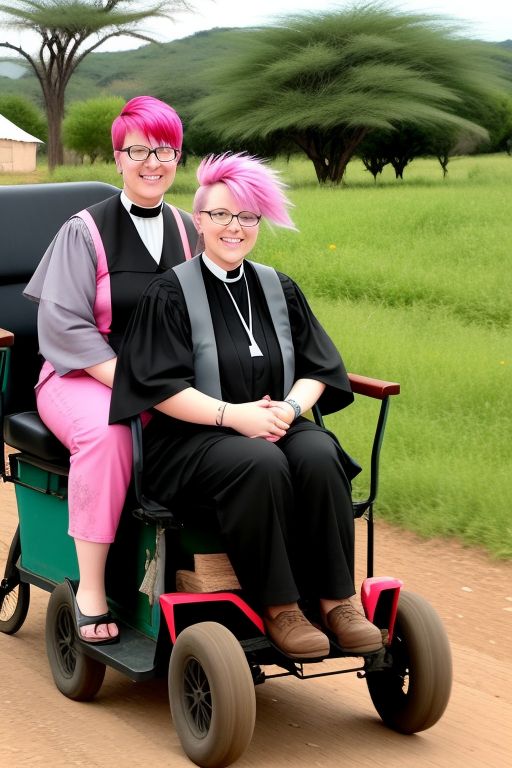
Okay, like a Facebook relationship status, it’s complicated. People can and do convert to become Mennonite. And, surprisingly enough, since a few decades ago, an African version of the Mennonite denomination has been growing rapidly to the point there are now more Mennonites in Congo than in Canada. I mean, who knows if their doctrines or religious practices are anything that a North American conservative would recognize, nevertheless they do carry the name of Menno Simons in a direction he probably never imagined.
That’s one thing that the Orthodox generally put up front. If you are Orthodox in Greece or a Greek community, then you’re a Greek Orthodox. The liturgy and general practice are the same, established by canons, but there is also room for ethnic expression and use of the language common to the people. In the Arabic world, for example, they use “Allah” where we use the Roman pagan word ‘God’ and have been using it before Islam even existed as a religion. Anyhow, in Orthodoxy, unlike Mennonites, the identity is built from the substance of something established and a faith that is ancient.
Absurdly, when it comes to Judaism, we no longer care if they’re practicing or apostate, we slap that big ethnic label on them all and claim all of them have a claim to the land by their DNA. To us, they’re all the same. But that’s certainly not the case when it comes to Biblical Israel, not every part of the assembly was blessed, some were literally swallowed up by the earth, while others were put to death for disobedience, and the whole would end up in exile:
But if you or your descendants turn away from me and do not observe the commands and decrees I have given you and go off to serve other gods and worship them, then I will cut off Israel from the land I have given them and will reject this temple I have consecrated for my Name. Israel will then become a byword and an object of ridicule among all peoples. This temple will become a heap of rubble. All who pass by will be appalled and will scoff and say, ‘Why has the Lord done such a thing to this land and to this temple?’ People will answer, ‘Because they have forsaken the Lord their God, who brought their ancestors out of Egypt, and have embraced other gods, worshiping and serving them—that is why the Lord brought all this disaster on them.’
1 Kings 9:6-9 NIV
It is quite clear that the covenant was even conditional for those who were biological offspring of Abraham. Not only this, but people could become part of Israel who were not blood descendants of Abraham, Ruth the Moabite, or Rehab the prostitute, a Gentile, for example. So it was never about ethnicity, it was always about obedience and the covenant conditional based upon obedience rather than bloodlines.
Chosen For Abraham’s Faith
The children of Israel were not picked for their superior genetics. That’s not to say there aren’t very intelligent and extremely talented people of Jewish religious heritage. Abraham was picked for being a righteous man:
And the LORD said, Shall I hide from Abraham that thing which I do; seeing that Abraham shall surely become a great and mighty nation, and all the nations of the earth shall be blessed in him? For I know him, that he will command his children and his household after him, and they shall keep the way of the LORD, to do justice and judgment; that the LORD may bring upon Abraham that which he hath spoken of him.
Genesis 18:17-19 KJV
It was Abraham’s righteousness and how he would guide his children to “keep the way of the Lord,” that God picked him. God went on to set Israel aside through religion, not race, and those who did not keep the law would soon find themselves entirely cut off from the assembly of Israel. There was never a blessing for simply being a blood relative of Abraham. It was always conditioned on a faith that produced the work of obedience and this remains the case.
Those born to keep the law of Moses must recognize their Lord and Savior or they’re no more blessed than the Benjamites put to the sword for their evil:
The tribes of Israel sent messengers throughout the tribe of Benjamin, saying, “What about this awful crime that was committed among you? Now turn those wicked men of Gibeah over to us so that we may put them to death and purge the evil from Israel.” But the Benjamites would not listen to their fellow Israelites. […] The Lord defeated Benjamin before Israel, and on that day the Israelites struck down 25,100 Benjamites, all armed with swords. […] The men of Israel went back to Benjamin and put all the towns to the sword, including the animals and everything else they found. All the towns they came across they set on fire.
Judges 20:12-13, 35, 48 NIV
If this were a Covenant merely about blood or genetics, then the Benjaminites really got shafted. I mean, I’m not sure how anyone could construe being slaughtered wholesale as being a blessing or some special thing to be chosen for, “Congratulations, you’ve been selected to be purged!” So this idea that anyone will ever be saved simply for their chosen race is wrong and there is only one true religion which is founded in Abraham’s seed, through the law of Moses, and is fulfilled in Christ.
My favorite Jewish writer explains:
Those who want to impress people by means of the flesh are trying to compel you to be circumcised. The only reason they do this is to avoid being persecuted for the cross of Christ. Not even those who are circumcised keep the law, yet they want you to be circumcised that they may boast about your circumcision in the flesh. May I never boast except in the cross of our Lord Jesus Christ, through which the world has been crucified to me, and I to the world. Neither circumcision nor uncircumcision means anything; what counts is the new creation. Peace and mercy to all who follow this rule—to the Israel of God.
Galatians 6:12-16 NIV
After Christ, even the law of circumcision becomes secondary to what St Paul describes as being “the new creation.”
So it was the righteousness of Abraham, which was followed up with their being set aside by careful obedience to the law—which was the test of the Old Covenant—and finally, reconciliation through Christ that is salvation for all.
It was NEVER only about ethnicity or race. Modern descendants of the Jews must do the same as anyone else, repent and accept their King or perish. Repentance is the first step to salvation and that is what distinguishes true Israel from the counterfeit. The first followers of Jesus were Jewish. Christianity is the part of the assembly that remained faithful to their Lord while the others who rejected their rightful king are called anti-Christ:
Dear children, this is the last hour; and as you have heard that the antichrist is coming, even now many antichrists have come. This is how we know it is the last hour. They went out from us, but they did not really belong to us. For if they had belonged to us, they would have remained with us; but their going showed that none of them belonged to us. […] Who is the liar? It is whoever denies that Jesus is the Christ. Such a person is the antichrist—denying the Father and the Son. No one who denies the Son has the Father; whoever acknowledges the Son has the Father also.”
1 John 2:18-19 NIV
There are a great many who call themselves Christian today who have Scripture and yet no discernment whatsoever. You don’t even need to believe in Jesus to understand what is being said in the passage. Who is identified as the liar and anti-Christ? 1 John 2 very plainly tells us who: “It is whomever denies that Jesus is the Christ.” That is to say those unfaithful to the covenant made with Abraham through their rejection of the Son—God in the flesh.
To say that some can deny the Son and still have a Covenant with the Father? It is to basically throw out the entire Gospel of Jesus Christ. It is completely moronic and a sign that someone was never truly part of the assembly of God. If they truly belonged they would see their Lord as the fulfillment and not be so easily led astray. When Jesus says “Salvation is from the Jews” he is not talking about an ethnic group, he is talking about himself and how he is the Messiah that was promised through the faithful seed of Abraham.
Chosen by Christ
It is really a form of idolatry to hold a race or ethnicity up as chosen by God for no reason other than their genetics. That is not what the “Israel of God” ever was. The assembly (or ‘ekklesia’) was always about those who were faithful, a remnant of Abraham’s seed that included Gentile converts, and turning it into an ethno-nationalist state is a perversion of what the original covenant between God and Abraham actually entailed. A covenant is a two-edged sword, while it comes with blessings for those who obey there is also a list of curses for those who do not hold up their own end.
Jesus spoke to them again in parables, saying: “The kingdom of heaven is like a king who prepared a wedding banquet for his son. He sent his servants to those who had been invited to the banquet to tell them to come, but they refused to come. […] “But they paid no attention and went off—one to his field, another to his business. The rest seized his servants, mistreated them and killed them. The king was enraged. He sent his army and destroyed those murderers and burned their city. “Then he said to his servants, ‘The wedding banquet is ready, but those I invited did not deserve to come. So go to the street corners and invite to the banquet anyone you find.’ […] “For many are invited, but few are chosen.”
Matthew 22:1-3,5-9,14 NIV
Any guess which of those on the guest list killed the servants sent by the King?

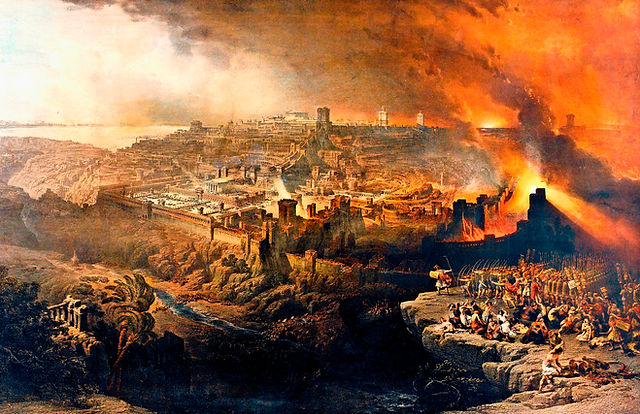
The Biblical Israel, for those who believe in the Gospel of Jesus Christ, is that remnant of Jews who obey and follow after the Word of God incarnate. This is always how Israel worked. Some were pruned off the tree and others grafted in. There were never special exceptions made for anyone merely on the basis of ethnicity or race. The Church is the nation of those faith to the work of God that started with a Covenant with Abraham and needs no worldly state or rebuilt temple of stones. Christians are the chosen people.
This essay doesn’t mean that there should be no modern state of Israel or that the mistreatment of any group of people in the world who have rejected Jesus is ever acceptable. We just need to know there’s a big difference between “identifies as’ and what is actually being referred to in the Bible.

 Irregular Ideation