
The Myth of an Indestructible Building

Standard

It was November 29, 1900, and fans filled the stadium in San Francisco for the annual Thanksgiving Day game between California Golden Bears and Stanford Cardinal. Some, not wanting to pay the entry fee (one dollar then, $40 in today’s money), climbed on a nearby glass factory roof to get their view of the action on the field.

The newly built factory roof collapsed about twenty minutes into the game. One hundred people fell as it gave way and plunged four stories down—many landing on the 500° F oven below. It was a horrific scene. Young people being cooked alive. What happened? The building roof wasn’t designed to hold a mass of spectators. It failed. Those who had climbed up were oblivious or did not have enough concern for the stress they were adding to the structure.
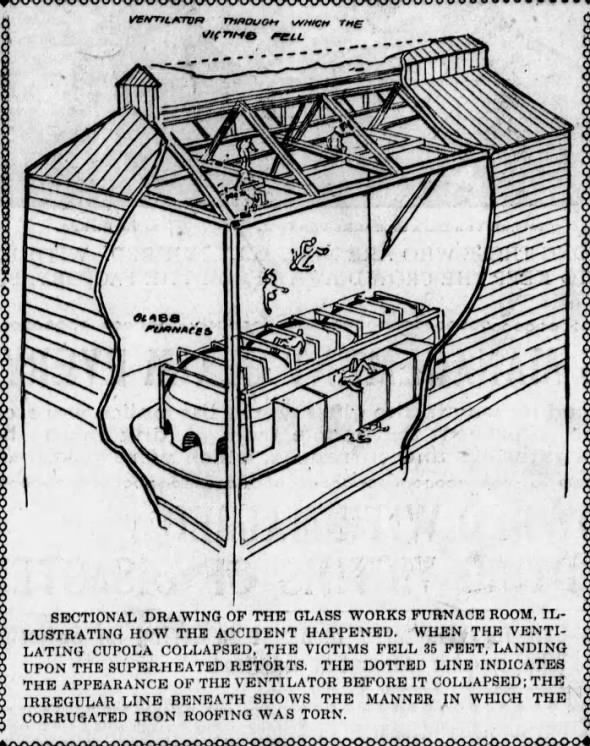
This tragedy wasn’t just a failure of design; it revealed a deeper misconception that buildings should be invincible, a myth that shapes our reactions to collapses even today. It goes further than engineering or physical buildings as well. Our models of reality are oversimplified at best and flat-out wrong in too many cases.

There is a common misconception and an unrealistic expectation about structures—many people seem to assume they are like blocks of granite. From those who believe that every building collapse is a conspiracy to those who think every failure demands stricter government regulations, the myth of an indestructible building continues due to a lack of understanding of engineering and the limitations.

Design Limits Are Not Defects

One key misunderstanding is design limits. Engineering is not about making a building too strong to ever fail. Unless we’re talking about the Great Pyramids, it’s all about trying to meet certain established parameters. An engineered building is designed to meet the expected conditions as defined by regional building codes. If the wind, snow, or loads exceed the designated standards, then there will likely be a collapse.

Earlier this year, after a heavy snowfall in upstate New York, many buildings had their roofs cave in (including this fire hall) because the weight of the snow was that much greater than the design weight. Sure, most engineers build an extra safety margin into their components, but eventually these limits are too far exceeded and you’ll end up with a tangled mess. This is why there are sideline roof shoveling businesses in these places where large snow accumulations are a regular occurrence.

Sure, code could force people to build to a much higher standard, making a collapse due to snow load virtually impossible. But this would increase the costs so much that it would price many people out of building a new house or barn. Engineering is all about compromise, more precisely about making the right compromises given the expected conditions. Yes, there is a case for making adjustments based on observation or after studies, but ultimately we build for what will work most of the time.

More Is Not Always Better

In the aftermath of the earthquake that had struck Myanmar and neighboring Thailand, there was a comment made to me in a chat hoping for more layers of regulation. This is a sentiment, in the specific context of rapid development of Bangkok, that seems more reflexive than reflective. It is a progressive impulse to believe that more interventions and rules are the answer.

The collapse of an unfinished tower in Bangkok, during the earthquake, sparks questions about building codes.  Was it missing sheer walls?  Did the contractor rush to ‘top it off’ quickly?  I want to know what the investigation finds.

But, for me, as someone who works in the construction industry and has occasionally needed to sift through these layers, I could not disagree more. Sure, better regulations may be needed. However, legalism doesn’t work in building standards any better than it does in churches. Sure, you need a code of some kind. And yet onerous regulation will add to the cost of construction, not necessarily improving the end results, and only making new housing less accessible.

It is, at best, the same trade-off discussion we can have about self-driving cars and the need for LIDAR. Sure, this expensive laser ranging system may marginally improve the results, but at what cost? Self-driving cars with cameras alone are already safer than human drivers. Keeping these systems at a price that is affordable will save more lives than pricing them out of reach for average people. It is, therefore, optimal to rollout the less expensive and safer tech even if it could be slightly improved.

At worst there is only more expense and no benefit to more layers of red tape. The real problem with rules is that they are written in language that needs interpretation. Unlike a classroom theoretical setting, in the real world you can’t just memorize the correct answers and pass the test. The ability to make a judgment call is far more important than adding to the pile of regulations. More rules can mean the more confusion and the truly critical matters get lost in the mess.

I see it over and over again, when different customers send the same job for a quote and all of them interpreting the engineering specifications their own way. It is the tire swing cartoon, a funny illustration of when the customer wants something simple and yet the whole process distorts the basic concept until it is unrecognizable. That is where my mind goes when we talk about adding layers. Is it increasing our safety or merely adding more points of failure?

This one stuck with me and should be standard equipment in every design department.  I first saw it as a child while visiting the engineering department of the construction company my dad worked for.

Some of it is just that some people are plain better at their jobs than others with the very same credentials. I am impressed by some engineers, architects, contractors, and code officers—not so much by others. I’m willing to bet the intuition of some Amish builders is probably more trustworthy than a team of engineering students’ textbook knowledge, full of theory, with no real or practical world experience. In the end any system is only ever as good as the users.

Theory Is Not Reality

My work relies on truss design software. I enter information and it does those boring calculations. When I started, I assumed that it was more sophisticated than it really is. I thought every load was accounted for and nothing assumed. But very soon the limits of this tool started to reveal themselves. It is only as accurate or true to reality as the engineers and developers behind it—and on the abilities of the user (me) understanding the gaps in the program.

When it comes to mental models—the kind of physics involved in engineering—only a few people seem able to conceptualize the force vectors. Things like triangulation, or compression and tension loads, are simply something I get. Maybe from my years of being around construction or that curiosity I had, as a child, that made me want to learn what holds a stone arch up or why there are those cables running through that concrete bridge deck. My model was built off of this childhood of building Lincoln Log towers (arranging them vertically) and occasionally making mini earthquakes.

I’m exasperated by this expectation that people have for skyscrapers to be indestructible or to topple over in the same manner of a tree—as if they’re a solid object. It also seems that the big difference between static and dynamic loads is lost on most people. They don’t understand why a building could start to pancake, one floor smashing the next, or how twisting due to extreme heat could undermine the structural integrity of a building without ever melting the steel. Of course this has to do with their beliefs or mistrusts that are not related to engineering—nevertheless it shows their completely deficient understanding of how the science works.

The concept in their head is off, their brain modeling is inaccurate, and their resolution may be so low they simply can’t grasp what the reality is. You try to explain basic things and their eyes glaze over—sort of like when Pvt. John Bowers tried to explain why the plants need water, and not the electrolytes in Brawndo, in the movie Idiocracy. Ignorant people will scoff before they accept a view different from their model of the world. The theory they believe rules over all evidence or better explanation.

On the other side are those who trust every established system without understanding it. They “believe science” and see more as an answer to every question. More rules, a larger enforcement apparatus, faith in their experts, without any feel for the problems encountered by the professionals or those in the field. If they had, they would question much more than they do. Human judgment is still at the base of it all. Or at least that is what the lead engineer told me while we discussed the limits of software and the need to be smarter than the tool.

Not even AI can give us the right balance of efficiency in design versus safety factor or what should be written in the code. It may be a better reflection of our own collective intelligence than any individual, but our own limits to see the world how it actually is are not erased by the machines we create. We are amplified, never eliminated, by the tools we create. So we’ll be stuck wrestling with our myths and theories until we take a final breath—only our flaws are indestructible.

Models of a Messy World

If truss software taught me anything, it’s that no model nails reality perfectly—not beams, not buildings, not life. We lean on these frameworks anyway, because the world’s too wild to face without a map. But just like those fans on that San Francisco roof in 1900, we often climb onto flimsy assumptions, mistaking them for solid ground. The myth of an indestructible building is just one piece of a bigger distortion: we think our mental models—of faith, of power, of people—are unshakable truths, when they’re really sketches, some sharper than others, of a reality we’ll never fully pin down.

Take religion. For some, it’s a cathedral of certainty, every verse a load-bearing beam explaining why the world spins. Others see it as a rickety scaffold, patched together to dodge hard questions. Both are models—ways to grapple with life’s big “why.” Politics is messier still. It’s like designing a city where everyone’s got their own codebook. One side swears by tight regulations, convinced they’ll keep the streets safe. Another group demands open plans, betting that freedom builds stronger foundations. Both sides act like their own ideological model is bulletproof, shouting past each other while the ground shifts—economies wobble, climates change, and people clash.

Then there’s prejudice, the shoddiest model of all. It’s like sizing up a beam by its color instead of its strength. Prejudice, always a shortcut to save us from the effort of real thought, fails because it’s static, blind to the dynamic load of human individuals. Good perception, like good engineering, adjusts to what’s real, not what’s assumed.

All these—religion, politics, prejudice—come down to how we see. Perception’s the lens we grind to make sense of the blur. Some folks polish it daily, questioning what they’re fed. Others let it cloud over, stuck on a picture that feels safe but warps the view. I think of those fans in 1900, not asking if the roof could hold them. They didn’t mean harm—they just saw what they wanted: a free seat, a clear view. We do the same, building lives on models we don’t test, whether it’s a god we trust, a vote we cast, or a snap judgment we make. The distortion isn’t just in thinking buildings won’t fall—it’s in believing our way of seeing the world is indestructible.

What makes a model reliable? Not that it’s right—none are. It’s that it bends without breaking, learns from cracks, holds up when life piles on the weight. In construction, we double-check measurements because we know plans lie. In life, we’d do well to double-check our certainties—about the divine, the ballot, the stranger next door. The San Francisco collapse wasn’t just about a roof giving way; it was about people trusting a picture that didn’t match the world. We’re still climbing those roofs, chasing clear views on shaky frames. Maybe the only thing we can build to last is a habit of asking: what’s holding this up? And what happens when it falls?
When the Truth Threatens Our Way of Life

Standard

Recently I was asked what books were formative for me. Two books immediately came to mind. The first being F. Scott Fitzgerald’s classic, “The Great Gatsby,” a tragic tale of a man who got ever so close to his dreams that had haunted me since high school as it seemed to be a repeat story in my own life. The second book, written by Peter Hoover and far less known outside of a particular religious circle, compared modern-day Mennonites to their Anabaptist forebearers.

Hoover’s book, “The Secret of the Strength,” drew an interesting parallel between the disruptive and defiant (and, dare I say, irrational?) early Anabaptists and the Old Testament character of Samson. This exploration of the secret of their strength lay dormant in me for years, but eventually helped define my longing for more than the conservative Mennonite status quo (including the doubled down version of the same old Mennonite priorities rebranded as “Anabaptist” by some) and this put me on a collision course with the religious culture that had been my identity since birth.

Anyhow, my own religious radicalization aside, I’m fascinated by patterns and especially when it comes to Biblical types. These patterns and types can be easily missed by the casual reader and yet are unmistakable once discovered. And, if we look closely enough, we may even see ourselves and our own patterns in these various characters. As you read, consider your own life, what defines your experience? Are you defining the future with your faith that goes beyond the status quo or are you simply defending a way of life?

Two Men Who Threatened the Status Quo

One thing interesting about Samson is how his story so similar to that of Jesus. These two men, as different as they appear at first blush, have many intriguing parallels. Their births were announced by angels, they were sanctified in the womb, they were deliverers of Israel (old and new, respectively) and free their people of oppression, and the list goes on (click here if you want to learn more), but there is one parallel in particular that I would like to explore and that is how their religious peers responded to their exploits.

First up is the account of Samson and those who decided to confront this Hebrew Hercules:

Then three thousand men from Judah went down to the cave in the rock of Etam and said to Samson, “Don’t you realize that the Philistines are rulers over us? What have you done to us?” He answered, “I merely did to them what they did to me.” They said to him, “We’ve come to tie you up and hand you over to the Philistines.” (Judges 15:11-17a NIV)

Here we have Samson running roughshod over the Philistines. And yet, these three thousand men of Judah, rather than join him in overthrowing their oppressors, decided to capture Samson and turn him over to their enemies. By their faithless reasoning, Samson was a greater threat for “rocking the boat” than the occupiers who had corrupted them with ungodly fear and turned them into cowards.

This reasoning in regards to Samson closely mirrors the discussion about Jesus, in the Gospel of John, and the threat he represented to the established order:

Then the chief priests and the Pharisees called a meeting of the Sanhedrin. “What are we accomplishing?” they asked. “Here is this man performing many signs. If we let him go on like this, everyone will believe in him, and then the Romans will come and take away both our temple and our nation.” Then one of them, named Caiaphas, who was high priest that year, spoke up, “You know nothing at all! You do not realize that it is better for you that one man die for the people than that the whole nation perish.” (John 11:47-50 NIV)

The discussion above takes place directly after Jesus raised Lazarus from the dead. Can you imagine that? A man is literally bringing people back to life, they claim to believe in a God that defeated powerful Egypt, and yet their concern is with what the Romans may think?

The men who turned Samson over to Philistines and the leaders who conspired against Jesus were both guilty of moral cowardice. In both cases, the concern was about the fallout. They feared what others may think, anxiously fretting over the potential for negative repercussions, and that fear led to a moral compromise. The three thousand who went to capture Samson were willing to side with the enemy for sake of political expediency. Likewise, the religious leaders who would eventually have Jesus put to death were more willing to sacrifice a little truth for an imagined greater good.

Samson and Jesus both presented a dangerous threat to the status quo. These moral cowards, more imprisoned by their own inner fear than they were by external oppressors, reasoned that it was better to hand over the heroes of faith, the very men who offered both them and their people a path to salvation, rather than to risk losing their own lives or privileged positions.

We like to think about them as the bad guys. But be honest, what of your cherished positions or most treasured things would you willingly sacrifice without carefully considering the consequences? Would you truly put your own Issac on the altar, the one thing that you value most in the world, and trust God or would you cling to your own reasoning and come up with an excuse for moral compromise?

Good Stewardship or Love of Money and Moral Cowardice?

The failure of Christian Aid Ministries (CAM) to act appropriately in response to sexual abuse caused me to think anew about my own experience.

This organization is basically the flagship of the conservative Anabaptist missionary effort. It is one institution that represents all stripe of conservative Anabaptist more than any other—with their shared German work ethic and careful management of resources.

From early reports, the primary concern seemed about “good stewardship” as it pertained to finances. Faith that does the right thing no matter the cost, apparently, in these initial discussions, taking a back seat to the advice of a lawyer and protecting their image and material assets.

This sort of damage control approach is not unusual in worldly institutions. However, it feels completely out of place for an organization that is supposed to represent a religious tradition of those who would rather face torturous death than to compromise ever so slightly in their commitment.

Indeed, it was Jesus who said, “What good will it be for someone to gain the whole world, yet forfeit their soul?” (Matthew 16:26a) Does an approach focused on avoid liability, punctuated by fear of consequences, the response one would expect of a political campaign, really represent Jesus Christ?

Whatever happened to “let your communication be, Yea, yea; Nay, nay: for whatsoever is more than these cometh of evil” (Matt. 5:37 KJV) and simply telling the truth regardless of cost?

One defining characteristic of CAM’s response is that it is reasonable and not unlike that organization’s general approach to missions. Unlike the disciples, whom Jesus sent out with nothing besides the shirts on their backs and the Spirit of God, they go in on the power of their own resources. It is a reflection of modern-day Anabaptist culture. They are reasonable and rational, not at all radical. Sure, some of their youth might be risk-taking and adventurous, but as a reflection of modern thrill-seeking culture. However, when it comes to really taking a step out in faith, doing what is right even if it means giving up everything, most retreat back to their comfortable religious lifestyles and token sacrifices.

It is really no surprise, then, that there is a tendency towards moral cowardice and “circle the wagons” when a leader needs to step up and take personal responsibility for the mess. I mean, these are men with families, the reputation of something they’ve built over many years to protect, they have something to lose and it is perfectly reasonable that they may hesitate to be open in a way that could expose them legally. Don’t most of us act the same when it comes right down to it? Is there anyone in our time who would actually volunteer to be hung up by their thumbs. It is really easy to advocate doing the right thing when it comes at no personal cost.

So there is definitely some sympathy to be had for those three thousand men from Judah who decided to hand over Samson. It is also reasonable that the religious leaders would choose to sacrifice one man to spare their nation from potential Roman destruction. Samson and Jesus were a threat to the established order in the same way as those who bring hidden sins into the open in our own time. There are many today who would rather “kill the messenger” and bury the prophets so they can continue on as they always have and remain in denial of their own hypocrisy and faithlessness.

Finding Faith Where It Is Least Expected

My blogging over the past couple of years (although less so recently) has focused on the failure of the religious culture I was born into. But that had not been my intention for the start. My writing in this blog had started in anticipation, as a means to share how faith had triumphed within the conservative Mennonite culture.

However, that is not what happened.

What happened is that my friends, my family, and those whom I had admired most, decided to side with what was most rational and sane over my delusional hopes. My hope against hope could not overcome their cold calculation and cynicism. How could it be that people who claimed to take the Bible literally and that Jesus walked on water suddenly turn to statistics and rational arguments as an answer to my pursuit of impossibility and faith? Do they really believe that “all things are possible” as it says in the verses they recite?

They travel around the world, earnestly trying to convert others to their Mennonite understanding, and then revert to “it is what it is” fatalism and insist that hearts can’t change when something comes up that threatened their own status quo. It was this double-mindedness that tortured me for those few years—the impossibility herself recited, “with God all things are possible,” (the theme of my faithful pursuit of a beautiful vision that nobody else could see) while she walked past my discouraged husk one evening and, when I was about to give up, it actually gave me the reason to keep on in my quixotic pursuit of true expectations-defying faith in the Mennonite context.

In the end, I was betrayed, like Samson and Jesus, by those whom I most dearly loved. Also, like those two men, my own bride will come from outside of my birth religious culture. Samson, by divine plan, married a Philistine. Jesus married his bride, the Gentile church… because there was more faith found among them than where it would have been reasonably expected. Like Jesus finding no greater faith in Israel than that of a Roman Centurion, I had to go outside my denominational understanding to find a Christian tradition not mired in modern rationalism and fear of change. Mennonite love could not span prejudice and preference.

The Christian tradition I now am a part of, while not free of the problems of other churches, has provided a fresh (albeit ancient) perspective of faith and, despite the defamatory caricatures I’ve heard in warnings against them by ever defensive Biblical fundamentalist Protestants, have as much vibrancy to their worship and signs of true spiritual life as I’ve found anywhere else. In fact, if it wasn’t for one of them my faith would have foundered—crushed forever against that unforgiving brick wall of Mennonite cultural expectations.

Those Who Try To Keep Their Life…

Speak the truth and you will be maligned. Be truly radical and you will be resisted by all, treated as a threat by those who should be strong allies, betrayed by those whom you trusted as dear friends, and abandoned by the crowds seeking their own ease in your hour of most desperate need.

The same patterns and types exist today as they did in Biblical times, (albeit in a different form) and we need to choose to live in faith and for truth rather by our own understanding and in our own strength. We must stand strong even when those supposed to be our leaders shrink back in fear and urge reasonable compromise.

So, anyhow, whatever did become of Samson?

Samson, after getting an agreement from the fear-fueled Judeans that they wouldn’t kill him themselves, allowed them to restrain him to be brought to the Philistines:

So they bound him with two new ropes and led him up from the rock. As he approached Lehi, the Philistines came toward him shouting. The Spirit of the Lord came powerfully upon him. The ropes on his arms became like charred flax, and the bindings dropped from his hands. Finding a fresh jawbone of a donkey, he grabbed it and struck down a thousand men. (Judges 15:13b‭-‬15 NIV)

Samson, even in being handed over to the enemy by his supposed allies, saw an opportunity and seized upon it. He snatches victory from the jaws of defeat, literally, using a jawbone, and (filled with the Spirit) singlehandedly dispatches one thousand Philistines. Those men from Judah had to feel a bit silly after that, they had clearly picked the wrong side, the moral cowards that they were, and missed the opportunity to share in the victory with courageous Samson.

Likewise, had those who condemned Jesus to death been a bit more courageous, as a group, they might have saved their cherished temple and their beloved identity as a nation. Instead, through their faithless choice, they actually brought the “or else” of Malachi 4:6 upon themselves. The destruction of Jerusalem came as a direct result of the religious leaders picking their course of action based on fear of Rome rather than faith in God. However, the effort of these morally corrupt leaders to save their way of life by killing Jesus clearly did not pan out.

Faithless leaders end up destroying the way of life they so desperately try to preserve through their own diligent efforts. Religious cowards miss the chance for real and lasting success. As Jesus said, “Whoever tries to keep their life will lose it, and whoever loses their life will preserve it.” (Luke 17:33 NIV) That’s a paradox of faith and pattern of Scripture, those who courageously face down giants end up winning despite the odds against them and those whose cowardice leads to moral compromise end up losing everything in the end.

Jesus, like Samson, turned what appeared to be terrible defeat into a stunning victory and made fools of these religious experts who condemned him for going against their customs. Those who rejected Jesus, despite their rational calculations and reasonable compromises, lost everything they were fighting for and missed out on something much better than the lifestyle they clung to so bitterly in their faithless ignorance. They thought they were wise and were really only fools blinded by their own prejudices and preferences.

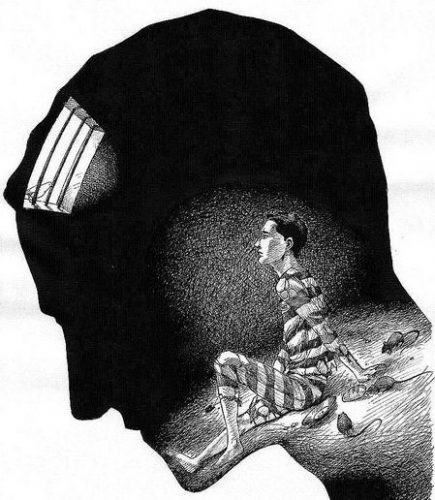
The good news is that it is never too late to repent, step out from underneath the false security of cultural conditioning and live in the light of the true substance of faith. Change is inevitable and death too. So, live recklessly, selfless, in love for those who need it most, as one with nothing to lose and everything to gain, because that is what praying “on earth as it is in heaven” is all about! Faith means leaving behind the prison of our fears and breaking the bonds of love-limiting expectations.

Conscience or Compromise?  The Courage of Desmond Doss…

Standard

There is a movie out about an unlikely war hero.  The man, Desmond Doss, was a Christian conscientious objector (or a conscientious cooperator according to his own description) who joined the army to save lives rather than take them.

Doss refused to pick up a rifle in training and for disobedience to orders to do so he was court-martialed.  But he stood his ground, he was allowed to go into combat without a weapon, and went unarmed as a medic.  His courageous effort to save lives earned him presidential honor.

Doss, unlike many in the church today, was unwilling to compromise for sake of convenience.  Many have compromised valuing their own temporal comfort over full obedience to the one who has control over eternity.  Many have compromised, voting for ‘the lessor of two evils’ and political expedience rather than take a courageous stand against the evil of both sides.

#1) The Apostate Church Does Not Overcome Evil With Good.

Jesus said…

“You have heard that it was said, ‘Eye for eye, and tooth for tooth.’  But I tell you, do not resist an evil person.  If anyone slaps you on the right cheek, turn to them the other cheek also.   And if anyone wants to sue you and take your shirt, hand over your coat as well.  If anyone forces you to go one mile, go with them two miles. Give to the one who asks you, and do not turn away from the one who wants to borrow from you.  You have heard that it was said, ‘Love your neighbor and hate your enemy.’  But I tell you, love your enemies and pray for those who persecute you, that you may be children of your Father in heaven.  He causes his sun to rise on the evil and the good, and sends rain on the righteous and the unrighteous.  If you love those who love you, what reward will you get?  Are not even the tax collectors doing that?  And if you greet only your own people, what are you doing more than others?  Do not even pagans do that?  Be perfect, therefore, as your heavenly Father is perfect.” (Matthew 5:38-48)

It is amazing to me that many claim to love Jesus and yet find all kinds of ways to make the plain teachings above not apply to their own situation.  They misuse other parts of Scripture to water down the words of Jesus and faithless hypothetical “what if” reasoning to justify around what is clearly stated.  I guess for them Biblical literalism only applies when it has no real practical value or real life consequences—like the creation narrative in the book of Genesis?

But, when Paul echoes Jesus and says we should “overcome evil with good” (Romans 12:21) I am doubtful that he is saying that we should do the same things evil people are doing while slapping a religious justification on it.  He’s actually telling us to be radically different, that we should care for our enemies as we would our own, and trust God will do justice.

Those in the apostate church do not trust God and therefore take matters into their own hands that are not assigned to them.  This is the beginning of their road to compromise, it is negotiating a deal with Devil to secure a temporal gain and exactly the temptation Jesus resisted when offered worldly power.

#2) The Apostate Church Is Focused On Judgement of Others Rather Than Self-examination.

Jesus said…

Do not judge, and you will not be judged. Do not condemn, and you will not be condemned. Forgive, and you will be forgiven. Give, and it will be given to you. A good measure, pressed down, shaken together and running over, will be poured into your lap. For with the measure you use, it will be measured to you. Can the blind lead the blind? Will they not both fall into a pit? The student is not above the teacher, but everyone who is fully trained will be like their teacher. Why do you look at the speck of sawdust in your brotherʼs eye and pay no attention to the plank in your own eye? How can you say to your brother, ‘Brother, let me take the speck out of your eye,’ when you yourself fail to see the plank in your own eye? You hypocrite, first take the plank out of your eye, and then you will see clearly to remove the speck from your brotherʼs eye.” (Luke 6:37-42)

If we ever could fully comprehend God’s perfection (and our own unworthiness by comparison) we would likely never judge anyone again.  Instead we would spend our days prostrate in prayer and thanking God for the amazing grace that saved a wretch like us.  Unfortunately we do not understand God’s grace and therefore struggle with smugness, sanctimony and self-righteous feelings.

We also tend to judge ourselves differently than we do others.  There is a tendency to justify our own behavior based in circumstances while treating the sins of others as a character flaw and an inexcusable choice for evil.  This tendency is called fundamental attribution error and the very opposite of what Jesus taught us to do.

We should never excuse our own compromise and then simultaneously pray “Father forgive them for they know not what they do” as Jesus did.  It is our job to show grace and in our doing so we are living in obedience to God who will show us grace.  Those in the apostate church do opposite of this and are harsh to outsiders while forgiving their own or themselves. 

#3) The Apostate Church Demonizes Opposition Rather Than Love As Christ Loved.

The apostate church has compromised and have broke spiritually blind despite their arrogance.  They therefore cannot love as Jesus did and do not understand this:

“Put on the full armor of God, so that you can take your stand against the devilʼs schemes. For our struggle is not against flesh and blood, but against the rulers, against the authorities, against the powers of this dark world and against the spiritual forces of evil in the heavenly realms.” (Ephesians 6:11-12)

A Christian should not be involved in the politics of those who demonize their opposition.  Some of the claims from this past election remind me the blood libel used to slander the Jews and create an irrational hatred of that whole people group.  When we turn other people into demons we justify our own unthinkable acts and often become as terrible as those we demonize.

Our flight is in a spiritual realm “not against flesh and blood” but the apostate church spiritualizes their own worldly perspective and demonizes those whom they are commanded to love.  Furthermore, our judgement again should be turned inward and towards our own, as Paul explains:

“I wrote to you in my letter not to associate with sexually immoral people—not at all meaning the people of this world who are immoral, or the greedy and swindlers, or idolaters. In that case you would have to leave this world. But now I am writing to you that you must not associate with anyone who claims to be a brother or sister but is sexually immoral or greedy, an idolater or slanderer, a drunkard or swindler. Do not even eat with such people.  What business is it of mine to judge those outside the church? Are you not to judge those inside? God will judge those outside. ‘Expel the wicked person from among you.'” (1 Corinthians 5:9-13)

Even in churches where political involvement is discouraged Paul’s words (above) are ignored and the judgement focused on those outside.  But we are told it is not our job to judge those outside our group—those outside are for God to judge.  Instead we are not to be associated with those who claim to be Christian yet live unrepentant in their immorality.

This in–group favoritism is common in the world, it is expressed in various forms of tribalism where people only see the faults of those outside their tribe, it is also a common feature of the apostate church, but it is the antithesis of what Jesus taught.  We must not associate ourselves with those who claim to be Christian and yet live in unrepentant sin.

#4) The Apostate Church Is Focused On the Worldly Kingdom.

Jesus said…

“My kingdom is not of this world. If it were, my servants would fight to prevent my arrest by the Jewish leaders. But now my kingdom is from another place.” (John 18:36)

The idea that a person must vote as a Christian duty is absurd.  Certainly there is a case for using the means we have influence the world in a positive direction and voting could be a means for doing that.  However, there is also a case for abstaining from politics and following after the example of Jesus who refused worldly power offered to him by Satan:

“The devil led him up to a high place and showed him in an instant all the kingdoms of the world. And he said to him, ‘I will give you all their authority and splendor; it has been given to me, and I can give it to anyone I want to. If you worship me, it will all be yours.'” (Luke 4:5-7)

Many seem to be willing to make a deal with the devil for much less than what was promised to Jesus.  Offer them a few Supreme Court Justices with assurances of their religious freedom and they’ll turn out in droves.  Never mind whether or not the one promising the world to us will deliver on their end of the bargain.

Have we forgotten that true men of faith would rather be in prison or a martyr than make the smallest comprise for worldly gain?

How has the church become so blinded by worldly political ambition?

It is disturbing to me is how some who profess Christ are actually shamelessly celebrating the election of a vulgar and unrepentant man as if it is a spiritual triumph.  It makes a mockery of our faith when we compromise out of fear, it is a spiritual poverty and should be repented rather than celebrated.  

Our lack of trust in God will make us losers even when we think we have won.  The ends do not justify the means.  We need less cowardly people who compromise for sake of temporal worldly gain—and more who make a courageous stand like Desmond Doss.