Cultural Erasure in the Age of Corporatism: Preserving Local Identity and Sovereignty

Standard

Cultural erasure is often discussed in the context of dramatic examples. Communist efforts to eradicate religious practice or the forced assimilation of Native Americans are two clear instances. Another is the British schoolgirl punished for wearing a Union Jack on a day meant to celebrate cultural diversity. Yet, a more insidious form of cultural erasure is sweeping through the United States, infiltrating every small town under the guise of free markets and capitalism.

What I’m referring to is corporatism, partnered with consumerism. This country was once defined by businesses owned by average people—those “mom and pop” shops. That is no longer the case. Capital and control are increasingly concentrated in the hands of a few (see this video on BlackRock), and choice is largely an illusion in this age of mega-corporations. We have become a nation of employees. Yes, small businesses and boutiques still exist, but they are the exception. Our regulatory regime favors economies of scale, benefiting established players who can absorb compliance costs.

Illusion of choice

On the road—hauling commodities—this economic transformation is alarming to anyone who cares to notice. Local mills and grain elevators have been bought up or are in the process of being acquired by major players. Businesses where locals once knew the owner have been transferred, one after another, to corporate boards far removed from the operations.This trend spans every industry. Thriving downtowns and corner stores have been replaced by Walmarts. Ironically, when communities regain a “local” option, it’s often a Dollar General. The impact extends beyond retail. Doctors can no longer afford to practice independently, and hospitals are absorbed by larger systems to manage ballooning compliance costs. Local communities have lost true choice as corporate brands dominate.

Even decisions within our towns are outsourced. Consider the plan to bulldoze Slifer House, a local landmark designed by a notable architect, listed on the National Register of Historic Places, and honoring a man who played a significant role in the town’s history. This building, originally a private residence, later an orphanage, and then a hospital, faces demolition. The board deciding its fate is disconnected from the community, concerned only with maximizing revenue at the expense of our shared heritage.

https://www.change.org/p/save-the-historic-slifer-house-from-demolition

I spoke with a township supervisor, a relative, and received the typical canned response about property rights. But this boilerplate conservatism fails in an era where BlackRock owns vast swaths of the economy, and we all now owe our souls to the company store. It’s not a free market when Larry Fink can mandate DEI policies across every place we shop or work.  Consumer choice doesn’t exist when all options on the shelf (see this video on BlackRock) are owned by the same entities.  Property rights may have built the middle-class, but appeals to them cannot address this systemic erosion of agency and destruction of ownership society by the current corporatism.

A town known for its Victorian charm and yet can’t protect this heritage from corporate interests.

This corporatist-consumerist machine erodes local identity and sovereignty by homogenizing communities. Regional dialects, traditions, and histories are drowned out by standardized corporate aesthetics and practices. The local diner with its quirky charm is replaced by a chain restaurant with identical menus and decor nationwide. The family-owned hardware store, where the owner knew your name, gives way to a big-box retailer staffed by transient workers. These shifts strip away the unique character of our towns, leaving behind this sanitized, generic, board approved and predictable landscape that could be anywhere—or nowhere.

Retaining local identity and sovereignty requires deliberate resistance to this tide. Communities must protect what matters to them, prioritize policies that support small businesses, such as giving tax incentives for independent retailers (rather than Jeff Bezos) or simply streamlined regulations that don’t disproportionately burden the little guy. Local governments should not side with entities outside of town, but rather should empower residents of the community to have a say in decisions affecting historic landmarks like Slifer House, ensuring that distant corporate interests don’t override community values. Grassroots movements can foster local pride by celebrating regional festivals, preserving historic sites, and promoting artisans who embody the town’s heritage.

Better options closer to home?

Sovereignty also means reclaiming economic agency. Communities could explore cooperative business models, where locals collectively own and operate enterprises, keeping profits and decision-making power in the hands of residents. Supporting farmers’ markets, local craftspeople, and regional supply chains can reduce dependence on corporate giants. Education plays a role too—teaching younger generations the value of their town’s history and traditions fosters a sense of ownership that no corporate boardroom can replicate.

Ultimately, the fight against cultural erasure through corporatism and consumerism is a fight for self-determination. It’s about choosing to preserve what makes our communities distinct, even when the deck is stacked in favor of scale and sucking out profits. By valuing local identity over corporate convenience, we can reclaim the soul of our towns and ensure they remain places worth calling home. Property rights were meant to protect local control—not to consolidate then outsource all decisions to out-of-towners.


Your Own Personal Jesus

Standard

The title of this blog is a repeated line from a popular song, “Personal Jesus,” covered by Johnny Cash.  According to the writer, this song is “about being a Jesus for someone else” and more specifically the mentoring role Elvis Presley had played in the life of his wife Priscilla.  The power of these words is how they change meaning depending on the artist who sings them.  When it was covered by Marilyn Manson they came off as being mocking and derisive.

My own thoughts, hearing the song, always brings me to the popular Evangelical phrase “accept Jesus as your personal Lord and Savior” and the theological implications.  Unintentionally, it is a commentary on how the Christian religion has been reinvented in this consumerist and individualistic age.  It is all about you.  Jesus is now personal, like a boyfriend, and pretty much whatever you want him to be.  There is no obligation to others, no real need for self-sacrificial love, or becoming part of the body of believers, only to hold a kind of positive sentiment in your heart.

And this is what I encountered in the church of my youth.  Except for those few symbolic expressions of community and caring, carry-overs from those radical Anabaptist roots, it was pretty much everyone for themselves—which is how most of us preferred it to be.  I mean, sure, we would tell the other guy we would be praying for him after ritual foot washing, some would still call you brother as if simply saying it made it true, but that was generally the extent of it.  We all had our own families if there was ever a real need, the church projects were generally for the elderly and those few favorites.

Saved Together 

Orthodoxy has a more robust view of Holy Communion and could, in theory, answer the overly independent view of salvation.  At the very least, with our partaking of the body and blood together central to worship, this puts to rest this idea that the internet preacher is enough.  Life in Christ is about His body and His physical presence, not only something we hold in our minds as true.  It is not only our knowledge of Christ and mental assent but is also about making His example the basis of our actions—being an incarnation.

Faith is not about what we claim to believe, it is about how we act:

Carry each other’s burdens, and in this way you will fulfill the law of Christ. […] Do not be deceived: God cannot be mocked. A man reaps what he sows. Whoever sows to please their flesh, from the flesh will reap destruction; whoever sows to please the Spirit, from the Spirit will reap eternal life. Let us not become weary in doing good, for at the proper time we will reap a harvest if we do not give up. Therefore, as we have opportunity, let us do good to all people, especially to those who belong to the family of believers.

(Galatians 6:2‭, ‬7‭-‬10 NIV)

Carrying of burdens is about more than mere “thoughts and prayers” or those mostly empty expressions.  No, it is all about providing real relief to others, being that ‘neighbor’ like the good Samaritan or the true advocate like St. Paul was for Onesimus.  It is not enough to only say “Go in peace; keep warm and well fed,” without ever helping others with their actual needs as we read in James 2:16.  It is our job to be our brother’s keeper, that is to look after their needs like we would our own or that of a family member.  This is what a community of faith is supposed to be about and also key to our salvation.

“If anyone falls, he falls alone. But nobody is saved alone.”

—Alexei Khomiakov

For some, their salvation comes from the hand we offer.  For others, their salvation comes from offering that hand.  The early church had this saying, “unus Christianus, nullus Christianus.”  That is to say that one Christian is no Christian.  This is what it means to follow Christ, this is what being in Communion is really about.  Sure the ritual and religious practice matters.  But the true substance in the blood and the flesh we are to consume is in how we become the hands and feet of Jesus.  To do otherwise, to only partake without acting in genuine love is to drink unworthily and bring damnation upon ourselves:

In the first place, I hear that when you come together as a church, there are divisions among you, and to some extent I believe it. No doubt there have to be differences among you to show which of you have God’s approval. So then, when you come together, it is not the Lord’s Supper you eat, for when you are eating, some of you go ahead with your own private suppers. As a result, one person remains hungry and another gets drunk. […] So then, whoever eats the bread or drinks the cup of the Lord in an unworthy manner will be guilty of sinning against the body and blood of the Lord.

(1 Corinthians 11:18‭-‬21‭, ‬27 NIV)

Stay In Your Lane

Sadly, within Orthodoxy, for some, it is about lighting a candle, making a sign of the cross, paying their membership dues (tithes), and regular church attendance.  In other words, all about going through the motions.  They don’t want to be bothered by real relationships or overcoming differences—let alone be concerned with the salvation of their fellow parishioners.  

Sheesh, let the priest do his job!  Mind your own business!  Don’t you have enough sins of your own to attend to?  

I’ve even heard clergy give advice like “stay in your lane” as if there’s no difference between confrontation of lingering issues and petty fault-finding…

I’ll back up a second and agree fully that we should be “work[ing] out [our] salvation with fear and trembling” (Phil 2:13), which does imply some introspection and that we start first with the beam in our own eye.  But, that said, even this admonition is addressed to “my dear friends” or the church body and not as a personal note.  So even this could be used to further the view of salvation that is about collective effort and not some sort of personal experience we have while sitting in the pew deliberately not noticing elephants in the room as our penance.

There are some who do not seem to realize that their mother’s scold, “If you don’t have anything nice to say don’t say anything at all,” isn’t written in Scripture, but this is:

“‘Do not do anything that endangers your neighbor’s life. I am the Lord.“ ‘Do not hate a fellow Israelite in your heart. Rebuke your neighbor frankly so you will not share in their guilt. “ ‘Do not seek revenge or bear a grudge against anyone among your people, but love your neighbor as yourself. I am the Lord.

(Leviticus 19:16b‭-‬18 NIV)

Speaking the truth is not always pleasant to the ears of those hearing it and yet it is part of what love does.  It is not that we should never confront, rather it is the SPIRIT of how we approach these sins or shortcomings of others.  So, sure, staying in our lane is good, but that doesn’t mean we should never alert someone driving with their headlights off at night since we have also done the same in the past.  It may feel like ‘keeping the peace’ to sweep everything under the rug or let the ‘problem’ go away by ignoring it—but it’s also an unloving attitude.

“Church is not a social club…”

I’ve now encountered it in two very different religious traditions.  When that cry is made for real brotherhood, deeper connections or genuine relationships are met with the strong suggestion that you’re not spiritual enough and a reminder that church is for worshipping God and superficial interactions.  If you expect a little more then you’re turning it into a social club.  This is an inversion.  It is a psychological projection and a garbage excuse.  It’s telling a person seeking medical care that hospitals are about the awe of the building and reverence for the institution, that they should go to the dance club if they so desperately want to be touched by someone.  

These phony physicians only add insult to injury, they are exactly the type of religious authorities that Jesus rebuked: 

“The teachers of the law and the Pharisees sit in Moses’ seat. So you must be careful to do everything they tell you. But do not do what they do, for they do not practice what they preach. They tie up heavy, cumbersome loads and put them on other people’s shoulders, but they themselves are not willing to lift a finger to move them. 

(Matthew 23:2‭-‬4 NIV)

For them, it is all about the right image, the dress standards, and keeping their perfect attendance record.  Basically, they check all of the right boxes.  Performative religion.  And who knows?  Maybe their Bible study and prayers, ten hours a day, really does it for them?  Who am I to say that their mission to Uganda was entirely a self-indulgent display of privilege and a waste of resources?  But I’ll also say that those who travel the world while doing the bare minimum for those whom God put right at their own doorstep are condemned as hypocrites by Jesus.

The church is established by the same God who told us that it is not good for man to be alone.  Good for you if you need nobody in your life.  Jesus is your homeboy?  But most of us need those meaningful and sometimes messy interactions with other humans.  That is what family is.  That’s what hospitals are built to facilitate.  And that is what a church is literally supposed to be.  If you don’t need a doctor maybe you are the doctor and your salvation requires you to show up to attend to those sick and suffering?  Why call would we call each other brothers and sisters in Christ if this weren’t the case?  If the church isn’t at all about social interactions—why do we waste the gas?

Those who say that church isn’t a social club are right.  It is also not an art museum where pretentious people go to engage politely and then share a light snack.  It should be much more than that.  It should be a refuge we can flee, the juniper tree where God sends angels to comfort and attend to the physical needs of Elijah, a garden of Gethsemane where the disciples are not sleeping in hours of need, it should be intimate and practical, a hospital or home.  A place to be ministered to and minister to each other.  It’s both where we share our moments of happiness and also mourn with those who mourn.

Church is a family or it is just fake.  

Post Script: Those who personalize Jesus tend to depersonalize their religion. Protestant or Orthodox, it doesn’t matter, they want to claim their great devotion with their embrace of abstraction and their own prescribed practices, but seem to forget that pure religion is about the human touch (James 1:27) and what they do materially for others is how to show their love for Jesus. Our salvation does not come apart from the body of Christ. Communion isn’t only what we partake of on a Sunday morning, it is what we participate in as far as loving others and, in particular, the community of believers. You cannot stay in your lane, avoiding people in a pretense of righteousness, and also love God.

Tesla’s Cybertruck Is Already A Huge Success, Here’s Why…

Standard

Did you hear the news?

Tesla is making a pickup truck!

Of course, I doubt anyone who pays a slight bit of attention on social media missed the debut of Cybertruck. I mean, who could miss such a disaster of epic proportions, right?

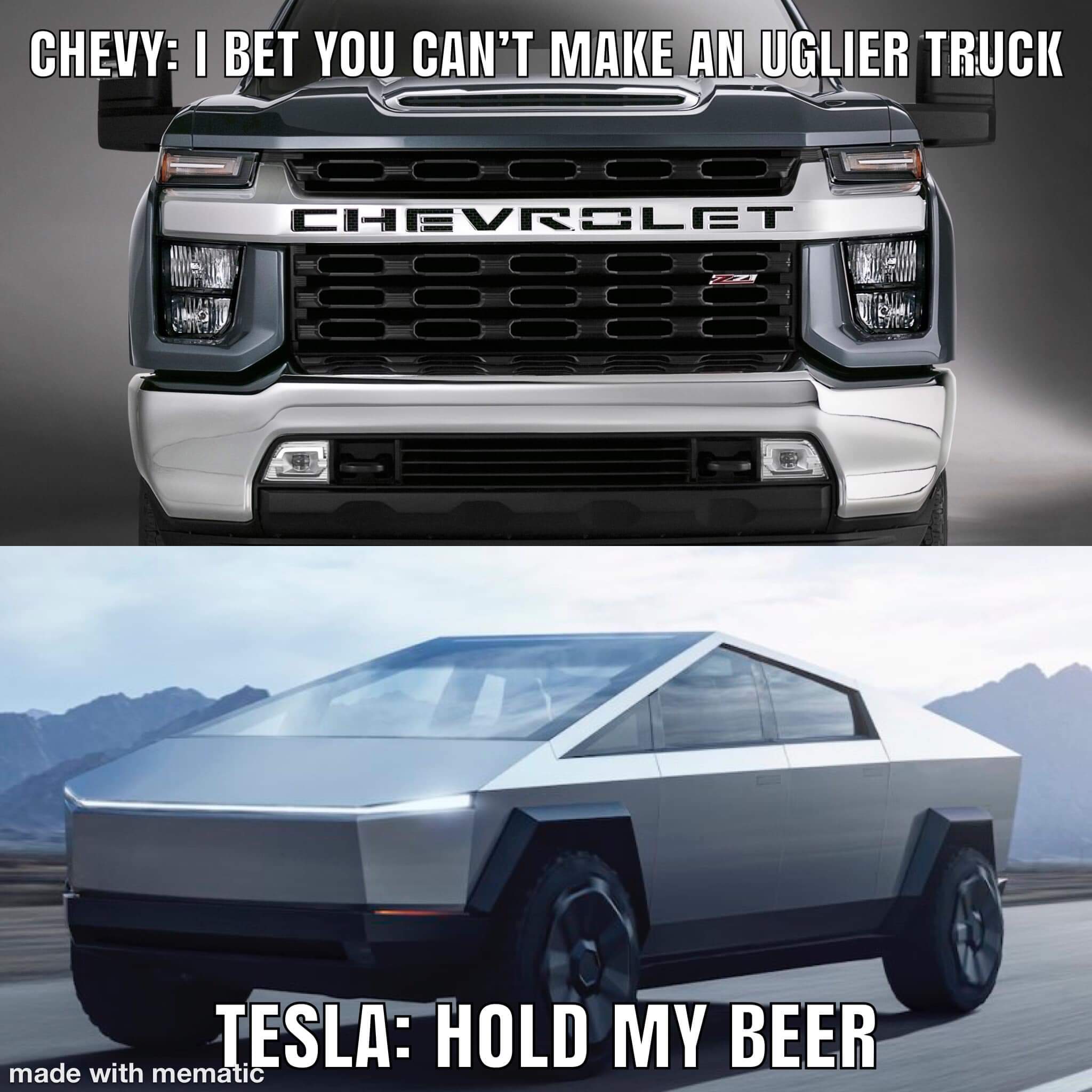
At first glance, Elon Musk blew it. The truck looks absolutely hideous to your typical truck buyer, like something off a Blade Runner movie set, a future that never will be and never meant to ever reflect what consumers actually want in a vehicle.

But the reality is that Tesla just scored a huge marketing win. Those of you who hate the design, you are not in the actual target audience. A traditional truck buyer isn’t really interested in anything Tesla is offering and taking sledgehammers to windows won’t change that. However, if you have joined those talking about this awful truck then you are doing exactly what Musk’s rollout was intended to do and that is you are providing free-advertising for Tesla.

You might say, “But, wait a minute, everyone is ridiculing this design, laughing about the broken glass, how is that a good thing?”

It doesn’t make sense that what appears to be a failure is anything but a failure, right?

However, there is one thing I’ve discovered in the past few years and that is that almost all publicity is good publicity for those who know how to leverage it. From Miley Cyrus selling albums by twerking awkwardly like an ex-Mennonite ‘woke’ feminist-wannabe still angry at her parents—to Trump winning the White House by offending “libtards” (a term I’m borrowing from a smart liberal friend) with his strategically insensitive Tweets—bad press can most certainly be turned into bankable success.

Sure, you might never, in a million years, buy a Cybertruck. But, who cares? I can about guarantee some version of this truck will be hitting the road in the next few years and now everyone that could possibly want one knows about it.

Musk gets it.

Musk, love him or hate him, understands that people aren’t only buying transportation.

No, ever since Chevy coupes could be bought in more than one color (and much to the chargin’ of Henry Ford and his venerable Model T that was available in any color you want—so long as that color is black), consumers are buying an image as much as anything else. Image trumps practicality at every turn in this age of consumerism.

Musk, for his part, is in the business of creating image and, on this front, has delivered before…

Tesla Successfully Changed What it Means To Be Green

When electric vehicles were first introduced by established carmakers (or rather reintroduced after a century-long hiatus) they were always sold as being ‘green’ and a compromise. The EV1, for example, that billion dollar General Motors boondoggle, while winning a cult of leftist conspiracy theorists, failed to inspire the car buying masses.

And, sure, you can find enough virtue-signaling professor types or too practical appliance-car buyers to purchase a Toyota Prius. But, for the simple reason that it is boring as Al Gore’s personality, you’ll never convince the general public that this should be their next vehicle . Nobody wants to settle, every big-ticket item we buy is an extension of us, shows our personality, and an electric Toyota has all the excitement of a tweed sweater.

Musk changed the game. He changed the focus from economy and compromise (for sake of some hypothetical greater good abstraction) to real luxury and serious power. There was really nothing that new or innovative about his designs. In a sense, all Telsa cars (at least up until the Cybertruck) had styling cues that belonged next to a 1990s Ford Taurus or Chevy Caprice of the bubble car era. But the marketing strategy worked.

Telsa made electric cars something relevant and cool.

To the target demographic Model S and subsequent offerings have looked sleek and sophisticated. They also offer real-world performance, exclusivity, and appearances of eco-friendliness on top of that. They pretty much bested the existing offerings of BMW, Lexus, Audi and Mercedes Benz in every metric that mattered to that demographic.

So what happened???

How did we go from that to Cybertruck?!?

But, first…

Why Does Anyone Buy a Pick-up Truck?

Truck buyers might claim to be practical. And that may be the case if you have an old Ford Ranger in your driveway, farm or hang drywall for a living. But most people do not need a pick-up truck any more than I need a Shelby GT-350.

With a pick-up truck you are buying an image.

Sure, pick-up trucks are often sold for their utility, for their ability to tow a trailer full of excavating equipment up a rocky cliff, and some do get used for this purpose, but let’s be real: The reality is that many of these two-ton behemoths (if not most) are used primarily as grocery getters, are not very practical for that task and that’s the point.

Come on, do you really think that guy (waking you up at an ungodly hour) put those obnoxious straight pipes on his Dodge Ram to uncork a little more power?

Is that six-foot lift kit on a late-model Duramax really about ground clearance and rock-climbing ability?

Don’t kid yourself, the jacked-up smoke-spewing monstrosity is all about trying to get you to notice and that goon behind the wheel will enjoy your disgust as much as your approval.

What we purchase is never only about the real-world utility of the thing. It is also to make a statement of some kind and trucks to make a statement. Owning a truck is often about getting noticed, it is a status symbol, it is a projection of strength, security and good ol’ American independence.

It is about possessing capabilities (real or imagined) that others do not have with their wimpy cars. And that’s generally why people prefer trucks over the alternatives.

Tesla’s Cybertruck Is Already A Huge Success

Believe it or not, Musk’s marketing plan was executed perfectly broken glass and all.

How do I know this to be the case?

Well, everyone is talking about it, even people who aren’t normally truck buyers or very interested in automotive news period are talking about Tesla’s hideous new Cybertruck creation, laughing about the busted window, making videos about the tug-of-war, etc.

Meanwhile, amid this free publicity is a subliminal message: If you want to be truly different, if you want to really stick it to the status quo, then buying the most loathed vehicle on the planet will give you that notoriety and the attention you want.

Call the Cybertruck ugly, but since when is a pick-up truck supposed to be pretty, dainty and delicate?

Laugh about a broken window, but since when have you seen someone dare to throw a steel ball at their shiny new F-150 or Silverado?

Say that the tug-of-war test is meaningless (and it is as far as something of practical value) and yet who hasn’t seen the videos online of similar contests between trucks?

Musk understands the average truck buyer better than they understand themselves. He also already knows that he’s not going to attract the traditional truck buyer.

Bubba ain’t giving up his “square body” Chevy even if you gave him ten Teslas and Billy Bob will be tweaking his “first-gen” Cummins until the thing dissolves entirely into a heap of rust and accumulated soot.

Likewise, pappy will continue to buy his overpriced four-wheel drive luxury barge, from a traditional brand, because new cars aren’t ‘safe’ like his 1960’s Oldsmobile.

The traditional truck buyer is not the target audience of Telsa’s campaign.

No, Tesla has, in effect, created the parody of a pick-up truck, the one that takes the increasingly squared shoulder look of pick-up trucks and goes straight-up box on wheels.

Cybertruck is extreme, it defies convention, which has been what the “big three” (if you can still call them that) have been doing for years. I mean, have you seen the new Silverados? The things are extremely exaggerated compared to the designs they replaced, almost cartoonish, and that has been the design direction for all full-size trucks, bigger, more aggressive, etc.

In reality, the Cybertruck is brilliant because it is the only way you can go to be more rugged, more independent and different.

It is a design that says, “I don’t care about you being offended.”

The only thing different is that the target demographic is not some redneck “rolling coal” in Arkansas who doesn’t want an electric truck, period, and never will.

Rather Musk’s target is someone like Arnold Swartzeneggar in Hollywood who in times past would’ve bought a Hummer to make a display of his unbridled masculinity, is desperate to be unique and yet now, to win female attention in his social strata, has to also signal his eco-consciousness.

There will be many out there who will emulate the boldness of their celebrity idols. Many who would enjoy irritating everyone else on the road with their annoying tastes and will especially enjoy the ire of the traditional truck buyers.

A successful product doesn’t need to be liked by everyone. In fact, when it comes to vehicles, it is better to have a specific group in mind and not to worry about what those outside that particular target group think.

Bad publicity isn’t bad if it gets your message to those who would potentially buy your product. The negative buzz can turn into a positive.

But will it work?

The Problem with Shock and Awe

Trump might win by a wider margin in 2020.

Tesla may have as much success with the Cybertruck as they have with their other vehicles.

However, people are fickle and the fresh direction that worked before might become old news and the next Edsel on the second go around.

Tesla (unlike Trump) also has some serious competition. Not only is Ford translating their proven F-150 platform into electric, but there is also the up and coming Rivian R1T that looks a little more thought out and has some traditional cues despite being differentiated.

It could be that most of Tesla’s target demographic consumers would settle for something a bit less radical and a bit more refined in appearance. The Cybertruck may simply be too silly to be taken seriously in the very competitive truck market—it may need to be tweaked towards a more traditional design.

There is a point when being controversial ceases to be appealing to anyone, goes full-on Aztec, and alienates everyone. (It didn’t work for Trump’s opponents who tried to adopt his brash style either, it completely backfired, it made them look even more lacking in authenticity than they did before.) And time will tell if Musk’s successful marketing of Cybertruck will turn into an actual sales success. But he did get our attention, that’s for sure, and that is half the game!

Musk, like Trump, has mobilized his haters and used them as a hugely successful marketing campaign.

Rudolf Diesel: Thoughts about Idealism, Despair, Progress, Politics and Hope

Standard

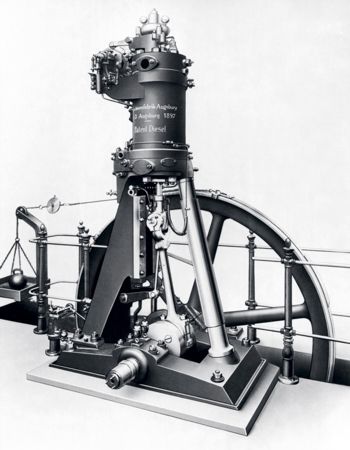
Diesel powers the world economy.  I never considered the extent to which that is true until watching a documentary (click here to view it) about this type of internal combustion engine.  It is named after the inventor, a French-German mechanical engineer, Rudolf Diesel, and is the reason why global trade is possible to the extent it is.

Early Diesel design, circa 1897

In considering the story of Diesel, his brilliant invention and the results, I could not help but see the pattern all too common with innovators.  Diesel’s life turned tragic, he was found floating in the North Sea, dead of an apparent suicide, and likely a result of his despair over the unintended consequences of his own design.

According to biographical accounts, Diesel was a utopian idealist who had hopes that his invention would be a catalyst for social change, free the common man and break corporate monopolies.  Unfortunately, while a revolution for transportation, Diesel power did not achieve the lofty social vision. 

Worse, the Diesel engine found use as a part in an efficient killing machine, the German U-boat, and this no doubt grieved the pacifist inventor.

Here are some observations…

#1) What is intended for good can often be used for evil.

Diesel had never intended his invention be used as a means of terrorizing North Atlantic shipping lanes.  And, likewise, many scientists and inventors had regrets related to their greatest contribution to the world.

German U-boat, the original stealth weapon 

There are lists from K-cups to A-bombs online and many others.  For example, Henry Ford seemed to dislike the vast social changes and consumerist mindset made possible by his manufacturing revolution that helped automobiles become a fixture of American life.  Even this media, the internet, once thought to be the beginnings of an information age, has become a cesspool of pornography and ill-founded claims.

I worry about this as a blogger.  Once my thoughts are out there they cannot be contained again.  Will someone pick up my words and run with them in a direction I never intended?  It is a potential outcome that could scare a sensitive soul into silence and is at least a reason for me to be prayerful in what I post here.

I believe there are many people who do not thoroughly think through the potential unintended consequences of the ideas they promote.  There are many government programs and social movements intended for good that might actually be creating more problems than the one that they were intended to solve.

Which takes me to a second point…

#2) Yesterday’s revolution is today’s loathed source of inequality and evil.

It is ironic that the invention that did actually outcompete coal for market supremacy is now enemy #1 for many.  The internal combustion engine won in the marketplace because it was by far the cheapest most efficient means to power transportation and still remains. 

Given there are no steam powered cars, tractors, trains and ships anymore, it is clear that internal combustion is the best bang for the buck and remains to be rivaled.  Diesel powered locomotives and ocean going container ships are extremely powerful while being very economical.    

109,000-horsepower Wärtsilä-Sulzer RTA96-C

Diesel power still outperforms hybrid technology—A loaded Diesel powered class 8 truck is more efficient pound for pound than a Prius.

Think about it: It takes one gallon of fuel to move an 80,000lb truck five to seven miles.  A 2016 Prius, by comparison, carries a weight of around 4000lbs can go anywhere from 50 to 58 miles on a gallon of fuel.  It may seem the Toyota is greener until you consider that it is moving twenty times less weight.  Twenty Prius cars combined together, after dividing their individual consumption by twenty, would consume 2.5 to 2.9 gallons of fuel.  Now, obviously, combining Diesel and hybrid technology on the scale of class 8 truck would undoubtedly yield even greater results if fuel economy were the only concern, but the point remains that Diesel power is extremely efficient and effective—and only more so the larger the application.

So what’s the problem?

Well, the current popular perception is that the petroleum industry “big oil” is the enemy and conspires to hold back technology that would dramatically increase efficiency.  Worse than that, we are told that petroleum power is a source of global climate change and a threat to the global ecology.  Poor Diesel would be driven even further into despair if half this is true.  We fight over oil.

 #3) Progressive aims of our time are at odds with each other or self-contradictory.

Globalism, higher standard of living for more people and environmentalist ‘green’ movements are at odds with each other.  Pushing one direction will almost invariably come at the cost of the others. 

Progressive politicians may tout an idea of a ‘green economy’ as a jobs creator, but the reality has been that wind and solar energy can only remain competitive through heavy use of government subsidies.  Beyond that, even with the help, domestic ‘green’ manufacturing is unsustainable against foreign competition.  At best we will merely replace jobs lost by the heavy regulations placed on fossil fuels and raise costs of living across the board.

Furthermore, it was the progressive policies of the past century that have created the current conditions.  Government policies like the Rural Electrification Act, the Interstate highway system and trade agreements have actually moved us away from a more sustainable less polluting lifestyle.  Our cheap and easy movement from place to place has harmed community and local markets.

Rural Electrification Act propaganda poster.

It is hard to know how the current landscape would look had the progressives of yesterday had not literally paved the way for suburban sprawl, the trucking industry (that currently employs me) and driven us to embrace a coal powered grid.  But I do suspect more of our food would be locally grown, more of our products locally produced and solar energy far more the norm in places utilities would be to costly to maintain unless mandated by law.

In final analysis things might not be as dismal as they seem.

It is easy to focus on the negative without considering the good.  The means of today are likely as unsustainable as the means of yesterday and therefore the progress of the past century might not be the end of us after all.  The only consistent reality in the past two centuries has been that markets constantly change.

Canal boats an all the infrastructure to support them were soon replaced by steam power and railroads.  In Pennsylvania the lumber industry rose in prominence before a rapid decline after the states wooded mountains were reduced to stubble.  The coal industry once put food on the table for boat loads of immigrants before cheap efficient oil and a multitude other factors conspired against it.

Bay State Mills, Lawrence, built 1845.

Manufacturing, from the once mighty water powered textile mills of the New England states to the formerly unstoppable domestic steel industry, has also migrated following cheaper labor and energy.  Each time promoting deep consternation and fear.  But so far the Luddites have yet to have the last laugh and a new balance is eventually found that usually benefits everyone.

Certainly the overconfidence and optimism about today’s new solution may become the big disappointment of tomorrow.  Yet, do we really wish to go back to a time when a transatlantic voyage was only something a religious zealot or crazy Viking explorer would do?  Would we really rather spend most of our time scrounging for just enough to eat as to avoid the possibility of mechanized warfare?

Nobody knows for certain why Diesel died... 

However, what is certain is that his invention changed the world and provided a means for interstate commerce and global trade that never existed before.  The pacifying effect of global trade, economic benefits of an expanded market place and inexpensive power are largely unappreciated.  But we probably do have Diesel to thank for helping create the long peace and prosperity of our time.

Maersk, Triple-E design, Diesel powered, container ship

In an age of information overload, where we know about beheadings in the Middle East before the people the next town over would have heard a century ago, it is difficult for our finite minds to contextualize and easy to become overwhelmed.  This, with an accompanying loss of faith, could be why middle-aged American white males are committing suicide (supposedly the most privileged in the world) and at an alarmingly increasing rate. 

Diesel’s pessimism about the future in retrospect seems to have been premature and his nightmarish perception of reality overstated.  In like manner many of our modern fears and despair inducing thoughts about the future could be negativity bias and nothing more.  Every generation seems to believe that the world is falling apart and still here we are.

Whatever the case, ignore the fear-mongering propaganda of the punditry and politicians.  Embrace temperance, a spiritual quality developed through faith, over mindless reaction and fearful impulse.  Trust God to secure the future, we can only live one day at a time and never ever lose hope!  If you are depressed about events in the world today, I invite you to see the higher perspective:

“Therefore we do not lose heart. Though outwardly we are wasting away, yet inwardly we are being renewed day by day. For our light and momentary troubles are achieving for us an eternal glory that far outweighs them all. So we fix our eyes not on what is seen, but on what is unseen, since what is seen is temporary, but what is unseen is eternal.” (2 Corinthians 4:16-18)

Perhaps the greater of two evils will be elected come November and drive the nation to complete ruin.  

Who knows besides God?

We may all die tomorrow, we will all die eventually, our work blown away in the wind of time and forgotten.  Everything comes to pass, nothing will remain as we know it today, but there is hope beyond all hope found in an eternal perspective.  So look up, because the sun is still shining and the future remains bright!

Do you see the light and feel the warmth of hope eternal?

If not, my prayer is for the blind to see…