
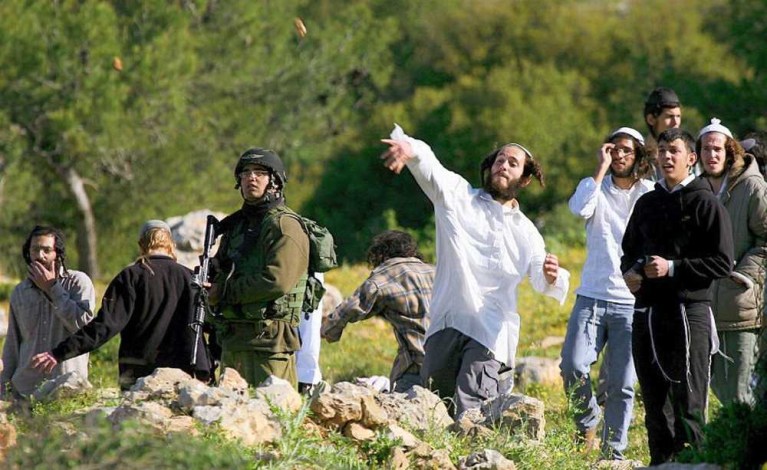
A disturbing Penn State poll conducted in 2024 revealed that 83% of Israelis support ethnic cleansing, with nearly half expressing approval for the complete killing of Palestinians in Gaza.
This level of consensus is chilling, arguably surpassing the public support for such policies in Nazi Germany between 1933 and 1945. The roots of this sentiment can be traced to the founding of Israel itself, where Zionist militias employed tactics of rape, murder, and terrorism to expel Palestinians from land they had inhabited for centuries. This violent dispossession undermines any claim to respect for property rights—a principle often championed by those who defend Israel’s actions.
The hypocrisy is particularly stark among American conservatives, who in one breath decry property taxes and champion the sanctity of life—down to the frozen embryo—yet in the next, justify the deaths of Palestinian women and children as “deserved” because 2% of Gaza’s men resisted occupation. This contradiction mirrors the selective outrage of a nation founded on the cry of “no taxation without representation,” yet which now supports a cruel occupying colonial power denying Palestinians self-determination and basic human rights.
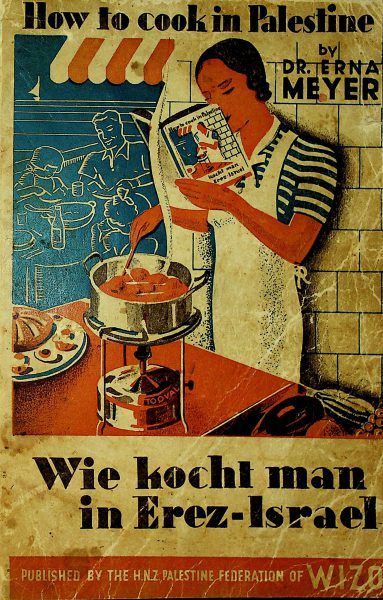
The erasure of Palestinian identity is a key tool in this moral failure, with many Zionists claiming Palestinians “never existed” despite historical evidence to the contrary. Palestine is referenced as far back as Shakespeare’s Othello (1603): “I know a lady in Venice would have walked barefoot to Palestine for a touch of his nether lip.” Early Zionist cookbooks, from the 1920s (to teach European settlers how to use local spices and oils unfamiliar to them) have “Palestine” in the title acknowledging the region’s distinct cultural heritage.
This ongoing effort to remove inhabitants echoes a biblical story of greed and injustice:
Some time later there was an incident involving a vineyard belonging to Naboth the Jezreelite. The vineyard was in Jezreel, close to the palace of Ahab king of Samaria. Ahab said to Naboth, ‘Let me have your vineyard to use for a vegetable garden, since it is close to my palace. In exchange I will give you a better vineyard or, if you prefer, I will pay you whatever it is worth.’ But Naboth replied, ‘The Lord forbid that I should give you the inheritance of my ancestors.’ So Ahab went home, sullen and angry because Naboth the Jezreelite had said, ‘I will not give you the inheritance of my ancestors.’ He lay on his bed sulking and refused to eat. His wife Jezebel came in and asked him, ‘Why are you so sullen? Why won’t you eat?’ He answered her, ‘Because I said to Naboth the Jezreelite, “Sell me your vineyard; or if you prefer, I will give you another vineyard in its place.” But he said, “I will not give you my vineyard.”’ Jezebel his wife said, ‘Is this how you act as king over Israel? Get up and eat! Cheer up. I’ll get you the vineyard of Naboth the Jezreelite.’ So she wrote letters in Ahab’s name, placed his seal on them, and sent them to the elders and nobles who lived in Naboth’s city with him. In those letters she wrote: ‘Proclaim a day of fasting and seat Naboth in a prominent place among the people. But seat two scoundrels opposite him and have them bring charges that he has cursed both God and the king. Then take him out and stone him to death.’
1 Kings 21:1-10 NIV
This evil plan succeeded, and Naboth was murdered for his land with the complicity of a manipulated mob. The parallels to modern times are striking: Palestinians are dehumanized as “wild,” “barbaric,” or “terrorists,” just as Naboth was falsely accused to justify his execution. In the West Bank unarmed Palestinians are being driven off their land—even a US citizen was recently beaten to death by settlers. Jezebel and Ahab eventually faced divine judgment, but not before their treachery destroyed an innocent man. Today’s leaders, spurred by similar greed and power, rely on a complicit public—modern “useful idiots”—to enable ethnic cleansing and cultural erasure.
Suspicion surrounds the events of October 7, 2023, when Hamas launched a devastating attack on Israel. Reports indicate that IDF guards were ordered to stand down from their normal patrols an hour before the incursion, despite Gaza being one of the most heavily surveilled regions in the world. This raises questions about whether the attack was truly a surprise. Historical parallels, like the shorting of airline stocks days before the September 11 attacks, suggest insider knowledge rather than direct orchestration. While there’s no concrete evidence that intelligence agencies planned the October 7 attack, circumstantial factors—such as the “dancing Israelis” linked to Mossad during 9/11—fuel speculation that Israel’s intelligence may have known of Hamas’s plans and allowed them to proceed. Unlike conspiracy theories that overcomplicate events, the simpler explanation is that the attack was permitted to serve as a pretext for escalating military action.

This pattern of exploiting crises is not new. The 9/11 attacks, carried out primarily by Saudi nationals, were used to justify the invasion of Iraq, despite no evidence linking Saddam Hussein to the plot. The invasion served special interests seeking to eliminate a regional rival, much as Israel’s current actions align with the Likud party’s long-standing goal of a “final solution” for Palestinian territories. Israeli Prime Minister Benjamin Netanyahu, who had covertly supported Hamas to weaken Palestinian unity, likely saw the October 7 attack as an opportunity to galvanize public support for extreme measures. By allowing Hamas’s unprecedented success, he manufactured consent for policies that would otherwise be unthinkable.
The world’s leaders rarely let a crisis go to waste. Through propaganda, they direct public anger to serve their agendas, erasing the humanity of the oppressed in the process. Just as Naboth was slandered and killed for his land, Palestinians face cultural erasure and violence, enabled by a global audience too quick to accept the narrative of their dehumanization. To learn from history, we must discern the truth and reject the lies that justify such atrocities.




 Irregular Ideation