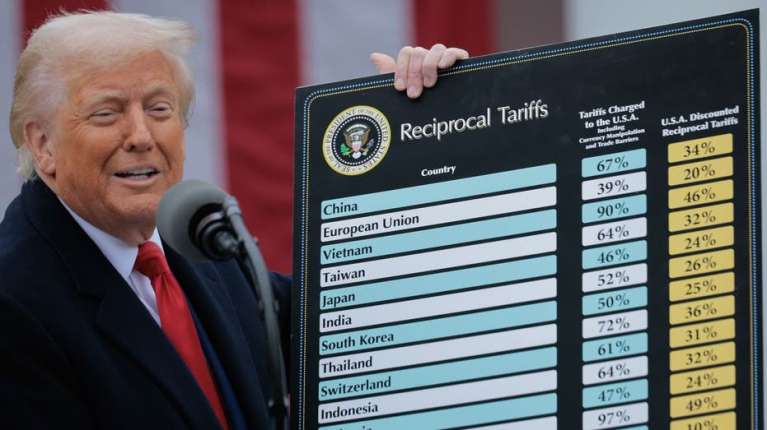
The point of Trump’s tariffs is to get rid of all tariffs. I can feel the blank stares of my ideological and indoctrinated friends who are hyperventilating about a blip in stock prices and loses for billionaires.
I get it, Libertarians, you really do not want the government to do anything and Thomas Sowell said stuff about tariffs being bad, so in unison you bleat: “Tariffs are taxes!”
But your sloganeering is not argumentation and—while I generally believe less is more in the case of government—I’m stuck here in the real world with Trump.
Economic theory has it’s place, as do ideals, and yet this isn’t a matter of Sowell said it, I believe it, that settles it.
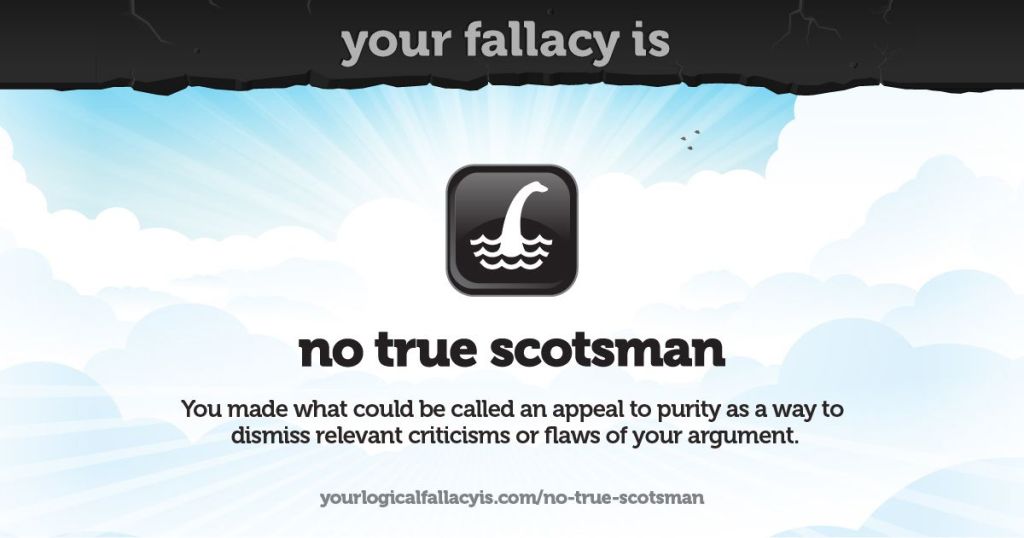
Marxists also believe their man’s theory will work if properly applied. Ideological people can’t accept when their theory doesn’t work in reality, they will always insist “that wasn’t true [insert ideology here]” and continue on their merry way muttering that next time it will work—if they could just brainwash more children and eliminate more enemies of the revolution. There’s never a reevaluation in light of the actual evidence.
True X hasn’t been tried.
So, without further ado, let’s dive into where free trade fails and Thomas Sowell after we do that…
Can Hell Be Made Worse?
After the devastating earthquake of 2010, I joined a group of young people on a trip to Haiti. It was a Christian mission and hosted by a Haitian pastor. This grandfatherly man had, at one point, been in business and ran a factory manufacturing clothes.
While I’m not going to make a case against charity or giving, there is often a cost that is unseen and a greater dependency created in the end. The Haitian pastor was forced to shutter his operation and lay off all of his employees after the combination of cheap imports and donations made it impossible to compete in the marketplace.
But the even sadder story was in a place in the country called “little Africa” where rice farmers tried to make ends meet. No, they were never rich. However, they had scraped a living out of cultivation up until Bill Clinton started to dump subsidized American rice on the Haitian market. These people were desperate. They mobbed our delivery of a bit of relief and aid.
I know, I know, this isn’t real free trade. But it is the kind of situation we are in. Putting our favorite theories and fandom aside, and ideals that could possibly work if all abided by the same rules or assumptions, we don’t live in that fantasy land. In the real world, it is like Haiti where subsidized products are exported and some will disproportionately suffer consequences.
Yes, in theory, Haiti still benefits, as a whole, from importing cheap or free stuff. But we can also make the argument that this kind of unfair trade has undermined a situation that was already fragile. A government that would protect Haitian industries would not let subsidized products be dumped without something stabilizing in return.
Thomas Sowell vs Donald Trump
Sowell is a great economist and provides a good answer to ‘progressive’ theories. His being a guest on the Rush Limbaugh show has made him a favorite of conservatives—wanting validation for their free market and small government views.
As an academic, Sowell’s work dealt mostly with economic theory and to argue against all tariffs he uses abstraction “protectionism hurts market efficiency” and that they don’t solve issues like wealth gap, that they favor special interests, and retaliation against tariffs hurts exports, and they lead to long-term stagnation. And he may be right if we lived in a vacuum sealed petri dish.
Trump, by contrast, lives in the very messy world of politics and negotiations. He runs on instincts and intuition, not by intellectual exercises or writing papers or creating a set of principles. He comes in with the big ask, the threat or the bluff, trying to disrupt and even create a bit of anxiety in the other side, before eventually bringing this process to a resolution that makes all parties leave with a feeling like they’ve won.
This is how we got from the “fire and fury” rhetoric—with the political class and corporate media hyperventilating about this being a path to war—to Trump being the first US President to set foot in North Korea and then shaking hand of Kim Jong Un. It is just his method of changing the conversation or moving the Overton window. You can’t get from point A to point B without shaking up the old status quo a bit.
Trump isn’t ideological, like Sowell, or trying to live off a written in stone economic code of conduct. No, when he has leverage, or sees an opportunity, he uses it. There are many countries tariffing US goods. And our trade deficit is enormous. So why is it so out of line for our President to cry foul or use the threat of reciprocal tariffs in other to back these countries down and then get a better deal for his country?
Surely Sowell isn’t against pushing for the elimination of tariffs—which likely is the end game. And, furthermore, Trump’s brazen actions are far more likely to get results than the fine professor’s best lecture on economics. Already other countries are lining up to start talks about removing their unfair tariffs against the US. It is a game of musical chairs and you don’t want to be the last one looking for a seat.
Power, Principles, and Persuasion
Marxism is about the application of power, Libertarians are about strict adherence to a set of principles, but Trump is different. He is about persuasion.
Marxism is a hammer—raw power of the mob, trying to smashing the old order to hand control to the workers, or so it claims. In reality, it’s a machine for centralization: seize the levers, dictate terms, and dress it up as justice. Think Soviet bread lines or Mao’s famines—equality morphing into control. Libertarians, by contrast, wield a rulebook, not a fist. Their creed—liberty, markets, entirely hands off—is sacred, rigid as stone. Tariffs? Sacrilege. Sowell represents this. Marxism a power grab, and libertarianism a fortress of unattainable ideals—both are better to be left as theory rather than an approach to real world negotiations.
Marxism would’ve sparked a trade war, not talks; libertarianism would’ve let markets bleed out. Trump’s different—he’s making countries dance. China grumbles but hints at softening; the EU’s haggling too. Stocks have dipped, and Sowell’s costs loom, but the moves are now undeniable: Vietnam’s concessions, India’s play, Japan’s hustle. It’s not a system winning—it’s Trump, raw and loud, proving persuasion trumps power or principle. He’s bending the world his way, one bluff at a time. He is about persuasion—messy, unscripted, a vibe that bends the room.
Tariffs are the threat, but trade that is truly free and fair is the actual goal. And Trump is further along in achieving this simply for his boldness alone. Maybe he’s not doing it the ‘right’ way or by conventional means, yet who says that we can’t try a new approach to get some better results than we’ve been getting? The people who have been leaving the American worker behind tot decades now? As my 13-year-old son would say: Let him cook!
We love technology because it makes our life easier. Machines do the back-breaking labor that once took an army of men, we all get more as a result, travel between places is a matter of gassing up the car and going rather than a perilous ordeal. In general social media platforms and online retailers reduce friction. That is to say, they facilitate an interaction at a much lower cost of time and effort. Why go shopping or hang out at the mall when you can sit on the couch?
That was a key revelation this week: Snapchat and TikTok have taken the place of roaming the corridors of what was once a retail Mecca. Entertainment is as simple as picking up your smartphone and finding out what Mr Beast is doing. He’s so much cooler than even the cool kids at school, so why even bother to see what they’re doing? It is too hard to make plans with friends, to get dolled up, to drive ten miles and walk on your feet when you feel as if you can get the same reward wearing your underwear at home in your bedroom.
More are living in a fantasy of life, following a path of least resistance, and not realizing the full cost. Social media is to the community what pornography is to sex. Sure, you have escaped the grip of boredom. That desire for interaction has been gratified. It is even more sterile and safe. That pretty girl won’t reject you here in virtual reality, she doesn’t compare to what is available at your fingertips anyways, so why be treated as second rate by what is second rate? We escape our limitations with our imagination.
However, it all comes at a cost, much of this cost is hidden or deferred. The cost is that we don’t accomplish what we could—in the real world—by our reliance on a meaningless space where nothing of value is accomplished.
Our convenience-seeking way is a form of depravity, that is to say, it is trading current pleasure for future pain. If we don’t get any physical exercise, for example, because the machines do all the work for us, we will lose our muscle mass and gain weight. Cuts in calories and gym time can counter this, but there must be proper sacrifices, or diabetes and quality of life decline will follow. Why not walk rather than ride in a vehicle? The exercise would do us good.
Oh, you don’t live in town?
Everywhere you need to go requires a drive?
The suburban sprawl and development built around the automobile have led to an increasingly dependent lifestyle. And that is not a typo. Our convenient mode of travel has made it easier to close a distance; we don’t need to live next to our sources of food, employment, or social interaction. Yet, as a result, everything is now more distant, and this is how we end up commuting forty minutes to work rather than spending the day in our own neighborhood. We can be everywhere all at once and are scattered to the wind because of this.
This is true regarding schools. Even after the one-room schoolhouse had gone away the schools were within talking distance in my hometown. But now nearly every child is either bussed or dropped off since all of the schools are part of the sprawl. It just amazes me, that in an age where we’re worried about sustainability and subsidizing EVs for a marginal reduction in carbon emissions, we are still—as a public policy—developing our communities in the direction of more dependency rather than less.
A smartphone feels so secure in our hands, so intimate, and yet will divulge our secrets (without our knowledge) to anyone with resources. For all we know it is a bomb waiting to explode given we are only the end user of the device and have no idea of its inner workings—let alone who had hands on it before it came to us. And simultaneously, while vulnerable to every nefarious actor that exists, we’re more isolated when it all goes down. Suddenly, in North Carolina, after the flooding, they can’t do business without cold hard cash.
One cost of convenience is dependency on long supply chains. Even those face-to-face transactions often involve third parties who skim a bit for themselves. We empower the global corporate conglomerates and are always at the expense of local control. Could your community survive without trucked-in food and consumer goods? How far would you need to walk for basic needs if the electric power went out or tankers stopped bringing in fuel? A century or two ago most people could find enough to eat simply stepping into their own backyard.
Sure, having a big garden and animals is inconvenient day to day, but it is much more sustainable. Our cars and phones make it easier to travel, but they also have put us in a bubble. As in, not being 100% present even to our own family beside us, where we drive past each other in a metal shell at 70 mph and never meet the people who supply our needs. We feel sophisticated because of the gadgets in our hands, when in reality an Amish man living a century ago had life figured out better than we do.
Given what we’re discovering about microplastics, the Amish were right even in their rejection of rubber tires. Why? Well, it isn’t because they had special knowledge. No, in simply rejecting most new technology they also avoid the unintended consequences as well. This disposition to be wary of what is generally accepted as improvement, asking what it will take away from the community and our humanity, is good. It is moral to take a little time to consider the long-term costs of our technology decisions.
As soon as we embraced technology that we could not manufacture or sustain by ourselves we became vulnerable. Humanity suffers as we look to technology. Sure, the benefits of innovation also can’t be ignored or downplayed. But we must always be as aware of the downside and, therefore, have an intentional approach when adopting the next new device. There is always a price to be paid for convenience. We need to do the hard work, to help rebuild those strong local communities and foster robust humanity.
Want to say “does not respond well to authority” without saying it? Just post a meme proclaiming yourself as a lion and decrying others as sheeple. Of course, the popular origin of this lion meme was a Trump retweet of the quote, “It is better to live a day as a lion than 100 years as a sheep.” The irony being that these ‘lions’ who have used the phrase since are still following someone’s lead.
The reality is, even in this current age of individualism, we are social creatures and are more often responding to the pressure of the crowd than thinking for ourselves. The ideas that motivate us, the narratives and interpretive overlays that we embrace, these aren’t things that we created in our own minds. But rather we have inherited many base assumptions from our homes or communities and will continue to be influenced our entire life.
And, speaking of influence, there was a review of Downfall, a movie about the last days of Adolf Hitler, that got me thinking about leadership. For obvious reasons, this is viewed from a negative light in regard to the Nazi dictator. The faith of the German people in their government is what enabled the atrocities of the regime. Viewing a flawed human being (or any collection of human authorities) as God is something very dangerous.
I’ve written frequently warning against the mob spirit and peer pressure. We should learn how to think for ourselves, make our own decisions, or we may be swept up in the latest propaganda campaign and used for immoral ends.
However, I also had to think that this unique ability of humans to organize around one charismatic personality is also the strength of our species and has given us a great competitive advantage over the strongest individuals. Our hunter-gather ancestors were only able to take down larger animals for food or to protect the themselves from deadly predators by working together. This took leadership, it required someone to be the point man of the group or coordinator of the collective effort.
So, sure, as the video says, “those full of doubts are desperate to follow those who are sure of themselves,” and “view them as shortcuts to prosperity,” yet this urge to fall in behind the Alpha is not always such a bad thing and is actually key to our success in building civilizations. A great leader can empower and get more from the group than the sum of the individual parts. I see this in John, the co-owner and true boss man at my company, without his infectious ambition and decisive confidence I can’t see us being near where we are.
The truth is that there are extraordinary men, there are those who do better embody the collective hopes of their people and thus are granted a right to rule. One only needs to consider the story of David, a lowly shepherd boy, who faced down the giant Goliath and through his courage inspired the armies of Israel to defeat the Philistines. Of course, this is not only a role for men either, the confidence of Deborah (Judges 4) or faithful example of Joan of Arc is what led to the decisive victories of their people over occupiers and oppressors.
People Need Leadership, Not Lords
We can talk about the ideal and imagine a world where everyone is completely able to take initiative, where order is always 100% voluntary and there is no need of authority or a leadership position. That is the design of the Israelite tribes before they demanded a king to rule over them. But even then, in that sort of anarchist system, there were judges that were appointed by Moses to arbitrate disputes and Moses, for his Divine call and standing up to Pharaoh, was the defacto leader of his people.
Every human is flawed. Moses fled into the wilderness after killing an Egyptian and, despite hearing from God, needed Aaron to speak for him. King David, the great warrior leader he was, had a loyal companion, Uriah sent to die in battle in order to cover for his adultery with Bathsheba. The temptation of every person given power over other people is to use it to their own personal advantage rather than for the good of the group. That is why the children of Israel were given this stern warning before appointing a ruler:
Samuel told all the words of the Lord to the people who were asking him for a king. He said, “This is what the king who will reign over you will claim as his rights: He will take your sons and make them serve with his chariots and horses, and they will run in front of his chariots. Some he will assign to be commanders of thousands and commanders of fifties, and others to plow his ground and reap his harvest, and still others to make weapons of war and equipment for his chariots. He will take your daughters to be perfumers and cooks and bakers. He will take the best of your fields and vineyards and olive groves and give them to his attendants. He will take a tenth of your grain and of your vintage and give it to his officials and attendants. Your male and female servants and the best of your cattle and donkeys he will take for his own use. He will take a tenth of your flocks, and you yourselves will become his slaves. When that day comes, you will cry out for relief from the king you have chosen, but the Lord will not answer you in that day.” But the people refused to listen to Samuel. “No!” they said. “We want a king over us. Then we will be like all the other nations, with a king to lead us and to go out before us and fight our battles.”
(1 Samuel 8:10-20 NIV)
Sounds familiar, doesn’t it?
We don’t have kings today, but we do have an all-powerful political class, that is mostly exempted from the laws they apply to us, who never met a new tax they do not like, and always willing to send our children to die to defend their own bloated ego or for the financial gain of the ruling class. Sure, call it ‘democracy’ as you vote for Tweedledee or Tweedledumb, but neither team red nor team blue actually represent you. We’re ruled not even by these visibly elected, but by special interests and those behind the scenes who pull the purse strings.
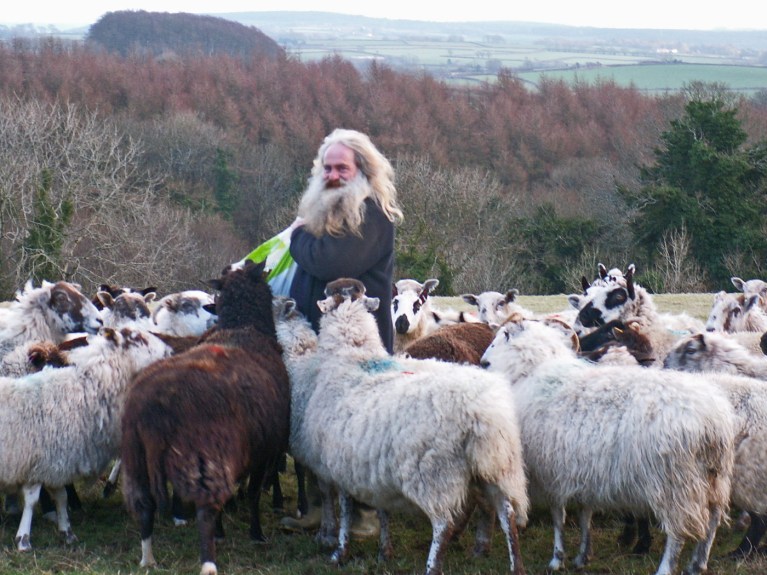
And therein lies the difference between the good leaders and the bad. The shepherd leader fills the role for the good of the flock, even willing to sacrifice themselves for the life of their sheep. The corrupt leader uses their power and authority as a means to dominate those who are under them. A good leader serves as an example, they encourage and try to get the best out of those looking to them for guidance. The evil politician, on the other hand, delights in creating dependency and keeping others subject to their whims.
In the end, no man is actually worthy to lead of their own authority and it is only through understanding our own place before God, that we ourselves are not God, that we can ever fill the role. Self-belief and narcissism, with a little psychopathy, is often what will get a person to the top spot. But humility and faith, valuing all individuals enough to go find the one lost sheep, that is the mark of a Godly leader. The only person fit to lead is one who is willing to submit to those who have authority over them.
The delusion of the Protestant independent spirit is that every man (or woman) and their Bible becomes their own king. This “you’re not the boss of me” attitude, in response to flawed leadership or simply as rebellion, is precisely why the church is becoming increasingly impotent. The Church, at least the one that Christ founded, had those given the authority to bind and loose, a council to decide important matters and those who acted as fathers. This hierarchy was never comprised of those faultless. No, what made them worthy, and the only thing that makes any of us worthy, is being clothed in the righteousness of the one Great Shepherd.
We need sheep who know they are sheep and shepherds, appointed to feed the flocks, like Peter:
When they had finished eating, Jesus said to Simon Peter, “Simon son of John, do you love me more than these?” “Yes, Lord,” he said, “you know that I love you.” Jesus said, “Feed my lambs.” Again Jesus said, “Simon son of John, do you love me?” He answered, “Yes, Lord, you know that I love you.” Jesus said, “Take care of my sheep.” The third time he said to him, “Simon son of John, do you love me?” Peter was hurt because Jesus asked him the third time, “Do you love me?” He said, “Lord, you know all things; you know that I love you.” Jesus said, “Feed my sheep.
(John 21:15-17 NIV)
In my own spiritual journey, after my own Bible-based authority failed me, God provided me with a man who would end his emails with the phrase “your unworthy priest” and is truly that. Fr Anthony is a very well-educated man, a college professor, and one who could easily flaunt his credentials as a means to humiliate some like me. But what has given him true authority, in my eyes, is how he humbly serves as a true example of Christian leadership.
He is a shepherd and the Church really needs more who are like him.
Simone Biles, arguably the best female US gymnast ever, decided to quit the competition at the Tokyo Olympics. This decision was as celebrated as if she had won gold and that caused some conservative friends to protest. The bulk of the criticism having to do with the glowing coverage of this choice. But then there was a lot that was aimed at her personally, calling her a deserter, “an entitled, weak, brat,” and part of the “participation trophy” behavior.
While I won’t call what she did stunning or brave, I will also withhold any sort of hard judgment concerning her. Maybe it was the right decision? If she isn’t feeling up to the task then it might be good to allow the next one up to fill the spot on the team?
Given that it was leaked, back in 2016, that Biles uses Adderall, a common stimulant used to treat ADHD, and banned by the Olympics, it is little wonder she is out of sorts. That’s a strong drug, in the methylamphetamine class, and going off of it could severely hamper a person mentally. Many people (conservatives, in particular) do not understand how much their mood and level of ambition are predetermined. During my brief stint using Adderall, I learned a lot about how easy it is to get things done when you have complete focus The withdrawal is something fierce too. For me it left a dead inside, can’t get out of my own way, feeling when in withdrawal.
So, rather than an indictment of Biles, this may be a concern about how we deal with life in the United States. Whereas previous generations and most people in the world cope without drugs, the US is very drug dependent. The US, in fact, is the world leader in prescription drug usage. The US produces and uses about 85% of the world’s methylphenidate. Rather than overcome by internal means, learning coping skills, or building mental strength by simply getting up and after it, we are relying on the take a little pill solution to problems.
Then again, we can’t know if Biles would ever be competing at this level without Adderall. But we do know that she has had many things to overcome. She has worked very hard to get to where she is. She has endured a childhood of hunger and sexual abuse too. This is why I’m not going to join anyone in calling her weak or anything else. Unless someone has competed at the highest levels of gymnastics and knows a little of the commitment and strength it takes, then it may be best to leave judgment to those who have been there and done that.
That said, the question of whether we are getting mentally weaker is worth looking into, but first another athlete’s story…
A hard-hitting and short career
Joey Julius stormed onto the college football scene with his big boot and his hit stick tackles.
Kickers are not generally known for their toughness. It is typical that they hang back and play safety on the kick coverage. It is expected that they might try to run the play out of bounds or go for a feeble attempt at the runner’s ankles.
Moment before impact
But that wasn’t Julius. He was a big boy, 260lbs, and very quickly became a Penn State fan favorite with his ferocious coverage team collusions. He was a walk-on and seemed to be ready to entertain for years to come. Yet, right as his fame rose, he disappeared.
It certainly was disappointing for me, as a fan, to see this exciting and unique player off of the roster. And, of course, I had to ask why. For me being able to start for a college football team would be an amazing privilege and never something I would pass up. However, as one who saw my own cousin, a 6′-8″ 320lb lineman, confident as he was going in, get bogged down with injuries and the pressure of college life, end up off the team after one season, I understood that it isn’t an easy thing to be an athlete at that level.
As it turns out, Julius, despite his new celebrity, still struggled with body image issues and binge eating disorder. For all his success on the field, and the acceptance it brought, he felt he was not as he was supposed to be, was overcome by anxiety, depression, and suicidal ideation.
As for toughness?
I know for certain, at least at my own size and strength, I wouldn’t run full speed into a division one athlete. So it would be hard to call Julius a weakling. As with Biles dropping out, their fame and athletic pursuits, our want of entertainment, all come secondary to their well-being and only they know what is right for them.
I wish him well.
My own story of quitting early…
I was picked to be on the church council late last year. My congregation is small, yet a serious responsibility and, in my mind, an honor. I had planned to serve out my full-term and was even a little excited. It was the first time I would serve in a leadership position. I had not been so much as a youth officer in my old denomination and it did bother me a little. That said, I’ve never sought out mundane administrative duties, so being overlooked for the role wasn’t that big of a deal either. Nevertheless, I took the reminders of Father Seraphim to heart, that we were to be an example to the rest of the church, and that would eventually lead to me resigning my post.
I would love to see myself as being mentally strong and might be in some regards. However, the death of Uriah had taken an emotional toll and I really was not feeling up to the task of being a council member. I was simply not putting in the kind of energy that I thought would be right for the position and started to have second thoughts after the first couple of meetings. So I shared these thoughts privately with sub-deacon Anthony, who graciously responded, but then decided to continue the course. However, that resolve did not last long. The next meeting, for whatever reason, I was just feeling very discombobulated and even angry, it didn’t make any sense. It was at that point that I decided to send Father a message to ask if it was okay to resign and he accepted.
It was embarrassing to me.
As Jesus said, concerning discipleship:
Suppose one of you wants to build a tower. Won’t you first sit down and estimate the cost to see if you have enough money to complete it? For if you lay the foundation and are not able to finish it, everyone who sees it will ridicule you, saying, ‘This person began to build and wasn’t able to finish.’ “Or suppose a king is about to go to war against another king. Won’t he first sit down and consider whether he is able with ten thousand men to oppose the one coming against him with twenty thousand? If he is not able, he will send a delegation while the other is still a long way off and will ask for terms of peace. In the same way, those of you who do not give up everything you have cannot be my disciples.
(Luke 14:28-33 NIV)
Yes, perhaps the death, after a year hoping for a miracle, presented an extenuating circumstance. But then everyone on the council has their own crap to deal with and some of them possibly more than me. With a combination of perfectionism with some laziness, I had taken the easy way out. Sure, it was good that I took my job seriously enough that underperformance was an issue. And I knew when I agreed to the position that I wasn’t going to be a flawless participant. Furthermore, I don’t quit my day job because of a bad day or even months of struggle. So maybe it was all simply an excuse as soon as things got tough?
I do know this, my replacement on council is an elderly fellow who probably should be enjoying his retirement rather than pick up the pieces for this me-first generation.
Is weakness a choice?
There is a character issue to be considered. I’m the guy who can show up to work, in absolute agony, head ready to explode from an infected tooth, because someone has to do the job.
Diminished capabilities or not, I understand that my participation in the group effort makes a difference and also that my paycheck depends on showing up. In other words, maybe my quitting council was a sort of self-indulgence, or willing fragility, rather than an absolute reflection of my true ability to complete the task?
Sounds harsh.
But then it is part and parcel of my generation’s ‘authenticity’ at all costs mindset. We cast this as being strength, the “you do you” mantra is repeated often. Still, it is also likely costing our greater potential when we choose to quit because of feelings of inadequacy or our lack of mental fortitude. The idea of “fake it until you make it” does not exist because other generations had it easier than we do. This learned helplessness, while comfortable, is essentially a self-fulfilling prophecy and keeps many people from ever reaching their full potential.
The name Jim Thorpe comes to mind. This Olympic athlete, the first of Native American heritage to win gold, was an incredible story of mental toughness. While in competition, having had his shoes stolen, he found a mismatched pair of shoes in the garbage—used an extra sock on one foot to make it work—and went on to win a couple of gold metals in this hasty arrangement. This is a man who had every excuse to give up. Have you ever try to run, let alone compete at the highest level, in shoes that don’t fit?
The true GOAT
It would be worthwhile to read up on Thorpe, compare what he endured to the stories of Biles, Julius, and my own, then draw some conclusions. Perhaps the reality is that we could and we simply didn’t? In other words, we made a choice, picked an easier path, and missed an opportunity for growth?
My grittier moments…
I’ve had many setbacks in my life. I started struggling for breath, as a preemie, was a slow developer physically and late bloomer otherwise. Opportunities were often behind me before I even realized I should be seeking them.
I don’t recall, it was relayed to me, but apparently an elementary school teacher had told my mom about an incident, during a math test, where I jumped up beside my desk and screamed. Why that shy child would make such an outburst? Well, probably because I was so frustrated, trying so hard to focus, full of anxiety, and was barely able to do the work.
Obviously, like my eldest sister who blazed her path, I was driven. But, unlike my sibling, who could put her mind to something and do it, I would be overcome with my perfectionism and eventually defeated in various pursuits by my fear and doubt. The most crushing of those being my inability to pull myself together when things became uncertain in romantic hopes.
That’s not to say that my sheer will and determination gained me nothing. As a 112lb senior, I started and finished a season of football. I’ve comeback, on a couple of occasions, from injuries that might have caused some to put an end to their fitness regime. I had even walked in faith, against the odds, to pursue the impossibly, to the point that I became mentally ill and had nothing left to give. I’m still here.
At times I hated whatever made me want to keep going despite these setbacks. My mind, like Job’s wife, telling me “curse God and die.”
Fortunately, unlike many in this age that loves victimhood, I had a mom who would not let me slack off or quit. Sure, she could never do the work for me. But she could have easily nurtured me to death by catering to her poor Joel. I was a trouble child, especially as a teen, a tortured soul, someone always stuck in the mud, spinning his wheels as dreams sped away and vanished over the horizon. I didn’t actually know how to grow up or be independent. I would still be living at home had my mom allowed it. She didn’t.
Nobody is born ready to soar, not even a bird!
The idea of a home mortgage had terrified me. Could I make the payments? What if I could not pay it back? It was too much for me to do voluntarily, without that push, because I didn’t have the mental strength. And yet, when the time came, when I finally did sign the papers, not only did I pay off the loan, I actually paid it off in half of the time!
Incidentally, it was this that made me more confident when facing the impossibly, that Mennonite female interest to end all, and also totally upended me when she said, “you’re thirty years old living in Milton.” In one sentence she had destroyed the meaning of the entire struggle up to that point.
Nevertheless, even then, when I stopped eating and holed up in that cracker box house, wishing to die. It was my parents, especially my mom, who continued to push. Yes, there was comfort and consolation, time given for me to grieve, rest and collect myself again, yet never coddling or agreement with my despair.
It is absolutely terrifying for me to imagine what I may have become had I quit the first time things required digging deeper. I mean, I would have likely died in that plexiglass box—the isolette—had I not been a fighter, had my physician uncle given up, etc.
Not to mention had my mom decided pregnancy was too much for her or my grandparents lacked the commitment of marriage.
Life is tough.
We would not get very far if we make quitting when things don’t go our way into a habit. That is why we should be concerned about the new turn towards making heroes out of those who do not finish. Sure, there are reasons to quit, to avoid injury or whatever, but when it is simply an excuse for not putting forth effort? That’s a problem.
Build strength—Do not coddle weakness
Our culture, sadly, is coddling many to their own detriment. Many young adults live as overgrown children, unfulfilled, because they’re encouraged to be mentally weak and their needs are being provided. By contrast, I’ve seen an Amish toddler herd cows, Chinese toddlers can cook meals, and humans have an amazing ability to rise to the challenge.
It is a sad day when we go from honoring strength, that hard work it requires to achieve greatness, to celebration of weakness. It is basically a suicide pact, a death spiral, and makes thriving impossible. By telling people that they’re unable, that quitting is okay, we are doing them a lifetime of harm. We are currently at a crisis point it is not sustainable to go the direction we are going.
We need more heroes like Jim Thorpe now more than ever. The future of our species depends on it. However, this mental toughness, it doesn’t start (or end) with elite athletes on the world stage. It means having the courage to get up and go again, despite our feelings, and repeat as many times as necessary until we’re able to overcome. There is no pill, no magic solution, only learning not to make excuses and push on.
I’ve been going to my parent’s house more often since I’ve been off the road. It sure beats spending time by myself in an empty little house or eating alone in a restaurant. And, besides that, my mom’s cooking is unmatched in the world. The usual routine was to have a meal during the week and also come home for Sunday dinner.
My plans to “leave and cleave” never came to fruition. All of my closest friends eventually married and disappeared from my life. My siblings (especially the married ones) are very independent and not usually available. Thus there is little other choice for meaningful social interaction during the week besides home. And, since my dad isn’t much for talking about much besides work, the bulk of my time talking is with my mother—who is quite similar to me in personality and temperament.
Going back a step…
Apparently, as a child, I was the only one who would cry when my mom would step out for a minute with the garbage. This separation anxiety never fully went away either. Even as an adult I’ve had a terrible fear of losing my mom. That could simply be because I’ve remained single and (besides a few online mothers who have been there for me) have really only had one significant nurturing person in my life.
In the past couple years, in particular, as my only opportunities for regular meaningful social interaction at church dried up and marriage remained unattainable, my mother was all I had. My mother is the one who has always been there for me through thick and thin. I love her despite our getting under each other’s skin sometimes.
Too much of a good thing?
As the saying goes, familiarity breeds contempt. That is suggested in Scripture where too frequently visiting neighbors is advised against: “Too much of you, and they will hate you.” (Proverbs 25:17) It does seem too much of even a good thing is bad. And, at very least, the law of diminishing returns may eventually apply to any activity and one would be better doing something else with their time.
Anyhow, with the thoughts of my over-dependency in mind, and my own terror over the thought losing this person who has been in my life longer than anyone else, and considering that Lenten season is about sacrifice, it became clear what to do:
If anyone comes to me and does not hate father and mother, wife and children, brothers and sisters—yes, even their own life—such a person cannot be my disciple. (Luke 14:26 NIV)
It is easy for those born into Christian homes to treated this teaching of Jesus as hyperbole or a command only necessary for new converts, but what if Jesus did mean it to be taken literally?
Would you literally give up your mother and father to follow after Jesus?
My mother, while imperfect as I am, was never the smothering type. Late into middle school (possibly the start of my 8th grade year) things weren’t going very well and I begged my mom to homeschool me. She denied the request. And, despite my discomfort with her decision not to give me what I wanted, she made the right call. Because, even though it is impossible to know where I would have ended up otherwise, I did eventually break past some of my shyness and am glad for that experience rare for a conservative Mennonite.
Mary and the sacrifice of motherhood…
I’ve been listening to a lot of Jordan Peterson lately and his contrast of the “devouring mom” with Mary (the mother of Jesus) caught my attention. Interestingly enough, both feminists and patriarchal men do not give Mary her due because both undervalue female contribution—both see masculine roles as superior and therefore discredit the importance of motherhood.
Mary, as a mother, was willing to sacrifice her son to the world. In fact, the first miracle of Jesus recordes in Scripture, was at the prompting of his mother:
On the third day a wedding took place at Cana in Galilee. Jesus’ mother was there, and Jesus and his disciples had also been invited to the wedding. When the wine was gone, Jesus’ mother said to him, “They have no more wine.” “Woman, why do you involve me?” Jesus replied. “My hour has not yet come.” His mother said to the servants, “Do whatever he tells you.” Nearby stood six stone water jars, the kind used by the Jews for ceremonial washing, each holding from twenty to thirty gallons. Jesus said to the servants, “Fill the jars with water”; so they filled them to the brim. Then he told them, “Now draw some out and take it to the master of the banquet.” They did so… […] What Jesus did here in Cana of Galilee was the first of the signs through which he revealed his glory; and his disciples believed in him. (John 2:1-8, 11 NIV)
That is an extremely interesting exchange between a mother and son. Based in his initial response, the miracle was out of the timeline that Jesus had in mind. Mary, for her part, totally ignores his “my hour has not yet come” protest and, without further comment, moves on to tell the servants to do what her son tells them to do.
It is important to note that the choice of “woman” by translators could give an incorrect sound of rudeness. According to various sources, the word he used was more similar to “ma’am” and might suggest he was distancing himself a bit from his mom or asserting some independence. But, despite being pushed outside of his comfort zone, he complied readily with his mother’s request.
Mary did what a good mother does for her son. She gave him a little nudge, she showed her confidence in him—first in ignoring his initial response and then by her instruction to the servants to follow his lead. And because of that we have this wonderful example of motherhood.
Before Jesus could become the ultimate sacrifice to the world he first needed a human mother willing to nurture him and then give him up. In some ways Mary shared equally in the sacrifice made by God. She, like God, sacrificed her own son—the child who grew in her womb—to be tortured and killed.
My mom…
My mom, like Mary, has always been my biggest encourager. Yes, like all good moms, there was always a push and pull. She would probably be happier if her other children not moved so far away and I may have happier to stay in her home until married. But without her push I’m not sure how much I would’ve accomplished with my life. It because of my mother that I opened a savings account as a child, it is because of her that I bought my house a decade ago, she has encouraged my writing, and her overall push has always been for my independence. She has empowered rather than enslaved me.
My mom had a good balance of empathy and necessary toughness. Unlike some parents, both she and my dad always tried to be fair (perhaps too fair) in how they presented me to the world. For better worse, we aren’t a family that is much for overselling ourselves. If asked, I would probably say that my parents are average and not without their flaws. Yet, in true fairness, saying my parents are average is a vast understatement—they are extraordinary people and I’m very grateful for them both.
So, anyhow, I have given up many things dear to me in the past year and, Lord willing, I will be completing the transition from Mennonite to Orthodox this year.
However, for all the once important things I’ve sacrificed in an unbending quest for the truth, I’ve not yet broken my dependency on my mother. My mom said goodbye to her mom last spring and, with my budding romance, it is bound to happen sooner or later—that is why I gave up my mom for Lent.








 Irregular Ideation