

Cultural erasure is often discussed in the context of dramatic examples. Communist efforts to eradicate religious practice or the forced assimilation of Native Americans are two clear instances. Another is the British schoolgirl punished for wearing a Union Jack on a day meant to celebrate cultural diversity. Yet, a more insidious form of cultural erasure is sweeping through the United States, infiltrating every small town under the guise of free markets and capitalism.
What I’m referring to is corporatism, partnered with consumerism. This country was once defined by businesses owned by average people—those “mom and pop” shops. That is no longer the case. Capital and control are increasingly concentrated in the hands of a few (see this video on BlackRock), and choice is largely an illusion in this age of mega-corporations. We have become a nation of employees. Yes, small businesses and boutiques still exist, but they are the exception. Our regulatory regime favors economies of scale, benefiting established players who can absorb compliance costs.

On the road—hauling commodities—this economic transformation is alarming to anyone who cares to notice. Local mills and grain elevators have been bought up or are in the process of being acquired by major players. Businesses where locals once knew the owner have been transferred, one after another, to corporate boards far removed from the operations.This trend spans every industry. Thriving downtowns and corner stores have been replaced by Walmarts. Ironically, when communities regain a “local” option, it’s often a Dollar General. The impact extends beyond retail. Doctors can no longer afford to practice independently, and hospitals are absorbed by larger systems to manage ballooning compliance costs. Local communities have lost true choice as corporate brands dominate.
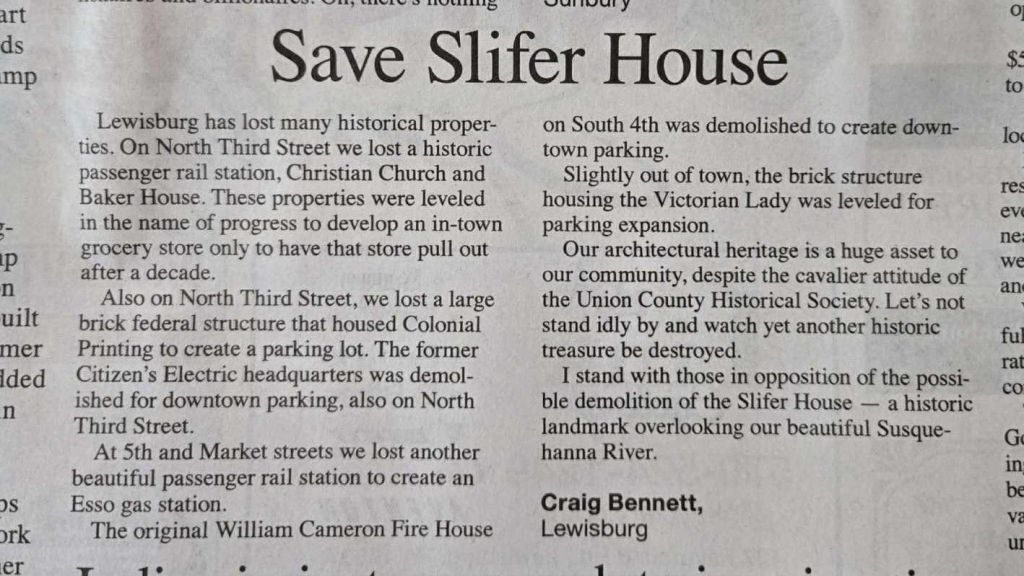
Even decisions within our towns are outsourced. Consider the plan to bulldoze Slifer House, a local landmark designed by a notable architect, listed on the National Register of Historic Places, and honoring a man who played a significant role in the town’s history. This building, originally a private residence, later an orphanage, and then a hospital, faces demolition. The board deciding its fate is disconnected from the community, concerned only with maximizing revenue at the expense of our shared heritage.

I spoke with a township supervisor, a relative, and received the typical canned response about property rights. But this boilerplate conservatism fails in an era where BlackRock owns vast swaths of the economy, and we all now owe our souls to the company store. It’s not a free market when Larry Fink can mandate DEI policies across every place we shop or work. Consumer choice doesn’t exist when all options on the shelf (see this video on BlackRock) are owned by the same entities. Property rights may have built the middle-class, but appeals to them cannot address this systemic erosion of agency and destruction of ownership society by the current corporatism.
This corporatist-consumerist machine erodes local identity and sovereignty by homogenizing communities. Regional dialects, traditions, and histories are drowned out by standardized corporate aesthetics and practices. The local diner with its quirky charm is replaced by a chain restaurant with identical menus and decor nationwide. The family-owned hardware store, where the owner knew your name, gives way to a big-box retailer staffed by transient workers. These shifts strip away the unique character of our towns, leaving behind this sanitized, generic, board approved and predictable landscape that could be anywhere—or nowhere.
Retaining local identity and sovereignty requires deliberate resistance to this tide. Communities must protect what matters to them, prioritize policies that support small businesses, such as giving tax incentives for independent retailers (rather than Jeff Bezos) or simply streamlined regulations that don’t disproportionately burden the little guy. Local governments should not side with entities outside of town, but rather should empower residents of the community to have a say in decisions affecting historic landmarks like Slifer House, ensuring that distant corporate interests don’t override community values. Grassroots movements can foster local pride by celebrating regional festivals, preserving historic sites, and promoting artisans who embody the town’s heritage.

Sovereignty also means reclaiming economic agency. Communities could explore cooperative business models, where locals collectively own and operate enterprises, keeping profits and decision-making power in the hands of residents. Supporting farmers’ markets, local craftspeople, and regional supply chains can reduce dependence on corporate giants. Education plays a role too—teaching younger generations the value of their town’s history and traditions fosters a sense of ownership that no corporate boardroom can replicate.
Ultimately, the fight against cultural erasure through corporatism and consumerism is a fight for self-determination. It’s about choosing to preserve what makes our communities distinct, even when the deck is stacked in favor of scale and sucking out profits. By valuing local identity over corporate convenience, we can reclaim the soul of our towns and ensure they remain places worth calling home. Property rights were meant to protect local control—not to consolidate then outsource all decisions to out-of-towners.
 Irregular Ideation