
Built for Scarcity: Why I Won’t Give My Son Everything He Wants

Standard

I’ve tried to give my son everything he needs to succeed. But that doesn’t mean I will give him everything he wants. There’s a reality in any pursuit: to be excellent, you’ll need to put in the work or delay gratification to reach your full potential. If a parent gives a child everything they want, there’s no incentive for them to learn and improve.

To a child, everything provided for them is a given, and every task required is an injustice. Why should they have to wash the dishes? The grumbling or attempts to negotiate last longer than the time it would take to finish the chore. And, honestly, the easy route is just to do it ourselves. But that deprives a child of the opportunity to learn all those transferable life skills—at the very least, to get a little practice being helpful rather than entitled.
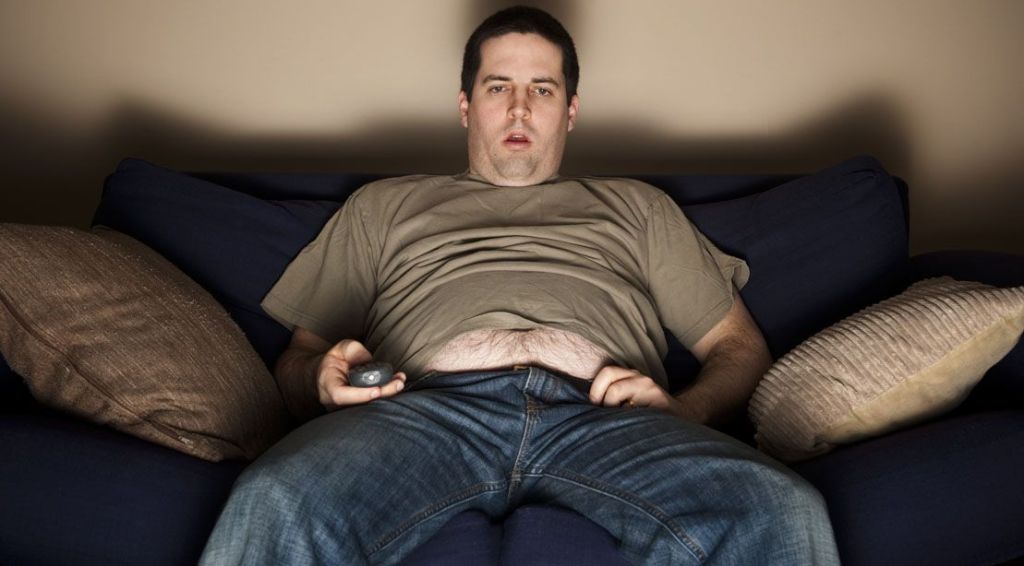
In the West we already have abundance and the result is atrophied muscles and dull minds.

If we shower children with abundance, they will never appreciate what is given nor ever be satisfied. It seems that no matter what we have, we always want more. If given the moon, we’ll want the other planets and the stars as well—and then we still won’t be happy with that. The greatest satisfaction comes through work and accomplishment. Playing video games all day or scrolling social-media feeds may trip reward centers, but it amounts to empty calories and can’t replace substance.

I’ve watched spontaneous interviews with very wealthy men, and nearly every one of them says that their abundance did not bring happiness. At least one admitted he was suicidal despite millions in assets. Our peak enjoyment in life comes when we invest time, effort, and resources and eventually reap the fruit of our labor. Sure, going to the gym may be difficult, but the endorphins are addicting and the muscles are a reward.

Built for Scarcity—Not Utopia

I watched a video about the problems with utopia, and the framing of capitalism as a system built for scarcity was correct. We would need a radically different way of ordering ourselves if the things we wanted just grew on trees. If you could have whatever you wanted without effort, why would you pay for anything or even care who owns it? My property rights only matter because it costs something to acquire or replace the things I own. If everything we wanted was free and completely abundant, we wouldn’t need to value it at all.

The presenter, who seemed intelligent enough, made a critical flaw while talking about providers of generative AI. He claimed that those charging for the service were creating artificial scarcity “because the code is open-source or whatever.” But this totally ignores the immense computing power that’s required—the powerful microchips, massive amounts of energy, and the staff needed to keep it all running. So no, that isn’t an example of abundance.

I’m used to naïve takes coming from the religious side, but it’s fascinating to see secular thinkers stumble over the very same things. Yet it touches directly on the human condition. We are not wired for abundance. Ultimately, even if we could reduce human labor to zero, our brains were created for scarcity, and when faced with unnatural abundance we don’t actually do very well.

Wall-E is probably the best depiction of a world of abundance that goes well.  It could go in many directions, unhealthy ease the better of the many scenarios.

Material wealth, to start with, is never a cure for boredom or lust. If anything, those who have all their physical needs met are often left with a void of purpose. Their abundance never creates fulfillment or a reason to be in the world. And some appetites are basically insatiable: a man can have all the sex he wants and still desire the one he cannot have. It is often the ultra-wealthy—those who have everything we imagine would make us happy—who are also the most perverse and dissatisfied.

It reminds me how young-earth creationist (YEC) types often portray entropy as purely negative when it is as necessary for life as order. Fertile soil, for example, contains organic compounds that come from dead plants and animals. This is part of a cycle—neither good nor bad—like the weather. The same forces that bring a spring shower can also leave behind a swath of destruction. Creativity itself often lives at the edge of order and disorder. You may not enjoy a messy room that needs cleaning, but without it your life would probably feel pointless.

Furthermore, social hierarchy would be the only game left if we completely removed the need for productivity and occupation. If AI replaced all jobs, the result might be material abundance, but not utopia. As the saying goes, “Idle hands are the devil’s workshop,” and some people with nothing to do will create drama. Boredom is good when it provokes us to create something new, but bad when the “new thing” is us causing trouble for others for lack of something else to do. It is better when we need to do something productive to survive, because we’re primed for it.

Consider how an overly sterile environment can trigger autoimmune disorders; similar problems would arise in a world where struggle was fully removed. It wouldn’t solve our environmental or energy problems—there would still have to be limits and rationing to keep from stripping the planet bare. Some people will never be content with the base level of property and possessions. There will still be scarcity even if human labor is no longer a cost. Advantages will still exist. At that point a new hierarchy will form—perhaps one based solely on beauty or charisma—where many have no path to “level up.”

In capitalism, while there’s an advantage to those who go first, there are multiple paths to success. Sure, there is cost-cutting at the expense of quality (see the Campbell’s Soup controversy), but there is also genuine efficiency and a system where nothing need go to waste. Bad actors create opportunities for others. If Enzo Ferrari hadn’t been a pompous jerk, we wouldn’t have Ford’s GT40 legacy or Lamborghini. Ferrari’s rude remarks were the provocation that pushed others to build cars capable of beating his. In a free market there is a profit motive to share rather than hoard. In a post-labor AI world where elites no longer need human workers or customers, would they have any incentive to distribute limited resources?

Abundance, Unearned, Robs Good Character

The video is correct that abundance won’t lead to utopia—yet it misses the deeper reason why. It isn’t just that we’d get bored or turn to status games (true as that is). The real problem is that abundance without cost quietly deletes the only proven mechanism we have for turning a human being into a person worth becoming. 

When everything is given for free, nothing is cherished.  When nothing is earned, nobody is grateful.  When no one is grateful, no one is generous.  When no one is generous, society stops being a community and it becomes a zoo with really nice cages: no material need unmet, the trough always full, and yet we are no different from a lion removed from its natural habitat.

That’s why I won’t hand my son the life he thinks he wants. I’ll give him everything he truly needs: enough security to take risks, enough scarcity to make victories sweet, enough resistance to grow muscle around his soul. I’ll let him wash the dishes, wait for the game he saved up to buy, lose the race he didn’t train hard enough for, feel the sting of “not yet” and the glory of “I finally did it”.

That feeling of a hard fought win cannot be artificially produced.  In a world where AI leads the way can there be human thriving?

Because the cruelest thing a parent can do isn’t to let a child struggle.  The cruelest thing is to raise him in a world so padded, so instantly gratifying, so artificially abundant that he never discovers the one truth every happy adult eventually learns: The joy was never in finally getting the thing.  The joy was in finally becoming the kind of person who could get it—and still know it wasn’t the point.

Scarcity isn’t the enemy of human flourishing.  It’s the narrow gate we have to squeeze through to find out who we actually are.  And I want my son on the other side of that gate—tired, scarred, proud, alive, and deeply, durably grateful—not because he was given the universe, but because he earned his small, yet irreplaceable and fully human corner of it.
Do you *really* want a life without conflict?

Standard

Thinking, as I’m sipping my coffee at Dunkin, a Saturday habit, we build civilization as part of the urge to reduce variables and the effort of living.  The thought started during my pre-waking slumber: We work, build shelters and store resources, create complex networks, to try to decrease unpredictability and the end result is that I don’t need to worry about my source of caffeine.

This orderly environment we create is ideal for raising children.  It is a nest.  Or at least at some levels.  Where we, like birds, weave a structure out of chaos in order to keep our offspring safe from predators and ourselves protected a world that can be unkind to the unprepared.  Squirrels scurry around, in the fall, gathering up things to keep for food over the hard winter months.  Our own species, likewise, is as instinctively forward thinking and creates systems to ease the strain.

The human endeavor, towards these ends of producing stability and abundance, has been so successful that many can go their entire lives not appreciating it. 

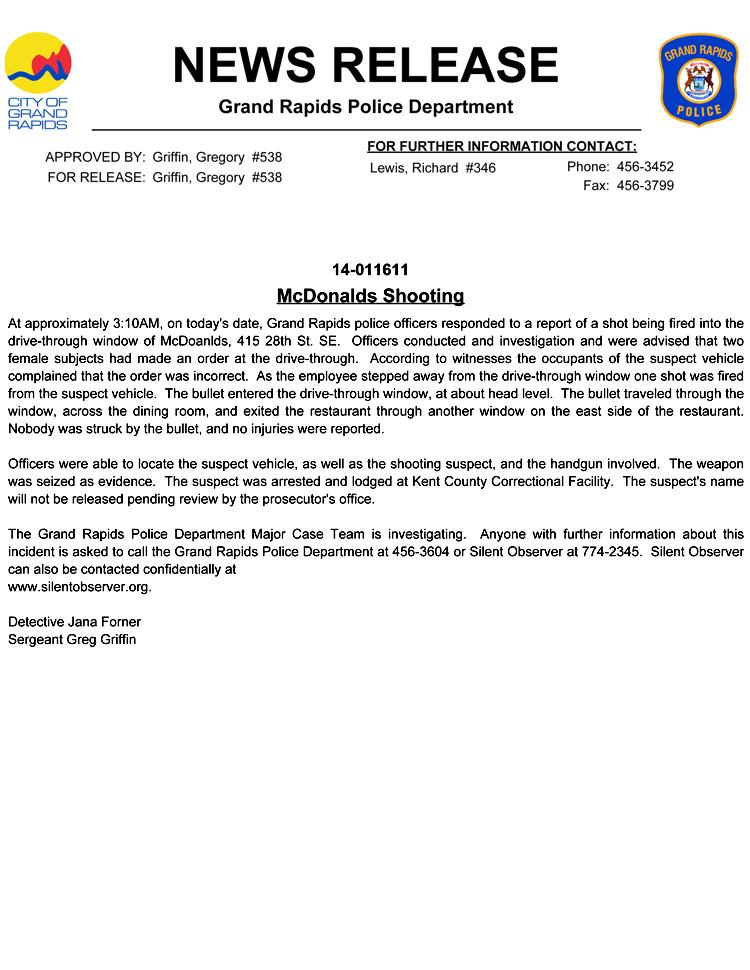
We’re so well-off, in the developed world, that our impoverished are obese rather than hungry and many now think that healthcare (a service provided by others) is a right.  we live in such unprecedented luxury and ease, even the poor can afford a lifestyle that many ancient kings would envy and yet feel so entitled to everything that we will shoot up the McDonald’s drive thru if we can’t get our bacon:

Evidently, being in civilization doesn’t make someone civilized.

Anyhow, other than entitlement and lack of appreciation, another product of civilization is boredom and fat.  In the absence of wars we created sport and without hard work, to keep from physical deterioration, we go to the gym.  It is truly bizarre, when you think about it, that we go out and seek the very anxieties that our ancestors built civilization to escape.  We are adrenaline junkies, doing intentionally dangerous things for the fix, we want to have unpredictable outcomes.

All of this really does make everything about our existence a weird paradox.  As soon we achieve a little bit of stability and peace we become restless.  That’s what convinces me that we are as much nature, made for the world we are in, as we are not.  That feeling that we somehow do not belong in this place with death and sorrow is what has motivated our progress.  It is less about our own being otherworldly and more what has enabled us to survive this universe that would kill us the moment we grew complacent.

This, incidentally, is the one thing that many people do not grasp about entropy, we tend to see decay and deterioration as being only a bad thing.  I mean, we fight it.  If someone walks into the house with muddy boots it is upsetting and spurs action.  But, without this tendency to disorder, without this repeated need to clean up on aisle five, would we even have a reason to live?  As much as we hate disorder, it is this continual struggle against it that gives us meaning and purpose.

False And True Knowledge

Standard

I am dismayed when fellow Christians (especially those claiming to speak for the church) make definitive statements that are unsupported in the evidence.  There are many who take a dogmatic black and white stand on ideas not supported logically, scientifically or in appropriate understanding of Scripture.

I am dismayed because we stand to hurt our credibility when we make our stand on things we do not actually know and with reasoning that falls apart under closer scrutiny.  It is too often the case that those who think they are defending the Gospel truth are actually destroying it in their stubborn obstinacy and inability to see past their own presuppositions about the evidence.

This is a problem in the fundamentalist circles I am most familiar with.  Instead of simply taking a stand on faith or sticking to the text of the Bible as they claim, many add their own assumptions.  They go another step off the firm ground of what is truly known and onto the quicksand of over-interpretation, unsupported inference and baseless speculation.  It is sad because it is unnecessary, it too often is the bathwater that conceals the true baby of Christianity, and drives critical thinking people away.

Two examples (often given in opposition to Evolution theory) is the idea that there is a clean break between living and non-living things.  The other is a misuse of the Second Law of Thermodynamics and the word “entropy” to mean something that it does not.  Both of these ideas originate in extrapolation from Biblical language, but neither one of them is actually as definitive in the Scriptural record as some might assume.

Postulate #1) Life cannot originate from non-life.

It seems obvious enough at first glance, doesn’t it?  I mean, have you ever seen mud materialize into human form, then suddenly become animated, walk and talk as a human would?  I have not.  We do not typically see dead organisms come back to life without a miracle.

And yet, under the microscope, it is interesting that the line between life and non-life is actually blurrier than one might imagine.  Viruses are considered dead because they do not have the ability to reproduce without a host cell and do not replicate themselves in the typical way of cell-division.  However, a virus can reanimate a dead cell, take control of it and use it to replicate.

Cells themselves are not ‘living’ in their individual components any more than a car is alive when you start it.  Yes, in one sense there is life, but it is the ‘life’ of chemical reaction (albeit in a complex system) and in physical processes not considered as living taken independent of each other. 

Think about it: The sun (due to gravity and other forces) is orderly, it takes hydrogen and, through a process of fusion, creates light energy and heavier elements.  Cells likewise, take one form of matter and through chemical process convert it to something else.  The difference between the sun and a cell, when we cut past the descriptive language to the actual material substance, is one of complexity and size rather than living or dead.

Our physical body is basically a complex machine comprised of individual self-replicating cells that work in concert with other different cells to produce organs, tissues and a body.  At the smallest level it is all chemical reaction and a sort of mechanical process that usually considered non-living.  But, at some point, taken together, these dead parts become something considered a living organism.  It is bit of a both/and paradox rather than an either/or dichotomy.

The difference between life and non-life seems to be a continuum more than a black and white line.  We do not consider a bacteria as equal to a plant or an animal equal to ourselves and the difference is probably the amount of ‘life’ each organism represents.  Likewise, I do not know if we can consider an animated universe something ‘dead’ with all the creative processes at work.  All, to me, are expressions of a creative and living God.

Postulate #2) Entropy is corruptive and not a good thing.

Lay people often misunderstand the Second Law of Thermodynamics (the state of entropy of the entire universe, as an isolated system, will always increase over time) as some kind of moral statement.  This misunderstanding is understandable.  Entropy is associated with decay and the universe is (by appearances, because of entropy) like a wind up clock that will finally someday be exhausted.

However, the increase of disorder or entropy in the universe is not an entirely bad thing.  In fact, entropy is how we get the energy and substance we need to survive.  When a man enters an ‘orderly’ forest, cuts a swath out to build a cabin and cultivates the space created, he has increased entropy.  Our favorite star (aka: the sun) taking ‘orderly’ hydrogen and turning it into a mix of heavier elements and light is increasing entropy.  Entropy is what makes the universe work and allows something as complicated as biological life exist.

Another way to understand entropy is to see it as an increase in complexity.  A stack of lumber is an orderly arrangement and has a relatively low state of entropy.  Hire a carpenter and turn the orderly stack into a house and, with addition of work to cut the lumber to different lengths, along with the contamination of nails, drywall, windows, doors, plumbing, and other building materials, you have increased entropy.

A pile of rocks is at a relatively low state of entropy.  People, one the other hand, represent a very high level of entropy.  We are arguably the pinnacle of disorder in the universe with our complexity and creative abilities.  Our turning orderly raw materials into complex creations, the process we use involving the dispersal of energy, is creating a higher level of entropy.  A 747 is a product of entropy as much as human engineering.

Entropy is like the sun or rain.  The same sun that produces the energy we need to survive can also cause skin cancer and kill us.  The rain cycle that we depend on for fresh water is also capable of producing floods and destruction.  Entropy is not exclusively creative or destructive, it is not something moral or immoral, it just is, and it is necessary for life to exist as we know it.

If life is an emergent property of physical complexity or entropy, then what?

The idea of life being an emergent quality of complex physical processes is unsettling to some.  There are serious philosophical questions and potentially big theological implications.  Nevertheless, if honest use of terms is our concern, we must be fearless and follow the evidence where it leads.

One idea at stake is our human exceptionalism.  In the book of Genesis we read an exceptional account describing the creation of man.  In it we both see humanity as being “in the image of God” and also that God ‘breathed’ the “breath of life” directly into man.  This is directness in the creation of humankind is unique in the Genesis narrative, but what does it really mean? 

We are not exceptional to animals in our physical body.  A human heart can be patched with a valve from a pig.  Human insulin can be created with bacteria and our genetic code is not too significantly different from other animals of our level of complexity.  It would appear that other animals also have consciousness at some level.

So clearly, for the Genesis account to be true, we are somehow special, touched uniquely by God, yet not in a physical sense.  When defining the terms used in Scripture, it is good to compare different accounts and see how similar language is used elsewhere.  In the case of breathing we are not without another reference for sake of comparison.

Genesis is not the only time in the Biblical canon that the divine breathed on men and gave them life:

“Again Jesus said, ‘Peace be with you! As the Father has sent me, I am sending you.’  And with that he breathed on them and said, ‘Receive the Holy Spirit.'”  (John 20:21-22)

The disciples of Jesus were clearly already physically alive.  But they were not yet ‘born of the Spirit’ and therefore could not understand the things of God.  Read John 6, Jesus talks about the “living bread” he represents and understand that he is not speaking about physical bread nor about physical life. There are many cases in Scripture like this one where a completely ‘literal’ (physical reality) interpretation is incorrect.

So, perhaps what many have been taught and think they know about the book of Genesis is wrong?  Perhaps the book is less about physical reality and more about a greater spiritual truth?  I believe that is possible, even probable, and leads to less conflict with what is known through scientific inquiry.

Knowing what we need to know…

I believe many Biblical fundamentalists confuse the bathwater of their own established interpretation, traditions and dogmas with the baby.  The baby or fundamental truth of Christianity is not found in historical documents nor proved with scientific evidence.  The truth of Christianity is found in knowing what Paul knew:

“For I resolved to know nothing while I was with you except Jesus Christ and him crucified. I came to you in weakness with great fear and trembling. My message and my preaching were not with wise and persuasive words, but with a demonstration of the Spirit’s power, so that your faith might not rest on human wisdom, but on God’s power.” (1 Corinthians 2:2-5)

The truth of Christianity is Jesus.  And, by Jesus, I do not mean the historical figure who’s words we read in a book and the religious traditions that borrowed his name.  I mean the Jesus that we live out daily and our having the mind of Christ today. The church must represent Jesus to the world presently, the power of the Spirit must be our reality now or our religious words only perpetuate a fraud.  Jesus must be experienced in our lives today and his will expressed through us or the truth is not in us.

When we find our answers in Jesus (rather than Genesis) and should have spiritual experience in our lives.  What makes us unique is the emergent quality of faith and the breath of God’s own Spirit in us.  We are in the image of the divine because we have the mind of Christ.  These are things revealed by faith and not products of mere human knowledge.

We need not know more than the way of Jesus.  If we live that out our lives will reveal the truth of Christianity without our need of superfluous or false knowledge to bolster our case.  Let the proof of faith be in the truth of our actions and the image of God found in our divine love.