Sight, Sources, Statistics and Science

Standard

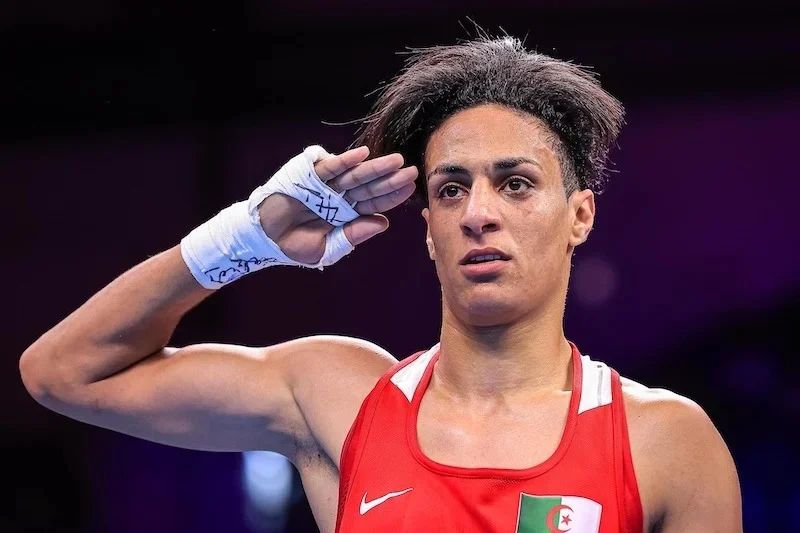
Social media provocateurs love to push popular controversies to generate clicks on their sites and get those heated comments sections.  The question about the gender of two boxers in the female category of the competition was that perfect story.  It was not straight up or settled, but generated a lot of strong opinions on both sides.

For myself, it is fairly evident that these two boxers do have a competitive advantage or they would not have won in their respective divisions.  I mean, that’s not even a matter of dispute.  An advantage is how anyone wins an athletic contest and it doesn’t mean they cheated.  However, when not only one but two people with the same extremely rare and potentially enhanced condition—both get the gold?  What are the odds?

Only one out of 500,000 people in the world go to the Olympics.  But, of course, nothing is ever that simple.  Those who live in small countries, like Algeria or Taiwan, have a far greater chance of representing their home countries simply because there are fewer people to fill the same spots.  And then not everyone in the world is competing to be in the Olympics.  Most of us don’t try out.  It is sort of like my being sixth while wrestling in the Eastern National AAUs—many superior to me simply didn’t make the trip.

But to go to Paris and beat everyone?  There is a reason why we give precious medals to those who do.  It is one thing to be that PhD who identified as a breakdancer and ended up scoring zero, it is quite another to get on the podium.  There were 124 boxers in the female category, divided into six different weight classes, and went through three qualification tournaments.  This is certainly not an easy road.  The champion is one out of every woman in the world who can make that weight and is into boxing.

There is speculation that those two boxers who had been disqualified from IBA fights due to failed gender tests—and masculine appearance—is they may have a disorder called Swyer syndrome.  This isn’t a fact, but it would explain why they would have been declared women at birth and always identified as women.  Those with this very rare condition have a male Y chromosome despite their female sexual hardware and offer no male advantage.  
However, it is also possible that the two have Androgen Insensitivity Syndrome, which impacts 2-5 out of 100,000 females, which means they would have characteristics of a female outwardly but also have male testes that are undescended.  Severe AIS wouldn’t confer an athletic advantage, according to the sources I’ve read, and yet that does not tell us anything about milder cases.  

Still, the conversation can’t end there, we have other possibilities:

Some press reports have mentioned 5alpha-reductase type 2 deficiency.  This rare syndrome is best reported in the Güevedoces in the Dominican Republic.  Affected XY individuals are apparently female at birth because they can’t activate sufficient testosterone to the much more potent dihydrotestosterone to masculine in utero and thus appear female (the default gender in the absence of masculinising hormones).  However, they have testes in what appear to be labia.  At puberty, the testes produce much more testosterone sufficient to activate receptors and masculinise the child.  Such subtleties are beyond the capacity of most regulatory bodies to accommodate.

The chances of two women with these rare chromosomal disorders somehow making it to the Olympics would be incredibly low.  For example, Swyer Syndrome is around 1 in 80,000 births.  So multiply those odds by the chances of getting to the Olympics and then take that times two.  The number is incredibly large.  There is a far greater chance of being struck by lightning.  If the XY chromosome is present in these two—along with higher testosterone levels—the fact they dominated the field, given what coaches have said, should be considered proof of a potential unfair advantage.

Sources Please Vs. What We See

Much of the smirking response of mid-wit “sources please” types—who simply went along with the ‘official’ International Olympic Committee (IOC) narrative—comes down to many of the slightly dimwitted “I see what I see” types misidentification of the issue as being about transgenderism.  When the real issue is whether or not these athletes have intersex characteristics and thus an unfair advantage in female competition.

Yes, the right is too reactionary.  However, not without cause, they know too well how the NCAA and corporate media denied that Lia Thomas had an unfair advantage as one born a man and still having a penis as well as the rest of a man’s hardware.  And they correctly see that these two Olympic boxing competitors have a masculine appearance.  They had incorrectly assumed that this was just another case of a man cheating his way to the top by pretending to be a woman.

However, that misunderstanding of some is being used as a strawman of the real issue, the real argument is source versus source.  Specifically, the fact that these two athletes were disqualified by the International Boxing Association (IBA) for having male XY chromosomes.  These laboratory tests took place in Turkey and India  So, despite the attempts, by bigots, to smear the IBA as being corrupt for ties to Russia.  But the reality is that no organization is totally without political ties and there’s a reason why the IOC has never banned the US for our military aggression around the world.

So it really comes down to who we want to believe.  The IOC rests its entire claim of gender, on legal documents, passports, and birth certificates, provided by the country of origin, and says this gender assignment makes the boxers women.  By contrast, the IBA cites biological science and test results and tells us these two ‘women’ have XY chromosomes.  Right off the bat, the criteria of the IBA are science and laboratories whereas the IOC is relying on political entities.  Should we follow the science or believe those appealing to non-scientific evidence?

At this point, the mid-wits completely lose the plot and rely on their confirmation bias rather than logical deduction.  They’ll simply refuse to acknowledge the obvious, that the official IOC criteria to determine eligibility is entirely inadequate for solving this riddle; that the IBA at least has what appears to be scientific evidence, and thus this is a question to be answered in the lab rather than the court of public opinion—so they double down on their insults trying to deflect from the real issue.

But, in the end, this isn’t about science, what we see, statistics, or sources.  No, it is about partisan politics that blind many somewhat intelligent adults to what even a child could see.  It exposes those “sources please” mid-wits as just another level of ignorance.  And social conservatives could help themselves a whole lot by not jumping the gun and not oversimplifying complex issues.  Both sides are guilty of false dichotomies and believing misinformation.  Lastly, those who are suggesting that I-man Khelif is representative of Algerian femininity are guilty of the bigotry of low expectations.

Two Kinds Of Black

Standard

Identity is fluid, a physical characteristic is not.  I had identified as being “Mennonite” for many years of my life.  It was not much of a choice for me.  Raised in a Mennonite home, participated in a Mennonite church, and had internalized the values, the belief system, etc.  Mennonite was simply what I was and it still remains by ethnic/cultural background.  Leaving the community does not mean I’ll escape the genetic realities of my birth tribe.  

Is an identity surface level or deeper?

There was many of these labels that have to do with our social status, some we pick and others are picked for us.  In school if you’re into sports, hang out with other athletes, it is going to get you a “jock” designation and likely also stereotype applied with that.  Likewise, if were to wear a particular wardrobe to conform with a group of self-described non-conformists then you’re Goth or Emo.  People tend to coagulate into identity group—they find others who are like them and also become more like those whom they identify with.

But there’s a huge difference between these identities built around how we dress or who we associate with and those like eye color, bone structure or genitalia.  Sure, someone can dye their hair purple and claim that they are an astronaut, but that does not change what they were born with nor does it make them qualified to fly a space shuttle.  There are those ‘assigned’ categories that need to be objective facts rather than some kind of self-identity or cosplay act.  Science needs to have clear definitions or the endeavor is impossible.  And society simply can’t let you be a medical doctor because you feel like you should be a Porsche owner while you’re stuck driving a Kia.

Anyhow, getting to the point, a big problem with these conversations is that people are using the same words to mean something different.  For example, Rachel Dolezal, the woman who identified as ‘black’ despite her being born a daughter of European parents and having their biological characteristics, yet she could be ‘black’ for many years.  In my mind she can be both black or not black depending on what the term is describing—is it the genetic inheritance or the adopted culture?

I mean, think of Eminem’s lyrics: “I am the worst thing since Elvis Presley, to do Black music so selfishly and use it to get myself wealthy.”

Technically, if it is a ‘white’ artist doing the writing and performing, what is so ‘black’ about it?  He’s performing in English.  He’s doing naval gazing more common with the self-loathing European culture and his lyrics were about being some weird trailer trash hybrid rather than the themes common with the gangsta rap I knew growing up where it was at least presented as being something to take seriously.  How is a genre of music a skin color?  Asians are quite good at playing instruments and music first developed by the West—is that appropriation?

In many cases ‘black’ is not referring to something truly immutable.  No, rather it is about a lifestyle, a set of values, a certain way of behaving and, by this definition, it is perfectly legitimate for someone to identify as black without African genetics.  In other words, it is more like belonging to political party or religion than something someone is born.  And this is how suddenly the far left can claim work ethic or nuclear families are ‘white’ despite the Africans I know being as hard working and loyal to their spouses as any other person.

It is grotesque, horrendously racist, when a political candidate tells a whole segment of the population that if they don’t vote for him then, “You ain’t black.

Of course that was to intentionally confuse actual skin color and everything associated with it, with a ideology and perspective.  It is to rob the targets (black people who think differently than him) of their identity and is a form of gaslighting.  An outsider doesn’t get to decide what people should or should not belong.  It is inappropriate and bullying behavior, this truly is the worst kind of manipulation, it reinforces stereotypes and denies the true diversity within a category of color.

So identity is fluid.  We can change our own idea of what we are.  Still, there are also the fixed points determined by birth, a physical characteristic, that even if the surface level manifestations are surgically changed and hormones artificially employed, cannot be chosen or changed.  A man can behave in a feminine way, a woman in a masculine way, yet he doesn’t lose a Y chromosome simply for declaring himself a woman.  Sure, he can have his male anatomy reconstructed to resemble the female sex.  But there is more to being a woman.

Due to chromosomal abnormalities, there may not be a binary of male and female, but there most certainly is between female and not female.  It is one thing for the man once known as Bruce Jenner to reject the typical male role and change his name.  But that does not change the fact that he fathered his children and lacks the real hardware to be a woman.  Again, Rachel Dolezal can act in a manner that is associated with those of African origins, even fool the NAACP with her outward appearance, but she is not truly African American.

We do not need to recognize every claim as being valid.  I can’t just thrash around in the pool, march up to the podium and demand to be recognized as the winner of a swim meet without the necessary qualifications or actual achievement.  Why then is it ever okay for someone with male genitals and body to dominate in a female category for simply changing his name and having the powers that be join him in his psychosis?  

Changing your name and official category doesn’t change the physical reality.

It is a serious threat to civilization to attack the common language in this manner and it cannot be taken lightly.  One person with a delusion is not a problem.  However, when it is a significant portion of society going off the rails together then very quickly becomes dangerous.  Matters of our preference and culture are subjective, what is feminine or masculine is not set in stone, but science and reason must be built on something that is objective.  There must be a wall between identity that is merely social construct and that which is grounded in substance.

Seeing Behind The Veil

Standard

In storytelling, there is a plot device called a MacGuffin.  This is an object, character, or event used to push the narrative forward and yet isn’t all that important in and of itself.  In other words, a thing that creates motivation and yet never even needs to be revealed to the audience.  We are supposed to believe this is something significant or valuable and that’s all we need to be told.

The contents of the briefcase are left a mystery despite being pivotal in motivating the characters.

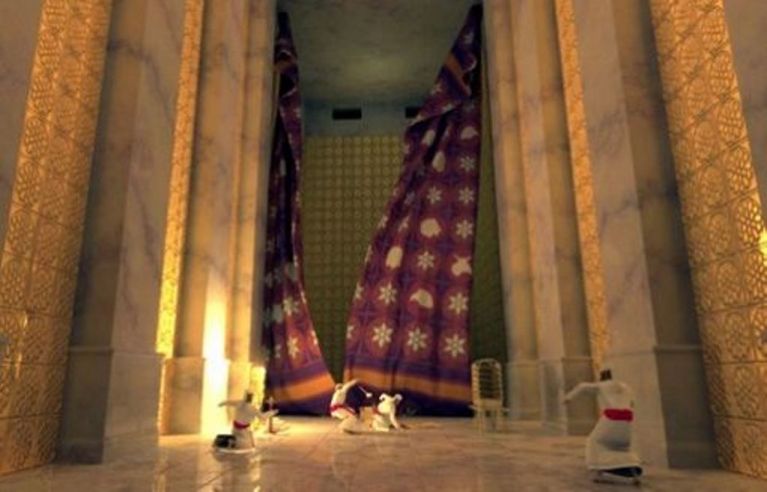
While reading through the Old Testament and pondering how temple worship worked, it is hard not to see the Ark of the Covenant as a sort of MacGuffin.  Sure, their God was not a thing.  And yet this sacred object, we’re told, contained something of God’s presence and would even strike dead those who innocently mishandled it.  Of course, most people may never have seen it, it was kept behind a veil in the temple where few had access, but all would be told of the sacredness.

“Then spake Solomon, The LORD said that he would dwell in the thick darkness. I have surely built thee an house to dwell in, a settled place for thee to abide in for ever.”

(1 Kings 8:12‭-‬13 KJV)

In fact, it was made sacred as much by this treatment as much as what actually dwelled within it.  The mythology surrounding it, as in the cultural or religious significance that was given to it, was extremely powerful.  Starting a special priestly class, Tabernacle and ritual practice, later the impressive structure of the Temple, there was a huge investment in this sacred object.  And yet, for all the attention it got, the Ark itself was usually kept hidden in darkness, guarded, within the Holy of Holies and behind a veil.

Holy Of Holies 

There are other things hidden behind a veil with significant motivational power.  One of them being the marriage MacGuffin.  For me this was a pursuit of something sacred, the church does consider the marriage bed to be sacred, and there is a whole mythology that is constructed around marriage.

This is what made it so jarring when, during my pursuit of the impossibly, a psychiatrist would classify it as “sexual attraction.”  They had just heard me describe a pure and faith-driven quest only to reframe it in such crass terms.  How dare they!  I was after love, not sex!  It really did offend me at the time.  With their clinical roughness, they had penetrated the veil of my marriage delusion.  It was an act of sacrilege.  

My childhood innocence is beyond recovery at this point.  For whatever reason, those of us born into a fundamentalist purity culture believe that we must be in denial of our own sexual urges that lead to marriage.  This is strange given how blunt St. Paul is on the topic, in 1 Corinthians 7:9, advising those who “burn with passion” to get married and basically get a room.  Why the veil of secrecy, these many euphemistic expressions to cover and mystify the bumping of uglies?

Speaking of erotic euphemism:

“Awake, O north wind; And come, thou south; Blow upon my garden, That the spices thereof may flow out. Let my beloved come into his garden, And eat his pleasant fruits.”

(Song of Solomon 4:16 KJV)

Why blush, be embarrassed or ashamed by this?

Could it be that without dressing this whole affair up with great ceremony, white bridal veils, teary-eyed parents, and such, we would have to face the reality of being creatures as hormone-driven as two ducks on a pond?  I mean, why aren’t we as honest as Solomon was in his poetry: “Roses are red, violets are blue, you have large breasts, that’s why I love you!”  Without white lies or half-truths, would our version of romance even survive?

So what is underneath the veil?

All of those things that I’ve discovered in the intervening years, that’s what…

To the extent I was in deep denial of my own sexuality, I was doubly in denial of the sexual nature of my female counterparts within the conservative Anabaptist culture.  The young lady who first propositioned, then made it all awkward and worried about somehow being ‘defiled’ if she got coffee with me has long since dropped the veil.  She has joined the others whom I had held in such high regard, revealed now as not being nearly as prudish or pure as I had once imagined.  That’s not a criticism or judgment either.  It is just the reality of the situation.

So, when the impossibly told me “I cannot not love that you the way that you wanted to be loved” what she was really saying the same thing as those Tinder girls with “must be 6′ or over to ride” in their profiles.  She wanted a guy who got her juices flowing, certainly someone a bit more rugged and traditionally masculine than me.  And, I mean, why not?  Why hide it?  Marriage is not only (or even primarily) about the high ideal that is advertised.  It is also about our scratching the itch.  Which is to say getting down and dirty with someone who meets the correct physical qualifications.

Also, perhaps it is that the fantasy is more satisfying than the act itself?  We read how Amnon, King David’s eldest son, had such an infatuation with his half-sister Tamar.  It tells us after having his way with her he despised her.  Or consider the disgust of Victorian-era art critic John Ruskin when, in marriage, he discovered that women aren’t like porcelain dolls.  You’ll have to forgive him, they put skirts over piano legs back then to keep the eyes of men safe from the unveiled feminine form.  Maybe there are some things that are better chased than caught?  If we find what we went looking for we might be shocked at what we found.

Sacred Fertility & Symbolism 

The final stop on this exploration of sacred and taboo has to do with something that I can’t unsee now that I’ve seen it.  I’m bound to lose half of my final two readers for going here. 

Nevertheless, I’m not here to please the pearl-clutching crowd. 

For me, this is not about toppling sacred cows or making people uncomfortable, it is about being honest enough to see reality for what it is and correcting our own perspectives of the cultural baggage we’ve inherited.

First, what drives much of the Old Testament Biblical narrative?  We know Abraham’s story, how he wanted an heir, and yet how Sarai, his wife, was unable to produce.  In this Genesis account we see various cases where wombs are opened or closed.  And the punishment of Michal, for rebuking her dancing husband, was that she had no child until the day of her death.  Being fruitful and multiplying was a high priority, as well as having sons to carry on the family line.

As an aside, we live in a very sterile world in comparison to our ancestors, we’ve become sheltered and sensitive to the point many do not eat meat or want their children exposed to death.  This wasn’t an option at the time when Scripture was written.  There is a kind of earthiness to their world and perspective, something more primal or real, a brutality of life difficult to stomach.  It is with this reality in mind, that we also have different sexual taboos and could be more prudish than they were about such things.

Second, I was sitting in church and taking a look at the colorful streams of light pouring through a stained glass image of Jesus pulling Adam and Eve from the grave.  My moment of appreciation for this beauty was interrupted by my noticing part of the symbolism.  Jesus is shown to be emerging from an oval shape, at the bottom of which are the covers of their opened tombs.  Requiring very little, if any, imagination, it bears striking resemblance to one Christian symbol even an iconoclastic Protestant would likely recognize, and that being a vertically arranged “Jesus fish” or Ichthys.

Light and life shining down…

However, concurrent to this, and a cause of some momentary shame, was the thought “That’s a vulva!”  I mean, how inappropriate to think that any part of the female anatomy, let alone those private nether regions, be put on prominent display or be associated with Christ!  

But is it really?

A mother, Mary, is necessary for the birth of Jesus.  Without her, and her womb that is miraculously made made more spacious than the heavens, there is no salvation for mankind.  It didn’t matter if God could have used any other way, all we know is that he used this young woman and all of the faithful since have followed the lead of Elizabeth, who full of the Holy Spirit loudly proclaimed:

“Blessed are you among women, and blessed is the child you will bear! But why am I so favored, that the mother of my Lord should come to me?”

(Luke 1:42‭-‬43 NIV)

As far as the symbolism, I would find that indeed my observation had basis in reality as the Ichthys is a version of Vesica Piscis (literally “fishes bladder” in Latin) or, in sacred geometry, the oval that two intersecting circles create an oval and said to be the place where spiritual and physical worlds interface. According to Syriac Press, in ancient Mesopotamia, it was used as a symbol of the combination of masculine and feminine energies that create a Divine Child.  Any pagan coincidence, like those with baptism, only serves to reinforce the power of the symbolism.

In a time when many settle for ‘fur babies’ over producing human offspring and the unique female contribution to the world is dismissed by feminists seeking male roles— when real women are mocked by men who pretend to menstruate—we need to start doubling down on our celebration of this reproductive role of women.  Phrases like “saved through childbearing” did not come into the Bible by accident.  The world was saved by the one who came out of Mary’s fertile womb and we ought not to downplay or be embarrassed by this.

Empty Vessel—Dying Corpse

Solomon’s Temple was destroyed in 586 BC, by the Babylonians, and the fate of the Ark within it is unknown.  This loss of sacred relics did not stop the Jewish faithful from rebuilding the temple, in 515 BC, but does make one wonder how much the contents mattered.  So long as the people were kept in awe that’s all that really seemed to be the point whether the edifice truly contained anything of real value or not.  With nothing behind the veil, the people still did the ritual and sacrifice. 

Why?

It seems sort of analogous to the US Dollar, a currency once backed by actual gold and now only by faith people continue to hold in the economic system it represents.  The harsh reality is that it has become merely a means to exploit. It is a way for a few elites to rob the value of the savings of other people by printing more money for themselves.  Those money changers Jesus chased out of the Temple were the amateurs. The real professionals never get caught.  The carefully maintained veil of secrecy around the Federal Reserve ensures that this particular scam continues for a long long time.

But, I digress.  

G. K. Chesterton once wrote, “a corpse crawling with worms has an increased vitality,” and that “a dead man may look like a sleeping man a moment after he is dead,” trying to describe the subtle yet significant difference between truly sacred tradition and a cheap gimmick version of this religion that was intended to replace it.  Perhaps this is what has me disillusioned?  With so many things, once the veil is lifted (which few ever dare to do) so much of the enticing mystery and popular mythology which propelled us forward falls apart.  And in this way some of the life I had felt early on feels more like decomposition.

Perhaps this is what is left when you’re the dog who has finally caught the car?  Nothing left to do but pee on the tire and continue on your way again.  The anticipation leading up to the day of revelation may be more exciting than the moment the veil is lifted and when all is seen.  Ruskin may have spent the rest of his life waxing eloquently about his female love interest.  Or maybe—just maybe—that MacGuffin which led us to the point we’re at today was merely a plot device to move the story forward and the only truly sacred part of the encounter is the fruit produced?

Sexual pleasure is fleeting.  We’re lured there by our imaginations, by our desire for what is beyond the veil of marriage, but it can all be a bit anti-climactic and even repulsive once you consider it after it is finally unwrapped from the flowery speech and those flawless air-brushed mental pictures.  But fatherhood, by contrast, seeing the great potential of my son, tending to his needs, pruning as needed, is something extremely fulfilling.  It is what has emerged from the womb that brings us renewed life and hope.  Pity the barren, the dying corpse who has lifted the veil and only saw the emptiness of their pursuits.

Why I Gave Up My Mother For Lent

Standard

I’ve been going to my parent’s house more often since I’ve been off the road. It sure beats spending time by myself in an empty little house or eating alone in a restaurant. And, besides that, my mom’s cooking is unmatched in the world. The usual routine was to have a meal during the week and also come home for Sunday dinner.

My plans to “leave and cleave” never came to fruition. All of my closest friends eventually married and disappeared from my life. My siblings (especially the married ones) are very independent and not usually available. Thus there is little other choice for meaningful social interaction during the week besides home. And, since my dad isn’t much for talking about much besides work, the bulk of my time talking is with my mother—who is quite similar to me in personality and temperament.

Going back a step…

Apparently, as a child, I was the only one who would cry when my mom would step out for a minute with the garbage. This separation anxiety never fully went away either. Even as an adult I’ve had a terrible fear of losing my mom. That could simply be because I’ve remained single and (besides a few online mothers who have been there for me) have really only had one significant nurturing person in my life.

In the past couple years, in particular, as my only opportunities for regular meaningful social interaction at church dried up and marriage remained unattainable, my mother was all I had. My mother is the one who has always been there for me through thick and thin. I love her despite our getting under each other’s skin sometimes.

Too much of a good thing?

As the saying goes, familiarity breeds contempt. That is suggested in Scripture where too frequently visiting neighbors is advised against: “Too much of you, and they will hate you.” (Proverbs 25:17) It does seem too much of even a good thing is bad. And, at very least, the law of diminishing returns may eventually apply to any activity and one would be better doing something else with their time.

Anyhow, with the thoughts of my over-dependency in mind, and my own terror over the thought losing this person who has been in my life longer than anyone else, and considering that Lenten season is about sacrifice, it became clear what to do:

If anyone comes to me and does not hate father and mother, wife and children, brothers and sisters—yes, even their own life—such a person cannot be my disciple. (Luke 14:26 NIV)

It is easy for those born into Christian homes to treated this teaching of Jesus as hyperbole or a command only necessary for new converts, but what if Jesus did mean it to be taken literally?

Would you literally give up your mother and father to follow after Jesus?

My mother, while imperfect as I am, was never the smothering type. Late into middle school (possibly the start of my 8th grade year) things weren’t going very well and I begged my mom to homeschool me. She denied the request. And, despite my discomfort with her decision not to give me what I wanted, she made the right call. Because, even though it is impossible to know where I would have ended up otherwise, I did eventually break past some of my shyness and am glad for that experience rare for a conservative Mennonite.

Mary and the sacrifice of motherhood…

I’ve been listening to a lot of Jordan Peterson lately and his contrast of the “devouring mom” with Mary (the mother of Jesus) caught my attention. Interestingly enough, both feminists and patriarchal men do not give Mary her due because both undervalue female contribution—both see masculine roles as superior and therefore discredit the importance of motherhood.

Mary, as a mother, was willing to sacrifice her son to the world. In fact, the first miracle of Jesus recordes in Scripture, was at the prompting of his mother:

On the third day a wedding took place at Cana in Galilee. Jesus’ mother was there, and Jesus and his disciples had also been invited to the wedding. When the wine was gone, Jesus’ mother said to him, “They have no more wine.” “Woman, why do you involve me?” Jesus replied. “My hour has not yet come.” His mother said to the servants, “Do whatever he tells you.” Nearby stood six stone water jars, the kind used by the Jews for ceremonial washing, each holding from twenty to thirty gallons. Jesus said to the servants, “Fill the jars with water”; so they filled them to the brim. Then he told them, “Now draw some out and take it to the master of the banquet.” They did so… […] What Jesus did here in Cana of Galilee was the first of the signs through which he revealed his glory; and his disciples believed in him. (John 2:1‭-‬8‭, ‬11 NIV)

That is an extremely interesting exchange between a mother and son. Based in his initial response, the miracle was out of the timeline that Jesus had in mind. Mary, for her part, totally ignores his “my hour has not yet come” protest and, without further comment, moves on to tell the servants to do what her son tells them to do.

It is important to note that the choice of “woman” by translators could give an incorrect sound of rudeness. According to various sources, the word he used was more similar to “ma’am” and might suggest he was distancing himself a bit from his mom or asserting some independence. But, despite being pushed outside of his comfort zone, he complied readily with his mother’s request.

Mary did what a good mother does for her son. She gave him a little nudge, she showed her confidence in him—first in ignoring his initial response and then by her instruction to the servants to follow his lead. And because of that we have this wonderful example of motherhood.

Before Jesus could become the ultimate sacrifice to the world he first needed a human mother willing to nurture him and then give him up. In some ways Mary shared equally in the sacrifice made by God. She, like God, sacrificed her own son—the child who grew in her womb—to be tortured and killed.

My mom…

My mom, like Mary, has always been my biggest encourager. Yes, like all good moms, there was always a push and pull. She would probably be happier if her other children not moved so far away and I may have happier to stay in her home until married. But without her push I’m not sure how much I would’ve accomplished with my life. It because of my mother that I opened a savings account as a child, it is because of her that I bought my house a decade ago, she has encouraged my writing, and her overall push has always been for my independence. She has empowered rather than enslaved me.

My mom had a good balance of empathy and necessary toughness. Unlike some parents, both she and my dad always tried to be fair (perhaps too fair) in how they presented me to the world. For better worse, we aren’t a family that is much for overselling ourselves. If asked, I would probably say that my parents are average and not without their flaws. Yet, in true fairness, saying my parents are average is a vast understatement—they are extraordinary people and I’m very grateful for them both.

So, anyhow, I have given up many things dear to me in the past year and, Lord willing, I will be completing the transition from Mennonite to Orthodox this year.

However, for all the once important things I’ve sacrificed in an unbending quest for the truth, I’ve not yet broken my dependency on my mother. My mom said goodbye to her mom last spring and, with my budding romance, it is bound to happen sooner or later—that is why I gave up my mom for Lent.