“What most frequently meets our view (and occasions complaint) is our teeming population. Our numbers are burdensome to the world, which can hardly support us . . . . In very deed, pestilence, and famine, and wars, and earthquakes have to be regarded as a remedy for nations, as the means of pruning the luxuriance of the human race.”
That quotation, while it sounds current, was written by Tertullian, an early Christian writer, in the second century and in a time when the human population was around 190 million—as in total population of the planet!
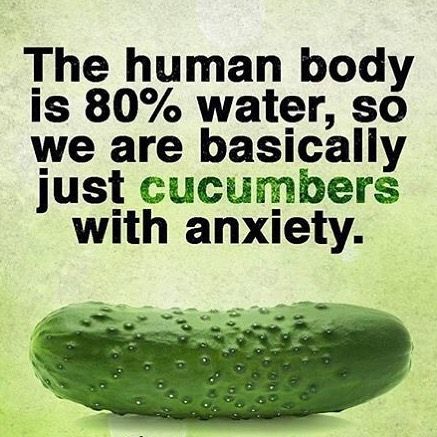
Today, nearly two millennia later, with a population of 7.7 billion of us anxiety cucumbers, we carry on this tradition of handwringing and worry about overpopulation. Books, written decades ago, predicted there would be mass starvation in the 1970s and yet here we are—each new generation fearful of the impending doom.
How could this be?
How could the experts of a generation ago be so wrong in their gloomy predictions?
We have perpetually overestimated our importance in the grand scheme of things and then simultaneously underestimated our ability to innovate (collectively) and adapt to an ever-changing planet.
Sure, we’ve had our impact, things like extinctions and deforestation are concerning and there’s a strong argument for conservation of resources. However, those preaching about the coming apocalypse are often either the victims of their own pessimistic bias or being exploited for political reasons.
No, the Amazon is *not* the lungs of the planet. It is an ecosystem that also consumes nearly as much oxygen as it produces. The widely reported fires are not unusual and, for the most part, involved land that has already been cleared rather than the old-growth forest. Furthermore, the trends of deforestation are slowing and will likely reverse. The only real change is that a man whom leftists dislike was recently elected in Brazil.
Climate alarmism is also a perennial favorite of secular doomsayers. But, oddly enough, these dire warnings never seem to change the behavior of those making them. For example, the Obamas recently made a purchase of a $14.9 million dollar estate in Martha’s Vineyard. That would be an incredibly stupid move for someone who really believed that the oceans were about to rise. But the truth is that the headlines screaming about the end coming in a decade have been a reoccurring theme for decades and the only thing that has changed over the past couple decades is an *increase* in the polar bear population.
What is missing from the fear-mongering campaigns and politically motivated hype is some perspective. This planet has been around for a long long time and has seen dramatic changes in climate. North America was once covered in glaciers. The Sahara desert was once lush and populated. Species have come and gone. Events like Permian Triassic Catastrophe (the ‘Great Dying’) have nearly made this planet uninhabitable, took eons upon eons to recover from, and occurred long before humans arrived. This or something like it will probably end the world as we know it and no amount of windmills will make the slightest difference.
We are not in control. We do not make the sunrise in the sky nor do we know what lies ahead. Tomorrow could just be another day or it could be the day a civilization ending asteroid hits and wipes out everything we have worked tirelessly to create, accumulate or preserve. My point isn’t to be defeatist or to encourage indifference. No, my point is to free you from fear and give you an opportunity to embrace what we do have—this fleeting moment to live and enjoy the experience.
No Earthly Good…
There is an ironic expression “don’t be so heavenly-minded that you are no earthly good” that is used to describe a person who wrongly uses big things to escape their small responsibilities. For example, when the Pharisees, always concerned about maintaining appearances for their religious peers, would declare “Corban” (set aside for God’s use) resources that should have gone to their mothers or fathers instead and Jesus calls them out for it.
Many use lofty reasons as an escape from faithfully performing their own mundane duties. It is easy to decry abuses a world away, but much harder to sacrifice our own personal advantages to serve local needs. We live in a world full of virtue-signaling social media personalities who either naively believe their 280 characters is making a difference or do so cynically, for selfish gain, and simply know what will help them climb the social ladder. There are many who would gladly make others suffer for sake of their conscience and yet rarely lift a finger themselves.
Those stuck in their worries rarely do much good in the world and especially when the anxieties are about things well out of their control. If anything the environmentalist’s obsession with planet-sized issues leads to indifference. In other words, some excuse their own hypocrisy in the name of saving the planet. Many others, more realistic about their ability to save the planet, are disheartened and give up entirely on the enterprise. Both miss the opportunity to make their own corner of existence better.
I recall many lectures from Evangelical pastors about things like the “10/40 window” and millions of ‘lost’ people in the world. The message, if meant to encourage, backfired for me. Unlike them, evidently, I could “do the math” and, by their reasoning, millions of souls would be damned regardless of my involvement and my time would be wasted. I mean what difference could one man make? Likewise, many are frozen rather than empowered by their global focus, even the activists themselves, and would be far more effective if they significantly reduced their scope.
In the parable of the good Samaritan, the two who passed by the wounded man were too concerned with other things to intervene on behalf of the immediate need. Likewise, in the story of the rich man and Lazarus, the unnamed rich man overlooked, possibly even stepped right over starving and sick Lazarus, on his way to important business elsewhere. In both cases above you have ‘big picture’ people missing a small, but obvious, local need and being condemned as a result.
To be truly “heavenly-minded” (at least according to the Gospel) is actually to love your neighbor, meaning that person right along the path you are on or literally at your front gate. That is how to be heavenly in a way that makes a real difference in the world. Those who try to ‘play God’ and save the world are “out of their lane” and are bound to be completely delusional or constantly overwhelmed. To be actually lofty means to sacrifice global ambition and to become locally active.
True faith does not require travel over land or sea, does not need outside funding or forced cooperation of the multitude, it only requires seeing the need in front of you and being the solution.
The Real Problem of Our Time…
The times we live in are unusual, but not for lack of a means to feed ourselves. And we’ve definitely left our mark on the planet, we (like all organisms) consume and in our consumption change the environment we live in. The universe is in a state of entropy, this planet is no exception, yet somehow there is life and we are here, extremely advanced, consciously aware of our place in it. We did not create the order we live in nor will we preserve it forever.
The established order of life, death, and birth again is something that should awe-inspiring and never a source of anxieties. From dust we came and to dust we shall return.
However, we are social creatures, we desire to have meaning and purpose in our lives, therefore we should find a role to serve. Which is the big problem in our time, we have our basic needs met with very little effort (at least in the developed countries) and should feel happy and content. But we are also more acutely aware than ever of the world’s problems and as a result, many feel more helpless and stressed than ever. In a time of peace, prosperity, and connectivity many are feeling angry, alienated and desperate for attention.
A History Guy video, “John B Calhoun and the Rats of N.I.M.H.,” about the threat of over-crowding and urbanization, deserves credit for provoking my thoughts. Calhoun had led a series of scientific studies involving rodents placed in a controlled, seemingly ideal, environment where necessities were provided and conditions right for a rapid expansion of population. The results of the experiments were startling, as the crowding increased so did the social dysfunction. Traditional mouse courtship was abandoned. Bizarre behavior from that of non-breeding “beautiful ones” to inexplicable violence (cannibalism, killing young, etc) became increasingly commonplace leading to a total collapse.
This “behavioral sink,” as Calhoun described it, was not a problem of lacking resources, the rats and mice had more than enough to thrive. But it was an issue of socialization, a question of carrying and comfort capacities, and illustrated the need for social structures. There are problems with this experiment, like all experiments, and human behavior is much more complex than that of rats or mice, but there does seem to be information relevant to our own human condition, as social creatures, and the rapidly changing times we live in.
What is really happening in our time is a disruption of beneficial structures and indiscriminate destruction of normalcies. Long gone are the times when most people stayed closely connected to a small group of people in one geographic place, we now drive thirty minutes to be with a friend, search for love across oceans, and many have no church, were raised in daycare by strangers and think “likes” on social media is relevance. The increase in substance abuse, mass shootings, and suicide could all be symptoms of a break down of social structures, like family and community, that give individuals a secure place.
We seem to be accelerating towards a cataclysmic end of our civilization, but that is a bit too pessimistic an outlook. Our species did not rise in numbers solely as a result of prolific breeding or by living in ideal environments. No, in fact, we survived to later thrive as a result of our unique capability to adapt ourselves to any climate and modify the environment to suit our own needs. Still, that does not mean we can continue to go in the direction we are going and our introspection is good so long as it leads us to make the changes needed.
Calhoun spoke of the need for a “compassionate revolution” and that our success often came as a result of honoring deviance over tradition. But he was also a man of his age. In our time it may be revolutionary, even rebellious, to live an ordinary life, to not indulge in travel, to stay local, to be loyal to our own familial commitments and remain faithful to the needs right at our doorstep. We need a restoration of the home and sacred space, a place to belong and also to be separate from the chaotic din of the mass media age.
We are not gods nor are we dumb beasts. We cannot singlehandedly save the planet, we can’t fix every problem either, but we can help to improve our local environment and settle our own internal space in a way that will bring light into the life of those we meet. The world needs fewer things to worry about, more love, hope, hugs, and Matthew 6:34:
“…do not worry about tomorrow, for tomorrow will worry about itself. Each day has enough trouble of its own.”





 Irregular Ideation