
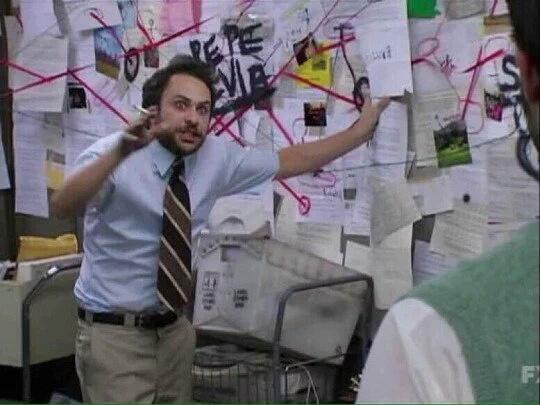
Conspiracy Central

Standard

Conspiracies happen all of the time. It is not a surprise that people plot evil schemes and would be more strange if they did not.  But it doesn’t mean that everything that happens is a conspiracy.  Being old enough to recall the black helicopter theories and warnings of imminent UN takeover.  Who can forget the FEMA camp claims and those pictures of ‘coffins’ Barack Obama’s administration would soon be loading us into?  Strangely many dates come and go, but none of those who push these wild global plots come forward later and say, “You know, I may have been wrong about JFK being the Antichrist… “

Wild conspiracy theories are about political ideology more than evidence.  It is oftentimes a product of those who feel disempowered and seek uncomplicated explanations.  The left, for example, hallucinates nebulous things like systemic racism or white privilege.  Not entirely claims without any merit and yet if it is used to explain every outcome—if you see it lurking behind everything people do—then stop, get some help!  The fringe right likewise, turns to fantasy when reality is too hard for their simple minds to understand.  Inflation can’t just be about the Fed printing trillions of dollars devaluing currency, no it must be fires at food processing facilities

There is always a motivated misunderstanding of evidence that is involved beneath this kind of claim—a misuse of statistics and facts to form grandiose theories.

The common thread of conspiracy theories is that they can’t be disproven.  They are all established on faith, firm belief evidence connecting all the dots can be found and can shape-shift as needed.  If one part can be disproven they can simply move the goalposts or deny the evidence is legitimate.  If someone does not want to believe that the moon landing happened you could show a Saturn V rocket, introduce them to one of the astronauts, thoroughly explain all of the alleged irregularities they see and they’ll still believe that it was faked. 
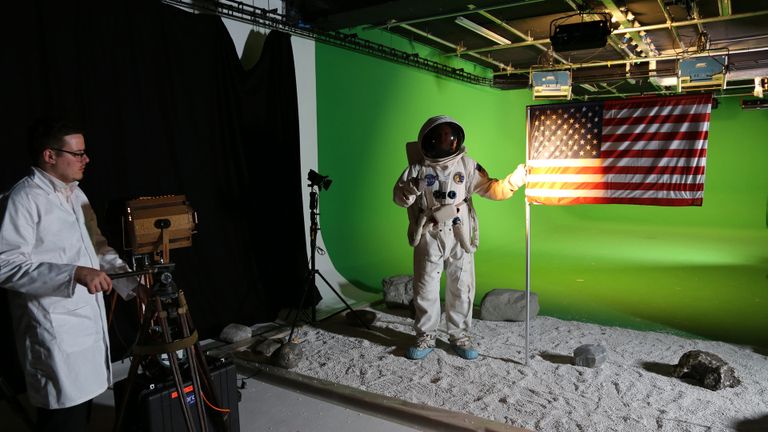
It is a matter of political orientation, not facts or plausibility, and stems from assumptions and a general mistrust of the system.

To the conspiracy-minded folks, everything becomes a conspiracy, there can never be an accident, or a lone wolf attack, no such thing as coincidence in their world. Sandy Hook couldn’t be a deranged (drugged out) Adam Lanza.   No, to Alex Jones it must’ve been a false flag with the casualties being crisis actors rather than real people.  And some of those hunch I understand, this is what happens when every tragedy is treated cynically as an opportunity by control-freak politicians. 
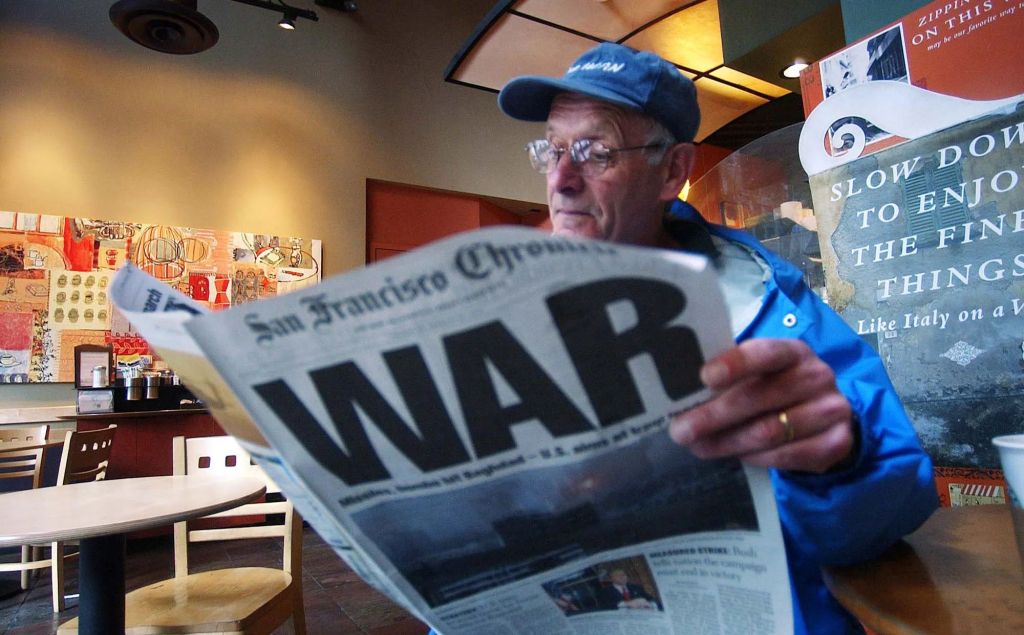
Why did we go to war with Iraq after 9/11? 

Is it so hard to believe that the CIA may have played some role in the JFK assassination when they do regime change all around the world?

The real issue I have with Q-Anon, where all is a hidden criminal plot (and everything is going according to the plan) is how it sucks the oxygen out of the room for discussion of real observable corruption.  The far-flung theories, worse, are used to discredit those reasonable concerns about the expansion of government power and proliferation of unaccountable agencies.  We should be far more concerned with what those with power are ‘legally’ doing in plain sight—and not giving them cover of cockamamie theories they happily use to dismiss us all as crackpots.
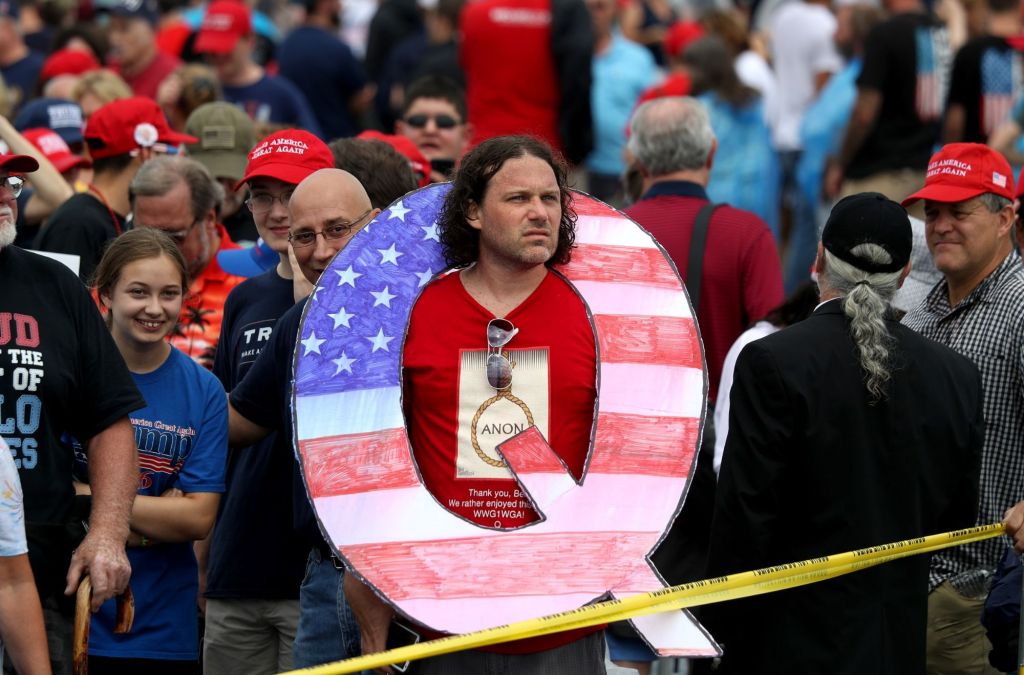
That’s the irony here, the conspiracy theorist is aiding the conspiracy.  For example, fact-checks of “Covid is a bioweapon” were used to strawman the reasonable questions about a possible Wuhan lab-leak.  This is why we couldn’t have a serious conversation.  

So why do the kooks need to speculate so far beyond the evidence?  Why can’t they stick to what is known or factual, the most plausible explanation, rather than always having to gallop to the craziest possible conclusion?  In some cases it might just be stupidity, that they simply aren’t very good at tracking normal human motivation.  But in many cases, it is just a form of resentment, they are unserious people—with a massive inferiority complex—who both need to distinguish themselves and also discredit those who did attain more.

It is basically the working-class equivalent of pulling the race-card.  

And yet this is not entirely without cause.

They’ve endured globalism, they have seen their jobs outsourced, prices rise and wages stagnate.  This was not the America that was promised to them.  A place where their own dreams would be the limit.  They see things going the wrong way, opportunities drying up for people like them, as a flood of new faces replace the familiar.  There has been a sort of conspiracy against them, but not in the way they imagine.  Yes, in many ways, they have been screwed over by their betters—so perhaps that is where the deep suspicion originates?

What Wears Me Out

Standard

I’ve always been a sort of magical thinker, my hopes always far outpacing my realities, and to the point that sometimes when my dreams would finally come true the pleasure had already been exhausted.

I had so wanted a go cart growing up.  On the school bus ride home my mind would start to wander into the fantasy realm.  I would picture a shiny new go cart, like the ones in the catalog, waiting for me at the end of the driveway and would actually be disappointed when it did not end up being true when we would finally pull up to to my stop. 

That’s not to say that I didn’t love the old go cart that my dad would finally weld up, using a rusted frame as a starting point, and an old lawnmower engine.  Anything with four wheels, that ran on gasoline, that could be slid around corners, definitely scratched that itch.  Still, my vivid world of make-believe did not always end with any fulfillment.

In my adulthood this tendency to be way out ahead of myself did not get any better.  I’ve cried, on more than one occasion, thinking of my beautiful bride walking towards me up the aisle.  And not in sadness either, it was in bliss having momentarily put myself in that wonderful place.  Of course, given that I never even so much as went on one date with this young woman, I pretty much ruined that music.

The world between my ears can be a paradise.  A place where there’s such thing as innocent love and anything is actually possible.  I used this as an escape.  My school years spent doodling and hoping for some kind of rescue from the mundanity of the classroom.

These visions were often grandiose.  A child scaled B-17 would land in the school yard.  I would run out to meet my faithful crew as the teacher and 5th grade class would watch in disbelief, stunned, as we revved the engines and were on our way to the nation (later a planet with two suns) that I benevolently ruled along with my brother Kyle and cousin Mel.

Truly, I had always thought that Kyle and I would always be together, build a house with a chimney in the center, like the ruins that I saw on a Civil War battlefield.  I’m not sure why, but it didn’t seem possible then (despite our fights) that we ever be separated, let alone hours apart, and I really can’t claim to have gotten over that disappointment yet.  He moved on, it seems that I could not.

And I have lived a sort of Peter Pan existence.  Holding on, hoping that some day the love that had eluded me, child-like and innocent, would finally magically arrive to rescue me from my torment for having failed to achieve.  I long overstayed the youth group.  Until I had my happily ever after, what choice did I have?  Get old by myself and alone?

Unfortunately, hope is not a strategy and I lacked the necessary social tools to approach an attractive young woman—let alone convince her to date me.  

Years would go by, where I would convince myself, “this time will be different,” and end up leaving the church retreat no closer to my goals and disappointed.  These beautiful wonderful thought going in would slowly morph into a nightmarish reality as opportunity would pass me by and I would be left with only my profound loneliness again.

It was only in my mid thirties that this optimism would crack and the pattern of hope followed by disappointment would finally overwhelm me.  Brimming with outsized expectations, I would arrive at the weekend, and suddenly shut down.  The wheels came off, I would collapse into the nearest couch, curl up, unable to push myself to try again—eventually ending up a sobbing mess.

The pressure had become too much.  The difference between my hopes and reality too insurmountable. 

Sure, I could entertain my delusions, the right one was going to finally arrive, we would look at our feet, shy at first, we would talk, she would smile at my earnest thoughts, I would finally be at ease and soon enough we would be walking hand in hand out the back of a church.  But the chances of that were as good as Gatsby somehow being able to turn back the hands of time and Daisy would be his.

My collapse from exhaustion came at the tail end of decades of forced optimism and sweeping aside my rational fears.  I did not want a world where my being 5′-8″ tall and rather unathletic disqualified me.  Love, to me, especially pertaining to my female religious counterparts, was supposed to be something transcendent.  Unfortunately, what I got instead was a brick wall of rejection.

Life is especially cruel to those with a high ideal.  If I were less able to see the marvelous maybe I could have more easily moved on to more practical aims.  But I could never get my head out of the clouds nor was I willing to acknowledge the harsh truth about romance.  The young women were also chasing their version of perfection and that perfect man wasn’t me.

Somehow, despite a mind that could span universes, I ended up being thirty years old living in Milton and thus ineligible for that kind of love.  How does a dreamer, still holding to those childish notions of escape, ever recover from that terrible pronouncement?

They don’t. 

It wears me out thinking about it.  

It makes me think of another novel and protagonist, Ethan Frome, an injured ruin of a man.  His house reduced in size as he limped, painfully, through what remained of his life.  Not even granted the merciful end to his suffering of that suicide pack those many years before.  Perhaps my life would have been better had my secret world been a little more stark, desolate and devoid of life?