Collectivism, Individualism, and the Alternative…

Standard

There was nothing more irritating to the middle-school version of me than collective punishment of a class.  It was totally unfair, from the perspective of a well-behaved individual, for the teacher to punish the entire class because of the few who misbehaved and seemed a gross injustice.

However, from a teacher’s perspective, punishing classes as a collective whole was 1) easier than finding the individual culprits and 2) might convince students to police themselves.  And, while it is debatable whether or not this technique accomplishes the desired ends, it is something used in military training and for the purpose of teaching that the collective unit will rise and fall together in a combat situation.

We thrive in groups.  There is a reason why you buy your car from a manufacturer rather than build it yourself and that reason is they can do it more efficiently than you can.  It is something called “comparative advantage” (which basically means that some people are better at doing some tasks than we are) and is one of the reasons why trade is almost always mutually beneficial.  For the most ideal result (for both individuals and the collective) it is usually better that we specialize and cooperate.

In real-life we do depend on each other for survival.   Yes, you might be strong, independent, well-disciplined and as prepared as one can be for a crisis.  However, if your neighbors are not, when a crisis does arise it will likely be you against the group and you will probably lose that fight no matter how prepared you are.  And, at very least, even if you were to somehow escape, you would not thrive as an individual like you do in a developed economy where there is cooperation and trade.

So, whether we like it or not, regardless if it is just or not to introduce artificial group responsibility for the actions of others, even if there was no moral obligation to be our brother’s keeper, there is group accountability that arises naturally because of our interdependence and also an economic argument to make for some collective effort (or collectivism) and denial of the individual.  In other words, we are individually better when we take some concern for other individuals who make up our own collective group.

Where Collectivism Goes Wrong…

In the first part of my life most of my effort has been to fight back against collectivism.  In life, as in the classroom, I was usually well-behaved, worked hard, lived within my means, always paid my own bills on time, and expected others to do the same.  It has always seemed terribly unfair that others would expect me to pick up the tab for their irresponsible lifestyle.

What is worse is that many collectivists are not content to subsidize those who they deem to be deserving of help out of their own pockets and instead support the use of use of government to enforce their ideals—taxes are used for income redistribution and affirmative action laws created in an effort to promote equality of outcomes.  To me that is trying to solve one injustice by means of another injustice.  There is no virtue in forcing other people to give to others against their will.

Furthermore, at some point, forcing a responsible person to subsidize another person’s lifestyle is to punish their behavior and promote irresponsible behavior.  The problem with artificial collective responsibility is that it can remove the incentive for the individual to be responsible for themselves and leads to a downward spiral.

For example, poverty has not been eliminated since the “war on poverty” began in 1964.  In fact, the percentage of single parent homes—one of the significant predictors of poverty—has increased dramatically over the same period.  It is often very difficult, for those already in the welfare system, to escape their dependence when the benefits of not working are almost equal to the income they could earn otherwise.

And then there is this awful thing called “identity politics” where people are put into competitive groups according to their race, gender or economic status and then pitted against each other.  Basically the idea is to promote conflict (rather than cooperation) between various identity groups.  People, according to this kind of thinking, should be judged as a part of their collective groups rather than as individuals and unique.

What identity politics amounts to, in practical terms, is that there are those who are collectively punished for the sins of their collective identity (past or present) and then those who, as a collective group, are deemed to be victims and therefore entitled to a protected status.  Identity politics is to blame for terms like “white privilege” and also for the resurgence of white nationalism.  It should be no surprise to anyone that those who are collectively punished will, in turn, circle the wagons and start to collectively protect their own identity group.

Teachers who punish the whole class for the actions of a few individuals assume that the group will push back against those who misbehave.  Unfortunately, it could also promote the opposite and cause the well-behaved students to give up and even join in the misbehavior because they will be punished regardless.  Likewise, when labels like “racist” or “sexist” are applied to an entire identity group they often become counterproductive.  People who are categorizing and castigated as a group regardless of their individual role might as well misbehave a little.

Collectivism ultimately fails when it is disrespectful of individual rights and disregarding of differences between individuals.  The potential for abuse is severe when it is the collective group versus some individuals or even when collective groups fights against other groups.  It is what leads to pogroms and purges.  Collectivism is extremely dangerous ideology when it becomes an excuse to privilege some ethnic, national, racial, religious, social or political groups at the expense of others.

Where Individualism Goes Wrong…

Individualism, to many people, seems like the perfect alternative to collectivism.  It is part of the ideological DNA of the United States of America.  Truly one of the things that made America great was the special consideration for the individual and their “inalienable” rights.

These rights, purportedly “endowed by our creator” according the nation’s founding documents, have been enshrined into law and a government system designed as a bulwark against abuse of individuals.  Progress, at least in American terms, has been a matter of extending the umbrella of these individual rights to those previously disenfranchised and considered less than equal because of their gender, racial or ethnic group.  While we can never agree on the particulars, the general idea that “all men are created equal” and have rights to “Life, Liberty and the pursuit of Happiness” is something most do agree on.

Respect for individual rights has made this nation great because it freed individuals to do what they wanted to do.  Yes, the nation was imperfect in it’s founding and remains imperfect.  However, the American ideal seems to be right in many regards, it is something that likely contributed to the current prosperity this nation and is something that has likely helped to shape a better world.  It is hard to imagine the world being better under the totalitarianism represented by men like Stalin, Hitler and other dictators claiming to represent a collective good.

Unfortunately, respect for the individual turns into a bad thing when it becomes individualism.  It is true that many are able to provide food, clothing and shelter for themselves as an individual.  However, nobody can provide for their own social needs and many in the world today are socially starved.  The problem is particularly acute in the developed world where people are materially prosperous and can live under a delusion of their independence.  But the truth is that it is not healthy for most people to be free from meaningful human connections or to have no purpose bigger than themselves.

The deficiencies of individualistic American culture have became clearer to me after I left home.  Being single, out on the road, a completely free individual, often made me feel profoundly lonely and unfulfilled.  I felt imprisoned in my own mind.  My siblings had their own lives, my friends all seemed to marry then disappear, the local church was unable/unwilling to pick up the slack, and depression set in.   No man is an island—positive social interactions and having a place to belong is what keeps us sane.

My recent trip to the Philippines punctuated this point.  The people there generally have less material wealth than their American counterparts.  As a result people depend on each other—family members expected to provide for each other, children help their parents, and is more or less an organic form of collectivism.  I felt happier there, as one participating in family activities, than I did with all the possessions and properties I’ve aquired over the past few decades.

As if to provide contrast, on my way way back from the Philippines I was put up in a Marriott (when my flight to JFK was diverted to Atlanta because of weather) and was basically alone despite being one of the hundred passengers and crew in the motel.  My accommodations were luxurious, my stomach full of quality grub courtesy of Korean Air food vouchers, my unlimited data plan connected me back to social media and all the entertainment in the world, and still it felt like a time devoid of purpose.

People do not need to be a part of an identity group.  However, we do seem to find our own identity in our interactions with other people and within a group.  Solitude, while therapeutic and a chance for reflection as a choice, is a punishment when imposed upon us by circumstances beyond our control.  Individualism, at an extreme, results in solipsism and anti-social behavior—it is easy to imagine that the world is against you when too disconnected from other people.

Where Community Gets it Right…

“Community is a sign that love is possible in a materialistic world where people so often either ignore or fight each other. It is a sign that we don’t need a lot of money to be happy–in fact, the opposite.” (Jean Vanier)

Community can mean many things.  However, the word itself is a fusion of “common” with “unity” and most often describes a group individuals with a shared identity or interest.  In this context community is a collection of individuals who love and take an active role in each other’s lives.

I believe community is something that transcends the ideological extremes (and false dichotomy) of individualism and collectivism.  It is not a balance or tension between individual rights and the collective needs of a group.  It is rather a fusion of individual and collective concerns that is not a product of coercion or imposed as a legal obligation.  It is a place where differences become a strength rather than a point of contention and were grievances are addressed without becoming the group’s central theme.

A healthy community is focused on the highest common denominator of the group rather than on the lowest.  In other words, the goals of the individuals in the group are bigger than what is merely good for them or those who are most like them.  Those who make up the group are not forced to give up their personal autonomy to tyrannical collective process either.  Instead they are free to voluntarily use their individual strengths to the betterment of the group, willing to work towards the goal they share in common with the group, and without their personal needs being neglected.

Community is a Christian ideal.  It is centered on sharing an identity with Jesus and is following after his example.  It means being willing to suffer temporary personal loss for the external good of others.  It means loving social outcasts, reaching out to those marginalized in society and being a helping hand to those in need.  It means having an identity (both individually and collectively) greater than race, gender, economic status, nation, or religious affiliation.  It means a community formed by all those (past, present and future) united in a mystical common-union:

“Here there is no Gentile or Jew, circumcised or uncircumcised, barbarian, Scythian, slave or free, but Christ is all, and is in all.  Therefore, as God’s chosen people, holy and dearly loved, clothe yourselves with compassion, kindness, humility, gentleness and patience. Bear with each other and forgive one another if any of you has a grievance against someone. Forgive as the Lord forgave you. And over all these virtues put on love, which binds them all together in perfect unity. “ (Colossians 3:11‭-‬14 NIV)

Community is where individuals take responsibility for the collective group and the collective group takes responsibility for the individual.  Not because they have to, not because they fear punishment, but because they want to, they have an identity bigger than themselves and love each other as Jesus first loved them.
Will the Real Anabaptists Please Stand Up…

Audio

We are all familiar with that guy—the high water mark of his life being his senior year of high school—who is always looking back on that one moment when he was actually relevant and longing for those glory days to return, right?

It is the tendency of some to romanticize the past and something very easy to do when things aren’t going as well as we’d like in the present.  Occasionally this sentimentalism about the past is useful reflection, but oftentimes it is no more than our fear of a future that seems uncertain and keeps us from the greater fulfillment of our potential as an individual or together as a group.

We read about those who rejected what would have brought them into the promised land who “in their hearts turned back to Egypt” and “worship the symbols of their former greatness rather than understand” (Acts 7:39) in Scripture.  Because of this idolatrous preference for things past-tense a generation of Israelites escaped the bondage of Egypt only to wander aimlessly in the wilderness because they did not trust God to overcome the giants of their time.

It is fashionable nowadays in some conservative Mennonite or somehow otherwise related circles to use the word “Anabaptist” as a means to distinguish themselves.  This resurrection of Anabaptist identity seems to both be a response to a perceived lukewarmness in the established tradition and also a rejection of what is often labeled Evangelicalism.  But what it often amounts to is no more than a change of window dressing and nothing more.

In many cases it seems these new Anabaptists are simply another hybrid/remix version of conservative Mennonite standards with Biblical fundamentalism, Revivalism, Pietism, along with many other more recent innovations and influences.  These self-proclaimed Anabaptists may actually be more at odds with their ancestors than their Old Order cousins whom they consider to be their spiritual inferiors.  There is no new life, only rewarmed leftovers of yesterday’s meals and a new distraction.

Early Anabaptists did not spend their days in obsessive omphaloskepsis or in preserving a religious cultural identity.  They were men emboldened by the Spirit to question the authority of their own human teachers and break from tradition passed to them.  They were rebels, branded as troublemakers and thought to be dangerous heretics. 

If your primary goal in life is raising your quiverful and maintaining a respectable image in church or society in general, then you, my friend, are no George Blaurock.

Are modern day Anabaptist wannabes doomed to wander a spiritual wilderness?

The short answer is, no.  

We all have choices to make in the present that will shape our future and the choice is still in front of us all. 

Here’s your choice: Will you be like those who stubbornly clung to the past for security and missed out on the promised land because of their lack of faith?  Or, will you this day choose to stop burying your talents in fear, invest fully in trust of God’s grace and rest completely in the Spirit’s ability to lead you as it did Jesus? 

Jesus, when his authority was questioned, pointed to John’s Baptism (Mathew 21:23-27, Mark 11:27-33, Luke 20:1-8) and a moment of special spiritual anointing recorded in all of the Gospels. 

We are told the sky was “torn open” (Mark 1:9-11) then the Spirit of God descended upon him “in bodily form like a dove” (Luke 3:21-23) “and alighted on him” (Matthew 3:13-17) and immediately after this: “Jesus, full of the Holy Spirit, left the Jordan and was led by the Spirit into the wilderness…” (Luke 4:1)  I believe those writers wanted us to know what gave Jesus authority and direction—what say you?

This is what I read: Jesus appealed to an authority greater than the experts on Scripture and theology back then could duplicate.  He points to something spiritually significant that accompanied his physical water Baptism.  An anointing by God that immediately leads him to the wilderness where he is tempted and then emerges to read from Isaiah “the Spirit of God is upon me” claiming it to be fulfilled that day in him to a stunned and incredulous audience.

But, besides that, there is another Biblical accounting of the Baptism of Jesus with an added detail of great importance, the testimony of John:

“I saw the Spirit come down from heaven as a dove and remain on him. And I myself did not know him, but the one who sent me to baptize with water told me, ‘The man on whom you see the Spirit come down and remain is the one who will baptize with the Holy Spirit.’ I have seen and I testify that this is Godʼs Chosen One.” (John 1:32-34)

Jesus did not only live as an example and die as a sacrifice for our sins.  No, according to the passage above, he came to deliver on a promise.  That promise was a spiritual anointing like his available to all who believe. 

That promise being “the Spirit of truth” that the world (including many who falsely claim to believe Jesus) cannot accept as real (John 14-17) and is only known to those who have been anointed or “clothed with power from on high” (Luke 24:49) and is what was experienced on the day of Pentecost in an event Peter claims was foretold by the prophet Joel before preaching a message of repentance:

“Repent and be baptized, every one of you, in the name of Jesus Christ for the forgiveness of your sins. And you will receive the gift of the Holy Spirit. The promise is for you and your children and for all who are far off—for all whom the Lord our God will call.” (Acts 2:38-39)

What is the first step out of the wilderness?

#1) “Repent, for the kingdom of heaven has come near.” (Matthew 3:2, 4:17, Mark 1:15) Which means turning away from our sinful attitudes and behaviors—be Baptized, then live in obedience to the teachings of Jesus as we know them.  The Baptism of repentance is something we do as both a symbolic gesture and also as part of sincere effort to put to practice the self-sacrificial love of Jesus.

This is the most difficult step for those raised in a Christian religious tradition.  We know how to follow the rules or behave ourselves and act right.  However, this is often a commitment without sacrifice and an occasion to stumble over our own pride.  We become like the prodigal son who never left home yet was far from repentance.

Keep repenting as need be.

#2) “Ye must be born again.” (John 3:1-21) This was something perplexing to Nicodemus and still mysterious to us.  Jesus says “no one can enter the kingdom of God unless they are born of water and the Spirit” then adds that only the Spirit gives birth to the spirit.  As surely as you didn’t give birth to yourself the first time you will not give birth to yourself spiritually.  For man this is impossible, but with God all things are possible.

There are many spiritual infants in the church today or those who rely on their own human reasoning and not the power of God.  There was recently a man, ordained in the Mennonite church, who confessed to his not being spiritually born when he started as a preacher.  We send missionaries out full of themselves or a religious indoctrination and youthful ambition rather than tell them to wait on the fullness of Spirit to come to them as Jesus urged his disciples.

#3) “But you have an anointing from the Holy One, and all of you know the truth.” (1 John 2:20)  Do you have that confidence?  Or are you like those Paul encountered who were Baptized in water of repentance and yet…

“While Apollos was at Corinth, Paul took the road through the interior and arrived at Ephesus. There he found some disciples and asked them, ‘Did you receive the Holy Spirit when you believed?’ They answered, ‘No, we have not even heard that there is a Holy Spirit.’ So Paul asked, ‘Then what baptism did you receive?’ ‘Johnʼs baptism,’ they replied.  Paul said, ‘Johnʼs baptism was a baptism of repentance. He told the people to believe in the one coming after him, that is, in Jesus.’ On hearing this, they were baptized in the name of the Lord Jesus. When Paul placed his hands on them, the Holy Spirit came on them, and they spoke in tongues and prophesied.” (Acts 19:1-6)

There are many who have been Baptized with water of repentance who are still not quickened in Spirit.  There are two Baptisms, one physical and the other spiritual, one is to show our repentance and another is of God clothing us.  I pray God sends the willing of this generation to lay hands on those who are Baptized yet still spiritual powerless and that through prayer they are anointed in the name of the Lord Jesus.

#4) “Where there is no revelation, people cast off restraint…” (Proverbs 29:18)  The word revelation (also translated as vision) is about spiritual foresight and leadership.  When there is no spiritual vision people cast off restraint, run wild, perish, etc.

Vision is not about looking backwards for answers.  This is not medieval Switzerland, you are not George Blaurock, I am not Conrad Grebel, and we can’t recreate the 1500’s today nor should we want to.  Tent meetings, Sunday schools, VBS (or any of the other innovations of a prior era) do not need to be preserved ad infinitum either.  We have work to do, work God has given us to do in this present moment using the advantages we are given.

Yes, the witness of faithfulness past-tense should not be forgotten and is a great encouragement.  Take these translated words of “Gott, dich will ich loben” (God, You I Will Praise) a hymn written by Blaurock before his martyrs death have great value:

“Lord God, how do I praise Thee
From hence and evermore,
That Thou real faith didst give me
By which I Thee may know.
Forget me not, O Father,
Be near me evermore;
Thy Spirit shield and teach me,
That in afflictions great
Thy comfort I may ever prove,
And valiantly may obtain
The victory in this fight.”

But putting those words to actual practice does not mean we should be consummate historians, full of knowledge of the past and light on vision for the future.  We should not be like those obsessed with their former glory, trying to be great again by looking backwards, rather we should be full of the Spirit and a vision for today.

The real Anabaptist is the one who does as they did and recklessly pursues the truth regardless of personal cost.  We need a radical faith, one that uses the technological means and media of today, that reaches the world with authentic self-sacrificial love.   We have tools at our disposal that give of us capabilities that our ancestors could hardly even imagine.

Ultimately, however, for any of our tools, technology and historical knowledge to be useful, we need a spiritual awakening.  Real Christian vision is not a product of human ability or effort, it comes from the Spirit of God—For any of our advantages to matter we must be born again.

Those who walk in the Spirit look forward with a positive vision and a great hope for the future.

Baltimore: Race, Rage, and Reality

Standard

As fires rage in Baltimore, my thoughts go to the many good people of all races harmed by those who excuse their own destructive and abusive behavior. Mob violence only adds to injustice.

A (Completely Open and Honest) Conversation About Race and Violence

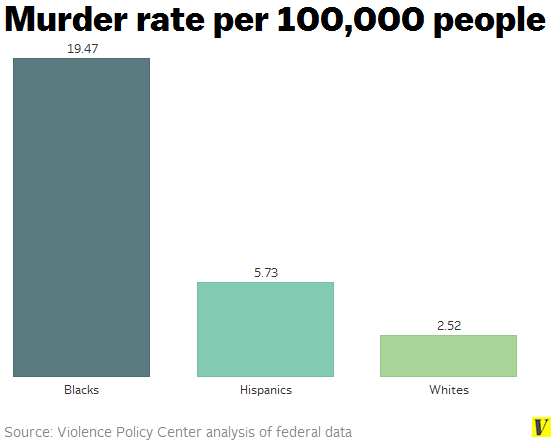
Many, including President Obama, have urged a conversation on race. I have avoided speaking in terms of black and white because I didn’t want to feed existing prejudices. Unfortunately, by my silence, I am also feeding into a dangerous ignorance about the root causes of violent behavior. There is a real elephant in the room when it comes to discussion of race and statistics, here’s a part of it:

image

It seems to me there could be a connection between that and the disproportionate violence here:

image

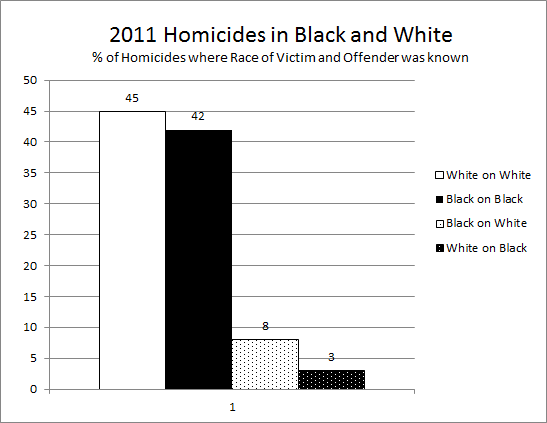
And this is how it breaks down as far as who is murdering who:

image

Media Fueled Ignorance and the Bigger Threat to Black Lives

A few weeks ago I read an article, “I Fear for Our Black Men,” and then began reading the comments in response. I was shocked. Instead of shared sympathy from other black women there was a lot of anger towards black men. From what I gather the complaint is that when a police officer harms a black man it is an outrage and a cause for civil unrest, but when a black man beats his wife or girlfriend nobody cares:

image

Why do we focus on stories about men being victims of police and yet ignore a far bigger problem of women and children victimized by men? Police brutality, while a matter of real concern, is a drop in the bucket of violence in general society and the black community. And the real disproportion is how much attention is focused on their failures rather than the bigger problems. It is straining on the gnat while swallowing the camel.

Which leads me to the topic of government and media complicity. Much is said about disproportionate arrest statistics or incarceration rates. But very little is mentioned about the disproportionately higher levels of violence I highlight above. Apparently we are supposed to obsess on the race only as an explanation and ignore all other factors—factors like resisting arrest, criminal records, dysfunctional homes, etc.

Why Not Build Identity Around Good Behavior Instead of Race?

I would rather talk about behaviors than race. I would rather good people of all races identify with other good people of all races. However, since shared race is how some people choose to build their identity, then I need to address the issue of racial tribalism directly: If you take the side of a person simply because they share your racial tribe identity, then you need to take complete ownership of the bad they do as well and you are a partner in it.

But I would rather we didn’t do that. I say we lose the tribalism motif. I say we stop focusing all of our attention on race and historical grievance. I say we start to address current behavior instead. That is fairer. It is fairer because the vast majority of people (all races) are not criminals. If we are not criminals we should not lump ourselves together with bad actors and defend them simply because we share their skin tone.

The Dilemma of a Colorful Thinker

Standard

I write this post with trepidation. I have been accused before of being too open with my thoughts by some. But I have been told by others that I am very guarded about my personal life and have been urged to express more of that. The truth is that my sharing is often intentionally not vulnerable. Talk may be cheap, but sharing my innermost feelings always comes with an emotional price tag and the risk feels too great. I can discuss abstract ideas for hours without wearying, but when I lay my deeper feelings out it leaves me exhausted, often also feeling degraded and disappointed.

I believe all people desire affirmation or acceptance. We also want to maintain our own separate identity, to be different from others and still be accepted. I had that conflict growing up as a religious minority. I wanted to be identified with my unique heritage. However, I also wanted to be treated as a unique individual and resisted being cornered with the many stereotypes of classmates. Questions, frequently asked without ill-intent, would often be framed as statements categorizing me, “you are X therefore you do Y and Z…”

Uniquely Mennonite; also a Unique Mennonite

I was born into a Mennonite home. Mennonites are a small Christian sect, a product of the Anabaptist movement that swept through Europe in the 1500’s and are known today for their traditional way of life and non-violent stance. Mennonite is both a religious denomination in that ‘members’ conform to certain established standards and, because historically many members come from within existing Mennonite families, it can also classify as a distinct ethnic group.

Most Mennonite children attend private schools and some, more frequently over the past couple decades, are home schooled. However, my parents chose differently, my siblings and I all attended the local public school. It was a consequential decision and a source of some inner turmoil for me as well. I am a proud alumnus of Lewisburg Area High School, yet there was a time where I begged my mom to home school me and throughout my schooling I always identified more strongly with my Mennonite sub-culture.

At school I conscientiously did not join my classmates in various activities. I would stand respectfully and silent during the reciting of the pledge of allegiance. As a devout Christian, I believed my allegiance was owed to something greater than country and I felt I could not pledge to anything besides God. I was separated in other ways as well. I did not grow up with a television at home, so I was out of the loop as far as popular culture and could not identify with much of the chatter about this or that celebrity. I didn’t wear shorts in the summer. I was odd.

But, in church, I did not always identify well with my Mennonite peers either, they had their own school experience and cliques. Prayers by church leaders would give specific mention of the students and staff of the Maranatha Christian School, but would leave out those few of us who attended elsewhere and I noticed it. The neglect of mention was completely unintentional, but it did contribute to a feeling of not mattering, that feeling was a source of insecurity then and lingers in my mind today. I never felt I fit into my school or church culture.

I savored my independent mindedness. I could feel privileged over both my public school and Mennonite peers at times. I had a spot amongst the misfits in both categories too. But, my finding a place among the misfits was to still feel excluded from the mainstream of both settings and was to be a double misfit. It was exclusivity with some exclusion or at least I felt excluded. I had one foot in with mainstream American thinking, with another in a culture that celebrates a persecuted past, and with that a mixed identity all my own.

My Place Amongst the Persecuted

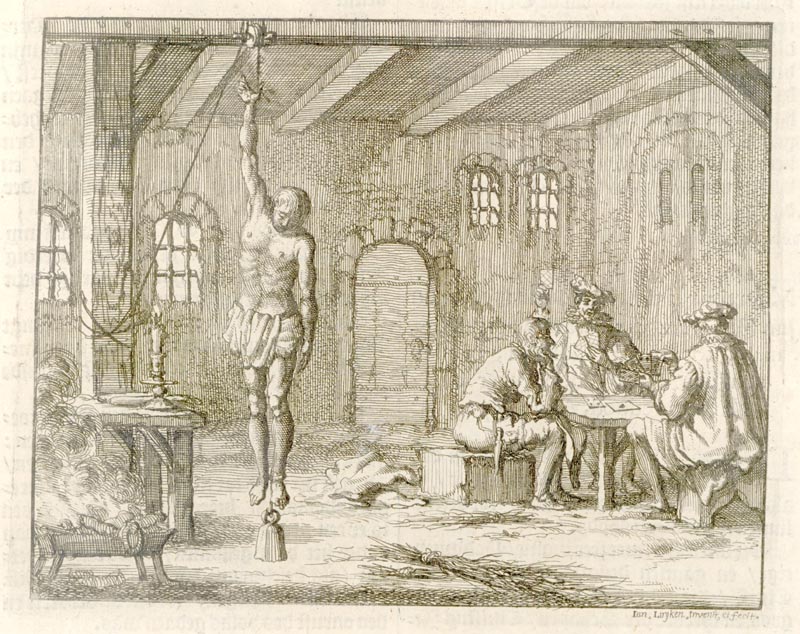
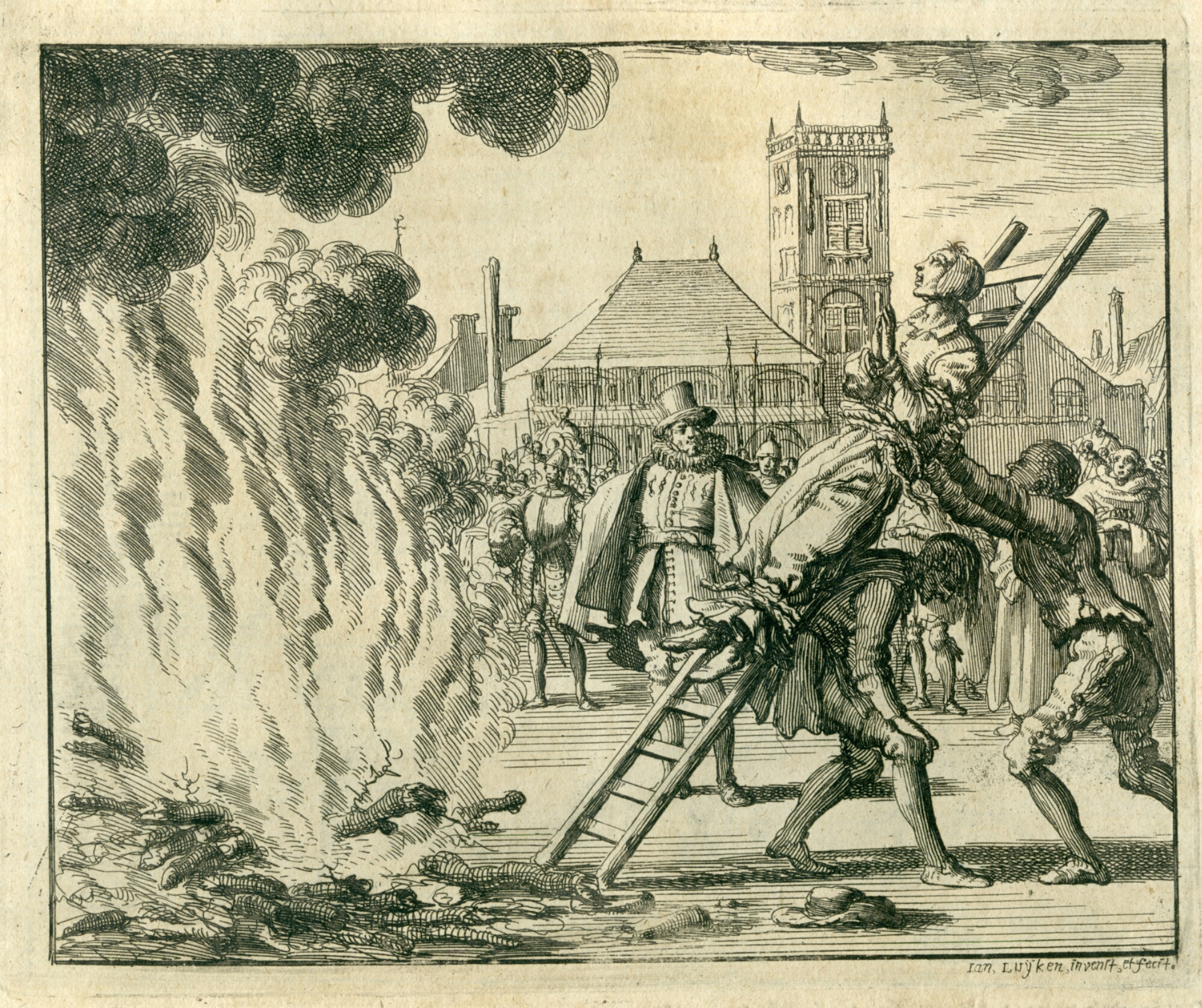
Mennonites have a long memory. We are dutifully reminded of acts of gruesome torture committed against our people from hundreds of years ago. There’s a book, Martyr’s Mirror, nearly as sacred as the Bible in many Mennonite (and Amish) homes, which is basically a chronicle of the violence done to Christian believers. The book includes haunting etchings of the terrifying ends of some who would not recant their faith under trial and these stories help shape Mennonite identity as a persecuted minority.

image

Torture of Geleijn Cornelus, Breda, 1572

Mennonites have a mistrust of mainstream society. Part of it is in a product of a religious emphasis to intentionally maintain a ‘non-conformed’ outward appearance and lifestyle. But the other big part is a real fear that persecution is just around the corner and that we could all soon suffer the same fate as our spiritual/ethnic fathers. Mennonites (and Amish) have been so insular and so separated from mainstream society that they actually have their own unique genetic disorders. Many still maintain their own German dialect, commonly referred to as “Pennsylvania Dutch” or “PA Dutch” for short, and church outsiders are referred to as “English” by Amish people.

The irony of it all is that Mennonites are more frequently adored than they are despised. Our biggest critics tend to be those who are disgruntled ex-members or those who had a bad experience in one church and judge all Mennonites based in it. We are treated both with respect and also patronizingly at times. My sister, a medical doctor, was once asked by a non-Mennonite if she would be interested in cleaning houses or babysitting, which could be taken as an insult to a person who was qualified for much more. Many have assumed my ignorance as well and apparently because of my rural and religious upbringing.

People do judge by outward appearances. People do make prejudiced assumptions based on ethnic heritage or religious connection and I have experienced this first hand. I believe that is likely why I have instinctively classified myself with the victims of prejudice rather than with the perpetrators. My unique upbringing may have been the reason why I was fascinated with history of racism in America. I read books; some of them required reading, but many others by curiosity and choice. The titles escape me, but I remember experiencing the civil rights era from the perspective of a woman in the NAACP, then living life as a young woman in Japanese internment camps and later spending time with a fictional lawyer named Atticus Finch.

My Struggle to Find Acceptance

I also have another identity and that one created in my slow development that earned me nicknames which included “micro” in them. I was short and small for my age. I was a late-bloomer beyond even my then diminutive size. I was older in my class, a polite and respectful student, I would often find more in common with adult teachers than my age-group peers, I had keen interest in history, was knowledgeable, but was also very innocent. I had little more than platonic interest in girls until my late school years and had mostly kept a safe distance from them. I did not seem to draw a whole lot of female attention either. I was an introvert in a crowd and shy around women.

With my struggle with stature, with a lack of strong social skills, athletic abilities, or other especially developed talents (besides being a non-stop daydreamer with some artistic gifts) and having not received an abundance of popular attention, I developed a bit of an inferiority complex. It only intensified as I became interested in dating and noticed many girls were more interested in a muscular, square shouldered or smooth talking male figures and I realized that just wasn’t me. I was this sensitive bundle of analytical thoughts without an adequate ability to express them. It was also furthered by the fact that I felt I was a misfit. I was way too religious for the more secular public school girls, but I was way too nuanced and philosophical for the cut-and-dried products of my own conservative religious culture.

For whatever reason, fate or fortune, I struck out with the first Mennonite girl I asked and that experience was where my confidence really began to wane. I had a an acute awareness of nuance differences of how people treat each other and knew too well how girls treated the ‘cool’ guys compared to those less popular. I was not disliked or mistreated. But I was also not that quintessential Mennonite guy either. It seemed the average Mennonite girl wanted this simple, macho, disinterested, reserved fellow and I did not fit that conventional mold. I was complicated; I alternately talked too much while not saying enough of the ‘right’ things, was fully Mennonite in some ways and not enough in others. I also lucked out with a church full of first cousins.

I was a deep-thinker, a conscientious person, fiercely loyal, told multiple times (by marriageable women) that I would make a wonderful husband, earnestly faithful, protective and gentle. I wanted to be the hero of the woman I admired, unfortunately I always seemed to play the cards of the villain or that’s how it felt my sincere efforts were received. It is against my nature (or maybe my Mennonite training) to harbor ill-will towards anyone. But feelings of rejection (both real and perceived) are as a poison to the soul. I have had my flashes of misogyny or jealousy, with those feelings immediately followed by longer moments of self-loathing and contempt for everything I was or was not. I was a victim of bad-timing, I was disadvantaged by my genetics, I was unfairly categorized and felt it all to be an injustice.

image

Drowning of Mattheus Mair, Wier, 1592

It may be irony, but it was black women who later affirmed my strengths and restored some of my confidence lost along the way. Like in the books I read, where I could identify with the female minority lead character, I felt minority women could somehow understand me and with them is where I felt most accepted. I was treated like I mattered. It did not hurt that some were educated beyond my Mennonite peers and could appreciate discussions of philosophy, psychology, sociology, identity and race.  Not wanting to produce a stereotype about Mennonites, but I would probably be more popular with my ethnic kinfolk if I would shoot more deer, get a big diesel truck, be an outstanding volleyball player and learn to love card games.

The Schizophrenic Demands of Insecure People

We live in a culture that both tells us to “be you” and yet also encourages conformity of thought or action and shames divergent thinking. We live in a society that preaches against stereotypes, that celebrates individuality and yet continually it categorizes people by race, religion or gender. I am simultaneously castigated as the perpetrator of racism and sexism, as a white male, but then instructed not to build identity around race or to make any judgments about sexuality. It is a feeling of being whipsawed, assailed for doing something that I have not done by those who are doing exactly what they say I shouldn’t do and that I didn’t do.

That is the dilemma of a colorful thinker: Do I go with those who say I should be identified with the perpetrators of historical violence? Or should I go with my instincts, my experience as a minority, and make my identity with the victims?

For me the choice is clear: I am neither victim nor villain. I have felt a victim of circumstance in the past. I have been treated unfairly, excluded unjustly, felt like a perpetual underdog. I have been condescended to and even discriminated against based in my race or religion. I have withstood bullies who picked on me because of my differences (my genetics did not lend to physical intimidation) and I have endured educated elitists who hurled insults, alleged my ignorance for challenging their perspectives and then would burned their straw-man effigies of me with an unwarranted glee. But I refuse to make my identity center on my claim to victimhood.

image

Burning of Anneken Hendriks, Amsterdam, 1571

I will not be like the bitter white co-worker who blamed his lack of success in college on not having the special privilege of affirmative action and would spout one racist opinion after another. I rebuked him without hesitation. I share no identity with his racism and hatred. I will likewise not patronize, show favoritism or cater to others simply on the basis of skin color and historical injustices. We all have challenges to overcome in life and it is easy to assume that our own are bigger or more real than someone else’s. I am not going to coddle and perpetuate the insecurities of any person, white, black or otherwise. I do not believe we help people overcome by treating people as helpless and hapless victims.

In discussions over race, with constructions like ‘white privilege’ and such, I have more frequently been lumped in with the perpetrators of racism rather than treated as a unique individual. It is frustrating, because Mennonites were some of the first to protest slavery and that is the identity that is more real to me than my skin color. Amish and Mennonites were even singled out in America for their ethnicity and conscience, some locked in prison during the First World War because they refused to fight. I feel, at times, that I have more in common with a persecuted minority than with anyone else. Yet, because I am a white male, some assume I could not possibly understand them and seemingly dismiss my perceptive without ever hearing it.

image

Burning of David and Levina, Ghent, 1554

I may not understand exactly what it feels like to be black in America. But I do know how it feels to be treated as inferior and less of a man on the basis of superficial things. I know too well what it is like to be categorized and stereotyped. I understand the conflict of one who loves their own heritage, has a defensive urge against those who attack their ethnic community and yet is still aware of the problems of their own people. I have a love-hate relationship with my own Mennonite religious/ethic heritage. I was taught to be afraid, not just of the police, but of mainstream society in general and some of my religious peers think they are persecuted because of perceived slights.

I have felt insulted and belittled at times. The slights were real and sometimes intentional too, but not always. I have found my reactions are a product of personal insecurities and sometimes little more than that. People all have their sources of insecurity. Conservatives fear a tyrannical government will soon take away their rights, thus fearfully stockpile guns and ammunition. Liberals think that the economic system is stacked against them and want government to impose on their neighbors allegedly as an act of justice. We can build identities around these insecurities. We may find people who share our fears and can look for evidence to ‘prove’ our own disadvantaged status or victim role. Unfortunately, while we do this, while we are demanding respect of our own person or people like us, we are also often leaving a wake of destruction behind us.

Insecure people produce more problems for themselves and others. We all know them, that super-sensitive person who is so insecure that they see an insult in even the most innocent requests or gestures. Take, for instance, a guy who told a story (apparently thinking his audience would be sympathetic) of a time he was driving down the road and a woman driving in the opposite direction scratched her nose as they passed. He knew an insult when he saw one. So he spun his vehicle around, aggressively pursued the offending party and gave a lecture on her disrespectful behavior. Of course, who knows why she touched her nose at that moment. Much more disturbing is a man who assumes an insult or injustice at every turn—and does not see his own offending belligerence.

Seeing Beyond Divisions of Black and White

I am a person with multiple identities and with none in particular. I am not alone either, I believe many Americans have many different identities and do not fit neatly into statistical categories. That said, Americans do also have bigger common identities of race or gender and these identities can sometimes be used to divide us. Our differences can be a cause for celebration, but they are also the basis of falsely dichotomous ‘us’ versus ‘them’ narratives and are used feed existing insecurities. But, treating every person like a unique person to be individually loved as a unique person, rather than in category of victim or villains, would solve a multitude of problems.

Pigeonholing, finger-pointing, scapegoating or shaming those who have offended me probably will not solve my own insecurities and I’m doubtful this type of action would ever create desirable results those whom I deem as guilty. Demonization usually only creates another class of victim. When we treat people like problems rather than people, when we throw them into categories of perpetrator on the basis of their appearance or history, then we have become contributors to the disease of prejudice rather than healers and helpers. If we want more heroic people in the world, then we must treat more people like heroes and as we wish to be treated. If we want dignity and respect for ourselves, then we need to stay committed to treating others with dignity and respect.

Healing of existing wounds will not come from two sides beating each other with superior arguments or competitive claims to offense. Tensions certainly will not be solved by making any person feel inferior or labeled as a villain. The urge to point out statistics about black men in response to those who cite statistics about police will not bring us closer to peace. The truth is if there is to be healing it will come from us learning to identify with all men, and not with only those who look like us or share our own opinions.

We need to recognize even our own intuitions, even those that are informed with history or statistical evidence, might be skewed, prejudicial and wrong. What we perceive to be true is not always whole or complete truth. We need to be more introspective, practice more constructive self-criticism, and address our own faults squarely. The assumptions we make about ourselves and about other people can hurt our chances for success. Yes, I could build a pretty solid rationalization to defend my own insecurities, but it would get me nowhere towards overcoming the obstacles to my success and, if reinforced long enough, could become a reason to not try at all.

Creating Shared Identities

It is impossible to say categorically that every white man has it better or every black woman has it worse and it is foolishness to assume it. A single black mother probably has more in common with a single white mother than she does with a black woman who is happily married. Then again, a black woman, who endures assumptions about her appearance, might actually be able to identify with a young Mennonite woman who dresses differently because of her own religious/ethnic heritage.

image

Dirk Willems rescuing his pursuer, Asperen, 1569

We need to endeavor to create shared identities bigger than race or gender or religion or even economic status and rid ourselves of crippling victim identities entirely. There are more of us misfits than there are those of us defined by statistics or stereotypes. We all have unique advantages or disadvantages and also our own special challenges to face. So, rather than dwell on ourselves only, or focus solely our own specific problems, we could realize struggle in various forms is common to all people and part of our shared humanity. I have my own struggles, you have your struggles and in sharing our burdens together we become brothers and sisters in the same fight rather than rivals or enemies.

I am not saying we should lose our unique identity either. What I am saying is that categories of white and black, privileged or persecuted, hero and villain are too small. We are colored, but not in black and white or shades of gray, we are truly many shades of many colors and uniquely our own person. We have many shared identities that could bridge our gaps and create common understanding, but to find them we need not to be bound to our past or prejudices.

My advice: Build an identity with those who overcome with love and despite the odds against them. Tune out those who only feed insecurity and fear.

(Click here for more Martyr’s Mirror images)

Sir Charles is right…

Standard

What Charles Barkley says about tribal mentality (watch the video) is spot on.  We are all susceptible to in-group favoritism, which is to prefer those we most identify with over those who we do not, and, with that, we can lose our objectivity.  Sadly, when issues are framed as ‘us’ versus ‘them’ (rather than on the basis of a careful and impartial analysis of the facts) the only result can be more polarization and division.

It is not just a matter of dividing over racial identities either.  Identities can be built around many things.  We can prefer or judge more harshly based in gender, class, education, religion, nationality, political affiliation, brand, friendship, familiarity and basically anything that can be used to create categories of people.  We don’t always side with those who are most like us either.  Regardless, who a person identifies with or against is a reflection of their own priorities and these often seemingly unconscious preferences are worth our conscious examination.

When the allegations against Bill Cosby started to become a story I was originally skeptical of his accusers.  I cringed because I had thought of him as a sort of role model of fatherhood.  I imagined his status as a wealthy celebrity may make him vulnerable to those seeking to gain financial and a sort of odd offer that could suggest a money motive behind the charges made me wonder even more.  Still, why would I assume Cosby is innocent and assume over a dozen women are guilty of trying to extort him?  It could be that I’m a man like him who would fear the same happening to me.  It could also be that the accusers are anonymous people as far as I am concerned and Cosby a public figure I thought I knew.

In contrast, a few years ago when the charges against Jerry Sandusky were made, when he was accused similarly in what became a media frenzy, I assumed he was probably guilty and without much consideration of his possible innocence.  First off, he lacked cuteness factor and, as awful as it is, appearance is a factor in our judgment of guilt or innocence. In my mind Sandusky looked the stereotypical part and that prejudice despite my knowing appearance is not evidence of guilt.  Second, despite being a Penn State fan, Sandusky was not on the coaching staff for a decade and I did not recognize him.  Besides that, his TV interview was awkward and, while actual proof of nothing but his awkwardness, it gave me the heebie-jeebies.

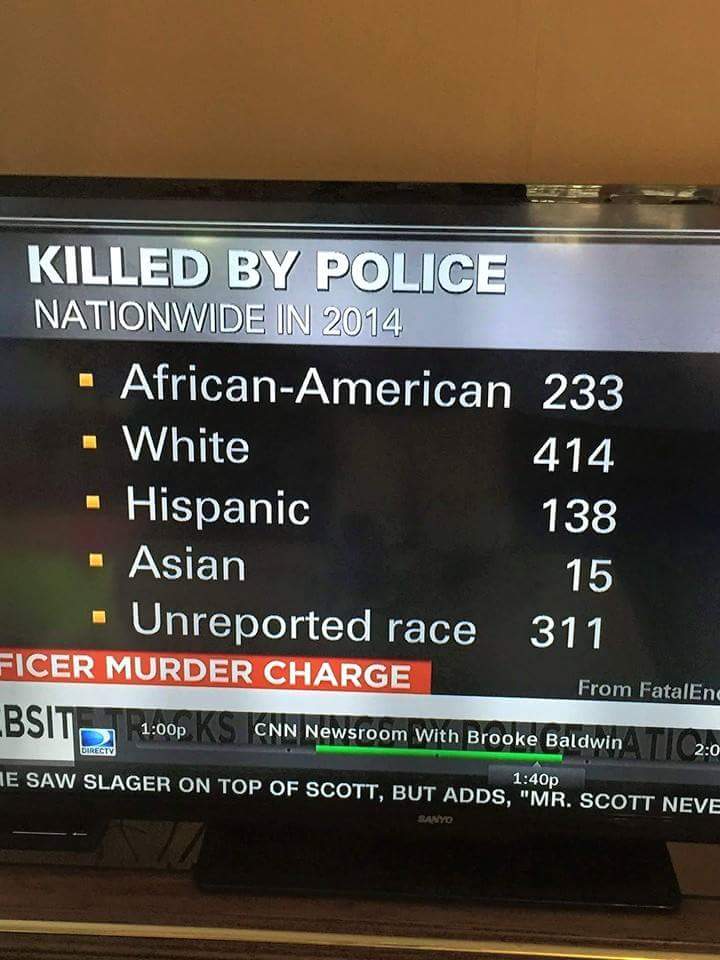
Black men often suffer the same image problem that causes people to be suspicious rather than sympathetic.  It is unfair, but not an inexplicable prejudice and definitely not helped when the causes célèbres are young men who died in violent confrontation.  It is not helpful to the cause of overcoming racial prejudice that solidarity centers around skin color rather than unquestionable character.  It is not fair to the vast majority of black young men for them to be lumped together with every other black young man and especially not helpful they be categorized with those involved in tragic violent encounters.

The idea that every black male is equally likely to be killed is based in an erroneous assumption that race is the only important factor in predicting outcomes.  Statistics do not tell individual stories and many factors other than race influence risk.  Factors like single parent homes, participation in gangs, drug use and many others can add to risk.  Factors like education, positive attitude, good community and others can reduce risk.  So, rather than categorize by race only (as if that’s all that matters) and feed a tribal mentality that is already too prevalent, we should look beyond as well. We should encourage unity around the ideas that reduce risk for all young men regardless of their race.

“It is better to light a candle than curse the darkness.” (Eleanor Roosevelt)

A first step towards light and away from darkness is to reconsider our own tribal identity.  It may say nothing more when she does it than when I do, but I did find it interesting that Whoopi Goldberg is skeptical of the allegations against Cosby and yet did not rise to the defense of Sandusky who faced far fewer accusers.  To Goldberg’s credit, she did separate the acts of the retired coach from the Penn State community, which is more fair than demanding morally responsible and mass punishment for those who had no way of knowing.  But why do we not treat both accused men the same regardless of appearances?

But I do digress.  This is my advice for moving in the direction of light and unity beyond racial identity.  This, for those afraid of young black men, means to identify with the young black men who do not fit a violent stereotype and should not be defined by the negative statistics.  It means judging less in appearance, less collectively and more on individual merit.  For those who fear police, this means obeying the law even when in disagreement, treating officers with respect even when not understanding their requests of us and seeing them as unique people to be treated as individuals rather than as part of some monolithic thing to shower our contempt upon.

image

It is the image of Devonte Hart giving a hug to Sgt. Bret Barnum that show the real path out of darkness and to light.  Let’s follow their lead and be a new tribe bigger than skin color and prejudice.  Leave fear and mistrust behind even if it makes you more vulnerable.  Give people who look different from you the same benefit of doubt you give to those who look more like you.  Be willing to go the second mile for those who seem as a threat to you and live to be a light to the world.  The world needs more hugs, fewer demands and chockholds.  We need to love all people as we want to be loved.

“If you really keep the royal law found in Scripture, “Love your neighbor as yourself,” you are doing right. But if you show favoritism, you sin and are convicted by the law as lawbreakers.” (James 2:8-9)

Anyhow, this is probably as much as I want to say about racial tensions, I have probably said more than enough already and I pray my words are understood as intended.  May God bless his children of all colors, genders and social statuses with abundance of love for each other.  May we love each other as God loves us and be leaders in love rather than reactionaries in fear.  We need love and understanding beyond the tribal boundary and that which is only made possible through having the mind of God.