The Myth of an Indestructible Building

Standard

It was November 29, 1900, and fans filled the stadium in San Francisco for the annual Thanksgiving Day game between California Golden Bears and Stanford Cardinal. Some, not wanting to pay the entry fee (one dollar then, $40 in today’s money), climbed on a nearby glass factory roof to get their view of the action on the field.

The newly built factory roof collapsed about twenty minutes into the game. One hundred people fell as it gave way and plunged four stories down—many landing on the 500° F oven below. It was a horrific scene. Young people being cooked alive. What happened? The building roof wasn’t designed to hold a mass of spectators. It failed. Those who had climbed up were oblivious or did not have enough concern for the stress they were adding to the structure.
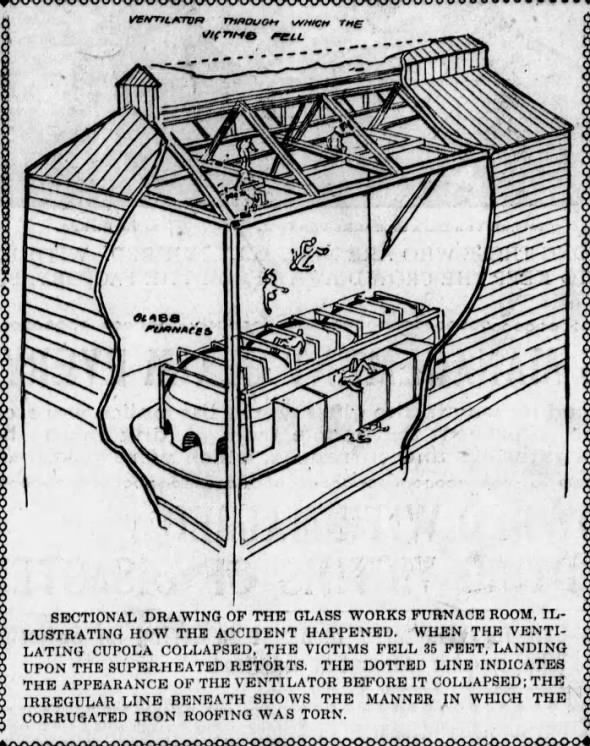
This tragedy wasn’t just a failure of design; it revealed a deeper misconception that buildings should be invincible, a myth that shapes our reactions to collapses even today. It goes further than engineering or physical buildings as well. Our models of reality are oversimplified at best and flat-out wrong in too many cases.

There is a common misconception and an unrealistic expectation about structures—many people seem to assume they are like blocks of granite. From those who believe that every building collapse is a conspiracy to those who think every failure demands stricter government regulations, the myth of an indestructible building continues due to a lack of understanding of engineering and the limitations.

Design Limits Are Not Defects

One key misunderstanding is design limits. Engineering is not about making a building too strong to ever fail. Unless we’re talking about the Great Pyramids, it’s all about trying to meet certain established parameters. An engineered building is designed to meet the expected conditions as defined by regional building codes. If the wind, snow, or loads exceed the designated standards, then there will likely be a collapse.

Earlier this year, after a heavy snowfall in upstate New York, many buildings had their roofs cave in (including this fire hall) because the weight of the snow was that much greater than the design weight. Sure, most engineers build an extra safety margin into their components, but eventually these limits are too far exceeded and you’ll end up with a tangled mess. This is why there are sideline roof shoveling businesses in these places where large snow accumulations are a regular occurrence.

Sure, code could force people to build to a much higher standard, making a collapse due to snow load virtually impossible. But this would increase the costs so much that it would price many people out of building a new house or barn. Engineering is all about compromise, more precisely about making the right compromises given the expected conditions. Yes, there is a case for making adjustments based on observation or after studies, but ultimately we build for what will work most of the time.

More Is Not Always Better

In the aftermath of the earthquake that had struck Myanmar and neighboring Thailand, there was a comment made to me in a chat hoping for more layers of regulation. This is a sentiment, in the specific context of rapid development of Bangkok, that seems more reflexive than reflective. It is a progressive impulse to believe that more interventions and rules are the answer.

The collapse of an unfinished tower in Bangkok, during the earthquake, sparks questions about building codes.  Was it missing sheer walls?  Did the contractor rush to ‘top it off’ quickly?  I want to know what the investigation finds.

But, for me, as someone who works in the construction industry and has occasionally needed to sift through these layers, I could not disagree more. Sure, better regulations may be needed. However, legalism doesn’t work in building standards any better than it does in churches. Sure, you need a code of some kind. And yet onerous regulation will add to the cost of construction, not necessarily improving the end results, and only making new housing less accessible.

It is, at best, the same trade-off discussion we can have about self-driving cars and the need for LIDAR. Sure, this expensive laser ranging system may marginally improve the results, but at what cost? Self-driving cars with cameras alone are already safer than human drivers. Keeping these systems at a price that is affordable will save more lives than pricing them out of reach for average people. It is, therefore, optimal to rollout the less expensive and safer tech even if it could be slightly improved.

At worst there is only more expense and no benefit to more layers of red tape. The real problem with rules is that they are written in language that needs interpretation. Unlike a classroom theoretical setting, in the real world you can’t just memorize the correct answers and pass the test. The ability to make a judgment call is far more important than adding to the pile of regulations. More rules can mean the more confusion and the truly critical matters get lost in the mess.

I see it over and over again, when different customers send the same job for a quote and all of them interpreting the engineering specifications their own way. It is the tire swing cartoon, a funny illustration of when the customer wants something simple and yet the whole process distorts the basic concept until it is unrecognizable. That is where my mind goes when we talk about adding layers. Is it increasing our safety or merely adding more points of failure?

This one stuck with me and should be standard equipment in every design department.  I first saw it as a child while visiting the engineering department of the construction company my dad worked for.

Some of it is just that some people are plain better at their jobs than others with the very same credentials. I am impressed by some engineers, architects, contractors, and code officers—not so much by others. I’m willing to bet the intuition of some Amish builders is probably more trustworthy than a team of engineering students’ textbook knowledge, full of theory, with no real or practical world experience. In the end any system is only ever as good as the users.

Theory Is Not Reality

My work relies on truss design software. I enter information and it does those boring calculations. When I started, I assumed that it was more sophisticated than it really is. I thought every load was accounted for and nothing assumed. But very soon the limits of this tool started to reveal themselves. It is only as accurate or true to reality as the engineers and developers behind it—and on the abilities of the user (me) understanding the gaps in the program.

When it comes to mental models—the kind of physics involved in engineering—only a few people seem able to conceptualize the force vectors. Things like triangulation, or compression and tension loads, are simply something I get. Maybe from my years of being around construction or that curiosity I had, as a child, that made me want to learn what holds a stone arch up or why there are those cables running through that concrete bridge deck. My model was built off of this childhood of building Lincoln Log towers (arranging them vertically) and occasionally making mini earthquakes.

I’m exasperated by this expectation that people have for skyscrapers to be indestructible or to topple over in the same manner of a tree—as if they’re a solid object. It also seems that the big difference between static and dynamic loads is lost on most people. They don’t understand why a building could start to pancake, one floor smashing the next, or how twisting due to extreme heat could undermine the structural integrity of a building without ever melting the steel. Of course this has to do with their beliefs or mistrusts that are not related to engineering—nevertheless it shows their completely deficient understanding of how the science works.

The concept in their head is off, their brain modeling is inaccurate, and their resolution may be so low they simply can’t grasp what the reality is. You try to explain basic things and their eyes glaze over—sort of like when Pvt. John Bowers tried to explain why the plants need water, and not the electrolytes in Brawndo, in the movie Idiocracy. Ignorant people will scoff before they accept a view different from their model of the world. The theory they believe rules over all evidence or better explanation.

On the other side are those who trust every established system without understanding it. They “believe science” and see more as an answer to every question. More rules, a larger enforcement apparatus, faith in their experts, without any feel for the problems encountered by the professionals or those in the field. If they had, they would question much more than they do. Human judgment is still at the base of it all. Or at least that is what the lead engineer told me while we discussed the limits of software and the need to be smarter than the tool.

Not even AI can give us the right balance of efficiency in design versus safety factor or what should be written in the code. It may be a better reflection of our own collective intelligence than any individual, but our own limits to see the world how it actually is are not erased by the machines we create. We are amplified, never eliminated, by the tools we create. So we’ll be stuck wrestling with our myths and theories until we take a final breath—only our flaws are indestructible.

Models of a Messy World

If truss software taught me anything, it’s that no model nails reality perfectly—not beams, not buildings, not life. We lean on these frameworks anyway, because the world’s too wild to face without a map. But just like those fans on that San Francisco roof in 1900, we often climb onto flimsy assumptions, mistaking them for solid ground. The myth of an indestructible building is just one piece of a bigger distortion: we think our mental models—of faith, of power, of people—are unshakable truths, when they’re really sketches, some sharper than others, of a reality we’ll never fully pin down.

Take religion. For some, it’s a cathedral of certainty, every verse a load-bearing beam explaining why the world spins. Others see it as a rickety scaffold, patched together to dodge hard questions. Both are models—ways to grapple with life’s big “why.” Politics is messier still. It’s like designing a city where everyone’s got their own codebook. One side swears by tight regulations, convinced they’ll keep the streets safe. Another group demands open plans, betting that freedom builds stronger foundations. Both sides act like their own ideological model is bulletproof, shouting past each other while the ground shifts—economies wobble, climates change, and people clash.

Then there’s prejudice, the shoddiest model of all. It’s like sizing up a beam by its color instead of its strength. Prejudice, always a shortcut to save us from the effort of real thought, fails because it’s static, blind to the dynamic load of human individuals. Good perception, like good engineering, adjusts to what’s real, not what’s assumed.

All these—religion, politics, prejudice—come down to how we see. Perception’s the lens we grind to make sense of the blur. Some folks polish it daily, questioning what they’re fed. Others let it cloud over, stuck on a picture that feels safe but warps the view. I think of those fans in 1900, not asking if the roof could hold them. They didn’t mean harm—they just saw what they wanted: a free seat, a clear view. We do the same, building lives on models we don’t test, whether it’s a god we trust, a vote we cast, or a snap judgment we make. The distortion isn’t just in thinking buildings won’t fall—it’s in believing our way of seeing the world is indestructible.

What makes a model reliable? Not that it’s right—none are. It’s that it bends without breaking, learns from cracks, holds up when life piles on the weight. In construction, we double-check measurements because we know plans lie. In life, we’d do well to double-check our certainties—about the divine, the ballot, the stranger next door. The San Francisco collapse wasn’t just about a roof giving way; it was about people trusting a picture that didn’t match the world. We’re still climbing those roofs, chasing clear views on shaky frames. Maybe the only thing we can build to last is a habit of asking: what’s holding this up? And what happens when it falls?
What Thomas Sowell (and Libertarians) Get Wrong About Trump’s Tariffs

Standard

The point of Trump’s tariffs is to get rid of all tariffs.  I can feel the blank stares of my ideological and indoctrinated friends who are hyperventilating about a blip in stock prices and loses for billionaires.  

I get it, Libertarians, you really do not want the government to do anything and Thomas Sowell said stuff about tariffs being bad, so in unison you bleat: “Tariffs are taxes!”

But your sloganeering is not argumentation and—while I generally believe less is more in the case of government—I’m stuck here in the real world with Trump.

Economic theory has it’s place, as do ideals, and yet this isn’t a matter of Sowell said it, I believe it, that settles it.  

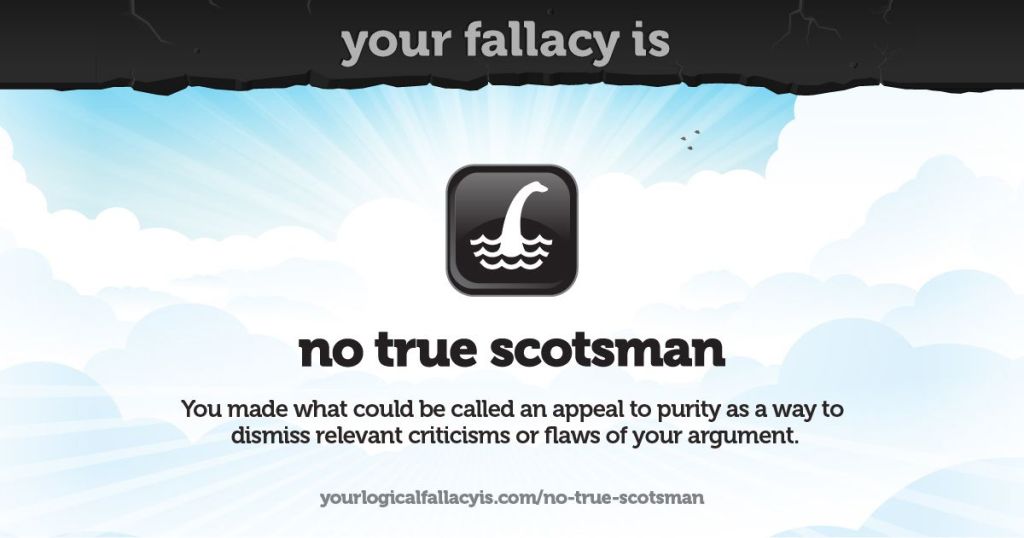
Marxists also believe their man’s theory will work if properly applied.  Ideological people can’t accept when their theory doesn’t work in reality, they will always insist “that wasn’t true [insert ideology here]” and continue on their merry way muttering that next time it will work—if they could just brainwash more children and eliminate more enemies of the revolution.  There’s never a reevaluation in light of the actual evidence.

True X hasn’t been tried.

So, without further ado, let’s dive into where free trade fails and Thomas Sowell after we do that…

Can Hell Be Made Worse?

After the devastating earthquake of 2010, I joined a group of young people on a trip to Haiti.  It was a Christian mission and hosted by a Haitian pastor.  This grandfatherly man had, at one point, been in business and ran a factory manufacturing clothes.  

While I’m not going to make a case against charity or giving, there is often a cost that is unseen and a greater dependency created in the end.  The Haitian pastor was forced to shutter his operation and lay off all of his employees after the combination of cheap imports and donations made it impossible to compete in the marketplace.

But the even sadder story was in a place in the country called “little Africa” where rice farmers tried to make ends meet.  No, they were never rich.  However, they had scraped a living out of cultivation up until Bill Clinton started to dump subsidized American rice on the Haitian market.  These people were desperate.  They mobbed our delivery of a bit of relief and aid.

I know, I know, this isn’t real free trade.  But it is the kind of situation we are in.  Putting our favorite theories and fandom aside, and ideals that could possibly work if all abided by the same rules or assumptions, we don’t live in that fantasy land.  In the real world, it is like Haiti where subsidized products are exported and some will disproportionately suffer consequences.  

Yes, in theory, Haiti still benefits, as a whole, from importing cheap or free stuff.  But we can also make the argument that this kind of unfair trade has undermined a situation that was already fragile.  A government that would protect Haitian industries would not let subsidized products be dumped without something stabilizing in return.

Thomas Sowell vs Donald Trump 

Sowell is a great economist and provides a good answer to ‘progressive’ theories.  His being a guest on the Rush Limbaugh show has made him a favorite of conservatives—wanting validation for their free market and small government views.

As an academic, Sowell’s work dealt mostly with economic theory and to argue against all tariffs he uses abstraction “protectionism hurts market efficiency” and that they don’t solve issues like wealth gap, that they favor special interests, and retaliation against tariffs hurts exports, and they lead to long-term stagnation.  And he may be right if we lived in a vacuum sealed petri dish.

Trump, by contrast, lives in the very messy world of politics and negotiations.  He runs on instincts and intuition, not by intellectual exercises or writing papers or creating a set of principles.  He comes in with the big ask, the threat or the bluff, trying to disrupt and even create a bit of anxiety in the other side, before eventually bringing this process to a resolution that makes all parties leave with a feeling like they’ve won.

This is how we got from the “fire and fury” rhetoric—with the political class and corporate media hyperventilating about this being a path to war—to Trump being the first US President to set foot in North Korea and then shaking hand of Kim Jong Un.  It is just his method of changing the conversation or moving the Overton window.  You can’t get from point A to point B without shaking up the old status quo a bit.

Trump isn’t ideological, like Sowell, or trying to live off a written in stone economic code of conduct.  No, when he has leverage, or sees an opportunity, he uses it.  There are many countries tariffing US goods.  And our trade deficit is enormous.  So why is it so out of line for our President to cry foul or use the threat of reciprocal tariffs in other to back these countries down and then get a better deal for his country?

Surely Sowell isn’t against pushing for the elimination of tariffs—which likely is the end game.  And, furthermore, Trump’s brazen actions are far more likely to get results than the fine professor’s best lecture on economics.  Already other countries are lining up to start talks about removing their unfair tariffs against the US.  It is a game of musical chairs and you don’t want to be the last one looking for a seat.

Power, Principles, and Persuasion 

Marxism is about the application of power, Libertarians are about strict adherence to a set of principles, but Trump is different.  He is about persuasion.

Marxism is a hammer—raw power of the mob, trying to smashing the old order to hand control to the workers, or so it claims. In reality, it’s a machine for centralization: seize the levers, dictate terms, and dress it up as justice. Think Soviet bread lines or Mao’s famines—equality morphing into control. Libertarians, by contrast, wield a rulebook, not a fist. Their creed—liberty, markets, entirely hands off—is sacred, rigid as stone. Tariffs? Sacrilege. Sowell represents this.  Marxism a power grab, and libertarianism a fortress of unattainable ideals—both are better to be left as theory rather than an approach to real world negotiations.

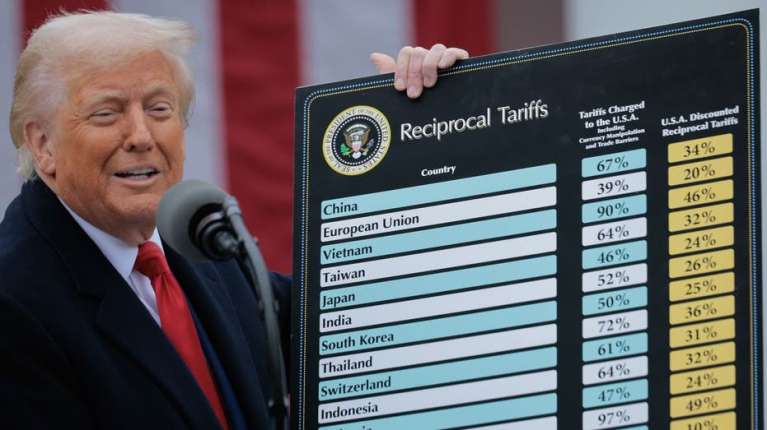
Marxism would’ve sparked a trade war, not talks; libertarianism would’ve let markets bleed out. Trump’s different—he’s making countries dance. China grumbles but hints at softening; the EU’s haggling too. Stocks have dipped, and Sowell’s costs loom, but the moves are now undeniable: Vietnam’s concessions, India’s play, Japan’s hustle. It’s not a system winning—it’s Trump, raw and loud, proving persuasion trumps power or principle. He’s bending the world his way, one bluff at a time.  He is about persuasion—messy, unscripted, a vibe that bends the room.  

Tariffs are the threat, but trade that is truly free and fair is the actual goal.  And Trump is further along in achieving this simply for his boldness alone.  Maybe he’s not doing it the ‘right’ way or by conventional means, yet who says that we can’t try a new approach to get some better results than we’ve been getting?  The people who have been leaving the American worker behind tot decades now?  As my 13-year-old son would say: Let him cook!

Reliable Sources

Standard

My initial reaction to the collapse of the Francis Scott Key Bridge was disbelief, I had just swiped open my phone, eyes adjusting after I rolled out of bed Tuesday morning, and saw the Daily Mail headline blazing on my Facebook news feed.  So immediately I Google “bridge collapse” and, sure enough, the highlighted results were full of similar headlines.  It must be true.

Since that moment there has been a flurry of speculation.  My first thought, of course, is was this deliberate?  Did the Russians do it?   But as I started to gather evidence, like the video showing the lights going out and puff of black smoke, mechanical failure was a plausible explanation.  That didn’t rule out some kind of sophisticated hacking attack, but then this isn’t a Tesla car or Hollywood fantasy where anything electronic can just be operated remotely through undisclosed magical means.

Theories are easy to create.  The hard part is to sift through the information pouring in and come up with something actually likely given probabilities and reliable sources.  A random guy online or old Larry at the parts counter isn’t trustworthy.  The corporate media is only slightly better, in that they at least get the general story right, yet are also politically motivated and basically parroting official sources or their ‘experts’ at a lower resolution.

What of these officials and experts?

I generally rate someone who has their own reputation on the line over someone who is spit balling and couldn’t change their own spark plugs.  Someone with credentials is a better choice for information given that they did put in the work to get their degree and prove their competence.  However, a PhD or government position doesn’t make a person honest or free of bias.  Those who get paid by the government are part of the political establishment and their partisan agenda should be assumed.

1) Professional Experience 

The sources that I trust are those who built a reputation outside of politics and within the industry—this is why I’ve subscribed to “What is Going on With Shipping?”  Later in the day of the collision and collapse of the bridge I found an established channel about maritime matters for explanation.  How do I know he’s credible?  His fluency is a start, he has the technical jargon and credibility with others who know shipping from first hand experience.  It is notable that nobody here is surprised that this incident could happen.  The details of his analysis give me confidence that the information is good.

Authority comes from having professional experience and a proven record.  When I picked my neck surgeon, for example, we had a conversation about his prior record and the procedure.  I sized him up.  He was articulate, empathetic, and had all the expected confidence of someone who could work a miracle of modern medicine.  He also was able to explain everything in terms that I could understand.  The trust I put in him paid off, my recovery was great and I’ve come back stronger than ever.  Licensing with charisma doesn’t mean someone is competent, but it definitely helps.

2) My Own Aptitude 

But my main tool for determining who to trust is based on my own aptitude.  I have a decent understanding of physics and spent my younger days curious about mechanical systems—and always needed to understand how they work.  I could turn a wrench.  I did my own diagnostics and repairs.  So when I do bring my car to the mechanic I’ve already done my homework. 

For example, when my car lost power right away I suspected the Ti-VCT system was to blame.  The engine then gave a code that supported this hypothesis and I took it to a local tire shop and inspection garage.  I told them exactly what to look for giving them a page of the diagnostics manual.  And yet, after having the car for a day or two (after changing the air filter and cleaning the MAF sensor) they concluded it could just be the car is old and losing compression.  Finally, after taking the time to look under the hood, I found the problem.  It was what I had been suspecting.  This time I took the vehicle to a real technician, a guy who with a reputation for good diagnosis, and he gave a beautiful technical explanation of what happens with a short in that system.  After an inexpensive repair I’ve had no issues since.

I’ve never worked in the engine room of a big cargo ship.  I know that they are huge and, despite involving the same principles, are on an entirely different scale.  For one, it takes a team to keep them running, this isn’t like your Toyota where you can simply turn the key, put it in drive and go.  No, they have a startup sequence and when I heard a play-by-play of the disaster unfolding, where the puff of black smoke was explained as being a fuel-air mixture imbalance when they were using a burst of compressed air to start the massive engine, I recalled hearing this being explained in a documentary and it all lined up with what I know about engines.  It is clear he was credible and therefore I felt the rest of his commentary had merit.  I’ll never trust the people who completely miss on the basics and then expect me to believe their conspiracy theories.

3) Most Plausible Explanation 

It could be the MV Dali crew were attacked by mind control aliens using the 5G cell phone network.  There’s no way to disprove this is not what happened.  However, it is not the most plausible explanation and certainly not the first stop (or last) of a reasonable analysis.  What is probable is the answer with the least amount of moving parts or crazy assumptions, which points currently in the direction that this was an accident waiting to happen or a matter of reasonable probabilities that needs no fanciful dreamt up explanation.

There are those times when fact is stranger than fiction.  But we should only go there if there is plain evidence of motives and the means.  Like when the Nord Stream pipeline exploded and prior to this the US President made a threat “We will bring an end to it.” It isn’t a big stretch to believe he had a hand in the sabotage.  The US Navy is one of the few in the world that have the capability of making this kind of attack, so that is a very plausible explanation.  It also wouldn’t just happen on its own or accidentally, so we do look for the potential connections.

Nothing is ever absolute.  We can’t know for certain.  But I’m going with the assessment of the professionals who don’t seem at all surprised that this could happen and can give an informative analysis.  I’ll weigh one of their opinions over ten thousand who claim that there’s something fishy or they feel it in their gut and who have never set foot in the bowels of a cargo ship.  The reliable sources are those with professional experience and are not tainted by ideologies or narratives that color their perspective of all events.