
Technology Versus Humanity

Standard

We love technology because it makes our life easier. Machines do the back-breaking labor that once took an army of men, we all get more as a result, travel between places is a matter of gassing up the car and going rather than a perilous ordeal. In general social media platforms and online retailers reduce friction. That is to say, they facilitate an interaction at a much lower cost of time and effort. Why go shopping or hang out at the mall when you can sit on the couch?

That was a key revelation this week: Snapchat and TikTok have taken the place of roaming the corridors of what was once a retail Mecca. Entertainment is as simple as picking up your smartphone and finding out what Mr Beast is doing. He’s so much cooler than even the cool kids at school, so why even bother to see what they’re doing? It is too hard to make plans with friends, to get dolled up, to drive ten miles and walk on your feet when you feel as if you can get the same reward wearing your underwear at home in your bedroom.

More are living in a fantasy of life, following a path of least resistance, and not realizing the full cost. Social media is to the community what pornography is to sex. Sure, you have escaped the grip of boredom. That desire for interaction has been gratified. It is even more sterile and safe. That pretty girl won’t reject you here in virtual reality, she doesn’t compare to what is available at your fingertips anyways, so why be treated as second rate by what is second rate? We escape our limitations with our imagination.

However, it all comes at a cost, much of this cost is hidden or deferred. The cost is that we don’t accomplish what we could—in the real world—by our reliance on a meaningless space where nothing of value is accomplished.

Our convenience-seeking way is a form of depravity, that is to say, it is trading current pleasure for future pain. If we don’t get any physical exercise, for example, because the machines do all the work for us, we will lose our muscle mass and gain weight. Cuts in calories and gym time can counter this, but there must be proper sacrifices, or diabetes and quality of life decline will follow. Why not walk rather than ride in a vehicle? The exercise would do us good.

Oh, you don’t live in town?

Everywhere you need to go requires a drive?

The suburban sprawl and development built around the automobile have led to an increasingly dependent lifestyle. And that is not a typo. Our convenient mode of travel has made it easier to close a distance; we don’t need to live next to our sources of food, employment, or social interaction. Yet, as a result, everything is now more distant, and this is how we end up commuting forty minutes to work rather than spending the day in our own neighborhood. We can be everywhere all at once and are scattered to the wind because of this.

This is true regarding schools. Even after the one-room schoolhouse had gone away the schools were within talking distance in my hometown. But now nearly every child is either bussed or dropped off since all of the schools are part of the sprawl. It just amazes me, that in an age where we’re worried about sustainability and subsidizing EVs for a marginal reduction in carbon emissions, we are still—as a public policy—developing our communities in the direction of more dependency rather than less.

A smartphone feels so secure in our hands, so intimate, and yet will divulge our secrets (without our knowledge) to anyone with resources. For all we know it is a bomb waiting to explode given we are only the end user of the device and have no idea of its inner workings—let alone who had hands on it before it came to us. And simultaneously, while vulnerable to every nefarious actor that exists, we’re more isolated when it all goes down. Suddenly, in North Carolina, after the flooding, they can’t do business without cold hard cash.

One cost of convenience is dependency on long supply chains. Even those face-to-face transactions often involve third parties who skim a bit for themselves. We empower the global corporate conglomerates and are always at the expense of local control. Could your community survive without trucked-in food and consumer goods? How far would you need to walk for basic needs if the electric power went out or tankers stopped bringing in fuel? A century or two ago most people could find enough to eat simply stepping into their own backyard.

Sure, having a big garden and animals is inconvenient day to day, but it is much more sustainable. Our cars and phones make it easier to travel, but they also have put us in a bubble. As in, not being 100% present even to our own family beside us, where we drive past each other in a metal shell at 70 mph and never meet the people who supply our needs. We feel sophisticated because of the gadgets in our hands, when in reality an Amish man living a century ago had life figured out better than we do.

Given what we’re discovering about microplastics, the Amish were right even in their rejection of rubber tires. Why? Well, it isn’t because they had special knowledge. No, in simply rejecting most new technology they also avoid the unintended consequences as well. This disposition to be wary of what is generally accepted as improvement, asking what it will take away from the community and our humanity, is good. It is moral to take a little time to consider the long-term costs of our technology decisions.

As soon as we embraced technology that we could not manufacture or sustain by ourselves we became vulnerable. Humanity suffers as we look to technology. Sure, the benefits of innovation also can’t be ignored or downplayed. But we must always be as aware of the downside and, therefore, have an intentional approach when adopting the next new device. There is always a price to be paid for convenience. We need to do the hard work, to help rebuild those strong local communities and foster robust humanity.

Rudolf Diesel: Thoughts about Idealism, Despair, Progress, Politics and Hope

Standard

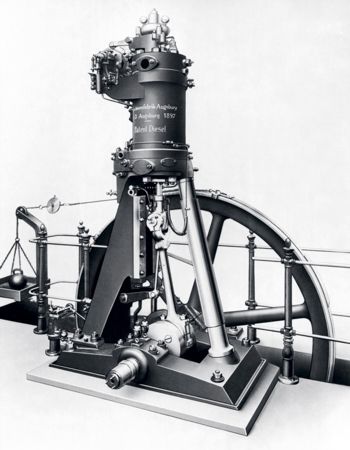
Diesel powers the world economy.  I never considered the extent to which that is true until watching a documentary (click here to view it) about this type of internal combustion engine.  It is named after the inventor, a French-German mechanical engineer, Rudolf Diesel, and is the reason why global trade is possible to the extent it is.

Early Diesel design, circa 1897

In considering the story of Diesel, his brilliant invention and the results, I could not help but see the pattern all too common with innovators.  Diesel’s life turned tragic, he was found floating in the North Sea, dead of an apparent suicide, and likely a result of his despair over the unintended consequences of his own design.

According to biographical accounts, Diesel was a utopian idealist who had hopes that his invention would be a catalyst for social change, free the common man and break corporate monopolies.  Unfortunately, while a revolution for transportation, Diesel power did not achieve the lofty social vision. 

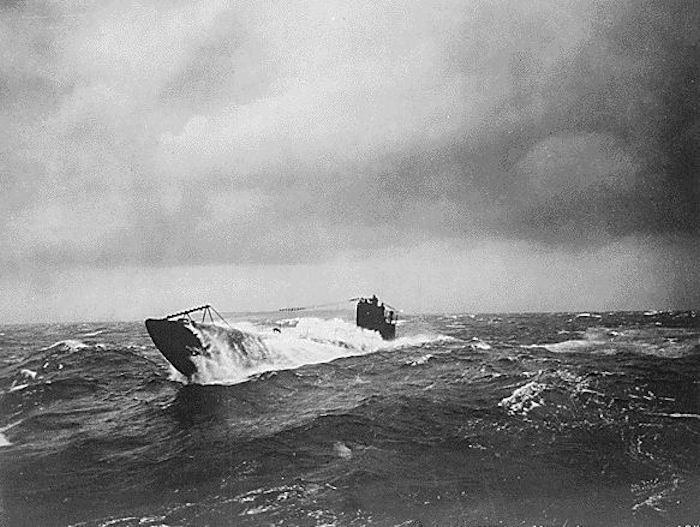
Worse, the Diesel engine found use as a part in an efficient killing machine, the German U-boat, and this no doubt grieved the pacifist inventor.

Here are some observations…

#1) What is intended for good can often be used for evil.

Diesel had never intended his invention be used as a means of terrorizing North Atlantic shipping lanes.  And, likewise, many scientists and inventors had regrets related to their greatest contribution to the world.

German U-boat, the original stealth weapon 

There are lists from K-cups to A-bombs online and many others.  For example, Henry Ford seemed to dislike the vast social changes and consumerist mindset made possible by his manufacturing revolution that helped automobiles become a fixture of American life.  Even this media, the internet, once thought to be the beginnings of an information age, has become a cesspool of pornography and ill-founded claims.

I worry about this as a blogger.  Once my thoughts are out there they cannot be contained again.  Will someone pick up my words and run with them in a direction I never intended?  It is a potential outcome that could scare a sensitive soul into silence and is at least a reason for me to be prayerful in what I post here.

I believe there are many people who do not thoroughly think through the potential unintended consequences of the ideas they promote.  There are many government programs and social movements intended for good that might actually be creating more problems than the one that they were intended to solve.

Which takes me to a second point…

#2) Yesterday’s revolution is today’s loathed source of inequality and evil.

It is ironic that the invention that did actually outcompete coal for market supremacy is now enemy #1 for many.  The internal combustion engine won in the marketplace because it was by far the cheapest most efficient means to power transportation and still remains. 

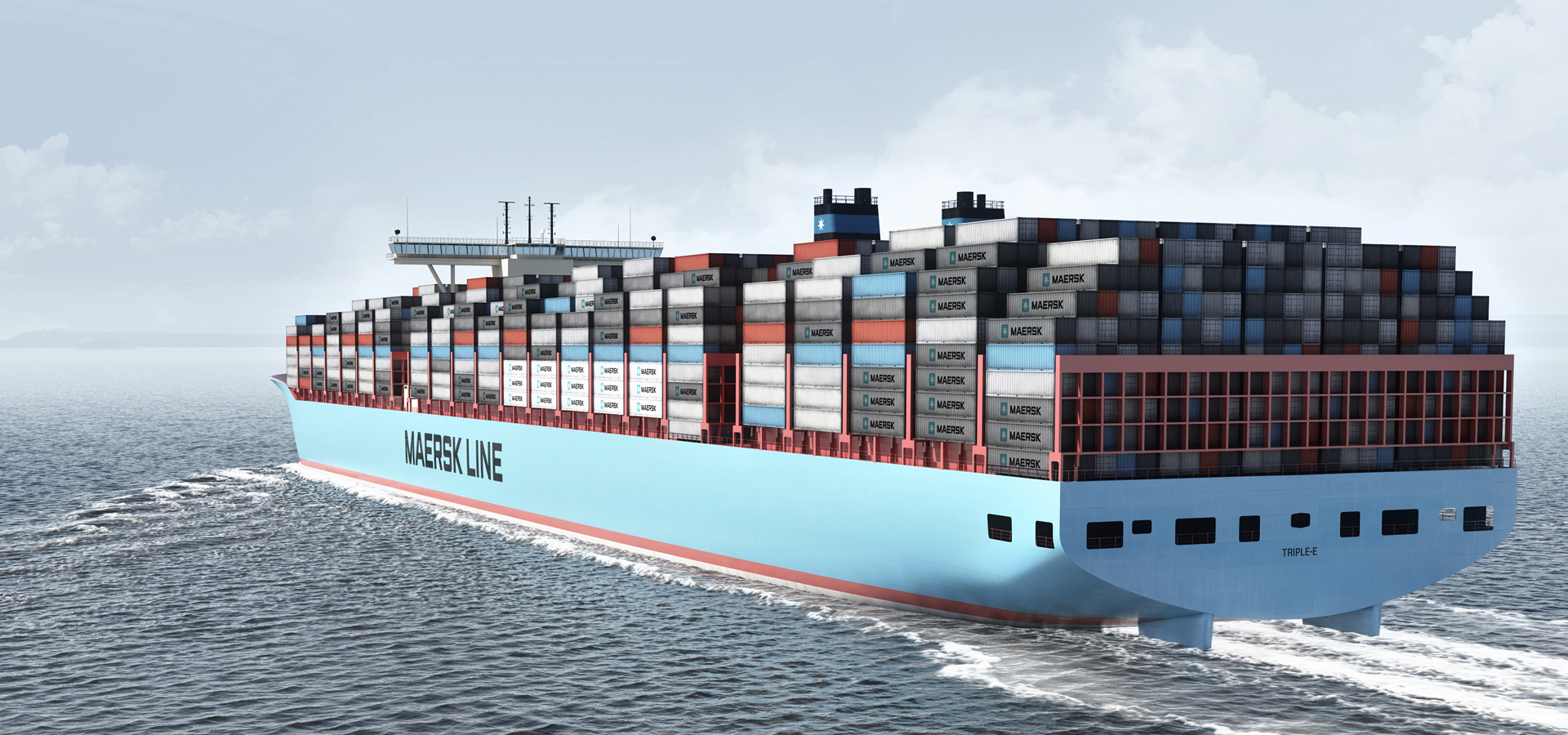
Given there are no steam powered cars, tractors, trains and ships anymore, it is clear that internal combustion is the best bang for the buck and remains to be rivaled.  Diesel powered locomotives and ocean going container ships are extremely powerful while being very economical.    

109,000-horsepower Wärtsilä-Sulzer RTA96-C

Diesel power still outperforms hybrid technology—A loaded Diesel powered class 8 truck is more efficient pound for pound than a Prius.

Think about it: It takes one gallon of fuel to move an 80,000lb truck five to seven miles.  A 2016 Prius, by comparison, carries a weight of around 4000lbs can go anywhere from 50 to 58 miles on a gallon of fuel.  It may seem the Toyota is greener until you consider that it is moving twenty times less weight.  Twenty Prius cars combined together, after dividing their individual consumption by twenty, would consume 2.5 to 2.9 gallons of fuel.  Now, obviously, combining Diesel and hybrid technology on the scale of class 8 truck would undoubtedly yield even greater results if fuel economy were the only concern, but the point remains that Diesel power is extremely efficient and effective—and only more so the larger the application.

So what’s the problem?

Well, the current popular perception is that the petroleum industry “big oil” is the enemy and conspires to hold back technology that would dramatically increase efficiency.  Worse than that, we are told that petroleum power is a source of global climate change and a threat to the global ecology.  Poor Diesel would be driven even further into despair if half this is true.  We fight over oil.

 #3) Progressive aims of our time are at odds with each other or self-contradictory.

Globalism, higher standard of living for more people and environmentalist ‘green’ movements are at odds with each other.  Pushing one direction will almost invariably come at the cost of the others. 

Progressive politicians may tout an idea of a ‘green economy’ as a jobs creator, but the reality has been that wind and solar energy can only remain competitive through heavy use of government subsidies.  Beyond that, even with the help, domestic ‘green’ manufacturing is unsustainable against foreign competition.  At best we will merely replace jobs lost by the heavy regulations placed on fossil fuels and raise costs of living across the board.

Furthermore, it was the progressive policies of the past century that have created the current conditions.  Government policies like the Rural Electrification Act, the Interstate highway system and trade agreements have actually moved us away from a more sustainable less polluting lifestyle.  Our cheap and easy movement from place to place has harmed community and local markets.

Rural Electrification Act propaganda poster.

It is hard to know how the current landscape would look had the progressives of yesterday had not literally paved the way for suburban sprawl, the trucking industry (that currently employs me) and driven us to embrace a coal powered grid.  But I do suspect more of our food would be locally grown, more of our products locally produced and solar energy far more the norm in places utilities would be to costly to maintain unless mandated by law.

In final analysis things might not be as dismal as they seem.

It is easy to focus on the negative without considering the good.  The means of today are likely as unsustainable as the means of yesterday and therefore the progress of the past century might not be the end of us after all.  The only consistent reality in the past two centuries has been that markets constantly change.

Canal boats an all the infrastructure to support them were soon replaced by steam power and railroads.  In Pennsylvania the lumber industry rose in prominence before a rapid decline after the states wooded mountains were reduced to stubble.  The coal industry once put food on the table for boat loads of immigrants before cheap efficient oil and a multitude other factors conspired against it.

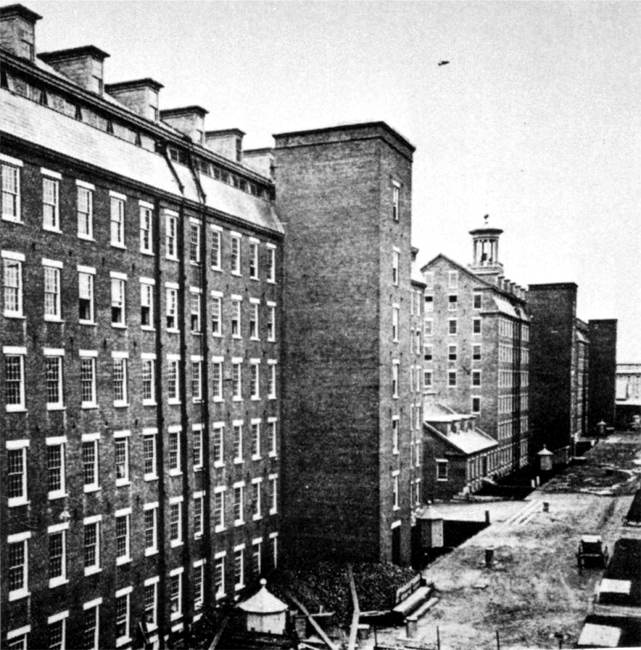
Bay State Mills, Lawrence, built 1845.

Manufacturing, from the once mighty water powered textile mills of the New England states to the formerly unstoppable domestic steel industry, has also migrated following cheaper labor and energy.  Each time promoting deep consternation and fear.  But so far the Luddites have yet to have the last laugh and a new balance is eventually found that usually benefits everyone.

Certainly the overconfidence and optimism about today’s new solution may become the big disappointment of tomorrow.  Yet, do we really wish to go back to a time when a transatlantic voyage was only something a religious zealot or crazy Viking explorer would do?  Would we really rather spend most of our time scrounging for just enough to eat as to avoid the possibility of mechanized warfare?

Nobody knows for certain why Diesel died... 

However, what is certain is that his invention changed the world and provided a means for interstate commerce and global trade that never existed before.  The pacifying effect of global trade, economic benefits of an expanded market place and inexpensive power are largely unappreciated.  But we probably do have Diesel to thank for helping create the long peace and prosperity of our time.

Maersk, Triple-E design, Diesel powered, container ship

In an age of information overload, where we know about beheadings in the Middle East before the people the next town over would have heard a century ago, it is difficult for our finite minds to contextualize and easy to become overwhelmed.  This, with an accompanying loss of faith, could be why middle-aged American white males are committing suicide (supposedly the most privileged in the world) and at an alarmingly increasing rate. 

Diesel’s pessimism about the future in retrospect seems to have been premature and his nightmarish perception of reality overstated.  In like manner many of our modern fears and despair inducing thoughts about the future could be negativity bias and nothing more.  Every generation seems to believe that the world is falling apart and still here we are.

Whatever the case, ignore the fear-mongering propaganda of the punditry and politicians.  Embrace temperance, a spiritual quality developed through faith, over mindless reaction and fearful impulse.  Trust God to secure the future, we can only live one day at a time and never ever lose hope!  If you are depressed about events in the world today, I invite you to see the higher perspective:

“Therefore we do not lose heart. Though outwardly we are wasting away, yet inwardly we are being renewed day by day. For our light and momentary troubles are achieving for us an eternal glory that far outweighs them all. So we fix our eyes not on what is seen, but on what is unseen, since what is seen is temporary, but what is unseen is eternal.” (2 Corinthians 4:16-18)

Perhaps the greater of two evils will be elected come November and drive the nation to complete ruin.  

Who knows besides God?

We may all die tomorrow, we will all die eventually, our work blown away in the wind of time and forgotten.  Everything comes to pass, nothing will remain as we know it today, but there is hope beyond all hope found in an eternal perspective.  So look up, because the sun is still shining and the future remains bright!

Do you see the light and feel the warmth of hope eternal?

If not, my prayer is for the blind to see…